

The 13th International Conference of Critical Education: Revolutionary theory in a time of monsters

Posted on

By Stephen Beresford

In early July, alongside fellow UWE Bristol PhD student, Anna Burchfiel, our supervisor and ECRG Lead, Professor Alpesh Maisuria, I had the privilege of attending and presenting at the 13th International Conference of Critical Education (ICCE) at the Aristotle University of Thessaloniki in Greece.

The theme of this year’s conference was ‘Critical Education in Times of War’ and the global political context was one that weighed heavy on proceedings; every contribution recognised that we live in barbaric times, in a time where the contradictions of capitalism have ushered in the global intensification of oppression and repression and an age of imperialist violence, war and genocide. As one presentation reminded us, we are living – in the words of the Italian Marxist Antonio Gramsci – in a ‘time of monsters’.

To this end, it was important to be at a conference where those at the forefront of struggle across the globe could share their experiences. Contributions were both outstanding and wide-ranging: we heard about the effect that the genocide in Gaza has had on adult education, and about the efforts being made – in the most unimaginable circumstances – to keep the flame of education alive; we heard about the repression being meted out against educators in Brazil and Turkey; about the perniciousness of discourses of SEND ‘inclusion’ in the UK; about the relation between capitalism, economic growth, ecological crisis, and dominant education forms, and from Anna, we heard about the reality of the financial ‘crisis’ in UK universities.

Important too was the fact that the conference agreed to a statement in solidarity with the people of Palestine, standing against the genocide and with the Palestinian struggle for freedom from occupation and apartheid. As one participant from Lebanon pointed out, when compared to her experiences at other more ‘mainstream’ conferences and academic organisations, it was notable the ease with which such a statement could be agreed. To be involved with ICCE is, in this sense, something that fills me with pride. It too should give food for thought for those organisations who fail to stand up at such a horrific juncture.

This touches on another theme that emerged in many of the contributions: the question of resistance and hope. Not only was it consistently noted that to feel despair, or to acquiesce in such times is a moral and theoretical error, it was also noted that across the world, forces of resistance are building that are waiting to be untapped. As Alpesh’s presentation implored, this means we must be more committed than ever to forging accurate, rigorous, scientific explanations of social reality; without doing so, practices aimed at social transformation will be blind, and the forces of liberation and emancipation will fail to seize on the moment of crisis.

This idea of the emancipatory nature of rigorous social explanation was also one that my presentation touched upon too. I argued that theorisations of the school that attempt to view it in terms of the reproduction of ‘unequal’ classes must not merely think of this in terms of class discrimination and the inheritance of advantage. Such an approach misses that the more fundamental purpose of the schooling system is to contribute to the reproduction of capitalist social relations; it is an ideological state apparatus, structured to ‘interpellate’ individuals in subtly different ways to generalise ideologies amenable to capitalism. The inherited nature of educational achievement must always be thought within, and as occurring because of, this more fundamental role of the school. Any theory that does not do this fails to explain the fundamental imperatives that shape schooling forms, and in the process, risks reinforcing conceptions of class amenable to the ideologies that reproduce capitalism, and its exploitation and oppression.

The contributions of Alpesh, Anna and I, like so many others at the conference were guided by the cause of the exploited and oppressed global working-class majority. What the conference reinforced in me was a belief that this cause is inseparable from – and in fact depends upon – accurate and scientific explanations ofthe social world. Research that does not proceed from an unrelenting commitment to explanatory rigour can only serve the forces who benefit from ongoing exploitation and oppression; as the Marxist theorist and education thinker Louis Althusser put it, ‘true ideas serve the people, false ones the enemies of the people’.

And this is precisely what ICCE is about: it is a site where in a spirit of comradely rigour and debate we hone our theoretical armoury; where we hear about the struggles in the realm of education from across the globe, and where we think together about how to understand such struggles. Such debates are conducted in order to guide our theoretical and political practice, sharpening our understanding of how practices of education might fit into – or thwart – the global struggle for liberation.

However, not only did the conference sharpen theoretical skills, it also sharpened motivations and resolve too. To hear from, and connect with, people from across the globe at the forefront of struggle is a tonic for anyone committed to a transformed world. The creation of these bonds of solidarity are a reminder that across the globe there are people committed to the idea that the social ills that provoke us all cannot be merely ameliorated through piecemeal change, but that they can only be vanquished by theoretically informed revolutionary practice.

ICCE gives an insight into how this revolutionary pulse of liberation, of justice and peace plays out in the realm of education. In this ‘time of monsters’, a space to reflect on these insights and theorise together is needed more than ever; to contribute at ICCE therefore is an honour, and indeed a responsibility, for anyone committed to thinking about education in terms of the global struggle for liberation and justice.

Stephen Beresford is a PhD student at UWE Bristol and can be contacted via email: stephen2.beresford@live.uwe.ac.uk
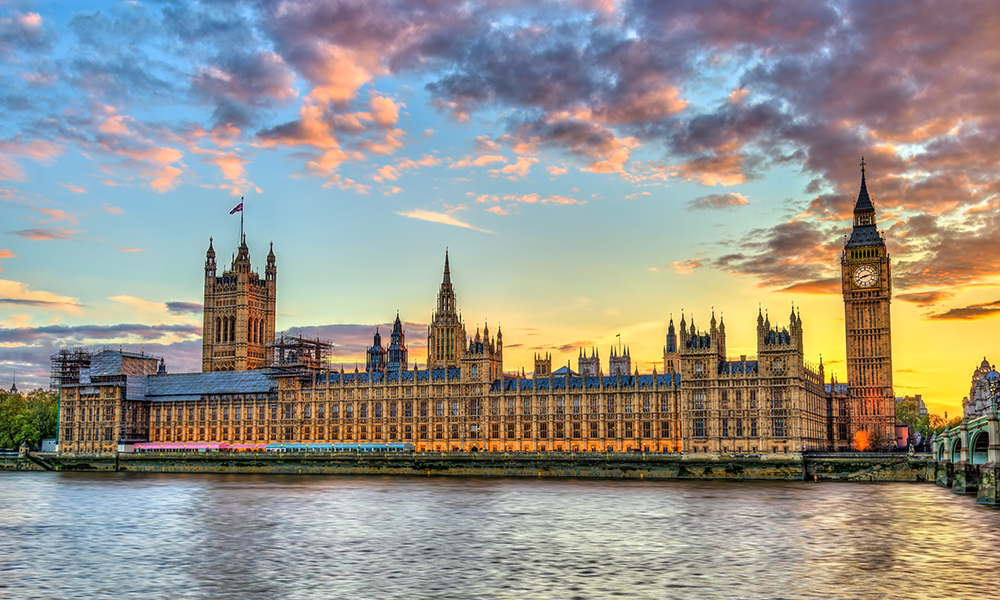
Parent poverty: The missing chapter in the Government’s Child Poverty Strategy

Posted on

By Professor Alpesh Maisuria

Co-hosted by: All-Party Parliamentary Group for Schools, Learning and Assessment & All-Party Parliamentary Group for Parent

Chair: Peter Swallow MP

Date: 23 March 2025


Today I attended an APPG event that launched of the ParentKind/NEU The Missing Chapter Report in Parliament, which will soon be released. The “missing chapter” refers to parent poverty, which is overlooked when looking at child poverty. With a focus on parent poverty, this report aims to influence the government’s Child Poverty Strategy, which the ParentKind/NEU claims will have “very little impact” unless it reduces the cost of school. The report states that…

“…school is not free. The cost of school represents, on average, between a fifth and quarter of the disposable income for parents in poverty.…The cost of school can’t become a ‘missing chapter’ in the Government’s poverty strategy.”

Here is the scale of child poverty and its historical and political context.

Key headlines on child poverty:

  • The Child Poverty Act 2010 set a target to end child poverty by 2020, the Child Poverty Unit was established achieve this target.
  • In 2011, the government published A New Approach to Child Poverty: Tackling the Causes of Disadvantage and Transforming Families’ Lives.

Since 2010:

  • Child poverty has increased by 700,000.
  • There are now 4 million children living in poverty in the UK.
  • 800,000 children rely on foodbanks.
  • 23% of children in poverty are ineligible for FSM.
  • 55% of children living in families of three or more are in poverty.

These statistics are staggering. Two headlines summarise the situation:

  • Child poverty is at its highest point since records began.
  • Household income at the age of five is now the main predictor of a child’s future educational attainment.

The Child Poverty Unit, established in 2010 to deliver the original goal of ending child poverty by 2020, was shut down in 2024.

The Labour government has committed to addressing this issue by establishing a Child Poverty Taskforce to oversee the development and implementation of a cross-government strategy to reduce and alleviate child poverty. The ParentKind/NEU report aims to inform this effort by highlighting:

  • the impact of poverty on the everyday lives of parents and families.
  • the financial burden of sending children to school.
  • the unique challenges faced by parents of children with Special Educational Needs and Disabilities.
  • the effects of poverty on parents’ mental health and well-being.

The link between poverty and poorer educational outcomes is clear. In a Parliamentary Office for Science and Technology (POST) horizon scan article, I note that gaps in educational attainment are also linked to broader life outcomes, including employment, income, health, and criminality.

Recommendations for the government in this ParentKind/NEU report:

  • Commit to reducing the cost of school for parents living in poverty.
  • Set a long-term ambition and a clear target on the cost of school.
  • Set up a new independent advisory board to help reduce the cost of school.
  • Make school meals free.
  • Make every school a poverty fighting school.

This APPG meeting was well attended by MPs and Peers, and crucially officials from the new incarnation of the child poverty taskforce, so the call to action has been heard by those who have impact.

However, more research is needed to support the issue, especially with the spring budget that will announce welfare cuts.  If you have research in any of these areas and would like to disseminate it to policy makers, or you are interested in pursuing research about parent poverty, get in contact with me (alpesh.maisuria@uwe.ac.uk).

School reopening? top scientists say not yet*

Posted on

“It is clear from the evidence we have collected that 1 June is simply too early to go back. By going ahead with this dangerous decision, the government is further risking the health of our communities and the likelihood of a second spike.” (Sir David King, Independent SAGE Group)

This blog post could end there, but given the high stakes, it’s worth pondering more…

Teachers and their unions have been robustly rallying against the Government’s decision to re-open schools as early as June 1st. Some sections of the press and government ministers have revisited Michael Gove’s characterisation of these opponents as the “Blob”, who according to the Daily Mail is

“made up of political opponents, union barons and local government administrations – is colluding to sabotage the reopening of schools.”

In 2013, I was one of the 100 academics who signed a letter against Gove’s damaging curriculum reforms, and this time it’s even more serious, so much so that the neutral British Medical Association (BMA) have supported the call from the Independent SAGE Group to keep schools closed for the time-being.

Because of misleading advice and data issued by Downing Street, renowned medical scientists decided to set-up an Independent SAGE group (ISG).

The ISG’s opposition to 1st June re-opening of schools came after a meeting, which included Mumsnet, and supplemented by rigorous advice from expert educationists. Professor Sir David King concluded that there is almost zero chance of conditions being reached for a safe reopening of schools on 1 June.

The report makes clear that decisions on school re-opening should depend on low levels of infections in the community and the capacity to respond quickly to new infections through a local test, track and isolate strategy. We are not there yet.

Although children are less likely than adults to get ill, they are still transmission agents. Even the DfE advice seems to reflect this concern:

Some studies suggest younger children may transmit less, but this evidence is mixed and provides a low degree of confidence at best.”

So, a child carrying the infection but not showing symptoms could spread it unnoticed to other children and staff, and it could then reach family members with existing medical problems as well as older relatives. The collateral damage could be fatally serious.

The Government have been keen to stress that their decision was about ethics stating that working class children are being disproportionately disadvantaged because they do not have the learning resources that children from wealthier families have for home schooling.

But the ISG report stresses that rather than rushing to re-open schools, it would be safer to provision computer equipment and offer distance learning. When the conditions are appropriate, outdoor (where transmission is minimised) summer activity schemes, including educational “catch up” sessions would be a viable option.

The current situation opens-up existential questions about how we conceive of education.  We in the Reclaiming Schools network have (long) argued that it is necessary to take a rounded view of children’s needs, not just getting children (back) behind desks.

Education should be geared for developing children’s social, emotional, and wider characteristics. In this context, one could imagine a school strictly adhering to social distancing being harmful for children. Stories of nurseries and reception classes having to remove all toys for a June 1st re-opening are clearly being forced to create an environment devoid of richness.

Furthermore, the Government instruction to get the youngest children back first is questionable. In most nations in the world, the school starting age is 6 or 7, so very few children of nursery and reception age are actually in school.

Mental health problems in children are always much lower in countries with admission at age 6 or 7. Children have had the chance to be children, and without baseline testing (followed by high stakes tests at 7, 11, 16 – England tests more than any comparable country).

There is a strong case to postpone national standardised high stakes testing, it would provide an opportunity to evaluate the impact of tests on children and teachers.

In any given year, around 15% of teacher leave the profession just after 12 months, and over 30% leave within 5 years. In most cases, that’s 4 years of education/training to find out that teaching is not only hard work, the external pressures of tests and league tables make it mentally and physically damaging, ultimately impossible.

Beyond and C-19, we need to reclaim education to make it progressive and socially responsible, and a National Education Service provides a vehicle to do this. 

Dr Alpesh Maisuria is Associate Professor of Education Policy in Critical Education at the University of the West of England. He writes widely about issues of social class, educational policy, neoliberalism and Marxism, as well the proposal of the Nationalised Education Service; academy and free schools; private schools; Swedish social democracy and class. This blog post is written in a personal capacity. 

*Sections of this writing have been reworked from a Reclaiming Schools blog post. Alpesh Maisuria is a Steering Group member of Reclaiming Schools.

“Labour need to commit to a comprehensive review of private education.”

Posted on

The problem of unfairness in the education system is now unavoidable. Labour must initiate a comprehensive review of the role of fee paying private schools. 

This should include the creation of an Office for private schools’ accountability, to monitor their public benefit and loss to the public.

In terms of a review, taxation must be a priority. Fee-paying private schools currently exploit a loophole exempting them from VAT on school fees. There is an oddity here: these schools are effectively run as private businesses, but enjoy special privileges from the state that other businesses do not.

The pendulum would shift with the introduction of VAT on school fees, and it would be state schools that benefit . With VAT at 20 per cent, there is an anticipated minimum of £1.75 billion that would be collected, a sum more than four per cent of the schools’ budget. This income would negate the cost of absorbing around five per cent more children in state schools.

The introduction of VAT has to be understood in the context of private schools paying just £44 million in business rates and corporation tax combined (2017), which is a massive “loophole” given their income of £7.83 billion.

Furthermore, the private schools’ lobby claim that private schools save taxpayers money; create a net wealth for the country’s economy; and that the cost of integrating private schools into the state set-up would practically and financially prohibitive. Unfortunately, it seems that a certain untruthfulness is often at play. Take for example an eye-catching front page headline in The Times: ‘Fee-paying schools ‘save the taxpayer £20 billion’. This is claim was dismissed by Full Fact, who show the calculation is miscalculated and/or designed to mislead.

In addition to VAT exemption, as charities, many private schools are exempt from corporation tax and almost all local taxes on property, but there is little stipulation beyond the general requirement: for free or subsidised access/places; developing links with grant making trusts so as to provide free services; lending equipment staff or facilities; and allowing state school pupils to attend certain lessons or events.

“There needs to be much more accurate and transparent reporting about private schools’ cost and benefit to the public”

However, are these generous general requirements enough to satisfactory their public benefit requirement, as charities?

There needs to be much more accurate and transparent reporting about private schools’ financial and social cost and benefit to the public, especially accruement from imposing VAT and removing charitable status.

This would be the objective of a comprehensive review, which could be undertaken by a Social Justice Commission (SJC) – tasked with advising Labour on integrating private schools, either fully or partially, into a National Education Service.

These changes would be long-term. The education system in the UK is complex because it is significantly stratified and differentiated. It is stratified because there are fee-paying selective private schools that are generally exclusive, and then there are the second stratum of schools that consist of state selective and comprehensive schools.

Importantly, within each of these two, there is significant differentiation among the schools. For fee-paying private schools, hierarchy can be discerned by fees, which range from £12k-£17,800 (the latter being the average ISC schools fee) up to £42,501 (Eton).

“Taxes could be introduced progressively in bands”

Taxes could be introduced progressively in bands to account for differentiation. Progressive taxation could also be introduced to break the feeder system of schools that entrench privilege through the pre-prep and prep schools’ network.

These schools are a pipeline to elite universities. To break this cycle of unfairness, progressive taxation could be extended to higher education in the form of university contextual admissions through levying a progressive admissions quota on universities.

One option here could be that the lowest ranked Russell group universities could admit a maximum of seven per cent of privately educated pupils to represent the same proportion of private school students as in the wider secondary school population, and the higher ranked to be able to progressively admit a lesser percentage.

Similarly, regulation and incentives around employing teachers could be introduced. For instance, consideration could be given to progressively incentivising private schools to employ state-educated teachers, the corollary would be to incentivise the privately-educated to teach in state school.

Such measures will likely mean that some private schools would game the system to pay lower taxation, some may even become fully state maintained, and a small minority would increase their fees to stay competitive in the exclusivity stakes. In the absence of an outright abolishing, these measures would rebalance the education system.

“The introduction of VAT ought to be the embryo for bigger changes”

The proposal of a National Education Service (NES) has an important prefix – “towards”, and the introduction of VAT to private schools fees ought to be the embryo for bigger changes to address unfairness.

In conclusion, a comprehensive review is needed for strategic short- and longer- term planning to create more egalitarianism in and through the education system. The review agenda could include, among others:

  1. creating a robust, accurate, and transparent reporting framework for private schools’ financial and social cost and benefit to the public, especially accrued from imposing VAT and removing Charitable status.
  2. exploring the feasibility of progressive taxes, regulation, and incentives to break entrenchment of elitism and privilege.
  3. creation of an Office for private schools’ accountability to monitor their public benefit and loss to the public.

Ultimately though, it must countenanced that a reformist ‘softly softly’ approach will not do, and a more strident revolutionary approach is needed to shake-off the shackles that private schools puts on life chances of working class pupils, females, BAME, and other minorities – ultimately, undermining equality.

Dr Alpesh Maisuria is associate professor of education policy in critical education at the University of the West of England. He writes widely about issues of social class, educational policy, neoliberalism and Marxism, as well the proposal of a nationalised education service; academy and free schools; private schools; Swedish social democracy and class.

Republished with kind permission from the independent think tank Private School Policy Reform

Back to top

Follow this blog

Get every new post delivered right to your inbox.