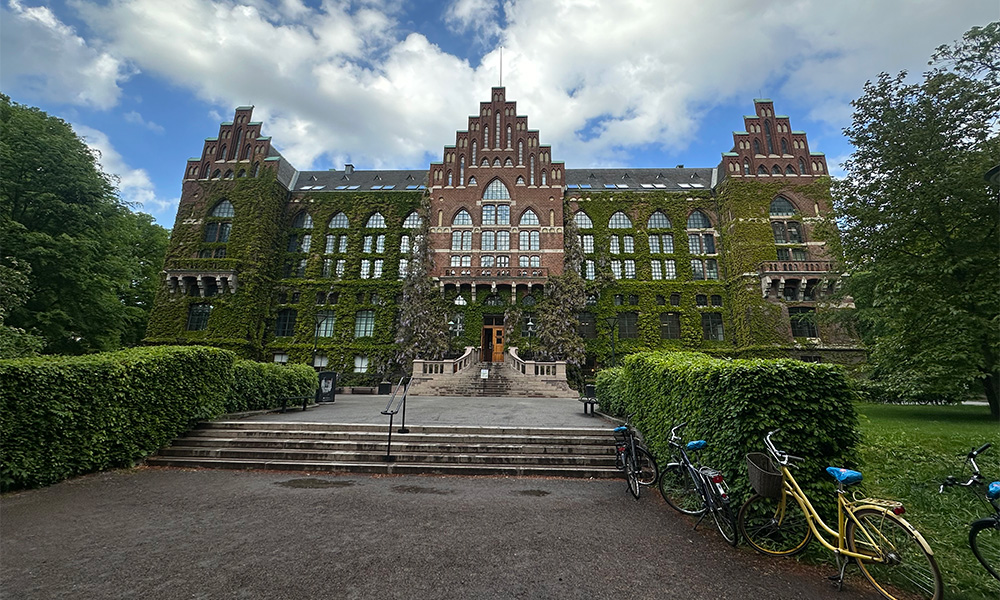
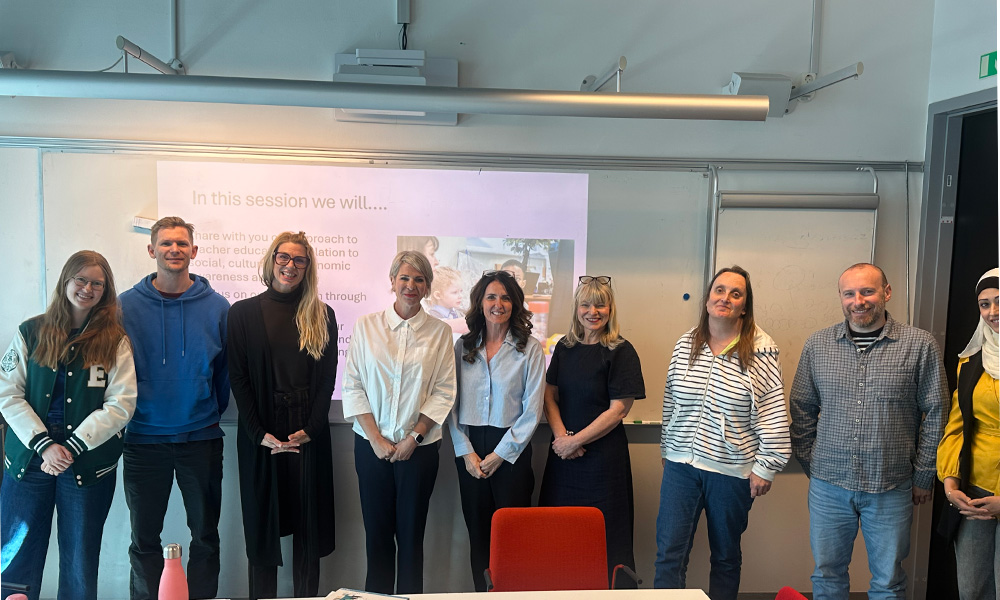
Teaching, rights, and reality: reflections on Malmö and Lund Universities and the shifting landscape of Swedish education

Posted on

By Dr Karan Vickers-Hulse, Dr Jane Carter and Dr Sarah Whitehouse

The relationship between education, democracy, and social justice is never static. During our recent ECRG delegation visit to Malmö and Lund Universities, conversations with postgraduate teacher‑education students and staff revealed a system grappling with profound political, demographic, and ideological shifts. These insights offer a powerful lens for thinking about how educators can navigate contested spaces, particularly when issues of critical literacy, anti-racism, and children’s rights are under pressure.

The changing context of Swedish schooling

Sweden’s education system is often internationally associated with equity, inclusion, and child‑centred practice. Yet the picture emerging from conversations with colleagues at Malmö and Lund Universities suggests a sector in transition with demographic shifts reshaping the workforce. Immigration has been halted and birth rates are falling so teacher training numbers are shrinking and yet at the same time, the need for 80% more SEN(D) teachers is rising due to increasingly complex learner profiles. Teacher training students we spoke to describe a system where children “know their rights but are not necessarily independent,” raising questions about how reasonable adjustments are conceptualised. For example, a child whose adjustment is “not speaking” may be protected but not supported towards independence or participation.  These tensions echo debates in the UK, where parental advocacy, funding structures, and the route to a diagnosis can unintentionally shape classroom dynamics and teacher workload.

Teacher identity, retention and the weight of policy

Much like in England, Swedish teachers are expressing a desire to leave the profession. Trainee teachers at Malmö spoke about the profound influence of their mentors-how a single supportive person has the power to shape their sense of belonging in teaching. Policy changes are also reshaping professional identity. Currently, there is a compulsory course on social relations and core values within teacher education in Malmo, but the 2028 curriculum reforms propose removing human rights, children’s rights, and even critical literacy. One student summarised the government’s stance starkly: “We (Swedish) don’t care about critical thinking.”  This shift has implications far beyond the classroom as the influence of social media rises, the removal of critical literacy from the curriculum risks leaving young people without the tools to navigate misinformation or interrogate power. Students we spoke to at Lund shared similar views but also reflected on the open discrimination of the indigenous Sami people in Sweden (one of the students was Sami) as well as the fact that being openly racist on teacher education courses was not always challenged.  One student reflected that there was a student on their course who was open about the fact that he supported Nazi views and when students raised the issue, the common response was that everyone is “entitled to their opinions”.  

Critical conversations: racism, silence, and the Swedish context

Perhaps the most striking theme was the difficulty of naming and addressing racism within Swedish institutions.  Colleagues described a university culture where racism is “not discussed,” and there is a national reluctance to use the word racism at all with one colleague stating that “it would be impossible to identify as a structurally racist institution” after we shared that our Vice-Chancellor identified UWE Bristol as institutionally racist.  Colleagues highlighted a fear that equality data could be misused, resulting in a system where ethnicity cannot legally be recorded. Instead, categories such as “Swedish,” “Non-Swedish”, “immigrant,” or “born outside Europe” act as proxies. Despite this, young people themselves appear to be shifting the narrative. Many now identify as Swedish and Iranian, Bosnian, or Arab suggesting a more self‑defined sense of belonging than previous generations.

Curriculum, values, and the politics of knowledge

Sweden’s highly standardised system requires students to study social sciences and humanities until age 18, with schooling continuing until 19. Social science teachers described teaching students to evaluate sources but also acknowledged the need to explore perspectives and voices; a task that becomes harder when political discourse narrows. In both UK and Sweden, the challenge is not simply what we teach, but how we create conditions for students to question, interpret, and imagine differently.

Navigating hope and responsibility

Despite the challenges, trainee teachers at Malmö University and Lund University expressed a desire to focus on how to hold critical conversations, how to support independence and how to navigate tensions between policy and practice. Their reflections suggest that even in restrictive climates, educators can cultivate spaces of inquiry, empathy, and resistance.  These conversations with colleagues in Sweden remind us that anti‑racist practice requires language, courage, and institutional support and that critical literacy is not optional but foundational to democracy. One educator noted that schools’ practice, grappling with the realities of migration, identity and inequality, was developing at a more rapid pace than in the university, saying “the university is often behind the schools.”

The conversations at both universities highlight the need for continued dialogue across borders. Whether in Sweden or the UK, educators face shared challenges: rising polarisation, shrinking civic spaces, and the erosion of critical thinking in public life.  Yet there is also shared possibility. Young people are redefining identity and teachers in schools are seeking deeper pedagogical understanding. And universities, when they choose to, can become spaces where difficult truths are spoken and new futures imagined. At ECRG, we’ll continue to do this work.

A matter of Art in the Primary Curriculum

Posted on

By Dr Claire Osborne, Senior Lecturer in Education

The Labour government’s ‘Curriculum and Assessment Review’ (2025) is now out of consultation. As government ministers reflect on the implications for education policy and fulfil their quest to build a “world class curriculum for all”, I want to take a moment to reflect on the future of art learning and teaching across primary education in England.

Art is a serious matter. It involves the development of authentic knowledge and skills such as learning how to master a range of art and design techniques including drawing, painting, and sculpture to knowing about great artists, architects, and designers in history (DfE, 2013). Moreover, studying art at primary level involves having the opportunity to experiment with different kinds of materials and art tools creatively; this could include how to work with charcoal to create light and shade or mastering a range of craft tools to design and make a clay pot. Engaging in the processes and practices of art not only ignites the imagination but can also develop children’s critical thinking skills (see Tambling and Bacon, 2023, p.13); skills which are much needed by industry to support economic growth. The ability to think critically and independently is especially important today as we witness a rise in AI reliance for educational purposes which may potentially impact on people’s cognitive activity and problem-solving skills (see Kosmyna, 2025).

However, due to enduring knowledge hierarchies, as previously identified by Eisner (2002), the teaching and learning of art and visual cultural knowledge can often be sidelined or undervalued in today’s primary school curriculum (see Cooper, 2018; Tambling and Bacon, 2023; APPG, 2023). My own research also suggests that in some cases, children’s engagement with art processes and practices can sometimes be seen as a treat when the “important” schoolwork has been done (Osborne, 2025). This can reinforce an idea that the creative arts and cultural learning experiences are ‘nice to have’ rather than essential elements to the school curriculum (see CLA, 2017).  More still, when arts-based disciplines are taught in primary schools, some teachers reportedly lack sufficient time and resources to plan high quality learning experiences where the development of arts knowledge and skills are at the forefront of curriculum planning (see Cooper, 2018).

Yet despite recent government and Ofsted pronouncements around the importance of children’s access to a broad, balanced, and knowledge rich curriculum, the decline in art teaching and learning, remains an ongoing concern. In many ways the “problem” (my inverted commas) can be attributed to  a succession of central government policy making decisions over the past 30 years which have shifted the role of primary teaching and learning towards standardisation, accountability, and a focus on measuring ‘useful knowledge’ (see Ball, 2017; Nsead, 2016; Biesta, 2010) rather than offering state educated children a more holistic schooling experience (see APPG, 2023; Tambling and Bacon, 2023). However, a lack of access to art in the primary years not only limits children’s exposure to a well-rounded primary education but may restrict, what Aristotle (2018) advocated in his ninth book on Metaphysics, children’s ‘potentiality’ thus raising issues around social equity and personal fulfilment. For some children, engaging with art also serves as a cathartic experience and therefore plays a much-needed role in any school curriculum in supporting children’s general well-being (see CLA, 2018). Yet, although great things are happening in some schools where the arts are supported well by leadership teams with sufficient funding (Osborne, 2025), we still find ourselves in a position where fostering human creativity and children’s self-expression are not always high on the agenda in every state funded school in England whilst the teaching and learning of essential art knowledge and skills can be undermined as generalist teachers are increasingly deskilled or lacking in confidence (see APPG, 2023, p.10; Tambling and Bacon, 2023; Osborne 2025).

To reverse this situation, art needs to be reestablished as a serious and challenging intellectual endeavour within primary education whilst maintaining the creative freedom and enjoyment it can provide for some children. As such, all children need sufficient time in the school week to experiment freely with art materials and processes whilst critically engaging with visual cultural knowledge which can inspire and challenge children’s thinking. Such rich learning experiences can complement other types of learning and subject disciplines across the curriculum and enhance children’s critical thinking skills. Moreover, schools are active sites of learning which can cultivate new knowledge in the field. This includes knowing about a diverse range of contemporary artists, craft makers, and designers who often act as social commentators on our human condition whilst still dedicating lesson time to appreciating and critiquing some of the more familiar traditional artists and art forms widely displayed in public galleries.

However, teachers need real time, space, and investment to be and become knowledgeable others who are confident, well-trained professionals, who are constantly learning from and with children about art processes and practices which foster creativity, self-expression, criticality and original thought. Moreover, teachers need time to be and become inquisitive researchers at the forefront of curriculum reform who promote the value of both ‘powerful knowledge’ (Young, 2008) and ‘purposeful’ knowledge and skills within their localised contexts. But this can only be achieved if reinforced by top-down education policy reform. This may in turn help to reprioritise the place of art within initial teacher education (ITE) whilst influencing school leadership teams in providing ongoing support for teacher’s continuing professional development (CPD) when in role.

Time and resource will always be a challenge despite recent talk about supporting teachers’ professional autonomy over curriculum planning and design (DfE, 2025).  Hence, as we witness the implementation of the Labour government’s recent Curriculum and Assessment Review (DfE, 2025), I would argue more needs to be done, to ensure the power of arts and visual cultural knowledge and skills remains firmly on the agenda in primary education. Moreover, every child attending a state funded primary school in England should have the opportunity to engage in high-quality art learning and creative exploration facilitated by well-trained and knowledgeable teachers who can adapt learning to reflect their local contexts. This is especially pressing today as we consider the growing influence of artificial intelligence (AI) on many facets of school planning and teaching, and the potential impact this may have on learning at every level and in every subject.  As the decline in localise planning continues and there is a growing demand for time saving ready made plans, the question is, how will the tool of AI impact on creative innovation and original thought? What creative possibilities will AI bring to the primary classroom and how can AI be used well to support children’s artistic engagement and authentic learning?

In the years ahead, AI will certainly shape the future of education; and in many ways, AI and the rise in Edtech could address the marginalisation of art in some schools by freeing up teachers to focus more time on providing children with memorable learning experiences rather than being overburdened with administrative tasks. Moreover, AI may provide teachers with better access to generalised artistic knowledge and skills to inform their curriculum planning and innovation thus responding to how learners learn. Nevertheless, AI is only a tool — it cannot replace teacher’s professional knowledge or professional autonomy or address ongoing issues around subject hierarchies. Furthermore, an over reliance on AI for planning, learning or teaching may inhibit both teachers and children’s critical thinking skills and decision-making processes. These are interesting times for primary education especially in terms of the purpose and philosophy of education. As we look to the future, educationists and policy makers will need to think carefully and mindfully about how AI is used as a supportive planning aid whilst considering how teachers can provide children with greater access to authentic, meaningful, and enjoyable art lessons, where everyone can fulfil their creative potential and engage with a “world class curriculum”. Giving children more access to the creative arts during their primary education may also counteract any notions around a potential decline in human cognitive functioning due to AI reliance by enabling us to continue to think for ourselves, both critically and creatively.

References

Parent poverty: The missing chapter in the Government’s Child Poverty Strategy

Posted on

By Professor Alpesh Maisuria

Co-hosted by: All-Party Parliamentary Group for Schools, Learning and Assessment & All-Party Parliamentary Group for Parent

Chair: Peter Swallow MP

Date: 23 March 2025


Today I attended an APPG event that launched of the ParentKind/NEU The Missing Chapter Report in Parliament, which will soon be released. The “missing chapter” refers to parent poverty, which is overlooked when looking at child poverty. With a focus on parent poverty, this report aims to influence the government’s Child Poverty Strategy, which the ParentKind/NEU claims will have “very little impact” unless it reduces the cost of school. The report states that…

“…school is not free. The cost of school represents, on average, between a fifth and quarter of the disposable income for parents in poverty.…The cost of school can’t become a ‘missing chapter’ in the Government’s poverty strategy.”

Here is the scale of child poverty and its historical and political context.

Key headlines on child poverty:

  • The Child Poverty Act 2010 set a target to end child poverty by 2020, the Child Poverty Unit was established achieve this target.
  • In 2011, the government published A New Approach to Child Poverty: Tackling the Causes of Disadvantage and Transforming Families’ Lives.

Since 2010:

  • Child poverty has increased by 700,000.
  • There are now 4 million children living in poverty in the UK.
  • 800,000 children rely on foodbanks.
  • 23% of children in poverty are ineligible for FSM.
  • 55% of children living in families of three or more are in poverty.

These statistics are staggering. Two headlines summarise the situation:

  • Child poverty is at its highest point since records began.
  • Household income at the age of five is now the main predictor of a child’s future educational attainment.

The Child Poverty Unit, established in 2010 to deliver the original goal of ending child poverty by 2020, was shut down in 2024.

The Labour government has committed to addressing this issue by establishing a Child Poverty Taskforce to oversee the development and implementation of a cross-government strategy to reduce and alleviate child poverty. The ParentKind/NEU report aims to inform this effort by highlighting:

  • the impact of poverty on the everyday lives of parents and families.
  • the financial burden of sending children to school.
  • the unique challenges faced by parents of children with Special Educational Needs and Disabilities.
  • the effects of poverty on parents’ mental health and well-being.

The link between poverty and poorer educational outcomes is clear. In a Parliamentary Office for Science and Technology (POST) horizon scan article, I note that gaps in educational attainment are also linked to broader life outcomes, including employment, income, health, and criminality.

Recommendations for the government in this ParentKind/NEU report:

  • Commit to reducing the cost of school for parents living in poverty.
  • Set a long-term ambition and a clear target on the cost of school.
  • Set up a new independent advisory board to help reduce the cost of school.
  • Make school meals free.
  • Make every school a poverty fighting school.

This APPG meeting was well attended by MPs and Peers, and crucially officials from the new incarnation of the child poverty taskforce, so the call to action has been heard by those who have impact.

However, more research is needed to support the issue, especially with the spring budget that will announce welfare cuts.  If you have research in any of these areas and would like to disseminate it to policy makers, or you are interested in pursuing research about parent poverty, get in contact with me (alpesh.maisuria@uwe.ac.uk).

All-Party Parliamentary Group for Schools, Learning and Assessment: Curriculum and Assessment Review Update

Posted on

Schools, Learning and Assessment APPG meeting with Becky Francis, February 2025.
Source: X @Appg_Schools

By Professor Alpesh Maisuria

SpeakerProfessor Becky Francis CBE, Chair of the Curriculum and Assessment Review

Discussant: Sarah Kilpatrick, National Education Union President

APPG ChairPeter Swallow MP

Date25 February 2025

Today, I attended the All-Party Parliamentary Group (APPG) for Schools, Learning and Assessment. Professor Becky Francis CBE was invited to provide an update on her Curriculum Review ahead of the initial findings to be published in Spring. Sarah Kilpatrick, NEU President, was the discussant for this event, which followed the previous meeting where Daniel Kebede, NEU General Secretary, was invited to speak about Teacher Workload, Recruitment, and Retention. At that meeting, a key theme emerged – the lack of flexibility in the curriculum, which left teachers with little professional autonomy over curriculum and assessment design.

Above: Schools, Learning and Assessment APPG meeting with Daniel Kebede, January 2025.
Source: X @Appg_Schools

I have been attending these APPG meetings as the ECRG Leader. In this capacity, I submitted evidence to the Curriculum and Assessment Review consultation, which closed in November after two months. The consultation elicited 7,000 responses. Today’s event attracted the largest audience I have seen in three years of attending. The majority seemed to be members of the House of Lords, including key figures such as Lord Knight, who chaired the influential Beyond Ofsted inquiry.

This blog is a summary of today’s meeting.

Professor Francis opened with a brief introduction, reiterating the principles that guide the review:

“The review will ensure that the curriculum appropriately balances ambition, excellence, relevance, flexibility, and inclusivity for all children and young people.”

More specifically, these principles are:

  • “The Review will be rigorously evidence and data-informed. The Review will not be distracted by myths, assumed ‘truths,’ or behaviors in other national systems without evidence of need and/or benefit.
  • The Review will seek evolution, not revolution. The Review will recognize the hard work and successes of those working in education. The Review will build on the existing relative strengths of a system with finite resources and will not seek to fix things that are not broken.
  • The Review will be alive to trade-offs, with attention paid to the practicalities of implementation and to the avoidance of unintended consequences and additional workload for education staff.
  • The Review will seek to identify and focus on addressing the most significant and pressing issues facing curriculum and assessment without destabilizing the system. The Review will recognize that reforms to curriculum and assessment necessarily impact the education sector and, if undertaken in an unfocused manner, risk creating significant additional work for education staff and incurring high opportunity costs. The Review will recognize that it is unable to address every issue facing the education system and that changes to the curriculum and assessment system cannot address every issue facing children and young people, or wider society.
  • The Review will maintain our country’s longstanding commitment to a high-quality comprehensive curriculum for all to 16.
  • The Review will identify those elements of our existing system that can lead to barriers to accessing quality provision and/or to particular pathways. The Review will identify these and develop solutions.
  • The Review will be undertaken in close consultation with education professionals and other experts, parents, children and young people, and stakeholders such as employers, colleges, universities, and trade unions.”

This introduction to this meeting was followed with a brief statement by Kilpatrick, followed by Q&A. Questions with the following themes were raised:

  • The need for a revolution in the curriculum given the problems that are linked.
  • The benefits of arts education, music, SEND, classics, languages, D&T, and PHSE.
  • Problematic performance measures and exam obsession.
  • Assessment at primary schooling.
  • Reliability of qualifications.
  • Misinformation and critical skills education.
  • SEND.
  • The “missing third” [approximately one-third of students who do not achieve at least a pass in GCSE English and Maths].

The reply to each of these questions was broadly that there are good things happening, and so a revolution was not needed. In any case, the terms of reference for the Review meant that the scope and focus was limited. Furthermore, the Review has not been tasked to deal with wider problems in the system. Francis highlighted the following problems:

Francis referred to the uptake of subjects as an indicator of success. A specific example was vocational qualifications, noting that 44% of young people select these qualifications. There was also a theme of international comparisons (for UK comparisons, see this briefing). For example, we are an international “outlier” with our focus on “comprehensive” education and “inclusion.” Francis noted that only Canada and the Scandinavian countries had these focuses for the curriculum and assessment. This is positive, and the review will build on these strengths.

Francis reiterated that this review would involve “trade-offs”. If more creative subjects are to be offered/emphasised, then something would need to be removed given the fullness of the curriculum. She was clear that finding the balance between these tensions would be very challenging and would take time – this Review was just the beginning of the process.

Francis mentioned the terms of reference and the imminent publication of the preliminary findings. She stated that nationally administered examinations would be maintained because they are fairer than teacher assessments, as demonstrated during the pandemic. It is noteworthy that Francis specialises in educational inequalities.

Sarah Kilpatrick provided a strident response, albeit briefly given the many questions allowed by the Chair. Among other things, Kilpatrick noted:

  • We need a revolution, not evolution, to address deep problems.
  • The “obsession” with accountability needs to change.
  • Progress 8 is problematic.
  • There is not enough time for children to develop critical skills, such as identifying misinformation.
  • Everything is done to prepare for OFSTED, which has been “weaponised” as part of the Academies program [this point is timely given the changes proposed in the Children’s Welfare and Schools Bill and changes to School Inspection].
  • Significant underfunding cannot be ignored.
  • There needs to be caution in using data because it is not consistently reliable. An example given was children being taken out of class to do other subjects.

Kilpatrick concluded by emphasising that the curriculum’s focus on testing is detrimental to fun, enjoyment, and joy.

In summary, Becky Francis provided an honest update framed by a strategy to manage expectations. The key messages were that the Curriculum Review’s principles gave it a limited scope and focus, and there would have to be trade-offs. Additionally, Francis was slightly cagey as the preliminary findings are to be published imminently, and there would be no leaking revelations before then. I have been acquainted with Francis since 2009 (she presented me with my PhD certificate in her role as Director of the UCL Institute of Education in 2015), on this occasion, she seemed frustrated and challenged. As one Peer half-jokingly remarked in this meeting, the Curriculum and Assessment Chair role is a poisoned chalice!

The full report of the Review is due to be published in Autumn 2025. 

Dr Verity Jones reflects on how children’s experiences of racism and their desire to have their voices heard is being realised in Bristol.

Posted on

By Dr Verity Jones (verity6.jones@uwe.ac.uk)

On the afternoon of 25 April 2024, just as children piled out of school, the RESPECT project team were putting their final touches to a billboard in Bristol that in invited people to think about what life would be like without racism.

The new billboard aims to amplify children’s voice and start conversations on this important topic. It features an illustration from the book that was co-authored with children from the project and invites people to think about what a world without racism might be like – giving us space to think about what changes need to be made.  

The ‘If Racism Vanished for a Day’ book co-authored was developed following research about 10 and 11-years olds in Bristol. This billboard is in response to the children demanding that anti racist education not be condemned to tokenistic celebrations of what it is to be Black during Black History Month or in response to a racist attack when it hits the media. Instead, children want to have opportunities to discuss these important issues through the year.

The children said: “…racism is not okay, and we want people to understand the way it affects us.”

A visit to the billboard in St Werburghs can hopefully provide an opportunity to start a conversation with children about these important issues and get children’s voices heard.

The team continues to work with schools across the UK and  through this work we often hear adults say that children don’t understand what racism is, or that they don’t or can’t recognise it. We can confidently say they do and they want change. The RESPECT project offers free resources to teachers on how to discuss racism and its impact on young people.

The ‘If Racism Vanished for a Day’ book is available in print or as a free e-book and is available here:

Big thanks: to all of the children who so generously shared their experiences; funders – UWE Bristol and UKRI – and installers Adblock Bristol.

RESPECT Team: Verity Jones, Luci Gorell Barnes, Tessa Podpadec, Chris Pawson, Sarah Whitehouse, Malcolm Richards, Justin Vafadari.

‘It’s our job to take the limits away’: A case study approach to exploring culture of teacher expectations in an English secondary school

Posted on

Education Research from UWE reaches around the globe…

In this article, Dr Smith draws on her doctoral research, carried out in the Department of Education and Childhood at UWE, investigating the beliefs and practices of high expectation teachers.

Although Dr Smith’s EdD thesis was only submitted recently, it has already had global reach. One of her supervisors, Dr Richard Waller received an unexpected email from a researcher at the New Zealand Council for Educational Research who wrote to say how impressed he was with the quality of Dr Smith’s research.

Having only had my thesis revisions accepted in June, I am still somewhat in a haze and only just beginning to reflect on my doctoral journey. I began my professional doctorate in education with a keen interest in extending my understanding and in improving practice: I wanted to generate professional knowledge that would have real impact. Achieving that goal was without doubt a challenging, but incredibly rewarding and enriching experience.

My professional interest in my research project was born from a sense of social injustice. Having taught in the state sector for over twenty years, I have been increasingly troubled by the concept of labelling and notions of fixed abilities that are prevalent in our education system. From the earliest stages of formal education, teachers are required to make predictions about future development of the children based on present attainment, as well as determining students’ academic ability. Children from lower socio-economic groups and from particular minority ethnic groups are over-represented in lower sets and streams, and allocation to these groups does not always match the level of ‘ability’ as designated by test scores. As children progress through school, attainment gaps widen between children from lower socio-economic groups and their peers, suggesting that schooling exacerbates inequalities in educational attainment.

This sense of injustice led me to explore the beliefs of ‘high expectation teachers’, and the practices through which teachers aim to build an inclusive learning environment, in addition to the ways they develop strategies that do not rely on pre-determined ability labelling. This exploration led me to understand that what constitutes a ‘high expectation’ teacher needed to be investigated from particular locations: through government policy; through theoretical models; through professional regulation and performance management, and through notions of professional identity. I learnt that these positions sometimes overlap, but at times, also conflict with one another.

The case study design of my research is focussed on one phenomenon, that of the beliefs and practices of high expectation teachers, and one bounded case illustrates the phenomenon. The case is specific, and bounded by time and location. It is intended to emphasize uniqueness through the in-depth exploration of the participants’ experiences. Within this bounded system are the relationships between people and events, and within those are differing perspectives, as the positions on what makes a ‘high expectation’ teacher are contradictory, and not universally agreed.

I used thematic analysis to analyse data collected through questionnaires, interviews and focus groups, but reflected that despite the in-depth nature of this analysis, the phenomena of high teacher expectation remained only partially scrutinised in terms of social justice. Therefore, the social concerns raised throughout my study are also explored through the theories of Bourdieu with the aim of making sense of the wider issues of inequality inherent in this study, particularly in the sense that habitus is helped by, and helps shape, pedagogical action.

My findings are that there needs to be a recognition that in education, socially advantaged interests and voices dominate in terms of social mobility agendas. Social cohesion is therefore a challenge as inequality rises from an education system tailored to white, middle-class values, and until we value the diversity of heritage in all its forms, we cannot hope for greater equity for our students. Furthermore, teachers tend to be granted space in the public domain only through technical competency. Findings also suggest that teachers must be able to be emotionally committed to different aspects of their jobs, as their sense of moral responsibility is at the core of their professional identity.

The research also challenges the assumption that academic achievement is paramount and suggests that there are many other measures of success, in which students discover and are celebrated for a particular talent, or a passion for something new. The ability to make choices should be a fundamental right and should be accessible to all as a result of social justice.

This presents a challenge in today’s economic and political climate. At the time of writing the thesis, 4.1 million children in the UK are living in poverty, a rise of 500,000 in the last five years, and in-work poverty has been rising even faster than unemployment, driven almost entirely by increasing poverty among working parents. In addition to the economic context our young people are living in, educational policy increases social inequities rather than reducing the poverty attainment gap. For example, additional funding has been allocated for new grammar school places, despite evidence that dividing children into the most ‘able’ and the rest from an early age does not appear to lead to better results for either group, including for the most disadvantaged students.

The financial landscape for most schools paints a bleaker picture than that for grammar schools. A further significant challenge for the education sector is the recruitment of the required number of teachers of sufficient quality and motivation, at a time of continued public pay restraint and rising student numbers. Similarly, spending on early education, Sure Start and the childcare element of Working Tax Credit fell by 21% from 2009–10 and 2012–13, with falls of 11% for early education, 29% for targeted support for childcare and 32% for Sure Start. Child Tax Credit and Child Benefit payments were frozen in financial terms. In addition to cuts to income support, community-based support services and to the funding of voluntary groups and services, this financial context may have an impact on children as they enter the school system.

Furthermore, Britain’s high-status professions remain dominated by the privileged; those from traditionally working-class backgrounds earn on average £6,800 less than colleagues from professional and managerial backgrounds. Although students in my study feel that they can ‘get ahead’ on merit, it could be suggested that British society is profoundly unfair. Education is crucial to change, but it cannot be considered in isolation if we are going to tackle the challenge of disadvantage. Education must be freed from its current constraints so that educators have the opportunity to develop every child’s personality, talents and abilities to the full.

Within the constraints of this wider context, one recommendation that arose from the study with the aim of creating a culture of high expectations is that a form of ‘high-integrity’ setting could be implemented in schools. In practice, strategies such as: making setting as subject-specific as possible; grouping students by attainment rather than perceived effort; regularly testing and moving students between sets, and using a lottery system when assigning borderline students to sets may help mitigate the consequences of attainment grouping. Schools, however, may be deterred from implementing more equitable grouping practices by perceptions of middle-class parental and student preferences for attainment grouping. A further complication raised in this study is that most teachers who currently teach in attainment groupings believe that mixed attainment groupings would create further barriers to progress.

A final reflection for me is on the complex and problematic nature of the barriers to creating a culture of high expectation. I entered into this research project with a rather idealistic notion that exploring one definition of high-expectation beliefs and teaching practices could lead to the creation of a culture of high expectation. The reality is far messier. In addition to my exploration of the contradictory definitions of what makes a ‘high expectation’ teacher, research discourse related to teachers tends to be prescriptive, rather than serious study of, or collaboration with, those prescribed to or portrayed. This resonates with my own professional experience, and I am grateful to have had the opportunity to explore this complex phenomenon through several lenses, even though at times these lenses seemed somewhat elusive!

Dr. Julie Smith has recently completed her doctoral research into the beliefs and practices of high expectation teachers, in the Department of Education and Childhood under the supervision of Dr. Richard Waller, Dr. Nicola Bowden-Clissold and Dr. Sarah Chicken. She is also Vice-Principal at a secondary school in Gloucestershire.

Follow Dr Julie Smith on twitter

References:

Archer, L., Francis, B., Miller, S., Taylor, B., Tereshchenko, A., Mazenod, A., Pepper, D. and Travers, M. C. (2018) The symbolic violence of setting: A Bourdieusian analysis of mixed methods data on secondary school students’ views about setting. British Educational Research Journal. 44 (1), pp. 119–40.

Barnard, H., Collingwood, A., Leese, D., Wenham, A., Drake, D, Smith, E. and Kumar, A (2018) UK Poverty 2018 [online].York: Joseph Rowntree Foundation. Available from: https://www.jrf.org.uk/report/uk-poverty-2018 [Accessed 25 April 2019].

Blandford, S. (2018) Born To Fail? Social Mobility: A Working Class View. Suffolk: John Catt.

Bourdieu, P. (1973). Cultural Reproduction and Social Reproduction. In:R. Brown, ed., (1973) Knowledge, Education, and Cultural Change: Papers in the Sociology of Education. London: Tavistock, pp. 71–112.

Bourdieu, P. (1977) Outline of a Theory of Practice.Cambridge: Cambridge University Press.

Bourdieu, P. (1984) Distinction.London: Routledge and Kegan Paul.

Bourdieu, P. (1990) The Logic of Practice. Cambridge: Polity Press.

Bourdieu, P. (1991) Language and Symbolic Power. Cambridge: Polity Press.

Bourdieu, P. (1992) The purpose of reflexive sociology. In Bourdieu, P. and Wacquant, L., eds., (1992) An Introduction to Reflexive Sociology.Cambridge: Polity Press, pp.61–217.

Bourdieu, P. (2002) Habitus. In: Hiller, J. and Rooksby, E., eds., (2002) Habitus: A Sense of Place. Farnham: Ashgate, pp.27–34.Bourdieu, P. and Passeron, J. C. (1977) Reproduction in Education, Society and Culture. London: Sage.

Braun, V. and Clarke, V. (2006) Using thematic analysis in psychology. Qualitative Research in Psychology. 3 (2), pp. 77–101.

Clifton, J., and Cook, W. (2012). A long division: Closing the attainment gap in England’s secondary schools. London: IPPR.

De Boer, H., Timmermans, A. C. and P. C. van der Werf, M (2018) The effects of teacher expectation interventions on teachers’ expectations and student achievement: narrative review and meta-analysis. Educational Research and Evaluation. 24 (3-5), pp. 180-200.

Francis, B., Taylor, B., Hodgen, J., Tereshchenko, A. and Archer, L. (2018). Dos and don’ts of attainment grouping. London: UCL Institute of Education.

Friedman, S. and Savage, M. (2017) The Shifting Politics of Inequality and the Class Ceiling. Renewal.25 (2), pp. 31–40.

Gorard, S. and Siddiqui, N. (2016) Grammar Schools in England: a new approach to analysing their intake and outcomes. Project report. Durham: Durham University.

Harrison, N. and Waller, R. (2017) Success and Impact in Widening Participation Policy: What Works and How Do We Know? Higher Education Policy.30 (2), pp. 141–160.

Hart, S., Annabelle, D., Drummond, M. J. and McIntyre, D. (2004) Learning Without Limits. Berkshire: OUP.

Jussim, L. and Harber, K. (2005) Teacher Expectations and Self-Fulfilling Prophecies: Knowns and Unknowns, Resolved and Unresolved Controversies. Personality and Social Psychology Review. 9 (2), pp.131–55.

Lupton, R., Burchardt, T., Fitzgerald, A., Hills, A., McKnight, A., Obolenskaya, P. Stewart, K., Thomson, S., Tunstall, R. and Vizard, P. (2015) The Coalition’s Social Policy Record: Policy, Spending and Outcomes 2010-2015. Social Policy in a Cold Climate Report 4 [online]. Manchester: University of Manchester; London School of Economics and the University of York. Available from http://sticerd.lse.ac.uk/dps/case/spcc/rr04.pdf [Accessed 27 May 2019].

Nias, J. (1989). Primary teachers talking: A study of teaching as work. London: Routledge.

Rosenthal, R. and Jacobson, L. (1968) Pygmalion in the Classroom: teacher expectation and pupil’s intellectual development.New York: Holt, Rinehart and Winston.

Rubie-Davies, C. (2015) Becoming A High Expectation Teacher: Raising The Bar.Abingdon: Routledge.

Stake, R. E. (2005). Qualitative case studies. In N. K. Denzin & Y. S. Lincoln (Eds.), The Sage handbook of qualitative research (3rd ed., pp. 443-466). Thousand Oaks, CA: Sage.

UNCRC (1990) The United Nation Convention on the Rights of the Child [online]. UK: Unicef.Available from: https://www.unicef.org.uk/what-we-do/un-convention-child-rights/ [Accessed 23 October 2017].


School reopening? top scientists say not yet*

Posted on

“It is clear from the evidence we have collected that 1 June is simply too early to go back. By going ahead with this dangerous decision, the government is further risking the health of our communities and the likelihood of a second spike.” (Sir David King, Independent SAGE Group)

This blog post could end there, but given the high stakes, it’s worth pondering more…

Teachers and their unions have been robustly rallying against the Government’s decision to re-open schools as early as June 1st. Some sections of the press and government ministers have revisited Michael Gove’s characterisation of these opponents as the “Blob”, who according to the Daily Mail is

“made up of political opponents, union barons and local government administrations – is colluding to sabotage the reopening of schools.”

In 2013, I was one of the 100 academics who signed a letter against Gove’s damaging curriculum reforms, and this time it’s even more serious, so much so that the neutral British Medical Association (BMA) have supported the call from the Independent SAGE Group to keep schools closed for the time-being.

Because of misleading advice and data issued by Downing Street, renowned medical scientists decided to set-up an Independent SAGE group (ISG).

The ISG’s opposition to 1st June re-opening of schools came after a meeting, which included Mumsnet, and supplemented by rigorous advice from expert educationists. Professor Sir David King concluded that there is almost zero chance of conditions being reached for a safe reopening of schools on 1 June.

The report makes clear that decisions on school re-opening should depend on low levels of infections in the community and the capacity to respond quickly to new infections through a local test, track and isolate strategy. We are not there yet.

Although children are less likely than adults to get ill, they are still transmission agents. Even the DfE advice seems to reflect this concern:

Some studies suggest younger children may transmit less, but this evidence is mixed and provides a low degree of confidence at best.”

So, a child carrying the infection but not showing symptoms could spread it unnoticed to other children and staff, and it could then reach family members with existing medical problems as well as older relatives. The collateral damage could be fatally serious.

The Government have been keen to stress that their decision was about ethics stating that working class children are being disproportionately disadvantaged because they do not have the learning resources that children from wealthier families have for home schooling.

But the ISG report stresses that rather than rushing to re-open schools, it would be safer to provision computer equipment and offer distance learning. When the conditions are appropriate, outdoor (where transmission is minimised) summer activity schemes, including educational “catch up” sessions would be a viable option.

The current situation opens-up existential questions about how we conceive of education.  We in the Reclaiming Schools network have (long) argued that it is necessary to take a rounded view of children’s needs, not just getting children (back) behind desks.

Education should be geared for developing children’s social, emotional, and wider characteristics. In this context, one could imagine a school strictly adhering to social distancing being harmful for children. Stories of nurseries and reception classes having to remove all toys for a June 1st re-opening are clearly being forced to create an environment devoid of richness.

Furthermore, the Government instruction to get the youngest children back first is questionable. In most nations in the world, the school starting age is 6 or 7, so very few children of nursery and reception age are actually in school.

Mental health problems in children are always much lower in countries with admission at age 6 or 7. Children have had the chance to be children, and without baseline testing (followed by high stakes tests at 7, 11, 16 – England tests more than any comparable country).

There is a strong case to postpone national standardised high stakes testing, it would provide an opportunity to evaluate the impact of tests on children and teachers.

In any given year, around 15% of teacher leave the profession just after 12 months, and over 30% leave within 5 years. In most cases, that’s 4 years of education/training to find out that teaching is not only hard work, the external pressures of tests and league tables make it mentally and physically damaging, ultimately impossible.

Beyond and C-19, we need to reclaim education to make it progressive and socially responsible, and a National Education Service provides a vehicle to do this. 

Dr Alpesh Maisuria is Associate Professor of Education Policy in Critical Education at the University of the West of England. He writes widely about issues of social class, educational policy, neoliberalism and Marxism, as well the proposal of the Nationalised Education Service; academy and free schools; private schools; Swedish social democracy and class. This blog post is written in a personal capacity. 

*Sections of this writing have been reworked from a Reclaiming Schools blog post. Alpesh Maisuria is a Steering Group member of Reclaiming Schools.

Keep calm and carry on learning – Part 7

Posted on

Equality of learning in lockdown …

In the seventh in a series of blog posts, Dr Verity Jones, Senior Lecturer in the Department of Education and Childhood at UWE, and Online Project Lead considers some of the challenges families from disadvantaged groups are facing in lockdown and what is needed to combat these inequalities.

Nine weeks in…

 … here in England things are changing. We’re now allowed to sit in a park and have a picnic. We can have as much exercise as we like and even go to garden centres. The first steps of returning to ‘normality’ are tentatively taking shape. However, the outlook for young people to return to schools and colleges is not on the horizon and our youth continue to be home schooled.

For some youngsters home schooling is working. Lessons are emailed in, downloaded and supported by parents and carers. However, there has been and continues to be a disproportionate impact of Covid19.

Home schooling has been dominated by online access. Week after week we welcome more organisations supporting online learning with free access to their resources, daily online activities and a social media frenzy of ideas to keep young people engaged while stuck at home. This blog has done its fair share of sharing such websites. But what about those who haven’t got access to the internet?

This week, the Good Law Project has argued that the reliance on online learning during lockdown is illegally disadvantaging some young learners who don’t have access to tablets and laptops and inadequate broadband. If hardware is available it may be shared by the family and pupils won’t have access to it for school work when they need it.

Add to this how greater numbers of lower income families, in what tend to be  more densely populated homes, are having to turn to food banks. Those pupils who would normally receive free school meals are having to negotiate new systems and pressures to ensure they have food.   In such circumstances it is not surprising that these groups have been the most harshly hit by the virus.

Covid19 has shown the reality of inequality in the UK.

Over the coming weeks it is essential that educational inequalities are addressed else the most vulnerable will become yet more vulnerable. But what intervention would work? Many schools are reporting distributing laptops and tablets to their most disadvantaged pupils, but this doesn’t ensure there is access to broadband or even electricity to support them.  This cannot be the answer.

Our most disadvantaged learners need a clear and supported educational strategy to ensure that the gap in achievement is not increased; every individual needs to be supported in order to meet their potential.

Reopening schools as soon as possible is not the answer.

It needs to be safe for both pupils and staff. Once back, the gaps need to be assessed and the curriculum adjusted. Reform is essential in order to rebalance teacher workload and improve the retention of our teachers so consistency can be maintained for our learners. Reform is essential to rethink the exams and assessments undertaken at all school stages and take account of the inequalities the pandemic has accentuated. We cannot just expect the gaps to grow and mind them.

Our education system needs to be right for all, not just for some. It is failing and will continue to fail if systematic change does not occur. 

Dr Verity Jones is Senior Lecturer in Education at the University of the West of England, Bristol. Online Learning Project Lead and Acting Associate Head of Department for Learning, Teaching and Student Experience.

Follow Dr Verity Jones on Twitter

“Labour need to commit to a comprehensive review of private education.”

Posted on

The problem of unfairness in the education system is now unavoidable. Labour must initiate a comprehensive review of the role of fee paying private schools. 

This should include the creation of an Office for private schools’ accountability, to monitor their public benefit and loss to the public.

In terms of a review, taxation must be a priority. Fee-paying private schools currently exploit a loophole exempting them from VAT on school fees. There is an oddity here: these schools are effectively run as private businesses, but enjoy special privileges from the state that other businesses do not.

The pendulum would shift with the introduction of VAT on school fees, and it would be state schools that benefit . With VAT at 20 per cent, there is an anticipated minimum of £1.75 billion that would be collected, a sum more than four per cent of the schools’ budget. This income would negate the cost of absorbing around five per cent more children in state schools.

The introduction of VAT has to be understood in the context of private schools paying just £44 million in business rates and corporation tax combined (2017), which is a massive “loophole” given their income of £7.83 billion.

Furthermore, the private schools’ lobby claim that private schools save taxpayers money; create a net wealth for the country’s economy; and that the cost of integrating private schools into the state set-up would practically and financially prohibitive. Unfortunately, it seems that a certain untruthfulness is often at play. Take for example an eye-catching front page headline in The Times: ‘Fee-paying schools ‘save the taxpayer £20 billion’. This is claim was dismissed by Full Fact, who show the calculation is miscalculated and/or designed to mislead.

In addition to VAT exemption, as charities, many private schools are exempt from corporation tax and almost all local taxes on property, but there is little stipulation beyond the general requirement: for free or subsidised access/places; developing links with grant making trusts so as to provide free services; lending equipment staff or facilities; and allowing state school pupils to attend certain lessons or events.

“There needs to be much more accurate and transparent reporting about private schools’ cost and benefit to the public”

However, are these generous general requirements enough to satisfactory their public benefit requirement, as charities?

There needs to be much more accurate and transparent reporting about private schools’ financial and social cost and benefit to the public, especially accruement from imposing VAT and removing charitable status.

This would be the objective of a comprehensive review, which could be undertaken by a Social Justice Commission (SJC) – tasked with advising Labour on integrating private schools, either fully or partially, into a National Education Service.

These changes would be long-term. The education system in the UK is complex because it is significantly stratified and differentiated. It is stratified because there are fee-paying selective private schools that are generally exclusive, and then there are the second stratum of schools that consist of state selective and comprehensive schools.

Importantly, within each of these two, there is significant differentiation among the schools. For fee-paying private schools, hierarchy can be discerned by fees, which range from £12k-£17,800 (the latter being the average ISC schools fee) up to £42,501 (Eton).

“Taxes could be introduced progressively in bands”

Taxes could be introduced progressively in bands to account for differentiation. Progressive taxation could also be introduced to break the feeder system of schools that entrench privilege through the pre-prep and prep schools’ network.

These schools are a pipeline to elite universities. To break this cycle of unfairness, progressive taxation could be extended to higher education in the form of university contextual admissions through levying a progressive admissions quota on universities.

One option here could be that the lowest ranked Russell group universities could admit a maximum of seven per cent of privately educated pupils to represent the same proportion of private school students as in the wider secondary school population, and the higher ranked to be able to progressively admit a lesser percentage.

Similarly, regulation and incentives around employing teachers could be introduced. For instance, consideration could be given to progressively incentivising private schools to employ state-educated teachers, the corollary would be to incentivise the privately-educated to teach in state school.

Such measures will likely mean that some private schools would game the system to pay lower taxation, some may even become fully state maintained, and a small minority would increase their fees to stay competitive in the exclusivity stakes. In the absence of an outright abolishing, these measures would rebalance the education system.

“The introduction of VAT ought to be the embryo for bigger changes”

The proposal of a National Education Service (NES) has an important prefix – “towards”, and the introduction of VAT to private schools fees ought to be the embryo for bigger changes to address unfairness.

In conclusion, a comprehensive review is needed for strategic short- and longer- term planning to create more egalitarianism in and through the education system. The review agenda could include, among others:

  1. creating a robust, accurate, and transparent reporting framework for private schools’ financial and social cost and benefit to the public, especially accrued from imposing VAT and removing Charitable status.
  2. exploring the feasibility of progressive taxes, regulation, and incentives to break entrenchment of elitism and privilege.
  3. creation of an Office for private schools’ accountability to monitor their public benefit and loss to the public.

Ultimately though, it must countenanced that a reformist ‘softly softly’ approach will not do, and a more strident revolutionary approach is needed to shake-off the shackles that private schools puts on life chances of working class pupils, females, BAME, and other minorities – ultimately, undermining equality.

Dr Alpesh Maisuria is associate professor of education policy in critical education at the University of the West of England. He writes widely about issues of social class, educational policy, neoliberalism and Marxism, as well the proposal of a nationalised education service; academy and free schools; private schools; Swedish social democracy and class.

Republished with kind permission from the independent think tank Private School Policy Reform

How can we promote acceptance of stigmatised appearances in primary schools?

Posted on

Primary Schools are excellent places for child development, learning and socialisation, but unfortunately can also be hubs for bullying, social isolation and stigma. The chances of a child having negative experiences during Primary School education increase if they have an appearance which is socially stigmatised. If you are wondering what a socially stigmatised appearance is… it essentially means having an appearance which significantly deviates from society’s ‘standard’ characteristics, for example being of a higher weight or having a visible scar.

Of course, no two children’s experiences will be the same and having an appearance which is deemed socially stigmatising does not necessarily mean a child will have a negative experience in or out of school. However, studies which have considered the experiences of children with various socially stigmatised appearances suggest it would be naïve to believe, in general, their experiences are the same as children who have a socially ‘normative’ appearance (e.g., white, able-bodied with no visible difference).

Why is this the case? Well, there are a number of factors at play here. External factors such as the media, parents, education and policy can all influence children’s attitudes towards other appearances. Think of a villain in a children’s film… a number of villains have an appearance which is deemed socially stigmatising. Scar from the Lion King? Ursula from the Little Mermaid? These messages likely influence children’s attitudes towards various appearances.

Children develop attitudes towards socially stigmatised appearances at a very young age – at around 4 years stereotyping and prejudice can exist. Although, some evidence suggests this is even younger, with stigma towards people of higher weight being present at the age of 3 years, according to one study. Another study found by the age of 5 children make judgements based on weight and are less likely to choose a higher weight child as a playmate. Children with facial differences such as burn scars, a birthmark or cleft lip and/or palate are also at risk, with evidence that they are less likely to be accepted by their peers. All of this evidence highlights how children who have a socially stigmatised appearance may be less accepted and judged accordingly. Therefore, it is unfortunately not surprising that studies have also found children with a socially stigmatised appearance have a lower quality of life and are more likely to be subjected to bullying.

This issue is not new. Research during the 1960’s painted a similar picture, whereby children consistently ranked a child with no socially stigmatised appearance as most preferred in comparison to various other socially stigmatised appearances. However, to date, majority of intervention? Efforts within psychology and body image have focused on secondary school children. However, attempting to promote acceptance of socially stigmatised appearances in children aged 11 years and above may be a fruitless endeavour, as attitudes are likely well ingrained by this age. It is important efforts be placed in younger age groups, when attitudes are still developing, in order to combat stereotypes and subsequent behaviours. 

Further, the majority of school-based body image interventions have focused on a medical (individual) model and less on the social (group) model. For example, consider a child who has a facial burn. This child may be perfectly happy with their appearance. However, if they are being teased, bullied or excluded from social events, previous efforts regarding the child’s body image, would attempt to help that child increase their self-worth and self-esteem. However, efforts are not focused on changing the attitudes and behaviours of children around that child. Providing body image interventions which target acceptance at a group level allow for improvements beyond just the individual.

There has been a handful of interventions developed which target Primary School aged children in a bid to do exactly this – promote acceptance of appearance, at a group-based level.  A pilot study of a recent body acceptance intervention, titled ABC-4-YC, has found promising findings in Australia. However, interventions developed to target this broader issue have either not been evaluated at all, or require further evaluation.

What is clear is that children develop attitudes towards appearance at a very young age and this can impact on the lives of those who have an appearance which is socially stigmatised. Yet, majority of the efforts to target this issue have focused on older children or at the individual level. Therefore, undoubtedly there is a need for evidenced-based school resources which promote acceptance of stigmatised appearances in Primary School-aged children. Efforts should be made within psychology, education and social policy in order to combat this issue in a sensitive, timely and age appropriate manner.

If you are interested in research on body image in schools, Appearance Matters: The Podcast! Co-hosted by Jade Parnell (me!) and Nadia Craddock delves into what we know about how we tackle body image within the classroom. This episode can be found here.

Jade Parnell is a PhD student at the Centre for Appearance Research, based in Health and Applied Sciences (HAS) at the University of the West of England (UWE). You can contact Jade directly via email: jade.parnell@uwe.ac.uk or twitter: @jadeparnell.

Back to top

Follow this blog

Get every new post delivered right to your inbox.