

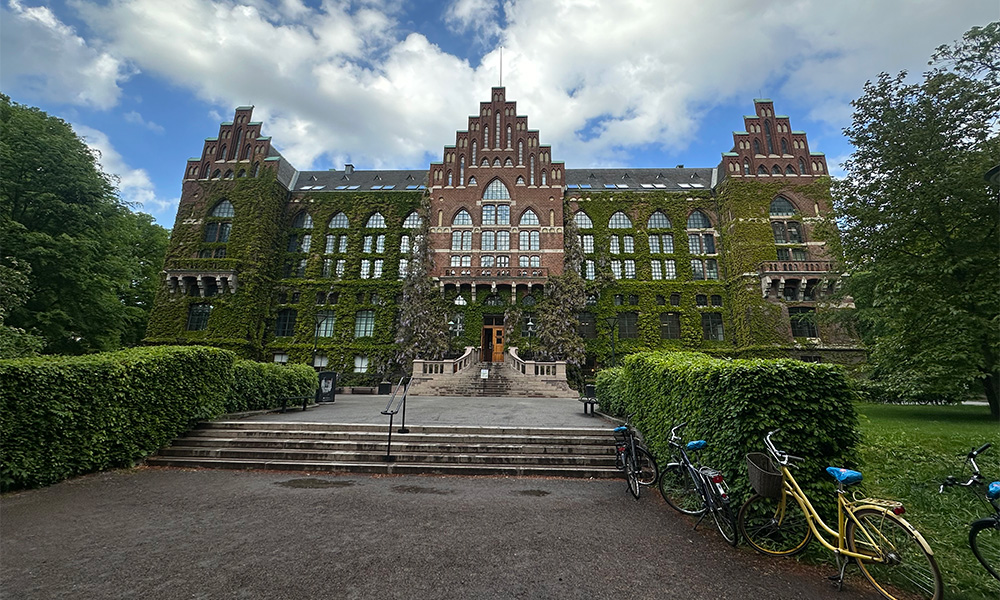
Teaching, rights, and reality: reflections on Malmö and Lund Universities and the shifting landscape of Swedish education

Posted on

By Dr Karan Vickers-Hulse, Dr Jane Carter and Dr Sarah Whitehouse

The relationship between education, democracy, and social justice is never static. During our recent ECRG delegation visit to Malmö and Lund Universities, conversations with postgraduate teacher‑education students and staff revealed a system grappling with profound political, demographic, and ideological shifts. These insights offer a powerful lens for thinking about how educators can navigate contested spaces, particularly when issues of critical literacy, anti-racism, and children’s rights are under pressure.

The changing context of Swedish schooling

Sweden’s education system is often internationally associated with equity, inclusion, and child‑centred practice. Yet the picture emerging from conversations with colleagues at Malmö and Lund Universities suggests a sector in transition with demographic shifts reshaping the workforce. Immigration has been halted and birth rates are falling so teacher training numbers are shrinking and yet at the same time, the need for 80% more SEN(D) teachers is rising due to increasingly complex learner profiles. Teacher training students we spoke to describe a system where children “know their rights but are not necessarily independent,” raising questions about how reasonable adjustments are conceptualised. For example, a child whose adjustment is “not speaking” may be protected but not supported towards independence or participation.  These tensions echo debates in the UK, where parental advocacy, funding structures, and the route to a diagnosis can unintentionally shape classroom dynamics and teacher workload.

Teacher identity, retention and the weight of policy

Much like in England, Swedish teachers are expressing a desire to leave the profession. Trainee teachers at Malmö spoke about the profound influence of their mentors-how a single supportive person has the power to shape their sense of belonging in teaching. Policy changes are also reshaping professional identity. Currently, there is a compulsory course on social relations and core values within teacher education in Malmo, but the 2028 curriculum reforms propose removing human rights, children’s rights, and even critical literacy. One student summarised the government’s stance starkly: “We (Swedish) don’t care about critical thinking.”  This shift has implications far beyond the classroom as the influence of social media rises, the removal of critical literacy from the curriculum risks leaving young people without the tools to navigate misinformation or interrogate power. Students we spoke to at Lund shared similar views but also reflected on the open discrimination of the indigenous Sami people in Sweden (one of the students was Sami) as well as the fact that being openly racist on teacher education courses was not always challenged.  One student reflected that there was a student on their course who was open about the fact that he supported Nazi views and when students raised the issue, the common response was that everyone is “entitled to their opinions”.  
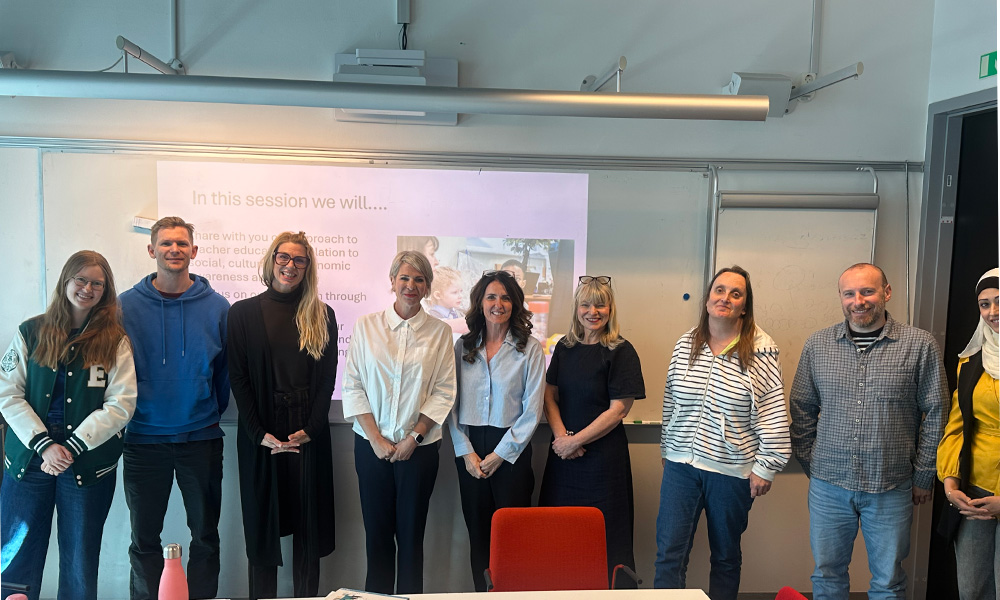
Critical conversations: racism, silence, and the Swedish context

Perhaps the most striking theme was the difficulty of naming and addressing racism within Swedish institutions.  Colleagues described a university culture where racism is “not discussed,” and there is a national reluctance to use the word racism at all with one colleague stating that “it would be impossible to identify as a structurally racist institution” after we shared that our Vice-Chancellor identified UWE Bristol as institutionally racist.  Colleagues highlighted a fear that equality data could be misused, resulting in a system where ethnicity cannot legally be recorded. Instead, categories such as “Swedish,” “Non-Swedish”, “immigrant,” or “born outside Europe” act as proxies. Despite this, young people themselves appear to be shifting the narrative. Many now identify as Swedish and Iranian, Bosnian, or Arab suggesting a more self‑defined sense of belonging than previous generations.

Curriculum, values, and the politics of knowledge

Sweden’s highly standardised system requires students to study social sciences and humanities until age 18, with schooling continuing until 19. Social science teachers described teaching students to evaluate sources but also acknowledged the need to explore perspectives and voices; a task that becomes harder when political discourse narrows. In both UK and Sweden, the challenge is not simply what we teach, but how we create conditions for students to question, interpret, and imagine differently.

Navigating hope and responsibility

Despite the challenges, trainee teachers at Malmö University and Lund University expressed a desire to focus on how to hold critical conversations, how to support independence and how to navigate tensions between policy and practice. Their reflections suggest that even in restrictive climates, educators can cultivate spaces of inquiry, empathy, and resistance.  These conversations with colleagues in Sweden remind us that anti‑racist practice requires language, courage, and institutional support and that critical literacy is not optional but foundational to democracy. One educator noted that schools’ practice, grappling with the realities of migration, identity and inequality, was developing at a more rapid pace than in the university, saying “the university is often behind the schools.”

The conversations at both universities highlight the need for continued dialogue across borders. Whether in Sweden or the UK, educators face shared challenges: rising polarisation, shrinking civic spaces, and the erosion of critical thinking in public life.  Yet there is also shared possibility. Young people are redefining identity and teachers in schools are seeking deeper pedagogical understanding. And universities, when they choose to, can become spaces where difficult truths are spoken and new futures imagined. At ECRG, we’ll continue to do this work.

Earth Day Heroes: Youth action, research impact, and the Bristol Uniform Challenge

Posted on

By Dr Verity Jones, Associate Professor in Education

On 30 September 2025, Sparks Bristol was filled with energy and optimism as over 100 young changemakers gathered for the Earth Day Heroes Awards Ceremony, hosted by the Global Goals Centre (GGC). From Bristol to Bangladesh, young people came together to celebrate the inspiring work they’ve been doing to make the planet better for everyone and everything.

These youth-led projects, spanning rewilding, recycling, campaigning, and creative storytelling, have involved over 7,000 participants taking active, positive steps toward sustainability, justice, and community care. It was a powerful reminder that young people are not just the future, they are part of the solution now.

Grounded in UWE Bristol research

This event and the initiatives it launched are deeply connected to research conducted at UWE Bristol. In particular, the Bristol Uniform Challenge (BUC) was launched at the ceremony. This draws directly on findings from a paper I co-authored with Dr Tessa Podpadec exploring children’s understanding of fast fashion and its impacts. The study, Young people, climate change and fast fashion futures, published in Environmental Education Research, revealed that while many young people are aware of climate issues, the links to everyday clothing choices are often overlooked.

School uniforms offer a tangible entry point for discussing sustainability, equity, and global supply chains. Through BUC, we aim to co-develop practical solutions with schools that reduce waste, support ethical production, and ease financial pressures on families  – while embedding sustainability into everyday school life.

Celebrating youth leadership

The Earth Day Heroes event featured contributions from Naomi Wilkinson (BBC Children’s wildlife presenter), a creative workshop from Aardman Animations, and award presentations by Dr Mya-Rose Craig (Birdgirl) and Cllr Henry Michallat, the Lord Mayor of Bristol. Their presence helped affirm the importance of youth-led action and the value of recognising it publicly.

As an Associate Professor at UWE Bristol, I’ve worked with the Global Goals Centre for over seven years, developing projects that centre social and environmental justice, creative engagement, and inclusive education. The Earth Day Heroes initiative is a living example of how research and practice can come together to support meaningful youth participation.

Looking ahead

Young people are now invited to begin developing their projects for the 2026 Earth Day Heroes Awards, continuing the momentum and deepening their engagement.

As educators and researchers, it’s vital that we create spaces where young people feel empowered to act, reflect, and lead. This event was more than a celebration, it was a demonstration of how research, practice, and youth voice can come together to shape a better future.

Belonging matters: The experiences of minoritised pre-service teachers in teacher education

Posted on

by Dr Karan Vickers-Hulse and Dr Sarah Whitehouse

The importance of a diverse teaching workforce has been widely acknowledged, yet representation and inclusion remain serious challenges within teacher education in England. Recent research by Dr Karan Vickers-Hulse (Associate Director: Education) and Dr Sarah Whitehouse (Programme Leader for the International Doctorate in Education and Senior Lecturer: Education and Humanities) explored the lived experiences of pre-service teachers from minoritised groups, specifically those minoritised by race, sexuality, disability, neurodiversity, and gender identity, as they navigated university teacher training and school placements.

The study involved a series of focus groups with seven pre-service teachers over a nine-month period.  What emerged were powerful personal accounts revealing how identity, belonging, and representation shape teachers’ professional journeys long before they qualify. Many participants described being the ‘only one’ in their placement schools -the only Black teacher, the only openly LGBTQ+ educator, or the only neurodivergent staff member. This often resulted in a sense of otherness, heightened scrutiny, and pressure to represent their entire community. One participant spoke of feeling ‘stared at’ as they walked down school corridors, while another shared uncertainty about how much of their LGBTQ+ identity to reveal for fear of ‘pushing an agenda’.

The research highlights how pre-service teachers from minoritised groups often experience a disconnect between their personal identity and the dominant professional culture of schools. Social activities built around drinking, assumptions about clothing, and the invisibility of minoritised narratives within curricula all contribute to feelings of exclusion. Crucially, these experiences aren’t isolated. They’re shaped by wider societal power structures and norms which remain embedded in teacher education. The study also showed that attempts at inclusivity, like supportive email signatures or diversity banners, can feel tokenistic if not backed by meaningful change in practice and culture.

Using a model of ‘critical incidents’, the study examined how pre-service teachers respond when faced with moments of exclusion or identity conflict. Some accepted these experiences as ‘just the way it is’, while others quietly challenged the norms or actively pushed back against discrimination. The model helps visualise how people shift between acceptance and challenge depending on context, safety, and professional vulnerability. Our findings call for teacher education providers to move beyond recruitment targets and take responsibility for creating genuinely inclusive environments. Representation alone is not enough – it must be accompanied by policies, practices, and cultures that value and support minoritised pre-service teachers throughout their training.  To truly build an inclusive teaching profession, we must listen to and act upon the voices of those historically marginalised within it.

It is not the responsibility of minoritised individuals to ‘fix’ exclusion – change requires collective effort. Teacher educators, schools, mentors, and policymakers must acknowledge discomfort, surface inequalities, and work together to build communities of practice where every teacher feels safe, seen, and valued. As one participant reminded us, it’s not about a ‘tick-box’ exercise. It’s about recognising that who stands at the front of the classroom matters – for the teachers themselves, and for the diverse pupils watching them.

Are we listening?

Posted on

Chloe Newman shares processes, findings and next steps of her research using Photovoice to advocate for the voices of children with autism in a mainstream EYFS setting

By Chloe Newman (chloe2.newman@live.uwe.ac.uk)

This blog discusses the process, findings and next steps of Chloe Newman’s 2024 Masters project; ‘Are we listening? Photovoice research advocating for the voices of children with autism in a mainstream EYFS setting’.

I grew up being educated in both English and Welsh schools and now, having been an undergraduate and postgraduate student at UWE Bristol, I am proud to be a neurodiverse teacher in mainstream and special schools. My values in education are ever-growing but at my core I believe in continual personal reflection and creating meaningful relationships with students as individuals. In fact, countless conversations with my Masters supervisor have led me to acknowledge myself as a Freirean who does not fit within the traditional ‘banking model’ of education where teachers hold the power and students are simply taught, disciplined, and comply instead, I am driven by a Freirean sense of mutual respect, care and hope for social change from the current political framework of education.

Working with four-year-old children with autism and limited verbal communication I wanted to examine if, with the right support, they would be able to express views. I wanted to know what was important to them in school, how I could help them to share their voice and how we, as educators, could respond to Reception aged children with autism’s voices.

This research would allow me to shine a light on important, yet often minoritised, individual voices. It enabled me to challenge what is often the line of least resistance for mainstream educators due to competing educational demands. My hope was, and still is, to continue to open the conversation around more awareness of strategies that authentically invite children with special needs to the table.

My search for an appropriate methodology led me to Burris and Wang’s 1990’s Photovoice which was created to give a voice to marginalised groups of society. For me, another appealing feature was it’s underpinning in Freire’s belief in a researcher as a facilitator with the hope of having an impact on policy. Photovoice typically follows the structure of using the method of participant led photography, reflection upon photographs and sharing with the community to promote policy.

It is widely acknowledged within special schools that children with autism benefit from a total communication approach and using Alternative and Augmentative Communication (more can be read on this within the New Siblands Special School Total Communication Policy). Using self-led photography felt like an innovative tool for which could be used as a type of AAC. Do. et al.’s meta-synthesis in 2021 found that photovoice has been used with individuals with autism. However, in these studies the youngest children were eight years old and had verbal communication, this was notably different in comparison to my project. This created an interesting reflection point for me and as a Freirean based methodology, relationships had to be at the heart of the study which meant adapting and then extending the methods used.

The project used a variety of AAC strategies including the iPad for self-led photography and an additional communication board for one student. These, alongside using a relational approach and parents to support with reflections, were the flexible tools that begun a process of allowing children to share their viewpoints. When holding the iPad to explore their world, I was surprised to find both children’s imaginative play and vocabulary was increased. This has led me to consider further exploration into whether using a camera as a relational tool could support children with autism’s imaginative vocabulary.

The findings of my project and supporting literature appeared to create some generalised answers which would be worth further investigation. These included both children’s desire to communicate with trusted adults, the importance for them of accessing outdoor spaces and chosen quiet spaces and their interest in school display art. However, the children also surprised me in their own individual ways. For example, there was a held assumption prior to the project that one child did not understand emotions and yet during their self-led photography they chose to take countless photos of other children who they described as ‘friends’ who ‘were happy’.

A key aspect of my title was ‘Are We Listening?’ and when considering the educators’ responses to these children’s expression of self, it would have been too simplistic for me to say educators listened to children’s voices and actioned these to give the children agency. Within the political and social climate of mainstream education, educators held what appeared to be deep-rooted concerns around funding available for support these children and debates around whether mainstream was an appropriate setting. Educators had good intentions and were surprised by the children’s ability to express themselves, but real change is an authentic process which takes time.

The project has created what feels like a responsibility to continue a collective dialogue across educational settings around the following questions:

  • Could special schools and mainstream schools be working closer together to share their best practice? And could this in turn, help to foster a holistic approach to education where guidance can be given on how to appropriately implement AAC within mainstream schools?
  • Do we give children with SEN, parents and educators the agency to contribute to conversations around ongoing improvements for the AAC which impact them directly?
  • How are we preparing our future teachers at initial teacher training to use practical and experiential approaches to total communication for children regardless of if they are training to be in mainstream, specialist or alternative provision?

For more information around this project and future research, please contact Chloe Newman (chloe2.newman@live.uwe.ac.uk).

References

  • Do, P. L., Frawley, P., Goldingay, S., O’Shea, A. (2021) The use of Photovoice in research with people on the autism spectrum: A meta-synthesis of the literature. Research in Autism Spectrum Disorder. 87 1-14. Available from: https://www.sciencedirect.com/science/article/pii/S1750946721001033 [Accessed 24 April 2024]
  • Freire, P. (2014) Pedagogy of Hope. London: Bloomsbury.
  • Freire, P. (2013) Education for Critical Consciousness. London: Bloomsbury.
  • Freire, P. (2005) Teachers as Cultural Workers: Those who dare teach. Boulder, Routledge Second Ed.
  • Freire, P. (1972). Pedagogy of the oppressed. Penguin Books
  • New Siblands School (2025) Total Communication Procedure. Available from: https://www.newsiblands.org.uk/Policies-and-Documents/ [Accessed 9 April 2025]

Addressing the awarding gap: A research event with Dr Paul Campbell

Posted on

This blog was originally featured on UWE Bristol’s Research and External Engagement blog on 21 March 2025.

Education and Childhood Research Group (ECRG) is proud to present a thought-provoking and vital discussion on race, assessment, and higher education. Join us on Friday 11 April 2025, 14:30 to 16:30, for an insightful session featuring Dr Paul Campbell, Associate Professor in the Sociology of Race and Inclusion at the University of Leicester.

Despite ongoing efforts to decolonise the curriculum, the ethnicity awarding gap remains a persistent challenge in UK higher education. Students from global majority backgrounds continue to face systemic barriers in assessments, leading to disparities in academic outcomes. Dr Campbell’s work directly addresses these challenges, offering research-driven insights and practical solutions to foster a more inclusive and equitable assessment landscape.

Dr Campbell is a leading scholar in race, education, and social justice. He is the author of Race, Assessment and Higher Education, “the first direct, evidence-based response on the challenges faced by students of colour in higher education assessments in the UK”.

His work not only advances academic discussions but also provides actionable strategies for meaningful change. His expertise spans sociology, history, education, and sport, with a particular focus on how racial exclusions continue to manifest in both academia and athletics.

This session will be particularly valuable for colleagues involved in learning and teaching across UWE Bristol. Attendees will gain:

  • a deeper understanding of the ethnicity awarding gap and its structural causes.
  • evidence-based approaches to making curricula and assessments more inclusive.
  • practical strategies to implement change at an institutional and classroom level.

Spaces for this event are limited, so early registration is encouraged. Secure your spot today and be part of the conversation that drives real change in higher education.

Don’t miss this opportunity to engage with critical research and contribute to a more equitable academic environment.

Successful launch of the ‘Tolerance’ children’s exhibition at Bristol Cathedral

Posted on

By Dr Jane Carter and Dr Sarah Whitehouse

Thursday 16 January 2025 saw the successful launch of a children’s exhibition at Bristol Cathedral, funded by a Higher Education Impact Fund (HEIF) bid and also the Early Childhood Research Group (ECRG), who funded the event’s refreshments, with a focus on the understanding of the value of tolerance and how this could be applied to a significant Bristol event, the toppling of the Colston statue.

We began the project with the European organisation, Children’s Identity and Citizenship Education (CiCe) network. CiCe had secured funding from the European Union to focus on citizenship education with a focus on the stated European values. We led the working group researching the value of tolerance from differing perspectives and applying the value to a range of sensitive and often controversial historical issues in each country of the working group. We worked with colleagues from Belgium, Romania, Greece, Estonia and Scotland to create a book for teachers to support the teaching of tolerance. The project was aligned and promoted by the Childhood, Children and Young People and Equity in Education strands of the ECRG.

Tolerance is a British Value (DfE, 2012) and also a European Value (European Commission, 2024). However, it is an underdeveloped aspect of the curriculum, in part because it is a contested, complex and so problematic area for teachers to navigate. Research by Whitehouse (2024) and Kitson and McCully (2016) has highlighted that many teachers actively avoid the teaching of controversial issues in relation to tolerance. Pettigine, Whitehouse and Carter (2024) brought together a set of distinctive perspectives on the issue – philosophical, theoretical and pedagogical. This approach enabled the development of a unique scheme of work that supports teachers to negotiate this area.

With HEIF funding, we recruited five Bristol schools to trial the lessons and to collaborate on developing the activities to match the specific contexts of each school. Whitehouse’s (2024) work on teaching controversial issues also informed the development of the project. Activities included: exploring a definition of tolerance as well as looking at definitions created by UNESCO, diamond nine discussions, drama, photo elicitation activities as well as teacher subject knowledge support to ensure children’s debates were supported by teachers planned interjections. Children were encouraged to analyse sources and consider viewpoints on the creation of the Colston statue, the work of Colston and the toppling of the statue. This work resulted in the children discussing and debating different perspectives and the impact of the Bristol Slave Trade and its legacy. Children produced writing, drawings, card sorts and discussion pieces, all of which were displayed at the cathedral.

The launch event included a talk by Jen Reid, a leading member of Bristol’s anti-racist movement, who engaged children in reflecting on their learning and on the legacy of the slave trade and current anti-racism approaches. Robert Short performed a number of spirituals that reflected the resistance of slaves.

Jen Reid, activist, with children from Ashton Gate Primary at the launch of the ‘Tolerance’ exhibition at Bristol Cathedral

Teachers and children said how inspiring the work had been and also have maturely children had managed to debate the issues, respectfully listening to the differing viewpoints expressed. The collaboration with the Cathedral has been a foundation of the launch event, with schools now coming to the Cathedral for workshops with the Cathedral Education Officer, Rebekah Guy.

Back to top

Follow this blog

Get every new post delivered right to your inbox.