On the afternoon of 25 April 2024, just as children piled out of school, the RESPECT project team were putting their final touches to a billboard in Bristol that in invited people to think about what life would be like without racism.
The new billboard aims to amplify children’s voice and start conversations on this important topic. It features an illustration from the book that was co-authored with children from the project and invites people to think about what a world without racism might be like – giving us space to think about what changes need to be made.
The ‘If Racism Vanished for a Day’ book co-authored was developed following research about 10 and 11-years olds in Bristol. This billboard is in response to the children demanding that anti racist education not be condemned to tokenistic celebrations of what it is to be Black during Black History Month or in response to a racist attack when it hits the media. Instead, children want to have opportunities to discuss these important issues through the year.
The children said: “…racism is not okay, and we want people to understand the way it affects us.”
A visit to the billboard in St Werburghs can hopefully provide an opportunity to start a conversation with children about these important issues and get children’s voices heard.
The team continues to work with schools across the UK and through this work we often hear adults say that children don’t understand what racism is, or that they don’t or can’t recognise it. We can confidently say they do and they want change. The RESPECT project offers free resources to teachers on how to discuss racism and its impact on young people.
The ‘If Racism Vanished for a Day’ book is available in print or as a free e-book and is available here:
Big thanks: to all of the children who so generously shared their experiences; funders – UWE Bristol and UKRI – and installers Adblock Bristol.
RESPECT Team: Verity Jones, Luci Gorell Barnes, Tessa Podpadec, Chris Pawson, Sarah Whitehouse, Malcolm Richards, Justin Vafadari.
Sparks have been flying the last few months with some electrifying leaps in sustainable education in Bristol and you are invited to come and take a peek on July 4th 5-6.15pm.
I have had the pleasure of working with Global Goals Centre for four years, throughout which we have been developing exciting, research informed climate and sustainable education. The dream has always been to have a physical site to work with schools and the public to engage, enthuse and educate on issues pertaining to the protection of people and planet for a sustainable future. In May 2023 this was realised with the opening of Sparks, a former department store in the heart of Bristol’s busy Broadmead shopping centre.
Sparks aims to disrupt what a department store is and invites you to reconsider the what, how and why of what you purchase.
Sparks has the usual departments of a large store – fashion, home furnishings, electrics and food. The difference is that what is on offer has sustainability, education and community at its heart. Furnishings, electricals and clothing are preloved with opportunities to learn how to repair and mend. Food is locally sourced from 60 small producers and the gift shop provides a space for over 80 local creatives to sell their wares. At the centre of the store is the Department of Discovery where schools, colleges and other groups can come and take part in one of the workshops I have developed with Manu Maunganidze. Listening to the needs of local schools we offer creative spaces to explore fast fashion, global food supply, sustainable transport, migration and biodiversity at a time of ecological and climate emergency.
On 4th July, we invite teachers to come for a free tour and see what it’s all about.
We know that many young people are concerned about the planet and we have developed hopeful pedagogies to support learners in navigating their emotional responses to these issues. While it’s important to recognise facts about carbon emissions, habitat loss and changing weather patterns, we believe it’s also important to frame this situation in the good news stories of how people and organisations are working towards mitigation – and how we may be able to support these. Feeling part of the solution can be empowering.
Having opportunities to engage with issues of sustainability face to face is great, but I’ve been extending that reach nationally and internationally through the Climate Change Primary Education Research Network
As Chair of UWE’s Climate Change Primary Education Research network, I have been organising termly online events that bring researchers, teachers and student teachers together to discuss their work and practice. Developing professional networks where up to date insights in sustainable education can be shared and critiqued are essential. In June I was able to reconnect with Disappearing Dialogue Collective – a community education charity in Kolkata, who I have previously partnered with in researching sustainable education practice in India. We delivered a hybrid event where I shared the work going on in the UK with teachers from India. In it we recognised the common challenges teachers face relating to lack of subject knowledge, resources, budgets and time to plan and deliver important learning about the environment as well as the successes.
As we prepare to end another academic year and plan for a new one, the English Curriculum remains stubbornly married to a view where climate and sustainability are notably missing. Networks, partnerships and collaborations with interesting and engaged people help to move thinking and practice on, and provide hope that the way we approach education for greater sustainable development is possible.
Jones, V., MacLeod C. (2022) Why Children Need to Read About Plants at a Time of Climate Change, Children’s Literature in Education, 10-29 https://doi.org/10.1007/s10583-022-09511-x
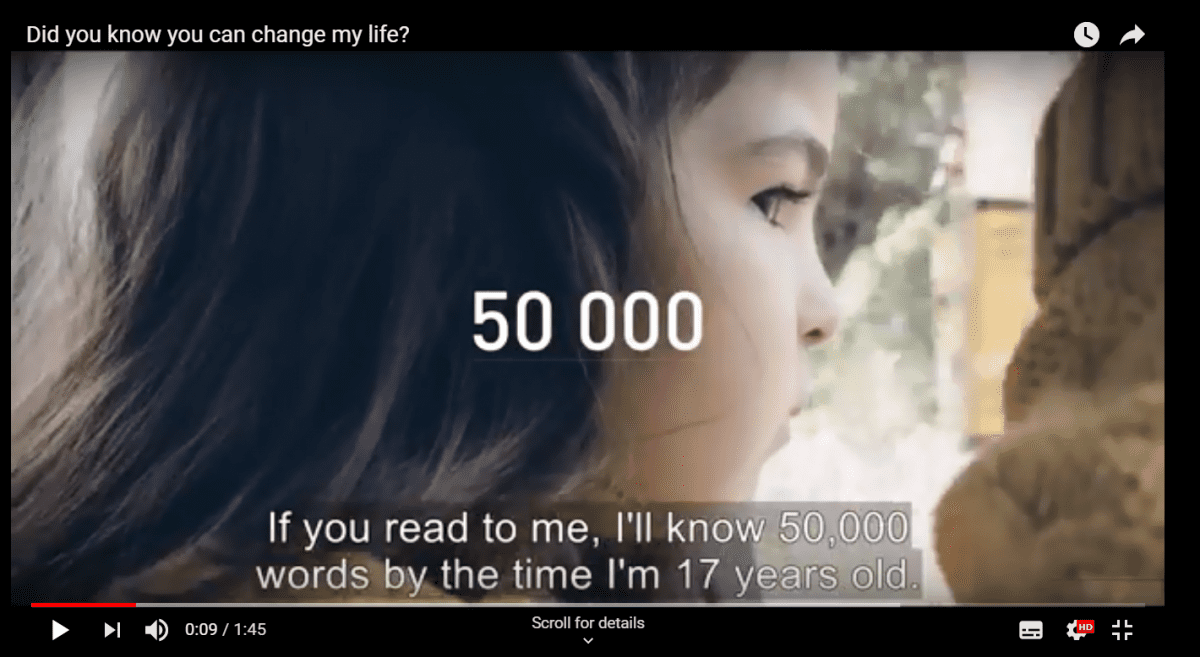
Changing a life is as simple as sharing a book with a child. This is the message that has engaged and enthused a team of librarians, academics, family workers and local authority education specialists from across five European cities who are part of the Erasmus Plus project ‘Open the Door for Reading’
There is a growing body of research that provides the evidence about the benefits of reading aloud to a child: whether you are a parent, caregiver, teacher or from a whole host of professions working with children and families. The research by Shahaeiana et al (2018) offers a comprehensive overview of the benefits,
Results indicated that early shared reading was associated with children’s academic achievement directly and indirectly through receptive vocabulary and early academic skills. Also, the frequency of early shared reading predicted the outcome measures, over and above other home learning activities. Associations were stronger among low and middle socioeconomic status groups compared to the high socioeconomic status group. We conclude that shared reading offers unique opportunities for adults to teach young children new words and concepts
Gothenburg, in Sweden had for some time been troubled by the apparent decline in caregivers reading to and with children, and the city embarked on an initiative to promote reading – to be “The City Where We Read for our Children”. Their research had suggested that only four in ten parents read with or to their child.
To develop the project further Gothenburg applied for Erasmus Plus funding for the ‘Open the Door for Reading’ Project launched with cities that had a similar focus: Turku in Finland; Brussels in Belgium; Milan in Italy and Bristol. Each city faces particular challenges and has similar issues with families who have traditionally been harder to engage in education or social services. Details of the project can be found on the website. The cities have met three times now and have learnt from the practice in each country. Exciting ideas like cloakroom libraries in Gothenburg; bedtime story book shelves in early years settings in Turku and using UWE teacher training students to read with children in Bristol have ignited the imaginations of participants. Gothenburg also shared the short film linked at the start of this piece. It was produced to promote reading to caregivers. It is a powerful reminder of the impact of reading for both the child and the caregiver.
The Bristol team, Debbie Miles and Cerys Stevens (Reading Recovery Teacher Leaders), Kate Murray (Head of Libraries) and Jane Carter have been working on the projects’ output: a practitioners’ guide to supporting caregivers with reading. This guide is full of practical ideas and tips for non-education focused professionals in ways to encourage first steps in communication around a text. It is hoped that midwives, social workers, family workers and early years professionals will become ambassadors for reading in the knowledge of its life changing effects.
The team is also now trying to gather support for a Gothenburg style initiative in Bristol and has begun to plan ‘Bristol, a reading city’. The city’s councillors are interested in the project as are many stake holders who attended a first meeting a few weeks ago to plan possible first steps in the project. Representatives came from local businesses, charities, city council services (Early Years; Family Support), the museum, libraries and schools. We are currently exploring funding avenues and hope to establish the first Bristol Cloakroom libraries along with community reading ambassadors. I am planning for UWE students to be involved in this exciting initial step and with the ‘Bristol a Reading City’ when funding is secured. Watch this space!