Children’s literature, anti-racism, and educational impact: ‘Difference in Primary Schools’ resource

Posted on

By Dr Verity Jones, Associate Professor in Education

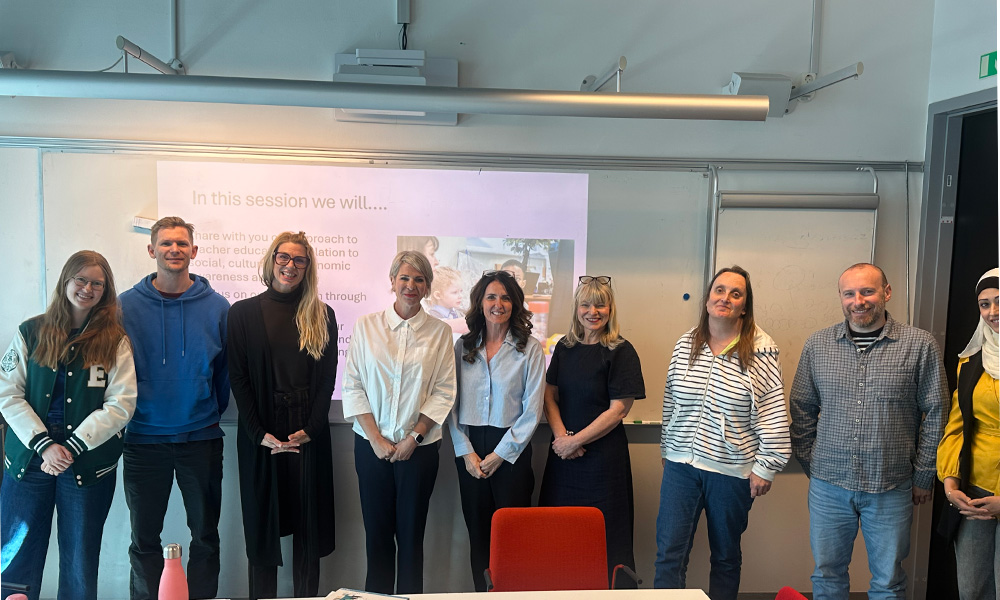
On 23 September 2025, Lambeth Palace hosted the launch of the Difference in Primary Schools resource—an ambitious and timely initiative that uses children’s film, songs and literature to support meaningful conversations about race, identity, and belonging in primary education.

Developed by the Difference programme, the resource is freely available to schools and educators across the UK, offering a suite of lessons that foreground empathy, critical thinking, and inclusive practice from early years through to transition into Key Stage 3.

As the team leader for the RESPECT project, I was particularly proud that the transition lesson draws directly on If Racism Vanished for a Day – a book developed through our project. Co-created with children from Bristol schools, the text and illustrations invite readers to imagine a world without racism.

The integration of our book demonstrates how academic research can shape real-world practice, particularly in the context of anti-racism education. It also highlights the power of literature as a pedagogical tool: not only to foster understanding, but to catalyse change.

As schools begin to adopt the Difference in Primary Schools resource, the reach and relevance of RESPECT’s work continues to grow – supporting educators in creating classrooms where every child feels seen, heard, and valued.

Inclusive climate education: a call to action from additional learning needs and alternative provision settings

Posted on

By Dr Verity Jones, Associate Professor in Education

This week sees the publication of the Climate Change and Sustainability Education in Additional Learning Needs and Alternative Provision Settings report, authored by Shannon O’Connor, Dr Jennifer Rudd, Dr David Thomas, and Bryony Bromley. Drawing on research from 26 additional learning needs (ALN) settings across Wales and a micro-Delphi study, the report highlights urgent gaps in resources, training, and support for educators working with learners who are often excluded from mainstream sustainability discourse.

As co-leads of the Education and Childhood Research Group’s Sustainability Strand at UWE Bristol, myself and Dr Tessa Podpadec welcome this report’s publication. It aligns closely with our commitment to embedding climate and sustainability education across diverse educational contexts, and particularly with our work on inclusive pedagogies that centre learner agency, creativity, and justice.

The report’s findings reinforce our belief that sustainability education must be differentiated – not diluted. Learners  deserve access to meaningful, age-appropriate content that reflects their lived experiences and capacities.

These themes resonate strongly with the work that Tessa, Dr Jon Mulholland and I have been developing at Sparks, Bristol with Global Goals Centre, a sustainable education hub where we have been working with special educational needs settings. At Sparks, we’ve explored how young people engage with sustainability through sensory-rich, place-based and creative approaches – from growing food and cooking with seasonal produce, to crafting with recycled materials and engaging in community-based environmental action.

These activities not only support curriculum goals but also foster a sense of belonging, purpose, and ecological connection among learners who may not otherwise see themselves reflected in climate narratives.

The report calls for:

  • A national bank of ALN-specific CCSE resources
  • Dedicated CCSE networks for ALN educators
  • Sustainability embedded across all Areas of Learning and Experience (AoLEs)
  • Easier access to ALN-friendly school trips and experiential learning.

These recommendations align with our Strand’s goals to support practitioner-led workshops and collaborative research that foreground inclusive climate pedagogies.

As Wales moves toward its net-zero targets, and as the curriculum for Wales embeds sustainability across all AoLEs, greater emphasis needs to be made to ensure that no learner is left behind. This report offers a roadmap for doing just that in Wales and beyond -and we encourage colleagues across education, policy, and research to engage with its findings. 

Crafting change: How craft is empowering children for a sustainable future

Posted on

By Dr Verity Jones

In the face of escalating ecological and social crises, education must evolve to equip the next generation with the tools to imagine and enact a more sustainable and just world. In our new paper published in the International Journal of Social Pedagogy, we explore how eco-craftivism – the fusion of ecological awareness and craft-based activism- can serve as a powerful pedagogical tool in primary education.

Conducted with 120 pupils aged 8 to 9 in two UK primary schools, our research investigates how creative, hands-on learning can foster eco-social pedagogy (ESP). ESP expands traditional social pedagogy by integrating ecological consciousness with social justice, emphasizing the interconnectedness of people, planet, and the material world.

We call to for a de-bordering of solidarities: to move beyond human-to-human empathy and include solidarity with the environment and non-human “things.” This form of solidarity, with human-made objects, is crucial in cultivating sustainable behaviours. Craft and craftivism are powerful tools for building creative relationships with things in ways that build solidarities with those things, but also serve as gateways to holistic solidarities with the environment and human others. By engaging with recycled materials like copper wire, cardboard, and old socks, we explore how pupils developed material literacies – an understanding of the origins, value, and lifecycle of everyday items. This awareness, in turn, sparked deeper ecological and social insights.

The project’s workshops – where children crafted bracelets, puzzles, and sock puppets – were more than just craft lessons. They were immersive experiences that connected students emotionally and intellectually to the climate crisis. Pupils expressed joy in creating, pride in reusing materials, and a newfound sense of agency. One student reflected:

It’s like doing something for the planet but also doing something that you can use.

This dual purpose – personal enjoyment and environmental impact – embodies the essence of eco-craftivism.

Teachers, too, reported a shift in perspective. Inspired by the workshops, they reconsidered their own classroom practices, opting to use more sustainable materials and integrate environmental storytelling into lessons. The study highlights how craft-making can transform both teaching and learning, making abstract issues like climate change tangible and emotionally resonant.

Importantly, the research also addresses the emotional toll of climate education. Many children initially expressed fear and helplessness. However, through creative engagement, these emotions often shifted toward hope and empowerment. Crafting became a medium for emotional expression and resilience, helping students process complex feelings in a constructive way.

This study is a vital contribution to the growing field of climate education. It demonstrates that eco-craftivism is not just about making things – it’s about making meaning. By fostering solidarity with people, nature, and objects, it cultivates a holistic understanding of sustainability that is both intellectually rigorous and emotionally grounded.

As we seek innovative ways to prepare young learners for the challenges ahead, this research offers a compelling model. Eco-craftivism shows that with the right tools – scissors, thread, and a bit of imagination – children can begin to stitch together a better future.

The full reference of this new article is:

Mulholland, J., Jones, V., Pawson, C. and Harrison, L. (2025). De-bordering solidarities: using eco-craftivism as an eco-social pedagogy in primary education. International Journal of Social Pedagogy, 14(1): 8.
DOI: https://doi.org/10.14324/111.444.ijsp.2025.v14.x.008.

School Art: Where Is It? A (re)exploration of the visual arts in secondary schools

Posted on

By Dr Will Grant, Associate Director of the School of Arts, UWE Bristol, and ECRG member


This blog post is a brief, informal introduction to the report School Art: Where Is It? (Fursman, Grant, & Wild 2024), which I recently co-authored with colleagues from UCL and Birmingham City University. The report revisits work undertaken by Dick Downing and Ruth Watson in their 2004 School Art: What Is It? report, and asks what has changed in the pedagogy, curriculum, and assessment of the visual arts in secondary schools over the preceding 20 years.

In 2004, Tate Gallery and the National Foundation for Education Research did something unusual. They decided to fund research into the substantive content of secondary school art classrooms, with a particular concern for engagement with contemporary arts practice in the sector. Given the brevity of the National Curriculum entry for Art and Design at the time (2003), it was very difficult to otherwise guess, without taking the time to ask, what rationales, pedagogies, and curricula art teachers across the country might be activating.

The resultant report, School Art: What is It? (Downing and Watson 2004), while adopting a loose methodology that might best be described as illustrative, became a defining record of practice typical in secondary art education that has persisted as a reference point across the decades following. Among its many observations, the report tells of very high levels of teacher agency, where individuals or collegiate departments of art teachers might take inspiration from a local gallery exhibition or their personal artistic practices, and others who centred curriculum on celebrating pupils’ opinions, creating safe spaces to build pupils’ self-belief. It also suggested that canonical artistic references were commonplace, predominately early 20th century sources assessed on technical accessibility. These references were very narrow, with only one non-European/American artist mentioned at all (Ana Bella Geiger), and only two further female artists noted in conventional school curricula (Georgia O’Keefe and Bridget Riley) across the interviews. In one comment especially memorable from my first encounter with the report (as a progressively-minded pre-service teacher), the authors note that:

Having referenced this report in our work in pre-service teacher education and within our individual research activities for many years, Carol Wild (UCL), Jo Fursman (Birmingham City University), and I decided it would be a worthy exercise to repeat the School Art report twenty years after its original publication. We wanted to both pay homage to this rare example of empirical data collection in art classrooms and simultaneously explore the changes that may have occurred over the preceding decades. We knew, from our own experiences in the classroom, that a lot of contextual factors remained the same in 2024 as in 2004 – a National Curriculum (2013) of limited operational value, a lack of expendable art materials, and a tension between artistic freedoms and increasingly conformative pedagogic and assessment policies (Grant 2023). However, there had clearly been huge political, technological, and disciplinary shifts over this period, and we knew research into how these changes have impacted on English secondary school art education was extremely limited. It felt somewhat ridiculous that pre-service art teachers were still being asked to reference source material on ‘contemporary’ classroom practices published before they were born!

We replicated the methods of Downing and Watson as accurately as possible – not for the sake of scientific rigour (the data set too small and rich to bear out any meaningful statistical comparison), but to create reflective connections between then and now. Therefore, we went about interviewing 36 secondary school teachers of art from over 30 different schools, asking identical questions of their curriculum, its content, and influences. In our writing, we directly borrowed structure and phrasing from the first report, producing a palimpsest that could be considered an iterative companion piece to the 2004 publication.

In our report, School Art: Where is it? (Fursman, Grant & Wild 2024), we present in a dispassionate voice a record that we hope other researchers, writers, advocates and practitioners will assess as fair reportage on the nature of secondary school art curriculum content in 2024. We followed in the philosophy of the first report – seeking not answers, but ‘questions that might be worthy of addressing’ (Downing 2005, 275). Given some of our findings – the ahistorical persistence of ‘formal elements’ as uncontextualised framework for normative curricula, a collapse in professional agency (especially among early career art teachers), and a significant decline in sculptural practices – it was tempting to err into commentary critical of policy, paradigm, or practitioners’ priorities. This was especially true where our own research assumed a critical stance on school orthodoxies (Grant 2020, Wild 2013) but we knew the enduring value to the field of Downing and Watson’s (2004) report was its subtle, observational neutrality.

Aside from the concerns that might be drawn by some readers of School Art (2024), there was also much that might be celebrated in the voices of our interviewees. We found a deep, unanimous sentiment among art teachers that curriculum diversification was an urgent mission, and evidence that this intent was starting to manifest in classrooms (in 2024, 35% of the artists mentioned by interviewees as featuring on their curriculum were female). We also saw photography and digital media emerging, and an interest among teachers to employ contemporary artworks to open paradigmatic questions about the nature of art practice with their pupils.

As authors, we have been delighted to receive so much public interest in a report that was initiated from personal curiosity. It has been used, directly, as evidence of contemporary arts provision in the DfE’s ongoing Curriculum and Assessment Review, and we will be discussing the report further at a panel event during the National Society for Education in Art and Design’s annual conference on 19 June 2025.

References

  • Department for Education (2013) Art and Design Programmes of Study: Key Stage 3, National Curriculum in England. Department for Education; London.
  • Downing, D. (2005) School Art – What’s in it?, in The International Journal for Art and Design Education, vol. 24, no. 3, pp. 269-276. https://doi.org/10.1111/j.1476-8070.2005.00450.x
  • Downing, D. & Watson, R. (2004) School Art: What’s In It? Exploring Visual Arts in Secondary Schools. National Foundation for Education Research; Slough. Available online here: https://www.nfer.ac.uk/publications/school-art-whats-in-it-exploring-visual-arts-in-secondary-schools/ (last accessed 10th April 2025).
  • Fursman, J., Grant, W., & Wild, C. (2024) School Art: Where Is It? (Re)exploring Visual Arts in Secondary Schools. National Society for Education in Art and Design; Corsham. Available online here: https://www.nsead.org/resources/research-reports-and-reviews/school-art-where-is-it-2024/ (last accessed 10th April 2025).
  • Grant, W. (2020) Liberal ideals, postmodern practice: a working paradox for the future of secondary school art education in England?, in The International Journal for Art and Design Education, vol. 39, no. 1, pp. 56-68. https://doi.org/10.1111/jade.12228
  • Grant, W. (2023) Protecting Transformative Optimism in the Art Classroom: Exploring Aspirant Art Teachers’ Shifting Ideals. EdD Thesis: University of Glasgow. Available online here: https://theses.gla.ac.uk/84006/ (last accessed 10th April 2025).
  • Qualifications and Curriculum Authority (2003) The National Curriculum Programme of Study: Art and Design Key Stage 3. QCA; London.
  • Wild, C. (2013) Who Owns the Classroom? Profit, Pedagogy, Belonging, Power, in The International Journal of Art & Design Education, vol. 32, pp. 288-299. https://doi.org/10.1111/j.1476-8070.2013.12029.x

Dialogue in times of war: The School for Peace method and social justice pedagogy in education

Posted on

On 15 January 2025, ECRG hosted Dr Roi Silberberg, Director of School for Peace – Wahat al-Salom – Neve Shalom, for a research seminar. In the seminar, he explained the School for Peace (SFP) approach to fostering dialogue between Jews and Palestinians during conflict. Rooted in social justice pedagogy, this method emphasizes identity exploration, power dynamics, and critical thinking to build understanding and inspire action.

Highlighting wartime initiatives, Dr Silberberg demonstrated how education is challenging structural inequities, understanding “the other,” and promote reconciliation. Through real-world examples and practical strategies, he offered insights into applying dialogic frameworks in education to address global conflicts and foster sustainable peace. 

Watch the recording of the online ECRG research seminar, ‘Dialogue in times of war: The School for Peace method and social justice pedagogy in education’, 15 January 2025.

Here is an e-dialogue between Dr Silberberg and ECRG’s Professor Alpesh Maisuria.

Alpesh: How and why did the School for Peace begin? How has it changed during its existence?

Roi: The School for Peace began in the 1970s on a barren hill granted by the Latrun Monastery. It originated from a vision of interfaith dialogue by Bruno Hussar, an Egyptian monk born Jewish. However, the young people who gathered there found a deeper connection in discussing national identity rather than religion, leading to the establishment of Palestinian-Jewish dialogue groups. As a few families settled on the hill, the intentional community of Neve Shalom/Wahat al-Salam was born. Over time, the School for Peace expanded its reach, training over 60,000 participants, including youth and adult change agents, to foster mutual understanding and tackle shared challenges.  

Alpesh: Can you give an example what topics you cover in the workshops?

Roi: Discussions about the Israeli-Palestinian conflict often evoke intense emotions, making the topic both deeply significant and highly sensitive. In many contexts, these conversations are fraught with tension, as individuals fear using the wrong words, offending others, or being misunderstood. Recognizing these challenges, the School for Peace (SFP) has developed a pioneering Terminology Workshop to help participants navigate this complex terrain with confidence and sensitivity. The workshop focuses on how language shapes our understanding and framing of the conflict. Participants explore a curated list of terms such as “occupation,” “conflict,” “apartheid,” and “colonization.” These words are examined for their power dynamics, historical and legal connotations, and the contexts in which they are used. Attendees engage in structured dialogue to consider how and why they might choose certain terms, gaining insight into the underlying narratives and tensions these words evoke. The aim is to create spaces where participants can articulate their views in a way that fosters dialogue rather than division.

Alpesh: What influence do you think the school can have on the current conflict last year?

Roi: The current war underscores the necessity of SFP’s mission. By fostering dialogue and addressing structural inequalities, the SFP creates spaces where both Jews and Palestinians can process their pain and work collaboratively. Recent wartime initiatives involved facilitating communication in polarized institutions and addressing the humanitarian crisis in Gaza through partnerships. SFP’s approach, rooted in tackling oppression and enabling dialogue even in times of heightened tension, positions it as a unique player in promoting long-term coexistence and understanding.  

Alpesh: Does the school have any external influences – pedagogical or political?

Roi: The School for Peace draws inspiration from global peace education theories and the works of critical pedagogists like Paulo Freire and Bell Hooks, emphasizing empowerment, transformation, and critical thinking. These approaches include a sensitivity to gender dynamics, addressing how intersecting identities influence dialogue and conflict resolution. Politically, while the school operates independently, it inevitably engages with the realities of inequality and systemic discrimination central to the Israeli-Palestinian conflict. Its partnerships with international and local organizations further integrate diverse perspectives, from environmental justice to social equity.  

Alpesh: How is the school supported financially?

Roi: The School for Peace is supported through a combination of funding sources, including Friends Associations of Wahat al-Salam/Neve Shalom, which operate worldwide, with an active branch in the UK. It also receives contributions from international foundations and generates income by offering facilitation services and consultations to other organizations and institutions. Grants, donations, and partnerships with educational and civic bodies further bolster its financial sustainability. Socially, the school benefits from the Neve Shalom community, which provides steadfast support and embodies the values of coexistence. The alumni network extends its influence, as graduates often continue peacebuilding in their respective fields. However, the polarized political climate can challenge the school’s bi-national framework and mission. 

Alpesh: Thank you and the very of best of luck in your honourable mission to bring justice, peace and equality in the country and the region.

Roi: Thank you Alpesh, and please let others know about our work. 

More information

  • Wahat al-Salam – Neve Shalom (pronounced “waaḥat’ as-salaam/nevei shalom”), Arabic and Hebrew for Oasis of Peace, is an intentional community of Palestinian and Jewish citizens of Israel ded­icated to justice, peace and equality in the country and the region.
  • The Neve Shalom Educational Institutions were founded by community members in 1984. These institutions, based on the village’s ideals, work to create the conditions for positive social change.
  • For more information, visit the SFP website.

Montpelier High student group, Tackling Diversity in Teaching, give PGCE Secondary students a masterclass on diversity and oracy in the classroom

Posted on

By Terra Glowach, PGCE Tutor and Co-Programme Lead for Secondary PGCE; Senior Lecturer in Education

On 14 October 2024, the Secondary PGCE Programme launched a week of university-school partnership activities focused on oracy: how to promote oracy skills among teachers and young people, and how to use pedagogy which generates rich classroom talk. This week of lectures, reading, discussions, observations and cooperative learning tasks coincides with the release of the Oracy Commission Report (PDF), which aims to centralise oracy education ‘to serve our communities and employers in helping to develop young people with the critical knowledge and skills, the sense of civic empowerment, that will prove beneficial for them and for social cohesion.’

The highlight of the week was a session led on campus by the Montpelier High student group, Tackling Diversity in Teaching (TDT), supported by teachers Amy Mayne and Jessica Bray.

Students Adama, Danitor, Sasha-Kay, Cymora, Fiza, Grace, Denecka, Ayesha, and Alexia gave a short talk on the history of TDT and the importance of promoting diversity and oracy in schools, then facilitated group discussions among trainee Secondary teachers about how they might champion diverse voices in the curriculum and the classroom.

TDT started with four members having conversations about inclusivity and how they were unrepresented in school: “It was to channel our frustrations in a positive way and somehow finding solutions for them like talking to teachers in our and other schools about our experiences as young women of colour.” Since then, they have organised and run school activities and workshops for university students training to become teachers across Bristol and the Southwest.

In terms of oracy, the members of TDT say that this experience has “been really valuable in building our teamwork and commitment. It’s of course led us to be far more confident as we have got used to speaking in public, to big audiences. Our trips to universities have been amazing in building aspiration and making us think about what we want from our education and futures. Having a group like this has emphasised how important our voices are and that we have the power to make a difference – we have now spoken in front of about 700 people – we have shaped the teaching of so many people!”

Each member of TDT took turns advising the PGCE students about how to embed diversity and oracy in their specific subjects:

English is a great subject to promote diversity and oracy. This could be through reading aloud and discussing books. However, English can bring up sensitive subjects and teachers should be mindful of this. Setting ground rules, such as never reading racial slurs, even when they’re in a text, is really important for students to feel safe.”

Maths: “Encourage students to explain their workings out. Talking it through builds confidence in their approaches, and helps others learn too.”

“Last year during Science week, we had a school wide treasure hunt. Every teacher had a scientist’s name and biography attached to their lanyard, and to complete the treasure hunt we had to speak to every teacher and ask about the scientist. This was a great way to promote oracy in conversation and social skills.”

PE: “There are so many incredible athletes, and one look at Team GB demonstrates our diverse, vibrant and multi-cultural society. Getting students to research and give presentations on their favourite sports figures, or even allocating different athletes to broaden our knowledge, is a great way to introduce oracy. Furthermore, students could be encouraged to lead warmups and training sessions, creating opportunities for public speaking in lessons. Another nice idea could be to encourage sportspeople to come in and give talks. This also models good oracy for students, as well as aspiration in sport.”

The TDT group gave a masterclass on the value of oracy and how to create a culture of oracy across the curriculum. Not only have they imparted concrete and useful suggestions to teachers which will help them act upon the recommendations in the Oracy Commission Report, but they have modelled the potential impact of acting on these suggestions: young adults with the confidence, eloquence and agency to change their world for the better.

Tackling Diversity in Teaching (TDT) encompasses the following ECRG strands of research: Equity in Education; Pedagogy; and Childhood, Children and Young People

ECRG Pedagogy Strand: Showcase ‘In conversation with Professor Gert Biesta’, 13 November 2024

Posted on

Once in a while, an opportunity presents itself to spend a few hours in the company of someone inspiring. For many in education and academia, Gert Biesta is one such individual. I’m pretty sure he would fit Malcolm Gladwell’s criteria for an ‘Outlier’, having definitely clocked up more than ‘ten thousand hours’ of practice in his specialist area, having authored and contributed to more than twenty books, edited multiple international journals, advised governments on education policy and held professorships at multiple universities around the world. But it isn’t just these achievements which set him apart. For me and many others, it’s the poignancy, challenge, clarity and hint of mischief in his ideas which make him a thought-leader in education, and someone worth listening to.

So, it was a great pleasure for the ECRG Pedagogy Strand to host Gert for an ‘in conversation with…’ event last Wednesday evening, to invite him to share his thoughts about the nature of teaching and to delve into these in conversation. Around one hundred teachers, school leaders and academics were treated to Gert’s headline ideas and emergent thinking in a short presentation titled ‘What teaching is, what it is for, how it works and why it requires artistry’. This talk was based on a paper of the same title which he wrote in 2023.

The key takeaways from this were that, whether we like it or not, teaching operates in uncertainty. It is complex, subtle and nuanced. It requires judgement and intuition and its qualities (or it’s quality – whatever that is?) cannot be easily captured or measured using the logic of technical rationalism. This of course resonates closely with my own work and calls to mind that line from Hargreaves and Fullan (2012, p.107) that ‘uncertainty is the parent of professionalism […]’. Uncertainty is inescapably baked-into teaching.

An idea hovering conspicuously throughout Gert’s address, and our conversation, was that, despite its ubiquity in influencing policy, the explanatory and inquiry-based logic of the medical profession (which leads organisations to rank order interventions in terms of cost effectiveness), is not well suited to education. Gert took aim at this approach to judging teaching ‘quality’ because of its tendency to frame pupils similarly to patients, and ‘teaching’ somewhat like a cure. He talked a lot about the artistry of teaching and it is clear that art and artistry are important topics for Gert.

In our conversation, I invited him to put himself in the shoes of a headteacher whose pupils are soon to take exams, the outcomes of which will determine their next steps and for which he will be judged. I asked, “Do you want artistry from your teachers, or outcomes?’ and his response was short and unequivocal: Teaching requires artistry whatever the headteacher wants. That is the nature of teaching.

Read more about Gert’s work and works on his website, gertbiesta.com, and you may like to follow him on social media:

Education in a Complex World

Posted on

Dr Ben Knight, Benjamin3.Knight@uwe.ac.uk.

Architecture Media & Politics Society (AMPS) annual conference, Toronto, Canada.

26th-28th April 2023.

Last month I presented a paper entitled ‘Exploring the Complex, Emergent Choreography of Classroom Teaching & Learning’ at the annual AMPS conference at Sheriton College, Toronto. Delegates came from over twenty different countries and each speaker brought their own particular take on the complexities of education at all levels in a fast-changing world.

My own interest in complexity and education stems from my interest in complexity theory as a framework for understanding the emergent and non-linear ways in which educational systems, from classrooms to national curricula operate and how bottom-up and top-down forces collide to create change. There were a number of other complexity theorists present and it was great to be able to have informal and fruitful dialogue about our work and possible future collaborations. In particular, two colleagues from Edinburgh University are keen to stay in touch and work towards some joint outputs.

There were also speakers who interpreted complexity in the more general sense and presented about the challenges of adapting to Covid lockdowns, about the complexities of intercultural learning and about balancing learner autonomy with curricular and pedagogical constraints. The keynote, delivered by the Dean of Sheriton College, focussed on the challenging world of work-related learning and proposed strategies for designing programmes which productively combine university and industry-based learning experiences. As a teacher educator working in a changing professional and political landscape this topic was of particular interest. My own talk was about the complexity of classroom learning, how learning does not wrap itself into neat 60-minute packages or appear on cue when teachers would like it to. I discussed evidence from research and from the classroom itself that learning is a messy, unpredictable and indeterminate phenomenon which demands expert judgement from teachers. My central thesis was that since learning is not a single, mechanised process or a predictable ‘product’ of teacher input, teaching cannot be scripted. Rather, classroom expertise relies on teachers’ capacity to problematise pedagogical dilemmas and critical incidents. I drew on my doctoral research and some of my subsequent publications, and was able to promote my forthcoming book on teacher professional judgement. My presentation was well received and followed by a lot of questions from the floor. A highlight was being able to share the below model for teacher judgement which I’ve been working on. The model situates judgements as occurring during and away from the moment of teaching, mapping loosely onto Schön’s (1987) concepts of reflecting in and on action.

In particular, I emphasised the value of systems thinking and how understanding the classroom as a system with multiple internal moving parts which mutually influence each other can help teachers to make productive organisational judgements. It was so helpful to be able to stand up and articulate the above model to others for the first time, get feedback and answer thoughtful questions about it.

It’s always nice to present on day one of a conference. Firstly, because you can then relax, enjoy the remaining presentations and focus on others’ work, but also because it leaves plenty of time to engage with fellow delegates who have had the chance to listen to your work. Meals out on the two evenings provided ample opportunities for this. Informal conversation over a meal and a few drinks with colleagues from different parts of the world always offers opportunities for new learning, but also always reminds me of how similar we all are irrespective of our different experiences, how similar education is and how as educators we share similar triumphs and make similar mistakes, wherever we are in the world. The jetlag wasn’t fun, neither was the mouse in my hotel room at 3am, but despite this I’ve come away from this conference having:

  • Strengthened and clarified my own ideas and work through exposing it to peer scrutiny
  • Learned from colleagues sharing a diverse range of educational ideas and complexities
  • Networked and forged some promising connections for future collaborations
  • Toronto Maple Leafs – Logos DownloadPromoted my book
  • Sharpened my thinking
  • Become a Toronto Leafs ice hockey fan (go Leafs!)

Back to top

Follow this blog

Get every new post delivered right to your inbox.