A new book for Earth Day: Taking A Close Look at Microfibres

Posted on

Earth Day (22 April 2026) saw the launch of a new children’s book, Taking a Close Look at Microfibres. Co-created by school pupils and researchers from UWE Bristol’s Science Communication Unit (SCU) and Education and Childhood Research Group (ECRG), the book supports children and teachers to explore an often invisible aspect of air quality: airborne microfibres.

The book is part of the Schools Under the Microscope project, a child-led citizen science project that invites pupils aged 9–14 to take part in real environmental research. Through hands-on investigation, creative inquiry, and collaboration with university researchers, children from England and Wales helped generate new knowledge while shaping an engaging educational resource for use in schools.

Exploring what’s in the air we breathe

While microfibres are increasingly well documented in water systems, far less is known about fibres in the air we breathe – particularly in school environments. The Schools Under the Microscope project set out to explore whether established citizen science methods, previously used in homes, could work meaningfully in classrooms.

Following an initial pilot with 90 pupils at May Park Primary School, Bristol the project expanded to include around 400 children across four schools. Together, pupils designed investigations, made predictions, prepared petri dishes, and positioned them around their schools for a two‑week sampling period. After collection, pupils used microscopes to count fibres, while researchers at UWE Bristol carried out further analysis and shared findings back with the schools.

This marked the first time data on airborne microfibres has been collected within school environments, offering valuable insights into both indoor air quality and the potential of citizen science in education settings.

Learning through participation and enquiry

The findings showed that microfibre levels in schools were similar to those found in homes, including a mix of natural and synthetic fibres – some even matching the colours of school uniforms. More importantly, pupils and teachers reported high levels of engagement and enjoyment throughout the research process.

The team found that although air pollution is often invisible, it becomes meaningful through hands-on activities.

From research to a children’s book

Children’s questions, observations, and reflections directly shaped the storyline and content of Taking a Close Look at Microfibres. The book is designed to open up discussion rather than provide simple answers, encouraging curiosity, critical thinking, and dialogue about environmental issues that affect everyday life.

Page from the book, Taking A Closer Look at Microfibres.

The illustrations were created by Luci Gorell Barnes, a socially engaged artist and arts-based researcher. Recycled plastics, fabrics, card, and paper were used to make the images – all materials known to shed microfibres. These materials were scanned and transformed into digital collages, visually reinforcing the book’s themes of materiality, pollution, and reuse.

The book is accompanied by free teacher notes and ten lesson plans, supporting cross-curricular learning in science, geography, citizenship, and sustainability education.

Launching on Earth Day – and beyond

The project also connects with wider work at UWE Bristol around sustainability and social justice. The research team is partnering with the Global Goals Centre to support the Better Uniform Campaign, which seeks to develop a more socially and environmentally just system for school uniforms across Bristol.

Access the free book and resources

Schools, teachers, and partners can access a free e‑copy of Taking a Close Look at Microfibres with resources for lessons and learning.

The team

Dr Margarida Sardo, Dr Ben Williams, Dr Verity Jones and Jacqui Warner.

What have you learned from rivers?

Posted on

By Emma Thomas, Terra Glowach, Kalpa Ghelani and Dr Verity Jones

Over the coming months, we will host public workshops, school sessions, family river walks, creative encounters, and online opportunities to contribute to our river work – join us!

What have you learned from rivers?

As Channel 4’s Dirty Business casts national attention on the shocking scale of water pollution in the UK, many are asking how we arrived at a point where our rivers are now frequently unsafe to enter, fish from, or even walk beside. The documentary drama makes visible what community activists, swimmers, anglers, and ecologists have long understood: our waterways are in crisis, and the crisis is human‑made.

However, while the national conversation focuses on what we have done to rivers, we – Emma ThomasTerra Glowach, Kalpa Ghelani and Verity Jones at UWE Bristol – are asking a different kind of question:


This blog launches our forthcoming public engagement work to co‑create a plurifesto- a plural manifesto – for river‑aligned action across schools, families, and communities.

Rivers are speaking – but what are they telling us?

Rivers appear to be signalling distress. Across the UK, the health of rivers has been jeopardised by intersecting pressures: sewage pollution, agricultural runoff, climate‑change‑driven storms, and increasing flood risk. Recent data paints a consistently stark picture:

  • Raw sewage was discharged into England’s rivers and coastal waters for 3.62 million hours last year, according to Environment Agency data. [theguardian.com]
  • 4.7 million hours of sewage were dumped into UK waters in 2024. [sas.org.uk]
  • In some protected areas, pollution has been extreme. Wessex Water discharged raw sewage for 36 consecutive days at Chesil Beach, a site with multiple environmental designations. [theguardian.com]

Projects to improve the ecological health of rivers are underway. For example, in our city, the Bristol Frome Restored Project focuses on improving the ecological health of the river through farm interventions, in‑stream habitat works, and efforts to remove barriers to fish migration. The Frome Gateway Regeneration initiative treats the River Frome as a key environmental and spatial asset within a wider urban transformation aimed at providing new homes, workspaces, and improved public and green spaces shaped through community consultation.

These projects aim for compliance with frameworks, strategic coherence and alignment with planning and policy outcomes. Having watched Dirty Business, it is clear we need more than box ticking against success criteria. We need to value plural knowledge, coexisting truths and embrace ambiguity, sensory experiences and relational ethics. We need to harness opportunities for rivers to teach all of our communities about resilience and regeneration. 

A different kind of response: Learning with rivers, not just about them

While monitoring data, modelling, and policy reviewns give us vital information about rivers and contribute to neighbourhood renewal – whether related to contamination, flooding or drought –  they cannot answer some important questions on their own:

  • How do we live with rivers in ways that honour their agency?
  • How do we teach the next generation a river‑attuned ethics?
  • How do we understand what rivers themselves “say” through flow, shape, silt, flood, drought, smell, and sound?

Our project begins by placing agency with the river- not as metaphor, but as a methodological and ethical commitment.

Inspired by new materialist, ecological, and pluriversal frameworks, we recognise rivers as more than resources, landscapes, or leisure sites. They are alive with histories, stories, sediments, currents, and relationships – and these can help us re‑imagine more just environmental futures.

Introducing our plurifesto for river‑led action

Over the next year, out team will work with:

  • Families
  • Primary and secondary schools
  • Youth groups
  • Community networks
  • Anyone who has ever walked beside, paddled in, or worried about a river

Together, through creative, embodied, and relational methods, we’ll collect responses to a shared provocation:

What have you learned from rivers?

From these stories, drawings, encounters, sounds, and reflections, we will co‑create a plurifesto – a collective document that does not aim for consensus, but for multiplicity. A plurifesto that:

  • holds children’s river truths alongside adults’
  • honours scientific knowledge alongside sensory, cultural, and ancestral knowledges
  • includes what rivers tell us through flood, pollution, rest, and resurgence
  • supports actions at policy levels, school levels, and family practices

This plurifesto will be a guiding compass – not a static manifesto but a living, evolving expression of our shared commitments with rivers.

Why act now?

The release of Dirty Business has intensified national outrage about sewage and corporate misconduct. But outrage alone will not reshape relationships with rivers.

We want to help transform this moment of anger into a moment of attunement, collaboration, and community‑based river justice.

Rivers are not only victims of industrial malpractice. They are teachers in the climate crisis, showing us:

  • how environments respond to pressure
  • how ecosystems hold memory
  • how water connects communities, species, and generations
  • how resilience emerges from movement, not stasis

If we are willing to listen, rivers may guide us toward new forms of ecological responsibility.

Join us

Over the coming months, we will host public workshops, school sessions, family river walks, creative encounters, and online opportunities to contribute to our river work.

If you’d like to take part – or if your school, community group, or organisation would like to host a river‑listening session – please get in touch.

Let’s build a plurifesto that honours what rivers already know, and what they are asking of us now.

When rivers speak – through contamination, through flood, through flow – we must listen. Because the future we’re trying to secure is one in which rivers can thrive – and in thriving, teach us to thrive too.

Thinking about death for the future

Posted on

By Dr Verity Jones, Associate Professor in Education

Recently, much of my thinking, particularly in collaboration with Chris Bear (Cardiff University), has led me to think more deeply about death as an ecological, educational and ethical concept that demands a futures lens. In our work on food systems, we ask what it would mean to attend to the deaths of non-human animals and plants –  not as abstractions but as lived relations.

In February, I attended the Centre for Sociodigital Futures, Immersive Public Futures Symposium, where themes of loss, endings, disappearance and possibility threaded through discussions of how societies imagine, design and negotiate futures.

International perspectives on imagining futures

Contributions from international speakers underscored that futures – thinking is rarely a smooth trajectory of progress.

  • Fabio Rubio Scarano (Federal University of Rio de Janeiro/Museum of Tomorrow) foregrounded planetary change and regeneration through anticipating and paying attention both to memory and tomorrow.
  • Lisa Bailey (Museum of Discovery, University of South Australia) explored how museums can engage diverse publics with complex and uncertain futures.
  • Andrea Bandelli (Woven Foundation for Creative Climate Communication) challenged us to recognise immersion not as a technical medium but as a condition – a relational mode that shapes how we encounter the world and its potential futures and agencies.
  • Mandy Rose (UWE Bristol) discussed documentary and digital cultures as tools for imagining post‑carbon possibilities through planty immersion.
  • Justin McGuirk (Design Museum, London) examined design-led approaches to futures and the need to construct possible future buildings to imagine within.
  • Dan Lockton (Norwich University of the Arts) reflected on how lost futures can help people collaboratively reimagine alternative futures.
  • Johannes Stripple (Lund University) used speculative ecology and storying  to unsettle fixed narratives of crisis and change.

Across these contributions, there was an insistence that imagining futures requires attending to what is disappearing, threatened or already lost.

Connections

The symposium strongly resonated with work with my own research. Whether supporting young women in imagining near-future careers in construction and engineering, examining ecological timescales in food ethics, or analysing how children’s literature either narrows or expands temporal imagination, much of my work is centrally concerned with how learners inhabit and negotiate time.

This sits alongside collaborations with colleagues at the Global Goals Centre and SPARKS Bristol, where we co-create learning experiences that are research‑informed, inclusive, socially engaged and committed to widening imaginative possibility.

Looking ahead

The symposium has sharpened my thinking on how endings and futures coexist – and how education must hold both. Several publications drawing on this work, including research on identity making, children’s literature and sustainable education, are currently in preparation and will be shared later this year.

Education, curriculum reform and the canary in the mine

Posted on

By Dr Sarah Whitehouse, Programme Leader for the International Doctorate in Education, and Senior Lecturer : Education and Humanities

I was reflecting on a keynote lecture delivered by Caroline Daly at the UCET (Universities’ Council for the Education of Teachers) conference in November 2025. In her address, Daly offered a powerful metaphor for the current education system, suggesting that education is often treated like “a canary down a mine.” Too frequently, when outcomes are uneven or disappointing, attention is directed towards pupils or teachers – the canary – rather than towards the wider education system that shapes what is possible. This framing invites a necessary shift away from individual blame and towards systemic critique.

This observation resonates strongly in the context of the recent Curriculum Review led by Becky Francis, which raises fundamental questions about curriculum content, curriculum making and equity. The review marks a notable shift in emphasis and sits in contrast to developments in the other three nations of the United Kingdom. As someone who has taught in Wales, and who has experienced the rapid pace of policy change within its education system, I am particularly interested in how curriculum reform – whether radical or incremental – creates both opportunities and challenges for teachers.

The Welsh context offers an important case study. The rapid introduction of the Curriculum for Wales has afforded teachers significantly greater freedom to design locally responsive, bespoke curricula. In principle, this represents a progressive move away from prescriptive content towards professional trust, creativity and innovation. Teachers are positioned as curriculum makers rather than curriculum deliverers, with greater scope to respond to local contexts and pupil needs.

However, recent research by Estyn and the Wales Institute of Social and Economic Research, Data and Methods (WISERD) suggests that this increased autonomy is not without risk. Their findings indicate that the new curriculum may be exacerbating existing inequalities, particularly in relation to attainment and access to disciplinary knowledge in some subjects. While some schools and teachers are thriving within this flexible framework, others are struggling to ensure coherence, progression and equity.

A key tension emerges here. Many teachers in Wales have not historically been prepared – through initial teacher education or ongoing professional development – to act as curriculum designers. Innovation requires time, subject expertise and sustained support, yet these resources are unevenly distributed across schools. At the same time, schools continue to be held accountable through inspection and assessment systems that have not fully adapted to the scale and ambition of curriculum reform.

This raises critical questions for curriculum change more broadly. Freedom and flexibility alone do not guarantee equity. Without systemic investment in teacher education, subject knowledge and collaborative curriculum development, innovation risks deepening rather than narrowing inequalities. Daly’s metaphor reminds us that if the canary is struggling, the problem may not lie with the canary at all—but with the conditions of the mine.

Building capacity, community, and climate literacy – reflections from the CCPERN January meeting

Posted on

By Dr Verity Jones, Associate Professor in Education

The Climate Change Primary Education and Research Network (CCPERN) began 2026 with an energising and thought‑provoking meeting that reaffirmed why this community matters so deeply. Bringing together teachers, researchers, practitioners, and organisations committed to sustainability education, CCPERN continues to offer a vital space for sharing practice, fostering collaboration, and exploring the urgent challenges facing climate and sustainability learning in primary education.

Our January meeting welcomed two speakers whose work, though distinct in focus, revealed powerful synergies: Kate Colechin, from UWE Bristol’s careers and widening access team, and Mark Whittaker, headteacher at a North Yorkshire primary school. Together, they helped us consider not only what children need to learn about climate change, but how education systems can better prepare young people for a rapidly changing world.

Green careers and early aspirations

Kate Colechin opened the session by offering insights from her work training careers practitioners and supporting young people in schools. Speaking from both a higher‑education and school‑engagement perspective, she highlighted how central sustainability has become to contemporary careers work.

Kate shared that, within UWE Bristol’s postgraduate careers guidance programme, sustainability and the UN Sustainable Development Goals (SDGs) are embedded across modules, shaping how future advisors support both young and old to think critically about the environmental impacts of work, and to recognise that “every job is a green job”. Her reflections on working with school pupils were particularly resonant: young people, she noted, are increasingly worried about AI, future employment, and the state of the planet – and they respond powerfully to opportunities that spark curiosity and broaden their sense of what is possible.

A key takeaway was the importance of early career‑related learning in primary school, especially as research shows that children’s assumptions about jobs often solidify between the ages of 7 and 17. Challenging stereotypes, expanding horizons, and linking learning to real‑world sustainability issues can shape dispositions that stay with children throughout their lives.

Whole‑school climate education and the power of place

From a practitioner’s standpoint, Mark Whittaker shared the work underway across Northern Star Academies Trust to embed sustainability in curriculum, culture, and community. His school’s context added important nuance to discussions about equity, engagement, and what climate education looks like in practice.

Mark described how participation in the CAPE (Climate Adaptation Pathways in Education) programme had been transformative for both him and his staff, helping them articulate the “why” of climate education and recognise the need to thread sustainability throughout the curriculum rather than bolt it on. His examples of outdoor learning, river‑themed curriculum design, and farm twinning illustrated how powerful experiential learning can be for building ecological awareness and student wellbeing.

He also emphasised the challenges: staff confidence, parental perceptions, and political sensitivities around climate issues. Yet his school’s work shows how partnerships – with RHS, the National Education Nature Park, and particularly Jamie’s Farm – can offer life‑changing experiences for children who may have limited access to green spaces.

Shared threads and looking ahead

Across both presentations, a clear message emerged: climate education is not a single subject, but a holistic endeavour. Whether helping young people imagine future green careers or enabling primary pupils to build connections with their local environments, the work must begin early, be embedded meaningfully, and involve whole communities.

CCPERN remains committed to cultivating these conversations, sharing practice, and supporting educators and researchers navigating this shifting landscape. We look forward to continuing this momentum at our next meeting on 25 March 2026, when we will explore international data on environmental education with Professor Jennie Golding from UCL and hear from Green Schools about their work across England.

Interested in joining CCPERN? Please get in touch with Verity Jones (verity6.jones@uwe.ac.uk).

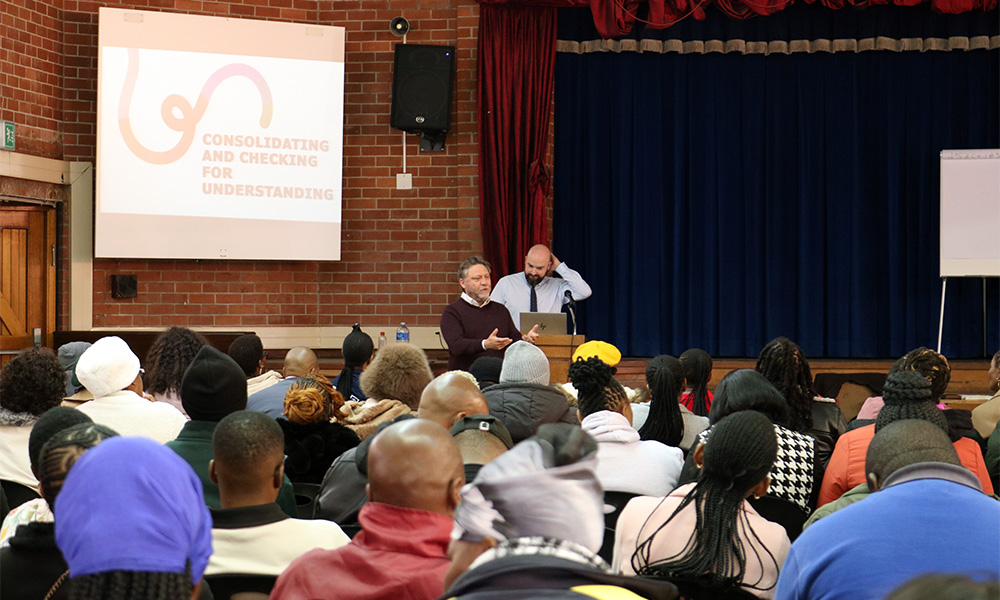
Why geography teacher educator conferences matter: Reflections from Manchester

Posted on

By Dr Verity Jones, Associate Professor in Education

The annual Geography Teacher Educator Conference took place in Manchester this year. At a time when teachers, teacher educators and researchers are navigating curriculum change, intensifying accountability pressures and the urgent challenges of climate and environmental crisis, conferences like this feel more important than ever. They offer not only a space for sharing research, but also a vital community of practice where ideas, uncertainties and hopes can be held collectively.

Conferences as spaces of knowledge exchange and care

The Geography Teacher Educator conference was awash with the generosity of exchange. Geography teacher education sits at a productive intersection between academic research, classroom practice and policy, and this was reflected in the diversity of sessions and conversations. Delegates moved fluidly between theory and practice: discussing curriculum futures, teacher identity, disciplinary knowledge, and pedagogical approaches to sustainability and environmental justice.

Equally important was the sense of support. Informal conversations over coffee were as valuable as formal presentations, offering space to share challenges, test ideas and reconnect with a community that understands the particular pressures of working in and with schools. In a sector where workloads are high and opportunities for reflective dialogue can be limited, these conferences act as moments of pause, renewal and collective thinking.

Schools under the microscope: Interdisciplinary inquiry with children

I was fortunate to present two interdisciplinary projects during the conference. The first was Schools under the microscope, a collaborative project (with Dr Ben Williams and Dr Margarida Sardo, UWE Bristol) that brings together geography, science, creative methods and children’s literature to explore how young people understand and experience their school environments.

Central to this project is our new children’s book, developed as both a research output and a pedagogical resource (with a launch coming soon!). The book invites children to look closely at microfibres. Sharing this work with geography teacher educators prompted rich discussion about the role of narrative, creativity and interdisciplinary approaches in supporting meaningful environmental learning.

The Hear Soil Project

My second input to the conference was a co-presentation with Amanda Bailey (Bath Spa University) focused on the Hear Soil Project. Hear Soil uses sound, sensory engagement and creative inquiry to foreground soil as a living, relational and often invisible element of geographical education.

Presenting this work within a geography teacher education context generated thoughtful conversations about how we might move beyond extractive or purely scientific framings of soil, towards pedagogies that emphasise care, reciprocity and more-than-human relationships. These discussions reinforced the value of collaborative, cross-institutional projects in opening up new ways of thinking about disciplinary knowledge.

Looking ahead

Leaving Manchester, I was reminded that conferences like this are not simply about dissemination. They are about connection, care and collective imagination. For those of us working in education and childhood research, they provide the conditions for interdisciplinary ideas to take root, for early-stage projects to be nurtured, and for shared commitments to social and environmental justice to be renewed.

As we look ahead to upcoming project launches and continued collaborations, the conversations begun at this conference will continue to shape both research and practice – a reminder of why these spaces matter.

Reading for pleasure, public libraries, and voices at the margins

Posted on

By Dr Anish Harrison and Professor Alpesh Maisuria

In November 2025, we submitted written evidence to the House of Commons Education Select Committee inquiry into “Reading for Pleasure”. The inquiry comes at a critical time with national data showing that children’s enjoyment of reading is now at its lowest level since records began in 2005 (NLT, 2025).

The Committee’s review sits alongside the Government’s announcement of 2026 as the National Year of Reading, led by the Department for Education and the National Literacy Trust. Framed as a chance to “kickstart a reading revolution”, the initiative recognises that reading for pleasure matters, not only for attainment, but for wellbeing, confidence and personal satisfaction. However, unless we listen to the experiences of children and families who are least engaged in reading, these ambitions risk falling short of being realised.

From thesis to Select Committee evidence

Our submission draws on doctoral research by Dr Anish Harrison, Voices at the margins: An exploration of the perceptions of ‘vulnerable’ children, their families’ and library professionals regarding reading for pleasure and public libraries. This was Anish’s EdD submission, taking a case-study approach and framed from a critical ecological perspective.  

The research explores how children and families from different demographics, including Children Looked After, children from diverse backgrounds and those in areas of high deprivation experience reading for pleasure.  It also examines the role of public libraries within this context, critically exploring its socio-historical formation and current situation that includes being a critical mechanism for reading to take place.

The study worked with children, parents and library professionals, including early years children, primary-aged readers, and young people in care. The data generated clearly highlighted that reading for pleasure is not an individualised, uniform, and silent activity. It is social, playful, emotional and deeply shaped by environment and opportunities.

One child put it simply:

“I like reading… I just want a book that I like, like comics and that …  not boring old smelly books.”

Their words challenge narrow ideas of what counts as reading, and whose preferences are valued.

Real world reading for pleasure

Across the research, children described enjoyment when they had choice and agency, but in the context of several factors: choosing and having access to a range of materials, reading with others, having inviting spaces to read and engaging with texts that reflected their interests and identities. Reading often happened alongside play, including Lego world-building, role play, and digital media.

The research found that public libraries played a crucial role in making this possible. For many families, they provided a free, welcoming “third space” beyond home and school, where reading was not assessed, timed, or in any way pressured – simply joyful. Libraries enabled shared reading, supported parents who lacked confidence, and gave children access to a wider range of books and formats than were available at home. 

An ecological model was created through the data, which reflected children’s reading for pleasure needs:

However, significant barriers were also identified. Parents spoke about time-poverty, long-working hours, and uncertainty about how to support reading. Some assumed reading was ‘something [that the] school does’ but at the same time, participants noted that school practices undermined enjoyment. For older children, reading was associated with pressure rather than pleasure.

Importantly, structural inequalities were present in what was seen as ‘legitimate reading’. These barriers prohibited the growth of children’s identity as readers, creating significant barriers to enjoying reading for pleasure.

Libraries under pressure

At the same time as reading for pleasure declining, public libraries have faced sustained budgetary cuts. Reduced opening hours, loss of professional staff, and fewer children’s activities have made access increasingly uneven. Library staff told us of high demand for story times and reading-related events, but diminishing capacity to deliver them.

Despite this, public libraries remain places of belonging. When these spaces were informal, well-designed and social, families felt welcome and reading for pleasure flourished. Conversely, where they were large, formal, or understaffed, some participants in the study felt excluded by the coldness.

Why reading for pleasure matters now

The evidence is clear: reading for pleasure supports who children grow as human beings. In the research, it created joy, connection, self-understanding, meaning-making, and confidence in lives shaped by scarcity and pressure. The opportunity to submit to the Education Select Committee was timely and ensured the thesis could have the potential for real-world impact. 

Our evidence-informed submission to the Select Committee makes five key recommendations:

  1. sustained investment in public libraries;
  2. recognising libraries as strategic partners in literacy policy;
  3. actively promoting library services during the National Year of Reading;
  4. adopting minimum service standards; and
  5. broadening definitions of reading for pleasure to reflect children’s reading realities.

If the National Year of Reading is to succeed, it must start by listening to voices at the margins. Public libraries are not a nostalgic extra, they are essential infrastructures for equity, enjoyment, and flourishing.

A matter of Art in the Primary Curriculum

Posted on

By Dr Claire Osborne, Senior Lecturer in Education

The Labour government’s ‘Curriculum and Assessment Review’ (2025) is now out of consultation. As government ministers reflect on the implications for education policy and fulfil their quest to build a “world class curriculum for all”, I want to take a moment to reflect on the future of art learning and teaching across primary education in England.

Art is a serious matter. It involves the development of authentic knowledge and skills such as learning how to master a range of art and design techniques including drawing, painting, and sculpture to knowing about great artists, architects, and designers in history (DfE, 2013). Moreover, studying art at primary level involves having the opportunity to experiment with different kinds of materials and art tools creatively; this could include how to work with charcoal to create light and shade or mastering a range of craft tools to design and make a clay pot. Engaging in the processes and practices of art not only ignites the imagination but can also develop children’s critical thinking skills (see Tambling and Bacon, 2023, p.13); skills which are much needed by industry to support economic growth. The ability to think critically and independently is especially important today as we witness a rise in AI reliance for educational purposes which may potentially impact on people’s cognitive activity and problem-solving skills (see Kosmyna, 2025).

However, due to enduring knowledge hierarchies, as previously identified by Eisner (2002), the teaching and learning of art and visual cultural knowledge can often be sidelined or undervalued in today’s primary school curriculum (see Cooper, 2018; Tambling and Bacon, 2023; APPG, 2023). My own research also suggests that in some cases, children’s engagement with art processes and practices can sometimes be seen as a treat when the “important” schoolwork has been done (Osborne, 2025). This can reinforce an idea that the creative arts and cultural learning experiences are ‘nice to have’ rather than essential elements to the school curriculum (see CLA, 2017).  More still, when arts-based disciplines are taught in primary schools, some teachers reportedly lack sufficient time and resources to plan high quality learning experiences where the development of arts knowledge and skills are at the forefront of curriculum planning (see Cooper, 2018).

Yet despite recent government and Ofsted pronouncements around the importance of children’s access to a broad, balanced, and knowledge rich curriculum, the decline in art teaching and learning, remains an ongoing concern. In many ways the “problem” (my inverted commas) can be attributed to  a succession of central government policy making decisions over the past 30 years which have shifted the role of primary teaching and learning towards standardisation, accountability, and a focus on measuring ‘useful knowledge’ (see Ball, 2017; Nsead, 2016; Biesta, 2010) rather than offering state educated children a more holistic schooling experience (see APPG, 2023; Tambling and Bacon, 2023). However, a lack of access to art in the primary years not only limits children’s exposure to a well-rounded primary education but may restrict, what Aristotle (2018) advocated in his ninth book on Metaphysics, children’s ‘potentiality’ thus raising issues around social equity and personal fulfilment. For some children, engaging with art also serves as a cathartic experience and therefore plays a much-needed role in any school curriculum in supporting children’s general well-being (see CLA, 2018). Yet, although great things are happening in some schools where the arts are supported well by leadership teams with sufficient funding (Osborne, 2025), we still find ourselves in a position where fostering human creativity and children’s self-expression are not always high on the agenda in every state funded school in England whilst the teaching and learning of essential art knowledge and skills can be undermined as generalist teachers are increasingly deskilled or lacking in confidence (see APPG, 2023, p.10; Tambling and Bacon, 2023; Osborne 2025).

To reverse this situation, art needs to be reestablished as a serious and challenging intellectual endeavour within primary education whilst maintaining the creative freedom and enjoyment it can provide for some children. As such, all children need sufficient time in the school week to experiment freely with art materials and processes whilst critically engaging with visual cultural knowledge which can inspire and challenge children’s thinking. Such rich learning experiences can complement other types of learning and subject disciplines across the curriculum and enhance children’s critical thinking skills. Moreover, schools are active sites of learning which can cultivate new knowledge in the field. This includes knowing about a diverse range of contemporary artists, craft makers, and designers who often act as social commentators on our human condition whilst still dedicating lesson time to appreciating and critiquing some of the more familiar traditional artists and art forms widely displayed in public galleries.

However, teachers need real time, space, and investment to be and become knowledgeable others who are confident, well-trained professionals, who are constantly learning from and with children about art processes and practices which foster creativity, self-expression, criticality and original thought. Moreover, teachers need time to be and become inquisitive researchers at the forefront of curriculum reform who promote the value of both ‘powerful knowledge’ (Young, 2008) and ‘purposeful’ knowledge and skills within their localised contexts. But this can only be achieved if reinforced by top-down education policy reform. This may in turn help to reprioritise the place of art within initial teacher education (ITE) whilst influencing school leadership teams in providing ongoing support for teacher’s continuing professional development (CPD) when in role.

Time and resource will always be a challenge despite recent talk about supporting teachers’ professional autonomy over curriculum planning and design (DfE, 2025).  Hence, as we witness the implementation of the Labour government’s recent Curriculum and Assessment Review (DfE, 2025), I would argue more needs to be done, to ensure the power of arts and visual cultural knowledge and skills remains firmly on the agenda in primary education. Moreover, every child attending a state funded primary school in England should have the opportunity to engage in high-quality art learning and creative exploration facilitated by well-trained and knowledgeable teachers who can adapt learning to reflect their local contexts. This is especially pressing today as we consider the growing influence of artificial intelligence (AI) on many facets of school planning and teaching, and the potential impact this may have on learning at every level and in every subject.  As the decline in localise planning continues and there is a growing demand for time saving ready made plans, the question is, how will the tool of AI impact on creative innovation and original thought? What creative possibilities will AI bring to the primary classroom and how can AI be used well to support children’s artistic engagement and authentic learning?

In the years ahead, AI will certainly shape the future of education; and in many ways, AI and the rise in Edtech could address the marginalisation of art in some schools by freeing up teachers to focus more time on providing children with memorable learning experiences rather than being overburdened with administrative tasks. Moreover, AI may provide teachers with better access to generalised artistic knowledge and skills to inform their curriculum planning and innovation thus responding to how learners learn. Nevertheless, AI is only a tool — it cannot replace teacher’s professional knowledge or professional autonomy or address ongoing issues around subject hierarchies. Furthermore, an over reliance on AI for planning, learning or teaching may inhibit both teachers and children’s critical thinking skills and decision-making processes. These are interesting times for primary education especially in terms of the purpose and philosophy of education. As we look to the future, educationists and policy makers will need to think carefully and mindfully about how AI is used as a supportive planning aid whilst considering how teachers can provide children with greater access to authentic, meaningful, and enjoyable art lessons, where everyone can fulfil their creative potential and engage with a “world class curriculum”. Giving children more access to the creative arts during their primary education may also counteract any notions around a potential decline in human cognitive functioning due to AI reliance by enabling us to continue to think for ourselves, both critically and creatively.

References

Earth Day Heroes: Youth action, research impact, and the Bristol Uniform Challenge

Posted on

By Dr Verity Jones, Associate Professor in Education

On 30 September 2025, Sparks Bristol was filled with energy and optimism as over 100 young changemakers gathered for the Earth Day Heroes Awards Ceremony, hosted by the Global Goals Centre (GGC). From Bristol to Bangladesh, young people came together to celebrate the inspiring work they’ve been doing to make the planet better for everyone and everything.

These youth-led projects, spanning rewilding, recycling, campaigning, and creative storytelling, have involved over 7,000 participants taking active, positive steps toward sustainability, justice, and community care. It was a powerful reminder that young people are not just the future, they are part of the solution now.

Grounded in UWE Bristol research

This event and the initiatives it launched are deeply connected to research conducted at UWE Bristol. In particular, the Bristol Uniform Challenge (BUC) was launched at the ceremony. This draws directly on findings from a paper I co-authored with Dr Tessa Podpadec exploring children’s understanding of fast fashion and its impacts. The study, Young people, climate change and fast fashion futures, published in Environmental Education Research, revealed that while many young people are aware of climate issues, the links to everyday clothing choices are often overlooked.

School uniforms offer a tangible entry point for discussing sustainability, equity, and global supply chains. Through BUC, we aim to co-develop practical solutions with schools that reduce waste, support ethical production, and ease financial pressures on families  – while embedding sustainability into everyday school life.

Celebrating youth leadership

The Earth Day Heroes event featured contributions from Naomi Wilkinson (BBC Children’s wildlife presenter), a creative workshop from Aardman Animations, and award presentations by Dr Mya-Rose Craig (Birdgirl) and Cllr Henry Michallat, the Lord Mayor of Bristol. Their presence helped affirm the importance of youth-led action and the value of recognising it publicly.

As an Associate Professor at UWE Bristol, I’ve worked with the Global Goals Centre for over seven years, developing projects that centre social and environmental justice, creative engagement, and inclusive education. The Earth Day Heroes initiative is a living example of how research and practice can come together to support meaningful youth participation.

Looking ahead

Young people are now invited to begin developing their projects for the 2026 Earth Day Heroes Awards, continuing the momentum and deepening their engagement.

As educators and researchers, it’s vital that we create spaces where young people feel empowered to act, reflect, and lead. This event was more than a celebration, it was a demonstration of how research, practice, and youth voice can come together to shape a better future.

Children’s literature, anti-racism, and educational impact: ‘Difference in Primary Schools’ resource

Posted on

By Dr Verity Jones, Associate Professor in Education

On 23 September 2025, Lambeth Palace hosted the launch of the Difference in Primary Schools resource—an ambitious and timely initiative that uses children’s film, songs and literature to support meaningful conversations about race, identity, and belonging in primary education.

Developed by the Difference programme, the resource is freely available to schools and educators across the UK, offering a suite of lessons that foreground empathy, critical thinking, and inclusive practice from early years through to transition into Key Stage 3.

As the team leader for the RESPECT project, I was particularly proud that the transition lesson draws directly on If Racism Vanished for a Day – a book developed through our project. Co-created with children from Bristol schools, the text and illustrations invite readers to imagine a world without racism.

The integration of our book demonstrates how academic research can shape real-world practice, particularly in the context of anti-racism education. It also highlights the power of literature as a pedagogical tool: not only to foster understanding, but to catalyse change.

As schools begin to adopt the Difference in Primary Schools resource, the reach and relevance of RESPECT’s work continues to grow – supporting educators in creating classrooms where every child feels seen, heard, and valued.

Back to top

Follow this blog

Get every new post delivered right to your inbox.