

Project Zulu pedagogy conference and workshops – August 2026

Posted on

Photo credit: Darcey Baker

By Nick Latham, Senior Lecturer in Initial Teacher Education

Do you ever get that feeling in an airport where you’re trying to find out which flight on the screen is yours? You’re staring at the screen and there’s an announcement about looking after your bags, the café nearby has had a large and excited group (probably on a hen do) arrive and your phone has decided that now is the time that it wants to run an update as you check the time? No? Well, I certainly did when leaving Johannesburg airport after delivering sessions to teachers in KwaZulu Natal Province, ironically about the very thing I had just experienced: cognitive overload.

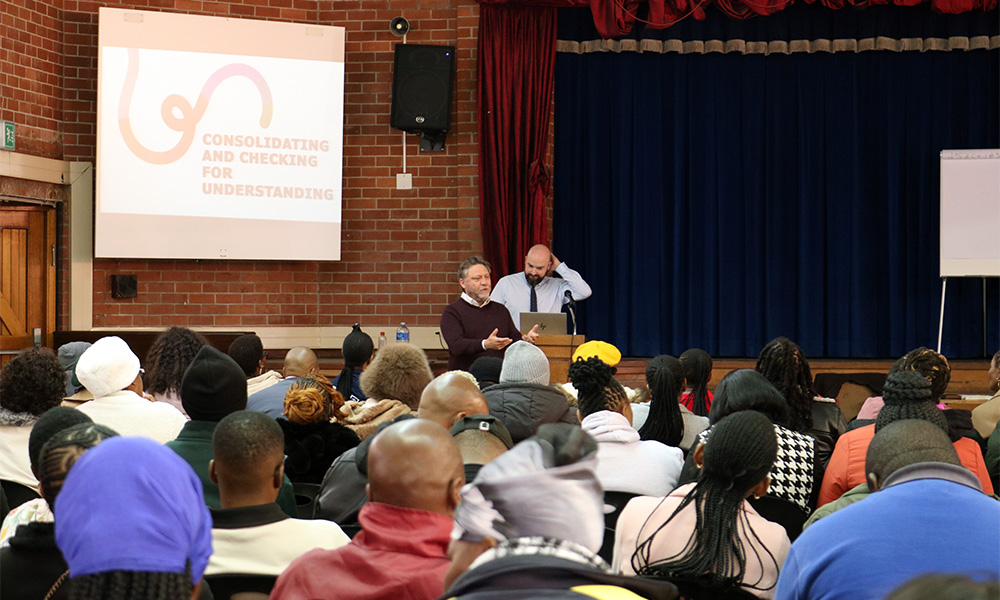
I have experienced cognitive overload both as a student and a teacher (and now at OR Tambo airport) as I’m sure we all have. This meant delivering these sessions to keen (if a little chilly – it’s winter in South Africa) teachers from schools in Madadeni Township with awareness of their cognitive load and not bombarding them with too much information too quickly. Like most teaching in education, teaching such a subject can get very self-referential; you are constantly aware that you should be doing the thing you are teaching whilst teaching it. Facilitating the cognitive load of the learners in our session was at the forefront of our minds when planning this session and it went down well according to the feedback we received both informally in the session and via our reflection forms.

The main content of these sessions focused on ways to reduce the cognitive load of students during the teaching of new material. We had structured the sessions in a way that we were introducing strategies in the order that they would be in lessons. We began with recall strategies and effectively activating students’ prior knowledge to prepare them for their new learning today. In South Africa, this is referred to as ‘from the known to the unknown’ (a phrase that many of the educators joined in with when we said it – clearly a popular one). We then focused on the gradual release model that is being utilised in many schools across England: I do, we do, you do. This involved me putting on my teaching hat and modelling the process as if the educators were my students – a process that, despite the cold, they engaged with as enthusiastically as I’d have hoped. The gradual release model helps students to engage with new learning without causing cognitive overload as the thinking responsibility moves gradually from the educator to the student. We then finished with a section on effective consolidation and how to aid the process of moving new learning from working memory into long term memory (which hopefully our sessions will!).

Another element we had to consider was our environment. Ben had taught sessions in South Africa before whereas I hadn’t been south of the Equator until our arrival. When discussing what elements of learning could lead to learners experiencing cognitive overload, the teachers across all sessions put forward that the children learning in a language that wasn’t their mother-tongue (for most in Madadeni, this is isiZulu) absolutely added to their cognitive load.

Another meta experience for us as this was also the case of the majority of the educators in the room despite their proficiency in English, it could not be ignored that we were not instructing in the language many would use amongst each other or when at home. We ensured that we had added a section about strategies to introduce new vocabulary at the start of lessons to learners as even when they are taught in their first language, new technical and subject specific words can add to a learner’s cognitive load. Our South African colleagues shared with us experiences and examples of these challenges: one science teacher informed us that the English words ‘energy’ and ‘force’ both translate to ‘amandla’ in isiZulu – adding an extra layer of difficulty to teaching about kinetic energy.

Throughout the sessions, the educators were able to give us insights into how they could apply the strategies into their own practice and still keep to the demands of the curriculum in South Africa. This was a wonderful experience working with some dedicated colleagues from a place where they face some similar and yet some very different challenges to teachers in England. This was my first involvement in the wonderful work that Project Zulu does and participating in it was a truly memorable, rewarding and challenging experience that has helped me to reflect more on my own practice.
Teaching, rights, and reality: reflections on Malmö and Lund Universities and the shifting landscape of Swedish education

Posted on

By Dr Karan Vickers-Hulse, Dr Jane Carter and Dr Sarah Whitehouse

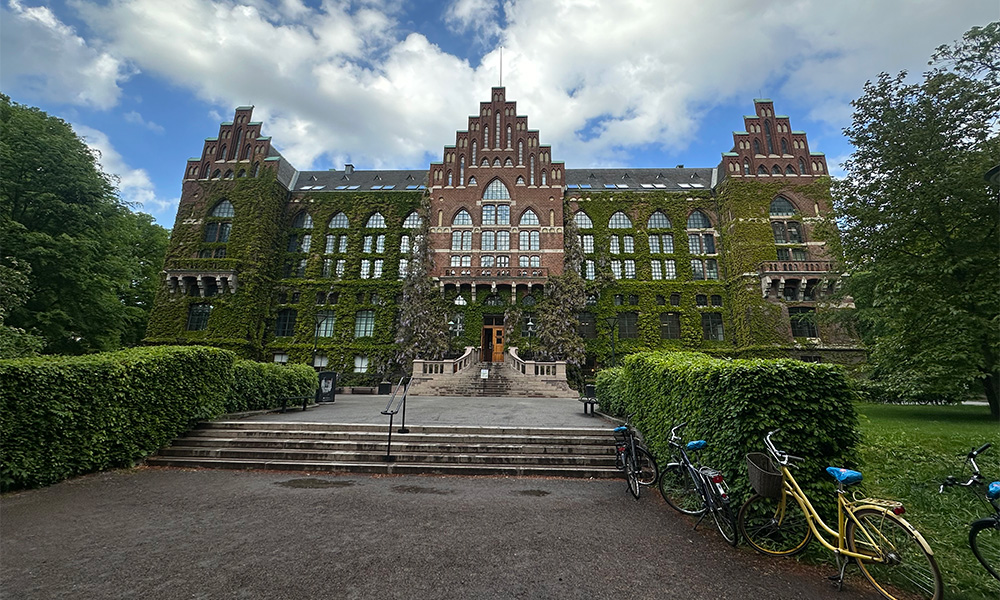
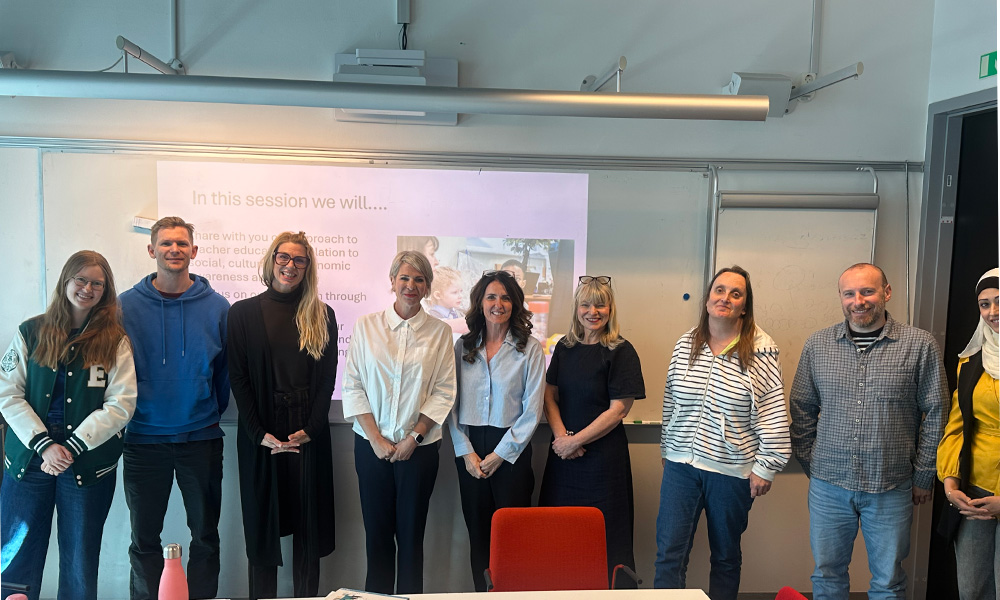
The relationship between education, democracy, and social justice is never static. During our recent ECRG delegation visit to Malmö and Lund Universities, conversations with postgraduate teacher‑education students and staff revealed a system grappling with profound political, demographic, and ideological shifts. These insights offer a powerful lens for thinking about how educators can navigate contested spaces, particularly when issues of critical literacy, anti-racism, and children’s rights are under pressure.

The changing context of Swedish schooling

Sweden’s education system is often internationally associated with equity, inclusion, and child‑centred practice. Yet the picture emerging from conversations with colleagues at Malmö and Lund Universities suggests a sector in transition with demographic shifts reshaping the workforce. Immigration has been halted and birth rates are falling so teacher training numbers are shrinking and yet at the same time, the need for 80% more SEN(D) teachers is rising due to increasingly complex learner profiles. Teacher training students we spoke to describe a system where children “know their rights but are not necessarily independent,” raising questions about how reasonable adjustments are conceptualised. For example, a child whose adjustment is “not speaking” may be protected but not supported towards independence or participation.  These tensions echo debates in the UK, where parental advocacy, funding structures, and the route to a diagnosis can unintentionally shape classroom dynamics and teacher workload.

Teacher identity, retention and the weight of policy

Much like in England, Swedish teachers are expressing a desire to leave the profession. Trainee teachers at Malmö spoke about the profound influence of their mentors-how a single supportive person has the power to shape their sense of belonging in teaching. Policy changes are also reshaping professional identity. Currently, there is a compulsory course on social relations and core values within teacher education in Malmo, but the 2028 curriculum reforms propose removing human rights, children’s rights, and even critical literacy. One student summarised the government’s stance starkly: “We (Swedish) don’t care about critical thinking.”  This shift has implications far beyond the classroom as the influence of social media rises, the removal of critical literacy from the curriculum risks leaving young people without the tools to navigate misinformation or interrogate power. Students we spoke to at Lund shared similar views but also reflected on the open discrimination of the indigenous Sami people in Sweden (one of the students was Sami) as well as the fact that being openly racist on teacher education courses was not always challenged.  One student reflected that there was a student on their course who was open about the fact that he supported Nazi views and when students raised the issue, the common response was that everyone is “entitled to their opinions”.  

Critical conversations: racism, silence, and the Swedish context

Perhaps the most striking theme was the difficulty of naming and addressing racism within Swedish institutions.  Colleagues described a university culture where racism is “not discussed,” and there is a national reluctance to use the word racism at all with one colleague stating that “it would be impossible to identify as a structurally racist institution” after we shared that our Vice-Chancellor identified UWE Bristol as institutionally racist.  Colleagues highlighted a fear that equality data could be misused, resulting in a system where ethnicity cannot legally be recorded. Instead, categories such as “Swedish,” “Non-Swedish”, “immigrant,” or “born outside Europe” act as proxies. Despite this, young people themselves appear to be shifting the narrative. Many now identify as Swedish and Iranian, Bosnian, or Arab suggesting a more self‑defined sense of belonging than previous generations.

Curriculum, values, and the politics of knowledge

Sweden’s highly standardised system requires students to study social sciences and humanities until age 18, with schooling continuing until 19. Social science teachers described teaching students to evaluate sources but also acknowledged the need to explore perspectives and voices; a task that becomes harder when political discourse narrows. In both UK and Sweden, the challenge is not simply what we teach, but how we create conditions for students to question, interpret, and imagine differently.

Navigating hope and responsibility

Despite the challenges, trainee teachers at Malmö University and Lund University expressed a desire to focus on how to hold critical conversations, how to support independence and how to navigate tensions between policy and practice. Their reflections suggest that even in restrictive climates, educators can cultivate spaces of inquiry, empathy, and resistance.  These conversations with colleagues in Sweden remind us that anti‑racist practice requires language, courage, and institutional support and that critical literacy is not optional but foundational to democracy. One educator noted that schools’ practice, grappling with the realities of migration, identity and inequality, was developing at a more rapid pace than in the university, saying “the university is often behind the schools.”

The conversations at both universities highlight the need for continued dialogue across borders. Whether in Sweden or the UK, educators face shared challenges: rising polarisation, shrinking civic spaces, and the erosion of critical thinking in public life.  Yet there is also shared possibility. Young people are redefining identity and teachers in schools are seeking deeper pedagogical understanding. And universities, when they choose to, can become spaces where difficult truths are spoken and new futures imagined. At ECRG, we’ll continue to do this work.

Back to top

Follow this blog

Get every new post delivered right to your inbox.