New Ways to Think About Classrooms and Teachers – An ECRG Pedagogy Strand Seminar

Posted on

Dr Ben Knight – ECRG Pedagogy Strand Leader


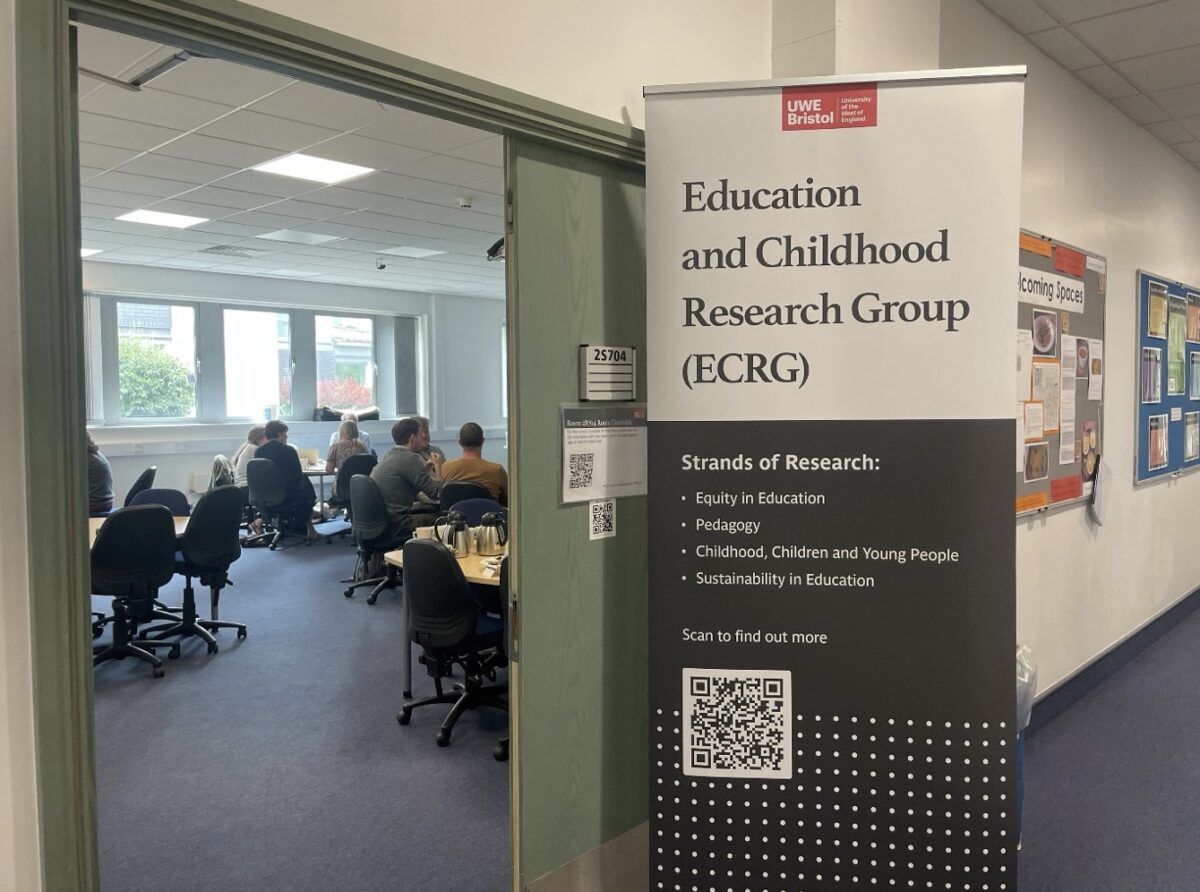
On Monday 5th June 2023, Dr Mark Hardman of UCL and Dr Lindsay Hetherington of the University of Exeter delivered a fascinating lunchtime research seminar focusing on ‘New Materialist’ ways of thinking about classrooms and teachers. Their aim was to show how theory can be used to inspire research into teaching practice. Drawing on examples from their own projects using a ‘material dialogic’ theoretical framework, Mark and Lindsay helped us explore different perspectives on teaching and learning practice. 

Participants were invited to consider how ‘material dialogic’ concepts aligned with their own research interests and contexts. The event prompted much fruitful discussion between Education & Childhood colleagues and provided a valuable space for reflection on theory and practice.

Feedback from the event was very positive, with PGCE Secondary Programme Leader Will Grant commenting:

“It was good to have some mental stimulation during a day of administrative chores! More opportunity, and expectation, that colleagues involve themselves in activities such as this can only be of benefit to the ITE team.”

Professor Jane Andrews also commented:

“I just wanted to say thank you for organising such a great seminar session today. I thought both speakers were really excellent and very engaging and the format for the event was really great too. Please pass on my thanks to the speakers and I’d love to attend more events like this one!”

Thanks to everyone who attended in person and online. More ECRG Pedagogy Strand events are planned for the 2023-24 academic year so please look out for announcements.

Towards a Network for Black Studies in Education at UWE ECRG 

Posted on

Malcolm Richards, Senior Lecturer in Education, Malcolm.Richards@uwe.ac.uk


Black studies is an interdisciplinary academic field that primarily focuses on the study of the history, culture, and politics of the peoples of the African diaspora and Africa and extends knowledge and experiences to include contributions as dynamic as ancient African histories to world civilisations. There remains growing frustration over the absence of black studies across the UK higher education sector, citing significant concerns that broader range of knowledges is excluded from the academy, which counters initiatives which respond to the disproportionate outcomes for marginalised student and staff communities.  

Led by Malcolm Richards (Senior Lecturer in Education) and facilitated through UWE New Starter Research Scheme (2023-2026), this project seeks to establish a Network for Black Studies in Education research across Britain with UWE. This exciting project brings together ongoing and new interdisciplinary projects across UWE ECRG (Education and Childhood Research Group), alongside the Equity in Education strand, principal partners, and wider educational communities to foster deeper understanding around research which focuses upon philosophical, intellectual, pedagogical, creative, and transformational experiences of peoples of African descent in education across Britain.   

The aim to establish a globally recognised Network for Black Studies in Education research at UWE. This project brings together ongoing and new interdisciplinary projects at UWE and with principal partners and wider educational communities to foster deeper understanding around the broad range of research which focuses upon philosophical, intellectual, pedagogical, creative, and transformational experiences of peoples of African descent in education across Britain, to better understanding and connect universities to the communities they serve.   

Project priorities: 

  1. Identify, examine, and strengthen valuing of theories, research, and pedagogical practices from Black Studies in Education scholarship.  
  1. Contribute to collaborative production and advancement of Black Studies in Education scholarship in the areas of research and pedagogy, curriculum development. 
  1. Engage UWE staff and students, research partners and local-global educational communities by sustaining accessible and inclusive spaces for critical dialogue surrounding issues of race, racism, identity, culture, indigeneity, social justice, and more. 
  1. Facilitate and encourage networking and collaboration with study programs, UWE staff and students, research partners and community organizations to better understand the field of Black Studies in Education, research, pedagogy, and practice. 
  1. Curate and archive local-global knowledge production and exchange and active research partnerships on issues of importance across the field of Black Studies in Education in Bristol, and beyond.  

Through the development of a virtual campus (site in development), we will engage audiences inside and outside the academia through a diverse programme of collaborative research activities, including publications, online symposiums, digital reading groups, exhibitions, and collaborations with our principal partners and wider local-global communities. We hope such activities can generate significant impact in other areas of strategic importance, including educational policy, sustainable education, health, and wellbeing, and support future research and funding opportunities.  

For more information about the Towards a Network for Black Studies in Education at UWE ECRG project, please can contact Malcolm Richards malcolm.richards@uwe.ac.uk directly. The project’s virtual campus launches in early 2024. 

Photo © Malcolm Richards 2023.  

References 

  • Alklimat. A. (2021). The History of Black Studies. Pluto. 
  • Andrews, K. and Palmer, L. (2016). Blackness in Britain. Routledge London. 
  • Bryan, B., Dadzie, S., and Scafe, S. (1985/2018). The Heart of The Matter: Black Women’s Lives in Britain. Verso. 
  • Callender, C. (1997). Education for Empowerment: Practice and Philosophies of Black Teachers. Trentham Books. 
  • hooks, b. (1994). Teaching To Transgress: Education as the Practice of Freedom (Harvest in Translation). Routledge. 
  • Sobers, S. (2023). Black Everyday Lives, material culture and narrative: Tings in de House, Routledge. 
  • Waters, R. Thinking Black: Britain, 1964-1985 (2019). University of California Press. 

‘We Out Here’ – Black British Voices in English Curricula

Posted on

Amy Saleh, Amy.Saleh@uwe.ac.uk


In 2020, the absence of Black writers from GCSE English Literature set text lists was widely acknowledged in educational reports and news outlets (Sundorph, 2020; Pearson, 2020; Weale and Bakare, 2020). UK exam boards have since changed this and a range of Black British literature can now be studied by GCSE students.

However, a Lit in Colour report (Elliott et al., 2021) revealed that:

  1. Despite authors of colour appearing on set text lists, the significant majority of students studied texts written by White authors in 2019
  2. Issues of time, money, subject knowledge and teacher confidence are barriers to teachers selecting texts by authors of colour
  3. Most secondary school teachers have had no training on how to talk about race

I thought: what can be done to remove some of those barriers? And so, the project was conceived.

The What, the Why and the How.

The project involves the collaboration of Black British teachers, with support from Black community leaders and young people in curating curricula, resources and CPD for teaching ‘Princess & The Hustler’ by Chinonyerem Odimba. This play is a celebration of Blackness and set in St Agnes amidst The Bristol Bus Boycott, a defining moment in Bristol’s history.

Exam boards usually publish guides to support the teaching of texts, though it is not their responsibility to create schemes of work. This is an opportunity to offer schools a unique and authentic set of resources which utilises the knowledge, perspectives, skills and lived experiences of Black British educators. Being racialised as Black does not automatically guarantee better knowledge of Black British texts, but a lack of racial diversity within English departments contributes to the idea of English being a ‘White subject’; this must be factored in when looking at the subject choices students make for A-Level or at university, and then applicants to ITE courses (ibid.).

We have created a six-week scheme of work with a set of resources to accompany lessons, including quizzes; contextual links; and exam-style questions with model responses. The CPD offer will enable teachers to develop their racial literacy and prepare for issues that may arise when facilitating ‘race talk’ (Sue, 2013) in the classroom. This will draw upon a paper titled “Black British Literature in the Secondary English Classroom” I presented at the ECRG Equity in Education conference (2023) and have submitted to the Changing English journal.

Following the launch of these materials (soon come!), small-scale research will be carried out in local secondary schools to assess the impact. Through class observations and focus groups, the student voice and experience can be centred, potentially influencing the teaching and learning of Black British literature across contexts.

Amy Saleh (amy.saleh@uwe.ac.uk)

Senior Lecturer in Initial Teacher Education

References

Elliot, V., Nelson-Addy, L., Chantiluke, R. and Courtney, M (2021) Lit in Colour: Diversity in Literature in English Schools. [online]. London: Penguin. Available from: Lit-in-Colour-research-report.pdf (penguin.co.uk).

Pearson (2020) Diversity and Inclusion in Schools [online]. London: Pearson. Available from: Diversity and inclusion in schools report (pearson.com).

Sue, D. W. (2013). Race talk: the psychology of racial dialogues. Am Psychol [online]. 68 (8), pp.663-72. [Accessed 12 July 2021].

Sundorph, Emilie (2020) Missing Pages: Increasing Racial Diversity in the Literature We Teach [online]. London: Teach First. Available from: English Curriculum Diversity Report..pdf (teachfirst.org.uk).

Weale, S. and Barake, L. (2020) Many GCSE pupils never study a book by a black author. The Guardian [online]. 30 September. Available from: Many GCSE pupils never study a book by a black author | Race in education | The Guardian [Accessed 24 July 2023].

Nurturing Professional Judgement: A Critical Guide for Teacher Educators

Posted on

Dr Ben Knight, Benjamin3.Knight@uwe.ac.uk


Dr Ben Knight, Senior Lecturer in the School of Education & Childhood has a new book coming out in January 2024.

The book guides teacher educators and early carer teacher mentors in ways to nurture professional judgement in the complex, dynamic and unpredictable environments of classrooms.

In-the-moment dilemmas and situational awareness are central to teachers’ work, but these concepts may not always find their way into teaching about teaching – as they often get pushed aside in favour of curriculum coverage and box ticking. This book challenges a technicist and mechanistic view of teaching and learning to examine how teacher educators might best prepare soon-to-be teachers to adapt to the multiple and ever-changing dilemmas of classroom practice. It discusses evidence in the literature that teaching does not simply ‘produce’ learning and that nurturing learning is a complex business which relies on both ‘art and science’. Current policies and compliancy agendas influencing the content of ITE programmes are analysed, and the text provides practical suggestions for how to nurture professional judgement in trainee and novice teachers, through HE provision and school-based mentoring.

The book describes the dynamism of those who teach in classrooms and reminds teacher educators of the value and necessity of managing structure and improvisation, protocol and intuition which are at the heart of what it means to be a professional.

The book is available for pre-order from Critical Publishing and Amazon.

Author Biography

Dr Ben Knight is a former primary teacher and current academic, teacher educator and educational researcher. After 11 years in the classroom Ben now teaches future teachers and educational researchers on a variety of undergraduate, postgraduate, masters and doctoral programmes at UWE. His own research and writing interests include teacher professional learning, interactive group work and applications of complexity theory to education.

Equity in Education Conference 2023 – FREE – ONLINE – Thursday 6th July 2023 between 09:00-17:30

Posted on

Mr Malcolm Richards, Malcolm.Richards@uwe.ac.uk.


Equity in Education 2023 seeks to build on recent ECRG events and highlight the outstanding research and teaching in equity in education across UWE, and with our partners. This conference is taking place on Thursday 6th July 2023 between 09:00-17:30 The conference is hosted online using UWE Teams online platform.

This a FREE event but registration is necessary. Click on this link for details. Links to sessions will be sent to all registered colleagues on Wednesday 5th July 2023 before 4pm.

Equity in Education Conference Programme 2023

TimeDESCRIPTIONS
WELCOME   9.00AM-9.15AM  Welcome, introductions and housekeeping with Malcolm Richards (UWE)  
Session 1 9.15AM-10.00amECRG In Conversation: Professor Richard Waller (Professor of Education and Social justice) in conversation with Dr Verity Jones (Associate Professor in Sustainable Education), and Dr Alpesh Maisuria (Associate Professor in Critical Education).   Colleagues will be discussing the following question: How can research contribute to more inclusive, diverse, equitable and just communities and societies?
SESSION 2 10.00am – 10.30amProfessor Richard Waller (UWE) Class and gendered inequalities in higher education: Some findings from the Paired Peers study
SESSION 3:   10.30am-11.30amPostgraduate student panel and Q & A Rachael Pryor Virtual schools and inequality in Bristol Anna Burchfiel Radical Access: Rethinking Undergraduate university admissions in England to tackle social inequalities
Paula Fieldhouse I could never do maths at school! How the intergenerational transmission of Maths Anxiety contributes to educational inequality and what can be done about it.
SESSION 4   11.30am-12.30amStudent voice and active participation Dr Ben Knight and Dr Marcus Witt (UWE) Personality-Sensitive Pedagogies: A Mixed Methods Analysis of Small Group Interactions Among 9-10 Year Olds
Ella Rees (UWE) Lessons learnt from a campus climate survey at a Post-92 UK University for sexual and gender-based violence
SESSION 5:   12.30am-1.30pmCreative methods and equitable pedagogies Luci Gorell Barnes and Dr Tessa Podpadec (UWE) Creative arts methods and methodologies
Dr Jane Carter (UWE) Influencer research: Reading, school libraries and reading across Bristol’s Somali community (pre-recording)
Will Grant (UWE)A reflection on dialogic diving boards and decolonising school art: The African mask project.
1.30pm-2.00pmLUNCH
SESSION 6   2.00pm-3.00pmLanguage, literature, performance, and expression in education (pre-recording) Amy Saleh (UWE) Teaching the Princess and the Hustler Tanisha Hicks-Beresford and Emma Thomas (UWE) Black Joy in the Curriculum Beyond Face Theatre Company Language, literature, and performance in education
SESSION 7   3.00pm-3.30pmNeurodiversity, teaching, and teacher education Jamie Whelan and Kalpa Ghelani (pre-recording)  
SESSION 8   3.30pm-4.30pm              Race, racism, and leadership in Bristol schools Claire Stewart-Hall (Leeds Beckett University) How whiteness functions through school leadership in the city of Bristol
Justin Vafadari and Dr Sarah Whitehouse (both UWE) REST Project Bristol
Alex Brown and Terra Glowach (UWE) Racism, counter stories from black teachers and school leadership in Bristol schools
SESSION 9   4.30pm-5.15pm  Black Educators Book Club: Bristol Hosted by Camille London-Miyo (Stephen Lawrence Research Centre) and Malcolm Richards (UWE) with Lisa Panford (Queen Mary University), Amy Saleh and Terra Glowach (both UWE)  
Pre-reading for this session: (open source) Link: Making spaces for collaborative action and learning: Reflections on teacher-led decolonising initiatives from a professional learning network in England?  
SESSION 10 5.15pm-5.30pmClosing remarks and next steps with Malcolm Richards (UWE)
Schedule of EiE online conference

Hosted by Education and Childhood Research Group (ECRG), this online event offers participants an opportunity to meet with others who share interests and to discuss their work, develop connections and possibilities that will encourage knowledge production and collaboration in the future.

This conference is suitable for anyone interested in or working on equity’ issues in educational and other contexts. We particularly welcome students and student-teachers from our respective institutions, alongside educators in schools, education unions and community education institutions across the UK, as well as colleagues from overseas.

For enquiries please contact Malcolm Richards via email on malcolm.richards@uwe.ac.uk

Embracing creative approaches on the professional doctorate in education (EdD)

Posted on

What is a doctoral thesis in education? 

Dr Tim Clark (UWE Bristol) and Professor Tom Dobson (York St John University)

We are pleased to share our upcoming collaborative research project which will explore the benefits and barriers to EdD students adopting creative approaches to project design and the presentation of their theses. 

But before explaining the project, let us outline why creativity and the EdD seem to go hand in hand.  A number of researchers have highlighted how the EdD programme has gained in popularity across the globe over the last two decades and in doing so have also highlighted how this growth has necessitated a rethink in what counts as knowledge and how that knowledge should be presented (Jones, 2018; Hawkes and Yerrabati, 2018; Wildy, Peden and Chan, 2015).  The main reason for this is that in focussing on practice in an education context, the EdD moves away from what Gibbons et al. (1994) call “mode 1” knowledge creation (i.e. knowledge created in the University) to “mode 2” knowledge creation (i.e. knowledge created in the context of practice with the help of the University).  Because of this shift from mode 1 to mode 2 knowledge creation, other researchers have called for a new type of “hybrid” thesis (Vaughan, 2021; Wisker, 2017), whose origins and audiences are located within the practices they articulate and explore. 

However, what research into the EdD and other professional doctorates shows is that the radical implications of this shift of knowledge are rarely embraced by students and their supervisors in the contexts of Higher Education.  This is due to both a lack of clarity in the way in which the EdD is articulated (Wildy, Pedden and Chan, 2015) as well as a tendency for University policies and practices to encourage students to follow traditional approaches to methodology and thesis writing (Wisker and Robinson, 2014; Brodin, 2018; Thurlow, 2021).  As our previous research shows (Dobson, 2022; Clark, 2022), this means EdD students often have limited agency when it comes to making key decisions about how they approach their research and writing.  Essentially, there is a risk that they are restricted to following a frame that has been provided for them. 

Photo by: British Council, TeachingEnglish

Our collaborative project will involve two phases.  The first phase is a scoping activity where we are writing a paper for a special edition of Teaching in Higher Education (abstract accepted), which argues that arts-based research (ABR) can help EdD students achieve mode 2 knowledge generation and the presentation of this in their own hybrid thesis.  Part reflection on our experiences of the EdD programme through creative writing, part position paper, and part systematic review, our hybrid article will map the theoretical underpinning of the EdD to ABR and in doing so articulate the benefits and the barriers of EdD students using ABR in their studies. 

Patricia Leavy’s Handbook of Arts-Based Research (2018) makes the parallels between the EdD and ABR easy to spot.  Irwin et al. (2018, p.50), for example, identify ABR as practice-based research which is a form of “living inquiry” where both self and others are represented and explored, making ABR both “relational and reflexive in character”.  This heightens the potential for participatory research as the “dimensions of engagement” are increased and “dialogic interchange” between self and others takes place (Gergen and Gergen, 2018, p.64).  According to McNiff (2018, p.32) the nature of this living inquiry means that students should be given more “format freedom” with their theses.  For Leavy herself (2018, p.11), this means students writing for a non-academic audience as “public scholarship and usefulness” become integral to inquiry. 

The second phase of our project will take place next academic year and will involve EdD students from both of our institutions as active participants in ABR workshops.  The idea of the workshops will be to expose EdD students to ABR practices and help them think about ways of approaching their own living inquiries using aspects of ABR.  This could include adopting ABR as a small aspect of their project design (e.g. using photo-elicitation in interviews) or adopting ABR as fundamental methodology (e.g. using creative writing to capture lived experiences).  As a form of living inquiry in its own right, our workshops will also allow us to investigate how we and our EdD students experience these workshops by using ABR practices, which we will negotiate with each group.  The data generated through the workshops will then be analysed and presented in appropriate hybrid forms with the EdD students as co-researchers. 

If any of this sounds of interest to you, or if you would like to participate in the project in some way, please do not hesitate to context us.  Through methodological and presentational innovation we hope to focus on making research more appropriate to practice and more accessible to all. 

Tim Clark

Tim.clark@uwe.ac.uk

Tim is a Senior Lecturer in the School of Education and Childhood at UWE Bristol

Tom Dobson 

t.dobson@yorksj.ac.uk 

Tom is a Professor of Education in the School of Education, Language and Psychology at York St John University   

References  

Brodin, E., (2018). The stifling silence around scholarly creativity in doctoral education: experiences of students and supervisors in four disciplines.  High Educ, 75, pp.655-673. 

Clark, T. (2022). Methodological becoming: Doctoral students’ perceptions of their methodological journeys. Studies in Graduate and Postdoctoral Education13(1), 36-53.

Dobson, T. (2022). “A structure that other people are directing”: doctoral students’ writing of qualitative theses in education.  The Qualitative Report, 27(4), pp.997-1010. 

Gergen and Gergen (2018) The Performative Movement in Social Science. In: Leavy, P. (ed.) Handbook of Arts-Based Research.  Guilford Press. 

Gibbons, M., Limoges, C., Nowotny, H., Schwatzman, S., Scott, P., and Trow, M. (1994). The New Production of Knowledge: the dynamics of science and research in contemporary societies.  London: Sage). 

Hawkes, D., and Yerrabati, S. (2018). A systematic review of research on professional doctorates.  London Review of Education, 16(1), pp.10-27. 

Irwin, R., LeBlanc, N., Ryu, J.., and Belliveau, G. (2018).  A/r/togrpahy as Living Inquiry.  In: Leavy, P. (ed.) Handbook of Arts-Based Research.  Guilford Press. 

Jones (2018). Contemporary trends in professional doctorates. Studies in Higher Education, 43 (5), pp.814-825. 

Leavy, P. (2018a).  Fiction-Based research.  In: Leavy, P. (ed.) Handbook of Arts-Based Research.  Guilford Press. 

Leavy, P. (2018b). Introduction to Arts-Based research.  In: Leavy, P. (ed.) Handbook of Arts-Based Research.  Guilford Press. 

McNiff, S. (2018). Philosophical and Practical Foundations of Artistic Inquiry.  In: Leavy, P. (ed.) Handbook of Arts-Based Research.  Guilford Press. 

Thurlow, S. (2021). Creativity is for poets and pop singers, isn’t it?  Academic perspectives on creativity in doctoral writing.  Arts and Humanities in Higher Education, 20(2), pp.187-206. 

Vaughan, S. (2021). Practice submissions – are doctoral regulations and policies responding to the needs of creative practice? Research in Post-Compulsory Education, 26(3), pp333-352. 

Wildy, H., Peden, S., and Chan, K. (2015). The rise of professional doctorates: case studies of the Doctorate in Education in China, Iceland and Australia. Studies in Higher Education, 40:5, pp.761-774. 

Wisker, G., and Robinson, G.  (2014). Experiences of the Creative Doctorate: Minstrels and White Lines.  Critical Studies in Teaching and Learning, 2(2), pp.49-67. 

Wisker (2017). The Contemporary Research Degree: Whose Project is it Anyway?Non Traditional Research Outcomes.  Available online: https://nitro.edu.au/edition-24

Education in a Complex World

Posted on

Dr Ben Knight, Benjamin3.Knight@uwe.ac.uk.

Architecture Media & Politics Society (AMPS) annual conference, Toronto, Canada.

26th-28th April 2023.

Last month I presented a paper entitled ‘Exploring the Complex, Emergent Choreography of Classroom Teaching & Learning’ at the annual AMPS conference at Sheriton College, Toronto. Delegates came from over twenty different countries and each speaker brought their own particular take on the complexities of education at all levels in a fast-changing world.

My own interest in complexity and education stems from my interest in complexity theory as a framework for understanding the emergent and non-linear ways in which educational systems, from classrooms to national curricula operate and how bottom-up and top-down forces collide to create change. There were a number of other complexity theorists present and it was great to be able to have informal and fruitful dialogue about our work and possible future collaborations. In particular, two colleagues from Edinburgh University are keen to stay in touch and work towards some joint outputs.

There were also speakers who interpreted complexity in the more general sense and presented about the challenges of adapting to Covid lockdowns, about the complexities of intercultural learning and about balancing learner autonomy with curricular and pedagogical constraints. The keynote, delivered by the Dean of Sheriton College, focussed on the challenging world of work-related learning and proposed strategies for designing programmes which productively combine university and industry-based learning experiences. As a teacher educator working in a changing professional and political landscape this topic was of particular interest. My own talk was about the complexity of classroom learning, how learning does not wrap itself into neat 60-minute packages or appear on cue when teachers would like it to. I discussed evidence from research and from the classroom itself that learning is a messy, unpredictable and indeterminate phenomenon which demands expert judgement from teachers. My central thesis was that since learning is not a single, mechanised process or a predictable ‘product’ of teacher input, teaching cannot be scripted. Rather, classroom expertise relies on teachers’ capacity to problematise pedagogical dilemmas and critical incidents. I drew on my doctoral research and some of my subsequent publications, and was able to promote my forthcoming book on teacher professional judgement. My presentation was well received and followed by a lot of questions from the floor. A highlight was being able to share the below model for teacher judgement which I’ve been working on. The model situates judgements as occurring during and away from the moment of teaching, mapping loosely onto Schön’s (1987) concepts of reflecting in and on action.

In particular, I emphasised the value of systems thinking and how understanding the classroom as a system with multiple internal moving parts which mutually influence each other can help teachers to make productive organisational judgements. It was so helpful to be able to stand up and articulate the above model to others for the first time, get feedback and answer thoughtful questions about it.

It’s always nice to present on day one of a conference. Firstly, because you can then relax, enjoy the remaining presentations and focus on others’ work, but also because it leaves plenty of time to engage with fellow delegates who have had the chance to listen to your work. Meals out on the two evenings provided ample opportunities for this. Informal conversation over a meal and a few drinks with colleagues from different parts of the world always offers opportunities for new learning, but also always reminds me of how similar we all are irrespective of our different experiences, how similar education is and how as educators we share similar triumphs and make similar mistakes, wherever we are in the world. The jetlag wasn’t fun, neither was the mouse in my hotel room at 3am, but despite this I’ve come away from this conference having:

  • Strengthened and clarified my own ideas and work through exposing it to peer scrutiny
  • Learned from colleagues sharing a diverse range of educational ideas and complexities
  • Networked and forged some promising connections for future collaborations
  • Toronto Maple Leafs – Logos DownloadPromoted my book
  • Sharpened my thinking
  • Become a Toronto Leafs ice hockey fan (go Leafs!)

Research in Further Education: The pathway towards continual professional development and the reflection and application of outstanding Teaching and Learning practices.

Posted on

Education and Childhood Research Group (ECRG), School of Education and Childhood, College of Health, Science and Society, UWE Bristol

In this blog, Gemma Lyons, a current EdD student at UWE and a Teaching and Learning Lead at Richard Huish College in Somerset, discusses the benefits of further education staff being ‘researchers’, as part of the delivery of outstanding teaching and learning practices.

The blog explores how action research has supported the development and refining of effective Teaching and Learning practices.

Earlier this year, the Department for Education (DFE) released its policy for Teacher development. Delivering world – class Teacher development (March 2022). Rationale, following the pandemic, levelling up is now the foci of the agenda. The ‘Schools White Paper, Opportunity for All’, sets out plans to make sure every child can reach the full height of their potential (Department for Education, White Paper, March 2022).  

Have educators been blinkered in our previous visions?
Most educators work with the premise of making a difference; creating environments in which all students can be provided with the opportunity to grow, bloom and flourish.

Teachers are the foundation of the education system – ‘there are no great schools without great teachers’ (Department for Education, 2022). This vision is reflected as baseline culture at Huish and is undercurrent throughout day-to-day activities. ‘ The vision for Huish is delivering exceptional education and delivering exceptional education requires exceptional people who are both reflective and engage in their own professional development and continuous improvement’ (Huish policy and procedure, 2021).

The Huish vision acted as the foundation, which the Teaching and Learning team built upon in 2020. In January 2020, as a teaching and learning team, we launched our first action research project. The aim of doing so, was to encourage staff to be inquisitive, considerate, and reflective about their and their learner’s learning environment and to be able to convert the findings in to beneficial ‘action’, to enable further success in an area or to enable adaptation to enhance outcomes.

When carrying out the action research, members of staff worked together in course teams to co-construct research activity. The Teaching and Learning team, directed the process, by providing the focus of formative assessment, as an area for investigation. Wiliam & Leahy’s Five Formative Assessment Strategies in Action by Kate Jones was explored. This focus was selected as it aligned with our college priorities at the time.

As a team, we facilitated teachers carrying out the research, by providing literature support and segmenting existing knowledge. Time was allocated on staff development days to aid completion . Staff gathered data during their normal day to day work and interactions. Staff members arranged lesson swaps and observations of one another, to support their investigations. Allocating space for thought and time for action, as well as having a flexible approach, were key to this project’s success.

The outcome was that during summer 2022, our first Huish action research book was published, containing research from the differing course teams on the investigative focus of formative assessment. Some examples included ‘engineering effective classroom discussion, peer- to peer learning and feedback strategies.’ We celebrated, by sharing best practices. Staff had the opportunity to showcase and discuss findings with each other. Our very own peer-peer learning!

Back to business in September, after summer break, we are now into action research projects round 2! This time staff can choose a theme or topic that they want to grapple with, alongside the focus being interlinked with the College or Course quality improvement targets, student feedback or being data based driven. So far, we have projects looking at classroom-based themes, such as flipped learning, positive psychology and independent learning, as well as research focused on pastoral and wellbeing aspects, such as retention, motivation and mental health, just to name a few. Academic, pastoral and well being staff are all involved in the process .

In the summer term last academic year, we were lucky enough to have Ofsted on site . From our visit, our final report found:

‘Learners develop an excellent attitude to their studies. This is demonstrated through their commitment to purposeful independent study. This commitment is not achieved by accident. It is the result of teachers using evidence-based methodologies to teach learners the benefits of independent study and instilling the attitudes and behaviours learners need to be successful students of their subject.’

(Extracts from Richard Huish Ofsted 2022 report)

We might be Ofsted outstanding, but that doesn’t mean we can take our feet off the gas! Our ultimate goal of improving the quality of teaching and learning provision for our learners remains.

To continue to develop best practices, we are striving for networking and partnership working opportunities. To get the ball rolling, we aim to begin partnership working with the Education department at UWE as of 2023. Aligning research that compliments both UWE’S 2030 strategic vision and Huish’s quality improvement priorities.

If you would like to discuss partnership opportunities, please make contact. We can offer an ‘on the ground’ approach to learning from research.


Contact email address: gemmal@richuish.ac.uk – Gemma Lyons- Teaching and Learning lead for school of Humanities and Social science at Richard Huish College. Taunton.

The Teaching and Learning Team at Richard Huish College, who have been involved in overseeing the process; Emma Fielding, Saffron Lee, Sarah Marshall, Toby Eveleigh, and Gemma Lyons (top to bottom).

Not to forget the wider College body of Academic, Pastoral, Wellbeing, and Support staff, who without them, we would have no research to discuss.

References

Department for Education (2022) Delivering world- class teacher Development, Policy paper, Crown copyright.  

Department for Education (March 2022) Schools White Paper, Opportunity for All, sets out plans to make sure every child can reach the full height of their potential. Policy paper, Crown copyright.  

Ofsted Inspection of Richard Huish College (2022) Further Education and Skills inspection report. Available at http://reports.ofsted.gov.uk/.

Richard Huish College (2022) Action research projects, formative assessment.

Richard Huish College (2021) Policy and Procedure, Continuous Professional Development and Appraisal.

“My Magical Garden”: A mindfulness intervention for teachers working with children experiencing challenges around anxiety, stress and self-regulation – exacerbated by the Covid-19 pandemic, school closures and ‘curriculum catch-up’.

Posted on

In this article Katrina Diamond, a Senior Lecturer in Education and Childhood at UWE, writes about an evidence-based mindfulness intervention, with primary aged children, based on the book “My Magical Garden” by Jacqui Gray and Terri Allen (2008).

The number of adults, and children, with mental health issues, stress, anxiety and fatigue is stark (Baker, 2021, Pitchforth et al., 2019).

Having experienced a serious illness five years ago I became very aware of mindfulness and meditation practices and the benefits of these holistic practices for health and wellbeing- not least the de-activation of the stress response (Selye, 1946; Neylan, 1998; McLaughlin et al., 2015)

Mindfulness has a growing evidence base (Kabat-Zinn, 2017; Mindfulness All-Party Parliamentary Group, 2015) for utilisation in educational settings (Hyland 2014; Vickery and Dorjee, 2016; Schonert-Reichl et al., 2015) as a means of managing stressful elements of school life. The lack of opportunity for creativity in the school curriculum currently and a lack of time for wellbeing and pastoral care, exacerbated by the unprecedented impact on education from a global pandemic, has placed children under increasing pressure, in an educational environment dominated by an instrumental curriculum in a neo-liberal landscape (Graham et al., 2011; Ball, 2016; Keddie, 2016).

The study involved researching an evidence-based mindfulness intervention in the form of a book entitled “My Magical Garden” (Gray and Allen, 2008).

I was lucky enough to meet the author of the book – Jacqui Gray – at a networking event and have been inviting her to my classes to introduce My Magical Garden to as many people as possible, ever since. Jacqui is passionate about her work with children and young people and her strapline is “every child has the right to confidence”. I agree, and with so many of our children currently lacking this due to many factors-not least the enforced isolation throughout the pandemic- it is more important than ever (Loades et al., 2020; Urbina- Garcia, 2021; Irwin et al., 2022)

Jacqui and I undertook a 6-month trial with a primary school in Essex during and after lockdown- using the Magical Garden as a means of reintegrating the children back into school when the pressures of the curriculum were dominating

The focus was on supporting children through two lockdowns, resulting from the pandemic, who were struggling with self- regulation and demonstrating behaviour that frequently resulted in exclusions from the classroom. The study also sought to support teachers and learners by offering a practical intervention that would help to manage the interrelationships between teacher- learner relationships and self-regulation by developing those relationships through support for learners with managing their own behaviour in the classroom and wider school environment generally (Cadima et al., 2016).

The book employs a combination of mindfulness and guided visualisation techniques, encouraging the children to use their imaginations to build their garden, choosing the people, animals, natural features and objects they wish to take in with them and then exploring “the magic that happens” as a result (Gray and Allen, 2008).

This article looks into the psychological and physiological processes involved in the acts of mindfulness and guided imagery and seeks to show the importance of children’s self-efficacy, (Bandura, 1977, 1986) introducing them to their own internal, self-regulation toolkit, that they can use whenever the world is too difficult for them.

The link between mindfulness and guided visualisation, self- regulation and the stress response is physiological and involves the stimulation of the vagal nerve (Tracey, 2002). The vagal nerve runs between the brain stem and the abdomen and reaches out to all of our major organs along the way. It is instrumental in the regulation of the autonomic nervous system, in particular, in keeping us in the parasympathetic, “rest and digest” nervous system and a more optimal learning state, than the sympathetic or “fight, flight or freeze” system responsible for the stress response in times of danger (Kelye, 1956; Tracey, 2002). When this is activated, the stress signals impair prefrontal cortex functioning, where all of our self-regulatory and inhibitory skills reside, as in that moment, survival is all that matters. The vagal nerve does this through the release of the hormone oxytocin. Oxytocin is the “love” hormone, playing a key role in childbirth but also possessing powerful anti- stress effects (Moberg and Petersson, 2022; Porges, 1998). The higher our vagal tone, the more oxytocin we release, the more empathetic we are, the greater our self-regulation and the more socially competent we become (Erath and Tu, 2015). The vagus nerve is like a muscle- regular daily exercising of this through deep breathing, guided visualisation and meditation, and connections with loved ones and peers, will increase vagal tone (Gerritson and Band, 2018). Importantly, in terms of schooling, high quality interactions between the teacher and the learner, particularly socially disadvantaged learners, promote the development of higher cognitive and self-regulatory skills, which calls into question the efficacy and impact of digital or virtual lessons, employed throughout the pandemic, in the development of vagal tone (Kok et al., 2013; Cadima et al., 2015; Urbina- Garcia, 2020).

The intervention took place over six-months in 2021 during the Covid-19 pandemic and enforced school closures. The intervention was conducted online with a trauma-informed primary school in Essex involving 31, Year 4 learners- 15 girls and 16 boys- the pastoral and wellbeing lead teacher, their classroom teacher and a group of parents. A second year 4 group not receiving the intervention acted as a control group. Initial workshops with the children, teaching and pastoral team and parents, were delivered by the author of “My Magical Garden” training them on the techniques used in the delivery of the intervention. The teachers and parents then reproduced the techniques with the children, regularly over a 6-month period and increasingly as a means of reintegrating the children into the school environment after the second lockdown.

Research methods to ascertain the impact of the intervention involved interviews with the pastoral lead and the class teacher, over 6 months, using a list of questions that explored the use and success of “My Magical Garden” and aligned with the school’s objectives. The final focus group engaged all the children in the class receiving the intervention, in a remote, one hour, zoom question and answer session, to ascertain their feelings around their use of “My Magical Garden”.

Thematic analysis (Clarke and Braun, 2017) elicited key themes across the research questions and focus groups and concluded that children, parents and teachers felt that “My Magical Garden” is a tool that helps to reduce anxiety, promote self-regulation, increase productivity and provide a safe place for children away from the pressures of school and the curriculum. “My Magical Garden” enabled the children to engage actively with their own imagination and creativity to navigate their school and home lives. From the teachers’ perspectives, the development of positive relationships, help with behavioural issues experienced within the group, and the resulting zero exclusion rate, proved to be invaluable. 

References

Baker, C. (2021). NHS key statistics: England, October (2019). House of Commons Library. [Online] available at; https://researchbriefings.files.parliament.uk/documents/SN06988/SN06988.pdf accessed 20th Feb 2022.

Ball, S.J. (2016.) Neoliberal education? Confronting the slouching beast. Policy Futures in Education14(8), pp.1046-1059.

Bandura, A. (1977) Self-efficacy: toward a unifying theory of behavior change. Psychological Review. 84. 191-215.

Bandura, A. (1986) Social foundations of thought and action: social cognitive theory. Englewood Cliffs, NJ: Prentice-Hall.

Cadima, J., Verschueren, K., Leal, T. and Guedes, C. (2016). Classroom interactions, dyadic teacher–child relationships, and self–regulation in socially disadvantaged young children. Journal of abnormal child psychology44(1), pp.7-17.

Clarke, V and Braun, V. (2017) Thematic analysis, The Journal of Positive Psychology, 12:3, 297-298

Erath, S.A. and Tu, K.M. (2014). Peer stress in preadolescence: Linking physiological and coping responses with social competence. Journal of Research on Adolescence24(4), pp.757-771.

Gerritsen, R., & Band, G. (2018). Breath of Life: The Respiratory Vagal Stimulation Model of Contemplative Activity. Frontiers in human neuroscience12, 397. https://doi.org/10.3389/fnhum.2018.00397

Graham, A., Phelps, R., Maddison, C. and Fitzgerald, R. (2011). Supporting children’s mental health in schools: Teacher views. Teachers and Teaching17(4), pp.479-496.

Hyland, T. (2014) Mindfulness-based interventions and the affective domain of education, Educational Studies, 40:3, 277-291

Irwin, M., Lazarevic, B., Soled, D. and Adesman, A. (2022). The COVID-19 pandemic and its potential enduring impact on children. Current opinion in pediatrics34(1), p.107.

Kabat-Zinn, J. (2017). Too early to tell: The potential impact and challenges-ethical and otherwise-inherent in the mainstreaming of dharma in an increasingly dystopian world. Mindfulness, 8, 1125–1135.

Keddie, A (2016) Children of the market: performativity, neoliberal responsibilisation and the construction of student identities

Kok, B.E., Coffey, K.A., Cohn, M.A., Catalino, L.I., Vacharkulksemsuk, T., Algoe, S.B., Brantley, M. and Fredrickson, B.L., (2013). How positive emotions build physical health: Perceived positive social connections account for the upward spiral between positive emotions and vagal tone. Psychological science24(7), pp.1123-1132.

Loades, M.E., Chatburn, E., Higson-Sweeney, N., Reynolds, S., Shafran, R., Brigden, A., Linney, C., McManus, M.N., Borwick, C. and Crawley, E. (2020). Rapid systematic review: the impact of social isolation and loneliness on the mental health of children and adolescents in the context of COVID-19. Journal of the American Academy of Child & Adolescent Psychiatry59(11), pp.1218-1239.

McLaughlin, K.A., Sheridan, M.A., Tibu, F., Fox, N.A., Zeanah, C.H. and Nelson III, C.A. (2015.) Causal effects of the early caregiving environment on development of stress response systems in children. Proceedings of the National Academy of Sciences112(18), pp.5637-5642.

McManus, S., Bebbington, P.E., Jenkins, R. and Brugha, T. (2016) Mental health and wellbeing in England: the adult psychiatric morbidity survey 2014. NHS digital.[Online] available at; https://webarchive.nationalarchives.gov.uk/ukgwa/20180328140249/http:/digital.nhs.uk/catalogue/PUB21748 accessed 22nd Feb 2022

Mindfulness All-Party Parliamentary Group. (2015). Mindful nation UK report (p. 82). The Mindfulness Initiative. Retrieved from http://themindfulnessinitiative.org.uk/publications/mind ful-nation-uk-report

Moberg, K.U. and Petersson, M. (2022). Physiological effects induced by stimulation of cutaneous sensory nerves, with a focus on oxytocin. Current Opinion in Behavioral Sciences43, pp.159-166.

Neylan, T.C. 1998. Hans Selye and the field of stress research. The Journal of Neuropsychiatry and Clinical Neurosciences10(2), pp.230-230.

Pitchforth, J., Fahy, K., Ford, T., Wolpert, M., Viner, R.M. and Hargreaves, D.S., (2019). Mental health and well-being trends among children and young people in the UK, 1995–2014: analysis of repeated cross-sectional national health surveys. Psychological medicine49(8), pp.1275-1285.

Porges, S.W. (1998). Love: An emergent property of the mammalian autonomic nervous system. Psychoneuroendocrinology23(8), pp.837-861.

Rothì, D.M., Leavey, G. and Best, R. (2008) On the front-line: Teachers as active observers of pupils’ mental health. Teaching and Teacher Education24(5), pp.1217-1231.

Selye, H. (1956). What is stress. Metabolism5(5), pp.525-530

Tracey, K.J. (2002) The inflammatory reflex. Nature 420: 853-859.

Urbina-Garcia, A. (2020). Young children’s mental health: Impact of social isolation during the COVID-19 lockdown and effective strategies.

Vickery, C.E. and Dorjee, D. (2016). Mindfulness training in primary schools decreases negative affect and increases meta-cognition in children. Frontiers in psychology, p.2025.

Katrina Diamond is currently a senior lecturer in Education and Early Childhood at UWE.

She has been involved in Education for 20 years, after an initial career travelling the world, with a background primarily in 14-19 education and adult learning, but focusing on Early Childhood more recently.

Her interests include positive psychology and its role in education and the field of psychoneuroimmunology and the mind-body connection.


Methodological Becoming: Becoming a Reflexive Researcher

Posted on

In this blog Dr Tim Clark, Senior Lecturer in Education and Childhood at UWE discusses his research which focuses on exploring doctoral students’ perceptions of the influences on their methodological decision making.

It is not unusual for postgraduate researchers (PGRs) to encounter challenges with the selection and coherent application of a methodological approach in their research.

The process involves understanding and engaging with complex philosophical debates which inform research traditions and the selection of research methods. This often entails the first introduction to some new (and potentially intimidating!) terminology such as ontology, epistemology and axiology.

In simple terms, these are concerned with the philosophy and study of reality, knowledge and values respectively. Ultimately, the quest for PGR students is to successfully identify and explore their own assumptions in these areas and then to consider, and clearly explain, how these inform the practical decisions they make about their own research design.

This means addressing questions such as: to what extent do we believe that our experience of reality is limited to interpretation? And what forms of data can best help us to understand complex social phenomena? Different perspectives in these areas have led to the emergence of a range of research paradigms, each with different models, principles and understandings of the purpose of research about the social world.

The table below, which appears in Clark (2021), adapted from Lather (2006) is a useful starting point for PGR students who are interested in exploring the decision making ‘landscape’ for research in education, as is Cohen, Manion & Morrison’s (2018) chapter ‘The Nature of Inquiry’.   

Table 1: Paradigmatic Chart

Clark (2021), adapted from Lather (2006)

Through my experience as a Doctorate in Education student I became particularly interested in both the process of my own decision making and in the diverse range of understandings and assumptions which were emerging across the cohort I was part of. At the same time, I was aware that much of the literature which explored this appeared to rest on an assumption that doctoral students’ methodological assumptions and decision making may simply be the product of supervisor and institutional influence.

As I began to consider that this process may be significantly more complex, I commenced my own doctoral research which was focused on exploring doctoral students’ own perceptions of the influences on their methodological decision making.

Methodological Journeys

My study, which is explored in more detail in my recent paper ‘Methodological Becoming: Doctoral students’ perceptions of their methodological journeys’ (Clark, 2021), sought to conceptualise methodological assumptions and understanding as being part of a more complex, socially constructed journey of ‘methodological becoming’. Framed by paradigmatic understandings of methodology, the study used life history inquiry and collective biography to support in-depth conversations with nine doctoral researchers in social science disciplines. The conversations focused on the students’ developing methodological understanding in the context of their personal, professional and academic experiences.

A key finding of the study was that doctoral students’ methodological assumptions could be understood as a socially constructed product of both their life histories and academic experiences. Engaging with academic content relating to paradigmatic understandings of methodology was perceived as playing a vital role in ‘unlocking methodological consciousness’, providing students with the tools they felt they needed to reflect on and understand their assumptions in the context of this previous experience.

Many of the students framed their academic engagement with methodological ideas as then enabling them to better understand themselves as researchers; their philosophies and methodological viewpoints; and, significantly, to reflect on lifelong experiences which may have shaped these. Interestingly, references to these experiences included examples where students cited important experiences in their childhoods and schooling which, through the lens of methodological consciousness, they saw as being relevant to their current assumptions.

It is important to note though, that whatever our own methodological views, it is not necessarily the accuracy or generalisability of any of the doctoral researchers’ memories or stories themselves which offers the most significant learning here. I frequently argue that part of the value of this work is the insight the narratives provide into how students understand, and present their own methodological assumptions – and the potential these have for enhancing reflexivity and methodological coherence. In short, acknowledging and reflecting on the journey may help us to better understand our current position and assumptions. This self-reflection may also be seen as key to preparing for the epistemological diversity (Pallas, 2001) which exists in research communities.   

Becoming a Reflexive Researcher

The idea of being reflexive (self-aware) in our research can be complex, indeed how much of our own stories we share through our work may itself depend on the assumptions which underpin our work and the extent to which we see ourselves as part of our own work (Folkes, 2022). However, engaging in reflexive thinking about our research can help us to better understand our own position, and the positions held by others, and to continue to reflect on the consistent application of our ideas. It is often all too easy to separate different aspects of our work in our thinking and inadvertently introduce contradictions between the position we have explained and the individual decisions we take within the process of our research.  

From the perspective that identifying connections and engaging in reflexive thinking has value in supporting work at post graduate level, some of the following actions may be productive starting points to consider:

  • Look to engage with readings which address paradigmatic understandings and epistemological diversity at an early stage in your studies.
  • Attend lectures or webinars which explore different methodologies, both within your programme and through wider networks and groups.  
  • Engage in dialogue with peers which involve articulating, justifying and listening to different methodological viewpoints.
  • Consider keeping a reflexive journal and recording your own journey. How might your current position have been informed by your previous experiences?

If you are currently considering this aspect of your own work or if you are interested in reading more about the journeys of the students who were involved in the study, you can find further information in my recent paper (Clark, 2021) or my full doctoral thesis (Clark, 2017).

Dr Tim Clark is a Senior Lecturer in Education and Childhood and a Fellow of the Higher Education Academy (HEA). His qualifications include a Doctorate in Education, Post Graduate Certificate in Academic and Professional Practice, Early Years Teacher Status and BA (Hons) Early Years Education.

Prior to his appointment at UWE in 2019, Dr Clark spent 20 years working in the early education sector in the UK, including 12 years as Head of Early Education for a charity in Bristol.

Dr Clark’s doctoral research used a narrative methodology to explore doctoral students’ perceptions of their developing methodological understanding/identities.

Back to top

Follow this blog

Get every new post delivered right to your inbox.