To Futurum and Beyond: The first steps of a UWE Science Communication graduate

Posted on

In the autumn of 2022, with my MSc Science Communication at UWE Bristol drawing to a close, I found myself caught between a rock (my looming dissertation deadline) and a hard place (a highly competitive and unforgiving job market). An interview with Bristol-based science education magazine, Futurum careers, provided a glimmer of hope. However, while my master’s ended on a high, the interview ended in rejection, and I found myself in the confusion of a post-grad, post-COVID job hunt.

Not long after the interview, Futurum contacted me to ask if I would be interested in doing some freelance work for them as a writer, a situation that the scicomm master’s had prepared me well for. Over the next couple of years, I developed a close working relationship with the Futurum team, writing articles, producing podcasts and gaining experience until, finally, they offered me the job I had originally applied for.

All this to say, when one door closes, loiter outside for a couple of years until it opens again.

Graduating from the UWE science communication master’s in November 2022.

Futurum Careers is a free online resource and magazine aimed at introducing 14-19-year-olds to careers in STEM (Science, Technology, Engineering and Maths) and SHAPE (Social Sciences, Humanities, Arts for People and the Economy). We collaborate with academics from all over the world and translate their research into open educational resources such as articles, activity sheets, podcasts, animations and PowerPoint presentations. Our resources connect curriculum subjects with real-world research projects and the people behind them, showing students that anyone and everyone can find their place in STEM and SHAPE.

As an editorial assistant at Futurum careers, I spend my days editing articles, creating educational resources and producing podcasts. Every day is an opportunity to use and continue to develop skills that I first learnt on the UWE Bristol MSc Science Communication.

Looking back through my coursework, I can read my first clunky attempts at science writing and cringe at my first awkward, stilted podcasts. We all have to start somewhere, and as the course progressed, my confidence grew and I honed my technical skills. I learnt how to tailor my writing to a target audience, how to build flexibility into a structured interview, and how to sift through heaps of complex information to find the golden nuggets needed to build a narrative. Putting these skills into practice and receiving expert guidance and feedback was invaluable and allowed me to take my first steps as a freelance science communicator with a sure foot. 

As well as skills, I also gained knowledge. I learnt about the deficit models and its downfalls, about trust in science and how to instil (or impair) it, and about science capital and the impact it can have on a young person’s prospects. Learning about these ideas gave me the context I needed to understand Futurum’s mission and find my place in the company.

A selection of Futurum careers resources.

Although I started working for Futurum as a writer, it is my work on the Futurum careers podcast that I am most proud of. As host of the podcast, I have interviewed all sorts of researchers from historians and philosophers to physicists, ecologists and even a marine bioacoustician. Chatting to these people about their research, their careers and their advice for students is the best part of my job. As I said in our recent editorial episode of the podcast, “[The podcast] is a really nice opportunity to get to know the researchers a bit better. And then I get to just sit back and listen to these people talk about their amazing lives and their amazing work. And it’s inspiring for me, so I hope it’s inspiring for the students that listen to it as well.”

Currently, I am working on an episode of the podcast with ethnomusicologist Dr Marcia Ostashewski and her team at the Centre for Sound Communities (CSC) in Unama’ki (Cape Breton), Nova Scotia. Marcia and I have been collaborating on a suite of educational resources over the past year, highlighting the diversity of researchers working at the CSC and the communities that they serve and support.

In September 2025, Marcia invited me to present these resources at a course on world music pedagogy in Halifax that explored the role of music in teaching and learning through diverse cultural perspectives and in relationship with diverse local culture bearers and communities. While public speaking is not my favourite thing to do, I was excited to travel somewhere new and push myself out of my comfort zone.

Presenting a Futurum careers PowerPoint at the World Music Pedagogy course hosted by the Centre for Sound Communities at Dalhousie University, October 2025.

In the end, half an hour of sweaty palms and stammering speech was well worth it. Not only did I get to listen to Julian Kytasty, a world-renowned bandura player, perform, but I also got to chat with him and learn about his musical heritage and traditions. Not only did I get to experience the joyful teaching of Mamadou Koita, a virtuoso balafón player from Burkina Faso, but I also got to play djembe alongside him and Afua Cooper, a slam poet, author and scholar.

To take part in this event was a truly special experience, and it’s just one of many highlights that I’ve had while working for Futurum. It’s a privilege to be able to say that I love my job and that I’m proud of what I do. In these uncertain times, it’s hard to know where my science communication career will end up, but I do know that it started in the Science Communication Unit at UWE Bristol, and I will always be grateful for that.

Playing djembe alongside Daniel, Mamadou Koita and Afua Cooper at the World Music Pedagogy course hosted by the Centre for Sound Communities at Dalhousie University, October 2025.

By Joe Aslett, UWE Bristol MSc Science Communication student 2022.

Physics in the Freezer: Communicating Science with Liquid Nitrogen

Posted on

Working with liquid nitrogen can be a daunting experience. It can suffocate in an ill-ventilated room, leave horrendous burns from seconds of skin exposure, and turn a banana into a deadly weapon…And yet it somehow pales in comparison to working with teenagers.

That is why I first reached out to David Williams to help out on ‘Physics in the freezer’. The MSc Science communication at UWE Bristol, more than anything, has taught me that while science is a subject that can be learnt, communication is a skill that must be lived and practised. And communication with young people is a skill unto itself.

Davids’ last bit of theatrics, disposing of Liquid Nitrogen after a show.

David set up ‘Physics in the freezer’ to combine his two passions: teaching and conducting dangerous science experiments. He has created a set of shows featuring different demonstrations using magnets, liquid nitrogen, and superconductors. He takes these shows to primary schools around the South West to inspire kids into STEM. To his credit, David quickly realised that the most aspirational way of delivering this content is with young presenters. As such, we spent two days in Breacon Beacon High School, not just showing these demonstrations to sixth-form physics students, but teaching them how to deliver one.

It was an early start on Tuesday, as we arrived at the school and got everything set up in their science labs. I’d had a practice session with David and run the show for year 5 (9-10ys old) twice at this point, so while not new to the material, I was filled with equal parts excitement and apprehension. The aim of the first day was to run through a whole show ourselves and then have our sixth formers pick and practise which parts they wanted to do. We ended up with a class of 7 and got straight into a lengthy safety briefing. Above I outlined just a few of the dangers of working with liquid nitrogen, but in truth, like many things in life, a sensible approach and a healthy dose of fear significantly reduce the risks. It was then on to the demonstrations.

Alice pouring liquid nitrogen into a kettle to create the ‘whistling kettle’

We always start with an introduction that covers the basics of the physics and the wonder that comes from seeing liquid nitrogen poured for the first time into a large glass dewar (a specialized container designed for storing and transporting cryogenic liquids). Smoke (or rather water vapour) billows down the sides, whilst the surface fizzes, pops and dances like quiet fireworks. The children at the shows love it, and even these teenagers seem somewhat impressed. Next, we proceed to pour liquid nitrogen into a steam kettle and listen to it whistle. I was in charge of this one, and while I’m used to getting ‘ohhs’ and ‘ahhs’ from a Year 5 audience, the sixth formers were less than impressed. Fine, and very understandable, but unsettling, nonetheless. Good thing we had bigger and better things up our sleeves. The following few demonstrations involve freezing, shrinking and bursting balloons, smashing frozen bananas and producing smoke-filled bubbles.  

Sixth formers then separated themselves into groups and got to work learning the script and practising the demos. I had a group of three demoing a whistling kettle and smashing bananas. Teenagers, once you get talking to them, are not nearly as scary as they seem, even if they did constantly quote memes at me that I’m apparently too old to understand (I’m 25, that seems unfair). They were about as enthused by the material as you can hope for from people who have willingly chosen physics but less so willingly come to school.

After 4 hours of hard work and participation, we rewarded them with a more advanced show on superconductors and magnets, which was a perfect end to a long day, especially for me, who hadn’t yet had the chance to see some of these demonstrations. It’s a real bonding experience to realise that students, teachers and demonstrators alike are all kicking their feet and giggling overshooting frozen magnets 5 feet in the air.

Flowers being frozen in Liquid Nitrogen

On Day 2, we were putting our prodigies to the test; they were to give three shows back-to-back to local Year 5 students visiting the school. When David had first told me about this timeframe, it seemed to me to be a trial by fire, but having now done it, I understand just how valuable ‘just getting to do it’ is for learning. And they were terrific. They read from scripts, of course, no one wants to spend a hot June evening practising lines, but every one of them came out of their shell and, show on show, improved vastly. By the end it felt damn near professional. I took over a few of the demos for students who had to leave early and had a blast getting to improve my presenting skills further and go off script with a newfound confidence.

The idea of throwing yourself into an unknown field with a dangerous substance and plenty of public speaking might make you squirm. I would argue it should. But I never once felt unsupported or overwhelmed. David made sure of that. My biggest takeaway from this experience is to put trust in yourself when you are the learner, and trust in others when you are the teacher. Participating in physics in the freezer gave me the opportunity to be both of those things, and I cannot recommend it enough to others who want to grow their communication skills.  Also, child, teenager, adult: who wouldn’t want to smash a frozen banana?

By Alice Thomson, MSc Science Communication student, UWE Bristol


Exploring engineering and sustainability through Minecraft: Science Hunters resources

Posted on

Laura Hobbs and Sarah Behenna

In 2020, the long-running Science Hunters programme launched Building to Break Barriers, an engagement project to support children from under-represented groups to explore engineering through Minecraft.

Science Hunters has a well-established history of communicating environmental sciences through the popular computer game, and this was its first large project focusing specifically on engineering aspects, supported by a Royal Academy of Engineering Ingenious Award. Despite facing significant challenges due to the COVID-19 pandemic, which affected environmental engagement projects across the UK, the project rapidly adapted, moved the majority of delivery to online activities and met or exceeded all targets by January 2022.

In September 2020, Science Hunters partnered with the DETI Inspire Programme to design a new session – the West in Minecraft – through the Building to Break Barriers project. Minecraft Clubs for children with Special Educational Needs in collaboration with Lancaster University, and another for Looked After Children were supported to continue during the pandemic. Schools were engaged virtually and children were able to participate in a Summer Challenge. Additional funding via a Biochemical Society Diversity in Science grant saw the project further extended into 2022, to deliver an event for children Special Educational Needs in collaboration with Loughborough University.

Legacy resources resulting from the project include two practitioner guides, on engaging children with STEM using Minecraft and available editions of Minecraft, and 15 topic-based resources, one of which was developed in collaboration with the Institution of Mechanical Engineers. Engineers participating in the project contributed to selection of topics and design of content, as well as delivery of sessions and analysis at the end of the project indicated that topics naturally aligned with the United Nations Sustainable Development Goals. Results were presented at the International Conference for Sustainable Ecological Engineering Design for Society, winning a Chair’s Award.

Example of a solar crop dryer designed in Minecraft. The Building to Break Barriers Solar Crop Dryer session was developed with UWE engineer Ceri Morris (image: Daisy Bristow, UWE graduate engineer).

Expanding on these outcomes, Science Hunters: Engineering for Sustainable Societies launched in 2023 with further support from the Royal Academy of Engineering’s Ingenious Award scheme. In this project, the focus was explicitly on exploring the Sustainable Development Goals, again supporting children from under-represented groups and using Minecraft. Sessions were delivered in schools and communities, including setting up several new Minecraft Clubs in disadvantaged areas of Bristol, and at science festivals. Views of teachers on incorporating the Sustainable Development Goals into engineering and environmental engagement activities using Minecraft were gathered and analysed to support the project’s delivery (results can be found in Education Sciences) and we are currently exploring the perspectives of community group leaders.

The project produced a further 12 topic resources, and a supporting resource pack and resource guide produced as outcomes of the project. The topic resources can be used as standalone activities, or together as outlined in the resource pack and guide, to support children to design and develop their own sustainable future communities.

So far, these Science Hunters engineering projects have produced more than 30 resources, freely available on their SCU webpages. Feedback from both projects has been overwhelmingly positive. Engineers have gained training and experience, while children reported that they enjoyed the sessions, learnt about engineering and engineers and wanted to learn more about engineering. Minecraft Clubs reached multiple groups of children, with feedback reflecting how valuable this was to them and their parents/carers. Teachers responded enthusiastically to the projects, citing the efficacy of Minecraft in engaging children, the benefits of seeing women in STEM roles and accessibility for children with Special Educational Needs. In Engineering for Sustainable Societies in particular, they highlighted the need to engage them with the Sustainable Development Goals and positive impacts, both now and in their futures, on their understanding of engineers and engineering and the role they play in society.

Building to Break Barriers resources can be accessed at: https://go.uwe.ac.uk/BuildingToBreakBarriers

Engineering for Sustainable Societies resources can be accessed at: https://go.uwe.ac.uk/EngineeringforSustainableSocieties

For more information please contact sciencehunters@uwe.ac.uk

Further information on the current and past projects undertaken by the Science Communication Unit can be found here.

Engaging children with STEM through Minecraft: new practitioner guides

Posted on

Science Hunters has been engaging children with the computer game Minecraft since 2014. Originally initiated at Lancaster University, the programme is now run in collaboration between Lancaster University and UWE Bristol. Its engineering strand, Building to Break Barriers aims to engage children from under-represented groups with engineering, using the game.

Minecraft is an extremely popular computer game, and has various features that make it ideal for communicating about Science, Technology, Engineering and Maths (STEM).

Over the course of delivery, the Science Hunters team have gained various insights into the practicalities of using Minecraft to engage children with STEM in schools, at Minecraft Clubs for specific groups and at small and large public events. As part of Building to Break Barriers, two guides, drawing on their extensive experience, have been produced for practitioners thinking of using Minecraft for STEM outreach and engagement:

Engagement through Minecraft: Available editions

Engaging children with STEM using Minecraft

The guides lay out why Science Hunters uses Minecraft to engage children with STEM including:

  • Its popularity makes it familiar and appealing to children
  • It can interest them in topics that they might not otherwise engage with, because they’re interested in the game
  • It is also relatively easy to use, and generally quickly picked up
  • Minecraft has various features which represent items and processes in the real world, which can help children explore and understand a range of scientific concepts.   

They also cover the versions of Minecraft available to choose from, and topics such as making STEM accessible, modes of Minecraft, options for setting up the game for use in engagement, face-to-face and virtual engagement and planning considerations. They are not official Minecraft resources. Building to Break Barriers was funded under the Royal Academy of Engineering Ingenious scheme from May 2020 to January 2022. Ongoing extension work is currently funded by a Biochemical Society Diversity in Science grant. For more information or to discuss future collaboration please contact sciencehunters@uwe.ac.uk.  

By Laura Hobbs and Sarah Behenna.

Please note that these guides were produced in 2021. Information contained within the documents may be subject to change and should be confirmed by users, and does not constitute recommendations.

Cover image build by Jay Fenney.

Empowering WECA pupils with data for sustainable school streets

Posted on

Speeding cars, traffic jams, air pollution… these are but a few of the grievances the average city dweller contends with on a daily basis. Below the driving age, children in the West of England do not contribute to these problems, yet they are among the most vulnerable to their consequences.

To allow children to safely make their way to school, without the need to breathe in polluted air and to arrive in a timely manner, EU citizen science project WeCount, together with DETI Inspire, has launched a series of educational resources for KS2 and KS4 pupils. Covering a wide range of subjects, all curriculum linked, children are able to learn about the grand challenges’ cities face in relation to urban travel, and the steps they can take collectively to make their school streets, and cities, safer, healthier and happier. By taking part, schools can gain points towards Modeshift STARS Travel Plan accreditation.

This collaborative project is coordinated by UWE Bristol researchers from the Science Communication Unit. Project manager Dr Laura Fogg-Rogers explains why these resources are so important:

“Road transport is a leading cause of air pollution and climate change within the West of England. For our cities to become net zero carbon emissions by 2030, the date which scientists warn is our deadline to keep global warming below 1.5°C and prevent runaway climate change, drastic changes need to be made to every aspect of life, not least driving. WeCount sensors and associated school resources are one piece of the puzzle in helping citizens to create the changes they wish to see. “

What is WeCount?

WeCount, led by UWE Bristol, is a project that equips households, community centres and schools with low-cost traffic sensors to count cars, bikes, pedestrians and heavy vehicles, as well as the speed of cars. Over time, the citizen scientists can observe trends and use the evidence to lobby for changes on their roads. Among the successes with WeCount data so far, citizens across Europe have convinced their councils to install speed cameras and reduce road speeds, and consider bike lanes and pedestrianisation, spread awareness among residents and contributed to consultations on new housing developments.

How do we get involved?

WeCount is giving away 20 sensors to schools across the West of England. Contact engineeringourfuture@uwe.ac.uk to apply for one for your school.

KS2 resources are freely available here. KS4 due for release later this month. Email the above email address if you would like to be sent a KS4 pack directly to your school when available.

All resources can be delivered without a sensor, using the data available on the Telraam website.

You are also able to buy all of the components required for the sensor at PiHut. For more details on the equipment you need, please see this document .

What’s inside the KS2 pack?

A whole school assembly

Fifteen curriculum-linked worksheets, with instructions and PowerPoint for teachers, covering Geography, IT, Maths, Science, Art and English, Design and Technology. These include tasks to: collect and analyse data; understand different urban travel views; design a bike for the future; vision a healthier, happier school street; and persuade the mayor to consider your proposals.

Lessons can be delivered independently or combined for after-school clubs or themed curriculum, and can be teacher-led or with the support of UWE Bristol or STEM Ambassadors.

What’s inside the KS4 pack?

A whole school assembly

Ten curriculum-linked worksheets, with instructions and PowerPoint for teachers, covering nearly all GCSE subjects – Geography, Computer Science, Maths, Science, Citizenship and English, Design and Technology, History and Engineering. These activities include tasks to: learn about the influence of powerful actors on the proliferation of the car; collect and analyse data; explore the science behind the sensors; debate the role of AI in solving the climate crisis; research local travel issues and viewpoints; design interventions and deliver action projects; creatively write about their experiences.

Lessons can be delivered independently or combined for after-school clubs or themed curriculum, and can be teacher-led or with the support of UWE or STEM Ambassadors.

Sophie Laggan,  Research Associate, citizen empowerment and policy change for urban health and sustainability at UWE Bristol.

New Minecraft programme allows children to digitally engineer the West of England

Posted on

A new Minecraft programme featuring iconic Bristol and Bath landmarks is allowing children to digitally engineer the West of England, improving their scientific knowledge and encouraging them to consider Science, Technology, Engineering and Mathematics (STEM) careers.

The Digital Engineering Technology and Innovation (DETI) programme team at UWE Bristol have been exploring digitally engineering the West with local children, using the incredibly popular block-building video game Minecraft.

Minecraft is the second-best selling video game of all time and extremely popular with children. Players place and break blocks with a wide range of appearances and properties, to build a huge variety of constructions. Players can easily make changes to their builds and quickly visualise new ideas, much like computer-aided design (CAD) software used for digital engineering.

The DETI Skills Inspire team partnered with local design and engineering consultancy Atkins, and Minecraft experts Dr Laura Hobbs and Jonathan Kim, to create a scale recreation of Bristol and Bath within the game, allowing local children to explore, build, re-design and re-engineer their very own cities.

Consultants from Atkins created a programme to convert Ordnance Survey data into a to-scale Minecraft world, allowing a highly detailed Bristol and Bath to be created – the West in Minecraft.

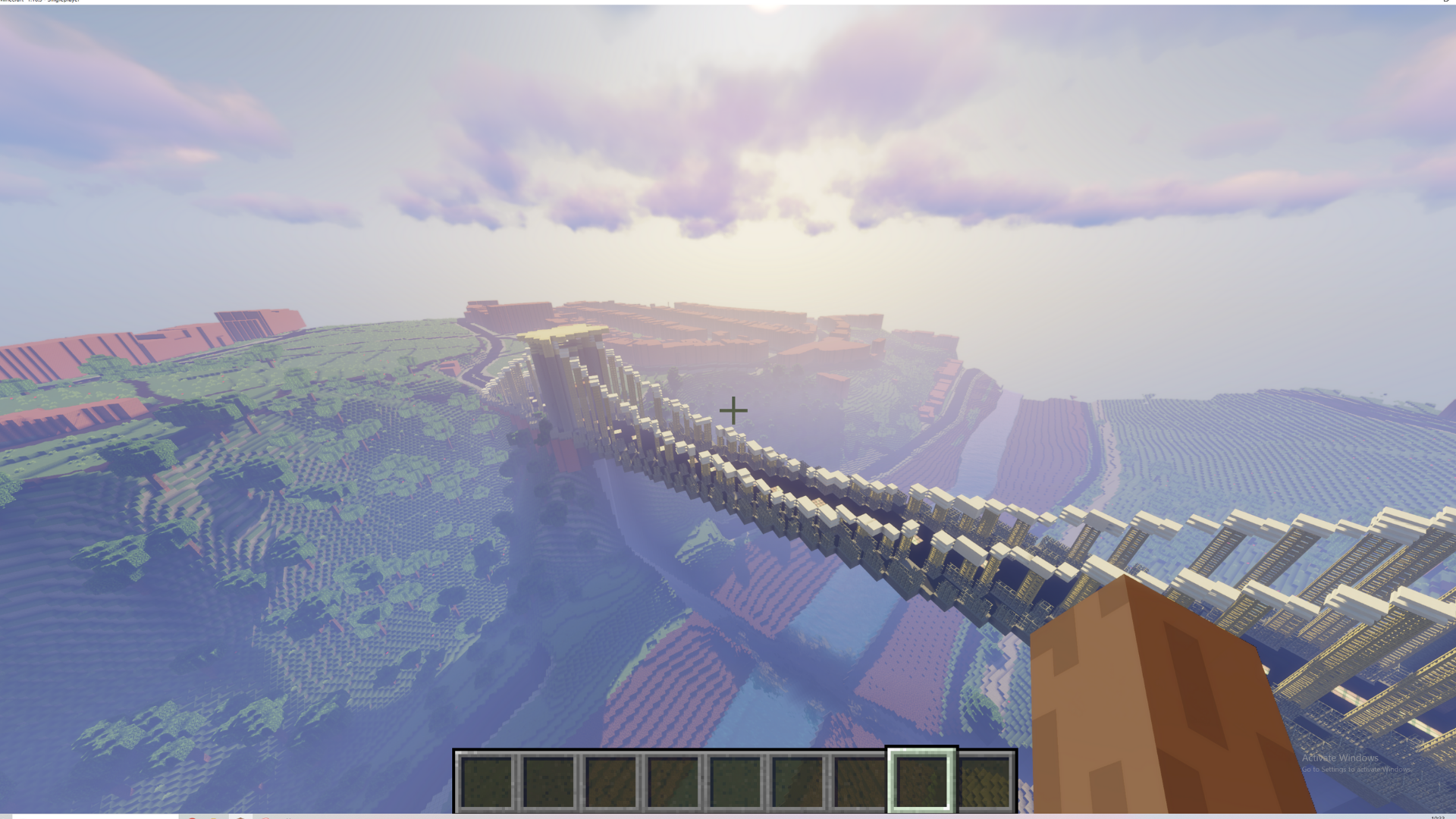
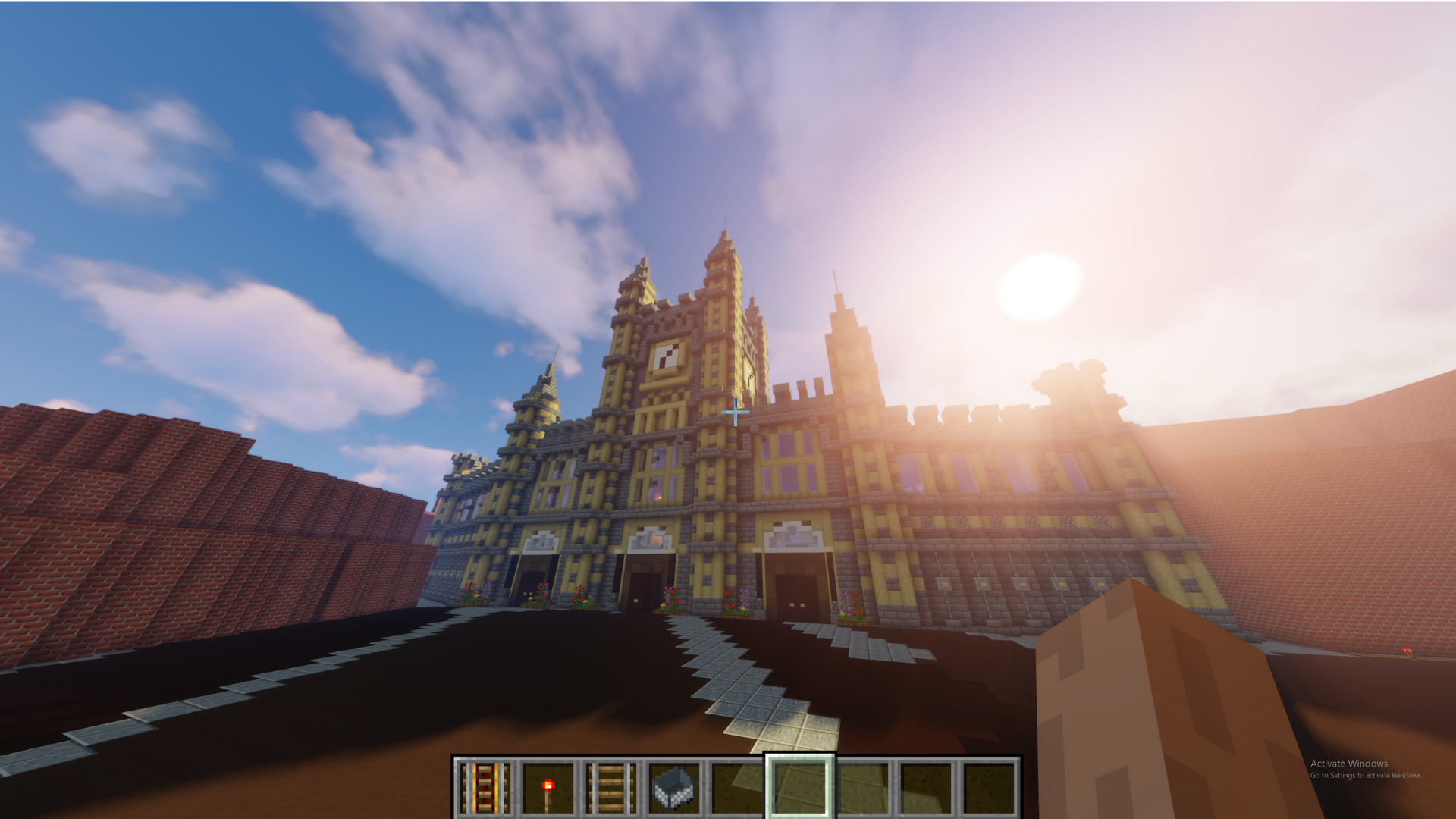
This new world was then populated with famous engineering landmarks such as the Clifton Suspension Bridge, Bristol Temple Meads Station and the SS Great Britain.

DETI Skills Inspire has been using this new Minecraft world at after-school STEM clubs recently established in Lawrence Weston and Easton, Bristol, as part of a STEM in the Community project funded by UWE Bristol and the STEM Ambassador hub West England, in collaboration with local community groups in both areas.

By re-creating these areas of Bristol within the game, children from both Lawrence Weston and Easton are able to explore the parts of their community that are familiar to them, piquing their interest and giving them power to reshape where they live.

Exploring new areas of the city through Minecraft also opens up opportunities for children to visit and talk about some of the city’s famous landmarks, many of which they may never have seen before, strengthening their knowledge and cultural connection with these areas and our city as a whole.

Liz Lister, Manager of the STEM Ambassador Hub West England, said: “Giving young people access to these places and giving them power to reshape them, even if it is just in Minecraft, offers them the opportunity to imagine their world as being different to what it is now. We hope that planting the idea that we can have some control over our own environment will lead some young people to think about the relevance of design and engineering to their lives, and then perhaps on to thinking of themselves as designers and engineers of the future.”

The activity utilises the approach developed by Science Hunters, which is based at UWE Bristol’s Science Communication Unit and Lancaster University, and is affiliated with their Royal Academy of Engineering-funded engineering strand Building to Break Barriers . The game has proven to be a successful educational tool, and evaluations undertaken by Science Hunters indicate that use of Minecraft through their approach  both attracts children who might not otherwise have engaged with science learning, and successfully improves scientific knowledge and understanding after participating in sessions.

Dr Laura Fogg-Rogers, Senior Lecturer in STEM Education and Communication at UWE Bristol, said: “So far ‘the West in Minecraft’ has been a huge success amongst the young people attending these STEM clubs. There has been much excitement at finding their own homes within the model city, re-building structures and adding to existing ones. Farms have been built on rooftops as the children have been encouraged to think about how they would re-design their city for a net zero future.”

A set of school resources to explore digital engineering, using this new Minecraft world, are currently being developed by the DETI Inspire team for release next academic year. These 1-2 hour lessons are currently being trialled with local primary schools, linking activities to the curriculum and drawing on several different subject areas to allow for a cross-curricular and rather unique learning experience.

New community STEM club launched in Easton

Posted on

STEM @ Baggator is a community STEM club for young people in Easton that takes place after school on Mondays (3-8.30pm) and welcomes all young people in the area to drop by and join in!

The club was co-developed with members of the local community, with support from the STEM Ambassador hub for the West of England and the DETI Inspire team at UWE Bristol, as part of a STEM in the community project funded by UWE, which aims to help STEM Ambassadors and UWE students collaborate to run STEM (Science, Technology, Engineering & Maths) initiatives that are relevant to their local communities.

Lego Mindstorms being assembled at STEM @ Baggator

STEM @ Baggator had a hugely successful launch event last week, with over 30 local young people joining in for some robot building and racing! There was a wonderfully positive atmosphere throughout the evening with everyone keen to get involved and even help tidy up all the stray pieces of Lego that had found their way onto the floor, as Lego tends to do!

At the next session, the team will be trialling a brand new activity which will have young people re-designing their local areas digitally, using the popular game Minecraft and a specially designed scale model of Bristol city.

A swarm of robots at STEM @ Baggator!

STEM in the community is an ongoing project based at UWE Bristol and we’ll be sharing more news of the initiatives that are being co-developed with other communities in the West of England region. If you would like to know more about STEM @ Baggator or would like to collaborate on a new community STEM project, please contact the team at deti@uwe.ac.uk

DETI is a strategic programme of the West of England Combined Authority (WECA), delivered by the National Composites Centre, in partnership with the Centre for Modelling & SimulationDigital Catapult, the University of the West of England, the University of Bristol, and the University of Bath. DETI is funded by £5m from WECA, with co-investment from the High Value Manufacturing Catapult and industry.

This post was originally published on the Engineering Our Future blog.

Meet Me in Another STEM Career

Posted on

In science communication, we often talk about science capital: the concept of feeling like science is “for me” as a result of sum of all the experiences and resources we’ve encountered that build up an interest in science. Everything from having parents in science, being taken to science-related events and having just one excellent teacher can change our lives to one where we pursue a career in STEM (science, technology, engineering, maths).

It’s sometimes difficult to work out exactly what might have pushed us into ambitions within science as a child, especially as we don’t know what we would have ended up doing if it wasn’t for that one teacher we had, or we had been ill the day the school trip went to the science centre. But what if we did have the opportunity to live our lives over and over again? We’d be able to work out exactly what it is that leads to the career paths we take. This is exactly what happens in Catriona Silvey’s “Meet Me in Another Life”, a soft sci-fi novel coming out on 8th July 2021. The novel follows two protagonists, Thora and Santi, who share the same preoccupation with science, the stars, and astronomy. They live their lives over and over, with each chapter painting them in a different relationship (e.g. friends, parent/child, teacher/student, colleagues, lovers, doctor/patient, etc.). In each life, they’re the same people, but due to different circumstances and relationships they don’t always end up following the same careers. Their careers are usually science-related, but not always, and it’s interesting to think about where they end up in their lives through the lens of science capital.

Catriona Silvey

I recently interviewed for Catriona Silvey for The Cosmic Shed and asked her about science capital. In her answer she lays down barriers resulting from internal, personal struggles, interpersonal relationships, and structural barriers in our society. She said: “I realised that I’d written book about these two very driven, very passionate people who mostly repeatedly fail to achieve their dreams.”

“Barriers can be very different for different people depending on their circumstances. Thora’s problem, especially towards the beginning of the book, is that she feels like she has too many choices. Which is quite a privileged position to be in, but it means she sort of ends up sabotaging herself, because quite often she won’t pick the thing she really wants to do because, fundamentally, she’s scared she’ll fail at it, and there’s nothing worse than failing at the thing you really, really want to do. So that’s very much a personal, internal barrier.”

“Another barrier for her is her parents,” Silvey goes on, “her parents have a very fixed idea of the person she is and what she should focus on, and it’s the humanities. And that, in some of her lives, really strongly influences her.”

“Santi’s problem is kind of the opposite of Thora’s problem in that he has a lack of opportunities. He’s a man and he’s straight, but on every other access he has less privilege than Thora has. His parents are working class, whereas hers are professors. He is not a native English speaker, whereas she is. Thora’s family are usually immigrants by choice, whereas Santi’s family are immigrants through economic necessity. For all these reasons, he often doesn’t have the opportunities he wishes he would have, and so his barriers are a lot more structural.”

While investigating what leads us into our careers certainly isn’t the central point of the book (the most pressing theme is really the need to find out why the protagonists are stuck in a time loop), I think for those working in science communication, Meet Me in Another Life offers an interesting meditation on science capital, giving us an experiment we can’t do in real life and wrapping it up in a vivid, gripping, beautifully-written novel.

You can listen to the podcast here:

Dr Hannah Little, Senior Lecturer in Science Communication at UWE Bristol.

Providing space for social communication in a STEM engagement project

Posted on

This post was originally published on the Engineering our Future and Curiosity Connections blogs.

Neurodiversity Week (15-21 March 2021) celebrates our unique strengths and differences, while recognising that the many talents of people with ADHD, autism, dyslexia, dyspraxia and other neurodiverse ways of thinking and learning are often not suited to traditional, formal learning environments. Science Hunters is a Science, Technology, Engineering and Maths (STEM) outreach and research programme that uses Minecraft to engage children from under-represented groups with STEM. Projects have covered a wide range of topics such as the Amazon rainforest, understanding diabetes, earth science and volcanoes and space, with the Building to Break Barriers project currently running at UWE Bristol engaging children with many aspects of engineering.

Minecraft is the second-best selling video game of all time and extremely popular with children. Players place and break blocks with a wide range of appearances and properties, to build a huge range of constructions. It can be played either as a single-player game or in a shared virtual world with multiple users playing together, and was chosen for Science Hunters because of its popularity (children want to play it!), particular appeal to children who learn differently, and suitability for explaining science.

Food inside lunar base.

A key target group for Science Hunters is children with Special Educational Needs (SEN), particularly through a dedicated Minecraft Club that has been running since 2015. It soon became clear that taking part in the club, alongside children with similar needs in an accepting environment, and playing a game which was a shared special interest, had more benefits for participants than STEM learning alone.

When face-to-face sessions are possible, as they were until the onset of the COVID-19 pandemic, Minecraft Club uses a dedicated server, so that children can play together in a safe social online space. Most of the children who attend have ADHD, autism and/or dyslexia. Spaces are limited to no more than 16 at a time, with simple guidelines to keep the club fun; children are not under pressure to conform to ‘neurotypical’ behaviour norms as may be expected in non-specific settings. STEM topics are briefly introduced, and then participants are free to build in Minecraft in relation to that topic; while adults are there to guide and support, children are encouraged to follow their own interests and ideas to create their own unique designs. For four years, data were collected from participating children and their parents/carers, who attended with them, through surveys and interviews.

During this time, 101 children aged 5-17 years attended; responses were gathered from 29 children and 37 caregivers. Results indicated that children both enjoyed and learnt something from attending, and while their feedback understandably often focused on Minecraft, they also indicated that they had benefitted socially and emotionally from being in the shared space with other children with similar interests. This was supported by insights from parents and carers, who described benefits outside the club, such as improved confidence and wellbeing, improved social skills, and reduced need for formal learning support.

Interest in playing Minecraft is what motivates children to attend, and the game provides a range of opportunities for children to potentially develop social and educational skills. This is supported by the process of designing and completing builds, independently or collaboratively, and communicating with others within the shared virtual world. Playing in the same physical space enhances this, as communication can move between the virtual and real worlds and allow in-person peer support and the ‘safe space’ provided in our Minecraft Club supports children with SEN to interact naturally and spontaneously. While it was set up as part of STEM outreach, the social communication impacts of our Minecraft Club – such as making friends, fitting in, and feeling valued without judgement regardless of completing tasks or conforming to expected social behaviours – are at least as important.

Minecraft Club is currently running virtually as part of Building to Break Barriers. We’ve looked at earthquake-proof buildings, protecting against flooding, tunnels, drones and more, and are exploring the effects of the change to meeting online.

More information about Minecraft Club, and its impacts reported here, is available in Hobbs et al. (2020) Shared special interest play in a specific extra-curricular group setting: A Minecraft Club for children with Special Educational Needs, Educational and Child Psychology, 37(4), 81-95.

If you have any queries about the project please contact ExtendingSTEM@uwe.ac.uk .

What is an engineer anyway? – Communicating engineering careers to pupils with DETI’s Engineering Curiosity project

Posted on

When children are asked what an engineer is, and what they look like, it can often be a tricky question.  They may jump to the image of an engine mechanic, or a man in overalls with a spanner and a hard-hat.  They may also have trouble recognising familiar jobs as coming under the umbrella of engineering. 

Engineering is defined as ‘working artfully to bring something about’. More literally, it is the application of science and maths to solve problems. And it’s a career that is more relevant than ever – to achieve net zero and a low carbon global economy, everything we make and use, from aircraft to cars, batteries to wind turbines, will need to be completely re-imagined and re-engineered.

When a child does not personally know an engineer, or does not recognise the role of engineering in solving the problems faced by a society, then this notion of an engineer becomes more removed from their view, and critically, from their career aspirations.  In science communication, we encounter children with low science capital throughout our work.  So how can the children dream of becoming an engineer, if they don’t know what one is? 

You can’t be what you can’t see

It is difficult for children to imagine themselves in that job, when the engineer does not look like them.  Encouraging girls and children from minority ethnic groups into engineering careers, and STEM careers more broadly, is a key focus of the DETI Inspire team working out of UWE. 

In collaboration with My Future My Choice, as well as many local engineers; the DETI Inspire team at UWE have developed the Engineering Curiosity cards and lesson resources for schools.  The aim is to bring the diversity of the West of England’s amazing engineers into the classroom and enthuse and inspire both primary and secondary pupils.  Through not only learning about what an engineer is and recognising their role, but also introducing them to real-life local engineers that may come from similar beginnings, so that they can start to think of engineering as something that could be for them!

Engineering Curiosity

Engineering Curiosity is a collection of 52 cards, based upon 52 local engineers in a wide variety of different roles and industries, in a kind of ‘Top Trumps’ meets ‘Happy Families’ style game.  The engineers featured have also each produced an engaging TikTok style video, giving a fun snapshot of their role and their route into it.  The project has developed lesson plans, curriculum linked worksheets and activities, and school-wide assemblies to accompany the cards and videos, all to aid schools in running sessions that involve the real engineers joining them live in the classroom through video link. 

During the recent British Science Week, local schools around the West have been taking part in DETI’s ‘Big Beam In!’, bringing the sessions to life and reaching over 3500 pupils.  Some of which may just be the West’s future engineers!

Looking to inspire in your science communication, or want to check out all the engineering roles for yourself?  You can find the resources, lesson plans and cards on the Curiosity Connections website.

DETI Inspire builds on the success of previous projects founded and launched in the Science Communication Unit (SCU) at UWE Bristol, including Curiosity Connections – the network for inspirational primary STEM education in the West of England, and Women Like Me – a tiered mentoring project for women engineers. The project is led by Dr Laura Fogg-Rogers and includes Ana Bristow, Sophie Laggan and Josh Warren from the SCU.

Josh Warren

Back to top

Follow this blog

Get every new post delivered right to your inbox.