The Science Communication Unit, UWE Bristol contributes to PCST 2025

Posted on

In May 2025 ten members of the Science Communication Unit (SCU) headed to Aberdeen, Scotland for the bi-annual Public Communication of Science and Technology Conference (PCST). PCST is an organisation that promotes discussion on the theory and practice of communicating science, and of public discourses about science and technology and their role in society. Every two years it hosts a conference gathering well over 600 science communication researchers, practitioners, and students from around the globe. Members of the team provided input to over 15 different conference sessions, poster presentations and pre-conference workshops. In this blog post I’ve aimed to capture a small flavour of the work that we presented, as well as share some of our reflections on the conference.

Dr Sarah Behenna stands with her first conference poster

Let’s start with Dr Sarah Behenna. Sarah shared work from the Science Hunters project, conducted with Dr Laura Hobbs, which was supported by a Royal Academy of Engineering Ingenious Award to encourage children from under-represented backgrounds to discover the many facets of engineering involved in sustainable development, and provide them with opportunities to apply their newfound knowledge by creating their own model sustainable solutions and communities in Minecraft. For Sarah, PCST was an opportunity not only to present her first conference poster, but to learn more about the history of science communication as a field and to understand how challenges can be shared across countries, and how we can learn both from the past and each other. You can read more about Sarah and Laura’s work in this recent blog.

The Inspire Sustainability team showcased research from their public engagement work at PCST 2025. Two posters were presented from the team, featuring work from Dr Louisa Cockbill, Sophie Laggan and Dr Laura Fogg Rogers about their Inspire Green Futures project, and also on the MAKERS project by Dr Laura Fogg Rogers, Kat Corbett, and Dr Joe Butchers. PCST showcased similar themes to these projects, including around citizen engagement for sustainability, with keynotes discussing how science communicators can empower action in partnerships with universities. This was timely with the publication of a new article from Laura’s team, which explores science communication’s role as a knowledge broker between scientists, policymakers, and citizens to co-develop public decisions for sustainability. Evaluation is a strong component of this work and Karen Collins, who has recently started a PhD in the SCU was also in attendance at the conference. With a focus on exploring science communication evaluation in her work, Karen was able to join a number of relevant sessions and further develop her networks.

A conference keynote photo from Guidiana Landivar Paz

Dr David Judge’s presentation asked how a science centre became the heart of one of the largest urban regeneration projects in Europe. David has traced the development of one Millennium Project, Bristol 2000, which regenerated an area of long-derelict docklands in the heart of Bristol, UK, and included the science centre later known as At-Bristol (now We The Curious). David shared how this aimed to create a new city centre which brought together science, nature and the arts. As well as considering historical developments, my inputs to PCST aimed to provoke some ethical reflection in a workshop exploring tensions and transitions in ethics surrounding science communication and public engagement.. This drew on work undertaken and recently published as part of the INSIGHT project, kindly funded by the Leverhulme Trust. I also contributed to a session exploring citizen science, sharing thoughts from a recent project focused on citizen science in the context of death and dying, which was featured in an open access collection published by the journal Frontiers in Environmental Science.

Dr Andy Ridgway featured throughout the conference programme. Andy contributed to a pre-conference workshop organised by the PCST Teaching Forum. The Teaching Forum is an international network of science communication lecturers who teach students at undergraduate, graduate and PhD level and the workshop considered use of AI in teaching contexts. During the conference Andy also facilitated a session drawing together work occurring on the European Competence Centre for Science Communication/COALESCE project for which the SCU is the UK Hub. This session posed the question ‘will we ever overcome the misinformation crisis in science communication?’ and explored national differences in problems generated by misinformation, as well as differences in approaches to tackling it. Andy said “for me the big take-away from PCST is the sense of connection it gives with the community and the positivity there is in any interactions. We’re lucky that in the SCU there are many of us who teach and research science communication. But many of those working in the field are working on their own in a similar role in their own institution. But even with the connections we have within the SCU, PCST really does help us feel part of a bigger community – and it’s always refreshing to not have to try to explain what you do when you start a conversation!”. The European Competence Centre for Science Communication featured in many events across the programme, and Dr Achintya Rao also joined the event, supporting communications and other activities associated to this project over the conference period.

Both Andy and Professor Emma Weitkamp also shared findings from research conducted in India and the UK, funded by the British Council, investigating science journalists’ working practices. These presentations examined data gathered from approximately 120 science journalists, including professionals from Brazil, Russia, India and China (BRIC) and Non BRIC countries exploring how science journalism is changing and evolving with emerging technologies like AI, and considering training and ethical recommendations for the future. For Emma, PCST offered an opportunity to catch up with old friends, as well as meeting new colleagues and she shared that “the opportunity to discuss research with people from around the globe, helps shape ideas, new research and funding applications that will emerge from the connections made and strengthened”.

On the theme of science journalism, Ria Griffith had a poster included in the conference on her PhD research, which is investigating the perceived disconnect between academic research and practice in science journalism, contributing to discourses of professionalisation of the field. Henry Bennie also participated in his first PCST conference, allowing him to connect with researchers and projects that relate to his ESRC funded PhD research examining media representations of Quantum Computing. Henry said, “the session that keeps rumbling around my head is the parallel session, ‘Tensions in communicating discovery science – changes over time’. So much of science communication is focused on relevance to audiences and society so naturally applied science is heavily communicated, and it is the focus of much (if not all) of science communication research. This discussion has helped broaden my thinking about how we can talk about emerging technologies that often have unclear applications and delivery timeframes, and how research can help identify new modes to communicate discovery science”.

Dr Amanda Webber presented research undertaken at UWE Bristol with our MSc students. Amanda’s talk, ‘”Lecturers chose such weird papers”: supporting scicomm students’ learning transitions’, shared findings from a recent article we co-authored that demonstrated students develop critical awareness of science communication models and the need to recognise and engage with multiple publics through our teaching. Amanda also shared how our MSc empowers students by supporting the development of their own identity as a science communicator. For Amanda the highlight of PCST was also “the people” and having a chance to meet and engage with others working in and/or researching science communication. Amanda said, “PCST also reminded me what a privilege it is to be part of the UWE Science Communication Unit – the unit is very well known internationally and part of so many networks and projects, it is great to be part of that.”

Ana Vasconcelos, Dr Amanda Webber, Guidiana Landivar Paz, Beatriz Vieite, Dr David Judge and Henry Bennie at PCST 2025

On that note, we were delighted to be joined at PCST this year by three PhD students who have stayed at the SCU for sabbaticals in 2024/25. Beatriz Vieite (Universidade de Aveiro) presented her study on mapping Portuguese biological collections, where she is aiming to characterise collections in terms of science communication, the strategies that are currently being used by their staff (curators and coordinators) and the difficulties they face in these contexts. Ana Vasconcelos (Universidade D Coimbra) shared her PhD project, which is seeking to explore how to design information to promote effective communication, health literacy, and patient understanding of Autoimmune Encephalitis (AE), a relatively rare but treatable group of immune brain disorders.

Ana shared that what stood out to her during this PCST was how the field of science communication is becoming increasingly aware, not only of the importance of co-creation and participation, but also of the value of being more open to other knowledge systems. “There was a strong emphasis on creating opportunities for mutual learning between academic knowledge and lived, embodied knowledge, highlighting that this is what true participation should be. I think this message came through particularly strongly in the keynote sessions, and I found it particularly valuable for my PhD research”, said Ana. Guidiana Landívar Paz (Universidad Complutense de Madrid) used PCST as an opportunity to reconnect with colleagues she’d previously met in Rotterdam at PCST 2023, and sessions on policy and science communication, science journalism in the Global South, generative AI, as well as the closing keynote, proved particularly valuable to Guidiana’s research on science communication before and after the COVID-19 Crisis in Spain and Bolivia.

The University of Aberdeen captured by Dr Achintya Rao

I was delighted to not only see so many members of the team representing their work at PCST (also acknowledging our colleagues contributions that were not able to make it to the event), but to reunite with many of the graduates we have taught and former members of the SCU, who are now advancing their careers in a wide variety of different locations and organisations. Amongst the hard work, the team also fitted in some wildlife spotting, local history, ceilidh dancing and an infamous karaoke night! Thank you to the PCST conference organising team for hosting us in Aberdeen, next stop Shanghai in 2027.

Professor Clare Wilkinson, Director of the Science Communication Unit, UWE Bristol

Young people become inventors at children’s book themed STEM workshop

Posted on

On June 14th, Joshua Warren from the Science Communication Unit (SCU) Inspire Sustainability team at UWE Engineering, inspired a class of Year 3 students from Cabot Primary with a STEM workshop based upon the children’s book, ‘Izzy Gizmo’ by Pip Jones. 

The workshop was a collaboration between the Inspire Sustainability team and the Bristol Old Vic Theatre, as part of the development of a stage-show based upon the book. 

‘Izzy Gizmo’ is a young global majority girl with a passion for inventing all sorts of wacky machines.  In the book, she discovers that engineering is all about finding success by trying again and again, as her inventions don’t always work first time.  One day, she finds an injured crow on her way home, and sets about trying to invent something to allow her new friend to fly again.

The children in the workshop, were delighted to be joined by the author, Pip Jones.  Pip introduced the children to the character of Izzy, and also talked to them about how inventions have changed their own worlds over time.  The children then were challenged to think like Izzy and design and build a flying machine for the crow, named ‘Fixer’.   

All students were awarded the ‘Izzy and Fixer’s Award of Invention!’ by Pip for attending the workshop and had a really inspiring day building and inventing!

Learn more about the Bristol Old Vic here: https://bristololdvic.org.uk/

You can read about and order the Izzy Gizmo book here: https://www.simonandschuster.co.uk/books/Izzy-Gizmo/Pip-Jones/9780857075130

To find out more about this workshop or the other outreach from the Inspire Sustainability team, please email engineeringourfuture@uwe.ac.uk

Engineering’s Family Fun Day

Posted on

The Science Communication Unit (SCU) Inspire Sustainability team welcomed over 900 people from across the city into UWE Engineering on Saturday 6th July 2024 to explore a range of different science and engineering activities. It was a wonderful day and the team received loads of great feedback. Watch the video to get an insight into the day.

Activities included:

  • Planetarium show called ‘We Make our Future‘ about how we can use human ingenuity and engineering skills to make a brighter future for our planet (the Inspire Sustainability team commissioned this show which Explorer Dome created and took to COP26 as well as into loads of local schools)
  • Flight and Driving Simulators – two very popular activities provided by UWE’s Digital Gallery
  • Robot building experience – was constantly surrounded by kids and adults alike building and coding Lego robots
  • Immersion in Bristol Minecraft worlds – everyone headed up the stairs to design changes to their city in the digital worlds
  • Physics in the Freezer – David Williams provided an awesome show with liquid nitrogen and magnets
  • Wind Turbine activity – some examples of wind turbine blade designs can be seen below – who could generate the most electricity?
  • Anibotics – families flocked to the animations and free giveaways David Smee and his team had on offer
  • Eco-House – Deborah Adkins had her wonderfully interactive Eco-houses on display
  • The Tinker Table – children loved getting hands on using tools to tear apart all the broken down electrical items donated as part of the UWE’s MAKERS repair cafe

Design from children’s engineering competition to be made by UWE Bristol team

Posted on

Each year the Science Communication Unit (SCU) Inspire Sustainability team in UWE Engineering, supports the regional delivery of the Leaders Award competition – challenging children to think like an engineer and design a solution to a problem.

This year, at the regional celebration event for the competition on 5th June, UWE Engineers revealed early plans to turn a young person’s winning design into reality.

The Leaders Award is a nationwide engineering competition (run by Primary Engineer) for young people to design inventions to solve a problem. UWE Engineering is one of the Leaders Awards partners in the South West of England and hosted this year’s exhibition of distinction shortlisted, highly commended & winning designs.

During the Awards ceremony, Hollie Lewis, Lecturer in Sustainable Project Management, presented plans for a UWE team to build last year’s winner Elliot James’ design, the “Smart shower”. Hollie is heading up the “Proto team” which includes Electronics Mechatronics Technical Team Leader, Steve Regester and Engineering Students: Erika Aiwekhoe, Ruth Cockroft and Naing Tun.

120 people attended the celebration event to congratulate the winners and take part in the activities UWE Engineering’s Inspire Sustainability team had to offer. The exhibition remained up the following day for the Family Fun day, where over 900 people visited and took part in a whole range of hands-on activities.

“Smart Shower”

Last year, Elliot James, pupil at St Katherine’s sixth form, won the prize for best Year 12 design – you can see his original “SMARTH” – SMART Bath – design below. The UWE proto-team have adapted this design and are starting to build the Smart shower.

More prototypes!

Engineers from GKN, headed up by Ian Gent, Research Engineer in Composites, also revealed a prototype machine that purifies water.

Dean of Engineering, Ramin Amali expressed at the Awards Ceremony how wonderful it is to have so many local young people participating in this Engineering competition and having their designs turned into a reality!

Driving policy around the COVID-19 pandemic

Posted on
Policy briefs exploring the impact of COVID-19 on people and the planet have been published by researchers from UWE Bristol’s Science Communication Unit.

During the global pandemic, children’s lives were changed by both the presence of the virus and measures put in place to control it e.g., closure of schools and play spaces, move to online learning, and social distancing. The Voices in a Pandemic project (VIP-CLEAR) highlighted the importance of capturing children’s voices, which are often missed, about the impacts of these mitigations on their lives.

The interdisciplinary research team from UWE Bristol (which included 3 members of the Science Communication Unit) used arts-based methods to capture the experiences of children in six schools in socially disadvantaged areas of Bristol.  The first of these activities asked them to ‘map their world’ as the country emerged from the third national lockdown. This process gave children the time and space to reflect on this period of their lives. Their drawings showed how diverse their experiences were; some children enjoyed spending time with their family, but others found it difficult being separated from key support networks, and friends and family members. It was particularly hard for those who were dealing with existing challenges around space, food, money and resources. It is likely that children will experience further social shocks (e.g., pandemics, climate change) and the mapping policy brief outlines ways in which schools, community services, local government and public health teams can support children to cope with these intangible threats.  A primary book and teacher’s notes have also been co-created by the project artist in collaboration with the academic researcher team.   ‘Learning to Live with Fog Monsters’ is available digitally and in hardcopy, and aims to engage children with these complex topics.

The Future Brief COVID-19 and the environment: links, impacts and lessons learned, meanwhile, brings together research that highlights how the risk of zoonotic disease and pandemics is increased through human activities such as industrialised agriculture and land-use change. The policy brief, produced by Science for Environment Policy (based in the Science Communication Unit) for the EU Directorate-General of the Environment, also highlights how climate change and the wildlife trade are increasing the risk of emerging infectious diseases that may jump from animals to humans.

The brief emphasises the importance of the One Health Approach, which recognises that environment, wildlife and human health are interdependent. Since the risk of zoonotic disease increases where humans encroach on wildlife habitat, global hotspots of high risk have been identified by researchers working in this field. Minimising the risk is another task; this will rely on actions that improve the sustainability of farming, land use and our interactions with wildlife.

The brief also offers an overview of findings on the environmental impacts of the pandemic – from changing air quality as the world locked down, to increased volumes of single-use plastic and PPE littering beaches. Mass action can change behaviour to be kinder to the environment – can we harness the shock wave of COVID to inspire a green recovery? The brief was produced before the war in Ukraine, which has of course had huge effects on the energy landscape in the EU, but the message stands that addressing climate change and environmental degradation should not be overshadowed by economics but be integral to a sustainable future.

Although national and world events in 2022 have turned our attention away from the pandemic and its effects, the VIP-CLEAR project and the Future Brief show that it is crucial we reflect on the events of the last three years, to learn lessons, to understand and support those affected, and look to a resilient future.

Amanda D Webber and Caroline Weaver

Shining a light on green job pathways for the next generation

Posted on

Today marks the launch of a new year-long programme that aims to inspire and motivate young people in the West of England to pursue green career pathways. Known as Inspire Sustainability, it is one of three West of England Combined Authority (WECA)-funded initiatives as part of the Green Futures Fund, that, if successful, could be replicated and scaled to meet the region’s Climate Emergency Plan and Net Zero ambition.

This announcement builds on recent WECA support of other green skills initiatives in local schools, with West of England Mayor Dan Norris awarding the first green jobs grant for three schools to develop a special environmental careers programme -read more here.

Inspire Sustainability: in a nutshell

Developed in collaboration with UWE-Bristol’s Science Communication Unit, Cabot Learning Federation, Avon Schools Eco Network and STEM Ambassadors West of England, the programme was developed as part of the initiative for Digital Engineering Technology and Innovation (DETI) Inspire programme. Inspire Sustainability will expand the region’s existing hub of sustainability skills education and training to highlight the region’s leading green skills and expertise in the labour market. Working in partnership, the consortium will deliver three areas of work to three pilot schools; Hans Price Academy in North Somerset, Bristol Brunel Academy in Bristol, and Digitech in South Gloucestershire.  The project includes:

  1. All-school engagement: tailored lessons, talks and careers events with diverse role models, culminating in a whole-school Sustainability Summit.
  2. Eco Council engagement: Eco Action Plan co-development to support the schools achieve Eco School status
  3. Teacher engagement: training so that teachers have the confidence to engage young people on these topics and support them to imagine a future where they can see themselves playing an active role in shaping development.

Once piloted, the outcomes will be shared widely to primary and secondary schools as well as to educational professionals and academics through the consortium’s networks.

West of England Mayor Dan Norris with Year 10 pupils from Orchard School at the Youth Engineering for Environmental Sustainability Summit in October 2021

Building on what works

The Inspire Sustainability approach builds on tried and tested methods explored in DETI Inspire, which has engaged over 7,000 children and young people in the West of England on engineering for sustainability.

Consortium member UWE-Bristol’s Science Communication Unit has a track record of working with and training diverse stakeholders to reach sustainability goals. In 2021, the Unit launched its Climate Action Hub to highlight the existing work of students and academics in this space, as well as to offer support and training to further amplify climate action. Currently it is delivering climate communications training to young people and supporting them to act on things that matter to them. The Youth Climate Communications toolkit will be used to develop the teacher engagement portion of Inspire Sustainability.

Meanwhile, the STEM Ambassador programme will be key to recruiting diverse green role models while Avon Schools Eco Network will use their expertise to support the schools to develop their action plans.

If you are interested to know more about any of this work, please contact project manager Sophie Laggan.

This post was first published on the Engineering Our Future blog on 30 June 2022.

Engaging children with STEM through Minecraft: new practitioner guides

Posted on

Science Hunters has been engaging children with the computer game Minecraft since 2014. Originally initiated at Lancaster University, the programme is now run in collaboration between Lancaster University and UWE Bristol. Its engineering strand, Building to Break Barriers aims to engage children from under-represented groups with engineering, using the game.

Minecraft is an extremely popular computer game, and has various features that make it ideal for communicating about Science, Technology, Engineering and Maths (STEM).

Over the course of delivery, the Science Hunters team have gained various insights into the practicalities of using Minecraft to engage children with STEM in schools, at Minecraft Clubs for specific groups and at small and large public events. As part of Building to Break Barriers, two guides, drawing on their extensive experience, have been produced for practitioners thinking of using Minecraft for STEM outreach and engagement:

Engagement through Minecraft: Available editions

Engaging children with STEM using Minecraft

The guides lay out why Science Hunters uses Minecraft to engage children with STEM including:

  • Its popularity makes it familiar and appealing to children
  • It can interest them in topics that they might not otherwise engage with, because they’re interested in the game
  • It is also relatively easy to use, and generally quickly picked up
  • Minecraft has various features which represent items and processes in the real world, which can help children explore and understand a range of scientific concepts.   

They also cover the versions of Minecraft available to choose from, and topics such as making STEM accessible, modes of Minecraft, options for setting up the game for use in engagement, face-to-face and virtual engagement and planning considerations. They are not official Minecraft resources. Building to Break Barriers was funded under the Royal Academy of Engineering Ingenious scheme from May 2020 to January 2022. Ongoing extension work is currently funded by a Biochemical Society Diversity in Science grant. For more information or to discuss future collaboration please contact sciencehunters@uwe.ac.uk.  

By Laura Hobbs and Sarah Behenna.

Please note that these guides were produced in 2021. Information contained within the documents may be subject to change and should be confirmed by users, and does not constitute recommendations.

Cover image build by Jay Fenney.

Empowering WECA pupils with data for sustainable school streets

Posted on

Speeding cars, traffic jams, air pollution… these are but a few of the grievances the average city dweller contends with on a daily basis. Below the driving age, children in the West of England do not contribute to these problems, yet they are among the most vulnerable to their consequences.

To allow children to safely make their way to school, without the need to breathe in polluted air and to arrive in a timely manner, EU citizen science project WeCount, together with DETI Inspire, has launched a series of educational resources for KS2 and KS4 pupils. Covering a wide range of subjects, all curriculum linked, children are able to learn about the grand challenges’ cities face in relation to urban travel, and the steps they can take collectively to make their school streets, and cities, safer, healthier and happier. By taking part, schools can gain points towards Modeshift STARS Travel Plan accreditation.

This collaborative project is coordinated by UWE Bristol researchers from the Science Communication Unit. Project manager Dr Laura Fogg-Rogers explains why these resources are so important:

“Road transport is a leading cause of air pollution and climate change within the West of England. For our cities to become net zero carbon emissions by 2030, the date which scientists warn is our deadline to keep global warming below 1.5°C and prevent runaway climate change, drastic changes need to be made to every aspect of life, not least driving. WeCount sensors and associated school resources are one piece of the puzzle in helping citizens to create the changes they wish to see. “

What is WeCount?

WeCount, led by UWE Bristol, is a project that equips households, community centres and schools with low-cost traffic sensors to count cars, bikes, pedestrians and heavy vehicles, as well as the speed of cars. Over time, the citizen scientists can observe trends and use the evidence to lobby for changes on their roads. Among the successes with WeCount data so far, citizens across Europe have convinced their councils to install speed cameras and reduce road speeds, and consider bike lanes and pedestrianisation, spread awareness among residents and contributed to consultations on new housing developments.

How do we get involved?

WeCount is giving away 20 sensors to schools across the West of England. Contact engineeringourfuture@uwe.ac.uk to apply for one for your school.

KS2 resources are freely available here. KS4 due for release later this month. Email the above email address if you would like to be sent a KS4 pack directly to your school when available.

All resources can be delivered without a sensor, using the data available on the Telraam website.

You are also able to buy all of the components required for the sensor at PiHut. For more details on the equipment you need, please see this document .

What’s inside the KS2 pack?

A whole school assembly

Fifteen curriculum-linked worksheets, with instructions and PowerPoint for teachers, covering Geography, IT, Maths, Science, Art and English, Design and Technology. These include tasks to: collect and analyse data; understand different urban travel views; design a bike for the future; vision a healthier, happier school street; and persuade the mayor to consider your proposals.

Lessons can be delivered independently or combined for after-school clubs or themed curriculum, and can be teacher-led or with the support of UWE Bristol or STEM Ambassadors.

What’s inside the KS4 pack?

A whole school assembly

Ten curriculum-linked worksheets, with instructions and PowerPoint for teachers, covering nearly all GCSE subjects – Geography, Computer Science, Maths, Science, Citizenship and English, Design and Technology, History and Engineering. These activities include tasks to: learn about the influence of powerful actors on the proliferation of the car; collect and analyse data; explore the science behind the sensors; debate the role of AI in solving the climate crisis; research local travel issues and viewpoints; design interventions and deliver action projects; creatively write about their experiences.

Lessons can be delivered independently or combined for after-school clubs or themed curriculum, and can be teacher-led or with the support of UWE or STEM Ambassadors.

Sophie Laggan,  Research Associate, citizen empowerment and policy change for urban health and sustainability at UWE Bristol.

New Minecraft programme allows children to digitally engineer the West of England

Posted on

A new Minecraft programme featuring iconic Bristol and Bath landmarks is allowing children to digitally engineer the West of England, improving their scientific knowledge and encouraging them to consider Science, Technology, Engineering and Mathematics (STEM) careers.

The Digital Engineering Technology and Innovation (DETI) programme team at UWE Bristol have been exploring digitally engineering the West with local children, using the incredibly popular block-building video game Minecraft.

Minecraft is the second-best selling video game of all time and extremely popular with children. Players place and break blocks with a wide range of appearances and properties, to build a huge variety of constructions. Players can easily make changes to their builds and quickly visualise new ideas, much like computer-aided design (CAD) software used for digital engineering.

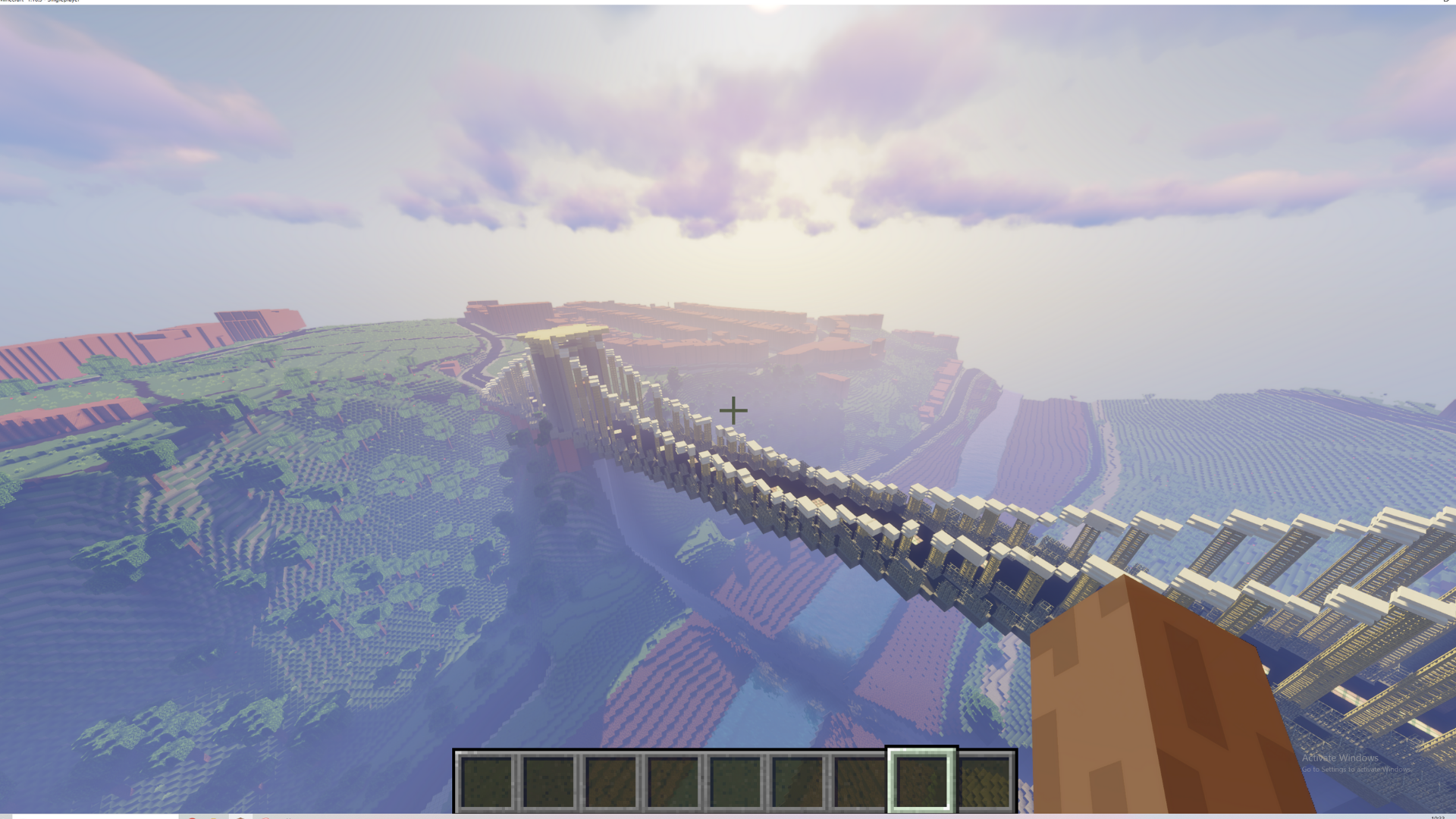
The DETI Skills Inspire team partnered with local design and engineering consultancy Atkins, and Minecraft experts Dr Laura Hobbs and Jonathan Kim, to create a scale recreation of Bristol and Bath within the game, allowing local children to explore, build, re-design and re-engineer their very own cities.

Consultants from Atkins created a programme to convert Ordnance Survey data into a to-scale Minecraft world, allowing a highly detailed Bristol and Bath to be created – the West in Minecraft.

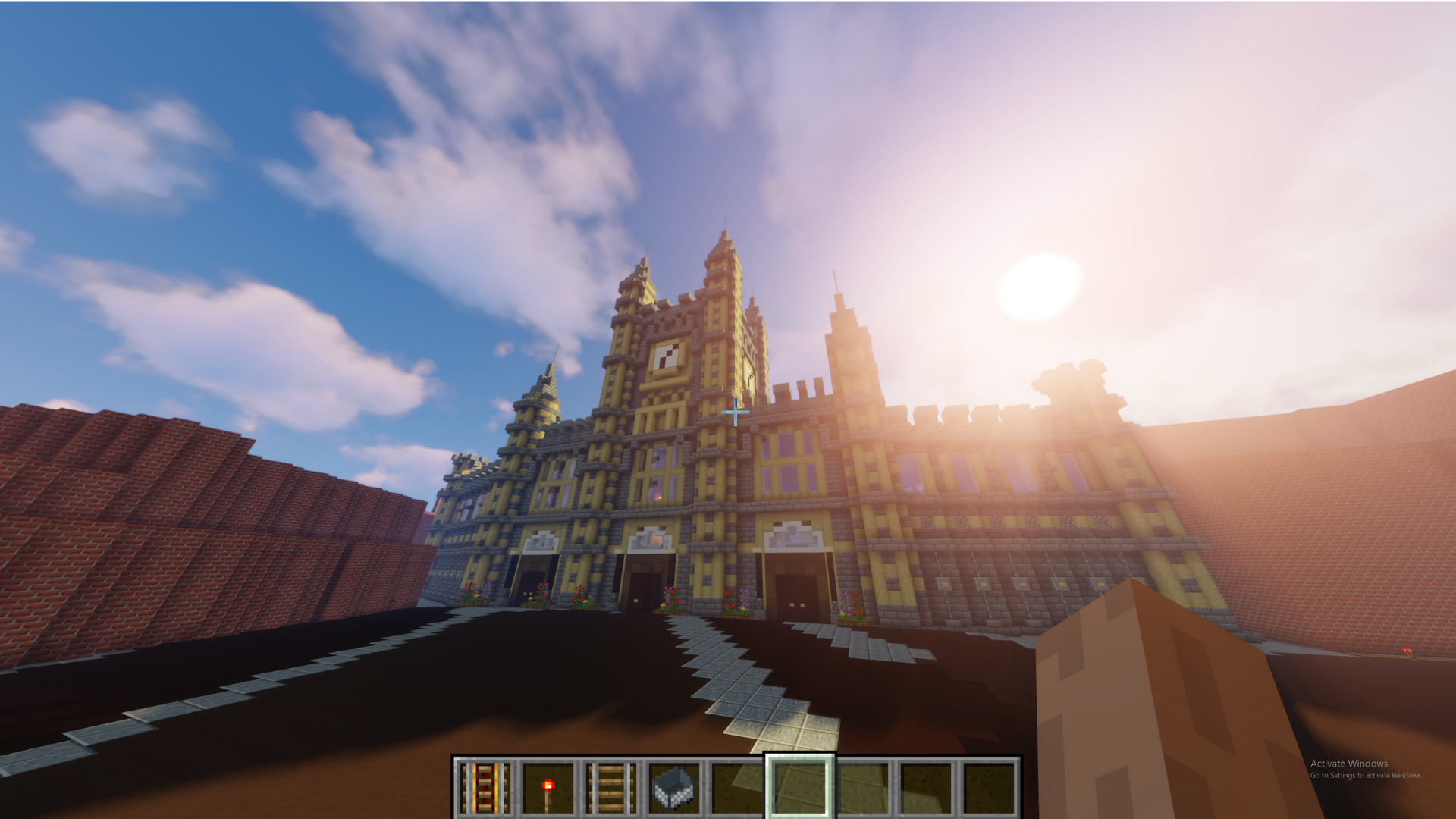
This new world was then populated with famous engineering landmarks such as the Clifton Suspension Bridge, Bristol Temple Meads Station and the SS Great Britain.

DETI Skills Inspire has been using this new Minecraft world at after-school STEM clubs recently established in Lawrence Weston and Easton, Bristol, as part of a STEM in the Community project funded by UWE Bristol and the STEM Ambassador hub West England, in collaboration with local community groups in both areas.

By re-creating these areas of Bristol within the game, children from both Lawrence Weston and Easton are able to explore the parts of their community that are familiar to them, piquing their interest and giving them power to reshape where they live.

Exploring new areas of the city through Minecraft also opens up opportunities for children to visit and talk about some of the city’s famous landmarks, many of which they may never have seen before, strengthening their knowledge and cultural connection with these areas and our city as a whole.

Liz Lister, Manager of the STEM Ambassador Hub West England, said: “Giving young people access to these places and giving them power to reshape them, even if it is just in Minecraft, offers them the opportunity to imagine their world as being different to what it is now. We hope that planting the idea that we can have some control over our own environment will lead some young people to think about the relevance of design and engineering to their lives, and then perhaps on to thinking of themselves as designers and engineers of the future.”

The activity utilises the approach developed by Science Hunters, which is based at UWE Bristol’s Science Communication Unit and Lancaster University, and is affiliated with their Royal Academy of Engineering-funded engineering strand Building to Break Barriers . The game has proven to be a successful educational tool, and evaluations undertaken by Science Hunters indicate that use of Minecraft through their approach  both attracts children who might not otherwise have engaged with science learning, and successfully improves scientific knowledge and understanding after participating in sessions.

Dr Laura Fogg-Rogers, Senior Lecturer in STEM Education and Communication at UWE Bristol, said: “So far ‘the West in Minecraft’ has been a huge success amongst the young people attending these STEM clubs. There has been much excitement at finding their own homes within the model city, re-building structures and adding to existing ones. Farms have been built on rooftops as the children have been encouraged to think about how they would re-design their city for a net zero future.”

A set of school resources to explore digital engineering, using this new Minecraft world, are currently being developed by the DETI Inspire team for release next academic year. These 1-2 hour lessons are currently being trialled with local primary schools, linking activities to the curriculum and drawing on several different subject areas to allow for a cross-curricular and rather unique learning experience.

Women Like Me engineers inspire Bristol primary school students

Posted on

Based in the Science Communication Unit and Department of Engineering Design and Mathematics at UWE Bristol and organised by Dr Laura Hobbs and Dr Laura Fogg-Rogers, Women Like Me is a peer mentoring and outreach project, aimed at boosting female representation in engineering. It is supported by the initiative for Digital Engineering Technology & Innovation (DETI).

Engineers on our Women Like Me programme are currently undertaking engineering outreach and engagement with children in the Southwest. Recently, Whitehall Primary School in Bristol asked if our engineers could answer questions from their Year 2 pupils as part of their ‘Amazing Engineers’ topic.

The children’s perceptive questions ranged from ‘Why did you want to be an engineer?’ to ‘Did you play with Lego when you were 7 years old?’:

  • Why did you want to be an engineer? 
  • Do you know what your next invention/work will be? 
  • How hard is engineering? 
  • Did you play with Lego when you were 7 years old? 
  • What kind of things do you use at work? 
  • What kind of engineer are you? 
  • Do you like your job? 
  • Did anyone help you with your first project? 

Four women in engineering, three from our current cohort and one a Women Like Me alumna, produced videos in which they answered the children’s questions, giving them both insights into the varied roles in engineering, and representation of diversity within the sector.

With women making up only 12% of engineers in the UK, more girls need to connect with engineering as a career, with positive female role models, and more women need to be supported to make a difference in the workplace. Find out more about the importance of diversity in engineering here.

More ‘meet an engineer’ videos can be found in our playlist.

The school described the connection with engineers as a “great experience for the children”. They really enjoyed watching the videos and hearing from real-life engineers answering their questions.

The children absolutely LOVED the videos! They were talking about them for days – really excited and buzzing! We’re so grateful for the time taken by your engineers to record them.

Kathie Cooke, Whitehall Primary School

Digital Engineering Technology & Innovation (DETI) is a strategic programme of the West of England Combined Authority (WECA), delivered by the National Composites Centre, in partnership with the Centre for Modelling & Simulation, Digital Catapult, the University of the West of England, the University of Bristol, and the University of Bath. Industry partners include Airbus, GKN Aerospace, Rolls-Royce, and CFMS, with in kind contributions from UWE, Digital Catapult and Siemens. DETI is funded by £5m from WECA, with co-investment from the High Value Manufacturing Catapult and industry.

This post was originally published on the Engineering Our Future blog.

Back to top

Follow this blog

Get every new post delivered right to your inbox.