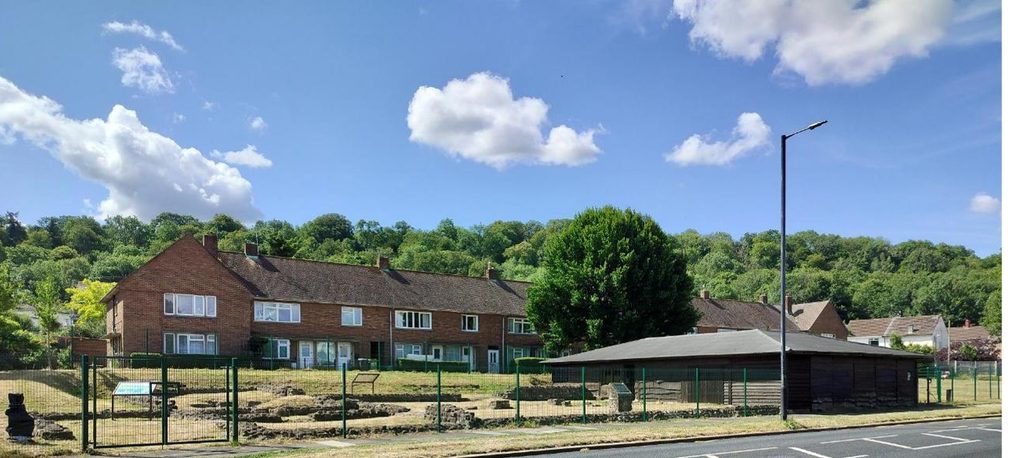
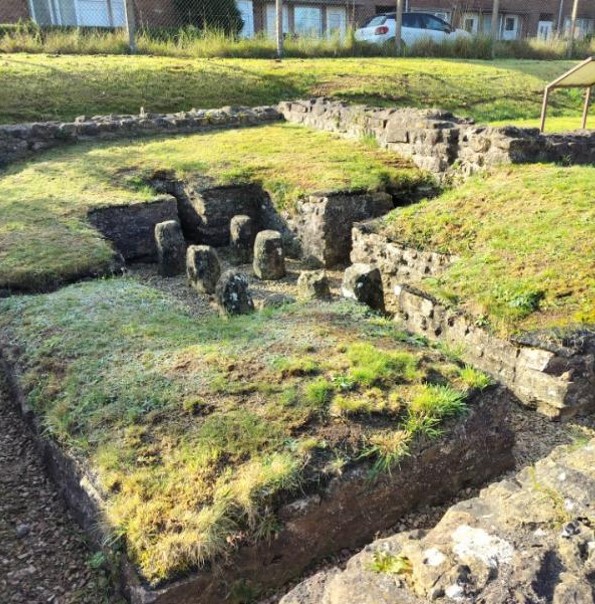
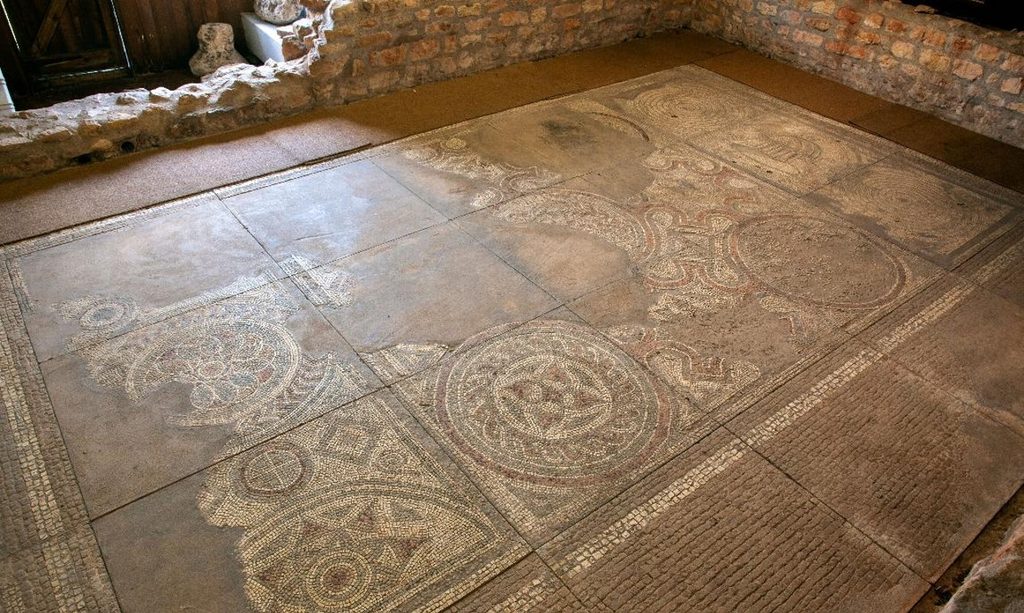
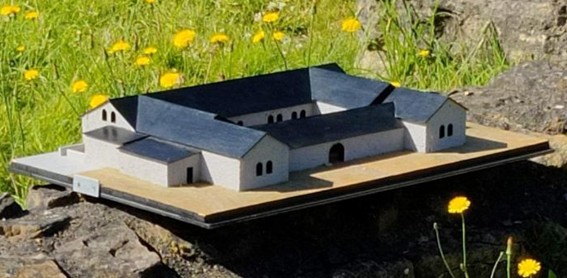
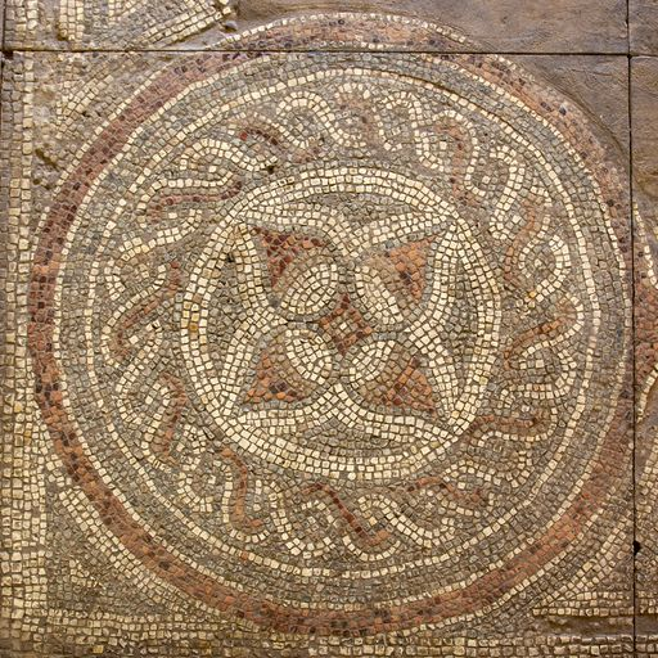
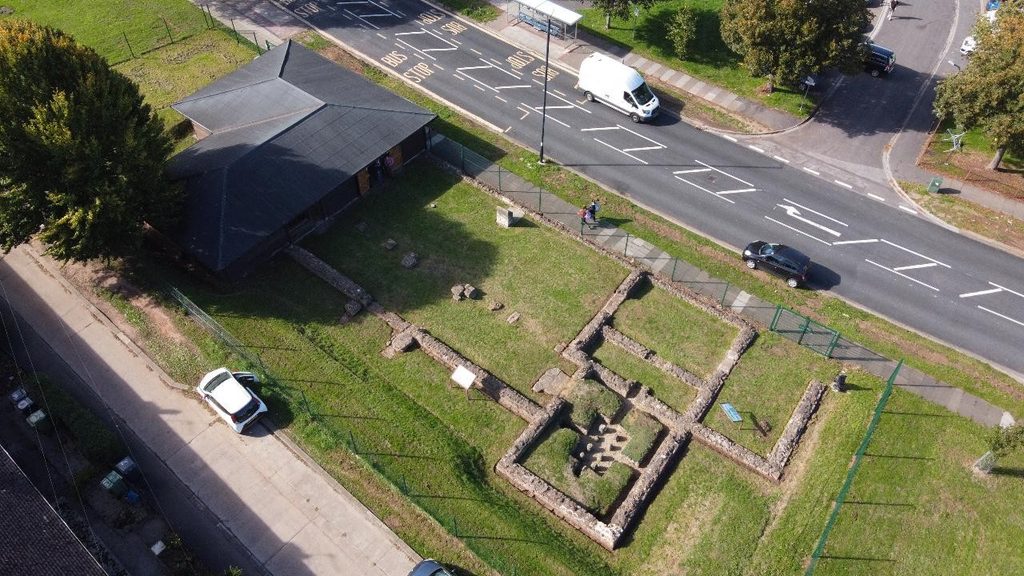
Discovered in 1947 during the construction of the Long Cross road and the housing estate now built around it, 1700-yer-old Kings Weston Roman Villa in Lawrence Weston is the only place to see a Roman bath suite in Bristol, and one of the only places in Britain with an in-situ Roman mosaic floor. The villa site has been on display ever since its excavation between 1948 and 1950 – the remains of a Roman central heating system are visible from the roadside and visitors can also explore the remains of the villa walls. Situated at the centre of a farming estate, the villa eventually collapsed and was buried under topsoil, but is now Bristol’s only surviving Roman villa.
Kings Weston roman villa site, Lawrence WestonUnderground heating systemMosaic floorModel of Kings Weston villaMosaic floor
Photo credit: Bristol Museums
A new collaboration between Bristol Museums and UWE is led by the Science Communication Unit’s Dr Laura Hobbs and Kate Iles, Senior Curator for Archaeology for Bristol Museums. It uses the well-established Science Hunters approach to engage children with Kings Weston Roman Villa using Minecraft. A co-designed Minecraft building challenge related to the real-world site, contextualised through a learner-centred approach and supported with practical anchors such as object handling, will support children to explore themes, build upon their existing knowledge, and develop their understanding of archaeological science and local heritage.
Aerial view of Kings Weston roman villa. Photo credit: Bristol University.
The project is off to an exciting start. During the summer, the UWE team visited the site, worked with the museum team to gather information and are now working on an example build of the villa in Minecraft. The project will then provide opportunities for local schools and community groups in the areas surrounding the villa. UWE researchers and the museum team will run trial sessions in schools and community settings and use the game to explore how the villa may have looked. Participants will be able to build a version of the Roman villa for themselves, engage with real and replica Roman objects and find out more about the Roman villa on their doorstep. The project will be evaluated via mixed-methods analysis to explore science communication through play-based engagement linked to the site, its heritage and its artefacts.
For further information or to get involved, please email sciencehunters@uwe.ac.uk.
Supported by Bristol City Council, Bristol Museum Development Trust and UWE Bristol.
By Dr Laura Hobbs, Science Communication Unit, UWE Bristol and Kate Iles, Bristol Museums.
When you think about conservation communication, you might picture the finished product: a social media post, a zookeeper talk, a campaign about an endangered species, or you might not even know what conservation communication is. What gets even less attention is what happens before any communication takes place: how organizations understand and value communication as a tool for conservation. In my Masters in Research (MRes), that is exactly what I’ve set out to uncover.
What Is Conservation Communication?
One of the first challenges I faced when diving into science communication literature was how loosely the term “conservation communication” is used or not used. Biodiversity, wildlife, environmental, the terminology shifts constantly, and that inconsistency makes focused research difficult.
For the purposes of my research, I’ve settled on this definition: “A process by which information about the conservation of the Earth’s natural environment and its wild inhabitants is exchanged between conservation communicators and the public.” It might sound straightforward, but unpacking this term reveals a lot. It’s not just about what organizations say, it’s about the processes, platforms and people involved, and the intended outcome of those exchanges.
Why Zoos? Why Now?
Zoos occupy an unusual space in the science communication landscape. Originally established as entertainment and recreational centers, zoos in the United Kingdom have gone through a dramatic transformation over the last century. Legislation, particularly the Standards of Modern Zoo Practice for Great Britain, has formalized conservation and public education as core obligations for zoos in the UK, not optional add-ons. Today, UK zoos sit at a powerful intersection of conservation science, public engagement, and entertainment.
That positioning at the nexus between research, communication and publics is exactly what makes them a great subject for research. As a science communication professional, I wanted to understand how they connect these groups together. After all, Zoos are one of the few places where millions of people have direct encounters with wildlife and conservation projects every year: they can reach audiences that academic papers and conservation campaigns often don’t. I wanted to understand how they use their position to share research and conservation messaging with the public, how do they think about conservation communication internally?
The Research: What I’m Exploring
I’ve been fortunate to have Bristol Zoological Society, the charitable organization behind the Bristol Zoo Project and Bristol Zoo Gardens, as a partner for my research. BZS runs conservation field projects around the world, has over 30,000 Instagram followers, and operates a well-established communications team. The BZA is a rich organization to study and having them as a partner has facilitated access to a wide range of documents and staff, ensuring that my research is built on a solid case study.
The case study is built around three core questions, which I think of as the Why, the Who, and the What of conservation communication at BZS.
Why does BZS believe engaging the public is important, and how is conservation communication understood at an organizational level? Is it embedded in their mission? Is there a shared internal understanding of the purpose of communication?
Who is involved in the creation and delivery of conservation communication? Communications teams, social media managers, educators, conservation scientists, and leadership can all be part of the communication process, but how do these roles interact, and how are they structured within the organization?
What is BZS trying to achieve through its communication? How are target audiences identified? How is engagement tracked? And do current strategies align with organizational conservation goals?
To answer these questions, I’m using two main methods: inductive and deductive document analysis of BZS’s internal and external documents, including strategy documents, conservation policies, and education frameworks, and semi-structured interviews with key communications and leadership personnel.
What Makes This Research Matter
A key finding in conservation communication literature is the necessity for science communicators to move away from the deficit model. This model focuses on the idea that the public simply lacks scientific knowledge, and the job of communicators is to fill that gap in a one-directional flow. Research has consistently shown that this approach is not effective. Public mistrust of scientific messaging often stems not from a lack of knowledge, but from the style and framing of communication itself.
For zoos, this is especially relevant. They have the rare ability to move beyond one-directional messaging. A keeper talk, a live animal encounter, an interactive exhibit, these are all opportunities for a more participatory form of communication that most conservation organizations cannot easily access. Understanding how BZS thinks about and deploys communications initiatives is, I think, very valuable for the wider field.
Where I’m At
I’m currently mid-project. Interviews with BZS personnel are underway and document analysis is well in progress. It’s already clear that the organizational view of conservation communication is a rich and underexplored area, particularly in zoos. I’m hoping this research helps make sense of the field and offers valuable insights for conservation communicators. If you’re interested in conservation, zoos, or the organizational perspective of science communication, I’d love to hear your thoughts, this project is very much a work in progress.
Brayden Bice, MRes student at UWE Bristol and Bristol Zoological Society.
Climate change is certainly not the easiest topic in science communication, as I have learned since I started practising this discipline. Communicators aiming to engage people about the climate crisis must address participants who are experiencing a rollercoaster of emotions. Anxiety, fear, anger, grief, plus an impending sense of doom. These same emotions are shared by communicators too. It is challenging to lift participants and ourselves out of this low mood and feel hopeful, empowered, and ready to act. Hard, but not impossible.
Serious games have been explored for years as a strategy to engage people in learning without the typical barriers of formal education. One example of a gamification approach in climate science communication is Climate Fresk: a 3-hour collaborative game based on the IPCC reports and created in France in 2015. Since then, the activity has spread to many countries, including the UK, with more than 2 million participants worldwide.
The activity is structured into four phases (reasoning, creativity, review, and debrief), using gamification to boost learning and empower the participants to embrace sustainable and climate-friendly practices. Participants are provided with cards on the causes and effects of climate change and must arrange them on a table in a cause-and-effect order. They are encouraged to be creative and acknowledge their emotions. After the game, they gather to share and discuss how to put what they felt and learned into practice.
The participants are not alone in this journey. They are guided and supported by facilitators (known as “freskers“), former participants who have undergone training to become part of the backbone community of Climate Fresk. There are currently more than 100,000 freskers worldwide, and they are generally not climate scientists themselves. Depending on their level of expertise, the facilitators run workshops in person and online across many settings (general public, schools, universities, businesses), either as volunteers or professionals.
Despite its solid structure and clear objectives, it is not straightforward to assess whether attending a CF workshop has an impact on the participants. The CF organisation also lacks a systematic way to assess its activities. This is when evaluation enters the chat. As part of my dissertation for the MSc Science Communication at UWE Bristol, Margarida Sardo and I planned to evaluate the impact of Climate Fresk on the knowledge, attitudes, and behaviours towards climate change of both participants and facilitators, by using a mix of qualitative and quantitative methods (observation, interview, and surveys).
We first focused on the participants of two workshops targeted at the general public. From our observation of the participants during the activity, they showed interest and engagement in the game and shared their emotions, which were generally quite low at some point. No need to despair though: after the game, participants discussed meaningful ways to contribute to climate action and sustainability, which also improved the overall mood. The topics they mentioned included both individual actions (changing diet, travelling sustainably, green investments) and collective action (political and economic engagement).
A few participants also agreed to be interviewed individually a week after the workshop. The aim was to obtain a first-hand account of how they experienced the activity and whether it affected them. The transcripts were analysed to identify common themes and patterns in the answers, based on the Generic Learning Outcomes. The results were mixed. The participants liked the activity and its collaborative nature, and also reported increased knowledge of climate change, especially the ability to see the bigger picture of the climate crisis. However, they also claimed the activity simply reinforced their previous beliefs about solutions to the climate crisis. They also felt their sense of agency on the matter did not change.
There are many potential reasons behind these contrasting results. All participants interviewed already had a high degree of climate awareness before attending the activity; in a sense, it was a bit like preaching to the choir. This self-selection produced a highly knowledgeable, already‑committed cohort of participants, reducing the potential for measurable change. Furthermore, it is unrealistic to expect a 3-hour activity to produce a lasting attitude and behavioural shift on such a complex issue. In this case, greater knowledge did not lead to greater empowerment, but that might not be true in settings with no participants self-selection.
Given the long-term impact of the activity on participants, we could not measure it after just a week, so Margarida and I designed a survey to engage the UK facilitators community, with both quantitative and qualitative questions about their facilitation experience, motivations to keep facilitating, what climate action they implemented as a result of CF, and the role of the organisation in their commitment to sustainability. Our goal was to assess whether CF can foster sustained action among that audience. It turns out it does, but indirectly.
Belonging is the game changer. Of the 38 respondents, around 90% reported that being part of the facilitators community was a source of inspiration and commitment to climate action and sustainability, including ethical banking investments, political activism, and systemic shifts in their professional work environments. Facilitating workshops also provided many freskers with a sense of purpose. However, some respondents aligned their answers with the deficit model (educating or informing the public) rather than a truly engaging approach (a two-way discussion between facilitators and participants).
Our findings suggest that climate communication initiatives may achieve their greatest impact not simply by increasing knowledge, but by creating spaces where people can reflect together, support one another, and sustain their commitment to action over time.
The CF organisation has come a long way in demonstrating the impact of serious games in climate change communication. To improve its outcomes, the activity should focus less on imparting knowledge and more on providing practical advice, offering ongoing support, and building a community centred on shared commitment and continuous learning. The climate crisis certainly seems a daunting challenge, but we can count on the friends we make along the way.
By Giorgio Graffino, MSc Science Communication graduate (2026) at UWE Bristol. Communicating about climate, weather, and the environment. Fighting the climate crisis one content at a time.
When I first heard the term “sabbatical student,” I pictured old-timey scholars taking long breaks to mull over grand ideas. Not that I took this image literally, but somehow this is what sprang to mind. In reality, I was lucky enough to hold this position for three months at UWE Bristol despite only being a master’s student.
Funnily enough, studying cognitive sciences in Croatia as part of my master’s programme, is exactly what led me to this opportunity in my hometown of Bristol. Through the Erasmus scheme, I was funded to undertake an internship of my own choosing. And fortunately, Professor Clare Wilkinson warmly accepted my request to join the Science Communication Unit (SCU) at the University of the West of England (UWE), allowing me to further explore my interests in science communication.
I wasn’t only attracted to science communication (SciComm) by my love of writing, I was also eager to explore what topics lay beyond this. I was especially curious to see how this experience would inform my own cognitive sciences research project.
First Encounters with SciComm
I came into this experience with a relatively blank slate in terms of science communication experience, but it didn’t take me long to realise that I had underestimated the breadth of this field. I was amazed by the varied SciComm approaches that the team were involved in, from teaching science through performing arts, to standup comedy, and even videogames like Minecraft.
It wasn’t just the variety of approaches that surprised me, it was also how much SciComm crosses different fields. I initially saw it as a means of making information more accessible, but it’s actually much more than that. It’s a rich, interdisciplinary field that connects areas such as the arts, humanities, and social sciences.
Getting to know the students on the MSc Science Communication programme at UWE reminded me just how flexible this field is. Suyi Tay a current student, is blending art and science and plans to share soil science in a future activity by transforming the sounds of soil samples into a live musical experience. Meanwhile, Ross Metcalfe, a further friend I made from the programme is exploring how research conducted by a charity might reach the public more effectively, by building a framework to improve that process, a fascinating example of how SciComm and society intersect.
Learning highlights
Me and a group of the 2025-26 Science Communication MSc students at UWE Bristol
Instead of just observing from the sidelines during the sabbatical, Clare encouraged me to actively explore and engage with SciComm in ways that matched my own interests. With this, I decided that I wanted to audit the Writing Science MSc module, which the senior lecturers Dr Andy Ridgway and Andrew Glester kindly approved.
One experience that particularly stood out to me on this module was the chance to interview a researcher and turn that conversation into a news article. I had the chance to interview Dr Amanda Webber, the MSc’s programme leader, who is also a senior lecturer and anthropologist. She was nothing short of captivating as she shared insights about the student learning experiences taking place in the forests of Madagascar. The process gave me valuable real-world practice, and with the article set to be published in the UWE Science Matters magazine, it’s a piece I can showcase to potential employers.
Another highlight from my sabbatical involved Suyi taking me along to the BCfm radio station, where she was presenting on a UWE led science show, Love & Science. She introduced me to the radio host George Edwards, who despite his multi-tasking, took the effort to explain how everything works as he went along.
I enjoyed listening to Suyi and George as they eagerly discussed a news article about ADHD diagnosis. The atmosphere felt like friends chatting in a pub, except that there were hundreds of people listening. This feeling of ease made me realise just how approachable these spaces are; they no longer seem distant and intimidating to me. George even offered me a chance to present on the show, which I hope to do after completing my masters.
My master’s thesis looks at how language is used in animal cognition research papers; specifically, how wording choices shape the claims that signal to readers.
Coming from a cognitive sciences background, I was already interested in how claims reflect the strength of the underlying evidence. For instance, a researcher might write, “These birds appear to remember locations for up to a week.” The word appear signals appropriate caution in a study which only tested a small number of birds under specific conditions.
But auditing the Science and Society module as part of the MSc programme pushed me to think beyond accuracy alone. I started to notice how claims also work on a social level, shaping how findings are received by readers and the wider scientific community.
For example, authors often write “the results indicate” rather than “I show.” This kind of impersonal phrasing creates distance between the researcher and the claim. It can make findings sound more objective and easier for the community to accept.
One of the most valuable outcomes of this sabbatical was being able to bring these perspectives together. I’m now approaching my thesis with a more rounded view of what scientific claims actually imply.
Presenting my thesis progress to the SCU team also played a big role in this. Although it was initially daunting, everyone was incredibly warm and supportive. Their enthusiastic response gave me a real confidence boost and made me feel part of a community where perfection isn’t expected, and sharing learning and the reality of experiences is also important.
Even though my project has since evolved beyond that which I originally presented, the feedback from the team at the SCU gave me important points to reflect on and ultimately helped me find a clearer direction.
Goodbye & thank you!
Looking back, this sabbatical truly surprised me, it pushed me to see SciComm and my own research in new and exciting ways. I am very thankful for the knowledge and skills gained from this experience, as well as the new friends.
A huge thank you to everyone in the Science Communication team and the MSc students, you were all incredibly inspiring. I look forward to seeing some of you again in the future.
By Megan Todd, Cognitive Sciences Master’s (MSc) student, University of Rijeka, Croatia.
A training course on identifying and tackling mis- and disinformation is being offered to science communicators across Europe and beyond.
The free online training will draw on research to provide science communicators with insights into why people are vulnerable to mis- and disinformation and how to spot it. It will also help communicators identify ways they can help to tackle it. This is the first of a series of free monthly bite-sized training sessions to be hosted by the new European Competence Centre for Science Communication.
Anyone who communicates science is welcome to sign up and attend, including journalists, press officers, scientists, bloggers and vloggers.
The training will take place 12.30-2.30pm (CET) on 11 February 2026. Anyone interested in attending should register using this form: https://forms.gle/m4UmJb8HcBX8Nfbn6. The deadline for registrations is 10am (CET) on Monday, 9 February 2026.
This online event will be run by Drs Andy Ridgway and Dr Emma Weitkamp – UWE Bristol at the Science Communication Unit, University of the West of England, one of the partners in COALESCE, the EU-funded project developing the Competence Centre. The session will be informed by research from former EU-funded science communication projects RETHINK and ENJOI, as well as other research into mis- and disinformation.
“Mis-and disinformation about science is one of the biggest challenges facing society, so we see this training as a priority for the Competence Centre,” says Emma Weitkamp, one of the coordinators of the Centre’s training activities. “Anyone who communicates science, including health and climate research, is welcome to attend. We are particularly keen for freelancers and those who do unpaid science communication work and who don’t normally have access to training, to participate.”
Other online Competence Centre training planned for later in 2026 include sessions addressing trust in science, understanding the audience and its needs and stakeholder engagement.
How do you persuade businesses to invest in nature? I went to Helsinki to find out.
On the 23rd and 24th of October the European Commission held its annual European Business and Nature Summit at the grand Finlandia Concert Hall in Helsinki, Finland. It brought together European politicians and policymakers with representatives of businesses from around Europe (including the UK) to discuss the transition to a sustainable economy in the EU, and how and why businesses should invest in nature and environmental protection.
I was there as Assistant Editor and Network Developer for the recently rebooted Science for Environment Policy (SfEP) news service, an environmental news outlet produced here at the Science Communication Unit on behalf of the European Commission’s Directorate General for Environment. I was lucky to be sent over to Helsinki to promote the service, make connections and get a taste of how the European Commission functions.
I started with the SfEP project back in April this year, though I wasn’t entirely new to the SCU, having completed the MSc Science Communication back in 2024. I guess I couldn’t stay away! I joined the Unit from a role at Bath Uni which was similar in that I was a journalist in an academic world, not always the easiest fit, but rewarding work. My previous project was investigating corporate influence in science, policy and public health, with a focus on Big Tobacco. For this reason, I approached a summit bringing together business and financial interests with policymakers with some caution, perhaps even cynicism. Would it be a greenwashing opportunity for business interests or a more authentic engagement in protecting nature?
I left pleasantly surprised on several counts. The businesses invited by the European Commission had for the most part been selected for their engagement with nature protection and restoration. So the big polluters were not in attendance, whilst various agricultural and financial interests were. There also seemed to be a sincere belief in the idea that “what’s bad for nature is bad for business”, as Director-General for Environment, Eric Mamer, put it in his opening remarks. It was interesting to see how familiar scientific and environmental advocacy talking points on nature restoration were skilfully presented to the audience of business people, framed in a way that was persuasive to their interests rather than threatening.
It was also a great opportunity to hand out brochures and talk to various researchers, non-profit groups, advocacy groups and policymakers about the work we do at UWE and SfEP. One great connection I made was with the Baltic Sea Action Group, a non-profit taking a broad approach to protecting the Baltic Sea and its biodiversity by working with “researchers, companies, decision-makers, authorities, and farmers.” They also led several sessions at the summit that touched on effective stakeholder collaboration on complex and controversial environmental protection projects.
The final pleasant surprise (though perhaps not really a surprise, but certainly pleasant) was Helsinki itself. The city is beautiful, very clean and has a pervasive sense of calm. Apparently, it recently went a full year without a single traffic death, which speaks to its orderly sensibility. Returning to Bristol coach station into the midst of full Saturday night revelry reinforced Helsinki’s serene atmosphere. Some put this down to the saunas, which I sampled, both at the hotel (they all have saunas) and at a public sauna which included a freezing dip in the Baltic sea, followed by baking in a large concrete room heated by a massive brick furnace. On the surface not the most relaxing sounding experience, but I left feeling pretty like I’d been rebooted.
It was a successful trip on several counts, not least because working virtually with a gigantic organisation like the European Commission has the potential to feel rather remote, so being able to meet people and feel like I had a role to play in a much, much larger project and its commendable environmental goals was a great opportunity.
By Louis Laurence, Assistant Editor and Network Developer, Science for Environment Policy
When I first arrived in Bristol, I could never have imagined how transformative my time there would be. Let me set the scene: a PhD student from Bolivia whose teenage imagination was filled with Poirot’s grey cells, Miss Marple’s mystery parties, British music, Skins, Monty Python, Trainspotting… Yes, I was a ‘Britophile’. Over time, university and adult life meant I’d forgotten that passion, until my love for Science Communication brought me back to the land of my dreams as a visiting research student at one of the loveliest places on earth, the Science Communication Unit (SCU) at the University of the West of England (UWE).
When I arrived I was both excited and slightly nervous. I had brought a research project that mattered deeply to me, but I wasn’t sure how it would resonate with others or how much it would evolve during my time at the SCU. Now looking back, I can see that every conversation, meeting, or even casual lunch made my research stronger. What started as a sabbatical soon became much more than that: an exercise in collaboration, cultural immersion, and rediscovering what makes research truly meaningful. Please join me in this brief diary of my stay.
March 28th2025 – First Steps
Today I went to campus for the first time. Everything felt new: the architecture, the rhythm, even the way people smiled in the corridors. I visited the Engineering School, the Students’ Union, and finally the College of Business and Law, X Block, where Professor Clare Wilkinson wants us to meet on Monday. I remember thinking, “This is it. This is where it begins.”
And I haven’t even mentioned the sunshine—yes, there was plenty of it.
March 31st2025 – Meeting Clare
Our first face-to-face conversation happened in Clare’s office. I had spent almost six months exchanging emails, filling out forms, and navigating the usual bureaucracy, so finally meeting Clare in person felt a bit unreal. Clare is one of the leading voices in science communication, so I feel incredibly lucky that she would be hosting me during this journey.
She warmly explained how the sabbatical would work — the weekly meetings, the structure of the SCU, and the community of visiting researchers. Then she handed me a book, Race and Sociocultural Inclusion in Science Communication, which resonated with my PhD interests, and recommended a bibliography on systematic reviews, the area I was currently focusing on.
It was a short, welcoming meeting. The perfect beginning. Clare encouraged me to set clear, achievable goals for my stay. I told her that finishing a chapter of my thesis would feel like a dream come true.
Before leaving, she introduced me to Ana Vasconcelos, another sabbatical researcher from Portugal. We had lunch together, and she even helped me find an adapter for my cables. That small act of kindness made the day brighter and was my first taste of how welcoming this community would be.
April 9th2025 – Going deeper
My second week was busy. I spent hours at the 24/7 library, a paradise for any researcher. Excellent Wi-Fi, comfortable chairs, and quiet spaces that made me feel instantly productive.
That morning, I met with Clare again, this time to present my research plan in detail. Of course, I was very nervous —would she think my project was too small, too messy, too ambitious? But she listened carefully, asked thoughtful questions, and told me she was genuinely interested. That gave me confidence. It was the first time I realised that what I was doing mattered. I felt my voice from the Global South was not only welcomed but needed.
That day I met Dr. David Judge, Jane Wooster and Dr. Achintya Rao, team members in the SCU, for the first time. We shared a lovely lunch chatting about gardening and birds, while I was still picking up the accent and the new words. I nodded wisely… even when I only understood 70%. I didn’t yet know how much I would learn from them later.
April 17th2025: Coffee, potatoes, and cinema
I still laugh when I remember my “time-zone limbo.” After nine years living in Spain, where the clock runs one hour ahead of the UK, my sense of time was completely mixed up. I’d often arrange things “an hour later” or “an hour earlier,” forgetting which time zone I was actually in.
Ana and I agreed to meet for lunch at 1:30. So there I was, waiting, getting hungrier by the minute, until I gave up and ordered a delicious jacket potato. But Ana had already eaten with Achintya, perfectly on schedule, just not my schedule. When we all realised the confusion they advised me to keep both clocks on my phone.
I still do.
We made up for the missed lunch with coffee that afternoon. We talked about conferences, cinema, urbanism, dictatorship and, of course, about Bristol. How each of us experienced the city in their own way. Ana had already made it part of her rhythm, and Achintya, with her global perspective, saw it through many lenses. For me, everything still felt extraordinary.
Their insight helped me see that my stay in Bristol wasn’t just about research; it was also about learning how people live, work, and dream here.
April 25th2025: Immersed in The Cave
I had the chance to spend a day with students studying for the MSc in Science Communication at UWE. We started with a VR Immersive Experience in ‘The Cave’, an emblematic and very cool space where we got to experiment with alternative identities and explore what living with blindness or schizophrenia might feel like. It was powerful, emotional, and unforgettable.
Immersive experience in The Cave
It was wonderful to spend time with such a diverse group: people of different ages, backgrounds, and scientific passions, all united by a shared curiosity about communication. Their energy was contagious, as was their willingness to teach me about the nuances of British people and culture. They convinced me that I needed to visit Cardiff as soon as possible!
Later, I joined sessions led by Clare, Achintya, and Professor Emma Weitkamp, where we explored Evaluation and Impact in Science Communication, Social Media in the Communication Mix, and Arts-based Approaches to Science Communication. Each session added something new, practical, inspiring, and deeply relevant.
Deep down, I caught myself wishing I could have done such an MSc when I started my career. It was exactly the kind of creative and collaborative environment I’ve always loved.
April 29th2025: My first SCU meeting
This was a turning point. I had the chance to present my project to the entire SCU. The table was full of wisdom, and I met many of the members for the first time. The format —sharing updates followed by open feedback— revealed just how many inspiring projects and ideas were taking shape within the group.
I prepared a colourful presentation to introduce who I am and did my best to tell my research story. The feedback was sharp but generous. Listening to comments from Dr. Laura Fogg Rogers, Andrew Glester, and Dr. Andy Ridgway, and being challenged to rethink some of my assumptions, made me realise that my research was part of a larger, evolving conversation.
Afterwards, Emma told me she believed in my project. She encouraged me to attend a writing retreat and offered to help me review my methods. For a student far from home, her generous support felt like a gift.
May 15th2025: Writing together in the city
The writing retreat was one of my favourite days. We met in the Arnolfini Building, right in the city centre. Each of us worked quietly on our projects, yet the room was full of connection. During breaks, we talked about history, politics, and gardening. Dr. Amanda Webber had just returned from a field trip in Madagascar, and I was thrilled to finally meet her and hear about her experience there.
Over one of the breaks, David and I had a fascinating conversation about actor-network theory and its relation to situational analysis. He is a very kind human being, and it was great to find common ground in frameworks often used in science studies, and to see how we were both applying them in our own science communication work.
Later, I had an amazing one-on-one with Emma. We began by sharing our migration journeys before diving into the details of my work. Besides being generous and incredibly insightful, Emma is also fun and easy-going, making hard work feel light. That day, I left with a clear roadmap: coding tests, a stronger framework, and the reassurance that I was on the right track.
May 27-29th2025: The Conference!
After two years of working mostly alone, attending the 2025 Public Communication of Science and Technology (PCST) Conference with the UWE team felt like a privilege. It was even more special because the event was taking place right here in the UK, in Aberdeen.
Among the sessions, the discussion on Science Journalism for Development in the Global South resonated deeply with me. It explored uncritical reporting, science-unfriendly cultures, and the persistence of a neo-colonial scientific order — issues that felt close to my own research. The closing talk by Dr. Rajesh Tandon was equally powerful, calling on us to reclaim science as a public good in the service of democracy.
The PCST Conference at the P&J Live, Aberdeen
Beyond the sessions, reconnecting with colleagues, meeting authors I admire, and spending time with the wonderful UWE crowd reaffirmed why I love this field. One of the highlights was standing side by side with Beatriz Vietie and Ana — three generations of sabbatical students at UWE — a living symbol of mentorship and continuity.
I also had deep, inspiring conversations with Sarah Behenna, whose project with girls and science reminded me of the bigger purpose behind everything we do: to make knowledge inclusive, to help others, and to bring science closer to people.
June 5th2025: About lunch drop-ins
Not all growth happened in formal meetings or structured encounters. During a lunch drop-in, Ria Griffiths and Jane Wooster introduced me to the great British debate: cream first or jam first on a scone? The Devon or the Cornish way? We laughed and shared stories, and for me, it was another kind of learning. Two amazing women, full of facts, thoughtful about humanity, and completely okay with my Latin American laughter.
As a Bolivian abroad, these small cultural exchanges were just as important as the academic ones. The time spent with Ria and Jane in our office was full of moments that made me feel closer to British culture. They taught me about daily life, expressions, humour, and the quiet warmth hidden beneath the English rain.
June 9th2025: ABee Orchid on campus
Monday had just begun, and I was on my way to the library when I ran into a very concerned Amanda. The reason soon became clear: a newly bloomed bee orchidon campus, a rare and beautiful flower that doesn’t appear often in gardens. I’d seen a picture before in Emma’s office, so I understood the excitement.
Amanda explained how important it was to protect these rare blooms, especially since some gardening work was happening nearby. But to our surprise and relief, the gardener had already noticed the orchid and was being extra careful not to harm it.
It was a quiet, special moment, a reminder to slow down, to look closely… to stop and smell the roses…or, in this case, the orchids.
June 12th2025: Clare and Guidiana go for lunch
Throughout my stay, I was lucky to have the continuous support of Clare who somehow always found time despite her impossibly busy schedule. She is not only deeply knowledgeable but also incredibly thoughtful and clear, a person with the rare gift of making complex things simple.
I admired her ability to remember everything that was happening across the Unit, to share readings and bibliographic gems at the right moment, and to write the clearest, most encouraging emails. During my stay, she helped me rethink the structure of my research and how I see myself as a researcher.
Claire seemed amused by my Britophile enthusiasm: my excitement about the never-ending sunny days, the delicious dishes, and the authors and musicians I’ve admired since I was a teenager. That day over lunch, we got to talk about that: about our simple, human sides. I told her about my family following this experience from the other side of the ocean, and she shared stories that helped me see her beyond the academic brilliance.
At some point, I told her I’d been keeping a diary of my visiting research experience as a way of not forgetting any of it. She smiled and said, “We’ve never posted a diary format on the blog.” And now, we will.
Interlude – My Bristol Moments
Beyond the campus, Bristol itself became part of my research journey. The city has this rare energy: creative, kind, and full of curiosity. We The Curious absolutely blew my mind. It’s such an extraordinary concept: a space where families spend the afternoon playing with science. I loved watching parents, children, and grandparents exploring science side by side.
The planetarium was even better than expected: immersive, beautifully narrated, and rich in astronomy. I was fascinated by the M Shed Museum. There wasn’t enough time to dive into every detail but it offered a powerful reminder of how science, culture, and history intertwine in the making of place and identity.
Between those experiences, the street art, the concerts in the city centre, and the food I enjoyed (because yes, I really liked the food!) Bristol felt like a vibrant place where science, art, and everyday life flowed together with creativity, dialogue, and of course, a pint and a smile.
June 16th2025: Simplifying and deepening
A short meeting with Clare and Emma helped me realize something crucial: I didn’t need to cover everything. They encouraged me to focus: “Go deep, not wide.” Be exhaustive with fewer cases, keeping the analysis simple but meaningful.
Their advice changed how I approached my work. It showed me that solid research isn’t measured by volume but by clarity —by choosing with care and asking the right questions.
In a way, it was preparation for leaving: an invitation to refine, to consolidate, and to take the most valuable insights forward with me.
June 23th2025: The Farewell
My last day at the SCU office was a full house. It felt like a normal workday, yet I could sense that quiet mix of joy and nostalgia. I joined my final SCU Meeting, where I shared that my communication had been accepted for the Science Communication Conference in Mallorca, a piece of work inspired directly by what I developed during my stay.
We laughed about how much I’d grown to love English food (yes, really!). We took pictures, exchanged small gifts and I left a sombrero de saoas a small souvenir and gesture of gratitude. Then we had lunch and, later, one last drink together in the garden.
It was the perfect ending: simple, warm, and full of community. The kind of goodbye that doesn’t feel like an ending at all, but rather the start of a new chapter.
Gracias, Thank you
From the bottom of my heart, I want to thank Clare and Emma. You gave me guidance, patience, and trust. And to Achintya, Amanda, David, Jane, Sarah, Ria and all the SCU members who made Bristol feel like home. You didn’t just strengthen my research; you offered me community.
I came here as a PhD student from the Universidad Complutense de Madrid, carrying my own questions and doubts. I leave with stronger research, new friendships, and a renewed love for British culture. Jacket potatoes, scones, pints, ceilidh dances, rare orchids, deep conversations, and countless moments of laughter— all of it is now part of me.
After almost three months back home, it’s nice to sit down and try to put into words the adventure I experienced at the beginning of this year.
I always wanted to have an experience abroad, and I never had the chance to do an Erasmus exchange during my undergraduate or postgraduate studies. So, I guess it was now or never — my last chance to try visiting a university overseas. A new adventure, and at the perfect time for my PhD, just before I dive into the you-know-what document.
I remember my last week in Portugal before I travelled to the UK. Let me get as much sunshine as I can before I never see the sun again for three months, I thought.
At least that’s the perception that we, Portuguese people, rooted by the sea and under the sunshine, have of the UK. To my surprise, though, the sun was shining on many days during my stay. As I told my colleagues at the SCU, “I’m going to be an ambassador for the good weather in the UK.” But, as they keep telling me, I was very lucky, it’s not always like this.
Weather talk aside — always the first topic to break the ice — my experience in the UK gave me three incredible things. I developed more confidence as a PhD student in science communication, had the chance to meet incredible people and, I’m now a fan of musical theatre – how many Wicked shows are enough?
Let’s focus on the first two topics here, which are most aligned with the purpose of this blog post.
I’m a PhD student in Science Communication, based at one of the leading biomedical research institutes in Portugal — the Centre for Neuroscience and Cell Biology of the University of Coimbra. My project sits at the intersection of health communication and information design. I’m using a participatory approach with clinicians, patients and families to create illustrated educational materials about autoimmune encephalitis. This group of rare but treatable brain disorders is still widely unknown. In fact, there is a lack of credible, accessible, understandable and relatable information available to patients and families living with this condition, especially in Portuguese. With this project, I’m aiming to help change this, while also contributing to research on how scientific designers and illustrators can use collaboration with end-users to design better and more effective communication methods.
Coming from a neurobiology background, switching to science communication meant learning an entirely new set of research tools, knowledge systems, and ways of thinking about reality — ontology and epistemology were just words that I had never heard before. Although I am well supported by an interdisciplinary group of supervisors, I wanted to learn more and have the experience of being embedded in a science communication research group. And the opportunity at the Science Communication Unit gave me just that.
At the SCU, I was hosted by Dr Margarida Sardo and Professor Clare Wilkinson, who provided incredible support by not only discussing and providing feedback on my project, but also mentioning the different opportunities that were open to me during my stay. These included participating in other projects and attending classes from the MSc in Science Communication at UWE Bristol. Having previously taken a Continuing Professional Development module with the team, I was unsurprised by how interesting, dynamic, and practical these classes were (after all, it’s a communication Master’s). However, the incredible and talented group of students I joined as part of the programme, who made me feel so welcome from day one, were another highlight of the stay.
I also got to explore and be inspired by UWE’s different campuses. I was mostly based at Frenchay (home of the SCU), but also spent time at Bower Ashton, the hub of the creative studies, and Glenside, with its picturesque buildings.
Since the best is saved for last, during my stay I met fantastic researchers, staff, and fellow PhD students. Most of my days were spent in SCU 2C010 with the best company, such nice and funny people: Ria, David, Achintya, Henry, Jane, Jelena (and, towards the end of my stay, Guidiana, also a visiting PhD student starting her own adventure).
Time flew during those three months, and I already miss it.
See you next time, SCU@UWE!
Ana Vasconcelos, visiting PhD student from the University of Coimbra, Portugal
Last month on a hot afternoon I presented at my first external conference – Nature Connections 2025 hosted by the University of Derby Nature Connectedness research group. My presentation was held in the beautiful Electric Daisy gardens. This was my first presentation as a PhD researcher and was the perfect platform to share my research, which is all about the social and cultural influences we have growing up and how that might impact individuals nature connectedness and access to citizen science.
The Electric Daisy Gardens, a buzzing Oasis in the heart of Derby city centre, created to bring people together for connection, culture and nature. Photo by Natural England, licensed under the Open Government Licence v3.0 (https://www.nationalarchives.gov.uk/doc/open-government-licence/version/3/).
The University of Derby Nature Connectedness research group was established to understand the human relationship with the natural world and the benefits that come with feeling connected. These benefits include improved mental well-being and enabling pro-nature behaviours, meaning a better relationship with nature helps both people, and the climate and environmental emergency we currently face. Headed up by one of the UK’s leading experts on nature connectedness – Professor Miles Richardson the group have been fundamental in establishing a measurable pathway to nature connectedness, outlined in their Connecting Families with Nature handbook. This pathway provides five routes to a sustainable connection with nature as sometimes, simply being in or looking at nature, is not enough to form a meaningful relationship.
Professor Miles Richardson undertaking his welcoming speech on day one of the Nature Connectedness 2025 conference. Photo, authors own.
To say I was nervous about presenting at the conference was an understatement. Having pretty much submitted my PhD thesis during the conference, I had got better at dampening my inner saboteur. I’ve worked on my PhD whilst being a single parent and the journey to completion has not been easy. I had been wanting to present at a national conference for some time, and many aligned with my research, but often they fell within the school holidays, when finding childcare can be difficult.
My PhD was in collaboration with the National History Consortium. This fantastic organisation knew that citizen science brings benefits to mental health and wellbeing and wanted to understand how they could better reach minoritised groups. The research started by determining barriers to participation, but conducting surveys and interviews it soon became apparent to me that the ‘Nature Capital’ a person has access to (defined here as the social and cultural resources that support engagement to the natural world) also impacts not only their relationship with the natural world but whether they access citizen science. My research shows evidence that individuals with greater access to supportive nature experiences, informal and social settings about nature feel more connected to it. This reaffirmed what I had always suspected, there are disparities in whom can access nature and the benefits this brings.
Back to attending the conference and my feeling of anguish. Being an ex-teacher, I was not short on experience in presenting to large groups. This conference was different. Here, all the experts in nature connectedness were sharing their findings, experiences and all felt as passionate as me about nature connectedness. This aspect of attending was amazing. To be surrounded by like-minded individuals who care deeply about the natural world was truly inspiring. It was the in-between conference stuff I was more nervous about. Taking me back to feelings at school of trying to find a seat in a busy canteen through the bustle of individuals already engaged in conversation, these same feelings played a part in my imposter syndrome. Surely I was not good enough to be there.
As it was I was presenting at the end of the conference, not a choice I would have made as I’m a get it over and done with type of gal. With the audience of academics, practitioners and experts in the field of nature connection all waiting eagerly in the blaring sunshine I had already worked up a sweat. It felt like each talk was a reminder of where I had gone wrong in my meticulous planning and practising. Was it too late to change? Obviously, it was, I would be on in thirty minutes and my presentation had been submitted in advance. If anything, I had over practised. A habit I had developed early on in my teaching career, as I knew if I practised my lessons thoroughly, I could handle all that a room full of teenagers threw at me.
The talk before me was about experiences of low-income residents and allotment gardening and was a great back drop for my talk. As it ended, I could hear the shrill high-pitched noise in my ears and felt the clammy sweat building on my already sticky hands from sitting in the sun. The time had come. It was my turn to present my research on nature connection and Nature Capital to UK experts.
I am happy to report the presentation was a success. I was handed a microphone so felt like a pop star. I even manged to crack an awkward joke. It’s an amazing rush when you get to present your findings from three years of hard work. The time flew and before I knew it those dreaded words of ‘are there any questions’ were being asked by the host. I had mixed feelings when no one piped up, did that mean they were not interested, or did they just need rest after a hot afternoon in the sun? I was soon reassured it was the latter. Several people approached me after my talk to compliment me and I was even mentioned on Linkedin! Natural England even posted a wonderful blog all about the conference content. I had arrived!
My thoughts about presenting at a conference for those that are considering it? It is scary but worth it. The brilliant people I met and spoke to, all the wonderful talks and workshops, the experience of being surrounded by so much passion about nature, left me feeling rejuvenated but tired! What now? Well, I have submitted my PhD, and the conference reaffirmed the career path I wish to take; I want to be part of the world of nature connectedness. I want to help and supporting people from disadvantaged backgrounds (like me) to have a better nature connection so that everyone can reap its benefits.
A huge thank you to the University of Derby Research group for allowing me to attend and present at the conference and to the Natural History Consortium and UWE Bristol for supporting my PhD research. #NCx25
By Jen Weston, PhD student, Science Communication Unit, UWE Bristol.
In April 2025 I travelled to Germany for my MRes project, research I am undertaking as part of the UWE Science Communication Unit. There I explored both interdisciplinary practice as a whole and more specifically, scientist’s personal experiences of Science-Art collaborations, which will in turn, inform my research project.
I’ve had an interest in Science Communication since I studied my Biomedical Science degree, and after 10 years of working in molecular biology laboratories I decided it was time to start a new career path to get my mind thinking in new and interesting ways. In June last year, having just returned from a trip to Berlin, one of my favourite European cites, I saw my MRes project advertised on the UWE SCU LinkedIn page; it involved art (which I love), science (which I also love!), talking to people (I’m a sociable gal) and potentially, a trip to Berlin… it felt like this opportunity was tailored for me. So, I took the leap, I applied for the MRes project, got the spot and gleefully re-entered higher education last September.
I was over-the-moon to be researching Science-Art, with the project itself exploring the experiences and impacts upon scientists who take part in Science-Art (or Sci-Art as its often described) collaborations. After our first couple of meetings my supervisors and I decided it would be best to carry out qualitative data collection via semi-structured interviews, asking questions about how these scientists felt during such collaborations, if it has affected their thinking at work and what their relationship with artists were like. I planned on using these interviews to step into the scientists’ shoes and understand their perspective of these unique phenomena, using this to potentially inform future Science-Art collaborations.
Schloss Solitude Stuttgart
Some of the interviews were carried out online but some happened in-person in Berlin, with my co-supervisors at the Schering Stiftung, a Science-Art foundation in Berlin, kindly funding this part of the endeavour. They also organised for me to go to a weekend of workshops in Stuttgart, at the beautiful Schloss Solitude site, an organisation that hosts academics from many disciplines, (including arts and sciences) to collaborate on interdisciplinary projects.
The workshops were discussing the concept of ‘Metabolic Futures’; how society, economy and ecology is driven by the transformation of materials, with talks, walks, discussions and artworks covering industrial farming, waste generation and circulation and changes in our foods systems. It was very much an interdisciplinary venture, and I found it immensely interesting and inspiring; meeting people from many fields and even managing to grab a cocktail out with a group of them after a wonderful, pickled food dinner on the final evening.
Metabolic futuresLake LabSchering Stiftung
After the workshops in Stuttgart, I took the train to Berlin to conduct my interviews and attend the opening of Emilia Tikka’s Science-Art exhibition, ‘Johtingeaidnu – The Path Within’, at the Schering Stiftung foundation. I was based at the Schering Stiftung gallery, but interviews took place in locations across the city including the Botanical Gardens, a laboratory by a huge lake and a cute café in the Winsviertel district. It was a delight to hear how much joy these scientists gained from working with artists and I’m excited to dig deep into the analysis of the data collected.
Botanical Garden and Museum Berlin
The opening night of ‘Johtingeaidnu – The Path Within’ was a buzz of activity, with speeches, fizz, pretzels and of course, the main attraction, the artwork itself. There were several pieces including two short films, an illustration and a projection in a Lavvu, a type of tent used by the Sámi people, all beautifully made and thought provoking. The pieces speculate about shared memories of ancestral migratory paths between Reindeer and humans via epigenetics. As a former geneticist I loved exploring this area more conceptually than I was used to in the laboratory, I shared a similar sense of wonder and joy those scientists felt when they were working with artists, their work appreciated from a new angle.
Exhibition Johtingeaidnu – The Path Within at Schering Stiftung
I finish my MRes in October, and although my workload is high, with my science communication research covering art history, sociology and philosophy, the support of my supervisors Dr David Judge (UWE), Professor Emma Weitkamp (UWE) and Dr. Katja Naie (Schering Stiftung) means I’ve very much relished the experience and hope to continue in this direction on my new career path.
By Stephanie Wakeman, MRes Science Communication student