To Futurum and Beyond: The first steps of a UWE Science Communication graduate

Posted on

In the autumn of 2022, with my MSc Science Communication at UWE Bristol drawing to a close, I found myself caught between a rock (my looming dissertation deadline) and a hard place (a highly competitive and unforgiving job market). An interview with Bristol-based science education magazine, Futurum careers, provided a glimmer of hope. However, while my master’s ended on a high, the interview ended in rejection, and I found myself in the confusion of a post-grad, post-COVID job hunt.

Not long after the interview, Futurum contacted me to ask if I would be interested in doing some freelance work for them as a writer, a situation that the scicomm master’s had prepared me well for. Over the next couple of years, I developed a close working relationship with the Futurum team, writing articles, producing podcasts and gaining experience until, finally, they offered me the job I had originally applied for.

All this to say, when one door closes, loiter outside for a couple of years until it opens again.

Graduating from the UWE science communication master’s in November 2022.

Futurum Careers is a free online resource and magazine aimed at introducing 14-19-year-olds to careers in STEM (Science, Technology, Engineering and Maths) and SHAPE (Social Sciences, Humanities, Arts for People and the Economy). We collaborate with academics from all over the world and translate their research into open educational resources such as articles, activity sheets, podcasts, animations and PowerPoint presentations. Our resources connect curriculum subjects with real-world research projects and the people behind them, showing students that anyone and everyone can find their place in STEM and SHAPE.

As an editorial assistant at Futurum careers, I spend my days editing articles, creating educational resources and producing podcasts. Every day is an opportunity to use and continue to develop skills that I first learnt on the UWE Bristol MSc Science Communication.

Looking back through my coursework, I can read my first clunky attempts at science writing and cringe at my first awkward, stilted podcasts. We all have to start somewhere, and as the course progressed, my confidence grew and I honed my technical skills. I learnt how to tailor my writing to a target audience, how to build flexibility into a structured interview, and how to sift through heaps of complex information to find the golden nuggets needed to build a narrative. Putting these skills into practice and receiving expert guidance and feedback was invaluable and allowed me to take my first steps as a freelance science communicator with a sure foot. 

As well as skills, I also gained knowledge. I learnt about the deficit models and its downfalls, about trust in science and how to instil (or impair) it, and about science capital and the impact it can have on a young person’s prospects. Learning about these ideas gave me the context I needed to understand Futurum’s mission and find my place in the company.

A selection of Futurum careers resources.

Although I started working for Futurum as a writer, it is my work on the Futurum careers podcast that I am most proud of. As host of the podcast, I have interviewed all sorts of researchers from historians and philosophers to physicists, ecologists and even a marine bioacoustician. Chatting to these people about their research, their careers and their advice for students is the best part of my job. As I said in our recent editorial episode of the podcast, “[The podcast] is a really nice opportunity to get to know the researchers a bit better. And then I get to just sit back and listen to these people talk about their amazing lives and their amazing work. And it’s inspiring for me, so I hope it’s inspiring for the students that listen to it as well.”

Currently, I am working on an episode of the podcast with ethnomusicologist Dr Marcia Ostashewski and her team at the Centre for Sound Communities (CSC) in Unama’ki (Cape Breton), Nova Scotia. Marcia and I have been collaborating on a suite of educational resources over the past year, highlighting the diversity of researchers working at the CSC and the communities that they serve and support.

In September 2025, Marcia invited me to present these resources at a course on world music pedagogy in Halifax that explored the role of music in teaching and learning through diverse cultural perspectives and in relationship with diverse local culture bearers and communities. While public speaking is not my favourite thing to do, I was excited to travel somewhere new and push myself out of my comfort zone.

Presenting a Futurum careers PowerPoint at the World Music Pedagogy course hosted by the Centre for Sound Communities at Dalhousie University, October 2025.

In the end, half an hour of sweaty palms and stammering speech was well worth it. Not only did I get to listen to Julian Kytasty, a world-renowned bandura player, perform, but I also got to chat with him and learn about his musical heritage and traditions. Not only did I get to experience the joyful teaching of Mamadou Koita, a virtuoso balafón player from Burkina Faso, but I also got to play djembe alongside him and Afua Cooper, a slam poet, author and scholar.

To take part in this event was a truly special experience, and it’s just one of many highlights that I’ve had while working for Futurum. It’s a privilege to be able to say that I love my job and that I’m proud of what I do. In these uncertain times, it’s hard to know where my science communication career will end up, but I do know that it started in the Science Communication Unit at UWE Bristol, and I will always be grateful for that.

Playing djembe alongside Daniel, Mamadou Koita and Afua Cooper at the World Music Pedagogy course hosted by the Centre for Sound Communities at Dalhousie University, October 2025.

By Joe Aslett, UWE Bristol MSc Science Communication student 2022.

Learning Lab: BBC Science Focus Magazine

Posted on

By Matilde Marques

From a young age, I always found myself torn between two passions: science and writing. For years, I thought I had to choose between them, not realizing that they could actually go hand in hand. When I discovered Science Communication, I was thrilled to learn that I could combine both loves. And as much as I enjoyed every bit of my MSc Science Communication studies, the Learning Lab at BBC Science Focus Magazine felt like the cherry on top.

Throughout my week-long placement, I had the opportunity to shadow several members of the editorial team and dive headfirst into the fast-paced world of science journalism. I got to write news articles and received invaluable feedback from the editors that pushed my writing to new levels. It was reassuring to see that the skills I’d been honing throughout my studies were well-suited to the demands of professional science writing. But more importantly, I was reminded that we never stop learning, and there’s always room to grow.

Beyond writing, the placement allowed me to develop several key skills that will be essential in my future career, including conducting thorough background research to ensure accuracy and depth, understanding the target audience, and learning how to tailor content to match their interests. 

One of the most rewarding parts of the experience was having an article I wrote published—an honor I’ll never forget! By the end of the week, I was tasked with writing an “Everything You Need to Know” guide on NASA’s OSIRIS-REx mission—a topic I knew almost nothing about. I won’t sugarcoat it: hearing that I had five hours to research and write my first piece was nerve-wracking. But I thrived on the adrenaline of it all. That challenge sparked something in me: I knew this was exactly what I wanted to do with my life—write about science to help inform others while constantly learning myself.

A highlight of the week came toward the end of the placement when I had the chance to sit down with the Editor. We had an encouraging and insightful conversation as he provided advice on how to carve out a career in science writing. It helped me see that my aspirations weren’t just a far-off dream—they were entirely within reach. His guidance gave me a clear sense of the next steps I needed to take to achieve my goal.

Another great takeaway from the week was the network of professional contacts I built. The connections I made have already been invaluable, providing advice and even career opportunities. Plus, having published work to show at interviews is a massive boost for my CV.

I loved every moment of my time at Science Focus, from gaining a deeper understanding of the magazine’s inner workings to working with an incredibly talented and supportive team. I wholeheartedly recommend the Learning Lab placement to any MSc Science Communication student at UWE Bristol. For those who are unsure of their career path, it’s an excellent way to explore different roles within science communication. As for me, it cemented my desire to become a science writer. The placement gave me the confidence to believe that the career I once thought was out of reach was not only possible but something I was fully equipped for, thanks to my academic background, and offered a crucial bridge between academic study and real-world application

My only regret? It was just one week long—I could have stayed for months. 

Matilde Marques, MSc Science Communication student, UWE Bristol

Finding purpose in prose…and science communication  

Posted on

Sophie Pavelle

I never knew what I wanted to be – except that any career for me had to have three conditions: it must involve an above-average dose of the outdoors, I would like to be in charge of the agenda, and some sort of animal (any will do!) needs to be in close proximity at all times. No doubt the aspirations of most people, right?

I had a linear route into science communication, albeit with several detours in-between. Studying Zoology at the University of Bristol straight after school, I appreciated the programmes breadth in not funnelling me in a niche direction. Like anyone in their late teens/early twenties, my mind was a meandering muddle. In a bid to find some sort of path to address the dreaded ‘what’s next?!’ question from parents and family, I dipped my toes into many pools – applying for work experience and short internships in physiotherapy, veterinary medicine, law, magazine publishing, copy editing, countryside management, the military and teaching. Although quite relentless, it became a helpful ‘tick-box exercise’ allowing me to cross off those areas which I didn’t enjoy (vital), and keep close those I found interesting.

Eventually, I found focus in the middle of all of these careers and interests. That is – in science communication – a dynamic and exciting vocation where you act as the mediator between scientific research, and the public. A crucial role, amid such a noisy, turbulent world. Despite this being only six years ago, science communication was something I had never heard of at the time. Safe to say, after seeing the MSc in Science Communication offered at UWE Bristol, and how varied it was, I was officially intrigued.  And that was before I’d even had a chance to explore the careers that alumni had pursued after graduating.

During my masters at UWE in 2016-17, the world felt like it was changing. Social media reared its head and became the giant it is today. We saw the power of how we can use those platforms to communicate environmental truths, and rally public support for positive change; namely with the release of Blue Planet 2 and the battle to eliminate single use plastics. The realities of climate change and biodiversity loss rushed into conversation, creating urgent pressure to find solutions. Personally, all of these events over the past six or so years have shifted my own communication priorities. I’m not only trying to engage the public with the joy of nature on a fundamental level, but also trying to spur real, lasting action for its future. It’s more of a ‘the faster we act, the less we lose,’ sort of situation.

After I graduated in 2018, I tried my hand at going freelance. The notion appealed to me (if we just revisit my eclectic career conditions above…) and I was grateful to be in a position where I could still live at home in Devon, earn money with two retail jobs, and experiment with science communication on the side. It was an immense balancing act, and at times very stressful and disheartening. Repeated rejection for jobs, ideas and offers of work sure makes you resilient! But the hope of finding a seat at the table really did keep me going.

I fostered and maintained links with wildlife charities and NGOs, offering volunteer hours with The Wildlife Trusts, fundraising for them and others and being a bit of a prolific networker whist trying to find my voice. Later, I got the brilliant opportunity to be part of the RSPB steering group for the 2019 State of Nature Report, and contribute to the forward. A spin-off article I was asked to write reflecting on the report’s implications was picked up by a major publisher, who asked me if I had ever thought about writing a book. Of course I hadn’t. I was convinced they thought I was somebody else (imposter syndrome, hello!). After all, isn’t writing a book something you do when you’ve accomplished something? Something you might strive to do in your wildest dreams of your later years?

But it’s only looking back that I’ve realised I’ve been writing my whole life. Without realising, I have always sought comfort in words, stories and narratives. Many of us do. Not a voracious reader by any means, but I have kept extensive diaries, written letters, postcards, poems and short stories. Whilst all my friends at school talked about the bands and music they were into, I kept quiet, for all I ever listened to were story tapes, and later, audiobooks.

I loved English at school and didn’t realise how much being able to write, and enjoy it, helped me through both my BSc and MSc, where many of the exams and coursework were written. Writing this blog has made me reflect on how much the variety of modules, teaching and assessments offered by the Science Communication Unit at UWE was invaluable preparation for my current work, not least in battling with imposter syndrome in writing my book. Despite what social media might portray, I’m shy, and introverted. Painfully so, when I was younger. But the MSc was a game changer for me. Smaller cohorts allowed better integration and interaction between staff and students, which boosted my confidence to contribute in class. The staff encouraged us to explore our individual creative and research interests, to push boundaries and take risks.

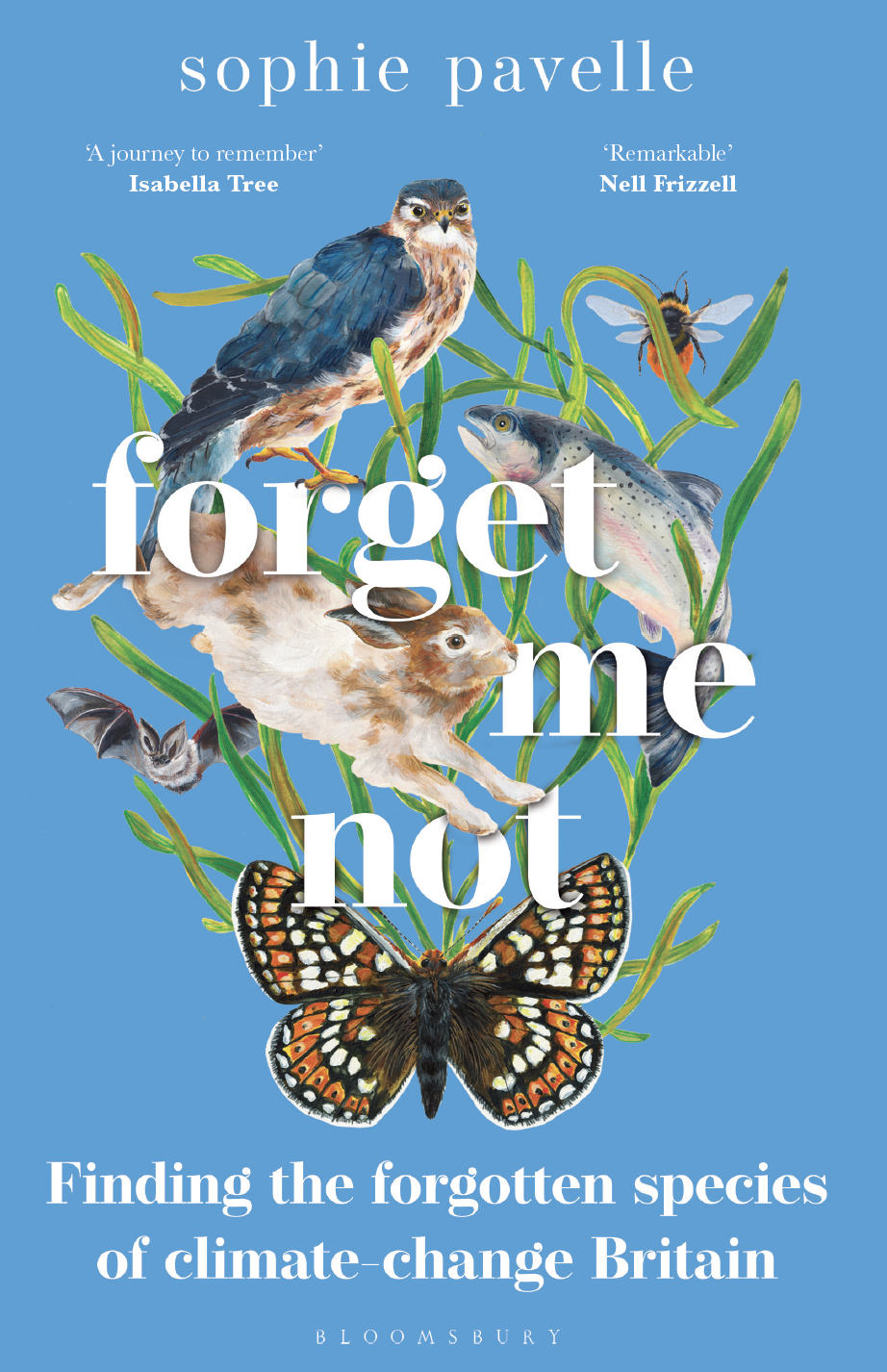
Bloomsbury commissioned me to write a non-fiction narrative about endangered native species and climate change in spring 2020 – on the same day that I got offered a communications job with Beaver Trust, and just as the UK went into lockdown. A rather overwhelming time to say the least…! The pandemic brought many books and creative content to fruition, but for me, that was never the plan for Forget Me Not. Covid-19 became a natural part of the narrative, and made elements of the low-carbon travel immensely challenging and stressful. Over the course of the 18 months of travelling and writing, I was prepared to have writers block and want to give up. Many people told me to expect this. But weirdly, that never happened. As I write this we are finalising the text, before I escape to a studio and record the audiobook. It’s a bizarre experience in a way. I often dream about certain paragraphs, and can place words and sentences exactly in the text, remembering where I was when I wrote it, what music I may have been listening to. Even what I was wearing!

Writing a book has by far been the hardest and most exhausting marathon of my life, but I adored every second. With just one month to go until publication day (9th June!) I’m still pinching myself at this surreal opportunity. I had no idea ‘science communication’ could look like this.

Sophie Pavelle is a writer and science communicator. Sharing stories about British wide audiences, she puts a contemporary twist on the natural history genre. Sophie works for Beaver Trust and presented their award-winning documentary Beavers Without Borders. She is also an Ambassador for The Wildlife Trusts and sits on the RSPB England Advisory Committee. Her writing has appeared in The Metro, BBC Countryfile, BBC Wildlife and Coast magazines. Her first book ‘Forget Me Not: finding the forgotten species of climate-change Britain’ is published on June 9th by Bloomsbury. You can pre-order it here: https://linktr.ee/forgetmenotbook

Graduating and working during the COVID-19 pandemic

Posted on

Finishing our MSc in Science Communication and graduating during a pandemic and national lockdowns was not how any of us expected it to go. But despite that I managed to get a job a few months after submitting my thesis. Not only that, but what I learnt, the work I did and the experiences I had on the MSc helped me to get the role along with my previous experience working in NHS roles.

I am working as content coordinator for NHS Blood and Transplant, the organisation which is responsible for the supply of blood, organs, tissues and stem cells. Most of my role is about developing and producing content for The Donor, a newsletter which is sent to everyone who is registered as a blood donor four times per year. We share donor stories, recipient stories, updates about the donation process, information about different blood types and types of donations, how important blood and organ donations are etc. Whilst not every article is super sciency, the aim is to engage the readers and keep the donors donating to meet the constant demand for blood products.

My writing improved so much during the masters and I think that has definitely helped me get the role as I had to write an article as part of the interview process. It has also helped in my day-to-day work. I go back to the news structure we learnt in the Writing Science module again and again when writing articles at work. It’s currently on a sticky note stuck on the wall above my desk.

Starting a new job whilst working from home in lockdown wasn’t without its challenges but in the past year and a bit I have:

  • Contributed to five editions of The Donor
  • Learnt the editorial process and house style of writing; spoken to/interviewed donors, recipients and internal/external stakeholders
  • Built confidence and developed my personal style
  • Learnt about blood donation, blood components and treatments
  • Chosen supporting images, designed articles and uploaded them onto the content management system

Researched and written a new regular scientific feature called functions of blood. Each article focuses on a different key role of our blood: transport, immunity and clotting. Did you know that the body has 60,000 miles of blood vessels? This is long enough to circle the globe more than twice.

I’ve also donated blood three times so far and counting!

By Morwenna Bugg

Morwenna was a student on the MSc in Science Communication at UWE Bristol in the 2019-2020 academic year.

Meet Me in Another STEM Career

Posted on

In science communication, we often talk about science capital: the concept of feeling like science is “for me” as a result of sum of all the experiences and resources we’ve encountered that build up an interest in science. Everything from having parents in science, being taken to science-related events and having just one excellent teacher can change our lives to one where we pursue a career in STEM (science, technology, engineering, maths).

It’s sometimes difficult to work out exactly what might have pushed us into ambitions within science as a child, especially as we don’t know what we would have ended up doing if it wasn’t for that one teacher we had, or we had been ill the day the school trip went to the science centre. But what if we did have the opportunity to live our lives over and over again? We’d be able to work out exactly what it is that leads to the career paths we take. This is exactly what happens in Catriona Silvey’s “Meet Me in Another Life”, a soft sci-fi novel coming out on 8th July 2021. The novel follows two protagonists, Thora and Santi, who share the same preoccupation with science, the stars, and astronomy. They live their lives over and over, with each chapter painting them in a different relationship (e.g. friends, parent/child, teacher/student, colleagues, lovers, doctor/patient, etc.). In each life, they’re the same people, but due to different circumstances and relationships they don’t always end up following the same careers. Their careers are usually science-related, but not always, and it’s interesting to think about where they end up in their lives through the lens of science capital.

Catriona Silvey

I recently interviewed for Catriona Silvey for The Cosmic Shed and asked her about science capital. In her answer she lays down barriers resulting from internal, personal struggles, interpersonal relationships, and structural barriers in our society. She said: “I realised that I’d written book about these two very driven, very passionate people who mostly repeatedly fail to achieve their dreams.”

“Barriers can be very different for different people depending on their circumstances. Thora’s problem, especially towards the beginning of the book, is that she feels like she has too many choices. Which is quite a privileged position to be in, but it means she sort of ends up sabotaging herself, because quite often she won’t pick the thing she really wants to do because, fundamentally, she’s scared she’ll fail at it, and there’s nothing worse than failing at the thing you really, really want to do. So that’s very much a personal, internal barrier.”

“Another barrier for her is her parents,” Silvey goes on, “her parents have a very fixed idea of the person she is and what she should focus on, and it’s the humanities. And that, in some of her lives, really strongly influences her.”

“Santi’s problem is kind of the opposite of Thora’s problem in that he has a lack of opportunities. He’s a man and he’s straight, but on every other access he has less privilege than Thora has. His parents are working class, whereas hers are professors. He is not a native English speaker, whereas she is. Thora’s family are usually immigrants by choice, whereas Santi’s family are immigrants through economic necessity. For all these reasons, he often doesn’t have the opportunities he wishes he would have, and so his barriers are a lot more structural.”

While investigating what leads us into our careers certainly isn’t the central point of the book (the most pressing theme is really the need to find out why the protagonists are stuck in a time loop), I think for those working in science communication, Meet Me in Another Life offers an interesting meditation on science capital, giving us an experiment we can’t do in real life and wrapping it up in a vivid, gripping, beautifully-written novel.

You can listen to the podcast here:

Dr Hannah Little, Senior Lecturer in Science Communication at UWE Bristol.

New insight into the motivations of today’s science communicators

Posted on

Words: Andy Ridgway

Why do those who blog, tweet, run events at festivals, give talks and engage in all the myriad of other forms of science communication do what they do? What do they aim to achieve when they communicate science?

While many of those who communicate science may well be too busy to ponder these questions day to day, they are important questions because, perhaps subconsciously for the most part, they influence the nature of the communication work they do. Not only that but when we look at these aims and motivations of science communicators at the macro scale, they provide an insight into their perceptions of the relationship between science and society. Are science and society connected and integrated, or somewhat disconnected?

It’s why questions about the motivations and aims of science communicators were an important part of the latest research organised by UWE Bristol’s Science Communication Unit as part of the European Commission-funded RETHINK project  which is exploring the nature of online science communication and how people make sense of science online.

A questionnaire, developed by Elena Milani, a Research Fellow within the Unit, and Unit co-directors Clare Wilkinson and Emma Weitkamp, was distributed to science communicators in the UK, The Netherlands, Poland, Sweden, Portugal, Italy and Serbia and sought to find out more about why science communicators do what they do and how they do it.

Many of the 778 people who responded were press officers (just over 140), or described themselves as freelance communicators or writers (nearly 120). We also received responses from journalists and researchers, as well as those who described themselves as a blogger, YouTuber or social media influencer and a whole host of other science communicators.

What the questionnaire responses make clear is that for many of those who communicate science across Europe, it’s an enthusiasm for science that lies behind what they do. Many of those who communicate science said they do it because it’s part of their job. Others say their motivation, which might be very relevant at the moment, is to counter misinformation.

What was also noticeable was that nearly 300 of our respondents said their motivation was to ‘educate’ others about science. Perhaps not surprisingly then, when Europe’s science communicators were asked what they hoped to achieve when they communicate science, the most popular responses were ‘inform’ and ‘educate’.

This implies that in the minds of many who communicate science, the way we produce knowledge through science is distinct from knowledge use by society and how society might contribute to that knowledge. Knowledge is a one-way street that leads from scientists to the outside world.

That said, a fairly high proportion of European science communicators, 65%, said in the questionnaire that they are looking to create conversations between researchers and the public. This implies a more blurred line between science and society – a two-way street, with knowledge exchanged between scientists and the outside world.

This is interesting in its own right. But the nature of the science and society relationship has assumed greater significance and visibility since the start of the coronavirus pandemic. It’s why there’s never been a more important time to think about this relationship, and maybe RETHINK some aspects of it.

In addition to asking science communicators about their motivations and aims, the questionnaire also sought to find out what they communicate, how they communicate science (whether they use social media or blogs for instance) and the barriers that stand in the way. The full report, including how this research links to science communication theory and previous research, is available here:

Thanks to researchers at Athena Institute, Vrije Universiteit Amsterdam in The Netherlands, Copernicus Science Centre, Poland, Vetenskap & Allmanhet, Sweden, Instituto de Tecnologia Química e Biológica António Xavier, Portugal, Sissa Medialab, Italy and the Center for the Promotion of Science in Serbia for their help in translating and distributing the questionnaire.

From MSc in Science Communication to Media Relations Manager…

Posted on

I knew Science Communications was for me when I was doing my undergraduate degree in Biological Sciences and preferred talking about my dissertation research, rather than being in the lab doing it. After that, I did some research and found the UWE MSc in Science Communication. I applied immediately. 

The module options on the programme at UWE drew me in as there were a variety on offer, and they each offered practical skills to help me step into a job right away. I knew that I wanted to work while completing my MSc, building up my experience in London, so the 3-day blocks worked perfectly for me. I held a number of internships during my time on the programme, and picked up my first part-time job when our lectures finished.

During the programme, as well as the compulsory modules, I studied Writing Science and Hands-On Science Communication. These modules taught me how to tell compelling stories about science that capture people’s imaginations – on page and in person. While the latter might not seem directly related to my role, it taught me a lot about how to explain something complex verbally. Often I’m speaking to journalists over the phone and have to be able to communicate clearly. It also built my confidence in presenting (it’s something you can’t avoid in this career!) and the modules gave me strong foundations by teaching me how to structure a presentation and deliver it with impact. I was also able to build a strong portfolio of work to take into interviews, which is hugely helpful when you’re starting out.

Armed with the academic and work experience I accrued during the MSc, I knew that I wanted to work in communicating science within a charity when I graduated, so I chose to focus my dissertation on how cancer charities communicate online. The project module is very open, so you can choose whatever you’d like to learn about. I picked something I was really interested in, and it also helped show my awareness in the area in job interviews later. 

Straight out of the MSc, I worked a part-time job in general communications for a medical membership organisation, alongside which I later worked another part-time role with a research laboratory, with a couple of freelance jobs on the side too.

Those times were pretty hectic, but I learnt a lot very quickly and had a wealth of experience after a year, including in time management. I then moved to Cancer Research UK working as a Science Press Officer, which was an incredibly busy, fun and meaningful job to me.

Now, as the Media Relations Manager for The Lancet, I manage our media output – deciding which of our many research papers to promote in the media, and how, to help achieve high profile, quality, international media coverage of the journals. I work in a wider communications team, and manage a Press Officer and freelance writers. While my undergraduate degree is key to help me understand the complex health research, my MSc is crucial in helping me recognise how to tell those stories to journalists and the wider public. The Lancet is strongly driven to use our research to benefit people’s lives, and the stories I help to tell focus on changing people’s perception, changing policy, or changing clinical practice.

A recent example of this is the so-called ‘planetary health diet’ – a huge report which was originally published in The Lancet and gave the first scientific targets for a healthy diet that was environmentally sustainable too. Working with the research funders’ media teams, we devised a comprehensive media strategy to ensure that the story hit the news globally, opening people’s eyes to the impact of food production on the climate and what we can each do to reduce this. The report made a huge public impact, making the ‘planetary health diet’ a globally recognised term, and changing food policy in some countries already. 

Media briefing for ‘planetary health diet’.

I feel incredibly lucky to have had the training I had at UWE, and I must mention the teaching staff on the MSc, who were always exceptional and give up a lot of time to support us and train us so well. Throughout my MSc, they gave me detailed, honest advice on what to expect from various careers, and linked me up to people working in that area when possible so that I could get on-the-ground insights too. They were very nurturing and their advice on those career paths is absolutely accurate. If you’re looking for an MSc in Science Communications, you’re in the right place and their training will be a vital cornerstone that you reflect on frequently in your career. 

Emily Head, MSc Science Communication student at UWE, Bristol

From MSc in Science Communication to Science Writer…

Posted on

When deciding where to study a Master’s degree, employability was a huge factor for me. I was keen to study somewhere that would teach me how to get stuck straight into the world of Science Communication. From day one in the Science Communication Unit (SCU) at UWE Bristol, we were treated like professionals and encouraged to present ourselves as so to the rest of the sci-comm community.

Since graduating, I have taken on regular freelance writing projects which have been a great way to practice the skills I learned at UWE Bristol. I have also recently started a full time job as a Science Writer for a small company in mid Wales who specialise in Cellular Pathology. My day job now includes writing articles for pathologists about new research and developing ideas to create multimedia content for our website.

I was already interested in Science Writing when I started the course so was grateful to learn a lot about this topic whilst studying and to meet several industry professionals. One of the key skills I am now using on a daily basis is learning how to filter through academic papers- as a communicator you may need to sort through huge quantities of research to fully understand an issue. I’ve also learned how to write more concisely. This really helps with sticking to word counts. My interview skills also developed very quickly on the course, something I’d never done before. I now use these skills to interview customers, researchers and colleagues both face to face and over the phone. Unsurprisingly, one of my favourite modules on the course was Writing Science and I still have the “Top Tips” we were given during the course and refer to them regularly for a refresher.

As much as I loved gaining the practical writing skills I now use in my full time job, I am also really glad I had the opportunity to learn more about the theory and history of the field as well. It has definitely broadened my horizons about more types of communication and how different media can be used to encourage science communication in a format accessible to everyone. Some of the other practical skills I gained through the course served to be valuable life lessons in team work, compromise and self-confidence. For example, I can proudly say I was part of a team to record an “as-live” radio show at the BBC- that’s a pretty memorable experience!

Finally, the teaching staff and my course mates from UWE Bristol have become invaluable sources of professional advice and encouragement as we all continue to support each other and celebrate our successes. Amongst my course mates we have shared a whole range of achievements including further study, international travel for fieldwork, BBC credits, conference attending and journal publication.

To find out more about the MSc Science Communication please visit our Postgraduate taught courses page.

Siobhan Fairgreaves, UWE Bristol MSc Science Communication student 2016/17

How to write a research synthesis report (or how I conquered my batteries mountain!)

Posted on

The words on the screen are drifting in and out of focus… lithium-ion and sodium-ion, redox flow and redox couples… and, errrrrm, what does ‘roundtrip efficiency’ mean?

It’s April 2018.  I have just returned to work after a sleepless year on maternity leave and been tasked with writing a report on battery technologies and their environmental impacts.

It’s an honour to write about such an important topic – batteries are critical to renewable energy systems and e-mobility – and I am excited about the job ahead.

However, faced with this seemingly insurmountable, not to mention impenetrable, pile of scientific papers upon which to base the report, it’s also easy to feel a little daunted.

I pull myself together. I know that I can do this because I’ve been here before, having successfully delivered reports on a diverse set of topics, from green finance to fish farming – as baffling as some of these topics may have seemed at first.

And sure enough, six months later, Towards the Battery of the Future (as the finished report is now titled) is being handed out to warm approval at high-level international conferences and EU meetings, deemed worthy of attention by top-tier policymakers and captains of industry.

With a glow of satisfaction, I pat myself on the back for having mastered a topic that, initially, I knew very little about. I’m also chuffed to have played a role in sharing the science with wider society.

Research syntheses

Towards the Battery of the Future is one of a number of reports I have worked on for Science for Environment Policy over the past 8 years. It is an example of a research synthesis – a publication which weaves together research, often from multiple disciplines, to support or influence policy.

In Science for Environment Policy’s case, we distill research to help policymakers protect and enhance our environment.

I can tell you from my time on these reports that producing a research synthesis is a tricky business. I am just starting work on a new report which explores the wonders of pollinators, and it feels a good time to reflect upon how best to go about a research synthesis.

An increasing body of scholarly work is assessing the role and impact of research syntheses, and various techniques for creating them1. This has yielded some interesting principles and frameworks, which provide valuable food for thought and guidelines for action.

This blog post is my nuts-and-bolts contribution to the discussion and, below, we have a handful of pointers, drawn from personal experience. These helped me take the batteries report, and those before it, on the journey from a mystifying blur of pixels to a bona fide publication, and one which may just make the world a better place.

1. Talk to real people

A chat with a well-selected expert can clarify more about a topic than days of scouring through research papers (and certainly more than could ever be gleaned from Wikipedia).

Work on the batteries report really got going after some enlightening conversations with the commissioning policy officer in Brussels and my trusty scientific advisor in Germany. Both helped define what we really need to focus on.

Where does the weight of evidence sit? What are the big debates and unknowns? And, seriously, what does roundtrip efficiency actually mean?

Thanks these chats, the words on my screen start to snap into focus, and, armed with a list of useful keywords, I feel ready to take on the research databases and build this report.

(And, turns out roundtrip efficiency is really a very simple concept. Need to know: you don’t want your batteries to leak too much energy when recharging).

2. And talk to lots of different types of people

I lost count of how many people contributed to and reviewed the batteries report. These helpful souls not only offered useful details, but also balance with their diverse backgrounds, from transport to chemicals.

And it’s not just scientists and policymakers who can help. Businesses, consultants and community groups, for example, are all a treasure trove of information and perspective.

I have been transported from my desk in a grey suburb of Bristol to tropical forests of Central America and windswept fish farms of the Baltic Sea, courtesy of telephone conversations with astonishingly obliging contributors.

With my tabula rasa outset for each report, I do often feel a little ignorant during these chats.  I’ve not quite forgiven the guy who actually shouted at me for asking the wrong questions (owing to my ignorance on the particular topic of the report at the time), but I did come out of that conversation much more knowledgeable than when I went in.

A caveat: the more people involved in a report, the longer it takes – and the risk of missing publication in time for key policy events increases, diminishing the report’s potential impact. In practice, synthesis writers are often faced with the challenge of finding the best way to produce robust content within short timeframes (see also: limited budgets).

3. Your reference manager is your best friend

I’ve seen many a writer get in a twist attempting to manually manage the reams of references that make up a report. Problems often arise as a report continually shifts in form throughout its development; citations get lost, bibliographies get muddled.

I’ve adopted Mendeley to overcome these issues, and do all the awkward formatting for me. It’s not perfect, and I’m always keen to know how others deal with their references, but it sure makes life a lot easier.

4. Keep on truckin’

It is the research that goes into developing a report, and not the actual writing, that drains the most time and energy. A day spent filtering and reading papers can amount to just two or three short paragraphs of text. Producing a research synthesis report is, at times, frustratingly arduous.

However, as Towards the Battery of the Future gradually morphed into a rounded product, I was reminded of why I went into science communication in the first place: it’s the perfect excuse to learn new things. The process of translating between the languages of science and the ‘lay person’ is also something I find undeniably satisfying.

Indeed, as I submit the final draft, I’m wishing I could make my own efficient roundtrip – to go back and do it all again.

Michelle Kilfoyle, Science Writer, Science for Environment Policy

  1. Some recent examples:

The Royal Society & the Academy of Medical Sciences (2018) Evidence synthesis for policy: a statement of principles. https://royalsociety.org/~/media/policy/projects/evidence-synthesis/evidence-synthesis-statement-principles.pdf

Wyborn et al. (2018) Understanding the Impacts of Research Synthesis. Environmental Science & Policy. 86: 72–84. DOI:10.1016/J.ENVSCI.2018.04.013

Back to top

Follow this blog

Get every new post delivered right to your inbox.