

Women Like Me

Posted on

Engineering our Future (this article first appeared on the Engineering our Future blog at UWE)

Only 11% of engineers in the UK are women. Is this enough?

No, it’s really not – we have an engineering skills shortage as it is, and the low proportion of women in the workforce means that a whole pool of talent is going untapped. Girls need to be able to see engineering as for them, connect with it as career and have access to positive female role models. And in turn, women need to feel supported to make a difference in the workplace once they get there, so that they not only go into, but stay in engineering roles.

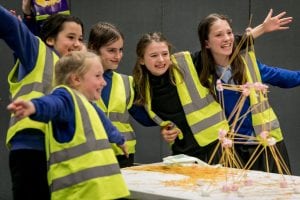
So what can we do about that, and how can we bring people together? Here at the Science Communication Unit at UWE Bristol, we’re launching ‘Women Like Me’; a project which aims to open doors to girls and build resilience for women in engineering. I will be running the project with Laura Fogg Rogers  over the next year; we both have lots of experience of delivering outreach and engagement projects and are passionate about making Science, Technology, Engineering and Maths accessible to everyone, at all stages.
Supporting women and girls in engineering

Women Like Me is a peer mentoring and outreach project aimed at boosting female representation in engineering. So what does that actually mean?

The project will pair senior women engineers with junior women engineers to give them mentoring support as they start out in their engineering careers. In turn, junior women will undertake engineering education outreach in schools and at public events in the Bristol and Bath area. Engineering is a creative, socially conscious, and collaborative discipline, and this project aims to support girls and women to make a difference in society.
Who can take part?

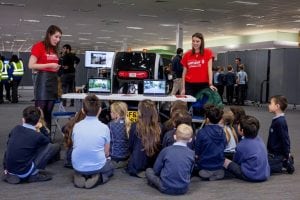
Mid-career and early career female engineers working in the Bristol and Bath area can get involved in the project. Senior women engineers are those who are more than five years post-graduation from their first degree. Junior women engineers are those with less than five years of experience since entering the engineering profession, and can include apprentices, trainees, postgraduate students and postdoctoral researchers.

Undergraduates aren’t eligible to take part; whilst they are fantastic role models, UWE already provides public engagement training for undergraduate engineering students through the Engineering and Society  module.

What will it involve?

We will offer networking opportunities to all participants at the start (October 2018) and end (April 2019) of the project. Senior engineers will receive training in mentoring and meet with their junior engineer mentee at least twice during the project.

Junior engineers will receive mentoring support from senior engineers and training in public engagement. They will then undertake at least three engineering outreach activities in local schools and at local public events. Activities and coordination of events is provided and supported by UWE; participation is voluntary and we’ll cover travel expenses.
How can I find out more or sign up?

For more information or to get involved, please email engineeringourfuture@uwe.ac.uk. You can also follow the project on Twitter for updates.

Women Like Me is based in the Science Communication Unit at the University of the West of England, Bristol (UWE), supported by the WISE Bristol Hub and STEM Ambassador Hub West England and funded by a Royal Academy of Engineering Ingenious grant. The project is organised by Dr Laura Hobbs and was initiated by Laura Fogg-Rogers. By matching senior and junior female engineers and supporting junior engineers to connect with the children and young people as the engineers of tomorrow, the project will lead to impact both in the workplace today, and for the future of the engineering profession.

Laura Hobbs

South West Engineering Leaders Awards Exhibition and Public Event

Posted on

Saturday 30th June 2018, 10am – 4pm

UWE Bristol Exhibition and Conference Centre,
North Entrance,
Filton Road,
Stoke Gifford,
Bristol, BS34 8QZ

Take part in science and engineering demonstrations, and see the inspiring designs from the Leaders Awards – the children’s engineering design competition for the South West.

On Saturday 30th June, UWE’s engineers will showcase their latest research and technology in the Exhibition and Conference Centre at UWE. The event is free to all and will be a public open day for families and schools.

The event and Leaders Awards sponsorship have been organised by Laura Fogg-Rogers, a Senior Research Fellow in UWE Bristol’s Science Communication Unit, as part of her work on the Children as Engineers project. Activities include having a go with drones, taking on the role of a city planner in a cardboard version of Bristol, and experiencing the latest virtual reality data controllers.


School children science engineering activityLaura Fogg-Rogers, who has coordinated the event said, “Engineers are highly creative people who can help to solve many of society’s problems. It’s a really collaborative profession, where you have to work together in teams to see your visions and designs come to fruition. The range of roles and careers is really diverse, and that’s what we’d like to emphasise to all young people, particularly girls. You can make your own mark in engineering!”
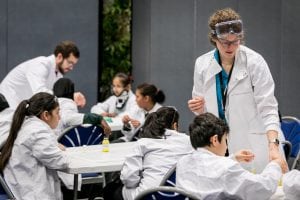
The public event forms part of UWE’s Week of Engineering which has been organised by the SCU, which celebrates the national Year of Engineering alongside International Women in Engineering Day. It will follow a series of activities including the Big Bang Fair at UWE and the Engineering our Future schools event, which will see 240 girls attend UWE to experience being engineers.

Alongside the public activities will be an exhibition displaying the shortlisted and winning designs for the South West Leaders Awards. UWE has teamed up with DE&S (part of the Ministry of Defence) this year to sponsor the South West England Region of the Primary Engineer & Secondary Engineer Leaders Award; a national engineering competition for schools.

School pupils answered the question “If you were an engineer what would you do?” by identifying a problem in society that engineering could solve and devising a solution.  UWE students from EngWest Studio will turn one of the winning designs into reality later this year.

SCU’s Laura Fogg-Rogers scoops award for science teaching project

Posted on

The Children as Engineers project led by Laura Fogg-Rogers from the Science Communication Unit at UWE Bristol has won a national award.

The TEAN (Teacher Education Advancement Network) Commendation Award for Effective Practice in Teacher Education was presented at an awards event held in Birmingham in May. Senior Research Fellow Laura Fogg-Rogers and Senior Lecturer Juliet Edmonds collected the award on behalf of UWE. The project team also brings together Dr Fay Lewis from the Department of Education and Childhood and Wendy Fowles-Sweet from the Department of Engineering Design and Mathematics.

The Children as Engineers project developed an undergraduate degree module called ‘Engineering and Society’ which pairs engineering students with teachers to bring hands-on science programmes into primary schools. It aims to address science, technology, engineering and mathematics (STEM) skills gaps in primary schools – for teachers and children.

The project sits against a backdrop of an urgent need for enough trained engineers to meet the country’s future needs. Estimates suggest the UK will need 100,000 new engineers in the next 20-30 years to solve problems affecting society, grow the economy, and design products for manufacture. In particular, more girls and women are encouraged to take up engineering as a career.

Pilot research indicates that student teachers specialising in science at primary school improved their subject knowledge and confidence to teach STEM in the future. Meanwhile, the engineering students taking the ‘Engineering and Society’ module benefit by developing their communication and presentation skills and creating a broad-based understanding of the relevance of their subject.

Pupils benefit from hands-on sessions delivered by the students, where they engage in activities such as building mini-vacuum cleaners, testing floating platforms and exploring flight. Children aged between eight and 11 learn about the skills, challenges and excitement of engineering.

Laura said: ”We were delighted that our team’s hard work over several years has been recognised at a national level by teacher educators. We plan to continue expanding this project to bring real benefits to teachers, engineers, and pupils, to inspire creative STEM teaching and practice for the future.”

The project is believed to be the first in the country to pair university students in these two disciplines to enhance the learning of both groups as well as delivering real benefits to school teachers and pupils.

Laura Fogg-Rogers

How do local residents across England and Wales value Mining Heritage? Experimenting with the Q Method.

Posted on

Margarida Sardo and Danielle Sinnett

Dr Danielle Sinnett (Architecture and the Built Environment) and Dr Margarida Sardo (Science Communication Unit) recently delivered workshops with residents to investigate how they value local mining heritage, as part of the INSPIRE project: IN Situ Processes In Resource Extraction from waste repositories.

With a total of six workshops across the country, the events were held at key mining locations across the South West (Tavistock and Redruth), the Pennines (Matlock Bath and Reeth) and Wales (Capel Bangor and Barmouth). At each paired location one workshop was held on a Wednesday evening and the other over a Thursday lunchtime  –  we wanted to ensure that the workshops were attended by a range of people, rather than those with a specific interest in mining heritage.

The Q method was used to examine the preferences of those living in areas of metal mining in England and Wales. This method was selected as it is suitable for contentious issues where there is no consensus of opinion and is effective at ensuring participants prioritise different outcomes. For example, instead of reporting that everything is ‘very important’, the Q Method allows participants to ‘sort’ a series of statements based on the degree to which the statement represents their perspective on a subject: the Q sort.

Evaluation on the chosen method was carried out and the data is currently being analysed. Preliminary results show this is a promising method of in-depth engagement. The Q sort was perceived by the participants as a time-consuming and demanding process but also interesting, thought provoking and challenging (in a good way!). Definitely a method to consider in a public engagement context, especially when looking for in-depth thoughts and views on certain issues.

We are now busy analyzing both the Q Method results and the full data from the evaluation and look forward to sharing the results in the near future.


FET Award: STEM outreach at Luckwell Primary

Posted on

This year, I have been lucky enough to receive a FET Award to promote STEM at a local primary school in south Bristol. Our key aims have been to use the expertise of UWE staff and students to deliver events which not only encourage children to pursue STEM careers, but also support teachers with some of the harder to achieve National Curriculum objectives.

Our first activity involved all students in Key Stage 2 – 120 in total. Inspired by the LED cards on Sparkfun, and ably assisted by fellow FARSCOPE students Hatem and Katie, we ran a lesson in which students used copper tape, LEDs and coin cell batteries to create a light-up Christmas tree or fire-side scene. Our aim was not only to show the students that electronics is fun and accessible, but to re-reinforce the KS2 National Curriculum objectives relating to electricity and conductivity.

Although a little hectic, the students really enjoyed the task and the teachers felt that the challenge of interacting with such basic components (as opposed to more “kid friendly” kits), really helped to drive home our lesson objectives.

To re-reinforce the Christmas card activity, we also ran a LED Creativity contest over the Christmas break. Students were given a pack containing some batteries, LEDs and copper tape and tasked with creating something cool.

Entries ranged from cameras with working flash  to scale replicas of the school. The full range of entries and winners can be found here. Overall, we were blown away by the number and quality of the entries.

Our second focus was introducing students to programming. To this end, we have been running a regular code club every Monday, this time supported by volunteers from UWE alongside FARSCOPE student Jasper. In code club, we use a mix of materials to introduce students to the programming language scratch. We currently have 16 students attending each week and recently were lucky enough to receive a number of BBC Micro bits.

Alongside Code club, we also ran a workshop with the Year 5 class, to directly support the national curriculum objectives related to programming. Students were given Tortoise robots (Built by FARSCOPE PhD students, in honour of some of the very first autonomous robots, built in Bristol by Grey Walter). Children had to program and debug an algorithm capable of navigating a maze.

As the outreach award comes to an end, we are planning a final grand event. Each year the students at Luckwell School get to spend a week learning about real-life money matters in “Luckwell Town”. During this week, students do not attend lessons – instead, they can choose to work at a number of jobs to earn Luckwell Pounds. This year, we will be supporting Luckwell Town by helping to run a Games Development studio. Students will use Scratch to design and program simple games for other students to play in the Luckwell Arcade.

IMG_3714

As with our prior events, the success will depend on volunteers from UWE donating their time and expertise to support us.

Luckwell Town will take place every morning of the week commencing June 12th. We are looking for volunteers to support us, so please respond to the Doodle poll if you are interested.

Martin Garrad, PhD student in robotics

Innovating university outreach

Posted on

Corra Boushel

Through funding from the Higher Education Funding Council for England and internal backing, the Science Communication Unit has been involved in developing an ambitious new UWE Bristol outreach programme for secondary schools in the region. We’ve worked with over 4,000 school pupils in the last 18 months, finding tardigrades, hacking robots and solving murder mysteries with science, technology, engineering and maths.

fairfield-algae-vs-protozoa-march-2016

The idea behind the project is not only to engage local communities and raise pupil aspirations. Our plan is to refocus outreach within the university so that it no longer competes with student learning or research time, but instead functions to develop undergraduate skills and to showcase UWE Bristol’s cutting edge research.

stem-roadshow-tweet

The outreach activities are developed by specialists, but then led by undergraduate students and student interns, who develop confidence and skills. UWE Bristol students can use their outreach activities to count towards their UWE Futures Award, and in some degree courses we are looking at ways that outreach projects can provide credit and supplement degree modules. Researchers can use the activities to increase their research impact and share their work with internal and external audiences – getting students excited about research through explaining it to young people. Enabling students to lead outreach – including Science Communication Masters and Postgraduate Certificate students – means that the university delivers more activities, reaching more schools and giving more school pupils the chance to participate.

worle-forensics-tweet

The brainchild of UWE Bristol staff Mandy Bancroft and John Lanham, the development stages of the project have been led by Debbie Lewis and Corra Boushel from the Faculty for Health and Applied Science and the Science Communication Unit with support from Laura Fogg Rogers. The project is now being expanded into a university-wide strategy with cross-faculty support to cover all subject areas, not only STEM.

bradley-stoke-science-tweetSpecial thanks on the project go to all of our student ambassadors and previous interns, as well as our current team of Katherine Bourne, Jack Bevan and Tay-Yibah Aziz. Katherine and Tay-Yibah are employed on the project alongside their studies in the Science Communication Unit.

Tackling the challenge of engaging with drought and frogs

Posted on

SCU was well represented at the Bristol Festival of Nature (BFON) in June, with Associate Professor Emma Weitkamp manning the Drought Risk and You (DRY) stand on Saturday and MSc student Hannah Conduit showcasing her research with the Durrell Trust as part of UWE’s festival tent.

Emma is exploring communication and engagement barriers and enablers related to drought and water scarcity within the DRY project. At BFON, Emma was interested to hear what visitors think about a set of cartoons produced as part of the project and whether these might be a tool to open conversations about water scarcity; climate change models suggest the UK will have wetter winters and drier summers, increasing the risk that we will have serious droughts. . In the southern UK, the most severe in living memory is the drought of ’76.

Initial work within the DRY project highlights the challenges of engaging people with Drought. Unlike flooding which has immediate effects, drought has a slow onset and many not have immediate relevance to many people.  Rain during BFON highlights the challenge – how do you engage people with drought when it’s raining?

Emma and Lindsey
Emma Weitkamp and DRY Project leader Lindsey McEwen at the DRY stand, Bristol Festival of Nature


Emma presented initial work on citizen science aspects of the DRY project at the Society for Risk Analysis meeting in Bath, 20th June, while Adam Corner, of Climate Outreach presented the project’s initial work on communication barriers.


Jeff Dawson
Jeff Dawson with the project research tools

Frogs are not the cuddliest of species, so Hannah is tackling similar challenges through her research with the Durrell Trust. Amphibians have suffered a dramatic decline in numbers, and around 40% of all amphibian species are now considered to be under threat. But in a world of glamorous tigers and cuddly lemurs, it is sometimes hard for frogs to get a look in.

Hannah’s research focuses on one particular species of frog; second largest in the world and perhaps one of the most endangered. The ‘Mountain Chicken’ is aptly named for its meat; prised locally as a delicacy with taste and consistency similar to that of its feathery cousin.

With less than 100 individuals remaining in the wild and continued threat from disease, the Durrell Trust and UWE are working together to find more effective ways of communicating the plight of amphibians like the Mountain Chicken.

At BFON, Hannah and her Durrell supervisor, Jeff, along with a small group of volunteers talked with the public about the Mountain Chicken’s story, as well as showing them some of the methods used by scientists and researchers to monitor the remaining wild frogs. Scanning the stall’s microchipped frog plushies and swabbing them for a fungal disease called Chytrid proved to be the weekend’s most popular activities.

Erik Stengler Hannah Conduit and Jeff Dawson
Erik Stengler, Hannah Conduit and Jeff Dawson, at the Saving the Mountain Chicken Frog stand, Bristol Festival of Nature

Research is currently ongoing for Hannah’s project, and will culminate in a handbook for use by the Mountain Chicken Recovery Programme in raising awareness and gathering interest amongst the public for the species.


Blog post written by Emma Weitkamp & Hannah Conduit


An Ethical Roboticist: the journey so far

Posted on

What do robots have to do with ethics? And how do you end up with the job of “roboethicist”? Prof. Alan Winfield, Director of the Science Communication Unit at UWE Bristol, explains his recent professional journey.

It was November 2009 that I was invited, together with Noel Sharkey, to present to the EPSRC Societal Impact Panel on robot ethics. That was I think my first serious foray into robot ethics. An outcome of that meeting was being asked to co-organise a joint AHRC/EPSRC workshop on robot ethics – which culminated in the publication of the Principles of Robotics in 2011: on the EPSRC website, and with a writeup in New Scientist.

Shortly after that I was invited to join a UK robot ethics working group which then became part of the British Standards Institute technical committee working toward a Standard on Robot Ethics. That standard was published earlier this month, as BS 8611:2016 Guide to the ethical design and application of robots and robotic systems. Sadly the standard itself is behind a paywall, but the BSI press release gives a nice writeup. I think this is probably the world’s first standard for robot ethics and I’m very happy to have contributed to it.

Somehow during all of this I got described as a roboethicist; a job description I’m very happy with.

In parallel with this work and advocacy on robot ethics, I started to work on ethical robots; the other side of the roboethics coin. But, as I wrote in PC-PRO last year it took a little persuasion from a long term collaborator, Michael Fisher, that ethical robots were even possible. But since then we have experimentally demonstrated a minimally ethical robot; work that was covered in New Scientist, the BBC R4 Today programme and last year a Nature news article. I was especially pleased to be invited to present this work at the World Economic Forum, Davos, in January. Below is the YouTube video of my 5 minute IdeasLab talk, and a writeup.


To bring the story right up to date, the IEEE initiated an international initiative on Ethical Considerations in the Design of Autonomous Systems, and I am honoured to be co-chairing the General Principles committee, as well as sitting on the How to Imbue Ethics into AI committee. The significance of this is that the IEEE effort will be covering all intelligent technologies including robots and AI. I’ve become very concerned that AI is moving ahead very fast – much faster than robotics – and the need for ethical standards and ultimately regulation is even more urgent than in robotics.


It’s very good also to see that the UK government is taking these developments seriously. I was invited to a Government Office of Science round table in January on AI, and just last week submitted text to the parliamentary Science and Technology committee inquiry on Robotics and AI.

You can find out more about Alan’s research and engagement on his own blog.

Back to top

Follow this blog

Get every new post delivered right to your inbox.