Today marks the launch of a new year-long programme that aims to inspire and motivate young people in the West of England to pursue green career pathways. Known as Inspire Sustainability, it is one of three West of England Combined Authority (WECA)-funded initiatives as part of the Green Futures Fund, that, if successful, could be replicated and scaled to meet the region’s Climate Emergency Plan and Net Zero ambition.
This announcement builds on recent WECA support of other green skills initiatives in local schools, with West of England Mayor Dan Norris awarding the first green jobs grant for three schools to develop a special environmental careers programme -read more here.
All-school engagement: tailored lessons, talks and careers events with diverse role models, culminating in a whole-school Sustainability Summit.
Eco Council engagement: Eco Action Plan co-development to support the schools achieve Eco School status
Teacher engagement: training so that teachers have the confidence to engage young people on these topics and support them to imagine a future where they can see themselves playing an active role in shaping development.
Once piloted, the outcomes will be shared widely to primary and secondary schools as well as to educational professionals and academics through the consortium’s networks.
West of England Mayor Dan Norris with Year 10 pupils from Orchard School at the Youth Engineering for Environmental Sustainability Summit in October 2021
Building on what works
The Inspire Sustainability approach builds on tried and tested methods explored in DETI Inspire, which has engaged over 7,000 children and young people in the West of England on engineering for sustainability.
Consortium member UWE-Bristol’s Science Communication Unit has a track record of working with and training diverse stakeholders to reach sustainability goals. In 2021, the Unit launched its Climate Action Hub to highlight the existing work of students and academics in this space, as well as to offer support and training to further amplify climate action. Currently it is delivering climate communications training to young people and supporting them to act on things that matter to them. The Youth Climate Communications toolkit will be used to develop the teacher engagement portion of Inspire Sustainability.
Meanwhile, the STEM Ambassador programme will be key to recruiting diverse green role models while Avon Schools Eco Network will use their expertise to support the schools to develop their action plans.
If you are interested to know more about any of this work, please contact project manager Sophie Laggan.
A toolkit and training for effective youth climate comms and social action
UWE Bristol’s Science Communication Unit (SCU) is launching a new Youth Climate Action Toolkit to empower young people to act on things that matter to them. The toolkit is suitable for 16-24-year-olds, and we encourage you to please download and share the kit with any (young) person you think may benefit from these tools!
The newly developed toolkit has been produced in partnership with young people from the Avon Schools Eco Network, following pilot training held with the DETI Inspire team in the School of Engineering.
The pilot involved 12 young climate activists who learnt how to be more effective with their own campaigning, whilst forming the foundations of this new toolkit to support other young people. As well as empowering young people to act, the toolkit aims to speak with and engage diverse audiences that may not otherwise take part (e.g., through filmmaking, persuasive writing and interactive stalls, etc).
What is inside the toolkit?
To allow any young person to use the materials independently of the training, the toolkit has been designed to stand-alone or complement the training. It consists of four sections:
Section one: lays the foundations for effective team working, with a skills audit for young people to assess their baseline entrepreneurial skills for sustainability, and time set aside to define their action project based on need
Section two: encourages readers to understand different worldviews – including those from different sides of the political spectrum, and people in positions of power and influence
Section three: drills down into the communication methods, allowing readers to select the right method for their audience and to prototype and test their communications
Section four: encourages readers to reflect on their learnings, re-assess their skills and evaluate the impact of their communications
Training in the community
The SCU team have also been delivering the Youth Climate Communications to local colleges and youth groups. The training is modular, which allows it to be adapted to suit the needs and interests of the organisations involved.
The training is already being modified to suit the needs of one college, where they have aims to support a more sustainable educational environment by delivering to their students over a two-week period at the end of term. Students will vote on a priority for action within their college and then work in teams, with the support of a coach, developing a communications and behaviour change campaign which could then be delivered in the following term.
The young people’s experience of the programme is being evaluated to better understand whether their attitudes, skills and behaviours relating to sustainability, change as a result of the training. Findings will be shared on this blog later this year.
For empowerment programmes
Meanwhile, aspects of the training are also being delivered to participants of more established empowerment programmes, such as this year’s Catalyse Change programme, Bristol Education Partnership’s Climate Challenge and The Global Goals Centre’s Groundbreakers awards, with the toolkit also featuring in the Groundbreakers’ action pack.
A future aim of the project is to deliver the training online to youth groups and educational establishments across the country, and beyond, with training provided to educators to deliver the programme themselves. For a taster of what this training could look like, head to our YouTube where you can access the social media component of the training.
Where it all began
The training emerged from conversations among the SCU and colleagues about the desire to share our knowledge on climate communications and active citizenship more broadly, so when a funding opportunity arose the Unit was quick to pull together a team to make their dream a reality. The all-female team consists of academics and researchers in disciplines ranging from human geography, engineering, and environmental anthropology – to building physics and entrepreneurship. What unites them is a common interest in supporting young people to develop the skills and confidence they need to take action about things that matter to them.
This training is the first offering from UWE’s Climate Action Hub, also established by the SCU. The Hub is a place for researchers and students to connect with communities for climate action. There is already some work on campus doing just this, such as the children’s workshops delivered by DETI Inspire and Inspire Sustainability, but this is the first time training has been put in place to support the University and communities to do more.
To find out more about the in-person and online toolkit or to connect to the Climate Action Hub, email project manager Sophie Laggan.
I never knew what I wanted to be – except that any career for me had to have three conditions: it must involve an above-average dose of the outdoors, I would like to be in charge of the agenda, and some sort of animal (any will do!) needs to be in close proximity at all times. No doubt the aspirations of most people, right?
I had a linear route into science communication, albeit with several detours in-between. Studying Zoology at the University of Bristol straight after school, I appreciated the programmes breadth in not funnelling me in a niche direction. Like anyone in their late teens/early twenties, my mind was a meandering muddle. In a bid to find some sort of path to address the dreaded ‘what’s next?!’ question from parents and family, I dipped my toes into many pools – applying for work experience and short internships in physiotherapy, veterinary medicine, law, magazine publishing, copy editing, countryside management, the military and teaching. Although quite relentless, it became a helpful ‘tick-box exercise’ allowing me to cross off those areas which I didn’t enjoy (vital), and keep close those I found interesting.
Eventually, I found focus in the middle of all of these careers and interests. That is – in science communication – a dynamic and exciting vocation where you act as the mediator between scientific research, and the public. A crucial role, amid such a noisy, turbulent world. Despite this being only six years ago, science communication was something I had never heard of at the time. Safe to say, after seeing the MSc in Science Communication offered at UWE Bristol, and how varied it was, I was officially intrigued. And that was before I’d even had a chance to explore the careers that alumni had pursued after graduating.
During my masters at UWE in 2016-17, the world felt like it was changing. Social media reared its head and became the giant it is today. We saw the power of how we can use those platforms to communicate environmental truths, and rally public support for positive change; namely with the release of Blue Planet 2 and the battle to eliminate single use plastics. The realities of climate change and biodiversity loss rushed into conversation, creating urgent pressure to find solutions. Personally, all of these events over the past six or so years have shifted my own communication priorities. I’m not only trying to engage the public with the joy of nature on a fundamental level, but also trying to spur real, lasting action for its future. It’s more of a ‘the faster we act, the less we lose,’ sort of situation.
After I graduated in 2018, I tried my hand at going freelance. The notion appealed to me (if we just revisit my eclectic career conditions above…) and I was grateful to be in a position where I could still live at home in Devon, earn money with two retail jobs, and experiment with science communication on the side. It was an immense balancing act, and at times very stressful and disheartening. Repeated rejection for jobs, ideas and offers of work sure makes you resilient! But the hope of finding a seat at the table really did keep me going.
I fostered and maintained links with wildlife charities and NGOs, offering volunteer hours with The Wildlife Trusts, fundraising for them and others and being a bit of a prolific networker whist trying to find my voice. Later, I got the brilliant opportunity to be part of the RSPB steering group for the 2019 State of Nature Report, and contribute to the forward. A spin-off article I was asked to write reflecting on the report’s implications was picked up by a major publisher, who asked me if I had ever thought about writing a book. Of course I hadn’t. I was convinced they thought I was somebody else (imposter syndrome, hello!). After all, isn’t writing a book something you do when you’ve accomplished something? Something you might strive to do in your wildest dreams of your later years?
But it’s only looking back that I’ve realised I’ve been writing my whole life. Without realising, I have always sought comfort in words, stories and narratives. Many of us do. Not a voracious reader by any means, but I have kept extensive diaries, written letters, postcards, poems and short stories. Whilst all my friends at school talked about the bands and music they were into, I kept quiet, for all I ever listened to were story tapes, and later, audiobooks.
I loved English at school and didn’t realise how much being able to write, and enjoy it, helped me through both my BSc and MSc, where many of the exams and coursework were written. Writing this blog has made me reflect on how much the variety of modules, teaching and assessments offered by the Science Communication Unit at UWE was invaluable preparation for my current work, not least in battling with imposter syndrome in writing my book. Despite what social media might portray, I’m shy, and introverted. Painfully so, when I was younger. But the MSc was a game changer for me. Smaller cohorts allowed better integration and interaction between staff and students, which boosted my confidence to contribute in class. The staff encouraged us to explore our individual creative and research interests, to push boundaries and take risks.
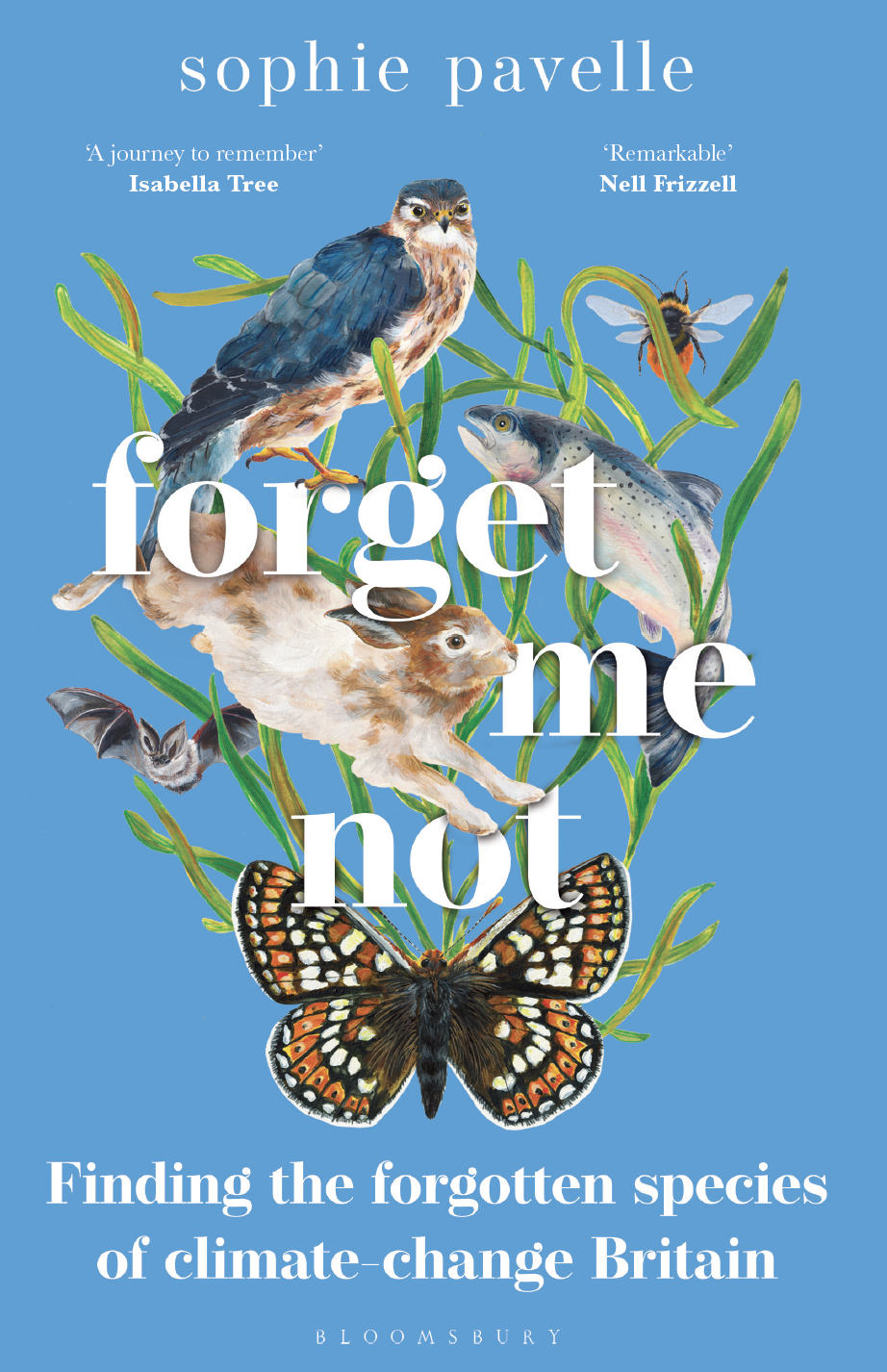
Bloomsbury commissioned me to write a non-fiction narrative about endangered native species and climate change in spring 2020 – on the same day that I got offered a communications job with Beaver Trust, and just as the UK went into lockdown. A rather overwhelming time to say the least…! The pandemic brought many books and creative content to fruition, but for me, that was never the plan for Forget Me Not. Covid-19 became a natural part of the narrative, and made elements of the low-carbon travel immensely challenging and stressful. Over the course of the 18 months of travelling and writing, I was prepared to have writers block and want to give up. Many people told me to expect this. But weirdly, that never happened. As I write this we are finalising the text, before I escape to a studio and record the audiobook. It’s a bizarre experience in a way. I often dream about certain paragraphs, and can place words and sentences exactly in the text, remembering where I was when I wrote it, what music I may have been listening to. Even what I was wearing!
Writing a book has by far been the hardest and most exhausting marathon of my life, but I adored every second. With just one month to go until publication day (9th June!) I’m still pinching myself at this surreal opportunity. I had no idea ‘science communication’ could look like this.
Sophie Pavelle is a writer and science communicator. Sharing stories about Britishwide audiences, she puts a contemporary twist on the natural history genre.Sophie works for Beaver Trust and presented their award-winning documentary BeaversWithout Borders. She is also an Ambassador for The Wildlife Trusts and sits on theRSPB England Advisory Committee. Her writing has appeared in The Metro, BBCCountryfile, BBC Wildlife and Coast magazines. Her first book ‘Forget Me Not: finding the forgotten species of climate-change Britain’ is published on June 9th by Bloomsbury.You can pre-order it here: https://linktr.ee/forgetmenotbook
Over half term, Tillie, Ellie and I represented Avon schools eco network at the youth climate communications workshop at UWE Bristol. We started the day with getting to know each other as it was a mix of young people from local groups of climate activists across Avon and Bristol. Discussion turned to what our baseline would be for what we want to achieve from the session, and what skills we could bring, from university degrees to team leadership skills. After settling in we decided that we all wanted climate action, so we went on to think about what our individual call to action would be to base our ideas off throughout the day. There were amazing ideas from adapting the UK school curriculum to having more climate awareness to creating a wider awareness of vegan lifestyle alternatives.
Next we learned about different parts of society and how their views on climate change differ. The Climate Outreach Society has helpfully gathered information from across society to create the seven segments of different people based on their values, interests, needs and beliefs. I personally found this really interesting and had never thought about breaking down audiences in this way. We then went onto focus on three segments that hold the most power and have the biggest impact when taking climate action. They are backbone conservatives, progressive activists and civic pragmatists. To communicate and portray our message to these different audiences we have to adapt and think about the way you present our message. For example, explaining the financial benefits to backbone conservatives would mean they may be more on board with your climate action plan. Role-playing different segments allowed us to ‘walk in their shoes’ and get a wider understanding of how to approach different parts of society that we might not be familiar with in day to day life.
The next activity was creating an eco house. We were given a wooden house and added post notes with ideas to adapt it to become carbon neutral such as solar panels and double glazing.
After this, we focused on different ways we could interact with varied audiences, for example, using engagement activities and interactive display. We used our call to action to create a simple prototype of an interactive and engaging activity that can be shared on social media or at climate based events. There were ideas like blind tasting meat and vegan alternatives to spark an interest in people to make small everyday choices to reduce personal carbon footprint.
After a delicious free lunch, courtesy of UWE, and a tour of the university eco garden where students grow their own food, we started back now with a focus specifically on filming short videos to portray our messages. We were given tips on how to get the right conditions such as lighting and sound for filming a high quality piece. In pairs we decided on one of our calls to action and planned a short video based around it. I used the idea of reducing single use plastic and replacing it with reusable containers. We were given 15 minutes to go around the UWE Bristol campus and film short videos. We even interviewed other students on why they were using reusable cups. At the end of the day we came together and shared our ideas and the films we had created. It was amazing to see some of the results created in such a short amount of time and really showed the possibility of creating high quality films, quickly.
Overall we really enjoyed the workshop and learned lots of new ways to communicate our own climate messages and from the surveys the UWE Bristol team gathered, 100% of people felt confident engaging with different audiences at the end of the session and we will be able to take these skills back to our individual groups . A massive thank you to all the mentors and leaders of the session for making it so engaging and we are looking forward to working with them again soon.
This training is now being rolled out to young people across the UK, with in-person workshops available for youth groups in the West of England. If you are interested in the free training, please email Sophie.laggan@uwe.ac.uk and follow at climate.action.hub on Instagram.
WeCount was a two-year Horizon 2020 project which aimed to quantify local road transport, produce scientific knowledge in the field of mobility and environmental pollution and co-design informed solutions for several road transport challenges. This citizen science project empowered citizens to take a leading role in the production of data, evidence and knowledge around mobility in their local areas. Five case studies across Europe were involved in WeCount: Madrid and Barcelona in Spain, Leuven in Belgium, Ljubljana in Slovenia, Dublin in Ireland and Cardiff in the UK.
The project started in December 2019 and finished in November 2021, running almost entirely during the global COVID-19 pandemic and having to adapt to restrictions and online delivery.
Citizens were given low-cost traffic sensors to install in their homes, enabling them to collect and analyse traffic data, as well as engage with key stakeholders throughout the process. The project has engaged with more than 1,000 citizens and stakeholders through workshops and other events. A total of 368 citizen scientists from WeCount case studies directly engaged with the project. An estimated 230,000 people were engaged indirectly through social media and the project website.
There was a nearly perfect split of males (51%) and females (49%) participants in the project. WeCount was able to attract a younger demographic than most citizen science projects with 29% of participants being younger than 16. This skew towards younger audiences reflects the effort of staff in reaching them when possible. WeCount reached 16 schools across Europe and engaged with 305 school children. WeCount citizens were highly educated (82% had a degree or above) which maybe a reflection of the online and digital conduct of the project due to COVID-19 restrictions.
Citizens took part in several workshops, from assembling the sensor to learn how to analyse the data. Across case studies, a total of 52 events and workshops took place, most of these were online. These events and workshops engaged a total of 843 citizens across Europe. Overall, citizens tended to enjoy the activities; 75% saw some improvement in their knowledge and almost half (48%) of citizens plan on using the data after the project ends.
By the time the project came to an end, 10% of participants had taken action and policymakers see huge added value in the project. WeCount was able to reach and sustain engagement with a broad demographics in society, with Telraam acting as a constant reminder to citizens to look at the data and stay curious about what data others in the network were capturing. The sensor is low cost and open access and is currently being refined, in response to citizens feedback to improve installation, design and accuracy. Alternatives have been explored for non-tech users such as strawberry plants, facilitated discussions looking at the data and awareness-raising roles created for citizens.
The project provided cost-effective data for local authorities, at a far greater temporal and spatial scale than what would be possible in classic traffic counting campaigns. The five WeCount case studies developed professional relationships with decision makers, which led to mutual benefits such as knowledge transfer, new contacts and access to widely subscribed communication channels.
Running a large-scale Citizen Science project during a global pandemic was a challenge but one that the WeCount team have excelled at, by very quickly changing and adapting all plans from recruiting and engaging face-to-face, to recruiting and engaging citizens largely online. More on the impact of the pandemic in delivering citizen science projects can be found here.
There is no question that the COVID-19 pandemic impacted plans to build potential relationships with some citizens, especially those from low-socioeconomic groups and intermediary organisations. Other impacts included slower deployment of sensors and reduced capacity for teams to build their own sense of community. Despite many setbacks, the case studies persisted in completing their engagement cycle. They shifted to online and did well in energising, encouraging, supporting and staying connected with citizens where possible, working collectively to co-design a truly participatory citizen science project. Clearly there is enthusiasm among some citizens to act, however some remain frustrated by what in their opinion is inadequate action from decision-makers, even after they do engage.
This evaluation shows the importance of co-designing citizen science projects with citizens so that they are engaging, enjoyable and empowering. The more a citizen enjoyed their time in the project, the more likely they are to continue working with WeCount data after the project ends, which will eventually lead to taking more action. In addition, the greater the street-level knowledge improvement the more likely a participant is to act.
If you are interested in learning more the evaluation report can be found here.
Dr Margarida Sardo WeCount Evaluation Lead, Science Communication Unit, UWE Bristol
Graphics by Sophie Laggan Research Fellow, Science Communication Unit, UWE Bristol
On 24th February, 12 young people, aged 15-24, headed to UWE Bristol’s Prototype and Play Lab, in the School of Engineering, for a training day in Climate Communications. Passionate about addressing the climate and ecological emergency, and eager to learn and connect with likeminded people (figure 1), the delegates came from across the Bristol area, with representation from five different schools/colleges and from the University.
Figure 1 Why the young people took part in the training.
The young people were recruited through the Avon Schools Eco Network, CCC-Catapult and through the researchers’ student networks, with the researchers full-knowing this was already a captive audience with some experience in climate communication (figure 2). While the training was free, with lunch vouchers provided and travel costs covered if needed, in exchange the young people were required to provide detailed feedback on the sessions. This feedback would then allow the researchers to adapt and evolve the training, so it could be replicated, converted into different formats (e.g., e-learning and guidebooks) and scaled to other youth groups and schools regionally, nationally and internationally.
Figure 2 The types of communication the young people have tried before.
The training emerged out of the collective interest of researchers at UWE Bristol, from the Science Communication Unit, FET, ABE and DGEM, keen to share their knowledge with and empower the younger generation. The first to live through climate breakdown since a young age, over half of young people experience some form of climate-related anxiety (Hickman et al. 2021). While some level of anxiety is a natural response to an external threat (Clayton, 2020) and can act as a motivator (Taylor, 2020), too much can be debilitating (Hrabok et al. 2020). To steer young people away from overwhelm, timely action, forethought and trust in science are needed (Manzanedo & Manning, 2020). And according to Climate Outreach, to resonate with young people we, as adults, need to validate their negative thoughts while avoiding overly optimistic communications, and provide resources that can alleviate their anxiety[1].
Drawing on this research, and the interests of young people, the Science Communication Unit shaped the programme of activities to build trust in the need for well-thought through evidence-based communications, tailored to audience that have the most power and influence to make impactful pro-environmental decisions.
Using the example of solar panels, Dr Laura Fogg-Rogers and Research Fellow Sophie Laggan explained that why one household may buy solar panels for environmental reasons, others will do so out of economic/energy security, while others still will do so because their neighbours did – because it is the ‘norm’. These different ways of viewing the world shape how we make decisions, and it is only through meeting people where they are at that we can forge meaningful dialogue and promote pro-environmental change.
The participants ran with this idea in a role-playing exercise where they tried to convince someone ‘not like them’ – and in a position of power and influence – to install solar panels on the roof of their school. With a bit of context about what makes their partner tick, the participants were able to tap into the other person’s values and use it to their advantage.
Following lunch and a tour of the Campus’s community garden led by a UWE Bristol student, the group returned for an engagement activity on passive houses with Dr Deborah Adkins. Each table were given a wooden replica of a typical UK house and asked to stick post-its on the areas they thought could be improved for sustainability, everything from solar panels to insulation and green roofs. The task was accompanied by a short presentation, allowing the participants to learn more about sustainable housing.
Deborah’s session was followed by a more depth explanation of the value of physical engagement activities, by Sophie, with the chance for each participant to prototype their design for an engagement activity based on the issue that mattered to them, be that local food or slow fashion. Their issues of concern were formulated in the opening session of the day – “Start with the why”.
The day was concluded by top tips by Josh Warren on filmmaking on a budget, before the young people were set to task on recording their own short film on a sustainability topic. The group enjoyed watching each other’s films and spent the last few minutes of the day reflecting on how valuable the day was for their activism and general understanding of people ‘not like them’.
Analysis of the before and after surveys, revealed some promising findings, which the project team will now monitor in future training activities. Perhaps most significantly, the young people’s negative thoughts (scared, angry, concerned, powerless, guilty, confused) all reduced following the training (except for mournful) and positive thoughts increased (empowered, hopeful, optimistic and determined) (figure 3).
Figure 3 How young people feel about the climate and ecological crisis (asked before and after the workshop).
Confidence in communication skills also increased. For instance, 100% felt confident/very confident in engaging their audience after the training, compared to just 11% (N=1) before (figure 4).
Figure 4 Before and after confidence levels in communication skills.
Nearly all participants rated the activities highly, with the eco house activity and ‘start with the why’ activity receiving the highest praise (figure 5). The average scores were attributed to either a lack of time to fully explore a topic or a lack of scaffolding to support the pupils to come up with good ideas.
Figure 5 Young people’s rating of the main activities. (None rated less than average (below 3 out of 5)).
Lastly, survey respondents were asked if anything was missing from the day. Suggestions included training on social media, graphics and poster design and engaging children, as well as time to provide more examples of communication best practice.
Next steps
Shortly after the training day the team found out they were successful in their bid to the HEIF FET-FBL Award. This now means that the training can be replicated again, in person, to different youth groups, with a focus on from more diverse backgrounds, and that they can create e-learnings and printable toolkits. This work sits under the umbrella of the Climate Action Hub at UWE Bristol, which acts as a space for researchers to connect with communities interested in tackling the climate and ecological emergency. To facilitate this exchange, the Hub is looking at setting up a Staff Network to allow staff the time to build these connections. If you are interested in connecting to the Hub in any way, or have ideas on how it should operate, then please contact Sophie.laggan@uwe.ac.uk.
In the coming weeks we will publish a blog written by one of the participants, who will share their experiences from the day.
By Sophie Laggan, Research Fellowin the Air Quality Resource Management Centre at UWE Bristol.
References:
Clayton, S., 2020. Climate anxiety: Psychological responses to climate change. Journal of Anxiety Disorders, 74, p.102263.
Hickman, C., Marks, E., Pihkala, P., Clayton, S., Lewandowski, R.E., Mayall, E.E., Wray, B., Mellor, C. and van Susteren, L., 2021. Climate anxiety in children and young people and their beliefs about government responses to climate change: a global survey. The Lancet Planetary Health, 5(12), pp.e863-e873.
Hrabok, M., Delorme, A. and Agyapong, V.I., 2020. Threats to mental health and well-being associated with climate change. Journal of Anxiety Disorders, 76, p.102295.
Manzanedo, R.D. and Manning, P., 2020. COVID-19: Lessons for the climate change emergency. Science of the Total Environment, 742, p.140563.
Taylor, S., 2020. Anxiety disorders, climate change, and the challenges ahead: Introduction to the special issue. Journal of Anxiety Disorders, 76, p.102313.
[1]Britain Talks Climate, a research project by Climate Outreach, segmented the UK population into different categories according to their views on climate change. 13% of the UK population identify as “progressive activists”, to which a large proportion are young people.
I grew up by the sea, with generations of my family making a living from our waters – it’s in my blood. I would spend countless hours exploring the local coastline, or waiting at the pier for my dad to come back with his latest haul, ever hoping for some weird and wonderful creature to come back amongst the lobsters, which I’d often gawk at before releasing back to the sea. Pipefish, eels, octopuses – they all captured my imagination; no wonder then that I began my academic journey studying marine science at the Scottish Association for Marine Science (SAMS), where I discovered just how much, and how little, we knew about the largest habitat on Earth.
I explored every aspect of the marine world, from chemistry to conservation and everything in between, but I realised that my background afforded me an insight that few others had access to – I was able to see how policy is implemented based on science thanks to classes within academia, however, I was also witness to how these decisions, and the effects of climate change, were affecting those out-with academia, who depended upon good fish stocks and clean, accessible waters to make a living. Year after year I would return home, and find fewer and fewer boats in the harbour, until one day I came home, and there was my dad’s boat gone as well…
The threats to our oceans, and to those that rely upon healthy marine ecosystems, are now numerous, and intensifying; with ocean acidification, deep-sea mining, plastics, de-oxygenation, and more all having an ever-increasing impact on our marine ecosystems. Only a few of these threats are seeing the attention that they deserve, I mean, when have you heard anyone talking about the expanding Oxygen Minimum Zones in our ocean? Now compare that with how many times you’ve heard folks chatting about the issue of plastics in the sea!
I’ve now made it my mission to not only raise awareness of the threats to our oceans, but also to shine a light on the depths of our seas, and the incredible life and habitats that we desperately need to protect, and yet, will never likely see. This brings me to where I am now, Dynamic Earth in Edinburgh, where I have the privilege of working as the Discovering the Deep project officer, helping to bring Scotland’s marine world, and rich marine heritage, to the fore. This project is one close to my heart, and it is beyond exciting. This National Lottery Heritage Funded project will look at Scotland’s relationship with our oceans; from the Challenger expedition, led by Charles Wyville Thomson of Edinburgh 150 years ago, bringing about the birth of a new field of science, Oceanography; to our cold water carnivorous coral reefs, found off of the Scottish West coast; and of course, we can’t discuss Scottish marine science without discussing the internationally collaborative marine research that Scotland is a leader in.
I am currently assisting in developing a brand-new interactive museum gallery exploring these areas, but once that opens in April I will be running our activity plan, with events, school workshops, showcases, and so much more, all of which will bring the people of Scotland closer to our ocean, to this world that has such an impact on our everyday life without many of us even realising! I wear many hats in this role, of which more than a few my MSc in Science Communication at UWE Bristol has prepared me for well. Interviewing scientists, writing copy, and engaging with the public – everything that I do, I think back to my training, and every time, the first thought that comes to mind is a question that I was asked from day 1 of this course – who is this for? I am very lucky that in my position, I have a whole range of groups I will be working with, from young people, rural communities, community groups, schools and everyone in between – for the next couple of years I will be engaging with them all, tailoring my content to meet their needs.
Where I go from here, once this project reaches its conclusion is anyone’s guess, but what I do know is that I will be taking the skills and experiences that I have gained over these years, and I will fight to empower our communities, to give them a voice, so that they can properly contribute to decisions being made around our waters, and so they can fully understand just how critical our oceans are to our way of life. Our oceans are our last frontier, with only around 20% fully explored so far, but already the commercial opportunities are mounting, and we all know what happens when a natural area can be exploited for profit, so now is the time to give our communities the tools they need to fight for our largest, and arguably most important environment, our ocean.
By Blair Watson, Discovering the Deep project officer at Dynamic Earth in Edinburgh and former MSc in Science Communication student at UWE, Bristol.
WeCount is a citizen science research project funded by the H2020 SwafS-programme and aims to empower citizens to take a leading role in the production of data, evidence and knowledge around mobility in their own neighbourhoods. The project started in December 2019 and was designed to have lots of face-to-face engagement and interaction between the project team and citizens in five European cities and regions (Leuven in Belgium; Madrid and Barcelona in Spain, Ljubljana in Slovenia, Dublin in Ireland and Cardiff in the UK).
Just as the project started recruiting citizens and running workshops, the world was hit by the COVID-19 pandemic, which meant restrictions on who we could meet and where we could meet them. Eventually, all WeCount countries went into lockdown, which placed additional challenges on delivering the project as it was originally planned.
Dr Margarida Sardo, from the Science Communication Unit conducted a short evaluation aimed at understand the impacts of the COVID-19 pandemic in running and delivering a large-scale, international citizen science project.
Main challenges faced by the WeCount team:
Uncertainty
Changing priorities
Reaching specific groups, such as senior citizens and low socio-economic groups
Online fatigue
Fear of face-to-face
Digital skills
Logistics
The COVID-19 pandemic has no doubt created new challenges for some citizen science projects, but with hybrid approaches to participant recruitment and engagement, projects can still thrive. This study provides useful advice for creating the flexibility, adaptability, refocus required to overcome the challenges faced.
Based on the findings of this evaluation, Sophie Laggan has created a full infographic, highlighting both the challenges faced by the WeCount team, but also offering helpful approaches to counterbalance the impacts of the pandemic on delivering the project.
For a closer look at the infographic below or to download a copy, please click here.
I recently had the opportunity to produce a documentary about the concerning shortage of early career pollinator taxonomists in Europe. The film was made to complement a Science for Environment Policy (SfEP) report that I co-authored, about the important role of pollinators in the survival of the global ecosystem, and highlighting the vital role of monitoring them, to understand the causes of their declining numbers1. As a former TV documentary producer, and now science communicator, it is always enjoyable to revisit my filmmaking skills. But, for anyone contemplating making a film – whether it’s the first — or the twentieth they have made — it is always a little daunting and exciting to figure out where to start, and who will be your charismatic interviewees that compel your viewers to watch the film to the end?
Focus
The first task, after deciding on the outline of content for the pollinators report, was to come up with a list of topics for our client that the film could focus on. Our client, the European Commission’s Environment Directorate-General, chose the decline in taxonomy — the classification of species — as a scientific discipline for the narrative focus of the film. Experts in this discipline are vital in monitoring pollinator populations in different habitats over time, to record the causes and effects of pollinator decline. This topic encompassed both professional and citizen science monitoring projects, as both are needed to understand the immense diversity of pollinators present in Europe, whilst collecting robust data over space and time to inform pollinator conservation measures.
On a budget
Budget constraints, coupled with a request from our client to feature scientists from across Europe set the parameters for the content of the film. Working within these constraints required careful consideration of how the film could be made — assessing content versus cost for each of the potential shoots we were planning.
Emma O’Dowd, Citizen Scientist for the Catalan Butterfly Monitoring Scheme (CBMS) captures and releases a butterfly during a field survey just outside Barcelona.
For example, changing the logistics of a particular shoot, by asking an expert to travel to a more convenient location, saved a great deal of time and money. It is all too easy to become fixed on an approach when setting up a film, but sometimes, out of necessity and with flexibility, creative solutions can be found which end up working better.
To free up some additional budget I managed to negotiate a discounted rate with our camera hire company and due to the environmental nature of the films they part sponsored us to complete the project. Further savings were made when instead of hiring a sound operator to work alongside me on camera, I gave my colleague Michelle, a science writer on the report, on-the-job training on how to swing a boom. Michelle’s lesson, learned from one of our outdoor shoots, is to always wear long trousers when filming outdoors in a field to avoid biting insects! Similarly, I regretted my lack of hat on that shoot, as there was little shade. Preparation is key — always look at the weather forecast beforehand (and out of the window on the day) and bring all that you may need, including lots of water whatever the weather.
Painted Lady butterfly in a specimen pot for identification, before release, by a Citizen Science Volunteer of the CBMS.
Interviewees
Securing the right interviewees for our film meant finding people who could tell the story of pollinator monitoring in Europe, covering both citizen science involvement and the need for professional career taxonomists. A longlist of potential experts had been recommended to us by our client, and this made the process somewhat quicker. However, we still needed to speak to these individuals and ascertain what they had to say on the topic, and how comfortable they might be at articulating their viewpoints for a non-specialist audience.
Adam Vanbergen being interviewed for the documentary on a balcony at the headquarters of the Institute National de la Recherche Agronomique (INRA) in Paris.
We were pleased to secure interviews with our scientific advisor for the written report, Adam Vanbergen, Director of Research, Agroecology, for the Institute National de la Recherche Agronomique, in Paris. In addition, we spoke to a pollinator expert based just outside Barcelona in Spain — Constanti Stefanescu, who manages a long-running citizen science butterfly monitoring programme. Constanti also helped us with another of the sequences on our wish list, filming a group of citizen scientists conducting a butterfly monitoring transect (a fixed-route walk on which butterflies are recorded). On this shoot we interviewed some of the dedicated citizen science volunteers, who, for a number of years, had been regularly monitoring butterfly populations near their homes across Spain. Their voices spoke of the joy of conducting butterfly transects, walking in the natural environment and contributing to a long-term scientific project.
The last two contributors we needed to secure for our film, were a late stage career bee taxonomist, and a new entrant scientist considering taxonomy. I focused my research on locating a female bee expert, to give balance to the film as both the other experts were male. These enquiries led me to Professor Concepción Ornosa Gallego, and her PhD student Daniel Romero in Madrid. I knew from my initial conversation with Concepción, that she was perfect for the film and keen to be involved — she preferred speaking in Spanish, so we recorded her interview in her native language, with Daniel kindly translating.
Left: Filming Concepción Ornosa Gallego informally, handheld.Middle: Using a tripod ‘legs’ for a formal interview with Adam in Paris. Right: CBMS volunteers with Constanti Stefanescu prepare for a morning of butterfly surveys in some field outside Barcelona.
This was the first time I’d conducted an interview in this way, and it certainly made things a bit tougher in the edit. However, it worked well on location, and Concepción spoke eloquently about the current barriers discouraging young people viewing taxonomy as a good career choice, and how these might be overcome. She also showed us how difficult it can be to identify one species from another — when it comes to the thousands of bee species that exist, the anatomical differences can be tiny. This is in contrast to butterfly species, which are much easier to identify and lend themselves well to citizen science monitoring programmes.
We had a number of locations open to us at the University of Madrid — Concepción’s office, the ‘type’ collection of pollinators housed at the university and the botanical gardens. This gave us a range of filming options on the day, an important insurance for inclement weather when a recce trip prior to filming isn’t possible and there is only a limited time period for the shoot to take place.
Concepción Ornosa Gallego examines bee specimens in her laboratory in Madrid, for a scene in the documentary – explaining the very small anatomical differences between some bee species.
Daniel’s interview gave the viewer the perspective of an early career scientist, who is currently choosing which path to take. Pollinator taxonomy was an option; however, he explained that the lack of jobs in this area, and difficulty in getting publications in this discipline in publications (which aid career development) put him off this choice. This is an issue he believes should be addressed to encourage more young people to enter this discipline. With many late career taxonomists set to retire, without more career entrants, we could be left with a dearth of expertise in identifying and monitoring pollinators, which are vital for the health of our ecosystems.
Having a balance of experts, early career scientists and volunteer citizen scientists, gives the viewer a range of relatable voices. It is important to reflect the diversity of the viewing public within your film as much as possible.
Finishing touches
The interviews and actuality footage were secured, but the film still needed something to add visual interest and colour, which, when you are discussing pollinators, should be the critters themselves, pollinating in all their wondrous forms. The film was made with the available light and a standard camera, which is great for filming interviews in brightly lit rooms, or in a sunny garden or field, but not so good for filming small pollinators on the wing. Luckily, there is a plethora of amazing Creative Commons footage available on a number of websites, shot by members of the public or budding natural-history camera operators. This footage added the movement, colour and beauty of the pollinators to the narrative voices of the interviewees.
Butterfly identification chart, and data collection sheet for a field survey by the CBMS.
The editing and post production process are as important as all other aspects of making a film. I edited this film, but benefitted in doing so from the input of other members of the SfEP team, as well as several of the client’s team. These varied opinions help produce a good product. However, it is always good to remember the mantra of professional editors ‘that the client is always right’. This doesn’t mean that you cannot offer your perspective to them, but ultimately, they know their end aims and audience best.
The written facts that were chosen to appear over some parts of the film, were an important aspect of the finished product, as was the subtitling. The latter was the very last thing that was added, and it was rewarding to see the final subtitled product delivered to the client. The client and contributors were pleased with how the film conveyed the message about the import of monitoring of pollinators, and have distributed it amongst their networks, and at conferences.
The film highlighted the need for understanding and classifying pollinators whose enormous economic and social importance is crucial for raising awareness about the cascading effects that will ensue from their absence. However, it is worth noting that the current lack of evidence for some groups of pollinators should not delay the urgent work of putting in place solutions we know will help: creating and preserving bigger, higher-quality and better-connected habitat for pollinator species.
These are some of the questions that have emerged through Kitchen Cultures, a project that has been developed with the Eden Project’s Invisible World exhibition during lockdown as part of a remote residency. In collaboration with six migrant women+ of colour (all from formerly European-colonised nations) and no-waste chef Fatima Tarkleman (herself a first generation migrant of mixed Nigerian-Ugandan-Pakistani heritage), we created a process to gather existing recipes that referenced the diverse cultures, knowledge and experiences of our participants, and to develop new recipes that that could be used to reduce food waste in the home.
By creating new collaborative recipes that utilised preservation techniques to keep or extend the life of locally grown/available ingredients, this project seeks to:
Discover existing and create new recipes to address food waste;
Create cultural encounters that tell us something about food, migration and colonialism;
Include women who are often excluded from the conversations about sustainability;
Learn about different ways of thinking about sustainability from different cultures;
Create a relationship with the land in which we live now in order to take responsibility for its future.
As such this project does not intend to use these issues in order to justify the sticking plaster of reducing food waste in the home as an answer to systemic food inequality. It is possible to cheaply preserve foods at home if you have time, money, resources and knowledge to do so, and some of the outcomes from the project will enable you to do so more effectively. However, in order to properly address food poverty, we need agricultural and hospitality policy that supports a resilient food system, and the political will to create a more just and equitable society.
As a collective, what we feel is important is to think about ourselves and our food systems as implicated within an ecological system that is currently facing a major crisis. The primary aim of this project is to pluralise conversations about climate change and sustainability by drawing from the knowledge, experience and values of diverse cultural imaginaries. The practice developed thus sought to acknowledge and honour the ways in which ecological knowledge is held and communicated in families and communities through our food traditions, and to learn from them in order that we may find new ways to live ethically in a world that we share with multiple species.
Sustainability and colonialism
Industrial agriculture is one of the biggest drivers of climate change, contributing to emissions, fossil fuel extraction and deforestation. Global agricultural systems destroy biodiversity and create dependencies on industries such as GMO seeds and livestock, fertiliser and machinery which has created billions in farming debt. In the exchange value system, where fossil fuels were conceived as a direct replacement for slave labour on the plantation and in the factory, the bodies of black and brown people and land continue to be seen as cheap resources to be extracted for profit. Climate change as we currently understand it is implicitly constructed through the logics of colonialism, and explicitly maintained through the infrastructures of racial capitalism.
All of us involved in Kitchen Cultures are from countries that are living the legacy of colonisation in terms of the resources, people and land that have been extracted, and which formed the basis of the wealth that in the UK. Colonisation was an ideological project that reshaped the bodies, minds and lands of colonised people, and its legacy of globalised capital and cheap industrial labour is one of the main drivers of climate change today. The legacy of colonisation on the wealth, land and other resources in our countries of origin meant many migrant families moved to the UK to provide better opportunities for their children; we come from cultures that think intergenerationally, and as a result we tend to waste as little as possible (food or otherwise).
We know that there’s knowledge in diaspora communities that isn’t always visible to outsiders; our recipes tell the stories of who we are, of where we are from, where we have been, and where we live now; and the climates, resources and species we’ve encountered along the way. We wanted to create a space in which our participants could tell their stories, in their own words, or through their own practice(s) in a space in which they are the experts, their kitchens.
Over six weeks we worked remotely with our collaborators to develop recipes, and to tell stories, through poetry and through food. By working with diverse food preservation knowledge in partnership with holders of that knowledge from diaspora communities in the UK to develop recipes and processes, we wanted to invite ways of thinking sustainability and ecology from the perspective of different cultures (human, ecological, microbial). Starting as a simple recipe development exercise, it evolved into a community storytelling and recipe sharing project that, as a result of COVID-19, has predominantly run remotely on Zoom, Whatsapp, Instagram, and via discussions over the phone.
We were extremely lucky in this unprecedented time to get some funding from Eden Project to do this work, so we were able to facilitate access to the project through bursaries, and to cover all associated costs, including for home filming equipment. The recipes and stories that are the outcome from this stage will become a series of documents and workshops which will then be shared with communities around the UK via the Eden Project’s community outreach program. As they are shared, we expect that these recipes will evolve/adapt/respond to their context, and participant stories and recipes will be enriched through this network of cross-cultural sharing across the UK.
COVID-19 and connecting to others
We are living through extraordinary times; however, this moment offered us an opportunity: to address social isolation in marginalised communities; to think about and act differently towards nature; to learn from and value different ways of knowing the world; and to do all of this in solidarity with each other. By engaging communities (human and other) traditionally left out of debates about the future of science, technology and ecology, we might begin to address some of the systemic (racial, gendered, economic) inequalities in our society that have been highlighted by the COVID-19 pandemic.
Through our experience of the collective grief, confusion and trauma, we felt that it was important to create connections between communities and people who might be experiencing isolation and disconnection. After the murder of George Floyd by police in the US, and the resulting wave of protests, there was also an increased awareness about the ongoing legacy of colonialism in the form of systemic and structural racism experienced by migrants daily. It was in this moment that it felt more important than ever to create a space in which PoC/BAME/global majority women+ could talk about their experiences of migration, colonialism and race in a way that was generative, healing and respectful.
Food is one of the ways in which we care for each other in our communities, and many of us come from cultural and cosmological traditions that consider nature (land, animals, rivers, trees) as part of these communities. By working collaboratively with each other, and by drawing attention to the organisms (bacteria, yeasts) in our environment and in/on our bodies who we also collaborate with through food preservation, I wanted to create conversations about what it means to care for each other when resources and opportunities globally are scarce for all species.
We’ve just completed the first stage of research with our participants, but the work is currently still in progress. We will be running the second stage of workshops with the Eden Project later in the year, with a view to developing a recipe kit that they can share as part of the Big Lunch next year. This is the first blog post introducing the project; in the future I hope to share some recipes and poetry that we are collecting from our participants, and to talk a bit more about the process we developed to conduct the research. We are also producing a short film, which will be available to watch on the Eden Project Invisible Worlds’ site as of December.
About
Kaajal Modi is an artist/designer and practice-based PhD Candidate at UWE Bristol, supervised by Teresa Dillon from the Digital Cultures Research Centre, and Emma Weitkamp from the Science Communication Unit. She is interested in fermentation as a metaphoric and material practice to create cross-cultural conversations about climate, migration and justice. Kitchen Cultures is a project developed in collaboration with the Eden Project and no-waste chef Fatima Tarkleman.