Jack Grealish and the Media Response

Posted on

By Matt Hall

Over the last week or so, football has been the focus of much negative press attention stemming from incidents of fan/player altercation. In Scotland, Glasgow Rangers captain James Tavernier was approached by a spectator in a game versus Hibernian. Shortly after in England, Aston Villa player Jack Grealish was hit from behind during a game against Birmingham City. The incident involving Jack Grealish was highly reported across the media and perpetrator, Paul Mitchell, was subsequently sentenced to 14 weeks imprisonment.

The defendant was charged with battery contrary to s 39 Criminal Justice Act 1988 and the football-specific offence of ‘pitch encroachment’ contrary to s 4 Football Offences Act 1991. As the blog by The Secret Barrister helpfully outlines, the maximum sentence for battery is 6 months, and taking in to account the guilty plea at the earliest opportunity and the then entitled one third deduction, the magistrates could have gone to 17 weeks. The maximum sentence for ‘pitch encroachment’ is a fine. Therefore, 14 weeks was certainly the top end of the scale and on the face of it, the sentence appears stern. Moreover, the defendant was also handed a 10-year Football Banning Order contrary to s 14a Football Spectators Act 1989.

On a note regarding the sentence handed down to Mitchell, many police officers took to Twitter to highlight the swift justice ( just a little over 24 hours) and the severity of the sentence when compared to those who assault police officers. For example, a defendant recently convicted of assault under the 2018 Assaults on Emergency Workers (Offences) Actwas fined £120 and ordered to pay £50 compensation to the police officer he punched (see here). It has been suggested (in the absence of Sentencing Remarks) that the severity of the sentence handed to Mitchell was driven by the need for a deterrent, a legitimate aim of sentencing. Clearly, police officers may have a point here in asking where the deterrent is for those who assault officers going about their job. It is hard to imagine that a similar attack away from a football stadium would have resulted in a 14-week custodial sentence.

Despite the severity of the sentence, it is the knee-jerk and, to quote Stuart Hall, ‘short, simplifying and brutal’ media coverage and commentary that often follows disorder related to football that has been concerning. Following the incident involving Grealish, The Guardian reported that ‘football is urged to protect players’ whilst ex-footballer and current England Women’s manager Phil Neville drew the comparison to tennis player Monica Seles who was stabbed in the back during a tennis match in Hamburg in 1993, outlining his fears that if things do not change ‘a player will end up stabbed.’ The idea of fences returning to the stands was also mentioned and ex-footballer David Cotterill went one step further and suggested that armed police were needed at football matches to assist stewards. Whilst ex and current footballers are well within their rights to worry about their safety, some of the reporting and suggestions that the media give credit to are clearly ill-thought and nonsensical. Indeed, the media has often contributed to the moral panic that ensues when incidents such as this occur at football.

Photo by Vienna Reyes from unsplash.com

Emma Poulton has argued that the ‘hysterical headlines, emotive language and graphic imagery’ that often follow football related disorder contribute to the public viewing all fans of football as ‘hooligans,’ again, a concept that lacks a universal definition and is a construct of the media whom use it to cover an array of behaviour within the football context. What follows, and is true in this instance, is then an outburst for ‘collective punishment’ and headlines such as that in The Guardian that football needs ‘to do more’ to protect players or that armed police are necessary. Indeed, when alcohol was seen as a partial cause in 1985 to the Heysel Tragedy, again, fuelled by newspaper headlines, Parliament were quick to pass legislation that criminalised alcohol possession in direct view of the pitch. In similar vein following the Grealish incident, one media outlet published the opinions of a police officer who believes that cocaine is now a cause of much disorder at football.

Regarding Grealish, some perspective is clearly needed. The individual who attacked him was acting alone. Moreover, football fans are heavily policed and regulated in terms of legislation. As noted above, ‘pitch encroachment’ is a football specific offence and The Home Office’s own statistics demonstrate that arrests for ‘pitch encroachment’ are minimal; 188 arrests in 2015-16; 204 in 2016-17 and; 191 in 2017-18. I would argue many of these arrests take place during times of goal celebrations and not spectators running on the pitch to attack players. Moreover, and taking into account the millions who attend football, this is clearly a minute percentage. This was an isolated innocent and one that does not warrant the knee-jerk responses and ‘hysterical’ headlines that have followed.

It must not be forgotten that football is not unique in attracting disorder; many other sporting and social events attract disorderly behaviour, yet very rarely, if at all, do they attract such stigmatising or emotive headlines or suggestions. A prime example of this would be disorder at horse racing (see disorder involving 40-50 people here) or the 71 people arrested at the 2017 Glastonbury Festival for various offences ranging from drug offences, ABH and possession of an offensive weapon. The point here, is that football is targeted by the media and some members of society in a manner that no other events are.

Clearly, the media and commentators play a role in how football and its fans are perceived. The moral panic that ensues football is unique, in that no other sporting or societal event attracts such condemnation; condemnation that has led to an abundance of football-specific legislation being implemented. Therefore, and despite the media soundbites, football is heavily protected. There is no need to return to fencing in front of the stands, and clearly no need for officers at football to be armed. Statements like this by the media are irresponsible and indicative of what football and its fans have had to witness since the mid twentieth century. The result is a moral panic and a tarnishing of all spectators who pay a lot of money to watch football. As commented by Chief Superintendent Owen West of West Yorkshire Police, ‘one person did an idiotic and criminal act.’ This should not be forgotten, and you cannot legislate for the actions of one mindless individual.

Photo by Tom Grimbert from unsplash.com

Read more from Matt Hall in his previous blog post Matthew Hall presents “Thatcher’s Legacy on the Narrative Surrounding Fans of Football” at the Football Collective Conference.

Interdisciplinary Research into Organized Crime

Posted on

On Wednesday 30 January at UWE Bristol, Dr Mary Alice Young convened an interdisciplinary research event on the role of technology and the intelligent machine in organized crime. The event was supported by the Centre for Applied Legal Research and the Criminal Justice Unit. There were 60 attendees in total, including a group of senior investigators from the Metropolitan Police Service, law enforcement officers from the South West Regional Organised Crime Unit, Embassy attaches, investigators from HMRC, and colleagues from UWE’s departments including, Artificial Intelligence, History, Forensics, International Relations, Geography and Criminology. 25 students also attended (representing three faculties), and made valuable contributions to the discussion and connections with potential employers.

Event outcomes

Since the event on 30 January, Dr Young has been successful with a number of publications and planning upcoming workshops.

Dr Young’s interdisciplinary article, ‘Organised Crime and Security Threats in Caribbean Small Island Developing States: A Critical Analysis of US Assumptions and Policies’, has been accepted for publication by the European Review of Organised Crime, with one reviewer stating that it ‘re-orientates a long standing misreading of the Caribbean reality’ of organized crime. Dr Mike Woodiwiss (History, UWE Bristol) is the second author, and the work builds on interviews and field research carried out in Jamaica in 2018.

Dr Young’s forthcoming paper on the untold truth of the architecture of anti-money laundering policies has been accepted for discussion at the Tax Justice Network’s annual conference in July 2019 at City University, London.

Dr Young will also convene a plenary workshop on enablers of organised financial crime, and host the closed Think Tank on Organised Crime in September 2019, at the Cambridge International Economic Crime Symposium, Jesus College.

Technology and Law Policy Commission: Algorithms in the Justice System

Posted on

By Dr Tom Smith and Ed Johnston

Technology and Law Policy Commission: Algorithms in the Justice System

Wales Evidence Session, 7 February 2019

This event had 3 different panels speaking for about 30 minutes each regarding the use of algorithms in the justice system. The talks were a mix of practical and managerial algorithms. Both had aspects that were interesting to our teaching and research, as well as elements that were irrelevant.

The commission opened by making the point that we are not asking the correct questions concerning the use of algorithms in the justice system. We are not asking what ‘values’ underpin their usage (for example, issues like transparency and ‘explainability’). All panellists agreed that this is a growth area but the swift growth causes a number of concerns. Firstly, how do we define the ‘values’ that need to underpin the tech and its usage in law?

A major concern rests on the fact that algorithms are often opaque systems for decision making and there is a problem with ‘explainability’ (i.e. we cannot extract from machine learning the rationale for why the algorithm arrived at a particular conclusion). Arguably, this raises a red flag for lawyers in terms of justification of decisions to those affected, and especially for the potential conflict between Freedom of Expression and the use of AI to tackle forms of extremism in England and Wales.

There is a further problem with the lack of emotional intelligence associated with the use of AI. This raises questions about the lack discretion afforded to humans in legal systems when allowing machine learning to make decisions. Much of modern policing is done by using discretionary powers – a concern is the potential for the use of AI to allow the criminal justice ‘net’ to widen disproportionately and without adequate safeguarding. Additionally, if there is an element of human discretion operating alongside AI, who do we defer to in making final decisions (a classic man vs. machine argument)? This raises questions about the risk of humans delegating responsibility (and thus accountability) to machines.

As well as these elements, we need to answer questions concerning data control. What happens to the data that is generated by machine learning?

A further problem exists concerning the language being unpicked by the AI. We have many different languages spoken/written in society. Coupled with this we have local spoken/written language. Finally, we have code spoken by offenders to avoid detection on social media (for example in organised dogfighting). The dogfighting articlesuggests that there is an informal code spoken on social media to alert likeminded individuals to events and dogs for sale – how can the AI pick up such information? This would require continuous human input and updating to ensure that those targeting by such technologies cannot evade justice by ‘gaming’ such systems.

Ed asked a question about the Harm Assessment Risk Tool (HART) being used by Durham Constabulary but sadly it was not answered. I wonder what risks exist in using an algorithm to make bail decisions post-conviction. However, with the advent of the Released under Investigation status used frequently by police officers and the reduction of the use bail, this is perhaps not an issue (however, that feels very much like fudging the numbers to appear successful – this new unregulated status may in fact be a retrograde step which undermines attempts to reduce unnecessary use of bail). 

There are positives to the technology. The Facial Recognition software described by a Police Inspector appeared to be very beneficial. There are some 12 million images in the Police National Database and the average officer will upload 30 new images per day. Previously, there would be a 12 day wait to try and identify a suspect from the database. The new software will provide a result in 5 minutes. This is of particular benefit when tackling crowd disorder at sporting events. Previously, officers would have to stick their heads out the window of a police van to identify someone. Now the software can scan all individuals in a crowd. Whilst this has clear practical benefit there was little regard for the potential breach of civil liberties or discussion about training for officers on responsible and effective use.

Finally, the panel spoke of the need for regulation and the panels tried to centre in on accountability, oversight and transparency. We need to know a) how will the use be regulated (soft regulation or by legislation) or b) what happens if the evidence is wrongly used. We can exclude evidence under s.78 PACE 1984 currently, but does this broad protection go far enough?

Lots of questions, not many answers. It’s clear that this is a ‘sexy’ and attractive area of law, which is being pioneered primarily in other jurisdictions. Whilst the desire not to be left behind and to utilise technology effectively in the digital age is understandable, this area also potentially poses great danger. The use needs to be carefully considered from a protective, due process standpoint rather than focusing solely on the practical benefits of the technology to crime control and enforcement.

First PROTAX project focus group works to counter tax crimes in the UK and EU

Posted on

Prof Nicholas Ryder (UWE Bristol), Sam Burton (UWE Bristol), Prof Umut Turksen (Coventry University) and Dr Fanou Rasmouki (TRILATERAL) hosted the first focus group as part of an EU funded project, PROTAX , in Bristol on 31 January 2019. PROTAX project is focused on the human factors surrounding tax crimes. As such, it seeks to understand ground-level problems that hamper the application of law, investigation, collaboration and ultimately the conviction of tax crimes. By integrating stakeholder knowledge and expertise, PROTAX will generate law enforcement tools and guidelines to help counter tax crimes and reach harmonised levels of organisation and networking across the EU.

Protax logo

At the focus group, we welcomed tax experts, law enforcement agencies, relevant industry representatives. It has been an excellent opportunity to discuss how to counter tax crimes in the UK and EU.

The following themes were discussed during the focus group:

  • Exploring tax crimes
  • LEA requirements and organisational aspects
  • Inter-agency co-operation
  • International collaboration
  • Dual role of the financial sector: Prevention and facilitation of tax crimes
  • Benchmarks and best practices
  • Ideas to advance the fight against tax crime

Once the remaining 10 focus groups in 10 different EU countries are completed, we will convene a conference in Brussels at the EU Commission where we will invite all focus group participants and other stakeholders involved in the prevention, investigation and prosecution of tax crimes. The conference will provide a platform for professionals specialised in tax and tax crime matters to learn about the findings of the focus groups and contribute to the formulation of recommendations to the European Commission and stakeholders to enhance capabilities in the fight against tax crimes.

For more information on Protax see the project website: https://protax-project.eu/

SLSA Seminar Series: The Perennial Problem of Disclosure – A way forward?

Posted on

By Ed Johnston

Ed Johnston has recently been award £1,500 from the annual Socio-Legal Scholars Association’s Annual Seminar Series. Ed is currently organising a one-day conference at UWE Bristol Law School on the topic “The Perennial Problem of Disclosure – A way forward?” This one day event will take place on Wednesday 3 July 2019.

Prior to the mid-1960s, there was no requirement for defence disclosure. Between 1967 and 1996 the defence only had to disclose alibi and expert evidence. The prosecution would disclose elements of their case to ensure ‘equality of arms’. The issue of balance between both parties is long-running, since the prosecution have historically commanded significant resources to investigate and prosecute crimes (in comparison to the defence). The system of disclosure is a fundamental element of fair trial procedure as it helps to compensate for this natural imbalance. However, with the advent of the defence case statement under the Criminal Procedure and Investigations Act (CPIA) 1996, both the underlying culture and systemic purpose of disclosure experienced a seismic shift.

In the following two decades, the general focus of criminal justice policy has been toward prosecuting cases in an efficient manner; the defence case statement forms a pivotal aspect of this. The disclosure regime was extended by the Criminal Procedure Rules (CrimPR) which now mean that disclosure, albeit operating under the guise of ‘case management,’ is essentially mandatory in summary trials. In contrast, under the CPIA 1996, summary trials were only the subject of a voluntary disclosure regime. Despite the insistence (via both judicial guidance and executive policy making) on the need for a culture of early disclosure and co-operative working to permeate modern criminal procedure, the post-CPIA 1996 regime is marked by practical failings and (arguably) ideological contradictions. This has generated significant and sustained criticism, and led to miscarriage of justices as a result of an inadequate disclosure system and culture.

In late 2017 and early 2018, a series of criminal cases collapsed after significant police failures in managing disclosure of key evidence. The first and most widely reported of these was the case of Liam Allan, who was accused of rape and released on bail for two years, before vital undisclosed evidence emerged days into his trial. In the wake of this, the CPS, Metropolitan Police, a Parliamentary Select Committee, and the Government have engaged in reviews of the effectiveness and fairness of the current disclosure regime in criminal proceedings. As mentioned above, this is not new; the modern system of disclosure has been lamented almost since its inception in 1996. There have been a number of critical examinations, including by academics Plotikoff and Woolfson (A Fair Balance in 2001); by Lord Justice Gross (A Review of disclosure in criminal proceedings in 2011); and by HMCPSI and HMIC jointly (Making It Fair in 2017) and the Mouncher Review (also in 2017).

Liam Allan speaking at the First Annual Criminal Justice Research Unit lecture at UWE Bristol in December 2018.

In 2018, two further reviews followed in the wake of the Allan case and others (including those of Samson Makele and Oliver Mears): the Justice Committee published Disclosure of evidence in criminal cases inquiry in July, and finally the Attorney General published a Review of the efficiency and effectiveness of disclosure in the criminal justice system in November. The latter review concluded that the ‘system is not working effectively or efficiently as it should’ and identified above all the need for a change in culture (rather than law) was needed. There is an obvious appetite for improving the function of the disclosure regime; yet, despite the numerous reviews and investigation, it remains fundamentally flawed and this represents a risk of causing further miscarriages of justice (which may or may not be detected). Speaking in June 2018, the former DPP, Lord Macdonald, suggested that it was ‘inevitable’ that innocent defendants had been imprisoned as a result of disclosure not being readily available to defence lawyers (a claim the then DPP, Alison Saunders, was hesitant to echo). Arguably, the current crisis in disclosure represents one of the most significant and impactful problems in 21st Century criminal justice.

This one day conference in July 2019 seeks to bring together academic and practitioner perspectives to examine potential avenues for reform and improvement. If you would like to attend this event, please register online here.

The confirmed speakers for the conference are: 

Anthony Edwards: “Contemporary issues with disclosure in the police station.”

Anthony is a criminal defence solicitor who specialises in Corruption, Fraud and Major Crime. He is widely acknowledged as one of the leading authorities on Police Station law and he has published widely in the areas of criminal procedure.

Dr. Abenaa Owusu-Bempah: “Reconsidering defence disclosure.”

Dr. Owusu-Bempah is an Assistant Professor of Law at the London School of Economics. Her research interests focus on criminal procedure and fair trial rights. Her recent book, Defendant Participation in the Criminal Process, examines how the disclosure provisions of the CrimPR compel the defendant to actively participate in their own criminal trial. The book examines how the adversarial criminal process can be effected by essentially non-adversarial provisions.

Dr. Hannah Quirk: “ Uncovering disclosure errors: Appeals and the CCRC.”

Dr. Quirk is a reader in Criminal Law at Kings College London. Her research interests lie in wrongful convictions and sentences. She has published extensively on the erosion of the Right to Silence and wrongful convictions.

Please see our event page for further details or click here to sign up now.

Catherine Easton (editor of the European Journal of Current Legal Issues) has been commissioned a Special Edition of the journal, which will focus on the papers presented at the seminar. This proposal has been accepted and the edition will be published in the winter of 2019.

The Knife ASBO: The Incorrect Response

Posted on

By Ed Johnston

Last week, the Home Secretary suggested a new measure to tackle the ever-growing problem of knife crime in England and Wales. He suggested that children as young as 12 could be sanctioned with ASBO-style order, should the offender breach the order, they could be imprisoned for up to two years. There is undoubtedly a major problem with knife crime in London and this requires a solution. In November 2018, the House of Commons Briefing Paper Knife Crime in England and Walesindicated that the period 2017/2018 had the highest rate of number of knife or sharp instrument crimes in over a decade with nearly 15,000 incidents. However, whilst this crime increased year on year, the Sanction Detection Rate for crimes that involved knives was under 30%. It is clear that something needs to be done to tackle this very dangerous problem. Furthermore, the Briefing Paper highlighted the findings of the Crime Survey of England and Wales that suggested 6.2% of 10-15 year olds knew someone who carried a knife and 0.3% of that sample self-reported that they carried a knife. The Government has previously attempted to ‘get tough’ on knife crime, The Criminal Justice and Courts Act 2015 introduced a minimum custodial sentence of six months for repeat offenders of knife crimes. Nevertheless, this has not provided an answer to the reoccurring problem and knife crime is perpetually in the news.

Knife Crime in England and Wales briefing paper
House of Commons Briefing Paper Knife Crime in England and Wales 

The Knife and Offensive Weapon Sentencing statistics published in December 2018 states that at the end of September 2018, there were 21,381 cases of knife crime formally dealt with by the criminal justice system. Of those cases, 36% of cases resulted in an immediate custodial sentence. A mere 11% of cases resulted in a caution, which is a 13% drop from September 2009. For almost 3/4s (73%) of offenders, this was their first knife or offensive weapon offence. So, whilst the courts are treating the problem with severity, the average custodial sentence exceeded 6.5 months in 2016 for the very first time; there appears to be no effective deterrent currently available. According to the House of Commons Briefing Paper, there were 5,053 admissions to English hospitals as a result of an assault by a sharp object in 2017/18. This is a rise of 14% on the previous year and when compared to 2014/15 it has increased by 39%. The problem is real, the courts have attempted to deter offenders by using harsher sentences which has driven up the average custodial sentence, however, nothing seems to be working. In fact, in the dawning hours of 2019, two people were killed in London before 6am.

It is clear that something needs to be done to tackle this problem. However, questions remain about Sajid Javid’s Knife Crime Prevention Orders (KCPO). The Home Secretary wants to amend the Offensive Weapons Bill in order to bring in these orders. Amendment 73A of the Bill suggests that the court can make an order if, on the balance of probabilities, on at least two prior occasions (within two years), the defendant was in possession of a bladed article without good reason, in a public place, school or further education premises. The good reason could be for work, educational purposes, religious reasons or as any part of a national costume. Whilst this is clearly aimed at deterring young people from carrying a knife, which is to be commended, the standard of proof is far lower than establishing if a defendant has committed a crime. All that needs to be established is the fact it is more likely than not the person has previously carried a knife twice. Should a defendant be subjected to a KCPO, there are a number of prohibitions that the court can impose. The court can prohibit the defendant from:

  • Being in a particular place
  • Being with particular people
  • Participating in regular activities
  • Using particular articles or having particular articles on them, or
  • Using the internet to facilitate or encourage crime involving bladed articles.

This is a civil injunction, hence the lower the standard of proof. However, any breach of the order will render the conduct criminal, and the defendant could be imprisoned. These types of injunctions are nothing new to the courts. They have had the power to stop defendants associating with certain people or entering certain spaces for years. The Anti-social Crime and Policing Act 2014, allows the court to ‘prohibit the respondent from doing anything described in the injunction’ or ‘require the respondent to do anything described in the injunction.’ Both sanctions would allow the court the bar an individual from being in a particular place, being with particular people, participating in regular activities or using the internet to encourage knife crime. This could mean a person subjected to an order could be banned from using social media.

 A new provision, is not required. Perhaps, the Home Secretary is looking to polish his ‘tough on crime’ mantra for when Teresa May steps down ahead of the next general election (with some suggesting that may be as early as this summer). Perhaps Mr. Javid should not look to widen the net of criminal justice by snaring more young people into its grasp, as the stigma of being involved or subjected to criminal sanctions is hard to shift for young people. Employment opportunities are only going to be hampered by being subjected to KCPO and it begs the question, how can this be effectively policed? If the aforementioned rise in custodial sentences does not deter young people from these offenses, will a bar on using WhatsApp or other social media platforms? Whilst the provisions, on paper, have some bite, the reality means that they are almost impossible to enforce. It is suggested that the orders will be reviewed periodically, although the police are already underfunded and struggling to tackle crime; it is unrealistic to suggest the police would have the resources to see if a KCPO is being complied with. Ultimately, the proposals are another example of an order which is enforced by a low standard of proof but carries consequences that could give rise to criminal sanction and could blight the offender’s future.

Perhaps the Home Secretary would be better served looking at alternatives to divert young people from knife crime, rather than creating new provisions, that replicate sanctions that are already on the statute book. The courts have tried using more serve sentencing powers and yet that has failed to remedy this ever-growing problem, it is hard to believe a regime that mimics existing legislation would fix this problem. Nevertheless, it will help Mr. Javid’s leadership bid as the Home Secretary looks like he is doing something, rather than actually doing something to tackle the growing epidemic of knife crime.

Professor Anthony Arnull’s Distinguished Professorial Address – UWE, 24 October 2017

Posted on

‘Should we trust the EU?’ was the controversial title of Professor Anthony Arnull’s Distinguished Professorial Address held on 24 October 2018 at the Bristol Law School, UWE. Prof Arnull who holds the Chair of European Union Law at the University of Birmingham and is the author and editor of a wide range of well-known scholarly works in the field (eg The European Union and its Court of Justice (OUP, 2nd ed, 2006), European Union Law: A Very Short Introduction (OUP, 2017), The Oxford Handbook of European Union Law (OUP, 2015)) started his Address by asking the question ‘What does trust have to do with the EU?’. He pointed out that the concept of trust is increasingly invoked by the CJEU in its jurisprudence. The view of the CJEU is that because Member States share the same values they should trust each other to respect them and thus cannot insist on evidence to show that they are being complied with.

Prof Arnull’s first task was to define the notion of ‘trust’. First, he noted that in an article published in 2004 Lenaerts identified a number of principles that should enhance the trust of individuals in the EU: transparency, equality of arms, legal certainty and predictability, and sound administration. (‘In the Union We Trust’: Trust-Enhancing Principles of Community Law’ (2004) 41 CMLRev 317-343). Writing on the same issue in 2017 Lenaerts explained that the CJEU was expecting the constitutional courts of all Member States to monitor the lower courts. (‘La vie après l’avis: Exploring the Principle of Mutual (yet not Blind) Trust’ (2017) 54 CMLRev 805-840).

Looking at the concept in a more general way Prof Arnull explained that Baier understands trust as ‘reliance on others’ competence and willingness to look after, rather than harm, things one cares about which are entrusted to their care’ but that it might be possible to add another dimension to trust, that of risk, a notion introduced by Niklas Luhmann in his extensive writings on the subject. In this context, both parties expect things to go smoothly for the benefit of both (eg hiring a babysitter). So, the question boils down to asking how can someone draw the conclusion that another person is trustworthy? After all, it is about good judgment and usually one relies on evidence to establish such trustworthiness. In other words, the question is: ‘does the person have a good track record?’ Sometimes as it is not easy to gather evidence one needs to use proxy indicators. This is particularly the case in decentralised systems when it is often difficult to find whether trust is met. Trust can indeed be misplaced and so there might be a lack of trust.

Going back to the European Union Prof Arnull asked whether it is rational to trust the EU. He observed that a high degree of trust had been displayed by the European States between the 1950 Schuman declaration and the 1957 Treaty of Rome that established the European Economic Community. Yet, the States also seemed not to trust each other, considering the possibility that a State might not live up to its treaty commitments. The Commission was tasked with ensuring that the treaty be applied, and an enforcement procedure was established under Article 169. Prof Arnull also went back to the enforcement procedure under the European Coal and Steel Community to prove his point. After all, the idea of policing States tends to show a lack of trust. Such an argument is supported by the introduction in the Treaty of Maastricht of the possibility for the Commission to start a second set of proceedings against States with a view to obliging them to pay financial penalties if they did not comply with the initial CJEU judgment. The Lisbon Treaty went a step further allowing the Commission to ask for financial penalties to be applied without having to seise the CJEU again, though that is only allowed in limited circumstances (Article 260(3) TFEU). Prof Arnull argued that there is trust in the Commission to enforce EU law but it was much higher in the past, especially under the European Coal and Steel Community. The Amsterdam Treaty also introduced in Article 7 TEU the possibility to check on States failing to comply with the key values of the European Union. Now such a procedure is being used against Poland and Hungary.

Prof Arnull then provided a myriad of examples of trust and lack thereof towards both Member States and the institutions of the European Union. As he pointed out in the Q&A session the permutation of trust relations in the EU does not permit a structured analysis of how trust works in the EU. He also explained that mutual trust is the basis of EU law as well as an assumption. That being said, if there is a lack of trust it does not mean that there will be no trust anymore; rather, it means that trust must be re-established at a later stage.

The application of the European Arrest Warrant is an example of the trust or lack thereof between EU Member States as the recent preliminary reference to the CJEU on a case brought by an Irish court shows (Case C-216/18 PPU). Indeed, the Irish court questioned whether the right to fair trial would be guaranteed should Ireland extradite the individual to Poland.

With regard to individuals and how much they can trust the EU, Prof Arnull highlighted that originally, under the ECSC treaty, legal and natural persons had a relatively easy access to judicial review but the Treaty of Rome severely curtailed that right. The reason for this was that such judicial review was viewed as detrimental to the good functioning of the then European Economic Community.

To ensure though that individuals benefitted from EU law, the Court established the principles of direct effect and supremacy. If it had thought the Member States could be trusted to comply with EU law it would have probably not created these principles. The CJEU also works on the basis of trust in the sense that it assumes that the highest national courts comply with EU law as well as monitor lower courts. Unfortunately, this was recently put to the test as the Danish Supreme Court refused to follow a preliminary reference in 2016 (Ajos Case). So, if a constitutional court does not comply with EU law such monitoring disappears or, at least, becomes more difficult. Some academics claim that the Danish court’s reaction was because it views the CJEU as too activist and this does not work well with the Danish legal culture. The question however is why such an issue is raised after Denmark has been for so many years in the European Union.

The European Commission is viewed as one of the most powerful institutions and so trust in it is paramount. Unfortunately, a number of events have permitted us to doubt the trust we put in it. For example, in 1999 the Santer Commission resigned. In 2006 Edith Cresson, a Commissioner, was found guilty of misconduct (Case C-432/04). More recently in 2018 the Ombudsman has had to deal with two cases of maladministration against the Commission, the first one relating to Barroso, the former President of the EU Commission taking up a job as advisor with Goldmans Sachs and, the second one relating to the appointment of Selmayr as Secretary-General. It should however be noted that in the latter case the Ombudsman did not attack the individual, rather it was the process that led to his appointment that was put in question. This all does not look good when the Commission is, according to the treaties, the guardian of the treaties and yet seems to contain a number of individuals who cannot be trusted.

The history of the European Monetary Union (EMU) is another point in case. Italy wanted to play a strong role in the EU and thus had to show that it fulfilled the convergence requirements to be part of the EMU. The criteria were flexibly interpreted in 1998 and so Italy became part of it. Later, Italy and Greece became the victims of the 2008 financial crisis. This led to asking the question why Greece had been accepted in the Eurozone in the first place. The criteria, so it seemed, did not appear to have been rightly applied or, possibly, there was a deliberate attempt by Greece to mislead other EU Member States. In any case the issue of trust was raised in this context. The problem was that the Council is the only body that can oblige a State to correct the deficit within a certain timeframe. Yet, the Council, notably due to its composition is unwilling to do so. As a result we end up in a situation whereby commitments are made but not upheld and then the breach is not rectified because of collusion between Member States. All this reveals that the actors at stake cannot be deemed trustworthy, at least in the field of monetary policies.

Another good illustration of the issue of trust in the EU is the enlargement process. At the Copenhagen European Council it was agreed that Cyprus could become a Member of the EU and that accession by a united Cyprus was encouraged. Consequently, the process launched by Kofi Annan, then Secretary-General of the United Nations, was supported by the EU. Yet, the EU did not attach any conditionality and so, despite the rejection by the Greek Cypriots of the unification of the island in a referendum organised by the United Nations, the EU allowed Cyprus to join the EU but on the understanding that the acquis was suspended in the northern part.

In conclusion, Prof Arnull explained that first the EU treaties have express provisions showing the lack of trust in the Member States. Second, practice also reveals that at times neither the Member States nor the EU institutions can be trusted. In other words, there are many reasons for not trusting the EU and the Member States. Does that mean that there is a crisis? No, according to Prof Arnull. Rather, all institutions must show that they are trustworthy and this can be done by setting practical guidelines and examples of good governance.

Student blog post: Can the events that happened during the Maydan protests in Ukraine be qualified as crimes against humanity?

Posted on

This post (edited for publication) is contributed to our blog as part of a series of work produced by students for assessment within the module ‘Public International Law’. Following from last year’s blogging success, we decided to publish our students’ excellent work in this area again in this way. The module is an option in the second year of Bristol Law School’s LLB programme. It continues to be led by Associate Professor Dr Noelle Quenivet. Learning and teaching on the module was developed by Noelle to include the use of online portfolios within a partly student led curriculum. The posts in this series show the outstanding research and analytical abilities of students on our programmes. Views expressed in this blog post are those of the author only who consents to the publication

Guest Author: Susanna Lando 

November 2013: President Yanukovych announces that Ukraine will not be signing the European Association Agreement. Within a couple of days the situation gets out of hand. The question however is: are the acts committed enough to qualify as crimes against humanity under the International Criminal Court (ICC) Statute? In my opinion, they are.

After President Yanukovych’s decision went public, peaceful protests started in the capital Kiev. The facts are briefly outlined in the diagram I have made below (Euromaidan Press for details).

© Susanna Lando

Source: here

Although not a party to the Rome Statute, Ukraine accepted the jurisdiction of the ICC by a declaration under Article 12(3).The prosecutor however chose  not to continue the investigations on the basis that neither the widespread nor the systematic requirements were present (see I Marchuk, ‘No Crimes Against Humanity During the Maydan Protests in Ukraine? Or the ICC’s Prosecutor Flawed interpretation of Crimes Against Humanity?’ (2017) 35 Boston U Int’l LJ 50-55). The concept of crimes against humanity is outlined in Article 7 of the Rome Statute. Its chapeau contains two elements: the acts must be widespread or systematic and directed against a civilian population (see video for details). In addition, both an actus reus and a mens rea must be identified. The actus reus consists of acts of serious violence listed under Article 7(1)(a)-(k). The mens rea requires knowledge of the attacks on the civilian population, and the awareness that the acts constitute part of the attacks (ICTY, Prosecutor v Kunarac, para 99). 

Let’s first look at the chapeau and whether it is fulfilled in relation to the events that took place during the Maydan protests. A civilian population comprises any person who is not a member of the armed forces (Article 50(1) of Additional Protocol I to the Geneva Conventions). A person ceases to be a civilian when he/she takes a direct part in the hostilities which is defined as the ‘(collective) resort by the parties to the conflict to means and methods of injuring the enemy’ (Interpretative Guidance on the Notion of Direct Participation in the Hostilities 43). In this case, however, the Maydan protests were performed peacefully and without weapons, therefore the individuals can be classed as civilians.

As the test for widespread or systematic is a disjunctive test (ICC, Situation in the Republic of Kenya, ICC, para 94), I will therefore only examine the requirement for systematic attacks. This concept was defined in Prosecutor v Katanga (ICC, para 394) and Prosecutor v Gbagbo (ICC, para 223) which referred to ‘the organised nature of the acts of violence and the improbability of their random occurrence’. The acts were frequent between December 2013 and February 2014 and they followed a clear scheme; there was an escalation in the choice of the different methods of violence: the beatings, the kidnappings, restrictive anti-protest laws, and finally the use of snipers and grenades. The pattern is, I believe, clear, and the acts were premeditated and planned as mentioned in Prosecutor v Akayesu (ICTR, para 580), which shows that the mens rea for the act was also present. Furthermore, it should be noted that the fact that they might have been committed for the President’s personal ends is irrelevant (ICTY, Prosecutor v Kunarac, para 103).

The specific crime concerned in this case in my opinion is persecution (Article 7(1)(h) Rome Statute). This entails three further requirements to the ‘chapeau’ of crimes against humanity. These include: ‘severe deprivation of fundamental rights contrary to international law (Commentary Rome Statute), on the basis of political, […] religious grounds or gender, and in connection with any act referred to in article 7(1)’.

With regards to fundamental rights being violated on the basis of discriminatory grounds, I believe there was a breach of Articles 7 and 10 of the ECHR in conjunction with article 14. Article 7 states that there shall be ‘no punishment without the law’. In this case the Maydan protesters were unlawfully arrested for charges with a higher penalty than the one applicable before the anti-protest laws. Article 10 refers to people’s freedom of expression which was clearly violated as the anti-protest laws cannot be viewed as falling within any of the lawful grounds for restrictions listed in the Convention (such as territorial integrity and prevention of crime). Finally, Article 14 regards discrimination on the basis of any ground such as ‘ethnicity, religion, political or other opinions […]’. The facts clearly suggest that the Ukrainian protesters were discriminated against because of their political ideas. Therefore both the first and second requirement for persecution are satisfied.

Finally, the acts must have been committed in connection to other acts enumerated in Article 7(1) of the ICC Statute. As Zimmermann explains, ‘[e]ven isolated acts […] will, if committed in connection with widespread or systematic acts of persecution, render those acts […] crimes against humanity’ (A Zimmermann, ‘Implementing the Statute of the International Criminal Court: The German Example’ in LC Vohrah et al (eds), Man’s Inhumanity to Man: Essays on International law in Honour of Antonio Cassese (Kluwer 2003) 977, 984). In my opinion it is therefore quite evident, based on the facts, that the beatings, kidnappings, shootings and anti-protest laws were aimed at intimidating and mistreating the population in order to force them to stop the protests.

Therefore, I argue that there are no doubts as to the nature of the crimes committed during the Maydan protests: they were crimes against humanity. Unfortunately, there has been a lack of interest in the application of international criminal law in this matter.

Student blog post: To which extent is it possible to include cultural genocide in the definition of genocide as stated in the ICC Statute?

Posted on

This post (edited for publication) is contributed to our blog as part of a series of work produced by students for assessment within the module ‘Public International Law’. Following from last year’s blogging success, we decided to publish our students’ excellent work in this area again in this way. The module is an option in the second year of Bristol Law School’s LLB programme. It continues to be led by Associate Professor Dr Noelle Quenivet. Learning and teaching on the module was developed by Noelle to include the use of online portfolios within a partly student led curriculum. The posts in this series show the outstanding research and analytical abilities of students on our programmes. Views expressed in this blog post are those of the author only who consents to the publication.

Guest author: Nikita Isaac

In this blog post I am addressing the highly topical issue of ‘cultural genocide’ and its potential inclusion in the definition of genocide. Whilst there is no legal definition of cultural genocide, we can still consider it as falling within the definition of genocide as stated in Article 6 of the ICC Statute. Several definitions of cultural genocide have been propounded by academics, one being a ‘purposeful weakening and ultimate destruction of cultural values and practices of feared out groups’ (pp 18-19). I believe that cultural genocide is present in many situations such as Darfur. This blog post argues that it is possible to include cultural genocide in the definition of genocide.

Signature of the Genocide Convention (Source: here.)

The work of Lemkin who coined the term genocide supports my view as in his broad definition he included cultural genocide alongside physical and biological genocide. He believed that physical genocide and cultural genocide were ‘one process that could be accomplished through a variety of means’ (D Short, ‘Cultural Genocide and Indigenous Peoples: A Sociological Approach’ (2010) 14 IJHR 833, 835), whether through mass killings or coordinated actions aimed at destroying essential foundations of group life.

The resulting definition in the ICC Statute is far from what Lemkin envisioned as still today cultural genocide is unrecognised legally. The travaux préparatoires of the Genocide Convention included a section on cultural genocide which was then excluded from the final version even though it had been deemed a serious human rights violation and thought to be a stand-alone crime. It is this version, that of the Genocide Convention, that was adopted in the ICC Statute. Political factors had played a part in the exclusion of cultural genocide as the United States were against formulating criteria relating to cultural genocide given their historical relationships with indigenous peoples (L Kingston, ‘The Destruction of Identity: Cultural Genocide and Indigenous Peoples’ (2015) 14 Journal of Human Rights 63, 65). So, ‘[t]he wording of the Convention was shaped … not to criminalize their own behaviour’ (C Powell, ‘What do Genocides Kill? A Relational Conception of Genocide’ (2007) 9 Journal of Genocide Research 527, 532).

The ICC Statute preamble states that parties to the statute are ‘[c]conscious that all peoples are united by common bonds, their cultures pieced together in a shared heritage, and concerned that this delicate mosaic may be shattered at any time’. Thus, if culture is a protected interest by the states that are parties to the ICC Statute why is cultural genocide not recognised?​​​​​​​

This picture shows how indigenous children were stripped of their cultural identity when forced into westernised schools. (Source: here.)

The example of what has happened to some indigenous groups in North America such as the Winnemem Wintu (see article by Kingston) substantiates my view that cultural genocide should fit within the definition of genocide. Cultural genocide affects these tribes as their culture and identity are stripped away over time and destroyed, though they may not suffer physical harm. The Winnemem Wintu are federally unrecognized (Kingston, p 70) by the US government and so are unprotected. Of the 14,000 Winnemem Wintu people only 123 remain (Kingston, p 70). They have continually lost land from the 1800s onwards (Kingston, p 70) and their cultural life as they know it is being decimated in front of their eyes. Their very means of life have been restricted through fishing bans, using plants for medicine and loss of ceremonial grounds (Kingston, p 70). The definition of genocide clearly does not safeguard indigenous people even though the loss of culture to them is just as devastating as loss of life (Kingston, p 72; see also this video). The UN Declaration of Rights for Indigenous People offers protection now, but it has taken over 60 years to reach this point and in that time indigenous people suffered detrimentally. I argue that culture can be seen as a fundamental human right. Yet, although this shows progress with regard to cultural issues, in no way does it criminalize the behaviour against indigenous people which means that there is still no international platform to criminalize cultural genocide.

This picture displays the shocking difference before and after a child was forced into school (Source: here.)

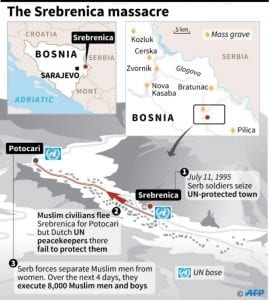
A case which reaffirms my opinion is Prosecutor v Krstic as it dealt with the genocide of Muslim men and boys in the safe area of Srebrenica (see video). It is interesting to note that the ICTY opened the discussion of cultural genocide stating that ‘[t]he destruction of culture may serve evidentially to confirm an intent, to be gathered from other circumstances, to destroy the group, as such’ (para 53). So, it is taken that cultural destruction satisfies the test of dolus specialis needed to fulfil the mens rea of genocide. Judge Shahabuddeen dissenting acknowledged, ‘it is not convincing to say that the destruction, though effectively obliterating the group, is not genocide because the obliteration was not physical or biological’ (para 50). So, referring back to the Winnemem Wintu, although they have not physically or biologically suffered, it does not mean that they have not suffered through other means. The Winnemem Wintu have suffered through losing their culture due to the construction of a dam on their historic and sacred land. This undoubtedly reinforces the claim that cultural genocide can be recognised via case-law despite not being expressly included in the statute of an international criminal tribunal.

(Source: here.)

Overall, I truly support the idea that it is possible for cultural genocide to be included in the definition of genocide as stipulated in the ICC Statute. As discussed, originally, a much broader definition of genocide was drawn up that included cultural genocide; however, this was excluded, thereby leaving indigenous people unprotected for decades. This has had a knock-on effect in the case law which, although making obvious references to cultural issues in relation to genocide, does not recognise ‘cultural genocide’ as a crime as such.

Student blog post: In light of the article by Melissa Bellitto, ‘The World Bank, Capabilities, and Human Rights: A New Vision for Girls’ Education beyond’ (2015) Florida Journal of International Law 91 discuss the role of the World Bank as a funder of education.  

Posted on

 This post (edited for publication) is contributed to our blog as part of a series of work produced by students for assessment within the module ‘Public International Law’. Following from last year’s blogging success, we decided to publish our students’ excellent work in this area again in this way. The module is an option in the second year of Bristol Law School’s LLB programme. It continues to be led by Associate Professor Dr Noelle Quenivet. Learning and teaching on the module was developed by Noelle to include the use of online portfolios within a partly student led curriculum. The posts in this series show the outstanding research and analytical abilities of students on our programmes. Views expressed in this blog post are those of the author only who consents to the publication.

Guest blog post: Daniele Tatoryte

Introduction

This blog post examines the role of the World Bank as a funder of education. Defined as an international organisation that helps emerging market countries to reduce poverty and promote prosperity, the World Bank is part of the World Bank Group, which is a family of five international organisations, and is composed of the International Bank for Reconstruction and Development and the International Development Association. The World Bank funds a variety of projects notably relating to education by providing loans in developing countries. It has been involved in education since 1962, thus being the largest international funder of education for development in low-income countries and supporting them with $3 billion a year. Overall, the World Bank has funded 2512 education projects. In this blog post I will first discuss the issue of gender inequality and then discuss education in the broader framework of human rights as I believe that the World Bank’s important role in supporting education should be more human rights focused.

 Gender Inequality

The Convention on the Elimination of Discrimination Against Women is the key international legal instrument that seeks to eliminate all forms of discrimination against women. In spite of its existence, girls (M Bellitto, ‘The World Bank, Capabilities, and Human Rights: A New Vision for Girls’ Education Beyond 2015’ (2015) 27 Florida Journal of International Law 91) are the most affected by education inequality as a large majority does not have access to education owing to cultural and social barriers (M Nussbaum, ‘Women’s Education: A Global Challenge’ (2004) 29 Signs: Journal of Women in Culture and Society 332). It is submitted that if girls could access education, they would better tackle issues such as medical care and contribute to the economy of the State, which is the aim of the World Bank (Bellitto at 101). Scholars such as Nussbaum and Sen have criticised the fact that women are treated as economic commodities and that their worth is based on their ability to contribute to the formal economy (see discussion in Bellitto at 95). The best way to deal with this problem is to implement anti-discriminatory laws that eradicate discrimination, a good illustration being India that has adopted a rights based approach in primary education. The World Bank, UNESCO and the Global Partnership for Education are focused on improving gender equality and empowering girls and women through quality education. To attain these goals, projects such as The Education 2030 Framework for Action (FFA) aims to achieve greater results by 2030. Some of their goals are to train more teachers, to support gender equality and improve the quality of teaching. In this light it is argued that educational planning could be a good approach to take into account and tackle all factors affecting education.

(The first UNESCO chart below shows the number of children (according to education level and gender) who were not enrolled in education between 2000 and 2015 whilst the second   indicates that the number of children without access to education varies depending on the continent.)


 Human Rights and Education

So, how can this problem be tackled? First, one may argue that the World Bank is bound by human rights law. After all, it has international legal personality as it fulfils three requirements: (1) it is independent from its member states in its functioning; (2) it possesses the capacity to create international rights and obligations; (3) and it possesses the capacity to bring or defend international claims (see here at 364-365). Unfortunately many courts do not have jurisdiction over international organisations and so there is no international judicial remedy against the World Bank. That being said, the Inspection Panel of the World Bank plays an important role as a control mechanism. If the funding provided by the World Bank is not used correctly, a claim can be brought by a minimum of two individuals so that the Inspection Panel can start an investigation. For example, in Nepal a claim, later dismissed, was made that discrimination on the basis of sexual orientation applied to vocational education. Another solution could be to direct the funds of the World Bank to local NGOs, rather than to central governments and education ministries (see here at 61-62), with a view to making education more effective and compliant with human rights law.        ​​​​​​​

Conclusion             

From my point of view, the World Bank and the State should work together to overcome social and cultural barriers affecting gender inequality in education. Undoubtedly, there has been a marked improvement in providing education and achieve gender equality. That being said, I could also argue that the approach the World Bank is adopting towards education is more economic than human rights based as primary education is supposed to be free and accessible to everyone. If access to education depends on one’s ability to pay for it then the human rights to education is violated. Moreover, it should be stressed that education is a necessity for the economic growth and development of these countries. On the one hand the World Bank provides these developing countries with funding to improve their economy but on the other, it takes away their financial independence and obliges them to violate human rights law by complying with conditions such as the privatisation of schools. Consequently, the implementation of a monitoring body independent from the World Bank is essential to improve its functioning and ensure that all its actions comply with human rights law.

A summary of this blog post in the form of a Prezi presentation is available here.


Back to top