

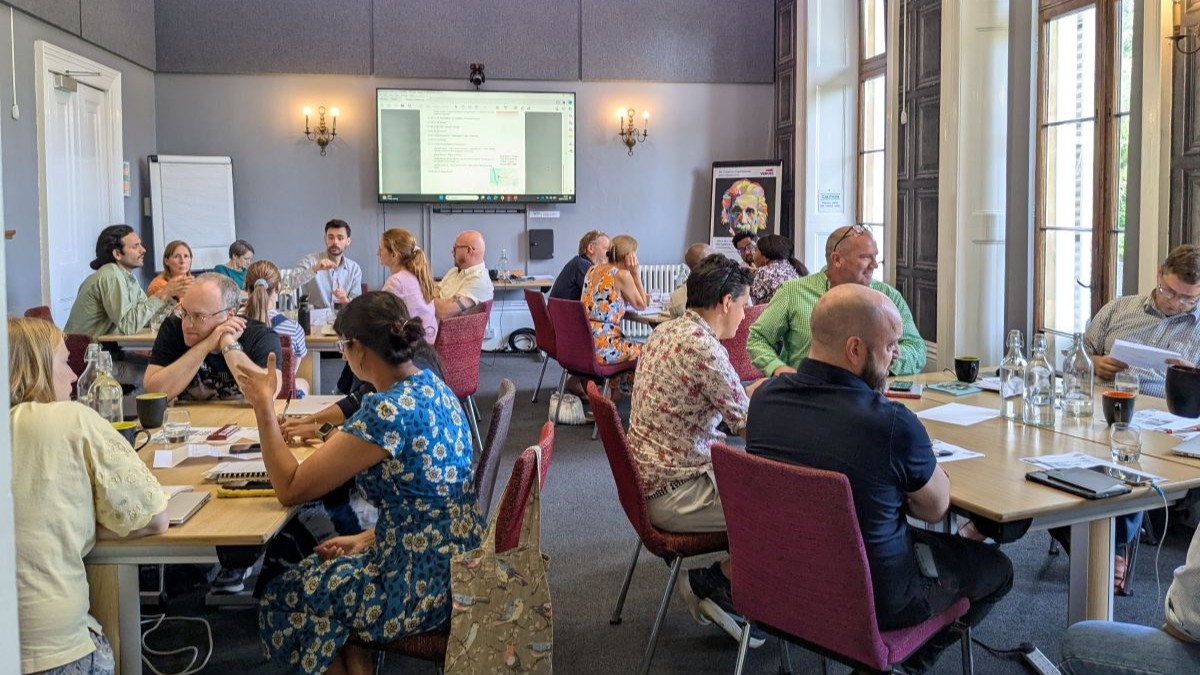
On the 23rd July 2026, Bristol Law School’s research-active staff and PGR students gathered for the annual Research Away Day at the Engineers’ House in Bristol. This was a genuine “Away Day” in every sense of the term, taking colleagues away from the UWE Bristol Frenchay campus and into a space designed for reflection and discussion.
The venue was perfect for our needs and created a nice vibe for both serious discussions and laid-back networking. Almost 30 colleagues attended the event. The day offered an opportunity not only to share ongoing research but also to reflect on strategic priorities, discuss common challenges and strengthen connections across the School’s research groups.
Research and the REF
The day began with coffee and tea before Prof James Green provided an update on the Research Excellence Framework (REF). Recognising that REF can sometimes appear complex and remote from everyday research activities, Prof Green started by outlining its purpose and significance before discussing recent developments concerning outputs, impact case studies, and the evidence required for the Strategy, People and Research Environment element.
A key message emerged from the session: every member of Bristol Law School’s research community contributes to the School’s REF profile. Whether through publications, engagement activities, collaborations or impact-oriented projects, all research activity plays an important role in shaping the School’s research reputation.
Showcasing research across Bristol Law School
One of the highlights of the day was the opportunity for colleagues to present their research in a series of brief five-minute presentations. Spread across the morning and afternoon, these sessions offered a fascinating glimpse into the diversity, quality and impact of research taking place across the School.
Members of the Global Crime, Justice and Security Research Group presented work addressing topics ranging from commercial law (Dr Austin Nwafor) and supply chain resilience (Mr Abhishek Panchwagh) to rehabilitation of offenders (Dr Jonathan Gilbert) and artificial intelligence in the creative arts (Dr Cobus Jooste). The afternoon session featured presentations from colleagues in the Research in Public International Law Group, working on issues such as genocide (Professor Gerhard Kemp), the right of rivers (Elena Blanco), ecocide (Dr Onita Das and Ms Elena Blanco) and EU citizenship (Professor Noëlle Quénivet).
Together, these presentations demonstrated the many forms that legal research can take. Colleagues spoke about newly published books, developing research projects, stakeholder engagement initiatives, interdisciplinary collaborations, policy-oriented research and practical outputs such as toolkits. The sessions illustrated both the intellectual richness of Bristol Law School’s research culture and its commitment to addressing contemporary legal and societal challenges.
Enhancing the visibility of research
The presentations were followed by a discussion on the visibility of research and researchers. Colleagues reflected on how visible they felt their research currently was, how visibility might be improved and what support could help maximise the reach and recognition of their work. These proposals will be explored during the next academic year as the School continues to strengthen its research profile.
Law and the industrial strategy
Colleagues then took part in an interactive workshop led by Ms Nicola Temple from Research and External Engagement. The session focused on the eight priorities of the Industrial Strategy. Working in groups across four tables, colleagues explored the role of law in addressing major economic and technological challenges. The discussions highlighted both existing strengths within the School and opportunities for future research development. The outputs from the session will help inform Bristol Law School’s evolving research agenda and strategic priorities in the coming years.
Sharing research challenges
The afternoon began with a Research Challenges session using a “Triad Listening” approach. Participants worked in groups of three, with each person taking turns to present a research challenge in three minutes. One colleague listened to the factual elements of the challenge, while another focused on the feelings and concerns expressed by the presenter. Following feedback from both listeners, presenters were encouraged to reflect on their challenge from different perspectives.
Looking ahead
The day concluded with some final reflections and words of thanks. Looking back, what stood out most was the relaxed and supportive atmosphere that characterised the event throughout. The schedule allowed enough time for meaningful conversations, reflection and networking, ensuring that colleagues never felt rushed between sessions. Equally importantly, the day provided a chance to step back from everyday commitments and reflect on the broader direction of research within the School.
PS: Copilot was used to structure handwritten notes taken during this event and the final version was edited using Grammarly.