By Tay Aziz and Sophie Pavelle
This time last year during our MSc Science Communication at UWE Bristol, we were buried under a mountain of coursework deadlines, research proposals and that creeping question of ‘what next’? We never thought that so soon after that joyous dissertation hand-in day we would be off on a sci-comm adventure to Hong Kong, to make a documentary and inspire 10,000 local school children to study science!

We teamed up with Anturus Education – a Welsh organisation that uses expedition, media and adventure to inspire kids to learn about the natural world. Our mission was to use film and public speaking to demonstrate that Hong Kong is far more than just an urban hotspot – it is in fact, a thriving wildlife hotspot with many nature-filled surprises!
Science communication is all about getting the public involved in scientific concepts and research findings — engaging them to take notice of the things that matter and spark curiosity.
Whilst we were there, we quickly became aware of the value of being creative in how we communicate science. Here are our thoughts on how filmmaking and different styles of presenting can reap meaningful rewards among your target audience.
Science Communication through filmmaking – Tay Aziz
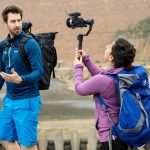
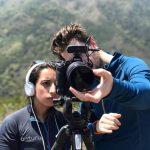
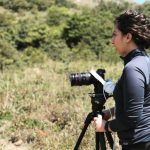
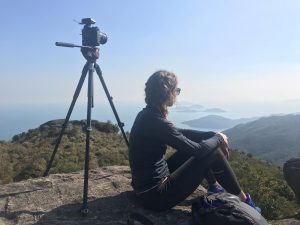
As well as delivering 30 school shows across Hong Kong, the Anturus team also filmed and produced a fifteen-minute documentary and a few shorter one-minute clips for YouTube. These videos were disseminated to schools and the public through the Anturus website and provided useful resources that teachers could access after the team had left, helping the team achieve a legacy once the project was complete.
As a science communicator, film and video is an incredibly useful tool – it can provide a sense of escapism, a new way to visualise information with animations, or an immersive experience in interactive 3D. Film can provide a platform for scientists to share their work and promote themselves as experts in a field, and it also has the potential to reach vast audiences and can impact an audience’s emotions as well as their knowledge on a topic. I first became interested in using film to communicate science whilst taking part in the Science on Air and on Screen module, as part of the MSc in Science Communication; since then I’ve created documentaries on plastic pollution, drought research and most recently, filmed presenter-pieces in Hong Kong.
Storytelling is an integral part of film and science communication films are no different. How we perceive the world is heavily influenced by forms of entertainment media, such as sci-fi novels, fictional films and documentaries. These depictions of science encompass more than just facts, but they include other elements of science such as its methods and allow non-scientists to ‘see’ where science happens, who does it, and how it works. When choosing a problem or focus for a film, it makes sense to consider the issues and themes and anchor those ideas in contextual evidence to create emotional appeal and build interesting discourse. World-class natural history documentaries, such as Blue Planet II, have gathered popularity as they follow key principles to engage interest in their audience.
‘If something is unusual it will be interesting. Where it comes to be dangerous is when you introduce an element of it being strange without relating it to the central idea of the topic you are talking about without a solid theoretical structure present.’
Sir David Attenborough
Choosing a subject which an audience can relate to (living creatures), they showcase surprising beauty and hidden stories in the real world, and they have substance to reinforce that initial generic interest.
Top Tips from Tay for getting into Science Communication filmmaking:
- Don’t underestimate the value of your academic qualifications. Science production companies are always looking for people who are highly qualified in an academic area and are good writers.
- You don’t need to go to film school. A qualification like the MSc can teach you most of the basics, and there are millions of excellent (and free) tutorials on YouTube. Try searching ‘documentary filmmaking’.
- Practice makes perfect. Make your own stuff, even if it’s a small project about something down the road from where you live.
- All the gear…no idea. Don’t spend tonnes of money on expensive equipment that you don’t need. Learn with what you have first – Sophie created a 22-part vlog series using just her iPhone!
- Keep it simple. Make sure you don’t cram huge amounts of information into a film – there should be a main idea or two, with a sequence of ideas to hold the viewer’s attention and lead them to the end.
Science Communication through Presenting – Sophie Pavelle
Science can be communicated in many different ways, but I have enjoyed communicating my adventures in the natural world using contemporary media and online platforms. Since my rather quirky trek around Cornwall for my MSc project, I’ve been surprised with how much I have enjoyed presenting as a route into science communication – especially as I’m not the most confident of people! By talking through a topic out loud – I find that I not only offer information to others, but I have learnt so much through the process of film production and presentation. The research that goes into a script, the hours spent modifying it before delivery, help you to think about an environment, a process, a species of wildlife, much more creatively. Your ultimate goal is to leave the audience with more knowledge of a subject or an enlightened view on an issue than before – and so by dissecting information and identifying the key points to present, in a way that is interesting and understandable, well, you end up learning a huge amount!
Pieces to camera
Our presenting experience during Hong Kong was two-fold: pieces to camera and live presentation across 30 schools – both completely different methods of communication and new experiences for me! The documentary sought to uncover the wilder parts of the city and reveal the complex relationship the locals have with its wildlife. My job was to research what wildlife was in store for us during our visit. Learning about the natural history of Chinese white dolphins, black kites, Rhesus and Long-tailed macaques, was a refreshing change from the garden birds and local kittiwake colony back home! Being part of a small, inter-dependent production crew was also a valuable opportunity; making a welcome change from being a one-woman filming team as I am for my online content. Learning from our trip leader Huw James about shot composition, different presenting angles and even things such as stance, breathing techniques, voice cadences and body language; offered invaluable on-location hints and tips as to how to boost your chances of gaining and maintaining the attention of your audience. If there’s one thing I remember from the MSc Science Communication, it’s that knowing your audience is EVERYTHING.
Live Science Shows
Following the first few days of filming in some impressive national parks such as Sai KunGreatand secondary schools. Here was our chance to now personally interact with our audience, to initiate that all-important dialogue that is integral to effective science communication. Our tour formed part of the Hong Kong Science Festival, coinciding with Science Week back in the UK. Organised by the Croucher Foundation which aims to promote science communication and teaching over Hong Kong, we had quite the schedule! 10 days. 30 different schools. 30 shows. Travelling in-between. I arrived having never done a live science show before – it was safe to say my last stage performance may well have been Villager Number 5 in the school nativity!! Many of the schools required translation into Cantonese – adding an extra hurdle to the learning curve.
Being a team of three co-presenters worked well; while two presenters steered the show, the other became the stage hand. It also meant that I could spend the first few shows nursing a lost voice and learning from Huw and Tay, both of whom are far more experienced with delivering science content on stage. The shows were largely based around ‘Our Wild World’, covering everything from deep-sea adaptations of the blobfish, how to be more ‘plastic-smart’, to exploring how volcanoes and glaciers interact. The Hong Kong students were a dream to present to – polite, attentive and practically bursting with enthusiasm to volunteer for on-stage activities and ask questions; it was an opportunity I relished as someone so fresh from education myself, to interact with such eager students and try and inspire them to further their curiosity in science and the natural world.
It was wonderful to see the children’s reactions to seeing photos and film of awesome nature – my favourite being their reaction to seeing clips from our documentary of the azure waters of the Geopark and its dramatic coastline, as many of them were not aware of its proximity to their home. We soon realised the apparent disconnect Hong Kong has with its natural land, particularly during one bizarre moment with a teacher, who was asking us for recommendations on which national park to visit!
Top Tips from Sophie for getting going with Presenting
- Just go for it. Nothing is harder but more important than just getting over those first few hurdles of getting your content out there. Experiment with different styles – but just practise, practise, practise. Take every opportunity you can to speak publicly, grow in confidence and learn your style.
- Do your research. As a science communicator its so important to do your research and be sure you’re conveying the correct facts to your audience. Keep your facts accurate – but keep them snappy and interesting.
- Be creative. This industry is competitive. Try to think of stories or angles to present that are different and innovative – give your audience something remember and your cameraman/woman something fun to film.
- Network. The MSc Science Communication has been amazing for meeting likeminded individuals who are passionate about the same ultimate goal. If you want to try out presenting, see if you can find someone who wants to practise their filming and plan some fun filming trips together.
Overall, as newbies into the science communication world, Hong Kong offered a vibrant, challenging and fascinating experience to develop technique and learn an invaluable amount about the various elements that form a documentary and a science show.
Follow us on social media @scicomm_tay and @sophiepavs– we’d love to hear from you!
Tay:
Tay Aziz is a passionate science communicator, physiologist and filmmaker. She is currently working as a researcher for the BBC’s Natural History Unit and is the curator of STEMinist, an online community to empower women and girls in Science, Technology, Engineering and Maths.
Sophie:
Sophie is an adventurous zoologist with a passion for using expedition to learn about the natural world. Sophie regularly explores the UK and overseas, sharing fun stories about wildlife and conservation through social media, writing, public speaking and workshops.
Sophie’s next project will involve working alongside The Wildlife Trust’s, making some online content for their 30 Days Wild Campaign in June. She’ll also be running digital content workshops for the City Nature Challenge in Bristol and speaking at the Festival of Nature.