
Just before those double-digit years and the challenges of being a teenager, summer holidays for me were a haze of fruit squash, football, climbing trees and playing tag with the neighbours’ children in a sleepy seaside town in Somerset. But they seemed to go on forever, and every now and then when I’d gorged on too many raspberries or scraped my knee, I just wanted to sit down in the sunshine and read a book.

During one of these summers, I went in my Dad’s study and pinched a book called The Sea simply because it looked like it had pictures in it. It blew my mind. There were indeed pictures, but of manta rays jumping out of the ocean and killer whales breaking through the Antarctic ice. It had me hooked, and not just on the obvious stuff either.
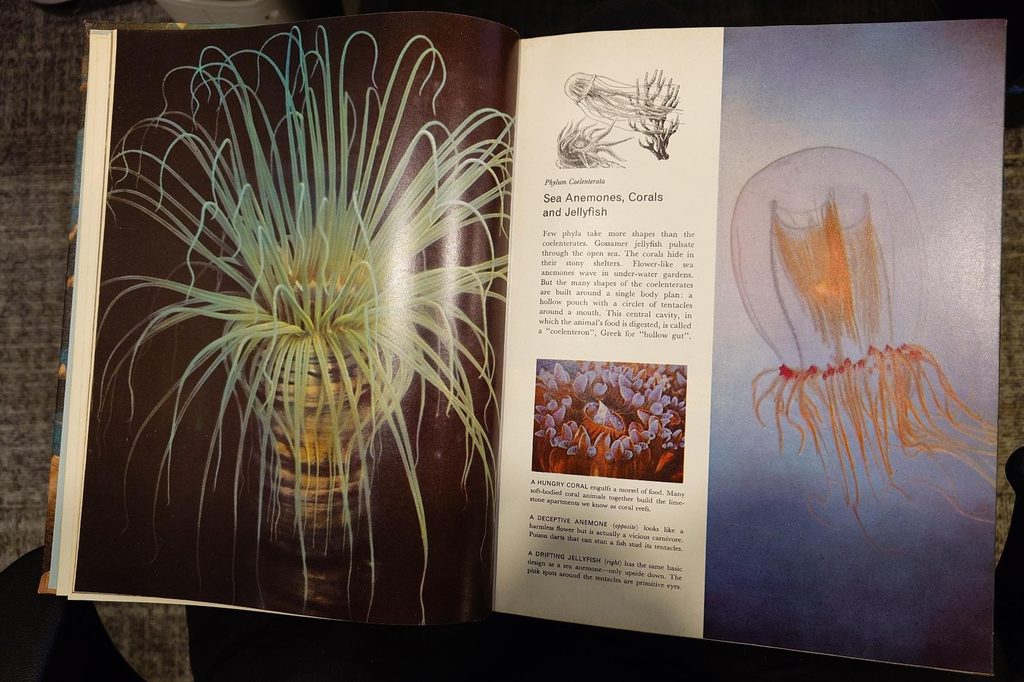
Published by Time/Life Books in 1963 (!), The Sea by Leonard Engel introduced me to tectonic plates, ocean currents and even the grisly business of whaling in graphic detail. After finishing that book, I greedily tore through the other two books in the series, Evolution and The Universe, both of which were equally inspiring.
If I’m honest, those three books (that now sit on my bookshelf, sorry Dad) completely shaped my opinion and love for science. And to a certain extent, they shaped my career too. After a PhD in applied mathematics (think, writing equations that describe what happens when two laser beams meet inside a liquid crystal display) at the University of Edinburgh, I returned to the West Country to take on UWE’s MSc Science Communication course in 2009. There, I not only learned skills that would go on to form my tricks of the trade as a science writer/journalist, but I also met inspiring tutors, such as Professors Clare Wilkinson and Emma Weitkamp, as well as talented fellow students, some of whom I remain in contact with to this day.

It was one of those fellow students – Toby Shannon-Smith – who contacted me in February 2025 with an unusual opportunity. As Public Engagement Manager at the Institute of Physics (IOP), he had fostered a partnership with publisher Hachette on a new children’s science book series. IOP had already commissioned someone to write one of these books about the universe. Toby wanted me to write one on physics.
Having never written a book before, nor written for the 8+ age group for that matter, I naturally wanted to do my homework before taking the plunge. So my usual hard scifi bedtime reading was replaced by very different reads, such as Richard Hammond’s All About Physics and Laura Baker’s Physics for Curious Kids. Before long, I knew what I wanted to cover and started scribbling down a synopsis. After a couple of weeks, I was happy with the result and sent it over to Hachette and IOP.
Initial feedback from everyone involved was positive and we seemed to be making good progress, but some late opinion from IOP Senior Advisor Charles Tracy OBE was less glowing. Though the topics seemed to be on point, he thought something was missing. And on reflection, I had to agree. What I was proposing wasn’t substantially different. It wouldn’t cut through the noise. To put it bluntly, it wasn’t inspiring.
The fix came when Charles suggested I read IOP’s teaching framework The fundamentals of 11 to 19 physics. There, I learned about IOP’s view of how physics should be taught, as well as the core principles that make up what physics is. Using these principles as a guide, I completely rewrote the synopsis around IOP’s big ideas, practices, characteristics and applications of physics. The new synopsis hinted at a book that would be bold and original, and I couldn’t wait to start writing it.
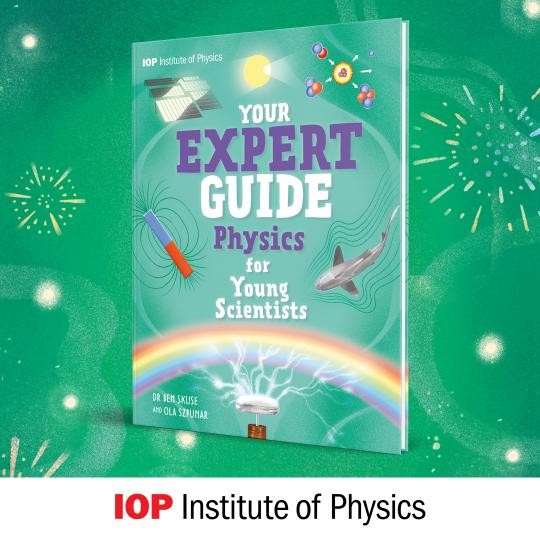


Fast forward a year and a half and Your Expert Guide: Physics for Young Scientists was published on 8 October. It is the sixth and last book in the ‘Your Expert Guide…’ series. Although I have no idea of what kind of impact it will have or how many children it will reach, I am genuinely proud of how it has turned out. And my hope is that it can have a similar effect that The Sea had on me, opening kids’ minds to the wonders of the world and universe.

By Benjamin Skuse, former MSc Science Communication student at UWE Bristol.