
Skills that empower – From Self-Doubt to Distinction: My MBA Senior Leader Apprenticeship Journey

Posted on

In this blog, Simon Flenley – Assistant Director of Research & External Engagement (Skills) at UWE Bristol – shares a unique perspective on apprenticeships, shaped by his dual experience. With years of strategic involvement in the skills landscape, Simon recently completed his own Level 7 apprenticeship, offering valuable insights from both sides of the journey.

In April 2023, I made the decision to enrol on the Senior Leader Level 7 apprenticeship through the University of Exeter. Having worked in the skills and vocational learning sector for several years, I had first-hand experience of how transformative these programmes – especially apprenticeships – can be.

It’s fair to say that after many internal ‘should I/shouldn’t I’ debates, I wasn’t entirely confident in my choice. My job is demanding, and as a parent to a six-year-old daughter, I questioned whether embarking on this journey was a form of self-punishment or a huge opportunity. After carefully scanning the module list and noting that the dreaded finance module came much later in the programme, I took the plunge.

As expected, imposter syndrome quickly reared its unhelpful head. Did I really belong in this cohort? What made me think I had the ability to succeed? Even if I did okay, wouldn’t that be luck rather than judgement? I hadn’t studied at university – or anywhere else for that matter – for over 20 years. How could I possibly cope?

Despite some early bafflement, I took a deep breath and settled into the learning – home office desk appropriately stocked with snacks.

What bolstered my decision to take the academic plunge was my career development. After all, apprenticeships are work-based learning programmes designed to equip us with the knowledge, skills and behaviours to grow and (hopefully) excel in the workplace. I’ve been a senior leader in education for some time – a sector that thrives on innovation, efficiency, with a need for pace in the face of complex external factors. I saw it as a genuine opportunity to grow and improve.

Fast forward to August 2025, and I passed both the apprenticeship and the MBA top-up with Distinction – a result I’m incredibly proud to share. Yes, my old friend Imposter Syndrome still pops up now and then to diminish the achievement, but for now, I’m learning to sit with it and own it. And it has certainly cemented my view that apprenticeships – at all ages and levels – are a critical part of our education and skills ecosystems in the UK.

Has this apprenticeship made me a more thoughtful leader? Am I more strategic? Have I improved? You’d have to ask the brilliant people I work with every day – but I’d like to think so. And I’d also like to think that one day, my daughter will see how hard work, even in the face of self-doubt, can truly pay off.

From Student Ventures to Social Impact: UWE Bristol Graduates Tackle Homelessness Through Art

Posted on

How university funding helped launch a creative enterprise that’s now making a real difference in Bristol

When Art Sync’s co-founders pitched their idea during UWE’s Venture Ready funding programme, they had a vision: to support BillyChip in creating a powerful marketing mural that would raise awareness of Bristol’s homelessness crisis. This month, that vision becomes reality with a striking 19-metre artwork in the heart of Stokes Croft.

The journey from university pitch to community impact demonstrates the tangible difference that Student Ventures funding can make. The Art Sync team couldn’t have funded this charity mural project without that crucial support, and now it’s set to have a significant impact on efforts to address homelessness in Bristol.

“This charity mural will have a big impact on the homeless crisis, and Student Ventures funding has made this happen,” explains the Art Sync founder Azul Amos. “We proposed this idea during the Venture Ready funding, to support BillyChip to install their own marketing mural. So it’s exciting to actually be able to pull it off.”

The success of Art Sync extends well beyond this single project. The graduate-led agency is now UWE’s current mural supplier, with five murals scheduled for installation across campus over the next six months. It’s a testament to how university support can nurture enterprises that give back to the institution while serving the wider community.

Art Meets Action in Stokes Croft

The 19-metre mural, being unveiled at the People’s Republic of Stokes Croft outdoor gallery next to Turbo Island, brings together four Bristol artists: Jody, Melo, Conrico, and AimesWasHere[RW1] . Each contributing their distinctive style to tell a compelling story.

The artwork celebrates collaboration between BillyChip, Big Issue, and the creative community to raise awareness ahead of a major fundraiser on 22 November. Hosted by BillyChip and DJ James Hype, the event will support Help Bristol’s Homeless in building micro homes that provide lasting, practical solutions to homelessness.

Values-Led Business in Action

What sets this project apart is its collaborative, values-driven approach. Art Sync contributed £1,000 and waived their agency fee to maximise impact. The participating artists reduced their rates, PRSC offered discounted space, and BillyChip covered the remaining costs. Organisations working together to amplify a clear message.

Azul Amos reflected: “It means a lot to be able to use our platform to spotlight causes that make a real difference. We’ve always believed art should inspire and connect people, this is our way of putting that belief into action.”

Jack Gascoigne, Communications Director at BillyChip, added: “Over the past year, we’ve been working hard to build meaningful connections with people and organisations who share our vision for real change. Seeing these partnerships come together, from Big Issue to Art Sync and DJ James Hype, shows how collaboration can make a real difference for those who need it most.”

The Ripple Effect of University Support

Art Sync’s trajectory shows the multiplier effect of supporting student entrepreneurs. Student Ventures funding didn’t just help launch a business—it enabled an enterprise that now creates opportunities for artists, enhances the university’s campus environment, and contributes to addressing one of Bristol’s most pressing social challenges.

As the graduates continue to grow their agency and take on more ambitious projects, they’re proving that creative businesses can be commercially successful while staying true to their social purpose. It’s exactly the kind of impact that university enterprise support programmes aim to achieve.


The Stokes Croft mural will be unveiled on 20 October 2025. The fundraiser for Help Bristol’s Homeless takes place on 22 November.

For more information about Art Sync, visit www.artsync.uk

Yu can find out more about student ventures here, or you can visit them on campus. – Pop in and say ‘Hi’


Housing and Homelessness, a Civic matter: Housing Matters 60th Anniversary

Posted on

Written by Allan Macleod, Head of Civic and Inclusivity

Ask anyone in Bristol what the biggest challenges the city faces are, and you will find three main responses, inequality, transport and housing. In many ways the three are interlinked but the rise of homelessness is becoming ever more evident and the cost of housing and inequality in access is something that many of us feel whether we own or rent property. Bristol has the highest rents outside of London and the amount of people living in temporary accommodation has more than doubled since the pandemic.

But, Bristol has become known for its creative attempts to address the housing crisis. The work of the Housing Festival has championed innovative approaches to housing delivery with the Hope Rise houses raised above a car park or the Gap House concept to grow the portfolio of deliverable housing sites. Alongside housing delivery the city has a longstanding and collaborative housing support sector, vocal about the needs of its users and active in promoting their case.

On September 17th one of the key players in the housing support sector, Housing Matters had its 60th anniversary and colleagues from across UWE were there to join the celebrations and explore how we can further support the sector. Housing Matters has been championing working upstream to provide communities the support their need at an early stage, near where they live. Data from this has shown that 94% of their clients wouldn’t have accessed specialist advice if it wasn’t in their community centre.

This community first approach is exactly how UWE Bristol’s new Civic and Inclusivity team wants to work with our Voluntary, Community and Social Enterprise partners.

As a University, we are often blamed for the growth in student numbers leading to higher rent and lower quality housing across the city. Our students may seem to be part of the problem but many of our students are also victims of it too, living in poor quality expensive housing. We have worked with Housing Matters to support these students. We recently connected our Student Union Housing officers to Housing Matters training to ensure that our students receive the best housing advice available when they seek support. UWE Bristol’s involvement goes further than just the needs of our students.

As an institution, we have a role to play in improving the local area in which we exist. UWE Bristols’s newly formed Civic and Inclusivity team is working both to provide meaningful volunteering and community engagement opportunities for our students but also to understand the needs of the region’s communities and how we can bring the full weight of the institution to tackle those needs.

We have a depth of academic expertise that is working to understand the needs of the sector and provide evidenced based research to back up the work of the housing support sector and had multiple academics from UWE Bristol at the event including Winifred Onyemaechi who, as well as being an associate lecturer in  Human Resource Management within CBL; is a trustee for Housing Matters.

”Winifred joined our Board in 2025 and brings with her a wealth of skills in Human Resource (HR) management and organisational development. She has both professional and academic experience in HR strategy, people development, and data-driven decision making – with a keen interest in the third sector. Winifred is pursuing a PhD in Business and Management, focused on Community-based voluntary organisations, which puts her in a strong position to advise Housing Matters on volunteer engagement and the wider charity landscape. She is also an Associate Researcher, exploring innovative ways to strengthen charity-sector impact.”

Housing Matters

Winifred explains, ”I joined HM because its mission to address homelessness and provide supportive housing truly resonates with my values of empowerment and social impact. I am passionate about creating a kinder and more inclusive society where everyone feels safe, supported, and valued. Having witnessed firsthand the challenges faced by individuals experiencing housing insecurity, I deeply appreciate the transformative impact of the charity’s work in helping people rebuild their lives with dignity and hope In addition, I believe my experience as a HR professional, alongside my current research work, will enable me to make meaningful contributions towards expanding the charity’s reach and enhancing its processes, practices and impact.”

Beyond research, we are exploring opportunities to use student pro-bono support and further research support through Knowledge Transfer Partnerships and research bids to develop our connections with the sector further. Our professional volunteering scheme provides an opportunity to tap into the creative talent of our students and if the event hadn’t fallen in welcome week, we’d have sourced UWE students to support with photography. As it was, we were fortunate to have Ripley Williamson King and Anna Jones, colleagues from UWE Bristol’s Research and External Engagement division captured the celebrations.

Our new Civic team is here to help charities, communities and the whole West of England’s VCSE sector to better navigate all the University has to offer. We have a range of opportunities that any charity can access. If you’re interested in finding out more about the Civic and Inclusivity team, or exploring research, volunteering or other support from UWE, get in touch with the Civic and Inclusivity team! You can contact Allen by Emailing: Allan.Macleod@uwe.ac.uk

Innovation with impact – How a badminton tournament became a catalyst for community health research

Posted on

At first glance, a badminton tournament might just seem like an enjoyable recreational event. But for Dr Praveen Kumar, Associate Professor in Stroke Rehabilitation at UWE Bristol, it has become a powerful vehicle for innovation, student engagement, and community impact.

Now in its eighth year, the annual charity tournament – held at UWE Bristol’s Centre for Sport – has grown from a gathering of 24 teams to nearly 80, raising over £32,000 for Bristol After Stroke. Yet the true legacy of the event lies not in the numbers, but in the relationships and research it has helped foster.

From Research Challenges to Real-World Solutions

Dr Kumar’s connection to Bristol After Stroke began during his PhD, when recruiting stroke survivors for research proved difficult through conventional hospital channels. The charity’s day centres offered a vital bridge – not only to participants, but to deeper understanding.

This collaboration sparked a commitment that extended beyond academia. Dr Kumar began volunteering with the charity, running exercise classes for the last nine years and listening closely to the needs of stroke survivors. One recurring theme was the lack of ongoing support after discharge – a gap he sought to address through innovation.

With input from patients, he developed a library of over 25 rehabilitation-focused exercise videos, now freely available on YouTube. These resources are tailored to individual needs through assessments and feedback, and have become a valuable tool for both patients and clinicians.

Inclusive Innovation and AI-Driven Rehabilitation

Recognising the importance of cultural relevance in healthcare, Dr Kumar partnered with South Asian organisations to create linguistically appropriate exercise materials. Recent funding from the University Hospitals Bristol and Weston NHS Foundation has enabled similar resources for Gujarati-speaking communities, expanding accessibility and impact. These videos are now available on Sirona YouTube channels.

Looking ahead, Dr Kumar is collaborating with AI specialists at the University of Bristol and being supported by the National Institute for Health and Care Research to develop a machine learning algorithm that generates personalised rehabilitation plans. This cutting-edge project aims to empower stroke survivors with tailored support, bridging the gap between clinical expertise and everyday recovery.

A Living Lab for Student Learning

The tournament and associated projects have also become a dynamic learning environment for UWE Bristol students. Over 200 physiotherapy and sports rehabilitation students have volunteered, gaining patient interaction, community health promotion, and hands-on experience with these Next-Step exercise classes that are delivered at UWE Bristol Glenside Campus. This year, Sports Rehab students will be offering pre and post event massage to badminton players participating in this exciting annual charity tournament.

This year, with support from UWE Bristol leadership, the Centre for Sport has offered a 50% discount on venue hire, enabling reduced entry fees for student teams and encouraging broader participation. Dr Kumar’s fundraising goal for 2025 is £6,500, with an ambitious target of £50,000 by the tournament’s 10th anniversary in 2027.

A Model for Community-Led Change

Dr Kumar’s work exemplifies the university’s commitment to research that makes a difference. By integrating sport, technology, and community engagement, he has created a model for how academic initiatives can drive real-world impact.

“In 2016, Bristol After Stroke in partnership with Dr Praveen Kumar, funded by South Gloucestershire Local Authority, launched a new physiotherapy led exercise group in the region.  Its aim was to support stroke affected people gain strength, balance and confidence in movement. It also set out to give people a better understanding of their stroke so was complemented with an educational and social aspect after the physio led exercise. Since this time, we have supported approximately 350 people with their physio goals and seen many overtake their goals. I am proud to say that I often meet alumni of the course that proudly tell me they don’t need to use their stick any more or it has led them on to a more active confident life.

We could not do this without Dr Praveen Kumar and this unique partnership with UWE Bristol Physiotherapy students. This is a pioneering approach and one that many areas envy. However, we could not do this and the many other services we provide without active fundraising. Dr Praveen Kumar’s Badminton tournament has become a key fundraising activity in our calendar and to date has raised over £32,000. 

This funding has enabled BAS to grow and take on new challenges and services. In 2016 we were receiving about 180 referrals a year and now we receive approximately 900 and we support those people with a broad range of services. During this time, this funding has contributed to us providing counselling support, groups and cafés, volunteering and our new walking sport groups like walking netball or walking football. 

All this funding supports helping stroke affected people get back on their feet and have a fulfilling life after Stroke. Praveen’s commitment and passion toward this end not only supports us financially but also motivates us at Bristol After Stroke to continue to innovate and provide this vital support.”

Rebecca Sheehy, CEO Bristol After Stroke

Students, staff, and supporters are invited to get involved in this year’s tournament – whether by playing, volunteering, or donating. Every serve supports recovery, inclusion, and innovation.

Get involved

Tournament details:
Date: Sunday 9 November 2025
Time: 09:00-18:00
Location: UWE Bristol Centre for Sport, Coldharbour Lane, Frenchay, BS16 1QY

If you would like to register for the tournament, please see the flyer below. If you would like to sponsor the event – to cover costs of courts, shuttles etc, please get in touch using the details on the flyer.

You can also support by making a donation on the Just-Giving page here.

📌 RISE connection: This work exemplifies Innovation with Impact by blending research with community engagement to forge innovative approaches to healthcare. It also contributes to Shaping integrated healthcare, one of our four RISE beacons, by integrating sport, technology and community engagement to empower stroke survivors and support recovery.

My Placement at Bristol City Leap

Posted on

This is a guest blog by James Buchanan.

Who are you, what are you studying, who did you do your placement with, and how did it come about?

My name is James, and I am a third-year Marketing student at UWE Bristol. I carried out my placement with Bristol City Leap, a partnership between Bristol City Council and Ameresco that will invest £1 billion into the city’s energy system over the next 20 years. The aim is to accelerate decarbonisation through projects such as heat networks, solar farms and energy efficiency upgrades.

I secured the role through the UWE Bristol Careers 148-hour internship scheme, applying for a position in the Social Value and Communications team. Before applying, I went to the UWE Bristol careers CV workshop, which helped me land the role. The application process was supportive and straightforward, and I began working two days a week alongside my studies. Later, I was able to extend this into a full-time summer role, giving me seven months in total with a great team.

What projects did you work on over the placement?

Over the course of the placement, I focused more on marketing and communications, linking my studies to the work I was doing. The highlight was contributing to the development of a marketing plan for Bristol City Leap. This allowed me to apply academic theory in a practical setting and explore how marketing could support the organisation’s growth.

I also worked with Revive, the electric vehicle charging network for the Southwest, where I supported the asset registry and helped shape a communications plan to be launched in the future. Community engagement was another important part of my role. I assisted in organising a community exhibition in Avonmouth and South Bristol for a proposed solar farm. As well as helping plan three engagement events with residents about to undergo Social Housing retrofitting. 

Beyond project work, I joined the Community and Wellbeing Committee, helping to plan staff socials and strengthen internal culture. I also attended the Bristol 24/7 Better Business networking event, where I met sustainability-focused organisations from across the city. Soon, I will also attend The Green Mingle, hosted by the Bristol Climate & Nature Partnership, which will allow me to stay connected to Bristol’s sustainability network.

What skills did you develop during the internship?

The placement allowed me to develop a range of professional skills. I became more confident in communications and event organisation. I built stronger project management skills, learned how to collaborate effectively across different teams, and gained experience in balancing tasks and prioritising when needed. On the commercial side, I developed an understanding of how marketing links to sales and business development.

Perhaps most importantly, I developed a deeper understanding of the importance of city-wide decarbonisation, seeing how solar farms, EV infrastructure and housing retrofit all fit into a long-term strategy to reach net zero.

How has this placement helped develop your career?

This experience has been an important step in my development. I now have hands-on examples of how marketing operates within a sustainability-focused organisation. It has strengthened my CV, given me clarity about the type of roles I want to pursue after graduation, and increased my confidence as I move into my final year.

What would you say to any student considering a placement?

If you are a student thinking about a placement, I would say take the opportunity. You will learn more about your skills and career interests than you ever could from lectures alone. It is one of the best ways to gain confidence and understanding of yourself.

As a placement host, how did having James working with you help your business?

“Hosting James as an intern over the summer was a genuinely rewarding experience for many of us in the team at Bristol City Leap. It was inspiring to see how his role evolved, particularly as he transitioned from working two days a week to a full-time after the official UWE internship ended.

The increased capacity allowed him to engage more deeply with our projects and contribute meaningfully to the development of a much-needed marketing plan, an essential step in expanding our impact across the city.”

Emily Walker-Smith – Bristol City Leap

Any final words!

Looking back, my time at Bristol City Leap has been rewarding and enjoyable. I developed skills, worked on meaningful projects, and built connections within Bristol’s sustainability network. Most importantly, I feel more confident about my future career and am proud to have contributed to projects that will benefit the city for years to come.

Future Finance – Collaborative Challenge Programme

Posted on

Future Finance is a partnership of industry and academic financial services experts, committed to creating positive change in the financial services sector and supporting financial services SMEs to adopt new technologies and innovation to grow their businesses. UWE Bristol has several Future Finance events lined up; join our collaborative challenge programme and get paid to shape the future of financial services or come and take part in one of our workshops.

Please contact felicity.cargill@uwe.ac.uk to register for any of the events listed below, or to ask any questions.

Collaborative Challenge Programme

Design Thinking | Thursday 23 October, 6 November, 13 November | 09:30–12:00 | Online 

Join three facilitated online sessions exploring: How Financial service organisations can better support the emergence of new projects and ways of working? 

The sessions will be led by Aimee Skinner and Jo Hare and will bring together stakeholders to share experiences and co-create ideas to foster innovation and adaptability in financial services.

We ask participants to commit to all three sessions, and we offer a participant payment of £75 per session.

High interest market – hack-a-thon | Monday 3 November | 09:30–16:00 | UWE Bristol Business School, Frenchay campus

Join us for a one-day in-person strategic workshop to explore innovation in underserved lending markets. You will take part in conversations centred on the following topics:

  • Mapping the Profiles and Behaviours of High-Interest Loan Users
  • Capital Allocation Strategies – How Financial Institutions Fund High-Risk Lending Markets
  • Risk, Recovery, and Decision Intelligence
  • Consolidating Learnings and Shaping Next Steps for Market Innovation

The day will be led by Yanhui Cathy Zhu and Richard Hatfield.

Financial professionals taking part will receive a payment for participation of £225 Students taking part will receive a payment for participation of £80.

Future Finance Training Workshops

Shaping People-Centred Financial Services: Design Thinking for Financial Leaders | Thursday 20 November | 09:30–12:30 | Online 

In this interactive online session, you’ll explore how human-centred approaches are improving experiences, building trust and driving smarter solutions across financial services. 

  • An overview of the Design Thinking framework and its applications in financial services
  • Real-world examples of how financial service organisations have adopted these principles to their advantage
  • Hands-on exercises to introduce core Design Thinking methods
  • Practical, actionable steps to start applying Design Thinking within your organisation

Leadership training for Financial Leaders

Are you a professional working in financial services and leading a team?
Join one or more of our upcoming online Future Finance leadership training workshops, led by academic expert Alison Miles.

Leading successful change | Tuesday 18 November | 09:30–12:30 | online

In this hands-on, discussion-led session, we’ll explore how to plan and lead successful strategic change but also look at how to deal with the problems of unplanned change. Reframing the notion of change as a strategic opportunity, this session shows you how to lead your team as you navigate change in fintech and financial services SMEs.    

Building high impact teams | Wednesday 10 December | 09:30–12:30 | online

In today’s fast paced, ever changing environment, your team is crucial to your business success. A high impact performing team is one which works collaboratively with high levels of trust and compassion. Through real world examples and practical exercises, this session will help you build a culture of shared purpose, collaboration and creativity within your team.

Leading strategic innovation and creativity | Thursday 11 December | 09:30–12:30 | online

Building and sustaining a creative, innovation strategy is essential in today’s ever-changing environment. Learn how to lead in ways that foster a culture of creativity and innovation and allow your business to develop and implement the new ideas it needs to thrive. Through real world examples and practical exercises, this course will help develop your personal leadership framework and tools to foster a culture of creativity in yourself and your team.  

International Repair Day: UWE Bristol at the heart of a global movement

Posted on

This is a guest blog written by Kat Corbett, Interim Head of Circular Economy at UWE Bristol.

On 18 October, International Repair Day is celebrated worldwide. It is a moment to recognise the power of repair not only to reduce waste and emissions, but also to strengthen communities and reimagine our relationship with the things we use every day.

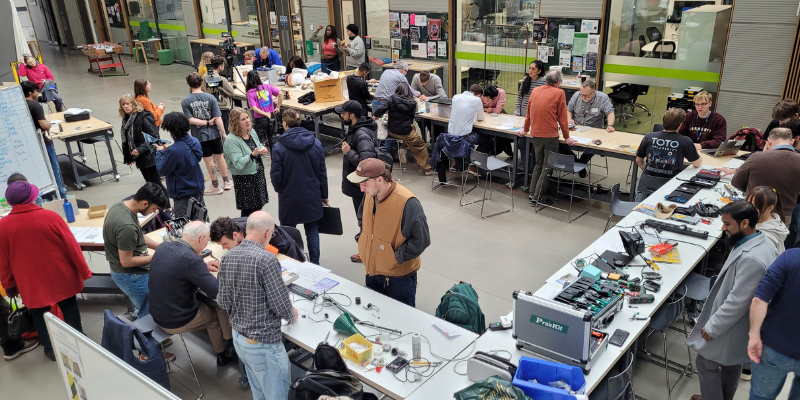
For UWE Bristol and the Bristol Repair Coalition, this year’s celebration follows closely on the heels of FixFest 2025, the international festival of repair. Seven delegates from Bristol joined campaigners, businesses, academics, and activists from over 20 countries to share experiences and strategies. The energy from that event carries directly into today’s focus: making repair affordable, accessible, and mainstream.

The global fight for a right to repair

Repair is becoming harder, even as the need grows more urgent. E-waste is now the fastest-growing waste stream globally, with millions of devices failing within just years, or even months or weeks of purchase. From phones that are impossible to open to laptops requiring specialist tools, barriers to repair are everywhere.

The Right to Repair Europe movement exists to tackle these challenges. With over 180 member organisations from 30 countries, including NGOs, community groups, social enterprises, refurbishers, and citizen advocates, the coalition campaigns for universal access to spare parts and manuals, affordable repair, and legislation that prevents planned obsolescence.

This International Repair Day, the initiative urges policymakers to act boldly. The recent decision by Microsoft to end free support for Windows 10 illustrates why: millions of usable devices risk premature obsolescence. Globally, the Right to Repair movement remains critical.

Bristol’s role in a global movement

The Bristol Repair Coalition, founded in March 2024 through the Repair Acts initiative, is a diverse alliance of community groups, social enterprises, academic institutions, local businesses, and city partners. Its aim is to create a regenerative material culture that prioritises repair and reuse, moving beyond recycling to systemic change.

The coalition works closely with Bristol City Council to embed repair into the city’s new Waste Strategy, while exploring a Circular Economy Demonstrator – a space to refurbish, repair, and resell items, create jobs, and provide training. It has also launched a public map of Bristol’s repair ecosystem, connecting residents with local repair cafés, social enterprises, and specialist services.

For UWE Bristol, involvement in the coalition reflects the university’s commitment to research, education, and practice in the circular economy. Staff and students are directly engaged in repair initiatives on campus and in the community, from the UWE Bristol Repair Café to student-led ventures providing affordable refurbished tech.

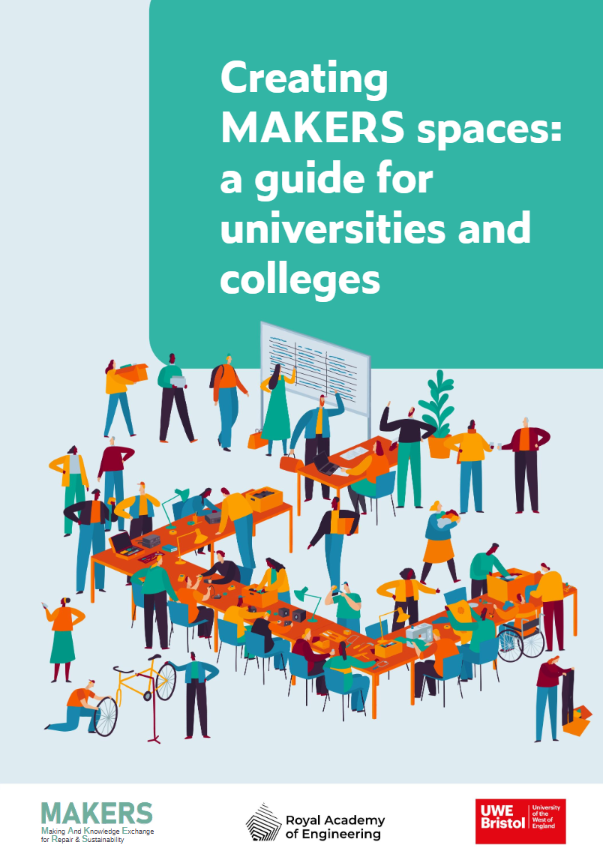
Launching the How to Create MAKERS guide: A blueprint for embedding repair in education

A key highlight this year is the launch of the How to Create MAKERS guide, a practical toolkit designed to help universities and colleges embed repair, making, and sustainability into their curricula. Building on the success of UWE Bristol’s MAKERS project – Making And Knowledge Exchange for Repair and Sustainability – the guide provides step-by-step advice on:

· Establishing local sustainability and repair projects

· Creating inclusive learning environments

· Building community partnerships

· Monitoring impact and sharing best practices

The guide is designed to enhance students’ hands-on skills and sense of belonging, particularly for under-represented groups, while promoting civic engagement and environmental sustainability. By providing a clear framework for implementing repair cafés, workshops, and community initiatives, it extends UWE Bristol’s impact nationally and internationally, helping institutions foster graduates who are technically capable, collaborative, and sustainability-minded.

Building hope through repair

International Repair Day reminds us that repair is more than a technical skill – it is a way of reimagining our future and our relationships with each other. It is about resilience, equity, and hope.

For UWE Bristol and the Bristol Repair Coalition, International Repair Day is an opportunity to celebrate achievements, from campus repair cafés to city partnerships, while recognising how much more remains to be done. As waste and emissions continue to rise, embedding repair into everyday life is essential.

International Repair Day celebration event:

International Repair Day Bristol 2025 will be celebrated on Saturday 18 October, 11:00–17:30 at Sparks, Broadmead. The event features hands-on workshops (electronics, bikes, furniture), creative activities (banner making, upcycling, take-apart table), talks on planned obsolescence and community activism, the Fixy Van drop-in, and a closing performance by Professor Teresa Dillon. Co-organised by Repair Acts and the Bristol Repair Coalition, the event connects Bristol to a global network promoting sustainable, community-driven repair practices.

Research with purpose – Putting lived experience at the heart of policymaking

Posted on

How can people with lived experience help shape better, fairer policy?
That’s the question explored by Dr Rounaq Nayak, whose 18-month Economic and Social Research Council (ESRC) Policy Innovation Fellowship examined how experts-by-experience can be meaningfully involved in knowledge mobilisation for policy and practice.

From November 2023 to April 2024, Dr Nayak was seconded to the Wales Centre for Public Policy (WCPP) to investigate how knowledge brokering organisations (KBOs) – such as the What Works Network – can embed lived experience into their work. While co-production is well established in health policy, practice elsewhere remains emergent. This fellowship set out to understand how involvement can be done ethically, effectively and with impact.

Exploring practice and principles

Working with colleagues Dr Katie Crompton and Dr Alex Jones, and in collaboration with WCPP and three What Works Centres – the Centre for Ageing Better, Youth Futures Foundation, and Centre for Homelessness Impact – the team conducted:

  • interviews with What Works and evidence centres,
  • a rapid review of current practice, and
  • an Insight Note distilling implications for those seeking to involve lived-experience experts in knowledge mobilisation.

Their findings show growing recognition of the value that lived-experience perspectives bring, enriching evidence with real-world insight and helping create policies with greater reach and relevance. Yet they also highlight the risks of tokenism, over-burdening individuals, and ethical concerns if involvement is not well supported.

Principles for ethical and effective engagement

The report outlines a series of guiding principles for knowledge brokering organisations, including:

  • safeguarding and fair remuneration,
  • clarity on purpose and participation,
  • building reciprocal and trusting relationships,
  • allocating time and resources from the outset,
  • planning clear pathways to impact, and
  • ensuring equity, diversity and inclusion in who participates and how.

Research with purpose

This fellowship reflects UWE Bristol’s commitment to Research with purpose – research that informs practice, shapes decision-making and centres people’s lived realities.

By working across academia, government and evidence organisations, Dr Nayak’s work is helping redefine what inclusive and ethical policymaking can look like.

👉 Read the full report: Involving experts by experience in knowledge mobilisation – Wales Centre for Public Policy

Enterprise that fuels progress: Aswath Ganesan Indra; Student to Space-Tech Entrepreneur

Posted on

Meet Aswath Ganesan Indra MSc Robotics graduate and Co-founder of GI Healthcare – our first international student to successfully secure the Innovator Founder visa. He is on a mission to develop advanced food tech products to make freshly cooked healthy food easily accessible and affordable to anyone anytime, anywhere – even beyond earth. His story showcases how the right enterprise support can fuel extraordinary progress. 


Building Autonomous Kitchens for Extreme Environments 

Aswath’s journey began in Student Ventures, where he developed initial proof-of-concept prototypes. A pivotal moment came when the prototype was installed in Glenside kitchen, catching the attention of MOD officials. This demonstration at Technology Readiness Level (TRL) 3 led to funding that propelled the project to TRL 6 – a lab-tested product demonstrated to users. 

Aswath’s startup, GI Healthcare, is pioneering autonomous kitchen technology for some of the most challenging environments imaginable – from military operating bases to Mars simulation programmes. Their mission is clear: create lightweight, compact cooking systems that use minimal resources while lasting longer than traditional alternatives. 

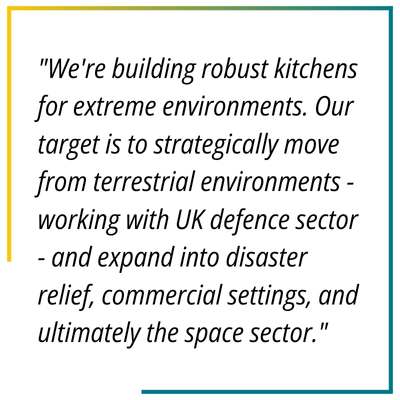
"We're building robust kitchens for extreme environments. Our target is to strategically move from terrestrial environments - working with UK defence sector - and expand into disaster relief, commercial settings, and ultimately the space sector."

The company is currently collaborating with impressive partners including the European Space Agency (ESA), UK Space Agency, and NASA’s CHAPEA team for Mars simulation research. Meanwhile, their terrestrial applications are gaining traction with the UK Ministry of Defence for operating bases, field kitchens, submarines and ships. 

“We’re now working towards field testing and deployment into military bases,” says Aswath. “Our timeline shows sales starting mid-2027, as we progress from TRL 6 to 9.” 

What makes this particularly impressive is that GI Healthcare retains all intellectual property rights. This positions them perfectly to expand into NATO countries and diverse markets while maintaining control of their innovations and staying true to their mission. 

The Power of Enterprise Support 

"This journey literally started from Student Ventures... Without that, it would have been very hard or much more expensive for us. We didn't have office space or anything, plus the expense of learning business skills and having mentors."

Student Ventures played a crucial role in Aswath’s entrepreneurial journey. The summer scholarship provided essential funding for initial market research, leading to a significant pivot from software to hardware solutions. “After market research, I found people needed the correct physical tools essentially, so it was better to jump directly into hardware,” he explains. 

The support extended beyond funding. Student Ventures provided workspace when laboratory facilities weren’t available, organised showcases for investors and early demonstrations, connected Aswath with mentors such as Callum Usher-Dodd, a Student Ventures Coach  who provided ongoing support and facilitated the crucial connection with Chris Abbott that led to the Glenside installation and subsequent MOD interest. 

Looking to the Future 

Aswath’s vision extends far beyond current achievements. The strategic progression from terrestrial defence applications to space technology reflects the ambitious scope of his work. His advice for current international students considering the entrepreneurial path is practical: utilise the two-year graduate visa to establish the business, understand customers, and navigate pivotal decisions before applying for the Innovator Founder visa. 

“Once you nail down your market and prove viability and credibility, it’s much easier to get a clear picture,” he advises. 

Aswath’s story exemplifies how enterprise education, coupled with the right support infrastructure, can transform ambitious ideas into reality. From Student Ventures workshops to defence contracts and space agency partnerships, his journey demonstrates that with bold thinking, critical support, and persistent innovation, the next generation of entrepreneurs can indeed fuel progress and ignite change. 


Interested in following an entrepreneurial path like Aswath? Discover how UWE’s Enterprise Zone and Student Ventures can support your journey from idea to scale-up and learn more about funding, mentorship, and workspace opportunities available and RISE with us. 

📌 RISE connection: Aswath’s journey exemplifies Enterprise that fuels progress by demonstrating how entrepreneurial support, from initial prototyping to securing international partnerships, transforms innovative ideas into solutions that address global challenges. His work also contributes to Securing a green, resilient future through sustainable food technology that minimizes resource use in extreme environments, and Skills that empower by showcasing how enterprise education and mentorship enable students to develop the business acumen needed to scale ambitious ventures from concept to real-world impact.

Composting, Community, and Circularity: A Glorious Morning at Heart of BS13

Posted on

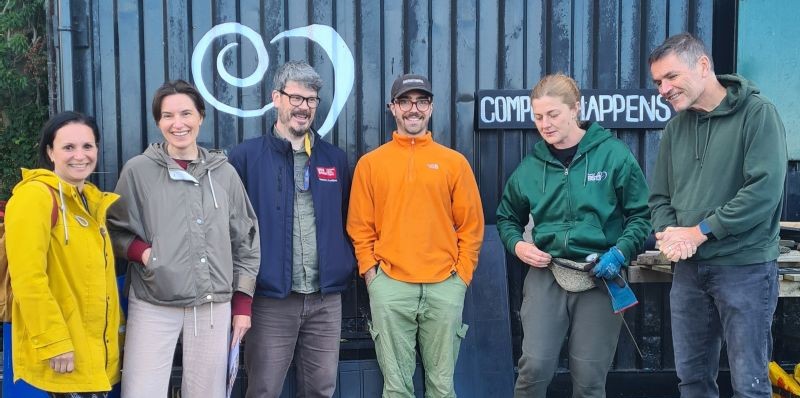
The Civic and Inclusivity and Sustainability Teams at UWE Bristol recently spent an inspiring morning at the Heart of BS13 Flower Farm,

Francesca Romita – Civic Development Manager

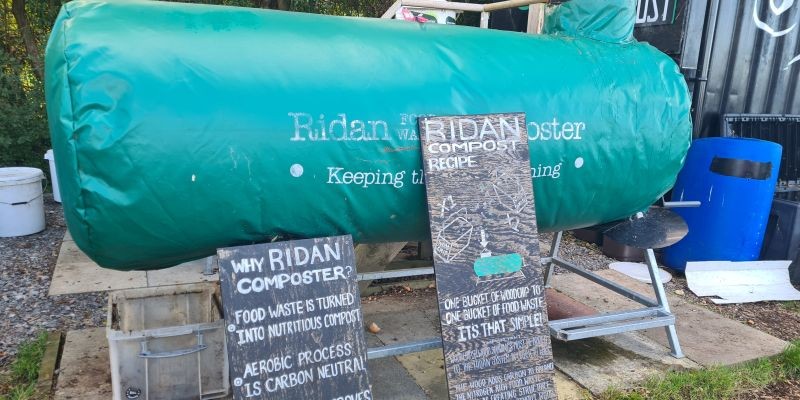
The Civic and Inclusivity and Sustainability Teams at UWE Bristol recently spent an inspiring morning at the Heart of BS13 Flower Farm, immersing ourselves in the transformative power of composting and community action. Guided by Jenny Liggit—Closed Loop Compost Coordinator and local composting champion—we explored the farm’s thriving community composting scheme, a brilliant example of circularity in motion.

Jenny’s work is truly remarkable. She’s successfully engaged 60 households in Hartcliffe, encouraging them to donate their food waste to be transformed into high-quality compost. This compost is then used to grow vibrant flowers and nourishing vegetables on the farm. Her approach is simple yet powerful: door-knocking, WhatsApp reminders, and warm invitations to visit the farm for a compost tour, tea, and cake. This grassroots engagement has sparked real behavioural change, demonstrating the impact of community-led sustainability initiatives.

We were also joined by Alex Montgomery, a former UWE student and founder of Generation Soil, a Community Interest Company turning Bristol’s food waste into living compost. Alex’s insights into soil health and food systems enriched our conversations, highlighting the importance of green skills education and urban food resilience.

But the visit wasn’t just about compost—it was about connection. We were joined by Paul Roberts (Head of Environment & Sustainability), Jeff Davey (Environmental Management Systems Lead), and Kat Corbett (Interim Head of Circular Economy). Together, we explored how universities like UWE can support and amplify this kind of transformational work.

Key takeaways

  • Food waste becomes compost, which nourishes soil and grows food and flowers—a closed-loop system benefiting both people and the planet.
  • Community engagement is essential, and Jenny’s success shows that with the right approach local communities can be deeply involved in sustainability.
  • Schools are required to manage food waste and develop climate action plans, but many lack the resources and capacity. Interestingly, SEND schools often lead the way due to their emphasis on outdoor learning.
  • Heart of BS13 emphasizes grassroots involvement, especially from young people, in shaping climate solutions—similar to how many Indigenous communities prioritise local leadership and traditional ecological knowledge.
  • Initiatives like Heart of BS13’s Green Skills Course— A practical training programme for 15–24-year-olds not in education or full-time work, combining volunteering, work experience, and learning. Activities include composting and flower farming at Hartcliffe City Farm, event planning and climate action, plus trips to green initiatives across the region.

How universities can support this vital work

There are exciting opportunities for UWE to collaborate with Heart of BS13, including:

  • Professional volunteering scheme to support marketing and campaign efforts
  • Science-informed practice to enhance impact and credibility and create links with academics at UWE
  • Outreach projects that demonstrate reductions in black bin waste, potentially attracting support from Bristol City Council
  • UWE Community Grants to fund student- and academic-led initiatives

Looking Ahead

This visit left us energised and inspired. We’re excited to explore how UWE Bristol can further support Heart of BS13’s mission to tackle health inequalities and build ecosystem resilience.

Composting may seem like a small act but today reminded us that it’s a gateway to community empowerment and transformational change.