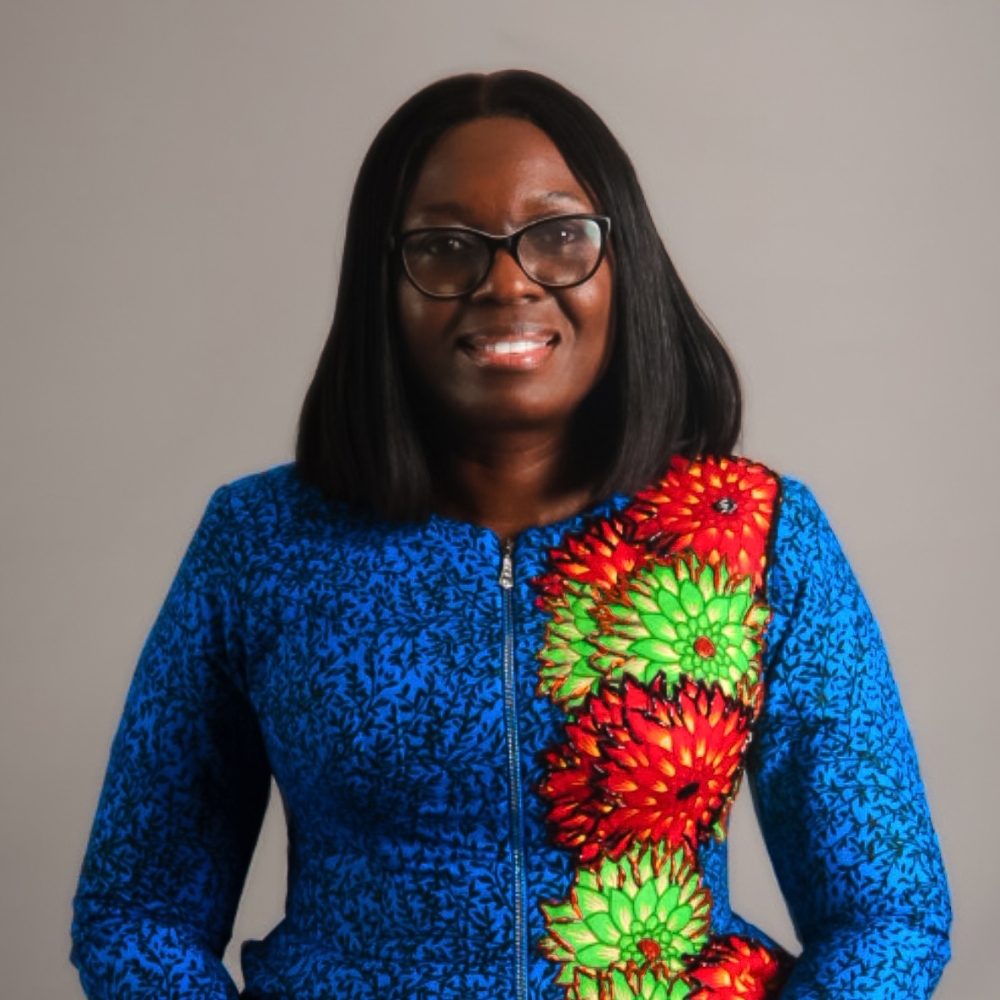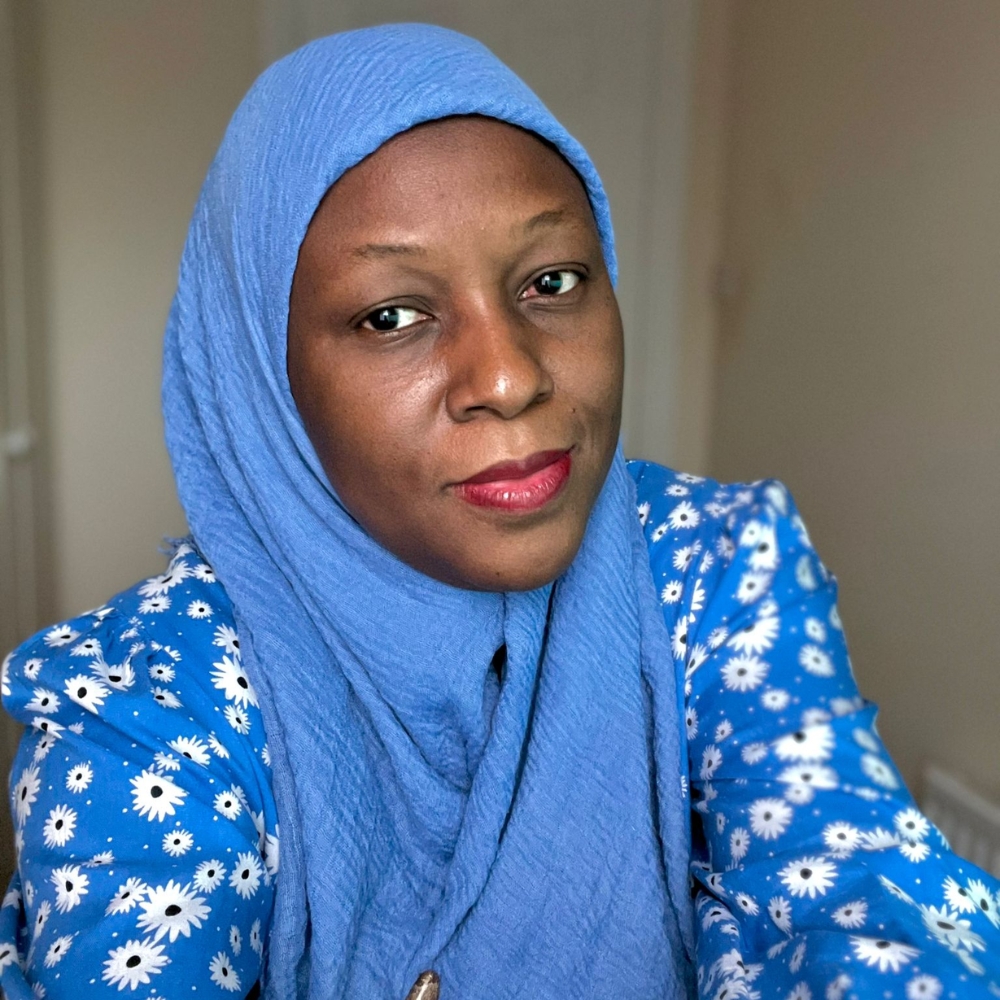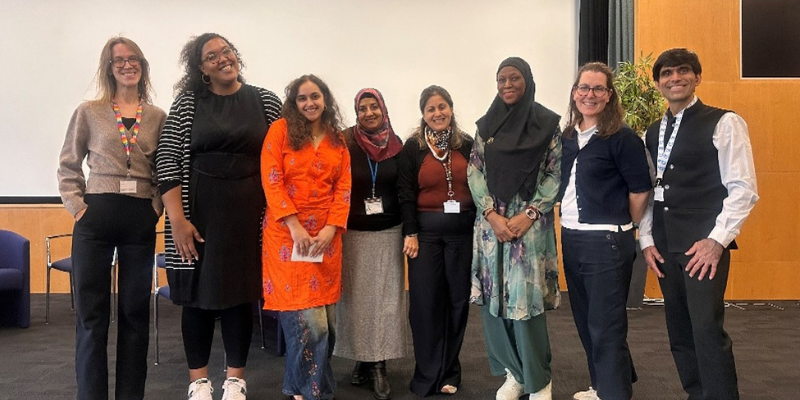
From L-R: Dr Jo Buring (GP, Bristol, NIHR Doctoral Fellow, University of Bristol); Ruby Osunsola (Nilaari); Dr Naabil Khan (Foundation doctor, Kent); Dr Tabinda Rashid-Fadel (Accure Health); Dr Reem Kayyali (UWE Bristol); Dr Faatihah Niyi-Odumosu (UWE Bristol); Francesa Arrigoni (Kingston University, London); Dr Praveen Kumar (Founder and Chair of Ethnic Inequality Research Network)
This is a guest blog by Dr Praveen Kumar, Associate Professor in Stroke Rehabilitation at UWE Bristol.
Health inequalities are rarely the result of a single issue. Gender, ethnicity, culture, mental health, trust in services and wider structural inequalities can all shape people’s experiences of healthcare. These interconnected challenges were at the heart of the Ethnic Health Inequalities Conference 2026, bringing academic, healthcare, community and lived-experience perspectives created opportunities to discuss inequalities and consider practical and holistic ways of addressing them and creating more equitable healthcare and research.
With World Menopause Day on 18 October, menopause and women’s health provided a particularly timely focus for the conference. The conference focus was also based on the release of the Renewed Women’s Health strategy for England.
Menopause: addressing inequalities in awareness, access and treatment
Dr Jo Buring (GP) practicing in Bristol explored inequalities in menopause awareness, access to care and treatment. Drawing on Patient and Public Involvement Engagement work with Somali, Afro-Caribbean and White communities in Bristol, alongside qualitative research exploring mental health issues during perimenopause phase, her session highlighted how women’s experiences of menopause can be shaped by wider social, cultural and health inequalities. The discussion emphasised the importance of ensuring that menopause research is genuinely inclusive and representative. Understanding the experiences of women from different communities is essential if we are to identify barriers to care and develop services that respond to the needs of women across the UK.
This focus was complemented by an insightful workshop led by Nathalie Sherring, CEO of Bristol Women’s Voice, exploring medical misogyny experienced by post-menopausal women. By placing lived experience at the centre of the discussion, the workshop moved beyond identifying problems towards practical action, with participants contributing to the development of a checklist designed to help women advocate for themselves within healthcare settings.
Dr Naabil Khan (Foundation doctor in Kent) further broadened the conversation around inequalities in women’s health, including maternity care and menopause, and challenged the limitations of approaches sometimes described as “Bikini Medicine” (refers to the outdated conceptualisation of women’s health as primarily focused on breast and reproductive health rather than whole-person health). The workshop highlighted diverse lived experiences and the importance of culturally responsive care, community engagement and practical action to address inequalities and inform research, service redesign and policy.
Connecting menopause and mental health
An important message from the conference was the need to recognise the connections between physical health, mental health and wider inequalities.
The relationship between perimenopause and mental health featured within the menopause discussions, while Dr Miriam Khan (GP) and Ruby Osunsola from Nilaari explored inequalities in Severe Mental Illness care and access to physical health checks among Global Majority communities in Bristol. Their PPIE work highlighted barriers relating to understanding, communication, trust and access to services. It also reinforced the importance of healthcare services working alongside community organisations and people with lived experience, rather than developing solutions in isolation. Their interactive workshop took this principle further by asking what meaningful community involvement in health research should look like. Drawing on Nilaari’s experience, the session explored trust, intersectionality and community expertise, encouraging a move beyond consultation towards shared ownership, influence and genuinely community-led research.
Anti-racism and institutional commitment
These conversations took place within a wider discussion about racial inequality and organisational responsibility.
As keynote speaker, Professor Sir Steve West, UWE Bristol Vice-Chancellor, shared UWE Bristol’s Anti-Racism Strategy. His contribution provided a meaningful context for the conference, highlighting the importance of creating a more inclusive and equitable university community and reinforcing the need for sustained institutional commitment to addressing racial inequalities, representing diverse voices and embedding anti-racist principles within organisational culture and practice.
This was particularly significant during Black History Month (October), providing an opportunity not only to reflect on inequality but also to consider the role institutions, researchers, healthcare professionals and communities can collectively play in creating meaningful and sustainable change for Global majority Groups.
Moving from consultation to partnership
A consistent message emerged across the conference:
Communities should not simply be consulted about health inequalities. They need to be partners in understanding and addressing them.
Bringing academic, healthcare, community and lived-experience perspectives together created opportunities not only to discuss inequalities but also to consider practical ways of addressing them.
Whether discussing menopause, mental health, women’s health or racial inequality, one message was clear:
Reducing health inequalities requires trust, accessibility, representation and genuine partnerships with communities.
By listening to diverse voices, recognising lived experience as expertise and moving from consultation towards shared ownership, universities, healthcare services and community organisations can work together to create research, services and policies that are more inclusive, equitable and responsive to the communities they serve.
Our sincere thanks to Dr Alice Berry, Dr Faatihah Niyi-Odumosu and Dr Vincent Singh for abstract reviewing; Dr Tabinda Rashid-Fadel and Dr Faatihah Niyi-Odumosu for chairing sessions; and Emma Thomas, Abi Price, Abi Goddard, Emma Dent and Charlie Buckfield for event management. We also thank Professor Marc Griffiths, Pro-Vice-Chancellor, and Professor Fiona Cramp, Director of CHCR, for generously supporting the venue and refreshments. A special thanks to Poppy Shields for her excellent behind-the-scenes administrative support throughout. Your collective contributions were greatly appreciated and helped make the conference a success.
Organising committee
Dr Tabinda Rashid-Fadel (Accure Health); Zehra Haq (CEO, Dhek Bhal), who worked for almost 40 years to support the South Asian community in Bristol), Dr Vincent Singh (Senior Lecturer, UWE) and Dr Praveen Kumar (Associate Professor in Stroke Rehabilitation, founder and Chair of the Ethnic Inequality Research Network, UWE Bristol).