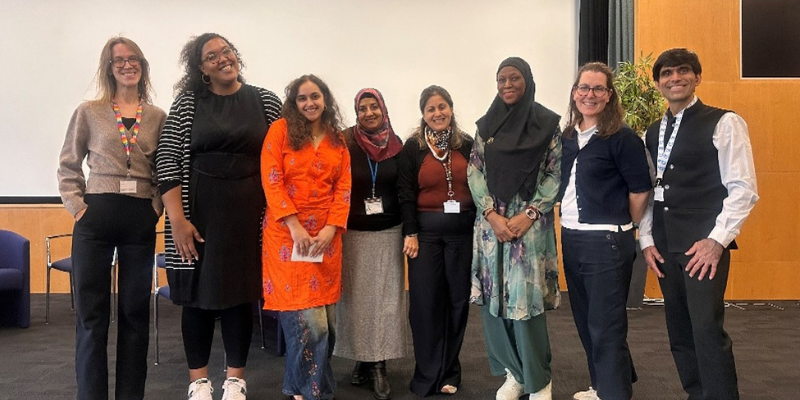
Top row L – R: Mahmoda Ali, Enterprise Team Manger; Mark Corderoy, Enterprise and Incubation Manager; Leanne Newton, Enterprise and Incubation Mangager; Nick Powell, Enterprise Programmes Manager.
Bottom row L – R: Daniel Nyambutora, Student Enterprise Co-ordinator; Nhi Ho, Student Enterprise Co-ordinator; Jo Portis, Enterprise and Incubation Co-ordinator
Guest blog post: Mahmoda Ali, Enterprise Team Manager
Over the past year, I’ve spent a lot of time talking to founders, students, academics, colleagues and partners about entrepreneurship at UWE Bristol and across the West of England.
One thing has come through strongly: there is no shortage of ideas or ambition here.
What often makes the difference is what surrounds those ideas- the people you meet, the expertise you can access, the confidence to take the next step and, sometimes, simply knowing where to start.
That thinking has shaped something we’re really excited to launch this September: the UWE Bristol Enterprise Engine.
The Enterprise Engine brings together our support for students, graduates, staff, researchers and regional founders. However, it’s more than putting existing activity under one roof. Instead of a single programme with a fixed starting point, we’re creating different ways into enterprise depending on where you are and what you need. Whether you’re exploring entrepreneurship for the first time, developing an idea, commercialising research or already building a venture, the aim is to help you find the right support, connections and next step, and stay connected to the wider ecosystem as you progress.
But for me, the most exciting part isn’t simply bringing our support together.
It’s what we can build around it.
The West of England is full of entrepreneurial talent, research, creativity and innovation. UWE is part of that ecosystem, and we want to play an even bigger role in connecting its different parts.
That means opening up more opportunities for people inside and outside the University to meet, share expertise, test ideas and build relationships. It means helping promising ideas find their next connection. And it means creating an enterprise community that people want to stay part of as they progress.
Because the best ecosystems keep giving back.
Students become founders. Researchers turn ideas into ventures. Founders become mentors, advisers and investors. Experience and connections flow back to the people just starting out.
That’s the kind of community we want the Enterprise Engine to help grow.
And this is just the beginning.
Over the coming months, we’ll be opening up new ways to get involved through our events, programmes and growing community.
Whether you have an idea, experience to share, connections to make or are simply curious about what’s happening, we’d love you to be part of it.
We will share more details in time, but get in touch to find out more: Enterprise@uwe.ac.uk
Manufacturers are under increasing pressure to improve productivity, address skills shortages and remain competitive. While robotics, automation and AI offer significant opportunities, many SMEs lack the capability to adopt these technologies effectively.
To help address this, UWE Bristol is launching the AI-Ready Robotics Workforce Programme, delivered through the world-renowned Bristol Robotics Laboratory (BRL) in partnership with the United Strategic Planning Centre (USPC). Designed specifically for manufacturing and production small and medium-sized enterprises (SMEs), this fully funded programme will help participants build practical robotics skills and understand how AI can enhance industrial applications.
What participants will learn
Participants will gain practical, hands-on experience in:
Operating and programming industrial and collaborative robots
Working with sensors, communication interfaces and machine vision systems
Integrating robotics within manufacturing environments
Using AI tools to support programming, diagnostics and process monitoring
Applying robotics and automation skills to workplace challenges
Understanding responsible AI use and human oversight in industrial settings
Programme structure
The programme will run over 10 weeks, with participants attending one full day per week at Bristol Robotics Laboratory.
Weeks 1-6: Robotics Fundamentals and System Integration
Participants will work with BRL’s robotics facilities to develop core skills in industrial robotics, collaborative robot programming, laboratory safety, communication systems, sensor integration, machine vision and manufacturing cell design.
Weeks 7-10: AI-Enhanced Robotics
The final phase, delivered with support from USPC, focuses on the practical application of AI within robotics environments. Topics include AI-assisted programming, code verification, diagnostics, process monitoring, integrated AI-robotics deployment and responsible AI practices.
There are two cohorts starting in autumn 2026, see dates for each cohort below.
Cohort 1
Cohort 2
Monday 12 October, 09:30-16:30
Tuesday 3 November, 09:30-16:30
Monday 19 October, 09:30-16:30
Tuesday 10 November, 09:30-16:30
Monday 26 October, 09:30-16:30
Tuesday 17 November, 09:30-16:30
Monday 2 November, 09:30-16:30
Tuesday 24 November, 09:30-16:30
Monday 9 November, 09:30-16:30
Tuesday 1 December, 09:30-16:30
Monday 16 November, 09:30-16:30
Tuesday 8 December, 09:30-16:30
Monday 23 November, 09:30-16:30
Tuesday 15 December, 09:30-16:30
Monday 30 November, 09:30-16:30
Tuesday 12 January, 09:30-16:30
Monday 7 December, 09:30-16:30
Tuesday 19 January, 09:30-16:30
Monday 14 December, 09:30-16:30
Tuesday 26 January, 09:30-16:30
Benefits for employers
By investing in workforce development, employers can:
Build confidence in robotics and automation projects
Develop in-house capability rather than relying solely on external expertise
Improve productivity and operational resilience
Strengthen understanding of both robotics hardware and software workflows
Support future investment decisions around automation and advanced manufacturing technologies
Who can apply?
The programme is open to SMEs employing between 5 and 249 people that have been operating for at least one year and work within manufacturing, engineering, production, automation or related industrial sectors. Participating organisations must be able to attend training at Bristol Robotics Laboratory on UWE Bristol’s Frenchay Campus.
The first cohorts are expected to start in autumn 2026, with places available on a fully funded basis for eligible SMEs. Places are limited.
£14.5bn for curiosity-driven foundational research
£8.3bn for targeted R&D addressing government and societal priorities
£7.4bn to support innovative companies to start, scale and stay in the UK
£8.4bn for skills, talent, infrastructure and national facilities underpinning all three areas
That blog focused on the broad “buckets” of UKRI funding. UKRI has now published its new five-year strategy (2026–2031) alongside its Delivery Plan for 2026–27. Since the budget itself was already known, there are few new spending commitments, but there’s now much more clarity on what UKRI’s priorities are, how it intends to invest, and who it expects to work with.
To summarise the changes in a sentence: UKRI intends to be more selective, less duplicative, and more challenge-led in what it prioritises, and be faster, more flexible, and more responsive in how it funds.
What funding areas does the strategy prioritise?
Curiosity-driven research
UKRI has explicitly protected a large “investigator-led” budget (£3.3bn) to support discovery research, underpinned by dual support and quality-related (QR) funding. UKRI says it is “committed to supporting and sustaining [this] investment, growing as the economy allows”. In practice this means open responsive calls will continue, though their format may evolve; the Delivery Plan mentions new open applicant-led schemes for BBSRC, and five new ESRC schemes (React, Connect, Grow, Explore, Challenge).
QR funding is still championed, but its allocation method is under review. Research England’s Strategic Institutional Research Funding (SIRF) review, running to 2030, is examining whether the formula-based funding given to English universities should better reward specialisation and collaboration. This echoes last autumn’s Post-16 Education and Skills White Paper, which wants to see “fewer broad generalist providers and more specialists” over time, with institutions collaborating rather than duplicating effort.
Strategic government and societal priorities
A revised emphasis is on targeted R&D to address government-defined challenges. This will mainly be delivered through integrated “Priority Programmes” which broadly align to the eight Industrial Strategy-identified sectors (IS-8), as well as leaving some space “wider priorities” categories that do not fit neatly within the IS8. The overarching message is that “UKRI will be selective about interventions to maximise the return for the UK”, emphasising the general approach of doing fewer things, better. These programmes don’t replace the old Research Councils, but are intended to break down the siloing that occurs across them, with Priority Programmes overseen by UKRI’s own programme board(s). Other UKRI organisational reforms also support this: rather than each Council guarding its own budget, resources will be dynamically managed across UKRI as a single portfolio, allowing funding to be reprofiled mid-year to capture emerging opportunities.
Industry and commercialisation
UKRI has substantially boosted support for business-led innovation (£7.4bn). Innovate UK is being refocused, via new service offers and IP support, to help spin-outs, scale-ups and R&D-intensive companies grow, including through its account-managed Velocity service for fast-tracking commercialisation. Mechanisms for research translation are also being simplified (see below).
How will funding change?
Faster and more responsive funding
UKRI wants faster, more agile decision-making: grant processing times will be cut through new assessment mechanisms and simplified applications. The target is to bring application-to-decision times down to 90 days for applicant-led calls and 60 days for targeted calls by 2031.
Some of this ‘speeding-up’ is expected to come from more experimental review methods which have been piloted with by the Metascience Unit (established under the former DSIT in 2024, now sitting within the merged business department). Distributed Peer Review, already trialled in 2025, asks applicants to assess each other’s proposals rather than relying solely on external reviewers. UKRI is now building this into a wider AI-assisted evidence platform intended to speed decisions further, alongside faster desk rejection of applications that clearly don’t meet the criteria.
As well as changes on the UKRI-side, there continues to be a trend towards more University-side ‘demand management’ (limiting how many applications an institution can submit to a given call). REE will continue to work on facilitating this demand management as quickly, efficiently, and fairly as possible.
Simplification and deduplication
Where possible, UKRI are trying to reduce duplication of schemes and harmonise them to use the same terminology. For example, in relation to innovation funding schemes there now will be a “new framework [which] reduces the number of schemes [they] run, helping simplify our offer and making sure [they] use consistent terminology across UKRI” (Prosperity Partnerships to enable collaborative R&I; Impact Acceleration to test applicability of new ideas to commercial application; Proof of Concept funding to test these ideas at scale, and Entrepreneurship training support).
Who will UKRI work with and expect universities to partner with?
UKRI is growing increasingly ambitious in encouraging private co-investment: UKRI is targeting 3:1 leverage on its Priority Programmes (compared to historic levels of 2:1 in wider R&I investment), so bids developed alongside industry, charity or other private funding may be viewed more favourably. Innovate UK, the Catapult network and new sector-specific Tech Boards are the main named delivery partners on this side of the strategy.
Collaboration with local government (be that city regions/councils, combined authorities, or NHS bodies) is another expectation. Through the £500m Local Innovation Partnerships Fund (which funded its first tranche of programmes in April 2026), UKRI wants city regions, combined authorities and universities to co-design programmes around genuine local strengths. In parallel with this and other investments (e.g. OxCam Arc), UKRI will also publish a refreshed “place funding policy” this year. This regional approach was further cemented in the devolution of “later-stage innovation funding” in the recent Rewiring the State – Cabinet Statement.
Internationally, UKRI is prioritising partnerships with the greatest mutual scientific and strategic benefit, particularly multilateral programmes like Horizon Europe and organisations such as CERN. Of note, Department for Science, Innovation and Technology (DSIT)’s annual report and accounts for 2025-26 were published recently, showing that 2025-26 Horizon Europe associated cost was £2.043bn against an allocated figure of £2.736bn.
Broader context
UKRI’s reforms sit inside a wider policy landscape rather than standing alone. The Industrial Strategy’s eight priority sectors (IS-8) provide the framework most Priority Programmes will map onto; the Defence Industrial Strategy (Sept 2025) commits to significant defence spending growth with an emphasis on dual-use technology (aligning with UKRI’s push on AI, quantum and engineering biology); and the AI for Science Strategy (Oct 2025) earmarks around £137m for AI-driven science, likely feeding into UKRI’s own AI-focused calls. The Post-16 White Paper, discussed above, shapes how QR funding and specialisation evolve alongside the SIRF review.
This backdrop now sits under a new government. Andy Burnham became Prime Minister in July 2026, and one of his first acts was to abolish DSIT, folding its science and innovation responsibilities into a new Department for Business, Innovation, Science and Trade (DBIST) under Jonathan Reynolds, with some digital and creative-industries functions moving to the Department for Digital, Culture, Media and Sport under Lisa Nandy, and universities policy moving to Lucy Powell at Education.
Early signals suggest Burnham intends to preserve the existing R&D settlement and Industrial Strategy rather than reopen them, but his “Manchesterism” emphasis on devolved, bottom-up growth, echoed already in UKRI’s own Local Innovation Partnerships Fund, makes it likely that regional research funding and devolution deals gain even more prominence over this parliament.
What this means for you and for UWE
Think about sector and regional strengths
Show how your work contributes to Industrial Strategy sectors (e.g. IS-8 sectors such as AI, health, clean energy), major agendas (NHS Long Term Plan, AI for Science) or regional strengths (West of England creative tech, green clusters etc.).
Embrace interdisciplinary calls and programmes.
Collaborate across UWE, external academics partners, or with industry partners to fit with the new Priority Programmes, supported by UWE’s new internal funding routes if pump-priming is needed.
Contact REE’s BID team to get help with positioning bids for outcome-driven calls, as well as keeping on top of new funding opportunities through the Research Funding Bulletin.
Consider commercialisation and partnerships early.
Engage REE’s Innovation and Impact team as soon as you realise your research could spin out technology or inform policy.
Develop and nurture industry, third-sector and local government contacts to bolster bids, with help from REE’s Business and Alumni Partnerships team.
Monitor and learn new processes
Get ahead by reading UKRI’s guidance from their pilot on Distributed Peer Review and other new schemes so that timely submissions and quick revisions (if invited) don’t catch your team out.
Lynne Fernandes Optometrists is a highly skilled, national award-winning Optometrists founded by Lynne and Gerard Fernandes. It is one of the most respected and trusted UK independent opticians, with highly qualified optometrists and industry-leading technology. Their innovative eye care and exemplary customer service is continuously improved by investment in equipment and products to provide personalised eye care and vision correction of the highest standard.
The Knowledge Base team was made up of Mario Vafeas, Michelle Jackson, and Mary-Ann Sherratt. Professor of Marketing, Mario Vafeas teaches undergraduate and masters; he is involved in Knowledge Exchange Projects with SMEs, and research in the field of buyer-seller relationships and value co-creation. Michelle Jackson is a Senior Lecturer in the Business School, teaching at undergraduate and master’s level and is an experienced marketer and marketing manager. Mary-Ann Sherratt was the Workforce Development Portfolio lead, and Clinical Lead for Optometry and is now Head of Optometry and Consultant Optometrist at Bristol Eye Hospital.
About the KTP Associate:
David Todd worked as a Marketing and Business Change Manager with Lynne Fernandes Optometrists and UWE Bristol. He holds a Master’s degree in Strategy, Change and Leadership, as well as Business Administration. During his time on the KTP programme, David benefitted from extensive training, including a course at Ashorne Hill on Strategy and Innovation, and studied for a Diploma in Digital Marketing.
When asked if he would recommend the KTP Associate role, David shared:
“I would thoroughly recommend the programme to other graduates. You quickly gain knowledge and experience that can make a positive difference to the organisation you work with. You will always have problems, and I have found on several occasions talking to the right people makes a tremendous difference – people want to help. I feel that it is a springboard to a successful and interesting career. The programme gives you the tools and knowledge to progress and enables you to be an asset to your organisation. It is just a pity that more people do not know about it!“
Photo: David Todd, KTP Associate
About Innovate UK:
Innovate UK is part of UK Research and Innovation, is the UK’s innovation agency. Their mission is to help companies to grow through their development and commercialisation of new products, processes and services, supported by an outstanding innovation ecosystem that is agile, inclusive and easy to navigate.
The Challenge the KTP Addressed:
The KTP project set out to address the follow aims:
Repositioning and relaunching the EyeSense subscription
A key challenge for LFO was to fundamentally reposition and successfully relaunch its EyeSense subscription, clearly articulating its value proposition and differentiating it from traditional eye care offerings in a market dominated by large competitors.
Introducing performance standards and monitoring
LFO faced the challenge of introducing consistent performance standards and robust performance monitoring across the business, in order to enhance patient experience while simultaneously improving eyecare outcomes.
Scaling the business and workforce
Another significant challenge was increasing the number of LFO practices on the high street and expanding the workforce within a year of project completion, requiring scalable systems, leadership capacity, and sustainable growth processes.
For Lynne Fernandes Optometrists (LFO), continued growth, competitiveness, and resilience in the face of the ‘big three’ presented a clear challenge. Competing on price was neither viable nor desirable; to prosper, LFO had to differentiate itself by delivering demonstrable added value to customers.
This made the expansion of its EyeSense subscription service not just an opportunity, but an imperative. However, scaling this service posed a significant challenge: it demanded management capability, alongside robust clinical and business systems and processes that the company did not yet have in place.
Photo: Newly refurbished practice on Wells Road (Bristol)
The Solution:
To address Lynne Fernandes Optometrists strategic growth ambitions, they undertook a programme of organisational development, focusing on embedding new management practices, cultural change and leadership capability.
These changes were essential to enable the scalable relaunch and growth of its innovative EyeSense subscription service, which offers predictive and preventative eye care and differentiates the business from more reactive competitors. LFO had previously engaged marketing expertise where the understanding of the importance of care quality had been misunderstood. Similarly, it was difficult to find people with clinical expertise who understood business and marketing.
Facing challenges in aligning clinical expertise with business and marketing capability, LFO partnered with experts from Bristol Business School and Optometry to manage this growth period rigorously. This led to the embedment of these changes within LFO, ensuring long-term impact beyond the project’s lifetime.
Photo: Inside the Nailsea Practice
The Impacts/Benefits of the KTP
The KTP delivered clear benefits for all partners. For Lynne Fernandes Optometrists, it resulted in a defined positioning statement for EyeSense, and a marketing plan for EyeSense, providing a strategic framework for future communications. The project also introduced standardised operating procedures, a new patient record coding system, and an electronic questionnaire, supporting improved efficiency and consistency. In 2025, the LFO group achieved 10% growth – EyeSense revenue had increased due to a fee uplift. Retail performance had been particularly strong, which was an impressive result given the broader UK retail landscape and the challenges which faced optical retail.
For UWE Bristol, the KTP project generated both academic and practitioner-focused outputs, including data collection for two research papers, one of which examines how tensions affect resource integration and outcomes in a private healthcare setting, and, jointly with the Associate, the development of a teaching case study based on brand positioning and branding hierarchy in an SME. These outputs contribute to academic dissemination and strengthen the potential for a future REF impact case study.
The KTP Associate gained a professional marketing qualification and completed the Strategy Innovation course, supported the advancement of their research and strategic skills through interviews, customer research via customer survey and operational development. This fed into the development of a positioning statement for EyeSense, which will guide all future marketing communications, and also led staff training and the implementation of new procedures, contributing to capability building within the business. They also developed standardised operating procedures – supporting staff development, new ways of working and ran staff training sessions.
What the partners have to say…
“The KTP has been a challenging but supported way of increasing and learning from cross discipline collaboration to the benefit of Lynne Fernandes Optometrists. In turn this will benefit patients in our geographical area and potentially influence national eyecare.“
Gerard Fernandes, Company Chair, Lynne Fernandes Optometrists
Photo: Gerard Fernandes, Optometrist and Director, Lynne Fernandes Optometrists
What the Knowledge Base partners have to say…
Academic Lead
“From an academic perspective the KTP was an opportunity to apply research-based knowledge to real-world commercial problems. The two-year project generated teaching material and provided the academic team with data for a new research paper. Working on a multi-disciplinary project, which had full commitment from the firm’s leadership team, was a very positive and rewarding experience.“
Mario Vafeas, Professor of Marketing, UWE Bristol.
Photo: Mario Vafeas, Professor of Marketing, Bristol Business School, UWE Bristol
Academic Supervisor
““Being involved with a KTP reminds me of the importance for business tutors, like myself, of the benefit of practical, live, real-time exposure to actual businesses. Gaining knowledge and experience is incredibly valuable for students, as it enriches their understanding and provides a practical context to theoretical learning. When students can relate their studies to real-world experiences, it not only enhances their learning but also prepares them for future professional challenges.”
Michelle Jackson, Senior Lecturer in Marketing, UWE Bristol
Photo: Michelle Jackson, Senior Lecturer in Marketing, Bristol Business School, UWE Bristol
This blog is guest written by Johnathan Hall, Business Partnerships Manager for Health and Social Care. Reflecting on key themes from UWE Bristol’s Festival of Research to explore how stronger collaboration between universities and health organisations can help tackle pressing challenges such as health inequalities and digital integration.
This week was UWE Bristol’s Festival of Research. Bringing together colleagues from across the university to collaborate, learn and explore some key themes that run thought research. I wanted to take a moment to reflect on a few ideas that came out of the opening address, specifically how UWE Bristol can work with organisations to collaborate more effectively and align around common goals.
Personally, I’ve worked within the NHS and supported health delivery for around 15 years, so my ears very much pricked up during Professor Sanjoy Shah’s keynote. Sanjoy is Joint Clinical Director for Green and Sustainable Healthcare at Bristol NHS Group, an intensive care consultant and a visiting professor at UWE.
He shared some really important insights into health inequalities across Bristol and the stark differences within the region. For example, residents in the most deprived areas of Weston-Super-Mare can expect to live around 10 fewer years in good health compared to those in Clifton. That really brings home the scale of the challenge.
Sanjoy also spoke about the frustrations he and his colleagues face with technical systems that don’t talk to each other, highlighting that as many as four different systems may be needed to build a full picture of a patient.
Solutions to challenges like these need to be developed rapidly and aligned with the NHS 10 Year Plan . This is where university collaboration and research are critical and can make a real difference. Universities have a major role to play in supporting health organisations to develop practical, real-world solutions to issues that directly impact care delivery.
This also closely aligns with some of the key themes coming through NHS Confed Expo last week. As with all sectors, AI is firmly on the agenda and is seen as a key enabler in delivering the 10 Year Plan, as well as helping to automate process-driven tasks.
While many people across the health sector are already using AI in some form, its formal integration into business-as-usual is still in the early stages. However, as momentum builds, it’s clear that adoption is about to accelerate.
There’s also a real need to ensure that AI and wider innovation are introduced into the health environment in a clear, coordinated way. As Sanjoy highlighted during the Festival of Research, there are already multiple digital platforms in use to manage patient care. Without careful planning, there’s a risk that new AI solutions will simply add to this complexity rather than help resolve it.
Again, this is where universities can play a crucial role—as facilitators and conveners, bringing partners together and helping to navigate these challenges.
UWE Bristol is well positioned to continue stepping up and supporting collaboration with the health sector in a range of ways, through undergraduate programmes and apprenticeships that develop the future workforce, CPD that supports current staff, research across a wide range of health topics and innovation activity within the University Enterprise Zone. Bringing partners together through the Integrated Care Academy is another great example of how this collaboration can come to life.
At the heart of all of this is research, it helps to drive informed, forward-thinking decisions. The Festival of Research felt like a brilliant forum to bring these strands together, highlighting not only the importance of research, but also showcasing the breadth of impactful work already underway.
If you’d like to explore how your organisation could benefit from partnering with UWE Bristol, the Business and Alumni Partnerships team would be happy to start a conversation. Whether it’s workforce development, research collaboration or innovation support across any sector, you can get in touch at uwebusiness@uwe.ac.uk.
This week is World Continence Week (15th to 21st June 2026) and researchers from UWE Bristol’s School of Health and Social Wellbeing are working to promote better bladder and bowel health at UWE Bristol and across the region. Bladder and Bowel leakage affects about 1 in 5 adults, which is about as common as hay fever, but is an issue that people are often reluctant to discuss.
Led by Prof. Nikki Cotterill, we are working with the Bristol Active City Network to raise awareness of how bladder and bowel leakage can affect people’s ability to get out and about and engage in exercise and other activities. For World Continence Week Nikki will be leading a webinar for the network, building upon previous engagement work with them on a pathway redesign project, aiming to help people to talk about bladder and bowel leakage and to access available self-help. In particular, bladder and bowel leakage can be the difference between taking part in exercise or being too embarrassed or worried about an accident. Addressing this, provides an opportunity to keep people in the activities they enjoy and socialising with friends and family.
A key resource to raise awareness and promote self-help is the CONfidence app, a self-help app developed by UWE Bristol researchers in conjunction with the Bladder and Bowel Confidence Health Integration Team (BABCON HIT) and Expert Self Care. The app has been downloaded by almost 20,000 people and has reached 20 countries. This App has been Co-created with people who have experienced leakage symptoms and national experts specialising in bladder and bowel care. Anyone experiencing bladder and bowel leakage can download the app for free. This gives access to practical advice and information on how to improve their bladder and bowel health.
Further tackling taboos, UWE Bristol has spearheaded the Boys Need Bins campaign, aiming to raise awareness about incontinence in men and the need for bins in men’s toilets. UWE Bristol is taking part in a pilot placing sanitary waste bins in men’s toilets across the Frenchay campus. This allows for the disposal of incontinence products including incontinence pads, stoma care items or other medical and sanitary products. Researchers are working with system partners to roll this out in other organisations across Bristol aiming for a ‘Boys need Bins Bristol’.
We need to talk more about bladder and bowel health to break down the stigma preventing symptom improvement. We are always keen to hear from anybody with an interest in this area, so please do contact Prof Nikki Cotterill with any thoughts or suggestions this World Continence Week: nikki.cotterill@uwe.ac.uk.
Duku Product Design is a UK-based engineering design consultancy with over a decade of experience in transforming client ideas into market-ready products. The company specialises in end-to-end product development, from concept through to design for manufacture and production delivery. In recent years, Duku has expanded beyond consultancy into the development of its own proprietary technologies, with a strategic focus on innovative and accessible EV charging systems, transitioning from a service-led consultancy model to a product-led scalable business.
About the Knowledge Base:
The academic team based within the Bristol Business School at UWE Bristol brings a strong research foundation, combining both academic and industry perspectives. The KTP was supported by Dr Mel Hudson Smith and Eamonn Condon. As Associate Professor in Operations Management, Mel has over 20yrs of experience working with small businesses to enable them to achieve their strategic objectives by ensuring their operational capabilities and processes are high quality, efficient and strategically aligned. Eamonn is the Programme Lead for the Marketing Degree and a Senior Lecturer in marketing. With international experience, Eamonn has valuable expertise in launching services, leading product teams and embedding processes and launch strategies to new markets.
Photo from the Final LMC – Eamonn Condon (Academic Supervisor), Ria Eyers (KTP Officer), Ellen Parkes (KTP Development and Growth Manager), Taabish Khan (KTP Associate), Andrew Aylesbury (Duku – Company Chair), and Paul Spenley (IUK Adviser). Excluding Alex Lee (Duku – Company Supervisor), Mel Smith (Academic Lead) and Helen Lewis (KTP Project Manager).
About the KTP Associate:
The KTP Associate, Taabish Khan, holds an MBA in Strategy and BSc in Business Management, brings over six years of experience across sales, project management, and corporate communications. His professional background spans both industry and agency roles, delivering commercially focused projects and working across cross-functional teams.
About Innovate UK:
Innovate UK is part of UK Research and Innovation, is the UK’s innovation agency. Their mission is to help companies to grow through their development and commercialisation of new products, processes and services, supported by an outstanding innovation ecosystem that is agile, inclusive and easy to navigate.
The Challenge the KTP Addressed:
The partnership aimed to embed a full commercialisation capability within Duku EV, enabling the transition from a design‑led consultancy to a scalable EV technology business. This capability supports the direct marketing of Duku’s own in-house designed products and enables a full idea‑to‑market service for new and existing design consultancy clients across home, fleet, and public charging markets.
Business Challenge:
At the outset of the KTP, Duku operated primarily as a product design consultancy but had begun developing proprietary EV charging technologies and patents. However, it lacked the commercial capability required to take these products to market. While the business had strong expertise in engineering design and product development, it did not have the internal frameworks needed to support market entry, revenue generation, or scale.
More broadly, the business faced structural challenges such as:
No formal market sizing or prioritisation framework
Lack of defined routes to market or commercial models
Absence of investor-ready financial planning and valuation logic
No established supply chain to support hardware delivery
Reliance on ad hoc project-based revenue rather than scalable growth
In addition, entering the EV charging market required navigating a complex and capital-intensive landscape, including manufacturing readiness, certification requirements, and long procurement cycles.
As a result, the core challenge was not only to commercialise a product, but to determine what should be commercialised, how it should be brought to market, and how the business could do so in a scalable and financially sustainable way.
The Solution:
To address the lack of commercial capability, the KTP focused on embedding structured, evidence-led decision-making within the business, while simultaneously validating real market opportunities for Duku’s EV charging technologies.
The project did not follow a linear path. Early in the partnership, initial commercial assumptions around launching a single public EV charger were tested through detailed market research and industry engagement. This revealed that the chosen segment was highly competitive, low margin, and capital intensive, prompting a fundamental shift in strategy.
In response, the focus moved from commercialising a single product to developing a scalable product portfolio built around Duku’s core cable management technology and family of 11+ patents. This shift enabled the business to target multiple higher-value markets, including fleet, domestic, and commercial charging applications, significantly improving long-term growth potential.
Alongside this strategic pivot, structured commercialisation frameworks were introduced across the organisation. Market sizing methodologies (TAM–SAM–SOM), competitor analysis tools, and value proposition frameworks replaced ad-hoc decision-making, allowing the business to prioritise opportunities based on evidence rather than assumption.
As industry engagement increased, further insights shaped the commercial approach. Engagement with OEMs, charge point operators, and international manufacturers highlighted differing preferences between licensing and hardware supply models. This led to the development of flexible routes to market, including both hardware delivery and IP-led licensing strategies.
(Charlie Meadows. Product Designer at Duku assembling the Duku EV ARC system)
In parallel, significant progress was made in building the foundations required for commercial execution. This included the development of investor ready financial models, structured outreach pipelines, early-stage supply chain relationships, and active participation in industry events to validate demand and position the business within the EV ecosystem.
These activities collectively transformed the business from a consultancy-led organisation with a single product concept into a commercially structured EV charging solutions provider, with a defined product portfolio, validated market opportunities, and a clear pathway to scale.
Key activities delivered through the KTP included:
Development of market sizing and total opportunity assessment frameworks
Expansion from a single product to a multi-sector EV charging portfolio
Creation of repeatable commercialisation tools and processes
Strategic input into Innovate UK grant funding applications
Preparation of investor ready financial and strategic documentation
Industry engagement through exhibitions, panels, and stakeholder outreach
The Results of the KTP:
By the end of the KTP, the business had undergone a fundamental shift – from a consultancy with an early-stage EV concept to a commercially structured EV charging solutions provider with validated demand, secured funding, and a clear pathway to scale.
This transformation was reflected not only in strategy, but in tangible commercial outcomes. During the project, the business secured over £276,000 in pre-production sales across multiple product lines, alongside contributing to £461,967 in Innovate UK funding. Combined, this represents a total financial impact exceeding £730,000, which is more than four times the grant value for the KTP.
Crucially, this activity was not isolated. EV-related grants and commercial traction accounted for approximately 30% of company revenue during the period, demonstrating a meaningful shift away from reliance on consultancy-led income and towards a scalable product-led model. In parallel, the business expanded from a single unfinished product to a portfolio of five production-ready EV charging solutions, significantly reducing market concentration risk and opening multiple routes to market.
The organisational impact extended beyond revenue. Headcount increased by 10% during the KTP, with the commercial groundwork laid through the project expected to support further job creation, including an estimated 7-12 roles within manufacturing through contract partners, and 4–6 roles within the emerging UK marine EV charging sector.
Beyond commercial performance, the project delivered meaningful societal and industry impact. Duku’s focus on accessibility contributed to a measurable improvement in usability, with the proportion of disabled users able to confidently use EV charging increasing from 25% to 61%. This represents a significant step toward inclusive infrastructure, addressing one of the key barriers to wider EV adoption.
(Emily Yates (www.emilyroseyates.co.uk) – Journalist + BBC presenter at a study conducted by Duku EV and RiDC around accessibility on EVC charging)
Depot and charging network safety was another critical area of impact. With 31% of workplace injuries attributed to trips and falls (HSE), the development of automated cable management systems directly addresses a major risk factor within EV charging environments, particularly in fleet and public settings.
The project also contributed to sustainability objectives. Through collaboration with sustainability specialists, the products developed are targeting up to99% recyclability, supporting longer-term environmental goals alongside electrification.
Just as importantly, the KTP elevated Duku EV’s external reputation and industry visibility. During the partnership, the business won the Industry Advocacy Award at the London EV Show 2024 and received Innovation of the Year from the IET for accessible vehicle technology.
(Alex accepting the Industry Advocacy Award at the London EV Show)
Duku EV also strengthened its position as a thought leader in the sector through a talk on accessible EV charging at Cenex Expo 2025, alongside panel participation at Cenex Expo in Millbrook and the EV Charging UK Conference in London in 2026. These milestones signalled growing recognition not only of the technology itself, but of the company’s role in shaping conversations around accessible and user-centred EV infrastructure.
(The Associate delivering a talk at the CENEX Expo ’25)
At an industry level, the KTP enabled Duku to contribute to early-stage policy and infrastructure development. Through involvement in the Clean Maritime Demonstration Competition (CMDC6) under UK SHORE, the business worked alongside organisations such as Cenex and the IET to help shape design guidance and best practices for marine EV charging, an emerging and strategically important sector.
The Knowledge Transfer Partnership (KTP) delivered significant benefits to the knowledge base partner, UWE Bristol, by providing a live commercial environment in which academic frameworks could be applied and tested. For the core project team of Mel Smith and Eamonn Condon, participating in Duku’s strategic transformation created a rich source of real-world material for both teaching and research.
Crucially, the collaboration provided valuable teaching examples of how a new intellectual property (IP) innovation is successfully brought to market (GTM). These practical insights are now being utilised in postgraduate courses, such as the MBA and the MSc in Marketing programmes. These outputs feed into student project work and support the development of future research and impact case studies.
Furthermore, the project’s complex requirements facilitated broader university collaboration, as thought leaders from across UWE outside of the core project team were brought in to assist wherever their specific expertise was needed.
Perhaps most significantly, the KTP has created capability that extends far beyond the lifecycle of the project. The commercialisation frameworks developed, covering market sizing, financial modelling, and go-to-market strategy, are now embedded within the business and are being actively deployed not only within Duku EV, but also as a formal service offering to external clients.
As a result, the KTP has not only delivered immediate financial return, but has established a repeatable and revenue-generating commercial capability that will continue to drive growth long after the project’s completion, while positioning the business for international expansion and external investment.
Key Facts and Impact:
Commercial Impact
Three Innovate UK bids won, valued at £71k, £184k, and £81k
Two confirmed sales orders across different product lines, valued at £88k + VAT and £186k + VAT
Total direct monetary impact of £610k during the project period
3.2x return on the original KTP grant value within the lifetime of the project
Estimated cost savings of £2.73 million over five years through improved strategic decision-making and reduced reliance on external consultancy
Strategic and Organisational Impact
Expansion from 1 to 5 product lines, covering domestic, fleet, and public EV charging markets
Establishment of a scalable supply chain to support hardware and licensing models
Transition from a design consultancy to an EV technology business with defined commercial pathways
Full redesign and launch of the Duku EV website, strengthening market presence and credibility
Reputation and Thought Leadership
Winner of the Industry Advocacy Award at the London EV Show 2024
Winner of Innovation of the Year for Accessible Vehicle Technology, awarded by the Institution of Engineering and Technology (IET)
Delivery of a talk on accessible EV charging at the Cenex Expo ‘25
Participation in panel discussions at:
Cenex Expo, Millbrook (2025)
EV Charging UK Conference, Crowne Plaza London (2026)
(Andrew, Alex, and Taabish with the award at the London EV Show ‘24)
Future and Legacy:
The KTP has established a foundation that extends well beyond the lifecycle of the project, embedding both capability and opportunity that will continue to drive growth across the business.
A key legacy is the formalisation of commercialisation as a structured function within Duku. The frameworks developed during the partnership, including market sizing, financial modelling, and route-to-market strategy, are now embedded at management level and actively used across both EV and non-EV projects. This capability has also been translated into a client-facing service, already generating revenue and strengthening the company’s wider offering.
The project is positioning Duku EV as a clean, investable, and scalable business, separate from the legacy product design consultancy. Commercial and financial readiness has been achieved, with Duku EV now progressing toward a £1.35 million seed raise, supported by early investor interest and ongoing governance development.
New market opportunities have also been unlocked. Active partnerships are now developed with UK and European charge point manufacturers, particularly in the fleet sector, where Duku’s ARC technology is gaining recognition as a differentiated solution. In parallel, the business is exploring marine EV charging, building on its involvement in the Clean Maritime Demonstration Competition (CMDC6), where it contributed to the development of design guidance and best practices alongside organisations such as the IET and Cenex.
While the focus is now on scaling the existing product portfolio, additional opportunities, particularly within marine AC and DC charging, are being explored as part of the longer-term roadmap.
The academic outputs extend beyond UWE. This included an industry project with the MBA cohort of Aston University, which explored IP valuation, organisational transition to hardware supply, and strategic recommendations for scaling, delivering both academic and commercial value.
Looking ahead, the impact of the KTP is expected to extend beyond the business itself. As Duku EV scales, there is clear potential for job creation across manufacturing and emerging sectors such as marine electrification. More broadly, by improving accessibility and usability in EV charging, the business is helping to reduce barriers to adoption and support the wider transition to electric mobility.
With commercial capability embedded, market pathways defined, and early traction established, the KTP has reshaped the trajectory of the business, positioning Duku EV for sustained growth, international expansion, and long-term impact within the EV infrastructure sector.
(Taabish visiting S.Charge’s facility in India – which is Duku’s manufacturer and partner on an international Innovate UK – India Department of Science and Technology (DST) grant)
What the partners have to say…
“This KTP has been genuinely transformative for our business. The project started at a pivotal point for us where we could see an opportunity and had a strong technical concept, but understanding where to focus our resources and building the strategy to exploit it was very difficult. We had a strong technical capability from our background in design and engineering, but this project gave us the structure and support to spend time on the commercial aspects which were not well defined at that point. Working with Taabish and the team at UWE has allowed us to challenge our thinking, refine our approach and ultimately build a plan with real long-term potential. We have ended the KTP with real clarity about our next steps, the next 12 months are going to be very exciting and we’re very grateful for the advice and support we’ve received from UWE and to have Taabish on board to expand and develop this opportunity.” Andrew Aylesbury – Director.
What the Knowledge Base partners have to say…
“From my role as a support academic on this project, I am very satisfied with how the transfer of knowledge from UWE has contributed to the pool of expertise to both Taabish and DUKU in their quest to lift their EV capability to the next stage. The partnership has worked very well and to me is a model of how they should be run” Eamonn Condon – Academic Supervisor.
“It has been a joy to be involved in this innovative and exciting KTP. The partnership between the company, academics and the Associate was exceptional and was key to unlocking the transformation from engineering consultancy to EV charging solution provider. As an academic, the impact of being part of both the planning and execution of a such a significant strategic change project, has created a rich source of material for both teaching and research” Mel Smith – Academic Lead.
KTP Associate…
“This KTP has been an ideal first long-term project following my MBA. While the course prepares you to act as a change agent bridging strategy with operational reality, this experience allowed me to apply that in a live business environment.
Building and translating a strategy into execution is rarely straightforward, particularly in a business balancing technical development with commercial ambition. The project exposed me to real constraints around resources, alignment, and timing – all of which shape outcomes.
It has been a steep and an extremely rewarding learning curve, requiring me to work across product strategy, market analysis, business development, and brand building within a highly competitive EV charging sector. I am grateful to have had this opportunity and the experience gained – and we aren’t finished yet!” Taabish Khan – KTP Associate.
From the Knowledge Transfer Adviser…
“The KTP is a great example of product development and commercialisation led with determination and skill by Taabish. It was a pleasure to work with the whole team and to be a part of the journey towards the implementation of a new sustainable revenue stream which adds to the business model. The KTP makes the company more competitive and with new strategic capabilities most notably the marketing and sales methodology which will serve as an embedded process suitable for any new product or service” Paul Spenkley – IUK Adviser.
UWE Bristol is delighted to once again take part in the Festival of Nature, the UK’s largest celebration of the natural world. UWE staff, families, and friends are warmly invited to join us at Millennium Square, Bristol City Centre, on Saturday 13 and Sunday 14 June, where our researchers will be showcasing an inspiring range of activities in the UWE tent.
What UWE Researchers Are Bringing to the Festival
This year’s programme features a rich mix of hands‑on workshops and interactive demonstrations.
Clair Schwarz(CATE) will introduce visitors to the ecological and cultural significance of the wren, offering the chance to create clay wrens and paper masks while exploring themes of storytelling, identity, and tradition.
Dr Laura Morgan(CATE) and Laura Clarke(CATE) will run a bio screen‑printing workshop using colour derived from native UK trees, helping visitors understand where textile colour comes from, why it matters, and how material choices can support more sustainable futures.
Nature‑inspired innovation will also be on display as Lidia Badarnah(CATE) and Dr Sigita Zigure(CATE) demonstrate how biomimicry, bio‑design, and nature‑based solutions can help create greener, cooler, and more resilient places. Their activity invites visitors to take part in creative challenges that show how nature can guide imaginative problem‑solving.
Verity Jones (CHSS) will share Taking a Close Look at Microfibres, an activity linking UWE research on air quality with the Schools Under the Microscope project, offering a creative way to explore microfibres, clothing, and indoor air quality.
Kishwar Ali (CHSS) will showcase research on how plants respond to climate change, how biodiversity supports resilient ecosystems, and how we can design greener, climate‑smart cities and landscapes.
Families can also meet the Oak Tree Doctors, presented by Carrie Brady(CHSS) and her research group. This hands‑on activity introduces the importance of healthy trees and the challenges posed by Acute Oak Decline (AOD), a disease affecting native UK oak species involving bacteria, the Agrilus biguttatus beetle, and environmental stressors.
Freya Radford(CHSS) will help visitors understand what makes a healthy river system, the organisms that live there, the stressors they face, and how biodiversity and ecosystem structure influence a river’s ability to withstand pollution.
Exploring greener streets, Yarden Woolf(CHSS) will present GP4Streets, an interdisciplinary project showing how everyday streets can become healthier and more climate‑resilient through simple, community‑led action. The project brings together expertise from urban planning, landscape architecture, public health, environmental science, and air quality research.
Oluwadamilola Okeyoyin(CHSS) will offer Plants and You, an interactive activity inviting visitors to touch, smell, and investigate herbs and plant materials while discovering how plants, microbes, and everyday health are interconnected.
Emma Thomas (CHSS) will present The Rights of Rivers an activity grounded in interdisciplinary research that treats rivers as teachers, collaborators, and agents within environmental futures. This work challenges narratives that position rivers as passive victims of pollution, instead highlighting river agency and diverse forms of knowledge—scientific, sensory, cultural, ancestral, and experiential.
Credit: Ania Shrimpton
Beyond the UWE tent,Kat Corbett(CATE) will contribute to the ‘How‑To’ Talks Tent with an activity focused on the circular economy. Using materials from the Scrapstore, participants will experiment with creating multiple objects from the same set of resources—such as playdough, buttons, and milk bottle lids—highlighting the value of reuse, imagination, and resourcefulness.
About the Festival
The Festival of Nature is directed by the Natural History Consortium, a partnership of 14 regional and national organisations, including UWE Bristol, the BBC, and the National Trust, working together to engage people with the natural world through collaborative action.
The Wild Weekend at Bristol’s Millennium Square is the largest event in the Festival of Nature programme, attracting 10,000–15,000 visitors over the weekend.
Find the full programme of events at Festival of Nature Website and follow updates on social media at @festofnature.
Event Details
Saturday 13 June 2026: 10:00–18:00
Sunday 14 June 2026: 10:00–17:00
Location: Millennium Square, Bristol City Centre, BS1 5SZ
The Bristol 3D Medical Centre, Integrated Care, and the Power of Collaboration with UWE Bristol
Written by Professor Marc Griffiths
Healthcare can do more than treat illness; it can transform lives. Nowhere is this clearer than at the Bristol 3D Medical Centre, a pioneering NHS facility where innovation, compassion and collaboration come together, redefining reconstructive care through advanced digital technologies, artistry and patient‑centred practice.
As explored in Episode 14 of the Let’s Talk Health and Carepodcast, recorded on site at the Centre, the Bristol 3D Medical Centre is the first NHS facility in the UK to bring 3D scanning, digital modelling and 3D printing together under one roof. But what’s particularly striking is its significance extends well beyond technological firsts. It represents a new model of integrated, innovation‑led care that sits squarely within the ambitions of the Integrated Care Academy at UWE Bristol.
What Makes the Bristol 3D Medical Centre Different?
Located within a residential community rather than a traditional hospital environment, the Bristol 3D Medical Centre operates at the intersection of:
Advanced engineering and digital design
Clinical expertise and patient safety
Artistry, craftsmanship and empathy
Psychological rehabilitation and wellbeing
Under the leadership of Amy Davey, Lead Reconstructive Scientist and Lab Manager, the Centre delivers a fully integrated pathway, from ultra‑high‑resolution facial scanning and digital sculpting, through to 3D printing in biocompatible materials such as resin and PEEK, and finally to the meticulous hand‑finishing of bespoke prostheses.
Critically, the Centre treats patients from infancy through to older age, supporting individuals affected by cancer, trauma, congenital difference and complex surgical intervention. The outputs are not ‘off‑the‑shelf’ devices; they are deeply personalised interventions designed around function, appearance, identity and confidence.
Positive Outcomes
The outcomes associated with the work of the Bristol 3D Medical Centre are striking – and deeply human. Patients do not come simply to “replace” what has been lost. As highlighted in the podcast, the Centre plays a pivotal role in helping people rebuild confidence, regain capability in their day-to-day lives, and improve their overall quality of life.
This includes supporting individuals to re-enter social life and employment, feel more confident interacting with others, and navigate the psychological transition following trauma or cancer. The Centre also helps reduce the need for further invasive surgery and enables smoother, less distressing rehabilitation pathways.
From infants benefitting from non-invasive helmet therapy that avoids surgical risk, to adults rebuilding facial identity following cancer treatment, the Centre demonstrates how innovative technology can directly translate into better outcomes – emotionally, socially and clinically.
This focus on rehabilitation, therapy and long-term wellbeing aligns closely with integrated care principles, where success is defined not only by clinical intervention, but by lived experience and sustained outcomes.
Integrated Care in Action
The Bristol 3D Medical Centre exemplifies the core themes of the Integrated Care Academy at UWE Bristol, blending clinical science, engineering, design and digital skills to translate research and technology into real-world clinical impact. Located within a community-embedded environment, the Centre supports hospital services, community rehabilitation and regional pathways, demonstrating how innovation in practice can strengthen system integration and place-based care.
As discussed in the podcast, the Centre already supports surgical planning, reduces theatre time, and enables clinicians to take an innovation-first approach before patient operations. This system-level value highlights how innovation at the point of care can positively influence efficiency, safety and patient flow across the wider system.
Just a few miles away, UWE Bristol brings together complementary strengths in robotics, advanced and additive manufacturing, health technologies, psychology and workforce development. Existing collaborations with Bristol Robotics Laboratory, where Amy Davey acts as an industrial mentor to doctoral researchers, alongside wider links with engineering and health research communities, reflect a shared ambition to bridge the gap between research and real-world healthcare application.
Looking Ahead
Looking to the future, UWE Bristol is well placed to deepen and extend collaborative workstreams with the Bristol 3D Medical Centre through an innovation-first model. This includes co-developed research focused on applied clinical challenges, translational pathways from robotics, materials science and digital health into patient care, and new approaches to workforce education, training and medical device innovation.
As Amy Davey reflects in the podcast, the Centre itself has the space, ambition and openness to grow into a regional hub and national centre of excellence. UWE Bristol – through the Integrated Care Academy – is a natural partner in shaping that future.
The Bristol 3D Medical Centre is more than a technological success story. It shows what is possible when innovation is driven by patient need, supported by integrated systems and strengthened through collaboration with higher education.
As the Integrated Care Academy continues to champion new ways of working across health, care, technology and education, the Bristol 3D Medical Centre stands as both proof of concept and inspiration – showing how research and innovation, when embedded in care, can genuinely change lives.
How machine vision is unlocking new ways to understand and improve animal welfare
AWARE-AI, a new two-year research project led by the Centre for Machine Vision (CMV) at UWE Bristol, bringing together partners from academia and industry to explore how artificial intelligence can recognise and track animal emotions through visual behaviour analysis has been backed by over £1 million in funding, including support from UK Research and Innovation (UKRI).
With collaborators including SRUC, Zoetis, and Agsenze, AWARE-AI represents a major step forward in how technology can support animal welfare -both on farms and beyond.
A team effort pushing the boundaries of AI and animal welfare
At its core, AWARE-AI is a collaborative effort led by CMV researchers, combining expertise in machine vision, artificial intelligence and animal behaviour.
Together, the team is working to answer a complex challenge: how can we interpret non-verbal emotional signals in animals in a way that is reliable, scalable, and grounded in science?
The answer lies in rethinking how we understand behaviour as something richer than just isolated actions, something more dynamic, and more meaningful.
From pigs to cows: Can AI understand emotion across species?
One of the most ambitious aspects of the project is its cross-species approach.
Focusing on both pigs and cattle, researchers will explore whether AI models trained in one context can translate across different animals and environments. This has huge implications for scalability – moving from species-specific tools to systems that can work more broadly across agriculture and animal care.
If successful, this could lay the foundation for AI systems capable of recognising emotional states across a wide range of animals.
A new way of reading behaviour: Emotion as a ‘language’
AWARE-AI takes a fundamentally different approach to understanding animal behaviour.
Rather than looking at single indicators, such as ear position or movement in isolation, the project treats behaviour more like a language. Instead of words, animals express themselves through patterns of posture, movement, and interaction over time. Rather than relying on existing datasets, the project will work with animals in controlled settings to observe how emotional states change over time.
This shift allows AI to move beyond surface-level signals and begin to interpret behaviour in a more holistic, nuanced way – closer to how humans intuitively understand emotion.
Building on a strong foundation of innovation
The project builds on CMV’s strong track record of applying AI to real-world agricultural challenges. Previous innovations have included developing systems capable of detecting stress in animals, identifying individual livestock within herds, and enabling continuous welfare monitoring through visual data.
AWARE-AI takes this work a step further, shifting the focus from identifying signs of distress to understanding the full emotional landscape of animal behaviour.
Why it matters: Smarter systems, better welfare
The potential impact of this research is significant.
AI-powered monitoring tools could enable:
earlier detection of changes in animal wellbeing
more responsive and informed care
improved welfare standards across agriculture
Beyond farming, the implications extend to animal welfare science, conservation, and any setting where understanding animal behaviour is critical.
Looking ahead
Launching in April 2026 and running for 24 months, AWARE-AI is set to position UWE Bristol and the Centre for Machine Vision at the forefront of research into AI and animal emotion.