This week is World Continence Week (15th to 21st June 2026) and researchers from UWE Bristol’s School of Health and Social Wellbeing are working to promote better bladder and bowel health at UWE Bristol and across the region. Bladder and Bowel leakage affects about 1 in 5 adults, which is about as common as hay fever, but is an issue that people are often reluctant to discuss.
Led by Prof. Nikki Cotterill, we are working with the Bristol Active City Network to raise awareness of how bladder and bowel leakage can affect people’s ability to get out and about and engage in exercise and other activities. For World Continence Week Nikki will be leading a webinar for the network, building upon previous engagement work with them on a pathway redesign project, aiming to help people to talk about bladder and bowel leakage and to access available self-help. In particular, bladder and bowel leakage can be the difference between taking part in exercise or being too embarrassed or worried about an accident. Addressing this, provides an opportunity to keep people in the activities they enjoy and socialising with friends and family.
A key resource to raise awareness and promote self-help is the CONfidence app, a self-help app developed by UWE Bristol researchers in conjunction with the Bladder and Bowel Confidence Health Integration Team (BABCON HIT) and Expert Self Care. The app has been downloaded by almost 20,000 people and has reached 20 countries. This App has been Co-created with people who have experienced leakage symptoms and national experts specialising in bladder and bowel care. Anyone experiencing bladder and bowel leakage can download the app for free. This gives access to practical advice and information on how to improve their bladder and bowel health.
Further tackling taboos, UWE Bristol has spearheaded the Boys Need Bins campaign, aiming to raise awareness about incontinence in men and the need for bins in men’s toilets. UWE Bristol is taking part in a pilot placing sanitary waste bins in men’s toilets across the Frenchay campus. This allows for the disposal of incontinence products including incontinence pads, stoma care items or other medical and sanitary products. Researchers are working with system partners to roll this out in other organisations across Bristol aiming for a ‘Boys need Bins Bristol’.
We need to talk more about bladder and bowel health to break down the stigma preventing symptom improvement. We are always keen to hear from anybody with an interest in this area, so please do contact Prof Nikki Cotterill with any thoughts or suggestions this World Continence Week: nikki.cotterill@uwe.ac.uk.
Duku Product Design is a UK-based engineering design consultancy with over a decade of experience in transforming client ideas into market-ready products. The company specialises in end-to-end product development, from concept through to design for manufacture and production delivery. In recent years, Duku has expanded beyond consultancy into the development of its own proprietary technologies, with a strategic focus on innovative and accessible EV charging systems, transitioning from a service-led consultancy model to a product-led scalable business.
About the Knowledge Base:
The academic team based within the Bristol Business School at UWE Bristol brings a strong research foundation, combining both academic and industry perspectives. The KTP was supported by Dr Mel Hudson Smith and Eamonn Condon. As Associate Professor in Operations Management, Mel has over 20yrs of experience working with small businesses to enable them to achieve their strategic objectives by ensuring their operational capabilities and processes are high quality, efficient and strategically aligned. Eamonn is the Programme Lead for the Marketing Degree and a Senior Lecturer in marketing. With international experience, Eamonn has valuable expertise in launching services, leading product teams and embedding processes and launch strategies to new markets.
Photo from the Final LMC – Eamonn Condon (Academic Supervisor), Ria Eyers (KTP Officer), Ellen Parkes (KTP Development and Growth Manager), Taabish Khan (KTP Associate), Andrew Aylesbury (Duku – Company Chair), and Paul Spenley (IUK Adviser). Excluding Alex Lee (Duku – Company Supervisor), Mel Smith (Academic Lead) and Helen Lewis (KTP Project Manager).
About the KTP Associate:
The KTP Associate, Taabish Khan, holds an MBA in Strategy and BSc in Business Management, brings over six years of experience across sales, project management, and corporate communications. His professional background spans both industry and agency roles, delivering commercially focused projects and working across cross-functional teams.
About Innovate UK:
Innovate UK is part of UK Research and Innovation, is the UK’s innovation agency. Their mission is to help companies to grow through their development and commercialisation of new products, processes and services, supported by an outstanding innovation ecosystem that is agile, inclusive and easy to navigate.
The Challenge the KTP Addressed:
The partnership aimed to embed a full commercialisation capability within Duku EV, enabling the transition from a design‑led consultancy to a scalable EV technology business. This capability supports the direct marketing of Duku’s own in-house designed products and enables a full idea‑to‑market service for new and existing design consultancy clients across home, fleet, and public charging markets.
Business Challenge:
At the outset of the KTP, Duku operated primarily as a product design consultancy but had begun developing proprietary EV charging technologies and patents. However, it lacked the commercial capability required to take these products to market. While the business had strong expertise in engineering design and product development, it did not have the internal frameworks needed to support market entry, revenue generation, or scale.
More broadly, the business faced structural challenges such as:
No formal market sizing or prioritisation framework
Lack of defined routes to market or commercial models
Absence of investor-ready financial planning and valuation logic
No established supply chain to support hardware delivery
Reliance on ad hoc project-based revenue rather than scalable growth
In addition, entering the EV charging market required navigating a complex and capital-intensive landscape, including manufacturing readiness, certification requirements, and long procurement cycles.
As a result, the core challenge was not only to commercialise a product, but to determine what should be commercialised, how it should be brought to market, and how the business could do so in a scalable and financially sustainable way.
The Solution:
To address the lack of commercial capability, the KTP focused on embedding structured, evidence-led decision-making within the business, while simultaneously validating real market opportunities for Duku’s EV charging technologies.
The project did not follow a linear path. Early in the partnership, initial commercial assumptions around launching a single public EV charger were tested through detailed market research and industry engagement. This revealed that the chosen segment was highly competitive, low margin, and capital intensive, prompting a fundamental shift in strategy.
In response, the focus moved from commercialising a single product to developing a scalable product portfolio built around Duku’s core cable management technology and family of 11+ patents. This shift enabled the business to target multiple higher-value markets, including fleet, domestic, and commercial charging applications, significantly improving long-term growth potential.
Alongside this strategic pivot, structured commercialisation frameworks were introduced across the organisation. Market sizing methodologies (TAM–SAM–SOM), competitor analysis tools, and value proposition frameworks replaced ad-hoc decision-making, allowing the business to prioritise opportunities based on evidence rather than assumption.
As industry engagement increased, further insights shaped the commercial approach. Engagement with OEMs, charge point operators, and international manufacturers highlighted differing preferences between licensing and hardware supply models. This led to the development of flexible routes to market, including both hardware delivery and IP-led licensing strategies.
(Charlie Meadows. Product Designer at Duku assembling the Duku EV ARC system)
In parallel, significant progress was made in building the foundations required for commercial execution. This included the development of investor ready financial models, structured outreach pipelines, early-stage supply chain relationships, and active participation in industry events to validate demand and position the business within the EV ecosystem.
These activities collectively transformed the business from a consultancy-led organisation with a single product concept into a commercially structured EV charging solutions provider, with a defined product portfolio, validated market opportunities, and a clear pathway to scale.
Key activities delivered through the KTP included:
Development of market sizing and total opportunity assessment frameworks
Expansion from a single product to a multi-sector EV charging portfolio
Creation of repeatable commercialisation tools and processes
Strategic input into Innovate UK grant funding applications
Preparation of investor ready financial and strategic documentation
Industry engagement through exhibitions, panels, and stakeholder outreach
The Results of the KTP:
By the end of the KTP, the business had undergone a fundamental shift – from a consultancy with an early-stage EV concept to a commercially structured EV charging solutions provider with validated demand, secured funding, and a clear pathway to scale.
This transformation was reflected not only in strategy, but in tangible commercial outcomes. During the project, the business secured over £276,000 in pre-production sales across multiple product lines, alongside contributing to £461,967 in Innovate UK funding. Combined, this represents a total financial impact exceeding £730,000, which is more than four times the grant value for the KTP.
Crucially, this activity was not isolated. EV-related grants and commercial traction accounted for approximately 30% of company revenue during the period, demonstrating a meaningful shift away from reliance on consultancy-led income and towards a scalable product-led model. In parallel, the business expanded from a single unfinished product to a portfolio of five production-ready EV charging solutions, significantly reducing market concentration risk and opening multiple routes to market.
The organisational impact extended beyond revenue. Headcount increased by 10% during the KTP, with the commercial groundwork laid through the project expected to support further job creation, including an estimated 7-12 roles within manufacturing through contract partners, and 4–6 roles within the emerging UK marine EV charging sector.
Beyond commercial performance, the project delivered meaningful societal and industry impact. Duku’s focus on accessibility contributed to a measurable improvement in usability, with the proportion of disabled users able to confidently use EV charging increasing from 25% to 61%. This represents a significant step toward inclusive infrastructure, addressing one of the key barriers to wider EV adoption.
(Emily Yates (www.emilyroseyates.co.uk) – Journalist + BBC presenter at a study conducted by Duku EV and RiDC around accessibility on EVC charging)
Depot and charging network safety was another critical area of impact. With 31% of workplace injuries attributed to trips and falls (HSE), the development of automated cable management systems directly addresses a major risk factor within EV charging environments, particularly in fleet and public settings.
The project also contributed to sustainability objectives. Through collaboration with sustainability specialists, the products developed are targeting up to99% recyclability, supporting longer-term environmental goals alongside electrification.
Just as importantly, the KTP elevated Duku EV’s external reputation and industry visibility. During the partnership, the business won the Industry Advocacy Award at the London EV Show 2024 and received Innovation of the Year from the IET for accessible vehicle technology.
(Alex accepting the Industry Advocacy Award at the London EV Show)
Duku EV also strengthened its position as a thought leader in the sector through a talk on accessible EV charging at Cenex Expo 2025, alongside panel participation at Cenex Expo in Millbrook and the EV Charging UK Conference in London in 2026. These milestones signalled growing recognition not only of the technology itself, but of the company’s role in shaping conversations around accessible and user-centred EV infrastructure.
(The Associate delivering a talk at the CENEX Expo ’25)
At an industry level, the KTP enabled Duku to contribute to early-stage policy and infrastructure development. Through involvement in the Clean Maritime Demonstration Competition (CMDC6) under UK SHORE, the business worked alongside organisations such as Cenex and the IET to help shape design guidance and best practices for marine EV charging, an emerging and strategically important sector.
The Knowledge Transfer Partnership (KTP) delivered significant benefits to the knowledge base partner, UWE Bristol, by providing a live commercial environment in which academic frameworks could be applied and tested. For the core project team of Mel Smith and Eamonn Condon, participating in Duku’s strategic transformation created a rich source of real-world material for both teaching and research.
Crucially, the collaboration provided valuable teaching examples of how a new intellectual property (IP) innovation is successfully brought to market (GTM). These practical insights are now being utilised in postgraduate courses, such as the MBA and the MSc in Marketing programmes. These outputs feed into student project work and support the development of future research and impact case studies.
Furthermore, the project’s complex requirements facilitated broader university collaboration, as thought leaders from across UWE outside of the core project team were brought in to assist wherever their specific expertise was needed.
Perhaps most significantly, the KTP has created capability that extends far beyond the lifecycle of the project. The commercialisation frameworks developed, covering market sizing, financial modelling, and go-to-market strategy, are now embedded within the business and are being actively deployed not only within Duku EV, but also as a formal service offering to external clients.
As a result, the KTP has not only delivered immediate financial return, but has established a repeatable and revenue-generating commercial capability that will continue to drive growth long after the project’s completion, while positioning the business for international expansion and external investment.
Key Facts and Impact:
Commercial Impact
Three Innovate UK bids won, valued at £71k, £184k, and £81k
Two confirmed sales orders across different product lines, valued at £88k + VAT and £186k + VAT
Total direct monetary impact of £610k during the project period
3.2x return on the original KTP grant value within the lifetime of the project
Estimated cost savings of £2.73 million over five years through improved strategic decision-making and reduced reliance on external consultancy
Strategic and Organisational Impact
Expansion from 1 to 5 product lines, covering domestic, fleet, and public EV charging markets
Establishment of a scalable supply chain to support hardware and licensing models
Transition from a design consultancy to an EV technology business with defined commercial pathways
Full redesign and launch of the Duku EV website, strengthening market presence and credibility
Reputation and Thought Leadership
Winner of the Industry Advocacy Award at the London EV Show 2024
Winner of Innovation of the Year for Accessible Vehicle Technology, awarded by the Institution of Engineering and Technology (IET)
Delivery of a talk on accessible EV charging at the Cenex Expo ‘25
Participation in panel discussions at:
Cenex Expo, Millbrook (2025)
EV Charging UK Conference, Crowne Plaza London (2026)
(Andrew, Alex, and Taabish with the award at the London EV Show ‘24)
Future and Legacy:
The KTP has established a foundation that extends well beyond the lifecycle of the project, embedding both capability and opportunity that will continue to drive growth across the business.
A key legacy is the formalisation of commercialisation as a structured function within Duku. The frameworks developed during the partnership, including market sizing, financial modelling, and route-to-market strategy, are now embedded at management level and actively used across both EV and non-EV projects. This capability has also been translated into a client-facing service, already generating revenue and strengthening the company’s wider offering.
The project is positioning Duku EV as a clean, investable, and scalable business, separate from the legacy product design consultancy. Commercial and financial readiness has been achieved, with Duku EV now progressing toward a £1.35 million seed raise, supported by early investor interest and ongoing governance development.
New market opportunities have also been unlocked. Active partnerships are now developed with UK and European charge point manufacturers, particularly in the fleet sector, where Duku’s ARC technology is gaining recognition as a differentiated solution. In parallel, the business is exploring marine EV charging, building on its involvement in the Clean Maritime Demonstration Competition (CMDC6), where it contributed to the development of design guidance and best practices alongside organisations such as the IET and Cenex.
While the focus is now on scaling the existing product portfolio, additional opportunities, particularly within marine AC and DC charging, are being explored as part of the longer-term roadmap.
The academic outputs extend beyond UWE. This included an industry project with the MBA cohort of Aston University, which explored IP valuation, organisational transition to hardware supply, and strategic recommendations for scaling, delivering both academic and commercial value.
Looking ahead, the impact of the KTP is expected to extend beyond the business itself. As Duku EV scales, there is clear potential for job creation across manufacturing and emerging sectors such as marine electrification. More broadly, by improving accessibility and usability in EV charging, the business is helping to reduce barriers to adoption and support the wider transition to electric mobility.
With commercial capability embedded, market pathways defined, and early traction established, the KTP has reshaped the trajectory of the business, positioning Duku EV for sustained growth, international expansion, and long-term impact within the EV infrastructure sector.
(Taabish visiting S.Charge’s facility in India – which is Duku’s manufacturer and partner on an international Innovate UK – India Department of Science and Technology (DST) grant)
What the partners have to say…
“This KTP has been genuinely transformative for our business. The project started at a pivotal point for us where we could see an opportunity and had a strong technical concept, but understanding where to focus our resources and building the strategy to exploit it was very difficult. We had a strong technical capability from our background in design and engineering, but this project gave us the structure and support to spend time on the commercial aspects which were not well defined at that point. Working with Taabish and the team at UWE has allowed us to challenge our thinking, refine our approach and ultimately build a plan with real long-term potential. We have ended the KTP with real clarity about our next steps, the next 12 months are going to be very exciting and we’re very grateful for the advice and support we’ve received from UWE and to have Taabish on board to expand and develop this opportunity.” Andrew Aylesbury – Director.
What the Knowledge Base partners have to say…
“From my role as a support academic on this project, I am very satisfied with how the transfer of knowledge from UWE has contributed to the pool of expertise to both Taabish and DUKU in their quest to lift their EV capability to the next stage. The partnership has worked very well and to me is a model of how they should be run” Eamonn Condon – Academic Supervisor.
“It has been a joy to be involved in this innovative and exciting KTP. The partnership between the company, academics and the Associate was exceptional and was key to unlocking the transformation from engineering consultancy to EV charging solution provider. As an academic, the impact of being part of both the planning and execution of a such a significant strategic change project, has created a rich source of material for both teaching and research” Mel Smith – Academic Lead.
KTP Associate…
“This KTP has been an ideal first long-term project following my MBA. While the course prepares you to act as a change agent bridging strategy with operational reality, this experience allowed me to apply that in a live business environment.
Building and translating a strategy into execution is rarely straightforward, particularly in a business balancing technical development with commercial ambition. The project exposed me to real constraints around resources, alignment, and timing – all of which shape outcomes.
It has been a steep and an extremely rewarding learning curve, requiring me to work across product strategy, market analysis, business development, and brand building within a highly competitive EV charging sector. I am grateful to have had this opportunity and the experience gained – and we aren’t finished yet!” Taabish Khan – KTP Associate.
From the Knowledge Transfer Adviser…
“The KTP is a great example of product development and commercialisation led with determination and skill by Taabish. It was a pleasure to work with the whole team and to be a part of the journey towards the implementation of a new sustainable revenue stream which adds to the business model. The KTP makes the company more competitive and with new strategic capabilities most notably the marketing and sales methodology which will serve as an embedded process suitable for any new product or service” Paul Spenkley – IUK Adviser.
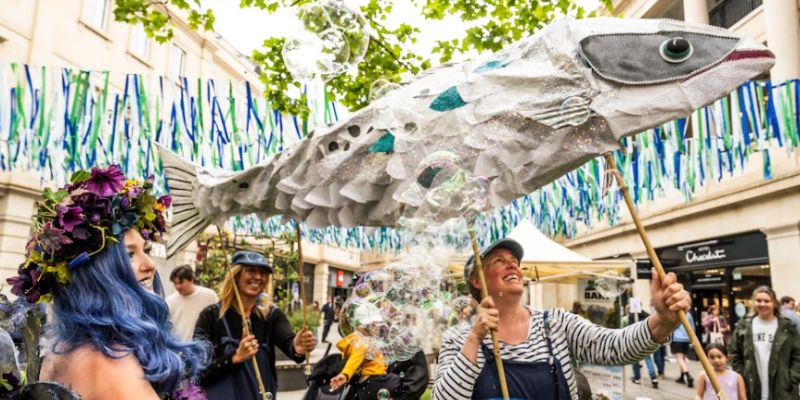
UWE Bristol is delighted to once again take part in the Festival of Nature, the UK’s largest celebration of the natural world. UWE staff, families, and friends are warmly invited to join us at Millennium Square, Bristol City Centre, on Saturday 13 and Sunday 14 June, where our researchers will be showcasing an inspiring range of activities in the UWE tent.
What UWE Researchers Are Bringing to the Festival
This year’s programme features a rich mix of hands‑on workshops and interactive demonstrations.
Clair Schwarz(CATE) will introduce visitors to the ecological and cultural significance of the wren, offering the chance to create clay wrens and paper masks while exploring themes of storytelling, identity, and tradition.
Dr Laura Morgan(CATE) and Laura Clarke(CATE) will run a bio screen‑printing workshop using colour derived from native UK trees, helping visitors understand where textile colour comes from, why it matters, and how material choices can support more sustainable futures.
Nature‑inspired innovation will also be on display as Lidia Badarnah(CATE) and Dr Sigita Zigure(CATE) demonstrate how biomimicry, bio‑design, and nature‑based solutions can help create greener, cooler, and more resilient places. Their activity invites visitors to take part in creative challenges that show how nature can guide imaginative problem‑solving.
Verity Jones (CHSS) will share Taking a Close Look at Microfibres, an activity linking UWE research on air quality with the Schools Under the Microscope project, offering a creative way to explore microfibres, clothing, and indoor air quality.
Kishwar Ali (CHSS) will showcase research on how plants respond to climate change, how biodiversity supports resilient ecosystems, and how we can design greener, climate‑smart cities and landscapes.
Families can also meet the Oak Tree Doctors, presented by Carrie Brady(CHSS) and her research group. This hands‑on activity introduces the importance of healthy trees and the challenges posed by Acute Oak Decline (AOD), a disease affecting native UK oak species involving bacteria, the Agrilus biguttatus beetle, and environmental stressors.
Freya Radford(CHSS) will help visitors understand what makes a healthy river system, the organisms that live there, the stressors they face, and how biodiversity and ecosystem structure influence a river’s ability to withstand pollution.
Exploring greener streets, Yarden Woolf(CHSS) will present GP4Streets, an interdisciplinary project showing how everyday streets can become healthier and more climate‑resilient through simple, community‑led action. The project brings together expertise from urban planning, landscape architecture, public health, environmental science, and air quality research.
Oluwadamilola Okeyoyin(CHSS) will offer Plants and You, an interactive activity inviting visitors to touch, smell, and investigate herbs and plant materials while discovering how plants, microbes, and everyday health are interconnected.
Emma Thomas (CHSS) will present The Rights of Rivers an activity grounded in interdisciplinary research that treats rivers as teachers, collaborators, and agents within environmental futures. This work challenges narratives that position rivers as passive victims of pollution, instead highlighting river agency and diverse forms of knowledge—scientific, sensory, cultural, ancestral, and experiential.
Credit: Ania Shrimpton
Beyond the UWE tent,Kat Corbett(CATE) will contribute to the ‘How‑To’ Talks Tent with an activity focused on the circular economy. Using materials from the Scrapstore, participants will experiment with creating multiple objects from the same set of resources—such as playdough, buttons, and milk bottle lids—highlighting the value of reuse, imagination, and resourcefulness.
About the Festival
The Festival of Nature is directed by the Natural History Consortium, a partnership of 14 regional and national organisations, including UWE Bristol, the BBC, and the National Trust, working together to engage people with the natural world through collaborative action.
The Wild Weekend at Bristol’s Millennium Square is the largest event in the Festival of Nature programme, attracting 10,000–15,000 visitors over the weekend.
Find the full programme of events at Festival of Nature Website and follow updates on social media at @festofnature.
Event Details
Saturday 13 June 2026: 10:00–18:00
Sunday 14 June 2026: 10:00–17:00
Location: Millennium Square, Bristol City Centre, BS1 5SZ
The Bristol 3D Medical Centre, Integrated Care, and the Power of Collaboration with UWE Bristol
Written by Professor Marc Griffiths
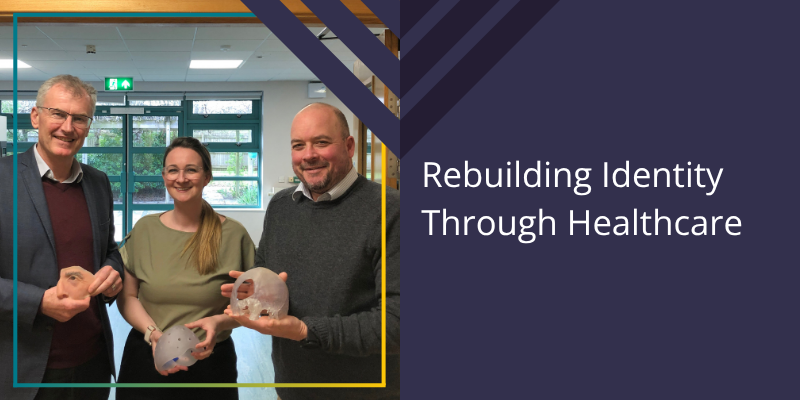
Healthcare can do more than treat illness; it can transform lives. Nowhere is this clearer than at the Bristol 3D Medical Centre, a pioneering NHS facility where innovation, compassion and collaboration come together, redefining reconstructive care through advanced digital technologies, artistry and patient‑centred practice.
As explored in Episode 14 of the Let’s Talk Health and Carepodcast, recorded on site at the Centre, the Bristol 3D Medical Centre is the first NHS facility in the UK to bring 3D scanning, digital modelling and 3D printing together under one roof. But what’s particularly striking is its significance extends well beyond technological firsts. It represents a new model of integrated, innovation‑led care that sits squarely within the ambitions of the Integrated Care Academy at UWE Bristol.
What Makes the Bristol 3D Medical Centre Different?
Located within a residential community rather than a traditional hospital environment, the Bristol 3D Medical Centre operates at the intersection of:
Advanced engineering and digital design
Clinical expertise and patient safety
Artistry, craftsmanship and empathy
Psychological rehabilitation and wellbeing
Under the leadership of Amy Davey, Lead Reconstructive Scientist and Lab Manager, the Centre delivers a fully integrated pathway, from ultra‑high‑resolution facial scanning and digital sculpting, through to 3D printing in biocompatible materials such as resin and PEEK, and finally to the meticulous hand‑finishing of bespoke prostheses.
Critically, the Centre treats patients from infancy through to older age, supporting individuals affected by cancer, trauma, congenital difference and complex surgical intervention. The outputs are not ‘off‑the‑shelf’ devices; they are deeply personalised interventions designed around function, appearance, identity and confidence.
Positive Outcomes
The outcomes associated with the work of the Bristol 3D Medical Centre are striking – and deeply human. Patients do not come simply to “replace” what has been lost. As highlighted in the podcast, the Centre plays a pivotal role in helping people rebuild confidence, regain capability in their day-to-day lives, and improve their overall quality of life.
This includes supporting individuals to re-enter social life and employment, feel more confident interacting with others, and navigate the psychological transition following trauma or cancer. The Centre also helps reduce the need for further invasive surgery and enables smoother, less distressing rehabilitation pathways.
From infants benefitting from non-invasive helmet therapy that avoids surgical risk, to adults rebuilding facial identity following cancer treatment, the Centre demonstrates how innovative technology can directly translate into better outcomes – emotionally, socially and clinically.
This focus on rehabilitation, therapy and long-term wellbeing aligns closely with integrated care principles, where success is defined not only by clinical intervention, but by lived experience and sustained outcomes.
Integrated Care in Action
The Bristol 3D Medical Centre exemplifies the core themes of the Integrated Care Academy at UWE Bristol, blending clinical science, engineering, design and digital skills to translate research and technology into real-world clinical impact. Located within a community-embedded environment, the Centre supports hospital services, community rehabilitation and regional pathways, demonstrating how innovation in practice can strengthen system integration and place-based care.
As discussed in the podcast, the Centre already supports surgical planning, reduces theatre time, and enables clinicians to take an innovation-first approach before patient operations. This system-level value highlights how innovation at the point of care can positively influence efficiency, safety and patient flow across the wider system.
Just a few miles away, UWE Bristol brings together complementary strengths in robotics, advanced and additive manufacturing, health technologies, psychology and workforce development. Existing collaborations with Bristol Robotics Laboratory, where Amy Davey acts as an industrial mentor to doctoral researchers, alongside wider links with engineering and health research communities, reflect a shared ambition to bridge the gap between research and real-world healthcare application.
Looking Ahead
Looking to the future, UWE Bristol is well placed to deepen and extend collaborative workstreams with the Bristol 3D Medical Centre through an innovation-first model. This includes co-developed research focused on applied clinical challenges, translational pathways from robotics, materials science and digital health into patient care, and new approaches to workforce education, training and medical device innovation.
As Amy Davey reflects in the podcast, the Centre itself has the space, ambition and openness to grow into a regional hub and national centre of excellence. UWE Bristol – through the Integrated Care Academy – is a natural partner in shaping that future.
The Bristol 3D Medical Centre is more than a technological success story. It shows what is possible when innovation is driven by patient need, supported by integrated systems and strengthened through collaboration with higher education.
As the Integrated Care Academy continues to champion new ways of working across health, care, technology and education, the Bristol 3D Medical Centre stands as both proof of concept and inspiration – showing how research and innovation, when embedded in care, can genuinely change lives.
How machine vision is unlocking new ways to understand and improve animal welfare
AWARE-AI, a new two-year research project led by the Centre for Machine Vision (CMV) at UWE Bristol, bringing together partners from academia and industry to explore how artificial intelligence can recognise and track animal emotions through visual behaviour analysis has been backed by over £1 million in funding, including support from UK Research and Innovation (UKRI).
With collaborators including SRUC, Zoetis, and Agsenze, AWARE-AI represents a major step forward in how technology can support animal welfare -both on farms and beyond.
A team effort pushing the boundaries of AI and animal welfare
At its core, AWARE-AI is a collaborative effort led by CMV researchers, combining expertise in machine vision, artificial intelligence and animal behaviour.
Together, the team is working to answer a complex challenge: how can we interpret non-verbal emotional signals in animals in a way that is reliable, scalable, and grounded in science?
The answer lies in rethinking how we understand behaviour as something richer than just isolated actions, something more dynamic, and more meaningful.
From pigs to cows: Can AI understand emotion across species?
One of the most ambitious aspects of the project is its cross-species approach.
Focusing on both pigs and cattle, researchers will explore whether AI models trained in one context can translate across different animals and environments. This has huge implications for scalability – moving from species-specific tools to systems that can work more broadly across agriculture and animal care.
If successful, this could lay the foundation for AI systems capable of recognising emotional states across a wide range of animals.
A new way of reading behaviour: Emotion as a ‘language’
AWARE-AI takes a fundamentally different approach to understanding animal behaviour.
Rather than looking at single indicators, such as ear position or movement in isolation, the project treats behaviour more like a language. Instead of words, animals express themselves through patterns of posture, movement, and interaction over time. Rather than relying on existing datasets, the project will work with animals in controlled settings to observe how emotional states change over time.
This shift allows AI to move beyond surface-level signals and begin to interpret behaviour in a more holistic, nuanced way – closer to how humans intuitively understand emotion.
Building on a strong foundation of innovation
The project builds on CMV’s strong track record of applying AI to real-world agricultural challenges. Previous innovations have included developing systems capable of detecting stress in animals, identifying individual livestock within herds, and enabling continuous welfare monitoring through visual data.
AWARE-AI takes this work a step further, shifting the focus from identifying signs of distress to understanding the full emotional landscape of animal behaviour.
Why it matters: Smarter systems, better welfare
The potential impact of this research is significant.
AI-powered monitoring tools could enable:
earlier detection of changes in animal wellbeing
more responsive and informed care
improved welfare standards across agriculture
Beyond farming, the implications extend to animal welfare science, conservation, and any setting where understanding animal behaviour is critical.
Looking ahead
Launching in April 2026 and running for 24 months, AWARE-AI is set to position UWE Bristol and the Centre for Machine Vision at the forefront of research into AI and animal emotion.
A wearable device developed through three years of research and testing is helping women manage hot flushes – demonstrating how innovation, entrepreneurship and collaboration can translate ideas into real-world impact.
For many women, hot flushes are one of the most disruptive symptoms of menopause – affecting sleep, confidence and day-to-day life. Yet, like many issues when it comes to women’s healthcare, practical solutions remain limited.
At UWE Bristol’s University Enterprise Zone, a start-up called MyCelsius has spent the past three years developing a wearable device designed to provide rapid cooling during hot flushes. The wrist-worn technology delivers targeted cooling within seconds, helping women manage symptoms in a discreet, non-medicinal way. The innovation combines engineering, user-centred design and real-world testing, supported by the innovation ecosystem across Launch Space, Future Space and the Bristol Robotics Laboratory.
For co-founders Max and Aonghus, the goal was clear: create a solution that genuinely improves women’s health and wellbeing.
The Problem
Hot flushes affect millions of women worldwide, yet the everyday impact of the symptom is often underestimated.
The idea behind MyCelsius began when co-founder Max experienced hot flushes linked to stress and anxiety. Early in the company’s journey, the founders joined an incubator programme with healthcare provider Bupa, where they gained deeper insight into the scale of the issue through conversations with women experiencing menopause.
What they heard was striking.
“Hot flushes can disrupt sleep, which leads to fatigue and insomnia,” explains Max. “That then affects concentration, productivity and mental wellbeing.”
For many women, existing solutions were limited.
While hormone replacement therapy (HRT) works well for some, it isn’t suitable or desirable for everyone. Outside of medical treatment, options were often limited to handheld fans or other temporary fixes.
“We realised there was a real gap,” Max says.
“Women deserve solutions that are effective, discreet and designed specifically with their needs in mind.”
The Innovation
Turning that idea into a viable product required extensive research and development.
Over nearly three years, the MyCelsius team conducted more than 1,000 tests and built hundreds of prototypes to refine the technology behind the device.
“We’ve worked with a community of hundreds of women going through menopause,” says co-founder Aonghus. “At every stage we tried to get prototypes onto people’s wrists so they could tell us how it should function, how it should look, and how it should feel.”
This user-centred design approach shaped every stage of development.
Early prototypes were large and bulky; they were functional, but impractical.
“We started with a big, ugly prototype strapped to someone’s wrist,” Aonghus laughs. “Even when it worked, people didn’t want to wear something that large.”
Over time, continuous testing and feedback helped the team refine the design, reducing the size while improving performance.
The result? A compact wearable device capable of delivering rapid cooling to the skin, helping to interrupt or reduce hot flushes. The system uses a miniaturised cooling mechanism designed to deliver significant temperature change within seconds.
Engineering that performance into such a small device was one of the biggest technical challenges.
“It’s easy to increase performance by making something bigger,” Max explains.
“The real challenge was maintaining that cooling power while keeping the device small, stylish and wearable.”
The Impact
Although still early in its journey, MyCelsius is already showing the potential of innovation driven by real user needs.
For the founders, the most rewarding part has been seeing the product make a difference in people’s lives.
“Designing something that genuinely helps people is what we’re most proud of,” says Aonghus.
“After years of development, seeing real users have a fantastic experience with it makes it all worthwhile.”
Voices from the Project
The journey from concept to market has not been straightforward.
“When we started, we genuinely didn’t know if the system was even feasible,” Max says.
Three and a half years later, the device has evolved dramatically.
“We started with something that looked like a prison tag. Now we have a stylish wearable product that’s helping people manage hot flushes.”
For the team, however, this is just the beginning.
“It feels too early to say we’ve achieved everything,” Max reflects. “You climb one mountain and then you see the next one behind it.”
Innovation at UWE Bristol
The MyCelsius journey has been closely connected to UWE Bristol’s innovation ecosystem.
The company has been based within Launch Space, part of the University Enterprise Zone, with additional support from Future Space and the Bristol Robotics Laboratory (BRL).
These environments provide access to workspaces, specialist facilities, technical expertise and business networks that help early-stage companies accelerate their development.
“We’ve been incredibly fortunate to be part of Launch Space, Future Space and BRL,” says Aonghus. “At Launch Space we have access to offices, labs and workshops. At BRL we can learn from experts in electronics and robotics. And Future Space connects us with an incredible network that helps us solve challenges.”
Max agrees the support has been transformative.
“It’s given us the infrastructure and foundation we needed to build the company.”
What’s Next?
Having launched the product recently, the next goal is simple: reach more people.
“We want to get MyCelsius onto as many wrists as possible,” says Max.
As more users adopt the technology, the team plans to continue gathering feedback and refining the product – ensuring the innovation continues to evolve alongside the needs of the people it serves.
For the founders, one milestone stands out.
“The moment I’m looking forward to,” Max says, “is seeing someone wearing MyCelsius out in the street.”
Most of us picture blood donation as simple: book an appointment, donate, have a biscuit, and your blood becomes someone else’s lifeline. But as Episode 13 of the Let’s Talk Health and Care podcast reveals, the reality is far more complex and far more fragile.
In The Fragile Lifeline: Rethinking How We Make and Move Blood, hosts Marc Griffiths and Peter Brindle are joined by Professor Wendy Phillips and Dr Helen Sanderson to explore a question that sits at the heart of healthcare resilience:
What if the future of blood supply isn’t about bigger donations but smarter manufacturing?
Why the blood supply chain is more vulnerable than we realise
Wendy and Helen unpack the hidden complexity behind every blood transfusion. Blood isn’t a single product: it’s separated into components, tested, tracked, and cross-matched with rigorous checkpoints at every stage. And because blood products are highly temperature-sensitive, even a small break in the “cold chain” can mean it becomes unusable.
The episode also highlights how disruption can ripple quickly across the system. From seasonal drops in donor numbers to extreme heat impacting storage conditions, the supply chain is under constant pressure. Wendy points to the seriousness of these risks by referencing an incident where a cyberattack on a third-party supplier had significant knock-on impacts, contributing to shortages and raising concerns about how close the system can come to critical levels.
The message is clear: blood supply is a lifeline but it’s a lifeline with weak points.
Making blood closer to where it’s needed
The conversation then shifts to the future: redistributed manufacturing – producing critical healthcare products closer to the point of need, at the scale required, when they’re required.
Dr Sanderson draws on work with defence partners to explain the logistical reality: blood products often need frequent resupply, have short shelf lives, and rely on refrigerated storage which can lead to waste even as teams must stay prepared for worst-case scenarios.
The innovation isn’t only about the blood itself, either. The episode surfaces a key (often overlooked) point: packaging is part of resilience. If essential medical packaging is sourced from a single nation or relies on fragile materials like glass, that’s another pressure point in an already delicate system.
What innovations are on the horizon?
This episode offers a genuinely fascinating glimpse of what “next” could look like and what might arrive sooner than people expect.
Among the approaches discussed:
Spray-dried plasma, currently being tested and scaled, as a more resilient alternative manufacturing route
“Walking blood banks” in deployed settings, which could provide rapid access to blood, though regulatory and ethical considerations remain
Freeze-dried components, which could reduce reliance on cold storage and simplify transport
Lab-grown red blood cells, still some way off at scale, but increasingly promising for targeted use (such as rare blood disorders)
Steps toward more universal blood, reducing inequalities caused by shortages in blood types needed by specific communities
Importantly, Wendy and Helen emphasise that innovation isn’t just “high-tech science” – it also requires the right systems around it: reliable power, robust equipment, consistent standards, workable regulation, and a skilled workforce.
UWE Bristol’s role: connecting research, regulation and real-world impact
What stands out is how strongly this work reflects UWE Bristol’s strengths: research that crosses disciplines, responds to real-world challenges, and actively shapes practice.
Wendy discusses how the Redistributed Manufacturing in Healthcare network, originally launched before COVID-19, gained new urgency as the pandemic exposed how quickly global supply chains can fail and how vital it is to secure access to critical health products. The team’s work has contributed to shaping thinking in the regulatory space around point-of-care and decentralised manufacturing – an essential step in turning innovation into safe, usable healthcare solutions.
The episode also highlights the role of workforce development, including the way universities and industry partners can collaborate to build the skills needed for future healthcare manufacturing and supply.
Listen now
If you’re interested in the future of healthcare resilience or you’ve ever wondered what really happens after a donation – this episode is worth your time.
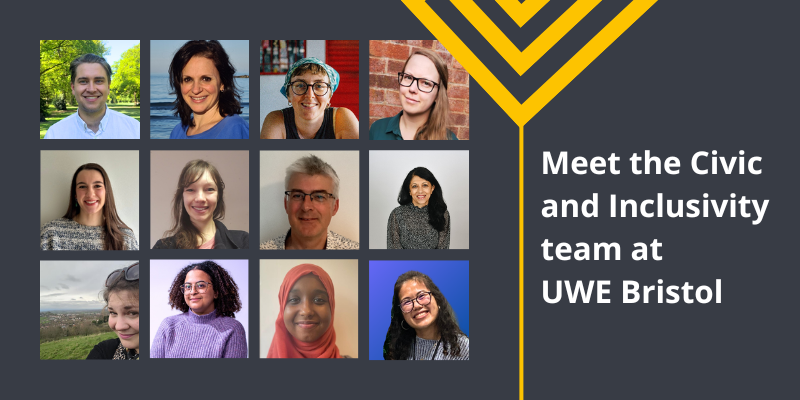
We are the Civic and Inclusivity team at UWE Bristol. Our work is shaped by a sector wide understanding that universities play a vital role in contributing to the social, economic, and environmental wellbeing of the places they serve. Our team looks to develop new opportunities for charities, communities and public sector partners. Sat within Research and External Engagement (REE) we enable these organisations to navigate UWE Bristol and all it has to offer, helping them seek out opportunities and find partnerships within the university. We work to ensure that UWE Bristol’s civic activity is purposeful, measurable, and rooted in authentic, proactive relationships with its surrounding communities.
At UWE Bristol, meaningful civic engagement is inseparable from our commitment to equity, antiracism and inclusion. The University has an Anti-Racism Strategy that acknowledges the deep-rooted inequities faced by Global Majority students and staff, outlining a clear need for accountable, institution wide action to dismantle systemic racism. Alongside this, UWE Bristol’s broader equality, diversity and inclusion (EDI) commitments prioritise creating inclusive cultures, amplifying staff and student voice, and ensuring that discrimination, bullying, and harassment are actively challenged across the institution. These commitments shape how the Civic and Inclusivity team partners with communities, supports students and works to change practice across the institution.
Bringing these elements together, the Civic and Inclusivity team works across the University. We support colleagues, students, and external partners in co‑creating initiatives that strengthen community connection, widen participation, and ensure that UWE Bristol’s civic mission contributes to positive local change. Our goal is to ensure that UWE Bristol’s role as an anchor institution is lived out in ways that benefit local people, empower marginalised voices, and enrich the University’s relationship with the communities it serves.
I’m Allan, I lead the Civic and Inclusivity team at UWE Bristol. Having worked in strategic and community-based partnerships for a number of years I lead the work to coordinate the University’s engagement with local partners across the region. I support academics to incorporate local partners into their research, meet community and charity partners to understand their needs and try to find ways to support them within the University, and work strategically across the institution to shift the ways we operate to become more inclusive and impactful for communities across the region.
I’m the Civic Development Manager at UWE Bristol, where I lead the Civic and Community Engagement Team enhancing students’ experience through in curriculum and extra-curricular activities. I work closely with academic colleagues to embed meaningful, community engaged learning in the curriculum.
I’m passionate about building purposeful, long-term partnerships with Voluntary, Community, or Social Enterprise (VCSE) organisations across Bristol and the wider region. My role focuses on connecting these partners with the university’s research, expertise, talent, and facilities, creating opportunities that enrich student learning, support community priorities, and strengthen UWE Bristol’s civic mission. Connect with me if you’re looking to develop collaborative projects, community‑engaged learning opportunities, or research partnerships that create tangible benefits for students, staff and local communities.
I’m Georgia, Civic and Community Engagement Coordinator at UWE Bristol. I focus on building mutually beneficial collaborations between charities, civic organisations, and our students. I coordinate initiatives that respond to the ambitions of our partners while giving students opportunities to share their skills, support local communities, and drive positive change.
I’m Kate, the Project Zulu Coordinator at UWE Bristol. I work closely with our partner schools in South Africa and colleagues across the university to support educational and community projects shaped by local priorities. My role includes coordinating overseas opportunities for UWE Bristol students and academics, supporting international partnerships and leading on the biennial Project Zulu Choir tours. I’m committed to building relationships that strengthen education and benefit communities in both the UK and South Africa.
I’m Samantha, a Data Analyst within the Civic and Inclusivity Team, focusing on evaluating the impact of UWE Bristol’s civic work across the City of Bristol. As part of my role, I work part of the time in the City Office at Bristol City Council, analysing the impact of the One City Plan and its approach. Alongside my skills in data analysis and insights, I bring extensive experience in public engagement and co design, ensuring that research and data collection are grounded in genuine collaboration and deliver meaningful, actionable insights
I’m Alicia, the Civic and Community Engagement Officer at UWE Bristol. I work alongside Francesca and Georgia to design, promote, and deliver a diverse range of volunteering opportunities that enhance UWE Bristol students’ employability, enrich their university experience, and support local charities and community organisations in achieving their objectives.
I lead the EDI projects team which aims to improve the experience and outcomes for students who may experience greater barriers to success, supporting UWE Bristol’s Access and Participation Plan and Anti-Racism Strategy. Many of these projects are delivered with partners within or outside of UWE Bristol, providing practice-based opportunities which help to ensure that all our students are able to succeed and thrive.
I’m Jaya the EDI Projects Co-ordinator delivering positive action programmes UWE Equity and UWE Futures supporting Global Majority students to thrive and succeed through activities such as coaching sessions, a mentoring programme and work experience opportunities.
I’m Steffie, EDI Projects Coordinator. I have led cross-university student positive action projects here at UWE Bristol for years, driving institutional change, inclusion, accessibility, and improvements in student outcomes for diverse student groups as aligned with our regulatory commitments to the Office for Students (OfS.) I’m passionate about social justice and demonstrating impact through robust evaluation. Connect with me if you’re looking for specialist knowledge and ideas about designing targeted interventions and projects that remove barriers to success.
I’m Touka Mostafa an EDI Projects Coordinator. I deliver positive action programmes such as The Equity Programme which supports Global Majority Students in thriving and achieving positive graduate outcomes through bespoke coaching sessions, skills workshops and mentoring. I also deliver and implement our Anti-Racism Strategy across REE by developing and running Anti Racist in Practice workshops.
I’m Ilwad, and I work as a Graduate Assistant on the UWE Futures Programme at UWE Bristol, assisting administration, recruitment, data and marketing. I help improve processes in these areas to increase student engagement, expand partnerships, help Global Majority students access more opportunities during their university life.
Hi, I’m Equity’s Social Media Intern, I build digital visibility for student talent and industry partnerships. Through strategic UWE Equity LinkedIn growth and storytelling, I help amplify access to opportunity and showcase programme impact.
Yan Kay, Social Media Intern
CASE STUDY One: UWE Futures Programme Providing Students with Transformative Professional Experience
UWE Bristol has ran the UWE Futures programme for three years. 23 final-year students from the College of Business and Law and School of Computing and Creative Technologies took part in the most recent week-long work experience placement across leading law firms and UWE Bristol within their professional services teams in the region.
Hosted by Bevan Brittan, Burges Salmon, Clarke Willmott, Foot Anstey, Osborne Clarke, RPC, and UWE Finance, the programme offered students the opportunity to gain invaluable industry insight, engage directly with professionals, and develop a deeper understanding of workplace culture and expectations. Students were also matched with a Mentor to provide advice and guidance until the end of the academic year.
For many of the students, this was their first experience in a professional working environment. While initially daunting, many found that the opportunity provided real-world exposure that helped them to clarify their career aspirations and next steps following graduation.
For more information about UWE Futures or to explore partnership opportunities, please contact: equity@uwe.ac.uk
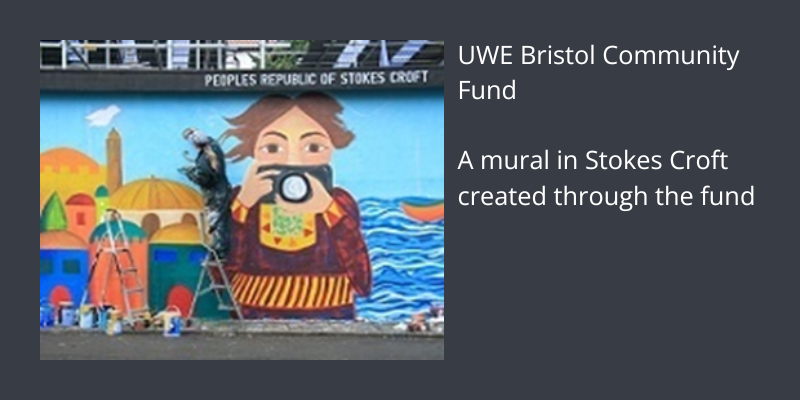
CASE STUDY 2 – UWE Bristol Community Fund, supporting students and staff to support our region’s communities
In partnership with The Quartet foundation, the Civic and Inclusivity team coordinate and distribute the UWE Bristol Community Fund which awards grants of up to £3,000 for community partnership projects.
This initiative aims to support projects which help to build relationships between staff, students and local communities. We are always looking to: develop opportunities for students to volunteer in the local community; enhance teamwork, communication and project management skills; enhance student learning through practical, community-based projects; deliver significant impact for the West of England region.
Applications must be led by a current UWE Bristol student or staff member and identify a lead community partner. If you have a good idea and are seeking a suitable community partner, the UWE Bristol Fund and civic engagement team can help with this. The project must benefit communities in the region’s four local authorities – Bristol, Bath and Northeast Somerset, North Somerset and South Gloucestershire. The fund give priority to projects that focus on schools and education, sustainability, stronger communities or health and wellbeing.
To learn more about the fund, to submit an expression of interest form or to get in touch with the team, please visit the UWE Bristol Community Fund webpages.
If you’d like to learn more about any of the work highlighted above, explore potential partnerships, or discuss how we can support your organisation or community, we’d love to hear from you. The Civic and Inclusivity team is here to help you navigate opportunities at UWE Bristol, connect with the right people, and co‑create initiatives that make a meaningful difference across our region.
Please get in touch with one of us or visit our webpages to start a conversation. We look forward to working with you.
Knowledge Transfer Partnerships (KTPs) are one of the UK’s best-kept secrets in innovation, quietly transforming businesses for decades.
For over 50 years, they’ve helped companies turn ideas into practical solutions with real-world impact, creating more than 14,000 projects and boosting the economy by £2.3 billion.
KTPs continue to deliver not only because they provide access to funding, but because they embed expertise, build capability, and deliver measurable change. In an environment where companies are under constant pressure to keep evolving, KTP is the initiative that consistently delivers the tools to do exactly that.
Why KTPs work
Unlike traditional funding schemes, KTPs also prioritise delivering a partnership and provide ongoing support. With an 87% success rate, this easily makes them one of the UK’s most effective innovation programmes.
At the centre of every KTP is a unique three-way collaboration between:
A business looking to innovate and grow.
An academic institution with cutting-edge expertise.
A graduate associate who brings fresh skills and energy.
This isn’t just a theory. Associates work full-time in the company, supported by academic experts and an Innovate UK Knowledge Transfer Adviser. It’s a system designed to deliver projects and build lasting capabilities.
Why do UWE Bristol do them so well?
UWE Bristol’s dedicated KTP Team has supported over 100 successful projects in the last 20 years. Our academics bring strengths across disciplines from robotics to marketing delivering projects that advance innovation, sustainability goals, community impact, and regionaldevelopment.
This expertise is supported by state-of-the-art facilities across our three campuses, with £300 million invested in the last five years to create spaces that inspire collaboration and creativity.
UWE Bristol’s infrastructure and dedicated KTP Team support the full project journey delivering better outcomes, stronger partnerships, and long-term impact.
Proof is in the results
A recent example is UWE Bristol’s award-winning African Agriculture KTP with Taro Agric and Obafemi Awolowo University. The project developed Internet of Things (IoT) enabled devices and smart dashboards to support the digital transformation of poultry farms, improving operational efficiency and animal welfare. Early outcomes showed potential for improved business performance and enhanced digital agriculture skills among more than 100 farming participants from various local communities. The KTP highlights how innovation can drive more sustainable agricultural practices.
Or look at Viper Innovations. Recognising the potential beyond subsea oil and gas for their cable‑monitoring technology, CableGuardian®, the company used a KTP to identify new opportunities in rail. The partnership embedded new innovation practices and aligned CableGuardian® with an emerging rail safety standard, resulting in successful trials, strong stakeholder buy-in and growing international interest.
In just 18 months, Viper reshaped its market strategy, strengthened product development, and laid the foundation for global expansion. Building on the success of this initial KTP, Viper later undertook a second KTP focused on generating greater insight from live data and enhancing the CableGuardian® service offering, which contributed to strengthening the company’s commercial proposition.
The impact of the initial KTP is already clear through UK installations, new strategic partnerships in the rail sector, and embedded capabilities that enhance product design and strategic planning, delivering real benefits for customers, including fewer delays, reduced penalties, and lower maintenance costs.
The secret to success
Let’s be clear, not every partnership is right for a KTP. KTPs are most successful when all of the partners are truly aligned. If a business brings a clear strategic need, academics offer relevant expertise, and the associate drives delivery, innovation will follow. With open communication and commitment from all partners, the outcome is long-term, transformational impact.
Why businesses should get involved
With Innovate UK covering up to 67% of project costs, the financial risk is significantly reduced, giving the business freedom to reap the other rewards of the programme. Those rewards are substantial. Remember: You’re not only unlocking funding for a project; you’re embedding expertise, creating intellectual property, and opening doors to new markets. In a world where innovation drives competitiveness, KTPs offer a practical route to staying ahead.
KTPs aren’t just another government programme. They’re the UK’s best-kept secret for driving innovation, building resilience, and future-proofing businesses. The evidence and outcomes are clear. If you have a project in mind, contact UWE Bristol’s KTP Team:
Leila Powell is a Community Engagement Researcher working on an Accelerated Knowledge Transfer(AKT) project with Via, tackling one of society’s most complex challenges: drug and alcohol dependency and its wider impacts.
Inspired by the Knowledge Transfer Partnership(KTP) model, AKT creates short-term collaborations between businesses and UK knowledge bases to accelerate innovation over two to four months. Co-funded by Innovate UK, this initiative aims to deliver rapid, high-impact solutions.
Via’sInnovation & Research Unit (IRU) ensures the charity delivers high-quality, evidence-based support by partnering with organisations like UWE Bristol to design and evaluate interventions that meet real needs.
Leila’s AKT project takes a distinctive approach by examining how individuals affected by drugs and alcohol engage with community resources and identifying what helps or hinders that connection. Supported by the Centre for Public Health and Wellbeing at UWE Bristol, the team aims to uncover key factors influencing engagement and develop a practical tool that empowers service users, strengthens pathways to holistic support, and overcomes potential barriers.
The KTP team at UWE Bristol recently caught up with Leila to hear about her AKT experience so far:
About Leila
My academic background includes a BSc (Hons) in Biomedical Sciences and an MSc in Public Health, which have shaped my enthusiasm for improving health outcomes through evidence-based approaches. Outside of work and academics, I enjoy playing volleyball and have previously been involved in volunteer work at the university, which strengthened my commitment to community-focused initiatives.
What attracted you to the position?
I was writing my MSc dissertation and working as a part-time multidisciplinary intern between Bristol Business School and the Centre for Public Health and Wellbeing (CPHWB) when I found out about this opportunity. Dr Amy Beardmore – the project lead, and my MSc programme lead – encouraged me to apply, which was incredibly validating as a soon-to-be graduate. Being able to implement my newfound skillset in a meaningful way before my graduation ceremony has felt like such a timely opportunity.
The goals of the project have resonated with me. Helping people is a reason I pursued my BSc in Biomedical Sciences in the first place, after seeing what occurred during the pandemic and how people were disproportionately affected. Looking ahead, I aspire to pursue a mixed-methods, multidisciplinary PhD with the CPHWB, and this role is the perfect stepping stone. These desires, along with my value of problem-solving, align with this AKT project.
What are you most looking forward to?
I’m excited about:
Contributing to a collaboration between UWE and Via.
Helping to build a (hopefully) long-term relationship between Via and UWE, where future students can continue this research and develop the project further.
Achieving milestones that will make a tangible difference for service users.
Gaining personal and professional development opportunities that will shape my future career.
How is the partnership between UWE Bristol and the company working?
The collaboration between UWE and Via has been positive and productive. We’ve had one planning meeting in London, and recently held our first workshop, which was co-designed by both teams. This session was incredibly insightful, as it allowed us to hear first-hand experiences from individuals, giving us a deeper understanding of the challenges and opportunities in accessing community assets.
Having both academic and community support ensures that our research is practical, innovative, and grounded in real-world needs.
What are the major benefits/support available from UWE Bristol?
Working with UWE offers:
Mentorship and guidance from academic supervisors: being able to work at a hot-desk office space in the CPHWB means I’m physically embedded within the team, and able to chat to staff for support or advice. This also provides frequent opportunities to discuss future career or PhD aspects.
Support from the KTP office: they are amazing with my (many) questions!
Access to expertise and resources, including staff facilities (yes, even the coffee machines!)
What do you enjoy most about your job?
I love the learning opportunities and the collaborative workplace culture. Not being able to go a day without having a conversation with at least one member of staff is very lovely. My past lecturers and supervisors are so keen to see me succeed, so it’s equitable to having positive affirmations thrown my way every day. Little things, like the team Christmas dinner that I was invited to before even starting my position, make the experience more special. Most importantly, I feel a sense of purpose, knowing that my work contributes to broader public health goals.
Conclusion and reflections
I’m enthusiastic and committed to making the most of this opportunity. The AKT partnership represents innovation, sustainability and early career development, all of which are crucial for shaping the future of public health research. Looking ahead, I’m excited about the potential impact of this project and the personal growth it will bring, not just for me, but for future students who may continue this work.