

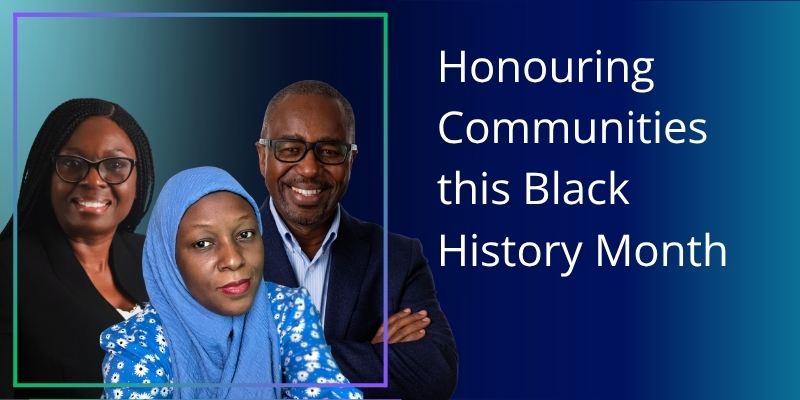
For Black History Month this year’s theme, Honouring Communities, recognises those whose contributions create meaningful change. Newly promoted UWE Bristol professors Timkuma Edafioghor, Mwidimi Ndosi and Faatihah Niyi-Odumosu, share how their work connects academic excellence with community knowledge to improve health outcomes, strengthen organisations and create opportunities for others.
Timkuma Edafioghor
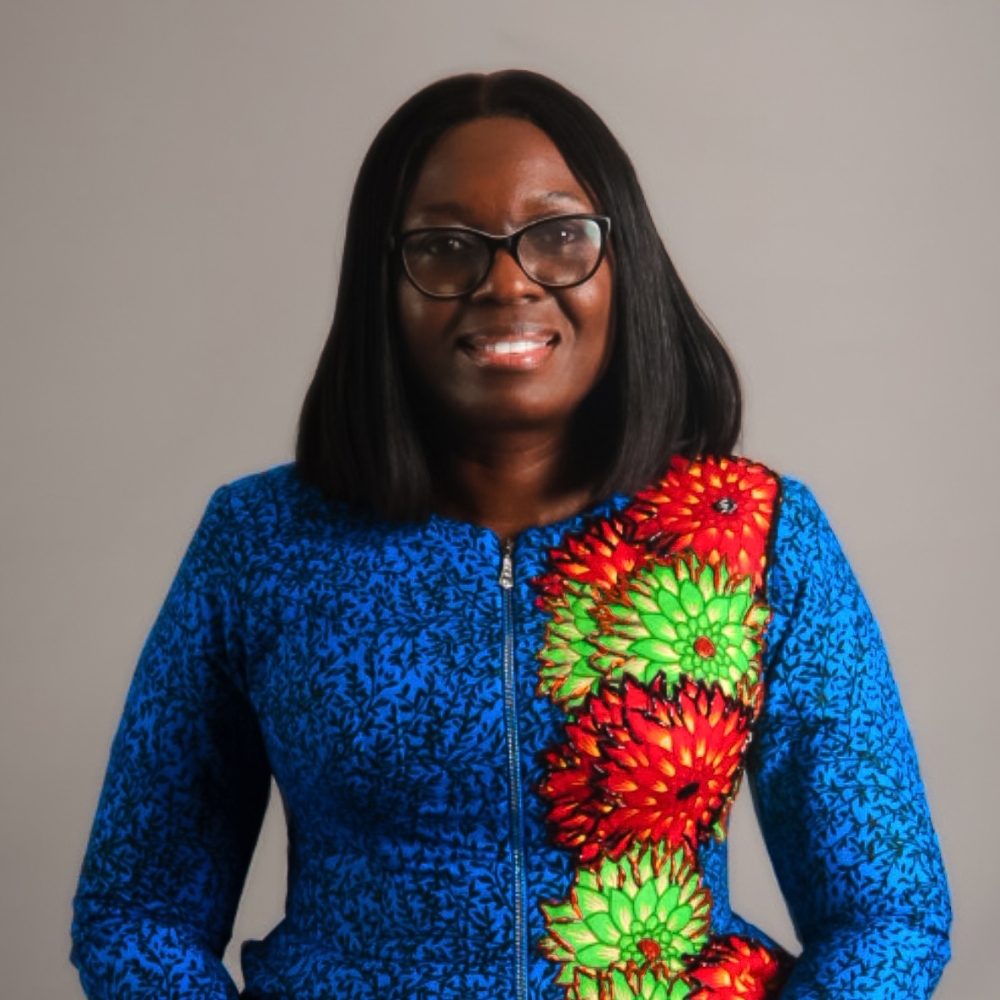
Strengthening enterprises through people and practice
Timkuma Edafioghor is an Associate Professor in Human Resource Management at UWE Bristol, with a particular interest in organisational resilience and how small and medium-sized businesses survive, adapt and grow through challenging times.
Published in leading international journals, including Human Resource Management and Human Resource Management Journal, her research explores how people and HR practices build organisational resilience.
Additionally, Tinkuma leads a project funded by the Equality, Diversity and Inclusion Caucus (EDICa), with UKRI and British Academy support through Heriot-Watt University, examining how hybrid working affects Black women academics’ productivity, visibility and career progression. She also founded the Black Business Leadership & Growth Partnership for the West of England, which gives Black-led small businesses practical, research-informed support in leadership, resilience and growth. For Bristol’s Black Small Business Show, Tinkuma delivered the webinar “Understanding Business Resilience: Why Some Businesses Survive and Others Don’t”, sharing practical insights with local Black business owners. Her guiding principle:
For me, research should not just sit in journals. It should make a real difference to people, organisations and communities.
Mentoring, faith and community support
Through the Network for Black Women Leaders (NBWL) and the alta mentoring platform, Tinkuma supports women’s leadership and career progression. As an alta steering-group member, she helps expand the platform across aviation, aerospace and space. She also co-founded the Safe Space Initiative for Black Women in Higher Education, where Black women in academia can connect, share experiences and support one another, with plans to reach more people across the sector.
In Bristol, Tinkuma serves the Redeemed Christian Church of God, Glory of God Parish, as Assistant Pastor, Sunday School teacher and Minister in Charge of Evangelism, Community Outreach and house caring fellowships. She mentors young people and emerging church leaders, and coordinates support for vulnerable community members through activities including coffee mornings and food donations. She also helps international students adapt to UK study through informal sessions on the academic system, essay writing, critical thinking and note-taking, recognising their varied educational backgrounds. Across her research, mentoring, church and community work, she creates opportunities and helps others thrive.
I am guided by the African philosophy of Ubuntu, the idea that our humanity is connected and that when we lift others, we all rise together.
Mwidimi Ndosi
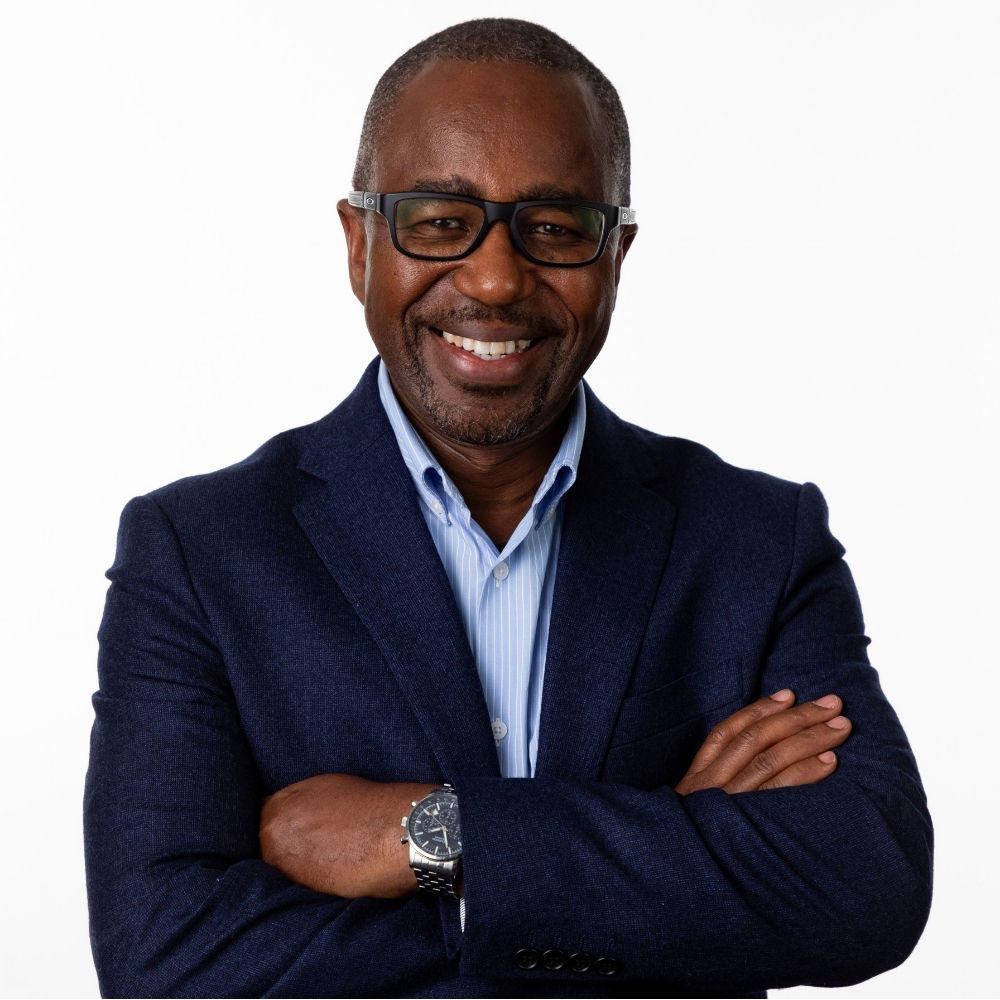
Putting patient priorities at the heart of care
As Professor of Rheumatology and Health Outcomes, Mwidimi Ndosi connects clinical research with patients’ priorities. He develops and validates patient-reported outcome measures and supports self-management for people with long-term rheumatic and musculoskeletal conditions.
I am interested in ensuring that patients’ perspectives are incorporated into the development and evaluation of healthcare interventions, and that research findings can be translated into meaningful improvements in clinical practice and outcomes that matter to patients.
Mwdimi recently completed a four-year term as Chair of the Health Professionals Committee of the European Alliance of Associations for Rheumatology, contributing to European work on education, standards of care and advocacy. The role reinforced his commitment to multidisciplinary working and to ensuring accessible, evidence-based and person-centred care for people living with rheumatic and musculoskeletal conditions.
Opening doors through knowledge and representation
For Mwdimi, honouring community means contributing through service, mentorship and making health knowledge accessible beyond academia. He supports rheumatology education and capacity-building where specialist services and learning opportunities are limited. In Tanzania, he helps educate health professionals, provides information to patient groups and, with local colleagues, highlights the need for stronger professional education, patient support, research and rheumatology services. This work reduces barriers to knowledge and builds sustainable local capacity.
For me, academic citizenship means using my experience and position to help create opportunities for others.
Mwidimi also shares research and health information through mainstream and digital media, including BBC Swahili, helping to make evidence more accessible to diverse audiences. In addition he volunteers with parkrun to encourage physical activity and wellbeing across different ages and abilities. Within higher education and research, he mentors early-career researchers, clinicians and aspiring academics, helping them gain the confidence, skills and opportunities to progress. His own path from nursing to professorship was not straightforward. As a Black academic and nurse, he has seen the value of representation, opportunity and encouragement, strengthening his commitment to those underrepresented in senior roles.
Faatihah Niyi-Odumosu
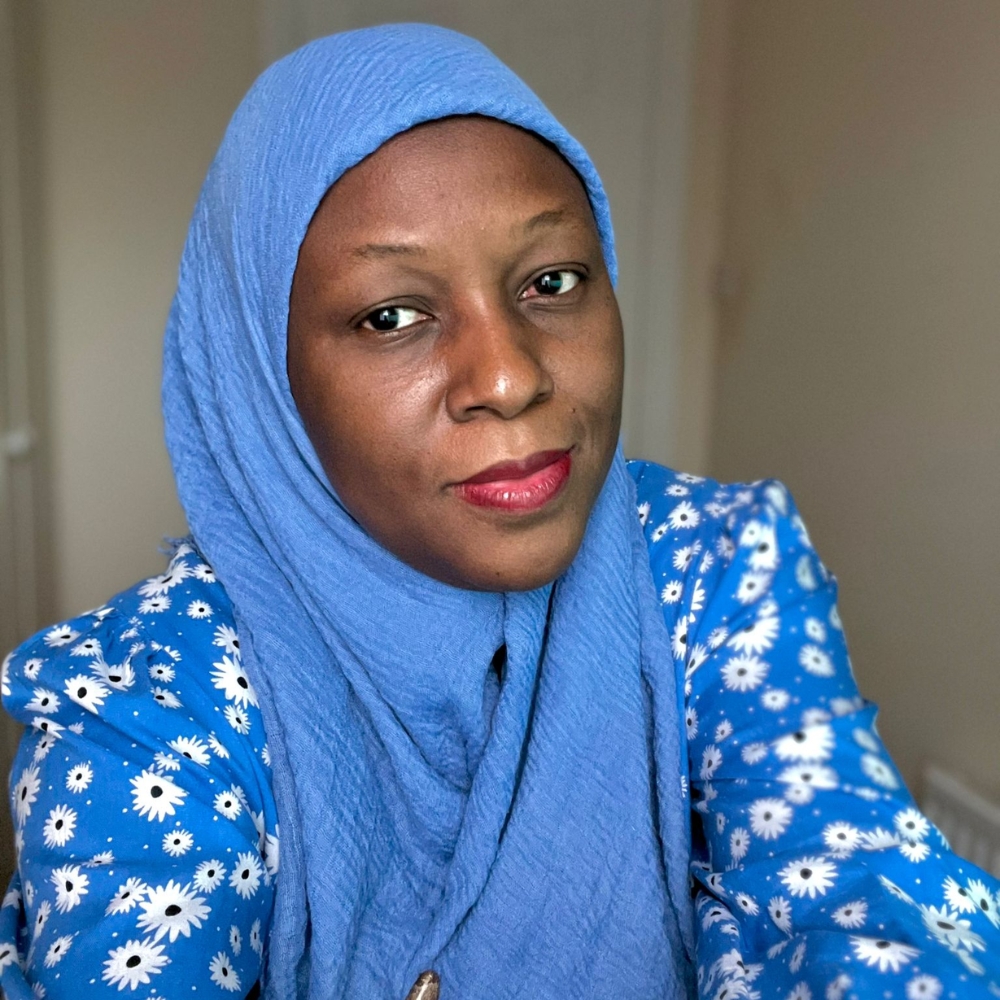
Expanding participation in active, healthy lives
Faatihah Niyi-Odumosu is a medical doctor and Professor of Physical Activity, Ageing and Community Health at UWE Bristol, as well as a Distinguished Professor of Public Health at MIVA University, Nigeria.
Her research develops physical activity interventions with underserved groups, including older adults, global majority Black and Asian communities, Muslim women and people with long-term conditions such as chronic kidney disease (CKD), in an effort to tackle health inequalities.
My work is participatory and co-designed, and it advocates for greater inclusion in health research and clinical trials.
Faatihah has secured about £3 million in Research and Knowledge Exchange funding from the Medical Research Council, Medical Research Foundation and Innovate UK. Her projects include Fitbees, a digital service helping South Asian older adults and adults with learning difficulties stay active and connected, and Family Backyard Cricket, which promotes intergenerational activity and social cohesion in South Asian and Black families. She is currently working on C2REST, a longitudinal study of the effects of climate change and air pollution on respiratory health in urban and rural Nigeria. Faatihah is also Associate Editor of the Journal of Physical Activity and Health and Secretary of the low- and middle-income country International Society of Physical Activity and Health Research Counciln (LMICISPAH).
From evidence to everyday impact
Faatihah founded Ageing Lifestyle in Blacks and Asians (ALIBSA), a global knowledge-exchange and research-engagement programme that improves health literacy and confidence in accessing services among ageing Black and Asian communities. Since 2023, it has offered free monthly webinars on ageing and healthy living across several continents.
She also established FaithFit, which equips multifaith leaders to promote physical activity, and the Renal Health Initiative, which supports CKD awareness, prevention and treatment through faith-led outreach in Nigeria, where one in ten adults is affected. In 2025, the initiative screened more than 200 people and referred 30 for further investigation. She later led the CoolKidney workshop with stakeholders and outdoor workers on heat stress and kidney health, alongside a related UK study funded through BNSSG ICB research capability funding with UWE Bristol colleagues in Architecture and Built Environment and Engineering.
I believe research has its greatest value when it improves lives, so much of my work extends beyond the university into communities locally and globally.
Mentoring is central to Faatihah’s work through the Royal Society Career Development Fellowship, Commonwealth Scholarship Commission and UWE Bristol Women Researchers’ Mentoring Scheme. She hosted a grant-writing workshop for Breaking Barriers for Black Academia and runs “Dragons’ Den: Nurturing Research”, where early-career researchers in the Global South pitch ideas and receive feedback and mentorship through her ISPAH role. At UWE Bristol, she co-leads the Black Professoriate Group, coordinates the Africa Staff Network and serves as EDI co-lead for the School of Applied Sciences. Her work has received the UWE Bristol Community Impact Staff Award and Black Hall of Fame Award.