Dr Owen Cranshaw, Research Fellow in Green Infrastructure
In this blog, we share some of our pilot research into the social and technical viability of installing ground source heat pumps in cemeteries, to generate energy for community buildings. For many, death remains a taboo topic, so this might be a startling proposition, so we will first explain our motivation and interest in the topic.
Unlike other spaces such as parks, which may be upgraded or redeveloped, burial grounds are unlikely to be disturbed over the long term, reducing the risk of damage to buried pipework and supporting the viability of the infrastructure investment. By absorbing solar heat, memorials may warm the surrounding ground, improving heat pump performance compared with grassland. However, cemeteries also currently play many roles in cities, offering spaces for recreation and nature, as well as burial and remembrance.
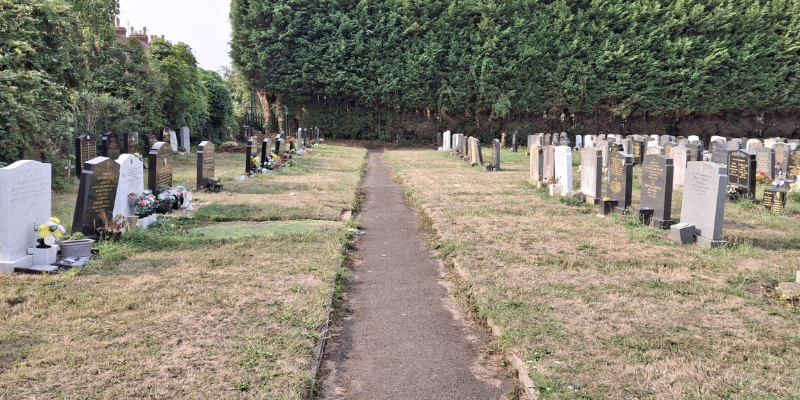
The research has three main parts. First, the capacity of a local cemetery, Shirehampton, Bristol was measured for hypothetical pipework installation. This involved looking at which paths would be suitable for pipework installation, and identifying any areas of greenspace not used for burial. Any proposals coming from this would not involve disturbing buried remains. Our ‘on the ground’ measurements at Shirehampton, using a measurement wheel, totalled 3,034-metres of straight path lines. Tracing the paths by eye in ArcGIS Pro gave an estimated area for the identified routes of 2,683-m², or around 13% of the cemetery’s total area (20,633-m²). Based on published performance a GSHP system installed along these paths could deliver in the region of 150,000–160,00 kWh of heat per year, roughly equivalent to the annual heating energy for 12 to 18 average UK homes, or a substantial contribution to a nearby community building such as a primary school.
Second, scaling this up nationally, we calculated the overall amount of cemetery land in England and Wales.
Our GIS analysis identified 2,255 cemeteries and burial groups across England and Wales, covering a combined area of 8,347 hectares (roughly equivalent to 12,000 football pitches). We then calculated how much of this land falls within practical distance of the kinds of community buildings that might benefit from locally-generated heat: places of worship, community halls and centres, schools, and libraries.
Community building type
Percentage (%) of cemeteries within 250m
Total number of sites
Site Hectares (multiply by 10,000 for m2)
Place of worship
70%
1,578
6,800
School (primary or secondary)
42%
947
Primary: 3518 Secondary: 1161
Community hall or centre
28%
631
2,717
Library
6%
135
422
The results are striking, particularly for schools. Forty-two percent of England’s cemeteries lie within 250 metres, the maximum practical reach of a ground-loop pipe network. As you would expect, places of worship are even more consistently co-located with cemeteries (70% within 250-metres), reflecting the deep historical relationship between churches and their adjacent burial grounds. Community halls and libraries are less commonly in close proximity however, overall, this suggests wider opportunities to explore cemetery-based geothermal heating.
Third, we explored the social and cultural acceptance of this idea. Regardless of how technically feasible the proposition may be, its social acceptability would be key to progressing this. A core part of this was a short survey, distributed primarily via the local community group, Shirehampton Action with whom we had discussed the project.
The survey received over 100 responses. On asking about the acceptability of installing heat pumps, views were strongly divided. Around 60% of respondents considered GSHP installation in cemeteries to be acceptable to some degree, while 29% felt strongly that it was wholly inappropriate. Installation was viewed as slightly more acceptable in a new cemetery site than an existing one, or if community facilities would benefit from the heat generated.
Qualitative comments reflected this strong difference in views- some stating that the question should not even be asked, but others saying they would much prefer a cemetery with heat pumps installed. Many asked further questions about the practical implications of such proposals- what would it look like during or after installation?
The findings demonstrate that this is a topic worth further, sensitive, research. From an engineering perspective, this pilot study has opened as many questions as it has answered. Cemetery paths are typically just one to two metres wide, irregular in layout, and flanked by memorials and tree roots — meaning that conventional ground source heat pump design methods do not straightforwardly apply.
Socially, these findings provide valuable insights into different views on the contemporary value of cemeteries, and personal attachments to both deceased loved ones and past populations and communities more generally. They raise questions about relative environmental and social values, and where the lines of acceptability are in the trade-offs for the many uses and meanings of different parts of our cities.
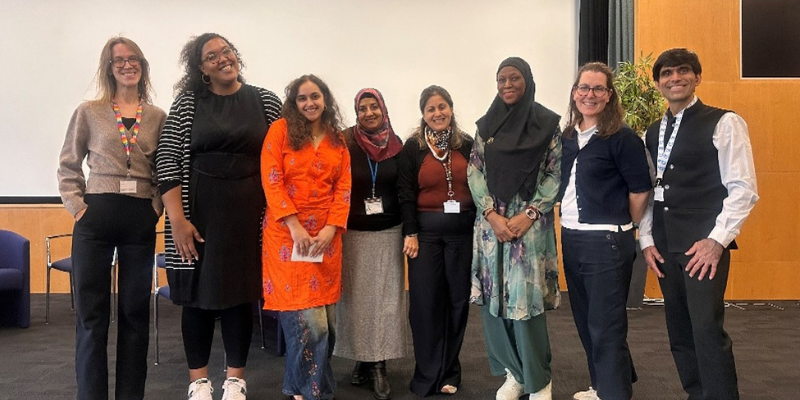
From L-R: Dr Jo Buring (GP, Bristol, NIHR Doctoral Fellow, University of Bristol); Ruby Osunsola (Nilaari); Dr Naabil Khan (Foundation doctor, Kent); Dr Tabinda Rashid-Fadel (Accure Health); Dr Reem Kayyali (UWE Bristol); Dr Faatihah Niyi-Odumosu (UWE Bristol); Francesa Arrigoni (Kingston University, London); Dr Praveen Kumar (Founder and Chair of Ethnic Inequality Research Network)
This is a guest blog by Dr Praveen Kumar, Associate Professor in Stroke Rehabilitation at UWE Bristol.
Health inequalities are rarely the result of a single issue. Gender, ethnicity, culture, mental health, trust in services and wider structural inequalities can all shape people’s experiences of healthcare. These interconnected challenges were at the heart of the Ethnic Health Inequalities Conference 2026, held on 8 October 2026 at EP1 Frenchay Campus, UWE Bristol, bringing academic, healthcare, community and lived-experience perspectives created opportunities to discuss inequalities and consider practical and holistic ways of addressing them and creating more equitable healthcare and research.
With World Menopause Day on 18 October, menopause and women’s health provided a particularly timely focus for the conference. The conference focus was also based on the release of the Renewed Women’s Health strategy for England.
Menopause: addressing inequalities in awareness, access and treatment
Dr Jo Buring (GP) practicing in Bristol explored inequalities in menopause awareness, access to care and treatment. Drawing on Patient and Public Involvement Engagement work with Somali, Afro-Caribbean and White communities in Bristol, alongside qualitative research exploring mental health issues during perimenopause phase, her session highlighted how women’s experiences of menopause can be shaped by wider social, cultural and health inequalities. The discussion emphasised the importance of ensuring that menopause research is genuinely inclusive and representative. Understanding the experiences of women from different communities is essential if we are to identify barriers to care and develop services that respond to the needs of women across the UK.
This focus was complemented by an insightful workshop led by Nathalie Sherring, CEO of Bristol Women’s Voice, exploring medical misogyny experienced by post-menopausal women. By placing lived experience at the centre of the discussion, the workshop moved beyond identifying problems towards practical action, with participants contributing to the development of a checklist designed to help women advocate for themselves within healthcare settings.
Dr Naabil Khan (Foundation doctor in Kent) further broadened the conversation around inequalities in women’s health, including maternity care and menopause, and challenged the limitations of approaches sometimes described as “Bikini Medicine” (refers to the outdated conceptualisation of women’s health as primarily focused on breast and reproductive health rather than whole-person health). The workshop highlighted diverse lived experiences and the importance of culturally responsive care, community engagement and practical action to address inequalities and inform research, service redesign and policy.
Connecting menopause and mental health
An important message from the conference was the need to recognise the connections between physical health, mental health and wider inequalities.
The relationship between perimenopause and mental health featured within the menopause discussions, while Dr Miriam Khan (GP) and Ruby Osunsola from Nilaari explored inequalities in Severe Mental Illness care and access to physical health checks among Global Majority communities in Bristol. Their PPIE work highlighted barriers relating to understanding, communication, trust and access to services. It also reinforced the importance of healthcare services working alongside community organisations and people with lived experience, rather than developing solutions in isolation. Their interactive workshop took this principle further by asking what meaningful community involvement in health research should look like. Drawing on Nilaari’s experience, the session explored trust, intersectionality and community expertise, encouraging a move beyond consultation towards shared ownership, influence and genuinely community-led research.
Anti-racism and institutional commitment
These conversations took place within a wider discussion about racial inequality and organisational responsibility.
As keynote speaker, Professor Sir Steve West, UWE Bristol Vice-Chancellor, shared UWE Bristol’s Anti-Racism Strategy. His contribution provided a meaningful context for the conference, highlighting the importance of creating a more inclusive and equitable university community and reinforcing the need for sustained institutional commitment to addressing racial inequalities, representing diverse voices and embedding anti-racist principles within organisational culture and practice.
This was particularly significant during Black History Month (October), providing an opportunity not only to reflect on inequality but also to consider the role institutions, researchers, healthcare professionals and communities can collectively play in creating meaningful and sustainable change for Global majority Groups.
Moving from consultation to partnership
A consistent message emerged across the conference:
Communities should not simply be consulted about health inequalities. They need to be partners in understanding and addressing them.
Bringing academic, healthcare, community and lived-experience perspectives together created opportunities not only to discuss inequalities but also to consider practical ways of addressing them.
Whether discussing menopause, mental health, women’s health or racial inequality, one message was clear:
Reducing health inequalities requires trust, accessibility, representation and genuine partnerships with communities.
By listening to diverse voices, recognising lived experience as expertise and moving from consultation towards shared ownership, universities, healthcare services and community organisations can work together to create research, services and policies that are more inclusive, equitable and responsive to the communities they serve.
Our sincere thanks to Dr Alice Berry, Dr Faatihah Niyi-Odumosu and Dr Vincent Singh for abstract reviewing; Dr Tabinda Rashid-Fadel and Dr Faatihah Niyi-Odumosu for chairing sessions; and Emma Thomas, Abi Price, Abi Goddard, Emma Dent and Charlie Buckfield for event management. We also thank Professor Marc Griffiths, Pro-Vice-Chancellor, and Professor Fiona Cramp, Director of CHCR, for generously supporting the venue and refreshments. A special thanks to Poppy Shields for her excellent behind-the-scenes administrative support throughout. Your collective contributions were greatly appreciated and helped make the conference a success.
Organising committee
Dr Tabinda Rashid-Fadel (Accure Health); Zehra Haq (CEO, Dhek Bhal), who worked for almost 40 years to support the South Asian community in Bristol), Dr Vincent Singh (Senior Lecturer, UWE) and Dr Praveen Kumar (Associate Professor in Stroke Rehabilitation, founder and Chair of the Ethnic Inequality Research Network, UWE Bristol).
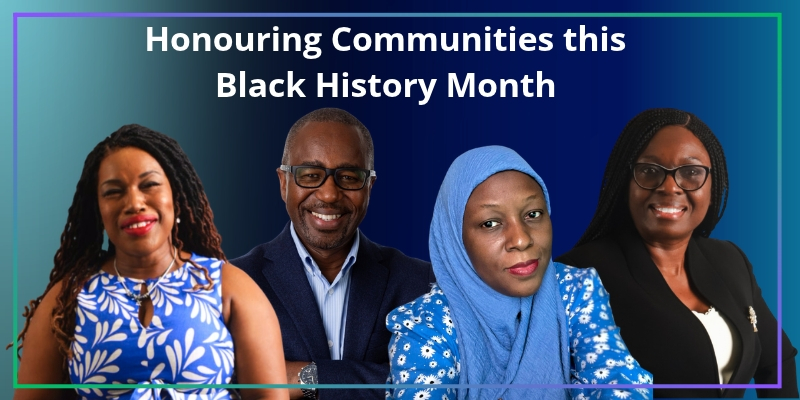
For Black History Month this year’s theme, Honouring Communities, recognises those whose contributions create meaningful change. Newly promoted UWE Bristol professors Tinkuma Edafioghor, Mwidimi Ndosi, Faatihah Niyi-Odumosu and Ifeoma Elizabeth Dan-Ogosi share how their work connects academic excellence with community knowledge to improve health outcomes, strengthen organisations and create opportunities for others.
Dr Tinkuma Edafioghor
Strengthening enterprises through people and practice
Dr Tinkuma Edafioghor is an Associate Professor in Human Resource Management at UWE Bristol, with a particular interest in organisational resilience and how small and medium-sized businesses survive, adapt and grow through challenging times.
Published in leading international journals, including Human Resource Management, her research explores how people and HR practices build organisational resilience.
Additionally, Tinkuma leads a project funded by the Equality, Diversity and Inclusion Caucus (EDICa), with UKRI and British Academy support through Heriot-Watt University, examining how hybrid working affects Black women academics’ productivity, visibility and career progression. She also founded the Black Business Leadership & Growth Partnership for the West of England, which gives Black-led small businesses practical, research-informed support in leadership, resilience and growth. For Bristol’s Black Small Business Show, Tinkuma delivered the webinar “Understanding Business Resilience: Why Some Businesses Survive and Others Don’t”, sharing practical insights with local Black business owners. Her guiding principle:
For me, research should not just sit in journals. It should make a real difference to people, organisations and communities.
Mentoring, faith and community support
Through the Network for Black Women Leaders (NBWL) and the alta mentoring platform, Tinkuma supports women’s leadership and career progression. As an alta steering-group member, she helps expand the platform across aviation, aerospace and space. She also co-founded the Safe Space Initiative for Black Women in Higher Education, a national network launched at UWE Bristol in September 2026 where Black women in academia can connect, share experiences and support one another, with plans to reach more people across the sector.
In Bristol, Tinkuma serves the Redeemed Christian Church of God, Glory of God Parish, as Assistant Pastor, Sunday School teacher and Minister in Charge of Evangelism, Community Outreach and house caring fellowships. She mentors young people and emerging church leaders, and coordinates support for vulnerable community members through activities including coffee mornings and food donations. She also helps international students adapt to UK study through informal sessions on the academic system, essay writing, critical thinking and note-taking, recognising their varied educational backgrounds. Across her research, mentoring, church and community work, she creates opportunities and helps others thrive.
I am guided by the African philosophy of Ubuntu, the idea that our humanity is connected and that when we lift others, we all rise together.
Dr Mwidimi Ndosi
Putting patient priorities at the heart of care
As Professor of Rheumatology and Health Outcomes, Mwidimi Ndosi connects clinical research with patients’ priorities. He develops and validates patient-reported outcome measures and supports self-management for people with long-term rheumatic and musculoskeletal conditions.
I am interested in ensuring that patients’ perspectives are incorporated into the development and evaluation of healthcare interventions, and that research findings can be translated into meaningful improvements in clinical practice and outcomes that matter to patients.
Mwdimi recently completed a four-year term as Chair of the Health Professionals Committee of the European Alliance of Associations for Rheumatology, contributing to European work on education, standards of care and advocacy. The role reinforced his commitment to multidisciplinary working and to ensuring accessible, evidence-based and person-centred care for people living with rheumatic and musculoskeletal conditions.
Opening doors through knowledge and representation
For Mwdimi, honouring community means contributing through service, mentorship and making health knowledge accessible beyond academia. He supports rheumatology education and capacity-building where specialist services and learning opportunities are limited. In Tanzania, he helps educate health professionals, provides information to patient groups and, with local colleagues, highlights the need for stronger professional education, patient support, research and rheumatology services. This work reduces barriers to knowledge and builds sustainable local capacity.
For me, academic citizenship means using my experience and position to help create opportunities for others.
Mwidimi also shares research and health information through mainstream and digital media, including BBC Swahili, helping to make evidence more accessible to diverse audiences. In addition he volunteers with parkrun to encourage physical activity and wellbeing across different ages and abilities. Within higher education and research, he mentors early-career researchers, clinicians and aspiring academics, helping them gain the confidence, skills and opportunities to progress. His own path from nursing to professorship was not straightforward. As a Black academic and nurse, he has seen the value of representation, opportunity and encouragement, strengthening his commitment to those underrepresented in senior roles.
Dr Faatihah Niyi-Odumosu
Expanding participation in active, healthy lives
Faatihah Niyi-Odumosu is a medical doctor and Professor of Physical Activity, Ageing and Community Health at UWE Bristol, as well as a Distinguished Professor of Public Health at MIVA University, Nigeria.
Her research develops physical activity interventions with underserved groups, including older adults, global majority Black and Asian communities, Muslim women and people with long-term conditions such as chronic kidney disease (CKD), in an effort to tackle health inequalities.
My work is participatory and co-designed, and it advocates for greater inclusion in health research and clinical trials.
Faatihah has secured about £3 million in Research and Knowledge Exchange funding from the Medical Research Council, Medical Research Foundation and Innovate UK. Her projects include Fitbees, a digital service helping South Asian older adults and adults with learning difficulties stay active and connected, and Family Backyard Cricket, which promotes intergenerational activity and social cohesion in South Asian and Black families. She is currently working on C2REST, a longitudinal study of the effects of climate change and air pollution on respiratory health in urban and rural Nigeria. Faatihah is also Associate Editor of the Journal of Physical Activity and Health and Secretary of the low- and middle-income country International Society of Physical Activity and Health Research Counciln (LMICISPAH).
From evidence to everyday impact
Faatihah founded Ageing Lifestyle in Blacks and Asians (ALIBSA), a global knowledge-exchange and research-engagement programme that improves health literacy and confidence in accessing services among ageing Black and Asian communities. Since 2023, it has offered free monthly webinars on ageing and healthy living across several continents.
She also established FaithFit, which equips multifaith leaders to promote physical activity, and the Renal Health Initiative, which supports CKD awareness, prevention and treatment through faith-led outreach in Nigeria, where one in ten adults is affected. In 2025, the initiative screened more than 200 people and referred 30 for further investigation. She later led the CoolKidney workshop with stakeholders and outdoor workers on heat stress and kidney health, alongside a related UK study funded through BNSSG ICB research capability funding with UWE Bristol colleagues in Architecture and Built Environment and Engineering.
I believe research has its greatest value when it improves lives, so much of my work extends beyond the university into communities locally and globally.
Mentoring is central to Faatihah’s work through the Royal Society Career Development Fellowship, Commonwealth Scholarship Commission and UWE Bristol Women Researchers’ Mentoring Scheme. She hosted a grant-writing workshop for Breaking Barriers for Black Academia and runs “Dragons’ Den: Nurturing Research”, where early-career researchers in the Global South pitch ideas and receive feedback and mentorship through her ISPAH role.
At UWE Bristol, she co-leads the Black Professoriate Group, coordinates the Africa Staff Network and serves as EDI co-lead for the School of Applied Sciences. Her work has received the UWE Bristol Community Impact Staff Award and Black Hall of Fame Award.
Dr Ifeoma Elizabeth Dan-Ogosi
Creating inclusive classrooms where students thrive
Ifeoma Elizabeth Dan-Ogosi is an Associate Professor in Public Health and Social Justice in UWE Bristol’s School of Health and Social Wellbeing, where she leads the MSc Leadership for Public Health and the Public Health Leadership and Management apprenticeship module.
After training in microbiology and working in sales in Nigeria, Ifeoma rebuilt her career in the UK through health research and higher education, completing her PhD in 2023 while working full-time. This journey informs her commitment to creating classrooms where every student can belong and succeed.
In May 2026 I gave the closing keynote at the Global Empowerment and Inclusion Summit at the Palais des Nations in Geneva. In September I gave a TEDx talk in Abuja. The title was: The Girl They Silenced, Built the Room Anyway. Neither of those stages was on anyone’s plan for me – including mine. This is the story of what I built when the system said no.
Across sixteen years of teaching and research at four UK universities, Ifeoma developed the Transformative Multicultural Classroom (TMC) model, drawing on Freire, bell hooks and Patricia Hill Collins to embed cultural and psychological safety in everyday practice. Modules taught through TMC achieve first-sit pass rates of 98.8–100%, with students from Global Majority backgrounds making up 60% of high performers. These results are proof that when belonging is embedded into the structure of education, outcomes improve for everyone. The University of Southampton has adopted the model within its Postgraduate Certificate in Academic Practice, and it is also being implemented at the University of Gloucestershire, University Centre Weston and UWE Bristol. Ifeoma is now writing a book on TMC and co-editing Public Health Leadership: Learning from Experience in the UK for Policy Press.
Building networks and widening opportunity
Ifeoma co-chairs the Steering Board of 100 Black Women Professors Now, run by WHEN Equality, and brought the programme to UWE Bristol, where it has secured funding for a further three years. Four UWE Bristol participants have since been promoted: three to Associate Professor and one to Professor. Alongside Tinkuma, Ifeoma co-founded the Safe Space Initiative for Black Women in Academia, with the motto “Connected, supported, thriving”. She also leads InspireHerNow, a women’s empowerment initiative, and a Black and Menopausal group supporting Black women experiencing menopause.
I describe myself as a Positive Disruptor and a Relentless People Connector. I challenge what holds people back, and I never stop bringing people together, because I believe progress happens when people are connected, championed and lifted up.
Since 2018, Ifeoma has mentored more than 50 early-career academics and PhD students across six universities and serves on the steering board of PhD Beyond 50s, where she also contributes her qualitative research expertise to its seminars.
At UWE Bristol, Ifeoma contributed to the anti-racism strategy and champions student success, disability access and widening participation. She also initiated and co-led the African Cultural Showcase, (with Dr Chizoba Esio-Bassey, Diana Peprah and Chinedum Ekene Samuel, supported by Dr Eugie Ntekor, Isaac Anaquador, Bea Payne, Mo Ebengo and Olabimpe Adegbuyi) which brought together more than 170 staff, students and members of the wider community. She received five awards in 2025 – three for equality, diversity and inclusion, and two recognising her community service, teaching and learning, and research. Subsequently she has been named a Role Model Future Leader in the INvolve People Awards.
What connects all of this is a single conviction: the system changes when the people it excluded come back and build the room anyway. That is what I am doing. And I am just getting started.
Together Professors Edafioghor, Ndosi, Niyi-Odumosu and Dan-Ogosi exhibit how research, leadership and service can create lasting change when communities are placed at the heart of these endeavors. By sharing knowledge, widening opportunities and supporting others to thrive, they embody the essence of Honouring Communities and are helping to build a more inclusive future.
This is a guest blog written by Dr Laura Hobbs, Senior Research Fellow in Science Communication and lead for Science Hunters.
In August, UWE Bristol’s Science Hunters team travelled to Rutherford Appleton Laboratory’s Summer Stargazing event, where families gathered to witness a near-total solar eclipse. Alongside the excitement of the astronomical event, children had the chance to discover the science and engineering behind the UK’s national space laboratory.
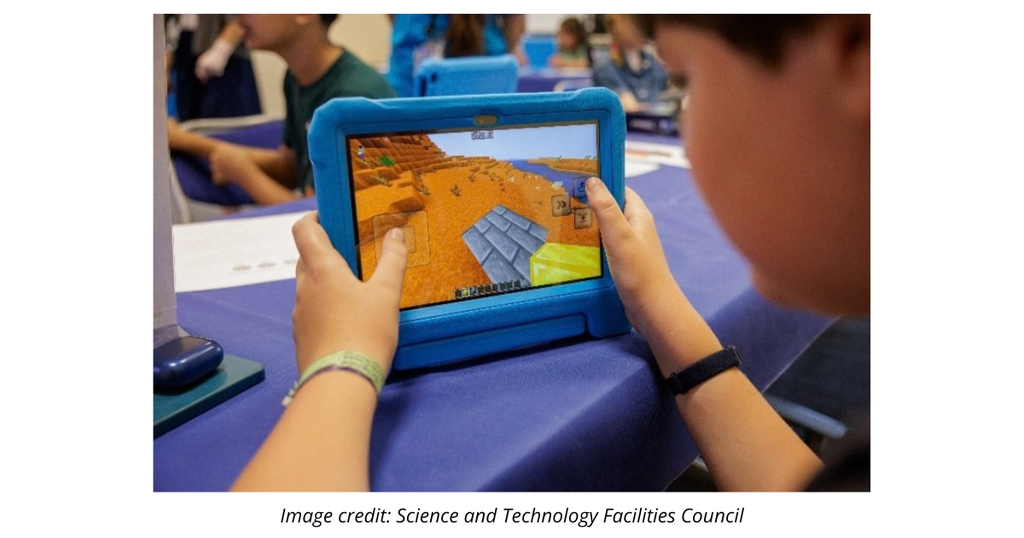
Based in the Science Communication Unit (SCU), the Science Hunters team develop practice and research in engaging children and young people with STEM (Science, Technology, Engineering and Maths) subjects through interactive topic exploration and constructive play in Minecraft. Supported by a Spark Award from the Science and Technology Facilities Council (STFC), the Science Hunters: Space Missions in Minecraft project brings together specialists from UWE Bristol and RAL Space to create, deliver and evaluate activities introducing real-world space science, testing facilities and Earth observation.
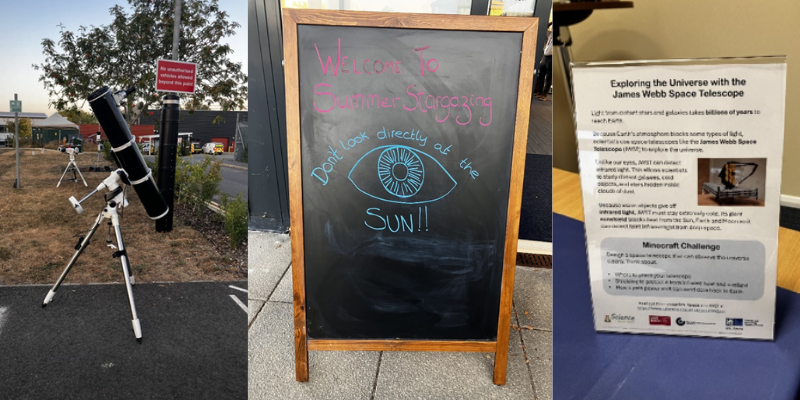
The Summer Stargazing event at Harwell Science and Innovation Campus offered visitors a packed programme of talks, tours, demonstrations and practical activities meeting the needs of the broad age ranges attending. Alongside opportunities such as creating and coding light sensors, recreating the solar system using fluffy planets and trying ice cream made using liquid nitrogen, visitors could join the Space Missions in Minecraft team to explore the most complex telescope ever flown: the James Webb Space Telescope (JWST).
The session introduced children to the telescope and how it helps explore the history of the universe. Using RAL’s JWST Lego model and an infrared camera display, participants learned why the telescope needs to remain extremely cold to detect infrared light from space to allow study of distant galaxies, the first stars, forming planets and more.
They then put this knowledge into practice by designing their own space telescopes in Minecraft. Like real engineers, they had to think about where their telescope would be located, how it would be shielded from heat, and how it would be powered to communicate with Earth.
As the eclipse began, activities paused and visitors headed outside. Equipped with eclipse glasses and gathered around solar telescopes, families and event staff fell silent as the Moon moved between the Earth and the Sun. Afterwards, visitors returned to the activities full of questions and enthusiasm. The Space Missions in Minecraft team spoke with families about the JWST, space science and how Minecraft can be used to explore complex scientific ideas and admired some excellent telescope designs created by participants.
The Summer Stargazing event was highly rated for inspiration and relevance to their lives by participants, demonstrating the power of combining cutting-edge research with creative public engagement. Through the partnership between UWE Bristol and RAL Space, young people were able to connect with real-world science, develop their problem-solving skills and perhaps even imagine themselves as the scientists and engineers of the future.
“We had the most amazing experience. We thoroughly enjoyed the whole evening from the lecture to all the stands in the visitor centre and were very impressed how well everything was pitched to engage all levels of scientific background.”
Event participant feedback, courtesy of STFC.
The Science Hunters team are continuing their collaboration with RAL Space at recent and future events at the campus, including Space Explorers Day and Jamboree on the Internet, and the ESA-ECSAT Open Day with support from the European Space Agency.
Many stroke survivors become less active after discharge from formal rehabilitation despite evidence that ongoing exercise improves mobility, independence, fitness, and reduces the risk of further stroke. Interviews with participants from the Bristol After Stroke (BAS) Next Steps programme revealed a strong desire for continued rehabilitation support, while carers reported feelings of abandonment and uncertainty about how to support recovery at home. The project was developed to address this gap by providing accessible, long-term rehabilitation opportunities within the community.
Rehabilitation Exercise Videos (REVs)
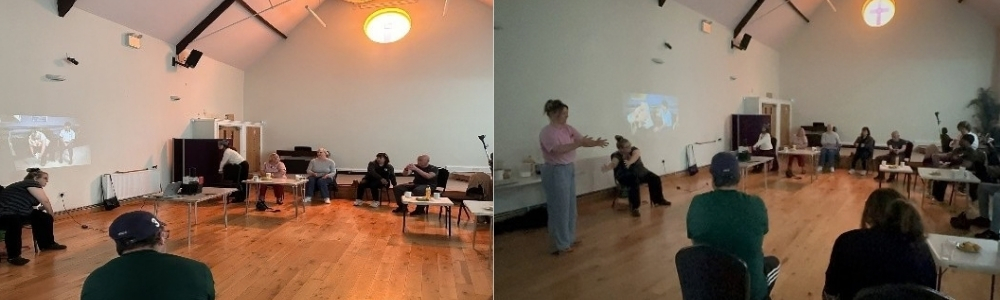
The programme builds on UWE Bristol and BAS’s established Next Steps rehabilitation classes and uses therapist-developed rehabilitation exercise videos (REVs) that have been co-designed with stroke survivors. Trained BAS group leaders and support workers deliver structured exercise sessions within community stroke groups, supported by guidance from a physiotherapist. The programme includes chair-based and functional exercises, written resources, safety guidance, and home-based exercise materials to encourage ongoing participation in rehabilitation beyond formal services.
Fostering Community
Unlike traditional therapist-led programmes, this model empowers trained support workers, volunteers, stroke survivors and community group leaders to facilitate exercise sessions within existing stroke support groups. The approach combines rehabilitation, peer support, social interaction, and education in familiar community settings. It encourages stroke survivors to remain active, learn from others with shared experiences, and access ongoing support without relying solely on NHS services, making rehabilitation more sustainable and accessible.
“Working alongside a stroke survivor facilitator created a supportive and inspiring environment. Participants became more confident, active, and engaged, demonstrating the potential of community-led approaches to support long-term recovery after stroke.”
Stella Fisher – Group coordinator, Bristol After Stroke
What’s the Impact?
Feedback from stroke survivors and carers has informed programme refinement and resource development. Participants reported that community exercise sessions increased motivation, confidence, social interaction, and engagement in physical activity. The project has also strengthened collaboration between UWE Bristol and BAS, created opportunities for student involvement, and generated a scalable model that could improve long-term rehabilitation outcomes while supporting NHS priorities for community stroke care.
“Facilitating the sessions was a hugely positive experience. It boosted my confidence, physical activity, and social connections, and it was wonderful to see so many participants enjoying themselves and supporting one another.”
The programme is being refined through participant, carer, volunteer, and group leader feedback, with plans for wider implementation across BAS stroke groups. Discussions are underway with the Stroke Association to distribute the programme’s resources nationally, creating the potential to extend the model beyond Bristol. Future work will evaluate effectiveness, optimise delivery, and explore opportunities for broader adoption across community stroke services, helping more stroke survivors access ongoing rehabilitation and support closer to home.
Bio
This year Praveen Kumar, Associate Professor in Stroke Rehabilitation at UWE Bristol and the Project Lead of the programme, was nominated for the JustGiving Awards. Over the years he has witnessed the number of annual referrals received by BAS rise from 180 in 2016, to now approximately 900 referrals each year. Remarkably, Praveen has helped the badminton community to raise nearly £38,000 for Bristol After Stroke.
How to get involved
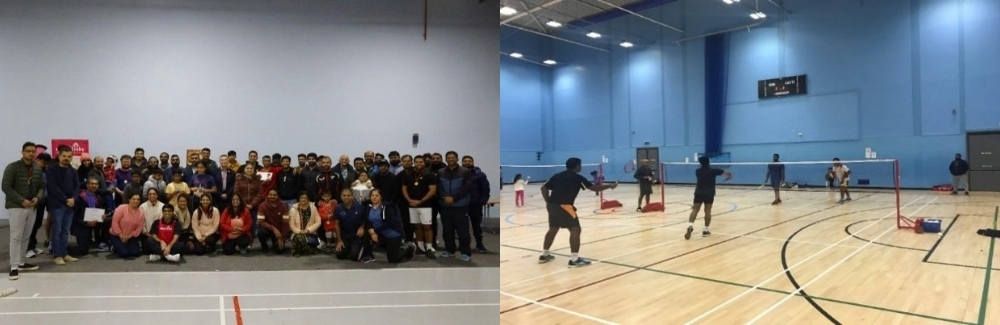
2026 marks the 9th Badminton Annual Charity Tournament for Bristol After Stroke on 21st November at UWE Bristol Centre for Sports. This year’s tournament is dedicated to the memory of Steve Miller (Occupational Therapist at UWE Bristol), and will celebrate the values he embodied: friendship, resilience, kindness, and community spirit.
This year aims to be the biggest tournament to date with 90 teams competing across four categories: Women’s Doubles, Men’s Doubles, Mixed Doubles and Children’s Doubles. The tournament will also be receiving support from the staff and students of the UWE Bristol Sports Rehabilitation team.
If you are interested in taking part in the event Praveen would love to hear from you! The tournament is designed for players who are comfortable competing at an intermediate to advanced level, so is ideal for any experienced badminton players looking for a fun but competitive day of badminton. Not a keen to play ball? The event is aiming to raise £6,500 and you can show your support by donating through the JustGiving page
The case of Bronwen James in the south-west of England raises the question of how we understand females who sexually abuse children and young people, and how we safeguard them within our schools and educational establishments. James was found guilty by a jury in Winchester of sexual offences related to a male student in her care when she was a teacher, and at the conclusion of the trial, further information came to light of her sexually abusing two female pupils. This case is important as it raises questions about the nature of child sexual abuse, safeguarding in schools, risk management, and how best to respond as well as prevent sexual abuse by people in positions of trust.
The research and evidence base around women who commit sexual abuse of children is quite sparse, and the topic is under-researched and underdeveloped. There are several reasons for this, including that there are fewer cases of females who sexually abuse children reported to the police, prosecuted, and therefore in the criminal justice system. Traditionally, child sexual abuse is seen as a male crime, and the criminal justice research and evidence support this. However, this does not mean that women cannot and do not commit child sexual abuse. It is important to understand that women who commit crimes are often processed, sentenced and managed differently throughout the criminal justice system, especially compared to males, with more points of intervention and divergence. Therefore, there are scale, logistical and management reasons they are a smaller cohort. Another important reason is that boys are less likely to come forward and report sexual abuse in general, but specifically by women, as it sits at odds with cultural ideas linked to masculinity, sex, and power. This is reinforced in society by the media and social commentary that boys have sexual relations as a rite of passage and not necessarily abuse, in contradiction to how it is framed when it’s a male teacher and female student. Socially and culturally, we must talk about the motivations and impact of child sexual abuse the same regardless of the gender, race or cultural background of the person committing the harm and the child harmed; but we do not, and this undermines victims’ experiences and damages effective risk management. In the James case, it is important to acknowledge that her victims were both boys and girls, which is a relative risk factor in child sexual abuse cases. For schools and educational establishments, it means that they need to be aware of the individualised nature of risk and the fluidity of offending behaviour.
One of the main talking points about this case was that to be a teacher, or to work with children and young people in a position of trust in England and Wales, you need a background check. Background checks rely on past convictions and information known and recorded in the system about a person. This highlights the challenge of using background checks to mitigate risk; they only work with known individuals. Therefore, schools and youth-serving organisations need to be working preventatively with staff, partners and students to highlight the warning signs of sexual abuse, how to report it and then how to manage it. The James case highlights that prevention strategies need to be better developed in schools, educational establishments, and youth-serving organisations, and in doing so they need to be consistent about anyone’s capacity to commit or be a victim of child sexual abuse.
Currently, there is a crisis in prisons and probation in England and Wales, with increased prison numbers, a lack of space and services within the criminal justice landscape, resulting in a breakdown in prison structure and function. The current governments response to this is to release prisoners with less than a third of their prison sentence left to serve early, although certain populations are caveated (sexual and violent offences), this release plan is based on sentence length, index offence and not on the person’s risk.
This is putting pressure on an already underfunded system that has had limited investment over the last 20 years, straining staffing levels and prison capacity. This means prison and probation are already under pressure with the existing population, and any new, increased, or changed population will put the system under even more strain. Currently, prisons are experiencing a crisis with too many people in the system, not enough capacity for the detention of prisoner’s safely and too few staff to run the estate effectively. The current crisis is a result of a series of factors, and policy decisions, including underinvestment in the system over an extended period, increased arrest and incarceration rates, increased breaches and recalls to prison, and an increase in longer-term sentences (especially those linked to violent and sexual offending). This has strained an already overburdened system.). This has strained an already overburdened system. In England and Wales, approximately 86,000 people are in prison, costing £60,018 per person per year. It is important to acknowledge, contrary to popular belief, that prison is not a cheap option. Prisons are expensive to run, maintain and keep secure, particularly when you consider the aging facilitates, especially in some Victorian era prisons, and any reduction or cut back in funding the prison estate can result in a risk to public safety. In England and Wales, consecutive governments have debated building more prisons, but this has not occurred at the rate it needed to, and some prions are now not fit for purpose and should not be in use. Additionally, when this is coupled with an overreliance on prison for the bulk of offenders, even low risk and short term prisoners, this means there is over population in prisons that are not running at capacity with individuals some of which could be managed in the community. Therefore, how does the government and the prison estate solve this challenge?
Additionally, when the previous Conservative government recruited more police officers, it did not replicate this increase with a similar one in prison and probation staffing, which is particularly important as at the same time their privatisation and then renationalisation of probation services services led many experienced staff to leave, therefore creating increased challenges for community risk management. Research indicates that the quality of staff working with people matters in rehabilitating them (i.e., recovery capital). The early release of prisoners is not a new approach in England and Wales, as the same thing happened last year. Interestingly, this is not just an England and Wales challenge, with similar pattern’s being seen in Scotland. Therefore, it is important to question whether the current approach to prosecution, sentencing, release and community integration is working. Or do we need a new approach?
The current short-term solution is to release people with less than a third of their sentence left to serve. The idea is that the closer they are to release, the more ready they are to be safely released and managed in the community. This scheme is not open to all prisoners; people who have committed sexual and violent offences are excluded, as well as people who have been convicted of manslaughter. Recently, the government has changed the inclusion criteria for early release, in part based on the overturned release of the killers of PC Andy Harper as a consequence of public and political pressure. The challenge is that many of the prisoners who are being released early have higher rates of breach and recall, therefore are quickly returned to prison. Therefore, the current solution will not have the desired effect. In reality, the approach needs to be based on risk and risk assessment with lower risk people being released and managed in the community while higher risk people and managed in prison. Risk is complex and individualised, but it is important as it is the foundation of effective public safety and community protection; therefore to be effective risk needs to be at the centre of any release or retention plan for prisoners. Risk assessment in England and Wales is based on actuarial risk assessment tools coupled with professional judgement, which enables informed judgement about individual cases. This means a more realistic risk management plan can be developed and rolled out, reducing breach, recall, and reoffending. A longer term solution to the prison crisis requires a reframing and reconceptualising of risk assessment, sentencing and release. With the growing political and practical focus on public health approaches to crime, offending and related behaviours (i.e. an Epidemiological criminology approach, that understanding, responding to and prevention crime at an individual, interpersonal, community and societal level and understanding how these intersect with each other). This approach sees offending behaviour as a life-course, developmental issue framed within a bio-psycho-social framework(that crime is caused by the interaction of biology, psychology and social interactions in people, which is why the causes of crime are similar but different for each person) that understands these behaviours in terms of risk and protective factors. In terms of risk and release, this means understanding the individual through their experiences and how these shape their future behaviour.
Release from prison and return to the community needs to be based on actual, not perceived, risk. However, this takes time and resources, but it will reduce future harm, be more victim-centred, and save costs/resources in the future. Crime is an emotive topic that affects people, communities, and society; therefore, any issue that affects them, like early release, needs careful consideration and appropriate planning.
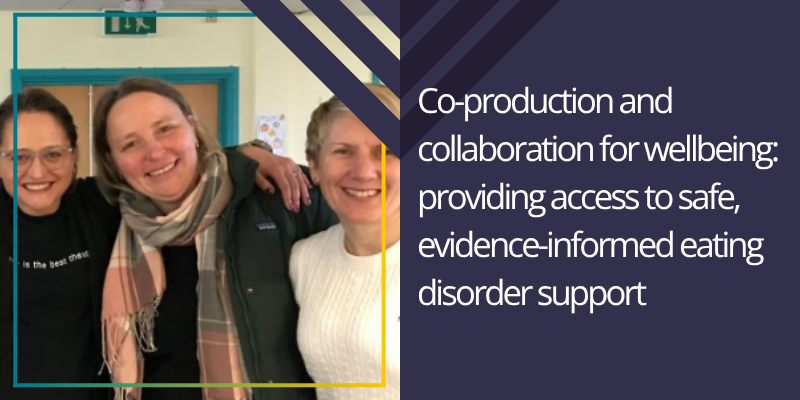
Eating disorders are serious, complex mental health conditions and the services supporting those affected often struggle to cope with demand. UWE Bristol Academic and the interim deputy director of the Centre for Appearance Research, Dr Christine Ramsey-Wade is working to change that. By connecting individuals with safe, trusted support her work will reduce the risk of escalation while people wait for, or transition between, services.
Christine is co-director of the Bristol Health Partners Eating Disorders Health Integration Team, who are working to improve the lives of people affected by or at risk of developing eating disorders in Bristol, North Somerset and South Gloucestershire. The partnership has created The Eating Disorder Support App, a free resource that supports users to understand what’s happening, use safer coping strategies, find moments of calm, and access the right help at the right time. The app was co-produced from the outset with clinicians, eating disorder specialists, people with lived experience, and specialist charities including Anorexia & Bulimia Care, First Steps ED, and PANS PANDAS UK. As a result, the app is grounded in the realities of living with and recovering from an eating disorder and sits alongside existing regional services and care pathways.
To date, the app has had over 23,000 downloads and is currently the only app recommended by the national mental health charity Mind in its app library. A recently published evaluation study explored how people used and experienced the Eating Disorder Support App and shows high satisfaction from users as well as highlighting its role as a trusted resource that healthcare professionals recommend to patients and families.
The app continues to be a free resource for those affected by eating disorders, with plans to expand the regional care pathways it signposts beyond Bristol, Bath, North Somerset, South Gloucestershire and Wiltshire.
As a result of this impact-driven work, Christine has been appointed as an advisory board member of the Oxford Mindfulness Centre –a not-for-profit organisation helping people achieve greater wellbeing through research- based mindfulness and meditation, and one of the leading training centres for mindfulness teachers internationally. As they pivot to focus on applying mindfulness to the key areas of lifestyle medicine, Christine’s work with them will focus on mindfulness, food and eating. This area aligns with Christine’s previous research, mindful eating teaching experience, and her work at the Centre for Appearance Research. She will be an invited speaker at the Oxford Mindfulness 2026 annual conference, and she has been invited to work with them as a guest teacher to deliver the Mindful Eating – Conscious Living programme in 2027.
Eating disorders can have a significant impact on both physical and mental wellbeing, but support is available. For UWE Bristol staff, MYNDUP provides confidential access to a range of wellbeing professionals, while Beat and Eating Disorders UK offer trusted information and specialist support. If you need help, remember that you are not alone and there are people ready to listen.
£14.5bn for curiosity-driven foundational research
£8.3bn for targeted R&D addressing government and societal priorities
£7.4bn to support innovative companies to start, scale and stay in the UK
£8.4bn for skills, talent, infrastructure and national facilities underpinning all three areas
That blog focused on the broad “buckets” of UKRI funding. UKRI has now published its new five-year strategy (2026–2031) alongside its Delivery Plan for 2026–27. Since the budget itself was already known, there are few new spending commitments, but there’s now much more clarity on what UKRI’s priorities are, how it intends to invest, and who it expects to work with.
To summarise the changes in a sentence: UKRI intends to be more selective, less duplicative, and more challenge-led in what it prioritises, and be faster, more flexible, and more responsive in how it funds.
What funding areas does the strategy prioritise?
Curiosity-driven research
UKRI has explicitly protected a large “investigator-led” budget (£3.3bn) to support discovery research, underpinned by dual support and quality-related (QR) funding. UKRI says it is “committed to supporting and sustaining [this] investment, growing as the economy allows”. In practice this means open responsive calls will continue, though their format may evolve; the Delivery Plan mentions new open applicant-led schemes for BBSRC, and five new ESRC schemes (React, Connect, Grow, Explore, Challenge).
QR funding is still championed, but its allocation method is under review. Research England’s Strategic Institutional Research Funding (SIRF) review, running to 2030, is examining whether the formula-based funding given to English universities should better reward specialisation and collaboration. This echoes last autumn’s Post-16 Education and Skills White Paper, which wants to see “fewer broad generalist providers and more specialists” over time, with institutions collaborating rather than duplicating effort.
Strategic government and societal priorities
A revised emphasis is on targeted R&D to address government-defined challenges. This will mainly be delivered through integrated “Priority Programmes” which broadly align to the eight Industrial Strategy-identified sectors (IS-8), as well as leaving some space “wider priorities” categories that do not fit neatly within the IS8. The overarching message is that “UKRI will be selective about interventions to maximise the return for the UK”, emphasising the general approach of doing fewer things, better. These programmes don’t replace the old Research Councils, but are intended to break down the siloing that occurs across them, with Priority Programmes overseen by UKRI’s own programme board(s). Other UKRI organisational reforms also support this: rather than each Council guarding its own budget, resources will be dynamically managed across UKRI as a single portfolio, allowing funding to be reprofiled mid-year to capture emerging opportunities.
Industry and commercialisation
UKRI has substantially boosted support for business-led innovation (£7.4bn). Innovate UK is being refocused, via new service offers and IP support, to help spin-outs, scale-ups and R&D-intensive companies grow, including through its account-managed Velocity service for fast-tracking commercialisation. Mechanisms for research translation are also being simplified (see below).
How will funding change?
Faster and more responsive funding
UKRI wants faster, more agile decision-making: grant processing times will be cut through new assessment mechanisms and simplified applications. The target is to bring application-to-decision times down to 90 days for applicant-led calls and 60 days for targeted calls by 2031.
Some of this ‘speeding-up’ is expected to come from more experimental review methods which have been piloted with by the Metascience Unit (established under the former DSIT in 2024, now sitting within the merged business department). Distributed Peer Review, already trialled in 2025, asks applicants to assess each other’s proposals rather than relying solely on external reviewers. UKRI is now building this into a wider AI-assisted evidence platform intended to speed decisions further, alongside faster desk rejection of applications that clearly don’t meet the criteria.
As well as changes on the UKRI-side, there continues to be a trend towards more University-side ‘demand management’ (limiting how many applications an institution can submit to a given call). REE will continue to work on facilitating this demand management as quickly, efficiently, and fairly as possible.
Simplification and deduplication
Where possible, UKRI are trying to reduce duplication of schemes and harmonise them to use the same terminology. For example, in relation to innovation funding schemes there now will be a “new framework [which] reduces the number of schemes [they] run, helping simplify our offer and making sure [they] use consistent terminology across UKRI” (Prosperity Partnerships to enable collaborative R&I; Impact Acceleration to test applicability of new ideas to commercial application; Proof of Concept funding to test these ideas at scale, and Entrepreneurship training support).
Who will UKRI work with and expect universities to partner with?
UKRI is growing increasingly ambitious in encouraging private co-investment: UKRI is targeting 3:1 leverage on its Priority Programmes (compared to historic levels of 2:1 in wider R&I investment), so bids developed alongside industry, charity or other private funding may be viewed more favourably. Innovate UK, the Catapult network and new sector-specific Tech Boards are the main named delivery partners on this side of the strategy.
Collaboration with local government (be that city regions/councils, combined authorities, or NHS bodies) is another expectation. Through the £500m Local Innovation Partnerships Fund (which funded its first tranche of programmes in April 2026), UKRI wants city regions, combined authorities and universities to co-design programmes around genuine local strengths. In parallel with this and other investments (e.g. OxCam Arc), UKRI will also publish a refreshed “place funding policy” this year. This regional approach was further cemented in the devolution of “later-stage innovation funding” in the recent Rewiring the State – Cabinet Statement.
Internationally, UKRI is prioritising partnerships with the greatest mutual scientific and strategic benefit, particularly multilateral programmes like Horizon Europe and organisations such as CERN. Of note, Department for Science, Innovation and Technology (DSIT)’s annual report and accounts for 2025-26 were published recently, showing that 2025-26 Horizon Europe associated cost was £2.043bn against an allocated figure of £2.736bn.
Broader context
UKRI’s reforms sit inside a wider policy landscape rather than standing alone. The Industrial Strategy’s eight priority sectors (IS-8) provide the framework most Priority Programmes will map onto; the Defence Industrial Strategy (Sept 2025) commits to significant defence spending growth with an emphasis on dual-use technology (aligning with UKRI’s push on AI, quantum and engineering biology); and the AI for Science Strategy (Oct 2025) earmarks around £137m for AI-driven science, likely feeding into UKRI’s own AI-focused calls. The Post-16 White Paper, discussed above, shapes how QR funding and specialisation evolve alongside the SIRF review.
This backdrop now sits under a new government. Andy Burnham became Prime Minister in July 2026, and one of his first acts was to abolish DSIT, folding its science and innovation responsibilities into a new Department for Business, Innovation, Science and Trade (DBIST) under Jonathan Reynolds, with some digital and creative-industries functions moving to the Department for Digital, Culture, Media and Sport under Lisa Nandy, and universities policy moving to Lucy Powell at Education.
Early signals suggest Burnham intends to preserve the existing R&D settlement and Industrial Strategy rather than reopen them, but his “Manchesterism” emphasis on devolved, bottom-up growth, echoed already in UKRI’s own Local Innovation Partnerships Fund, makes it likely that regional research funding and devolution deals gain even more prominence over this parliament.
What this means for you and for UWE
Think about sector and regional strengths
Show how your work contributes to Industrial Strategy sectors (e.g. IS-8 sectors such as AI, health, clean energy), major agendas (NHS Long Term Plan, AI for Science) or regional strengths (West of England creative tech, green clusters etc.).
Embrace interdisciplinary calls and programmes.
Collaborate across UWE, external academics partners, or with industry partners to fit with the new Priority Programmes, supported by UWE’s new internal funding routes if pump-priming is needed.
Contact REE’s BID team to get help with positioning bids for outcome-driven calls, as well as keeping on top of new funding opportunities through the Research Funding Bulletin.
Consider commercialisation and partnerships early.
Engage REE’s Innovation and Impact team as soon as you realise your research could spin out technology or inform policy.
Develop and nurture industry, third-sector and local government contacts to bolster bids, with help from REE’s Business and Alumni Partnerships team.
Monitor and learn new processes
Get ahead by reading UKRI’s guidance from their pilot on Distributed Peer Review and other new schemes so that timely submissions and quick revisions (if invited) don’t catch your team out.
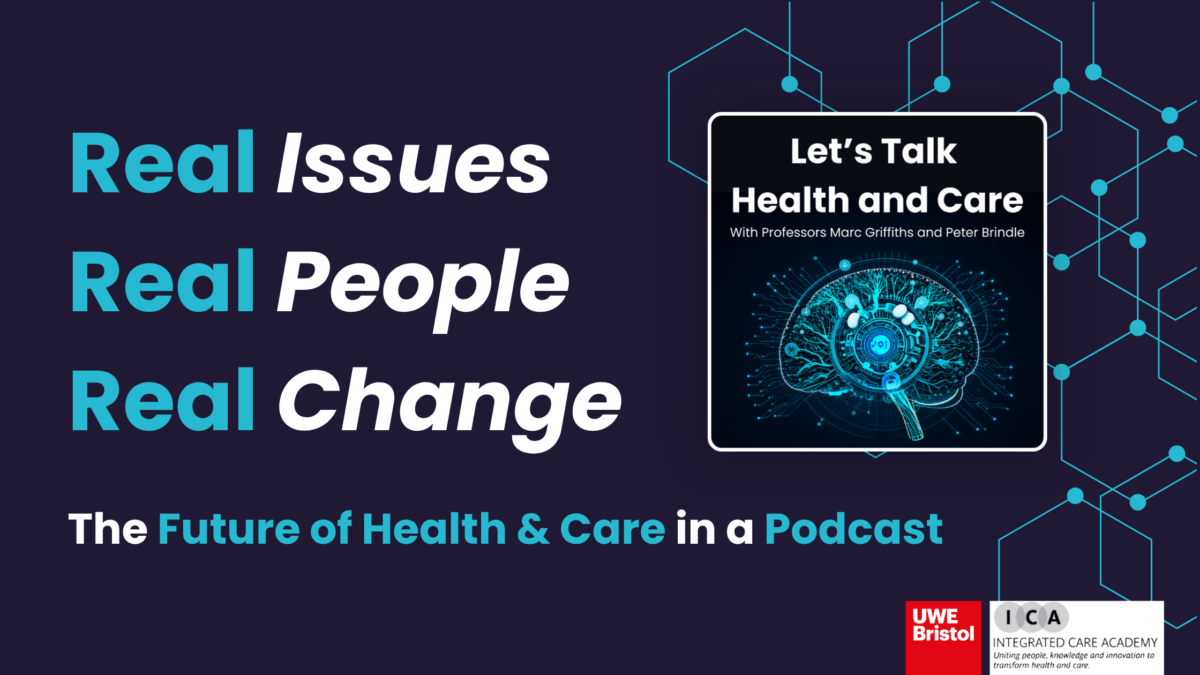
Have you ever wondered about the future of the healthcare industry? Who is taking us with them? Let’s Talk Health and Care Podcast (LTH&C), a part of the Integrated Care Academy (ICA) at UWE Bristol, aims to unveil the answers to these key questions and introduce you to the academics, researchers, founders and community leaders driving this change. Meet the people working to tackle real-world challenges with compassion and determination from the bottom up.
Professors Marc Griffiths and Peter Brindle sit down with academics, founders and community leaders who have identified real opportunities for change and who are working incredibly hard to implement that change. In the wake of the NHS England 10-Year Health Plan, the healthcare industry is actively searching for innovative solutions to complex problems.
“the NHS now stands at an existential brink” where “the choice for the NHS is… reform or die”.
Department for Health and Social Care, 2025
How can one conversation change the trajectory of your career?
In episode 8, Dr Appolinaire Etoundi explained how one conversation at a swimming pool changed his career. He discusses how, by blending engineering with healthcare he is now able to improve accessibility and independence for amputees and people with disabilities. Now, his work has helped to reduce the cost of prosthetics by up to 80%, with devices costing less than £500. This is the meaningful impact and innovation the podcast continues to spotlight. Listen now to hear Dr Etoundi explain how this happened.
One theme which comes up repeatedly is that healthcare is a complex industry inextricably linked with other industries, ranging from engineering to technological development, to community centres, to educational institutions. The ICA bridges all these industries and more, promoting a collaborative healthcare environment, fit for the future.
Intervention through community
In episode 10, we explore how we can prevent acute health issues requiring hospital treatment further down the line. Both our guests, Mark Graham and Jo Poole, emphasise the importance of neighbourhood-based health for building trust and a boundary-less workforce, bridging the gap between community and healthcare. Find out more about how this community centre acts as a one-stop community hub, and the impact it is having.
This boundary-less mindset can be applied when tackling cultural change, like systemic racism. In episode 2, Noor Nixon and Professor Anthony Hill discuss the Inclusive Training Within Practice Project, highlighting the challenges Black, Asian and Minority Ethnic students and staff face, and what a multi-system initiative can achieve. This is echoed with Caafi Health in episode 4, who exemplify a community-logic model, where healthcare is powered by the community, for the community. Listen to episodes 2 and 4 to find out how systemic discrimination is holding health and care back.
“We learned that the idea that health challenges are deeply social rather than just medical.”
Huda Hajinur, Co-founder and Director of Caafi Health, episode 4.
Listen to the podcast and find out how the latest research and collaborative problem solving is changing the way we interact with healthcare. Episodes are available on SoundCloud, Spotify and Apple Podcasts.