Skills that empower – From Self-Doubt to Distinction: My MBA Senior Leader Apprenticeship Journey

Posted on

In this blog, Simon Flenley – Assistant Director of Research & External Engagement (Skills) at UWE Bristol – shares a unique perspective on apprenticeships, shaped by his dual experience. With years of strategic involvement in the skills landscape, Simon recently completed his own Level 7 apprenticeship, offering valuable insights from both sides of the journey.

In April 2023, I made the decision to enrol on the Senior Leader Level 7 apprenticeship through the University of Exeter. Having worked in the skills and vocational learning sector for several years, I had first-hand experience of how transformative these programmes – especially apprenticeships – can be.

It’s fair to say that after many internal ‘should I/shouldn’t I’ debates, I wasn’t entirely confident in my choice. My job is demanding, and as a parent to a six-year-old daughter, I questioned whether embarking on this journey was a form of self-punishment or a huge opportunity. After carefully scanning the module list and noting that the dreaded finance module came much later in the programme, I took the plunge.

As expected, imposter syndrome quickly reared its unhelpful head. Did I really belong in this cohort? What made me think I had the ability to succeed? Even if I did okay, wouldn’t that be luck rather than judgement? I hadn’t studied at university – or anywhere else for that matter – for over 20 years. How could I possibly cope?

Despite some early bafflement, I took a deep breath and settled into the learning – home office desk appropriately stocked with snacks.

What bolstered my decision to take the academic plunge was my career development. After all, apprenticeships are work-based learning programmes designed to equip us with the knowledge, skills and behaviours to grow and (hopefully) excel in the workplace. I’ve been a senior leader in education for some time – a sector that thrives on innovation, efficiency, with a need for pace in the face of complex external factors. I saw it as a genuine opportunity to grow and improve.

Fast forward to August 2025, and I passed both the apprenticeship and the MBA top-up with Distinction – a result I’m incredibly proud to share. Yes, my old friend Imposter Syndrome still pops up now and then to diminish the achievement, but for now, I’m learning to sit with it and own it. And it has certainly cemented my view that apprenticeships – at all ages and levels – are a critical part of our education and skills ecosystems in the UK.

Has this apprenticeship made me a more thoughtful leader? Am I more strategic? Have I improved? You’d have to ask the brilliant people I work with every day – but I’d like to think so. And I’d also like to think that one day, my daughter will see how hard work, even in the face of self-doubt, can truly pay off.

UWE Bristol named Training Provider of the Year at the Enginuity Skills Awards

Posted on

UWE Bristol is delighted to announce that we have won Training Provider of the Year at the Enginuity Awards 2025!

The Training Provider Skills Champion of the Year award recognises outstanding commitment to learning and skills development that supports sustainable engineering and manufacturing growth through partnerships between providers and employers.

Since 2017, UWE Bristol has supported over 1,000 Engineering and Built Environment apprentices, with achievement rates up to 100%. Our Women in Industry project addresses skills and diversity gaps by partnering with employers and STEM networks, boosting female applicants by 60% in a year.

We are so proud of our Apprenticeship programmes, and the opportunities they provide for increasing access and participation and addressing under-representation. This award reflects so much hard work and dedication from so many people, underpinned by the critical projects that UWE Bristol delivers such as the Women Like Me project.

Simon Flenley, Assistant Director of Research & External Engagement (Skills) at UWE Bristol

Continuing on from our success at the Enginuity Awards, we are also thrilled to have been shortlisted for University of the Year at the Multicultural Apprenticeship Awards.

The prestigious Multicultural Apprenticeship Awards aim to showcase the range of talent and hard work within multicultural communities that is made possible with the contribution and support of employers and learning providers. 

As part of our commitment to diversifying participation, UWE Bristol recognises the importance of its apprenticeship offer to reach those communities and groups who do not typically access higher education. 

We are committed to improving the opportunities for residents across our city, region, and beyond. Our outreach work aims to connect with all communities to improve the understanding of the offers that are available. In doing so, we are proud of our continued work with employers, who are at the heart of increasing social mobility with apprenticeship programmes. Our research activities and projects, such as those like Women Like Me, led by Dr. Laura Fogg-Rogers, address the inequalities faced by under-represented groups.

At Babbasa, we believe all young people regardless of background, deserve the chance to realise their professional ambitions. Through our partnership with UWE’s Centre for Apprenticeships, we’re bridging the gap between aspiration and opportunity by empowering employers with inclusive practices, uplifting young voices, and creating pathways to a fairer, more representative workforce.

Sangeetha Wynter, Head of Services at Babbasa

Whilst we acknowledge there is still a lot of work to be done in this area, this recognition is a fantastic opportunity to build on the work already being done in this area. We look forward to the Awards ceremony on 7 November.

Find out more about Apprenticeships at UWE Bristol.

Empowering Neurodivergent Talent: Apprenticeship Inclusion

Posted on

At UWE Bristol, we believe that a truly inclusive learning and working environment benefits everyone. In today’s diverse workforce, recognising and supporting neurodivergent individuals is not just a matter of inclusivity – it’s a strategic advantage.

We are committed to fostering an inclusive environment where neurodivergent individuals can thrive academically and professionally. By understanding and supporting neurodivergent talent, we not only promote inclusivity but also unlock a wealth of potential.

Approximately 1 in 7 people in the UK are neurodivergent, encompassing conditions such as dyslexia, ADHD, autism spectrum disorders, and more. At UWE Bristol, we see the incredible value that neurodivergent students and apprentices bring to our community. These individuals often possess exceptional skills in areas like problem-solving, creativity, and holistic thinking—attributes highly valuable in the workplace.

Apprenticeships provide a practical pathway for neurodivergent individuals to apply their strengths in real-world settings. The hands-on experience, structured learning environment, and mentorship opportunities align well with the learning styles of many neurodivergent apprentices.

For businesses, embracing neurodiversity within apprenticeship programmes can lead to:

  • Enhanced Innovation: Diverse thinking styles contribute to creative problem-solving and innovation.
  • Improved Employee Retention: Inclusive practices foster a supportive environment, leading to higher job satisfaction and retention rates.
  • Greater Productivity: Unlocking the potential of the entire workforce is critical for effective and efficient ways of working and boosting outputs.

To reinforce the importance of understanding and supporting neurodivergent individuals within the apprenticeship landscape, Simon Flenley, Assistant Director of Research & External Engagement (Skills), Vanda Papafilippou, Senior Lecturer in Human Resource Management and Dr. Laura Fogg-Rogers, Associate Professor for Engineering in Society from UWE Bristol met with Inclusive Change.  The discussion covers the challenges neurodivergent apprentices face, the importance of disclosure, recruitment and retention strategies, and creating an inclusive learning and working environment. The video also highlights our initiatives and upcoming events aimed at fostering these discussions and practices.

Watch the full Film


Please don’t hesitate to get in touch with us.  Our partnership managers can explore how we can support your business with our apprenticeship programmes.

Make a business enquiry

Why UWE Bristol are so invested in Higher and degree apprenticeships

Posted on

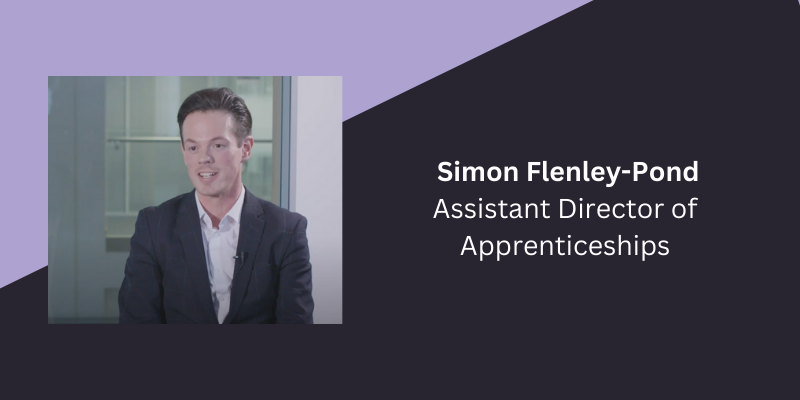
Simon Flenley-Pond, Assistant Director of Apprenticeships, explains how apprenticeships develop real-world skills to apply into the workplace and why higher and degree apprenticeships are so important for the employer, university, and apprentice.  

Find out more about our higher and degree apprenticeships and explore the many higher and degree apprenticeship courses on offer with us. 

To choose UWE Bristol as an employer means that your apprentices are going to gain from high quality teaching and learning from staff who have often got industry experience and have worked in the kind of roles that they’re delivering to the apprentices.

We also work closely with employers through the design process, so when we are designing or redesigning apprenticeships, we often work with employers to make sure that the curriculum that we’re offering is right for the role that apprentices are in, or going to be in.

And what we also do is partner with employers throughout the program. So, we take your feedback, we look at that as part of our program redesign, and we’re always looking to support your voice within our continuous improvement plans for any of our programs.

The university are really invested in apprenticeships. It speaks to our core offer around vocational learning and training. We also know that our apprenticeships are working. We’ve delivered to over 2,500 apprentices since we’ve become an apprenticeship training provider. We’re now delivering across 25 apprenticeship standards across health, science, protective services, engineering, construction, and management.

With that, we’re also delivering to over 300 employers and on a national basis. So, we know that our provision is reaching corners of the country where there perhaps isn’t provision available. We also know that apprentices and employers are benefiting from this, allowing them access to higher education that they may not have been able to get elsewhere.

The apprenticeship offer at UWE Bristol is flexible and programs are often delivered in a hybrid model. So, apprentices have the flexibility to learn online when they are perhaps local, or perhaps when they have work commitments. That is balanced out with time at the university, which is really beneficial not just to the apprentice, but also to the employer. So, for instance, apprentices will have access to lab space, which gives them the real-world skills to be able to take back into the workplace and enhance their career development. Also allowing their productivity in the workplace to be much more efficient.

What we also find with our hybrid offer is that we are reaching a broader range of employers and apprentices across the country as well.

Want to find out more?

Speak to a Partnership Manager today or find out more about our higher and degree apprenticeships.

Explore the many higher and degree apprenticeship courses on offer with us. 

Meet the apprentice: Vicki

Posted on

In this blog post, our Degree Apprenticeship Project Support Officer Angel Capili speaks to our Occupational Therapy Apprentice Student apprentice Vicki Walters about her experiences so far on the course:

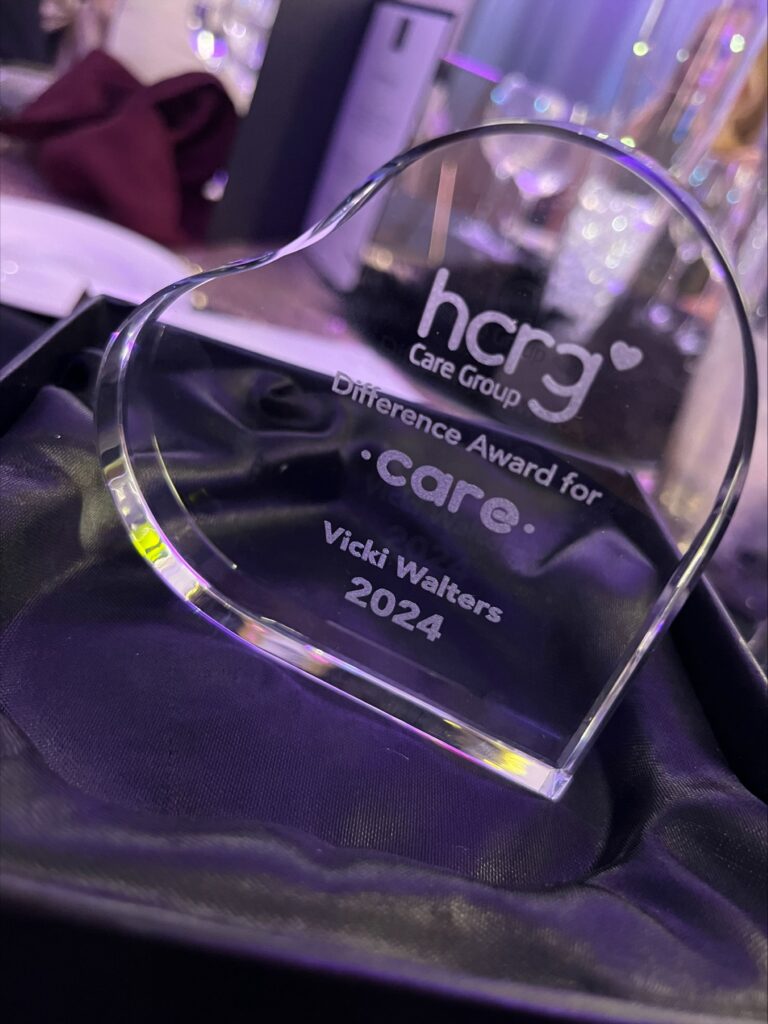
In July, an exceptional individual received The Chief Nurses Care Award, chosen by their team from all HCRG Care Group employees.

Despite facing challenges like dyslexia, they pursued a career in occupational therapy, showcasing resilience and dedication. Starting as a hairdresser, they transitioned to the care sector and found their passion in occupational therapy at Serona.

Over 11 years, they have excelled in their role, inspiring others with their journey from humble beginnings to prestigious recognition. Their story exemplifies the transformative power of passion and perseverance:

“My apprenticeship provided me with a solid foundation in theory, giving me a deep insight into the reasons behind the impact of my work. Having a mentor for the last 3 years has been instrumental in shaping my approach and guiding me towards success.”

The Chief Nurses Care Award

As she looks to the future, with three diverse placements and valuable experience in the healthcare system, she is well-prepared for her career. Mentors and employers have been instrumental in her growth, while innovative software has enhanced efficiency.

Challenges like balancing work and family persist, but she is ready to navigate her career path confidently.

“Remember, obstacles are just stepping stones on your path to success. With the right support and determination, you can overcome any challenge, including mastering time management. If it’s something you truly desire, go for it!”


Find out more about our higher and degree apprenticeships and explore the many higher and degree apprenticeship courses on offer with us. 

Meet the apprentice: Muhammad

Posted on

In this blog post, our Degree Apprenticeship Project Support Officer Angel Capili speaks to our Medical Physics Technology (Radiation Physics) apprentice Muhammad about his experiences so far on the course:

The Degree Apprenticeship Hub extends a warm acknowledgment to our apprentices who are actively driving change and making a significant impact within their respective workplaces. Join us as we delve into their experiences and uncover the transformative journey they have embarked upon.

Muhammad, an apprentice in Year 2 going into Year 3 of our Medical Physics Technology (Radiation Physics) programme, has been nominated and shortlisted for the award of Young Adult Learner of the Year at his hospital – University Hospitals of Leicester NHS Foundation Trust. He will find out later on in the year on the outcome. I had a great pleasure of interviewing Muhammad on this achievement.

“When I joined the team, I had no radiation knowledge at all. So I did my training all by hand. I wrote down everything and over the course of two years I had essentially a book full of notes.”

 Muhammad had peers join the course and found that his notes were informative and useful. He then thought to himself of centralising all his notes onto a platform where it is readily available and accessible for his peers.

“I created a SharePoint website with all my notes on which I slowly transcribed over the course of many months onto this website, and now the website’s been published, all the trainees can look at my reports and be like oh, that’s how you do it. That’s how you test. This is some of the issues I faced, it challenges and addresses it all in one place”

He elaborates on the importance of collaboration and team work.

“A team is only as strong as the weakest link in the chain. So if you can, it doesn’t say somebody’s at high ability and someone’s a low ability, it shouldn’t be viewed as they’re better or they’re worse. It should be viewed as, how can I get that person to that level and even surpass?

And that’s something I’ve grown up with. Like we grew up in a big family and we didn’t want to see other people do bad. And we always try to integrate everybody. And that’s something I’d really try to bring to work”.

The dedication and commitment to his apprenticeship did not go unnoticed as he was able to be nominated for Young Adult Learner of the Year.

Muhammad shares his background as a Muslim, of British-Asian heritage where his family originates from Africa, ethnically from India.

“There is a broad range of people from a different range of backgrounds and are quite good at addressing those differences as well. During the month of Ramadan where Muslims fast, my team have been accommodating in a sense where they have offered for me to start later or finish earlier, they are very understanding which I am very grateful for”.

I then asked Muhammad what skills they have gained on this apprenticeship. “100% has to be organisational skills. I mean to any person who does a degree apprenticeship, they have to balance a full time job and a full time degree. If they’ve got family, if they’re married, if they’ve got any other personal situation, they have to also balance that. It’s an incredibly hard situation to be in, in terms of your timings, if you’re not disciplined with your time, you could easily lose track, if you’re organised with your time, you can. You can distribute that workload better throughout the week”.

He discussed his future plans post-completion of his degree apprenticeship, aiming to become a registered technologist upon successful completion. Additionally, he expressed aspirations of pursuing a master’s degree when he feels adequately prepared.

Muhammad concludes and shares his experience on the overall degree apprenticeship experience  as getting to carry out your education at your own pace and work at the same time.

“When I when I was in college, University was the only option and not apprenticeships. I think it’s such a shame that people don’t have that exposure to the apprenticeship scheme because it’s the best of both worlds in the sense.”

Find out more about our higher and degree apprenticeships and explore the many higher and degree apprenticeship courses on offer with us. 

Back to top