Case Study: UWE Bristol Leading Inclusive Health Research Through Health Ambassadors 

Posted on

Image: The Health Ambassadors from left to right: Zia Haque; Louise Hill-Davis; Trace Mulzac; Sayambrita Mukherjee; Samina Baig; Alina Fieroiu

UWE Bristol is at the forefront of developing innovative, community-led approaches to inclusive health research through its Health Research Ambassadors model.  

The Challenge 

Health research often excludes the very communities most affected by poor health outcomes. Structural barriers such as language; cultural differences; and traditional consultation processes, mean people from global majority and under-served communities are underrepresented. This creates gaps in both research relevance and equity. Deep rooted conscious or unconscious bias also plays a part in widening the gap between researchers and members of under-served communities.  

The UWE Bristol Approach 

Building on insights from community engagement models like the Black and Green Ambassadors scheme, UWE Bristol researchers Dr Andy Gibson and Dr Carmel McGrath developed the Health Research Ambassadors initiative to bridge the gap between diverse communities and the health and care research sector in Bristol and surrounding regions. Health Ambassadors often adopt an unconventional approach to engage with community members, including one to one conversations, catch ups over a hot drink and participating in festivals and community events to build meaningful relationships.

With initial funding from the National Institute for Health and Care Research (NIHR), UWE Bristol piloted the approach with asylum seekers, successfully engaging communities around physical and mental health. The model has since evolved into a major regional programme through support from Bristol Health Partners (of which UWE Bristol is one partner), and partnerships with Caafi Health, Bristol, North Somerset, and South Gloucestershire (BNSSG) Integrated Care Board, and People in Health West of England, co-led by UWE Bristol. 

Scaling Impact 

The programme, now managed by Caafi Health, has gone from strength to strength. When the Health Research Ambassadors project formally launched, it began with three ambassadors. Over the following two years, it experienced significant expansion,. With support from Bristol Health Partners, funding was secured from NHS England as part of a broader effort across the region to support a diverse Research Engagement Network, working to improve the inclusion of under-served, racially minoritised communities in research. 

The programme has since grown to six ambassadors and has extended its geographical reach beyond Bristol into South Gloucestershire and North Somerset. The ambassadors have increasingly taken leadership roles, representing community voices in steering groups, Patient and Public Involvement and Engagement panels, and research design committee

Driven by UWE Bristol’s leadership,  and supported by Bristol Health Partners, the programme has grown in scope, expanding  from a small pilot to a regional network across Bristol, North Somerset and South Gloucestershire. 

The programme has supported over 100 research collaborations with universities, NHS organisations, and NIHR infrastructure e.g. Biomedical Research Centre: Bristol and the NIHR Health Protection Research Unit in Evaluation and Behavioural Science.

The Health Ambassadors scheme has also extended to serve other extended to other under-served groups, including disabled communities.

“Caafi Health ambassadors add real value from the very start of a research project.

Their ability to bring together diverse voices, create a welcoming environment, and support communication and trust enables open, inclusive discussions where everyone feels heard.

They represent the gold standard of inclusive PPIE and are essential in ensuring that research outputs truly reflect the needs of all.”

Sayambrita Mukherjee, Health Ambassador

The Role of Health Ambassadors 

Health ambassadors are recruited from underserved communities and provided with training and support to enable them to act as a trusted two-way bridge with the world of academia. They: 

  • Shape research questions and design to reflect lived experience 
  • Improve culturally competent recruitment and engagement 
  • Facilitate workshops, focus groups, and outreach 
  • Share findings back to communities to build trust and impact 
  • Build longer connections with the world of academia
  •  Maintain ongoing support to the community members by understanding the effects of changing national and world political situations that have a deep impact on under-served communities and their willingness to be involved in research.

Impact 

UWE Bristol’s leadership has: 

  • Increased participation from underrepresented communities 
  • Improved the quality and cultural relevance of research 
  • Strengthened trust between communities and researchers 
  • Influenced regional and national approaches to inclusive research 

The initiative was recognised with the HSR UK Award for Innovation in Inclusion (2023), highlighting its role in tackling long-standing inequalities in research participation. 

Why It Matters 

By embedding community expertise into every stage of research, UWE Bristol is redefining how health research is conducted, ensuring it is equitable, collaborative, and impactful. 

By creating environments where people can express their opinions, share their lived experiences and where their struggles are genuinely heard, we can create a sense of hope and empowerment, leading to lasting change for both researchers and people in under-served communities.


Meaningful partnerships between universities and industry are essential if we are to bridge the gap between education, training and employment.

Posted on

They help equip young people with the skills and experience needed to succeed, while supporting the local workforce to thrive.

Guest blog by Lucy Wicksteed, Assistant Director of Research and External Engagement for Business


It’s hard to remember a recent week when the value and purpose of universities wasn’t being debated somewhere in the national media.

As my own son finishes his first year at university, my conversations around this are no longer confined to colleagues. They come up with friends, family and, most importantly, young people themselves. And who can blame them for questioning their choices?

The Milburn Review into Young People and Work found that a university degree is no longer a guaranteed shield against unemployment. Around 15% of young people who are Not in Education, Employment or Training (NEETs) now hold degrees, while entry-level jobs have become both less plentiful and more demanding.

For those of us of a certain age, it can be tempting to dismiss this as history repeating itself. In 1993, as an A-Level Politics student during a recession, I nervously stood up at a student conference in Shrewsbury and asked: “What’s the point in going to university if there are no jobs at the end of it?” And I joined fellow students in booing Edwina Currie MP when she suggested too many young people were entering higher education.

Lucy’s question from the student conference

My views on opportunity and access haven’t changed much, but the world certainly has. Back then, there were no tuition fees, no internet, no smartphones, no Covid and no AI.

What hasn’t changed is the risk of failing to invest in young people. If we do, we face future talent shortages, reduced innovation and weaker economic competitiveness (not to mention the impact on the health and wellbeing of a generation). Skills England forecasts that demand in priority jobs will grow significantly by 2030, with most additional demand requiring higher-level qualifications, demonstrating the continued need for graduates and advanced skills within the workforce.

Indeed – despite what some of the headlines might suggest – Higher Education Statistics Agency (HESA) data shows graduate unemployment has increased only slightly and remains at around 5%. However, averages can hide important differences. Outcomes do vary considerably between subjects, and for some graduates, the transition from university to work feels much harder than it did a few years ago.

The Milburn Review calls for a participation system that better supports young people from education into employment, recognising how much the world of work has changed. And that responsibility belongs to all of us: schools, colleges, universities, policymakers and employers.

Which is why strong partnerships between universities and industry matter more than ever.

At UWE Bristol, we are committed to ensuring our students graduate with more than qualifications. They need the confidence, capability and networks that come from real-world experience. That means meaningful placements and internships, opportunities to work on live business projects, and access to mentors and entrepreneurs who can help them test ideas, launch ventures and develop commercial awareness.

But our role extends beyond students.

Universities also have a responsibility to support the wider workforce and the communities they serve. By using our expertise in skills development, training and careers support, we can engage people who may not previously have seen higher education as relevant or accessible. This is about widening participation, building confidence and creating practical pathways into meaningful employment.

We can also help businesses stay competitive by translating our world class research into high-quality Continuing Professional Development (CPD) opportunities, exchanging knowledge (it works both ways!) and enabling organisations to adopt new technologies more quickly.

From digital skills to emerging technologies, universities have a crucial role to play in helping people reskill and upskill through Skills Bootcamps, CPD, Degree Apprenticeships and other flexible learning opportunities. At UWE Bristol, we are working closely with employers and policymakers to help build a local workforce that is adaptable, inclusive and ready for the jobs of the future.

As a future-focused, practice-led and partnership-first university, our relationships with business and industry have never been more important. Building on our long-standing experience as a proud post-1992 institution rooted in our region, we will continue to strengthen our work in outreach, skills development and training.

We’ve been contributing to skills, training and economic growth for a long time — and, dare I say, we’re quite good at it. But the urgency of the challenge, and the opportunity to make a difference, has never been greater.


Find out more about our Student and Graduate talent, our Enterprise Zone, or how you or your business can access our funded skills programmes.

UWE Bristol win funding to use Deep Learning to create a Holistic Assessment of Animal Welfare  

Posted on

The Centre for Machine Vision (CMV) at UWE Bristol have recently won funding to investigate towards a Holistic Assessment of Animal Welfare using Emotion and Deep Learning, building on prior work from CMV.  

The project aims to develop technology for automated assessment of animal emotional wellbeing through the interpretation of body language, informed by work in human activity and emotion recognition using AI. Body posture and movement, which together characterise a wider body language, manifest as varying body shapes/poses and movements. The team will utilise human eye tracking to identify holistic spatial temporal animal features linked to perceived animal emotional states, then apply this knowledge via a novel form of supervised machine learning. 

The project comprises of five partners including BOKU University, Scotland’s Rural College, University College Dublin, Linnaeus University and UWE Bristol.

The call was run by the European Partnership on Animal Health and Welfare with each partner funded by their national funder, DEFRA in UWE Bristol’s case.  

The total grant is €1,459,800, with €492,000 allocated to CMV/UWE. There has also been a spinout InnovateUK project, “Pig Health Station” aimed at realising a commercial product, arising from the work. 

The interdisciplinary team will explore computer vision-based machine learning techniques to train machine models with numerous examples of pig body language corresponding to different animal emotional states (ground truth), such as positive emotions associated with reward or negative emotions caused by unfamiliar environments. With extensive examples including structured treatments and environments to create a spectrum of emotional experiences, they aim to correlate specific animal stances and movements with given emotions and levels of arousal. 

Through a system of detected trends and alerts, AI enabled automation could offer a powerful means to identify animals needing follow-up interventions in a timely manner, ensuring animal wellbeing, reducing production costs (e.g. treatments, morbidity) and antimicrobial usage (e.g. fewer blanket treatments). 

The project will be led by Associate Professor of Computer Vision and Machine Learning Dr Wenhao Zhang, Lecturer in Robotics and Machine Vision Dr Disi Chen and Professor of Machine Vision Professor Melvyn Smith.  

UWE Bristol named Training Provider of the Year at the Enginuity Skills Awards

Posted on

UWE Bristol is delighted to announce that we have won Training Provider of the Year at the Enginuity Awards 2025!

The Training Provider Skills Champion of the Year award recognises outstanding commitment to learning and skills development that supports sustainable engineering and manufacturing growth through partnerships between providers and employers.

Since 2017, UWE Bristol has supported over 1,000 Engineering and Built Environment apprentices, with achievement rates up to 100%. Our Women in Industry project addresses skills and diversity gaps by partnering with employers and STEM networks, boosting female applicants by 60% in a year.

We are so proud of our Apprenticeship programmes, and the opportunities they provide for increasing access and participation and addressing under-representation. This award reflects so much hard work and dedication from so many people, underpinned by the critical projects that UWE Bristol delivers such as the Women Like Me project.

Simon Flenley, Assistant Director of Research & External Engagement (Skills) at UWE Bristol

Continuing on from our success at the Enginuity Awards, we are also thrilled to have been shortlisted for University of the Year at the Multicultural Apprenticeship Awards.

The prestigious Multicultural Apprenticeship Awards aim to showcase the range of talent and hard work within multicultural communities that is made possible with the contribution and support of employers and learning providers. 

As part of our commitment to diversifying participation, UWE Bristol recognises the importance of its apprenticeship offer to reach those communities and groups who do not typically access higher education. 

We are committed to improving the opportunities for residents across our city, region, and beyond. Our outreach work aims to connect with all communities to improve the understanding of the offers that are available. In doing so, we are proud of our continued work with employers, who are at the heart of increasing social mobility with apprenticeship programmes. Our research activities and projects, such as those like Women Like Me, led by Dr. Laura Fogg-Rogers, address the inequalities faced by under-represented groups.

At Babbasa, we believe all young people regardless of background, deserve the chance to realise their professional ambitions. Through our partnership with UWE’s Centre for Apprenticeships, we’re bridging the gap between aspiration and opportunity by empowering employers with inclusive practices, uplifting young voices, and creating pathways to a fairer, more representative workforce.

Sangeetha Wynter, Head of Services at Babbasa

Whilst we acknowledge there is still a lot of work to be done in this area, this recognition is a fantastic opportunity to build on the work already being done in this area. We look forward to the Awards ceremony on 7 November.

Find out more about Apprenticeships at UWE Bristol.

Unlock new opportunities with UWE Bristol’s Skills Bootcamps 

Posted on

We’re excited to launch a new series of Skills Bootcamps at UWE Bristol, designed to equip learners with specialist knowledge and hands-on experience that can be applied immediately. These highly subsidised, practical training programmes provide an accessible pathway for freelancers, SMEs, and employees in larger organisations to gain industry-relevant skills and make an immediate impact – whether advancing their careers or driving success within their workplaces. 

Each bootcamp includes 1:1 career or industry coaching, ensuring learners can confidently apply their newly acquired expertise to current roles and future aspirations. 

Our new Skills Bootcamps launching in 2025/26 are: 

Launching in 2026: Visitor Economy – British Art Show 2027 

“The Project Management Skills Bootcamp at UWE was a genuinely hands-on experience. The mix of short theory bursts with live simulations and team challenges meant I could transfer concepts like critical-path mapping, stakeholder analysis, and risk planning straight into my role at my workplace the very next day! Learning from seasoned project managers who have delivered large-scale, high-budget programmes added genuine credibility to the bootcamp.”

Maaz Yunus, SAH Diagnostics

Contact bootcamps@uwe.ac.uk for more information, or complete the enquiry form.


The Skills Bootcamps Programme is funded and managed by the West of England Mayoral Combined Authority, and delivered by The University of the West of England, Bristol.

Celebrating Innovation: MyCelsius Wins Prestigious Medilink South West Award

Posted on

We’re thrilled to announce that MyCelsius, a pioneering early-stage business based at Launch Space at UWE Bristol, has been recognized for its groundbreaking work in women’s health. On 14 May 2025, aboard the iconic SS Great Britain, MyCelsius was awarded the One to Watch Award at the Medilink South West ceremony – a testament to their innovation and dedication.

With a mission to enhance women’s wellbeing, MyCelsius has developed the MyCelsius Cooling Bracelet – a revolutionary solution designed to empower women experiencing hot flushes. Crafted with cutting-edge cooling technology, the bracelet seamlessly blends elegance with functionality, helping users regain confidence and comfort.

We are grateful for Medilink South West, and everyone who’s been part of our journey so far. It’s a proud moment for our team and a reminder that the best is yet to come.

Located in the heart of the University Enterprise Zone (UEZ), Launch Space is a thriving hub for high-tech, research-driven start-ups. We’ve empowered hundreds of early-stage tech entrepreneurs with fully funded support, including office space, expert business mentoring, and exclusive networking opportunities.

Join us in celebrating MyCelsius and their incredible achievement!

Learn more about Launch Space and how we help startups succeed.

Let’s Talk Health and Care Podcast: Spotlighting People, Research and Real Impact

Posted on

At UWE Bristol, our Let’s Talk Health and Care podcast series is growing into a powerful platform for conversation, connection and collaboration across the health and care sectors.

Led by Professor Marc Griffiths and Peter Brindle from the College of Health, Science and Society, each episode opens up a different topic with honesty, insight, and lived experience – showcasing brilliant people, breakthrough research and thoughtful reflection on real-world challenges.

We’re shining a spotlight on two episodes that deserve to be heard far and wide.

Episode 7: Preventing Child Sexual Abuse – A Public Health Approach

Featuring: Professor Kieran McCartan, Professor of Criminology at UWE Bristol

In what Marc and Peter describe as their most impactful episode to date, they sit down with Professor Kieran McCartan to discuss the urgent and often uncomfortable topic of child sexual abuse – and how we can apply public health strategies to prevent it.

The conversation covers prevalence, community-level action, and why talking about this issue openly is essential to creating safer environments for all children.

Listen now on Spotify, Apple Podcasts, or SoundCloud

Trigger warning: This episode includes sensitive discussions around child sexual abuse. For support or further information, visit NSPCC.org.uk.

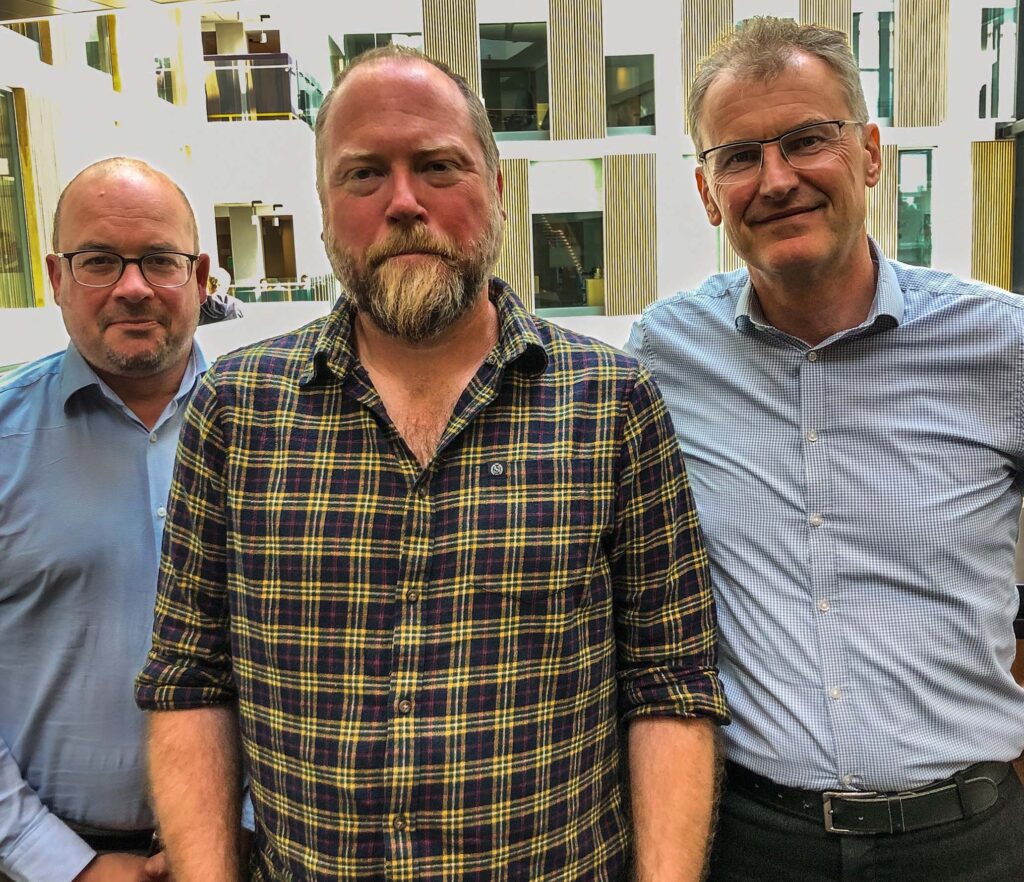
Professor Marc Griffiths, Peter Brindle and Professor Kieran McCartan standing next to one another

Coming Soon: Episode 8 – People, Prosthetics and Possibility

The next episode, out later this week, explores what happens when patient experience, engineering innovation, and collaborative problem-solving come together.

Featuring voices from across healthcare, prosthetics and mechatronics, the conversation highlights the power of a user-centred approach in solving real challenges in rehabilitation. This is a conversation that speaks directly to ICA, UWE’s values, and the future of integrated care.

Available soon on Spotify, Apple Podcasts and SoundCloud

New book by UWE’s Dr Stephen Hunt explores land, liberation, and ecology

Posted on

We’re excited to share that We Must Begin with the Land – a new book by Dr Stephen E. Hunt, Senior Learning Developer (Business and Law) at UWE Bristol – has just been published by Zer0 Books. The title has been added to the UWE Library catalogue and may become a valuable resource for students and staff across a range of programmes.

In this timely and thought-provoking publication, Stephen examines how we grow, share and eat food – not just as a practical issue, but as a political, ecological, and philosophical one.

About the author

Stephen is a writer, ecological activist and radical historian. He holds a PhD in English Literature (Romantic Ecology) from UWE Bristol and continues to contribute to the field of environmental humanities. His previous works include The Revolutionary Urbanism of Street Farm and a co-edited Bloomsbury collection on ecological solidarity and the Kurdish freedom movement.

A social ecology of food and farming

Framed through the anti-colonial lens of social ecology, We Must Begin with the Land explores how communities – from Wiltshire to Rojava – are reclaiming the way we think about agriculture and abundance.

Through real-world case studies and radical theory, Stephen touches on:

  • Food sovereignty movements like La Via Campesina
  • Indigenous knowledge and ecological traditions
  • The promise of hemp, fungi, and seaweed in sustainable material science
  • Refugee-led urban growing communities
  • The surprising rise of Japanese Shumei cultivation in rural England

As described by reviewer Dr Clémence Scalbert Yücel (University of Exeter), “This is a rich and nourishing work written by someone passionate about good food – good for the people, for the planet, for society.”

A must-read for changemakers

This book offers fresh insight for those interested in agroecology, ecological democracy, and sustainable futures. “A must-read for social movements struggling for emancipatory agroecologies radical ecological democracy, and food justice,” says Professor Michel Pimbert (Coventry University).

Explore the book

UWE researchers launch futuristic hydroponics installation at Triennale di Milano

Posted on

SPIKA challenges inequality and urban food futures through microbial innovation.

UWE has been a key part of a development that has taken centre stage at one of the world’s biggest design exhibitions – the Triennale di Milano – with a striking new installation exploring nature, inequality and the future of food.

Launched on 13 May, SPIKA is part of the 24th International Exhibition at the Triennale di Milano. The installation features a hydroponic tower powered by microbial fuel cells – a sustainable system developed at UWE Bristol with Dr Mukesh Sharma and Prof Neil Willey. It invites audiences to consider our relationship with nature and how we might produce nutritious food in future urban settings.

Watch the SPIKA build come to life and hear from the researchers involved:
Video: Building SPIKA

SPIKA is an output of the Microbial Hydroponics (Mi-Hy) project – a €6.5 million EU/UKRI-funded effort to create sustainable urban hydroponic systems. The team at UWE is working in partnership with KU Leuven, University of Southampton, CSIC Madrid, University of Novi Sad, Biofaction Vienna and SONY Computer Science Labs Paris.

Innovation at UWE: The MI-Hy System

The Mi-Hy system – short for Microbial Hydroponics – is being developed in the Envirotron at UWE Bristol, a specialist facility for environmental and agricultural innovation. It reintroduces beneficial microbes into hydroponic systems and uses smart technology to manage these microbial communities.

Why? Because microbes are key to turning common urban waste streams into a nutrient source for food production. This makes Mi-Hy a bold response to urban sustainability, food security, and climate change – using waste to grow nutritious crops, closer to where people live.

Mi-Hy is part of the European Innovation Commission’s CO₂ and Nitrogen Valorisation Portfolio – a €30 million programme aimed at reducing emissions and creating circular solutions across Europe. The system will be demonstrated at key events and forums across the continent over the next two years.

See SPIKA in action

SPIKA is on display at the Triennale di Milano until November 2025

sage growing in the hydroponic tower powered by microbial fuel cells

SPIKA and Mi-Hy are just one part of a bigger picture – showing how UWE researchers are using science, design and collaboration to shape sustainable futures.

Visit the live exhibit website to explore the exhibit in real-time

You can see updates by following on Instagram: @spika.mi_hy, @triennale

Knowledge Transfer Partnership Associate Spotlight: Abdulrazaq Sanni

Posted on

Abdulrazaq is a Software Engineer as part of our Knowledge Transfer Partnership (KTP) with WASE and UWE Bristol. A KTP is a UK-wide, 3-way partnership between a business, a university and talented graduate, and aims to help businesses improve competitiveness and productivity, whilst also boosting the career prospects of the graduate.   

WASE and the College of Arts, Technology and Environment (CATE) at UWE Bristol began their KTP together in April 2025. The KTP will create a machine learning-based soft sensing platform. This platform will be integrated within WASE’s Electro-Methanogenesis Reactor (EMR) to remotely optimise system performance. The system will help expand EMR technology, allowing customers to treat wastewater on-site while generating energy, reducing carbon emissions, and producing cleaner water and nutrients for use as fertilizers.

The project aim is to develop game-changing improvements to the EMR technology by enhancing the system’s monitoring and adaptability. This will ensure minimal downtime and maximum value from the waste. The improvements will involve optimizing WASE’s industrial-scale system and improving predictive analytics in anaerobic digestion (AD). We will use feedback from microbial electrolysis cell (MEC) modules to enhance sensor accuracy.

The KTP team caught up with Abdulrazaq to hear about their experience of the KTP so far:

What attracted you to the position?

I’m drawn to the role for several reasons. Primarily, it’s the excitement around the project’s potential — what we can achieve and the path to getting there. I enjoy challenges and solving problems, and this feels like the perfect project for someone like me. I’m especially excited about helping position WASE at the forefront of innovation in the anaerobic digestion (AD) sector through the application of AI and operational automation.

Another reason is the role’s position at the intersection of academia and industry. Having previously worked in academia, I’ve been considering a transition into the industry. This opportunity allows me to bridge both worlds. Finally, the sustainability aspect is very important to me. I’ve worked on a project that was somewhat related to sustainability, and being part of an initiative that contributes to a healthier climate is truly rewarding.

What are you most looking forward to?

I’m most looking forward to realising the project’s objectives. I say “realising” because I genuinely believe they’re achievable, even though the journey might be challenging. Reaching those goals will be a testament to the work, support, and growth that come along the way. It will also reflect the level WASE will have reached — and I’m excited to be a key contributor to that progress.

How is the partnership between UWE Bristol and the company working?

It’s only my third week so far, but the partnership has been fantastic. Everyone at both the company and the university has been incredibly supportive and engaged, which is great because it shows that everyone is equally invested in the project. One thing that stands out to me is how they’ve managed to involve the right people — experts who understand exactly what we need to do. That alignment is crucial to the project’s success, and I think they’ve nailed it.

What are the major benefits/support available from UWE Bristol?

The major sources of support from UWE have been the academic team and the KTP team. The KTP team has been actively involved from the start, guiding me through key steps and helping me understand the important elements of the partnership. The academic team has also been very supportive and clearly committed to mentoring and guiding me throughout the project.

What do you enjoy most about your job?

Although it’s only my third week, it already feels like an environment where I’ll get to learn a lot — especially about anaerobic digestion, a field I hadn’t worked in before. The learning curve is steep, but that only makes it more exciting. The people here have also been amazing. They could probably list “Family” as one of their core values, because that’s exactly how they operate — with a strong sense of unity and belonging. That culture really helps drive a shared sense of purpose.


Find out more about KTPs at UWE Bristol

Back to top