We’re excited to share that We Must Begin with the Land – a new book by Dr Stephen E. Hunt, Senior Learning Developer (Business and Law) at UWE Bristol – has just been published by Zer0 Books. The title has been added to the UWE Library catalogue and may become a valuable resource for students and staff across a range of programmes.
In this timely and thought-provoking publication, Stephen examines how we grow, share and eat food – not just as a practical issue, but as a political, ecological, and philosophical one.
About the author
Stephen is a writer, ecological activist and radical historian. He holds a PhD in English Literature (Romantic Ecology) from UWE Bristol and continues to contribute to the field of environmental humanities. His previous works include The Revolutionary Urbanism of Street Farm and a co-edited Bloomsbury collection on ecological solidarity and the Kurdish freedom movement.
A social ecology of food and farming
Framed through the anti-colonial lens of social ecology, We Must Begin with the Land explores how communities – from Wiltshire to Rojava – are reclaiming the way we think about agriculture and abundance.
Through real-world case studies and radical theory, Stephen touches on:
Food sovereignty movements like La Via Campesina
Indigenous knowledge and ecological traditions
The promise of hemp, fungi, and seaweed in sustainable material science
Refugee-led urban growing communities
The surprising rise of Japanese Shumei cultivation in rural England
As described by reviewer Dr Clémence Scalbert Yücel (University of Exeter), “This is a rich and nourishing work written by someone passionate about good food – good for the people, for the planet, for society.”
A must-read for changemakers
This book offers fresh insight for those interested in agroecology, ecological democracy, and sustainable futures. “A must-read for social movements struggling for emancipatory agroecologies radical ecological democracy, and food justice,” says Professor Michel Pimbert (Coventry University).
SPIKA challenges inequality and urban food futures through microbial innovation.
UWE has been a key part of a development that has taken centre stage at one of the world’s biggest design exhibitions – the Triennale di Milano – with a striking new installation exploring nature, inequality and the future of food.
Launched on 13 May, SPIKA is part of the 24th International Exhibition at the Triennale di Milano. The installation features a hydroponic tower powered by microbial fuel cells – a sustainable system developed at UWE Bristol with Dr Mukesh Sharma and Prof Neil Willey. It invites audiences to consider our relationship with nature and how we might produce nutritious food in future urban settings.
Watch the SPIKA build come to life and hear from the researchers involved: Video: Building SPIKA
SPIKA is an output of the Microbial Hydroponics (Mi-Hy) project – a €6.5 million EU/UKRI-funded effort to create sustainable urban hydroponic systems. The team at UWE is working in partnership with KU Leuven, University of Southampton, CSIC Madrid, University of Novi Sad, Biofaction Vienna and SONY Computer Science Labs Paris.
Innovation at UWE: The MI-Hy System
The Mi-Hy system – short for Microbial Hydroponics – is being developed in the Envirotron at UWE Bristol, a specialist facility for environmental and agricultural innovation. It reintroduces beneficial microbes into hydroponic systems and uses smart technology to manage these microbial communities.
Why? Because microbes are key to turning common urban waste streams into a nutrient source for food production. This makes Mi-Hy a bold response to urban sustainability, food security, and climate change – using waste to grow nutritious crops, closer to where people live.
Mi-Hy is part of the European Innovation Commission’s CO₂ and Nitrogen Valorisation Portfolio – a €30 million programme aimed at reducing emissions and creating circular solutions across Europe. The system will be demonstrated at key events and forums across the continent over the next two years.
See SPIKA in action
SPIKA is on display at the Triennale di Milano until November 2025
SPIKA and Mi-Hy are just one part of a bigger picture – showing how UWE researchers are using science, design and collaboration to shape sustainable futures.
Abdulrazaq is a Software Engineer as part of our Knowledge Transfer Partnership (KTP) with WASE and UWE Bristol. A KTP is a UK-wide, 3-way partnership between a business, a university and talented graduate, and aims to help businesses improve competitiveness and productivity, whilst also boosting the career prospects of the graduate.
WASE and the College of Arts, Technology and Environment (CATE) at UWE Bristol began their KTP together in April 2025. The KTP will create a machine learning-based soft sensing platform. This platform will be integrated within WASE’s Electro-Methanogenesis Reactor (EMR) to remotely optimise system performance. The system will help expand EMR technology, allowing customers to treat wastewater on-site while generating energy, reducing carbon emissions, and producing cleaner water and nutrients for use as fertilizers.
The project aim is to develop game-changing improvements to the EMR technology by enhancing the system’s monitoring and adaptability. This will ensure minimal downtime and maximum value from the waste. The improvements will involve optimizing WASE’s industrial-scale system and improving predictive analytics in anaerobic digestion (AD). We will use feedback from microbial electrolysis cell (MEC) modules to enhance sensor accuracy.
The KTP team caught up with Abdulrazaq to hear about their experience of the KTP so far:
What attracted you to the position?
I’m drawn to the role for several reasons. Primarily, it’s the excitement around the project’s potential — what we can achieve and the path to getting there. I enjoy challenges and solving problems, and this feels like the perfect project for someone like me. I’m especially excited about helping position WASE at the forefront of innovation in the anaerobic digestion (AD) sector through the application of AI and operational automation.
Another reason is the role’s position at the intersection of academia and industry. Having previously worked in academia, I’ve been considering a transition into the industry. This opportunity allows me to bridge both worlds. Finally, the sustainability aspect is very important to me. I’ve worked on a project that was somewhat related to sustainability, and being part of an initiative that contributes to a healthier climate is truly rewarding.
What are you most looking forward to?
I’m most looking forward to realising the project’s objectives. I say “realising” because I genuinely believe they’re achievable, even though the journey might be challenging. Reaching those goals will be a testament to the work, support, and growth that come along the way. It will also reflect the level WASE will have reached — and I’m excited to be a key contributor to that progress.
How is the partnership between UWE Bristol and the company working?
It’s only my third week so far, but the partnership has been fantastic. Everyone at both the company and the university has been incredibly supportive and engaged, which is great because it shows that everyone is equally invested in the project. One thing that stands out to me is how they’ve managed to involve the right people — experts who understand exactly what we need to do. That alignment is crucial to the project’s success, and I think they’ve nailed it.
What are the major benefits/support available from UWE Bristol?
The major sources of support from UWE have been the academic team and the KTP team. The KTP team has been actively involved from the start, guiding me through key steps and helping me understand the important elements of the partnership. The academic team has also been very supportive and clearly committed to mentoring and guiding me throughout the project.
What do you enjoy most about your job?
Although it’s only my third week, it already feels like an environment where I’ll get to learn a lot — especially about anaerobic digestion, a field I hadn’t worked in before. The learning curve is steep, but that only makes it more exciting. The people here have also been amazing. They could probably list “Family” as one of their core values, because that’s exactly how they operate — with a strong sense of unity and belonging. That culture really helps drive a shared sense of purpose.
HUG®, a sensory device co-designed during the Arts and Humanities Research Council-funded LAUGH project at Cardiff Metropolitan University, is transforming care for people living with dementia. HUG is a large cuddly sensory doll that people living with dementia find comforting and soothing to embrace. HUG has long arms, a simulated heartbeat, and integrated customisable music and has achieved worldwide commercial success through spinout company HUG by LAUGH® (www.HUG.world).Lisa Hughes, manager of Llys y Seren care home, said “HUG is transformative for people who tend to become agitated when under stress, which happens frequently with people living with dementia. I honestly think HUG not only improves the quality of life for people using it but it’s also life prolonging.”
Building on this success, a 2022 study led by University of the West of England Bristol and Aneurin Bevan University Health Board adopted 500 HUGs across care settings, reporting positive outcomes. Findings were presented at the Senedd Welsh Parliament during an AHRC impact event, further validating HUG’s positive impact on wellbeing.
In an exciting new development, HUG by LAUGH® co-founder Dr Jac Fennell is partnering with med-tech start-up Milbotix and UWE expertise in Health and Computer Science. Milbotix, a spinout from research at UWE Bristol and the University of Bristol, develops wearable solutions that give insights on the wearer’s wellbeing, such as how anxious the person is feeling.
Dr Zeke Steer, Milbotix CEO
Commenting on the collaboration, Dr Zeke Steer, Milbotix CEO and inventor of SmartSocks® said: “This collaboration will use SmartSocks® technology to monitor changes in the psychological wellbeing of HUG® users. The aim of the collaboration is to provide measurable, quantitative evidence of HUG’s effectiveness as a non-pharmacological intervention, potentially supporting its broader adoption in healthcare”
Dr. Jac Fennell, co-founder of HUG by LAUGH® and researcher at UWE Bristol, added: “This is an exciting opportunity to evaluate the emotional and sensory power of HUG® with innovative digital technology. Using SmartSocks® to monitor the impact of HUG will enable us to generate meaningful data and insights for carers and clinicians.”
Dr Jac Fennell with the HUG
The project will also explore HUG’s benefits for people with autism, mental health challenges, and those receiving palliative care.
Vilans, the Dutch Centre of Expertise for Long-Term Care, will lead an evaluation of SmartSocks® and HUG® in two dementia care facilities. This Vilans study will assess patient wellbeing and potential cost savings, contributing evidence to inform dementia care and policy in the Netherlands.
Findings from both UK and Dutch evaluations will shape plans to trial HUG® with the SmartSocks® in NHS settings, with the goal of reducing agitation and anxiety, improving care outcomes, and supporting the wider use of non-pharmacological assistive technologies in health and social care.
HUG by LAUGH and Milbotix have been supported by Alzheimer’s Society’s award-winning Accelerator and this marks the first time two supported innovations have joined forces on a collaborative project.
According to Alzheimer’s Society there are currently around one million people in the UK with dementia. This is projected to rise to 1.4 million people by 2040.
Simon Lord, Alzheimer’s Society’s Head of Innovation said:
“At Alzheimer’s Society, we support and invest in innovative solutions to address the challenges people affected by dementia face today, while our world-class research helps to deliver the treatments of tomorrow.
“This collaboration shows the power of innovation in dementia care. As we raise awareness this Dementia Action Week of the six most common symptoms, we’re urging anyone worried about themselves or a loved one to use our symptom checklist and speak to their GP.
“An early and accurate diagnosis can open the door to vital treatment and support, including innovative products like SmartSocks and HUG. Technologies like this can significantly improve quality of life by addressing specific symptoms like anxiety. It’s inspiring to see our Accelerator partners working together to create solutions that support people with dementia.”
If you’re worried about yourself, or someone close to you, then check your symptoms today. Visit alzheimers.org.uk/checklist or call Alzheimer’s Society’s Dementia Support Line on 0333 150 3456.
This HUG by LAUGH and Milbotix collaboration project is supported by an Arts & Humanities Research Council Impact Accelerator Award.
About Milbotix
Milbotix is a fast growing, venture-backed digital health company with offices in Bristol, UK. We create accurate, AI-enabled wearable devices embedded in everyday items of clothing for use in research, social care and healthcare. Our first family of products is called SmartSocks®. Developed with support from Alzheimer’s Society and Innovate UK, the socks are more familiar and less intrusive for people with conditions like dementia.
HUG by LAUGH® is a UK-based company focused on improving quality of life through innovative, research-led products. Its flagship product, HUG®, is a sensory comfort device designed to reduce anxiety and enhance wellbeing, particularly for people living with dementia. Developed from academic research at Cardiff Metropolitan University, HUG has been trialled in hospitals, care homes, and domestic settings. HUG by LAUGH are Alzheimer’s Society UK Accelerator Partners.
Vilans is the national Centre of Expertise for Long-Term Care in the Netherlands. The organisation works to improve the quality of care through research, innovation, and knowledge sharing. Vilans collaborates with care providers, policymakers, and researchers to develop practical solutions that support people with complex care needs. As a leading voice in dementia care, Vilans conducts evaluations of innovative interventions and contributes evidence to inform national care policy and practice.
At UWE Bristol, we believe that a truly inclusive learning and working environment benefits everyone. In today’s diverse workforce, recognising and supporting neurodivergent individuals is not just a matter of inclusivity – it’s a strategic advantage.
We are committed to fostering an inclusive environment where neurodivergent individuals can thrive academically and professionally. By understanding and supporting neurodivergent talent, we not only promote inclusivity but also unlock a wealth of potential.
Approximately 1 in 7 people in the UK are neurodivergent, encompassing conditions such as dyslexia, ADHD, autism spectrum disorders, and more. At UWE Bristol, we see the incredible value that neurodivergent students and apprentices bring to our community. These individuals often possess exceptional skills in areas like problem-solving, creativity, and holistic thinking—attributes highly valuable in the workplace.
Apprenticeships provide a practical pathway for neurodivergent individuals to apply their strengths in real-world settings. The hands-on experience, structured learning environment, and mentorship opportunities align well with the learning styles of many neurodivergent apprentices.
For businesses, embracing neurodiversity within apprenticeship programmes can lead to:
Enhanced Innovation: Diverse thinking styles contribute to creative problem-solving and innovation.
Improved Employee Retention: Inclusive practices foster a supportive environment, leading to higher job satisfaction and retention rates.
Greater Productivity: Unlocking the potential of the entire workforce is critical for effective and efficient ways of working and boosting outputs.
To reinforce the importance of understanding and supporting neurodivergent individuals within the apprenticeship landscape, Simon Flenley, Assistant Director of Research & External Engagement (Skills), Vanda Papafilippou, Senior Lecturer in Human Resource Management and Dr. Laura Fogg-Rogers, Associate Professor for Engineering in Society from UWE Bristol met with Inclusive Change. The discussion covers the challenges neurodivergent apprentices face, the importance of disclosure, recruitment and retention strategies, and creating an inclusive learning and working environment. The video also highlights our initiatives and upcoming events aimed at fostering these discussions and practices.
Please don’t hesitate to get in touch with us. Our partnership managers can explore how we can support your business with our apprenticeship programmes.
Sibling sexual behaviour and abuse (SSB-A) is an emerging research area in the field of preventing and responding to harmful sexual behaviour (HSB) in children and young people (CYP). Over the last five years the authors have been involved in several research projects (including the first government commissioned national sibling sexual abuse project for the Home Office with SARSAS, Purple Leaf and Dr Sophie King-Hill from the University of Birmingham)have worked with a number of national and international organisations (#SiblingsToo and Thriving Survivors) and have published with others on SSB-A (including but not limited to Dr Sophie King-Hill, David Russell, Dr Peter Yates and Stuart Allardyce – for a list of relevant publications please see the resource and the UWE repository). Over this period, it has occurred to the authors that while the research and evidence base on SSB-A is emerging and has long been central to the work of many professional organisations and frontline services, these services rarely carry out research or collate an evidence base on their practices and outcomes relating to SSB-A. This is mainly because frontline services lack time, resources, funding and research experience to carry out this work alongside their practice. To support services/organisations/professionals who want to become more outcomes focussed and evaluate their work regarding SSB-A, the authors using internal impact related funding from UWE, have developed a research and evaluation framework for SSB-A.
The research and evaluation framework has been developed and is underpinned by the authors’ research experience and knowledge of the area of SSB-A, as well as the extensive research and evaluation carried out by them in the field of sexual abuse. The framework provides the current research context of SSB-A and states why we need a better practice-based evidence base, before highlighting the most effective methodologies for doing this and how they can be best understood, interpreted and evidenced by practitioners. The framework is underpinned by a wellbeing and trauma-informed approach and a public health and development perspective. Moreover, as SSB-A is a family systems issue it needs a family systems response, especially if uncovered or disclosed in childhood, as such the framework addresses and centralises a ‘whole family’ perspective.
Given the complicated nature of reporting and recording data on SSB-A, whether the behaviour and abuse was disclosed and reported in childhood (therefore framed as harmful sexual behaviour (HSB) and an ongoing child protection issue) or in adulthood (as a victim services issue as well as potentially a criminal justice issue), evaluating the topic can be challenging. The framework offers insights to collecting and evidencing outcomes for five distinct but interrelated populations:
Children and young people (CYP) who has been harmed
CYP responsible for the harm
Parent and carers of CYP impacted by SSB-A
Adults who as children were responsible for harm
Adult victim-survivors of SSB-A
The framework also provides examples of the research questions, data that needs to be collected for each of these groups, providing worked examples and data collection tools and analysis guidelines. It is hoped that this framework will be of use to practitioners in developing their own evidence base in SSB-A and that this in turn will feed into academic research as well as improving commission, evidence-based practice and improve outcomes for everyone impacted by SSB-A.
The framework is a free resource and can be found on the UWE website.
Amy and Kieran would like to thank New Wave , especially Jessica Jolliffe and Kaela Earl-Tester, for all their work on the production of the final document.
The incredible Project Zulu Choir returns to the region in May for their biennial tour.
Project Zulu is a suite of educational development projects run by UWE Bristol to promote lifelong learning opportunities across township schools in KwaZulu-Natal, South Africa. The Project involves a choir of 20 children aged 11 to 14, from two of the township schools.
Over three weeks the choir will tour the South West, showcasing their traditional Zulu song and dance in concert halls, schools, and busking in busy city centres.
The tour will close with a gala concert at Bristol Beacon, marking 10 years since the choir’s last visit to the renowned venue. The performance features Britain’s Got Talent finalist and opera sensation, Innocent Masuku, who became a household name in 2024 after his performance on the ITV show. He will host the gala concert, perform solo and sing with the choir in what promises to be a truly unique collaboration.
View the 2023 finale concert for a taste of what to expect:
The tour dates are:
Saturday 24 May: Central Bathbusking day*
FREE EVENT, public spaces all day (location to be confirmed)
Thursday 29 May: Central Bristol busking day*
FREE EVENT, public spaces all day (location to be confirmed)
Friday 30 May: Central Bristol busking day*
FREE EVENT, public spaces all day (location to be confirmed)
*Busking days are weather permitting. Exact busking locations will be released on Project Zulu social media closer to the day.
When they’re not performing, the choir will visit primary and secondary schools across Bristol, offering cultural workshops and exchange opportunities. Generous hosts in Bristol will open their homes to the choir members, providing a reciprocal hosting experience.
Dr Benjamin Knight, Project Zulu Director, said: “The choir will bring boundless energy and charisma during their tour, projecting their incredible sound and thrilling audiences. But this tour isn’t just a must-see event – it plays a crucial role in supporting the children’s schools and education. Every ticket bought and every donation made will directly impact young people’s futures.”
UWE Bristol is proud to highlight the achievements of Dr. Jack Lowe, based in the Digital Cultures Research Centre, who recently completed the prestigious ARC Accelerate programme. Jack spent six months transforming his innovative ideas into a scalable venture, with the support of this AHRC/ESRC-funded initiative.
About ARC Accelerate
ARC Accelerate is a 6-month accelerator programme designed to help researchers in social sciences, arts, and humanities transform their ideas into market-ready products and services. The programme offers up to £62,500 in funding, along with comprehensive support including training, mentorship, and networking opportunities.
Dr. Jack Lowe: Pin the Tale
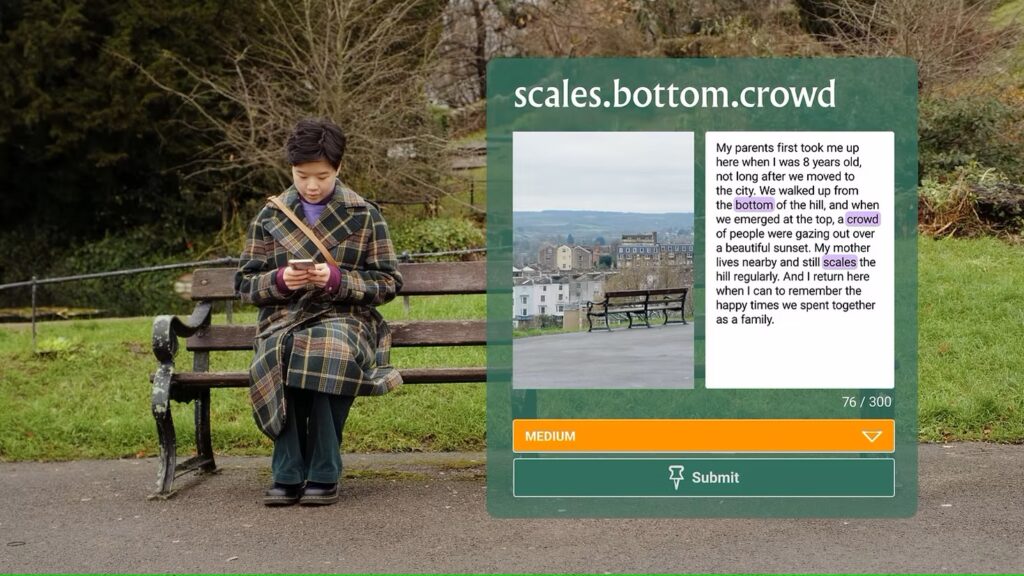
Jack has developed Pin the Tale, a digital game that strengthens community ties to place using the what3words app. In the game, players use what3words addresses to write stories about specific locations, creating connections between narrative and place. This innovative approach encourages players to explore and share their experiences of different locations through storytelling.
For Jack, the ARC programme offered a transformative perspective on research commercialisation. He reflects:
“Commercialisation doesn’t have to mean profiteering. Instead, it is most useful as a lens for thinking about how to sustain the impact of your work, whatever form that might take.”
The programme’s structured support and resources proved invaluable:
“Having a dedicated period of paid time focused solely on my venture, and being able to fully pay my collaborators for their work, resulted in an outcome that simply would not have been possible otherwise.”
Through engaging with multiple stakeholders during the programme, Jack gained crucial insights into how his platform could meet real-world needs. Each public workshop has provided new learning opportunities about the challenges and possibilities his game presents.
Project Progress and Future Plans
Since completing the ARC Accelerate programme, Jack has successfully launched Pin the Tale in early-access to the public. The game is now freely available online, inviting users to discover and create stories connected to specific locations across the UK.
“At its heart, Pin the Tale is about re-connecting individuals and communities to the places they live in, visit or care about. It’s about going beyond the ‘official’ stories of places; the ones we might be familiar with from history lessons or books. Pin the Tale aims to be much more intimate, inspiring and creative, where ‘culture’ and ‘heritage’ is something to be uncovered in people’s own stories and the stories of others in their communities.”
The game offers two key experiences:
Discovering stories about places you’re interested in: Navigate on the map to an area of the UK that you’re interested in. Click the Find Stories button to read stories other people have written about places in that area.
Share your own stories: Zoom into a UK location on the map that you want to write a story about. Click the square closest to the spot your story is about, then click ‘Write a story about this location’. Stories on Pin the Tale can take any creative form: fictional, poetic, historical, personal, informative, imaginative.
Jack emphasises the experiential nature of the game:
“When learning about the world around you feels like a process of discovery – when it engages your imagination – that’s when it becomes exciting. We want to evoke that feeling in our players.”
The project continues to gain recognition within the academic community, with Pin the Tale being selected as a featured project at this year’s Royal Geographical Society Annual International Conference, where it aligns perfectly with the conference theme of ‘Geography and Creativity.’
Support for UWE Researchers
UWE is committed to supporting our researchers in transforming their innovative ideas into real-world impact. Jack’s success in the ARC Accelerate programme demonstrates the potential of our research community to drive positive change through commercialisation.
I work closely with minoritised communities around their sexual health and on marginalisation through sexual violence. Recent BMA award winning work has been with young survivors of sexual violence.
Collaborating with local partners, the Greenhouse and the Bridge SARC via Bristol Health Partners Sexual Health Improvement Health Integration Team (SHIP HIT), we set out to put survivors of child sexual abuse in charge of improving sexual health services for survivors like them in the city.
Their voice, their path
We supported young survivors to redesign the way that their treatment worked. We paid attention to power dynamics to ensure real co-production. We produced a new patient pathway guided by a kind of a passport or map to help children, young people and their carers find their way through the service, through the journey.
The map showed them all their options and put them in charge of decisions about where they could go and what it was like. We used bitesize videos to show them what they could expect, what the sexual health clinic looks like, who you’ll be meeting, here’s the room, here’s the process. For all of us involved, it was – always is – about finding the options that they like, what’s going to work for these young survivors.
More power to the individual
Throughout the design process, we used safe, trauma informed art based methods to uncover what survivors needed from a service. The young survivors designed different characters and imagined what each would need. At the end, we also asked them to tell us how to evaluate the work, if it was for them, what do they think success looks like.
For me, it’s about giving power to these unheard voices and in the case of trauma survivors, the process needs to be restorative, giving them back voice and options. And I guess that’s the thread in my work. I’m passionate about listening to people to find out what they need – not what we assume or think they need. That’s so important.
This is true across a range of groups I work with, there’s never one answer. I have other research students working with minoritised groups including black men in London telling us what they need from sexual health services, sexual violence survivors telling us what stops them using healthcare and what support male sex workers need. We are looking for funding to build a digital community around their sexual needs. The latest project I am working on is to get refugee and asylum seekers better served by sexual health and gender-based violence services.
Trusted to make a real difference
I love what I do. I really love listening to people’s stories – and helping to tell them, to share them. It’s an honour in many ways. But there’s real responsibility too. I work with groups that have often suffered trauma. And so it’s incredibly important that these survivors can see that their stories making real world change. I recently handed over £2000 in BMA prize money to the young survivors at Greenhouse who co-produced the patient pathway and they will decide how to spend it.
Because that’s what it’s all about. What we do has to make a change. It has to result in improvements. So yes, I tell my students that we’re here to change the world. Not just here to find out about it, but to make it better.
Contribution to the UN 2030 sustainable development goals
UWE Bristol is proud to align our research to the UN sustainable development goals. The above research aligns with the following goals:
The Knowledge Transfer Partnership (KTP) between University of the West of England (UWE), Obafemi Awolowo University (OAU), the Taro Agric Farm (TAF) was established to harness data-enabled innovations (DEI) for the commercial poultry industry in Nigeria. The project aimed to enhance chicken production efficiency and optimise overall business operations through the strategic application of data-driven technologies and academic expertise. Kamran Munir (Professor of Data Science) led the collaborative relationship with the Nigerian partners and the project from UWE. Saidu Oseni (Professor of Animal Sciences) led the project from OAU.
The Company
Taro Agric Farm (TAF), is a broiler chicken production company based in Southwest Nigeria. With over a decade of experience, TAF specialises in commercial broiler farming, operating concurrent batches of 2,000 birds per cycle. The company has multiple production centres, including its main base in Ile-Ife, Osun State, and outgrower units in Ilesa (Osun State) and Ibadan (Oyo State). Beyond production, TAF is actively engaged in consulting services, capacity building, and training for poultry farmers, offering expertise across the entire broiler chicken value chain—including input supply, production, processing, distribution, and marketing. A defining characteristic of TAF is its forward-thinking approach to poultry farming. Through the African Agriculture Knowledge Transfer Partnership (AAKTP), TAF successfully integrated smart technologies such as IoT-enabled sensors, a data storage for real-time data management, and predictive analytics to enhance decision-making in poultry production. This has positioned TAF as one of the leaders in leveraging data-driven solutions for sustainable poultry farming in Nigeria.
The Challenge
The Knowledge Transfer Partnership (KTP) between Taro Agric Farm (TAF), Obafemi Awolowo University (OAU), and the University of the West of England (UWE) was initiated to apply data-enabled innovations (DEI) to commercial chicken production in Nigeria and to improve and optimise business operations. A key focus was developing a strategy for embedding DEI to create sustainable broiler chicken operations over the long term. The poultry industry in Nigeria faces multiple constraints, including high mortality rates, inefficient farm management practices, limited use of data in decision-making, and poor environmental conditions affecting broiler chicken welfare and productivity. In the past, TAF like many others in the industry, relied on conventional methods of managing poultry production, which lacked the real-time monitoring and predictive capabilities needed to optimise productivity and farm environment. Farmers and farm managers had to rely on manual data collection and experience-based intuition, making it difficult to identify early warning signs of health risks or performance inefficiencies. Without data-driven insights, farm operations were reactive rather than proactive, often leading to delayed interventions and losses. In addition, one of the biggest challenges TAF faced in the past was high mortality and morbidity rates in broiler production. Various environmental factors, such as poor ventilation, excessive heat, high humidity, and exposure to noxious gases, particularly ammonia, significantly affected bird health. Without a robust system to monitor and control these environmental conditions, broiler chickens were at risk of disease outbreaks, respiratory problems, and stress, which ultimately led to economic losses.
Tackling these constraints required innovation in both poultry management and business practices to enhance the viability and profitability of operations. The KTP project activities included setting up an IoT platform, configuring sensor nodes, and establishing a database to record and store data on various parameters such as chicken welfare, input supplies, production, processing, distribution, and marketing. The project also involved the development of dashboards for monitoring key performance indicators (KPIs), the use of predictive analytics, and conducting performance comparisons across production batches. Additional activities included stakeholder engagement through workshops to build and embed capacity. The key accomplishments of KTP project include the successful setup, testing, and deployment of a IoT platform in a broiler chicken unit in southwest Nigeria, where key variables related to chicken welfare and performance were captured and monitored. Company data was archived in a database, and a dashboard was developed to track temperature, relative humidity, air quality and noxious gas parameters. An end of project Stakeholders’ Engagement Workshop aiming towards widening participation and sustainability with approximately ~100 participants, including poultry farmers and industry professionals, was also successfully conducted.
“This project equipped TAF staff with advanced digital farming skills, enhanced OAU’s research capacity and curriculum, and strengthened international collaboration—demonstrating how innovation and partnership can drive sustainable agricultural development.”
Prof. Kamran Munir (Professor of Data Science, University of the West of England, UWE Bristol)
Benefits and Changes
The Knowledge Transfer Partnership (KTP) between Taro Agric Farm (TAF), Obafemi Awolowo University (OAU), and the University of the West of England (UWE) has led to significant improvements in broiler chicken production, farm efficiency, and data-driven decision-making at TAF. As a result of the KTP, Taro Agric Farm and its staff have acquired several new knowledge areas and capabilities. These include (but not limited to):
The staff gained expertise in deploying sensor nodes to monitor key health and welfare indicators of broiler chickens. This application of digital technology is directly contributing to improved productivity and profit margins by enabling real-time data collection and analysis of poultry welfare to guide operations at the unit.
TAF implemented a smart farm infrastructure, incorporating WiFi, inverters, and clusters of sensor nodes, along with smart cameras to monitor the comfort, welfare, and performance of chickens. This integration allows for continuous, remote monitoring, improving operational control and decision-making.
The business acquired the capability to track, manage, and analyse its data assets—spanning performance, ambient conditions, costs, and returns—via a MySQL database. This centralised data storage allows for enhanced data organisation, retrieval, and long-term analysis.
A key capability gained was the deployment of a real-time dashboard that tracks health and welfare indicators of broiler chickens. This dashboard offers a user-friendly interface for staff to monitor key variables and make informed decisions regarding poultry welfare and management.
The staff were trained to track and monitor key performance indicators (KPIs) across production batches and historical data. This has allowed TAF to benchmark performance, identify trends, and adjust improve the consistency and quality of production, while also enabling more accurate forecasting and strategic planning
TAF’s adoption of data-enabled innovations (DEI) and IoT technologies positioned it as a leader in digital poultry farming in Nigeria. Sales turnover is expected to increase by 30%-40% within three years, due to improved efficiency and scalability. Profit before tax is projected to grow by 20%, within the next three years. Increased demand for TAF’s consulting services, as other poultry farms seek to implement similar digital solutions.
Obafemi Awolowo University (OAU) updated its Animal Sciences curriculum to incorporate digital technologies. The project also strengthened ties between OAU and UWE, fostering international collaboration in poultry technology research. The project research outcomes are being published as open access where possible which cover the use of digital technologies and data-enabled innovations for the enhancement of the welfare and performance of broiler chickens – as a case study in Nigeria.
“The KTP was an excellent opportunity to blend academic research with industry application. At OAU, we have always been committed to advancing precision livestock farming, and this project allowed us to practically demonstrate the power of digital transformation in poultry production.”
Prof. Saidu Oseni (Professor of Animal Sciences, Obafemi Awolowo University, OAU, Nigeria)
Key Facts
To best of our knowledge, TAF is the first poultry farm in Nigeria to integrate IoT and digital technologies into broiler production to this scale.
IoT-enabled sensors deployed to monitor temperature, humidity, air quality, and toxic gases in real-time.
A database established for real-time data collection and performance tracking
Decision Support Dashboard developed, allowing farmers to make data-driven decisions
Sales turnover expected to grow by 30 – 40%within three years
Profit before tax projected to increase by 20%
100+ poultry farmers and industry professionals trained on smart poultry farming
19 undergraduate & 2 MSc projects initiated on digital poultry farming at OAU
Presented findings at the Nigerian Poultry Show (NPS) 2024, reinforcing industry leadership
OAU integrated digital technologies into its Animal Sciences curriculum, influencing future research.
Find out more about the Knowledge Transfer Partnership in the Case Study below.
This partnership received financial support from the Knowledge Transfer Partnerships programme (KTP). KTP aims to help businesses to improve their competitiveness and productivity through the better use of knowledge, technology and skills that reside within the UK knowledge base. This successful Knowledge Transfer Partnership project, funded by UK Research and Innovation through Innovate UK, is part of the government’s Industrial Strategy.