Uncovering unheard stories and amplifying voices that haven’t been heard in the mainstream

Posted on

Professor Shawn Sobers, Cultural Interdisciplinary Practice   

I’m an anthropologist, so for me there’s no separation between the personal and the practice. That’s why I call my research heart work. Because it’s directly connected to me, myself, my cultural identity.   

Through my work, I want to tell stories that need to be told.  Some call them untold stories, but I prefer to call them unheard stories rather than untold, because often I’m not the first person ever to tell them, but I bring the stories to light in different ways. They’ve already been told in the oral tradition, so they’ve been heard, but not by everyone. Often communities don’t have the mechanisms to share these stories, tin the mainstream, in the media, or other formats. To get the stories out there for more people to hear. I’m keen to help them do just that.   

The Emperor’s best friend   

An example: a big part of my research work has been around a space in Bath called Fairfield House. It’s where Emperor Haile Selassie lived for four years when he came to England to campaign for allied support to liberate his country from Mussolini’s invasion. The Emperor left his former home Fairfield House to the city of Bath for aged citizens. My own parents spent much time there too at the day centre, when they were alive.   

Back in 2016, I was at Fairfield House for an Ethiopian cultural day. I got talking to a lady around my mum’s age. Her name was Emeyou Teklamariam. She mentioned how her great grandfather used to live at Fairfield House. She told me his name: Blattenguetta Herouy. I knew about him because I made a documentary film in 1999 called Footsteps of the Emperor for ITV West, which featured his grave in Bath and the speech the Emperor gave at the graveside.   

He was the emperor’s closest friend, his foreign minister, his trusted advisor. And at a time when the emperor was at one of his lowest points in his life following the invasion of his country , his friend Blattenguetta Herouy died. He was buried about 10 minutes down the road from where we were in Fairfield House. But when I mentioned it, Emeyou didn’t believe me. Nor did everyone else! She told me his body was now in Ethiopia, not Bath. And she was right, his body was exuhmed by the Emperor in 1947, butut his elaborate grave, which contains beautiful Ethiopian writing, is still there. To prove it, about half an hour after meeting Emeyou, I took her and her family and friends  down to the graveyard, and they were shocked to see it there.   

Restoring, re-telling   

While there was no longer a body in the grave, and it needed repair, as the large cross and surroundings had all toppled over. Blattenguetta Herouy was a much-loved and respected man, so this was sad to see. So, after talking to the community, I secured some research funding for a project around Ethiopian culture and its connection to the city of Bath. I used some of this funding, as well as additional money raised, to restore Blattenguetta Herouy’s grave.   
  
When the restoration work was finished, we organised an unveiling, with Haile Selassie’s grandson leading the ceremony. It was a very personal, significant moment for Blattenguetta Herouy’s family, many generations of which were present, and the wider Ethiopian community in the country.    
  
Then, as a very generous thank you, the family invited me out to Ethiopia for a memorial service for Blattenguetta Herouy, and for his official reburial. I was also asked to say a few words. This was in 2023,  seven years after I first met Emeyou, and 24 years after I first found the grave myself and featured in my film for ITV in 1999, (which was the first time the Emperor’s stay in Bath, and also anything about Blattenguetta Herouy, had featured on British television It is these forms of slow unravelling, moments of serendipity, and relationship building, that I find fascinating in research, and that I build into my work. Sometimes research projects can be quite fast, but even then, I look for the longer threads than can evolve and become something quite unknown in the future. For me that is where the beauty in research resides. As it lives and breathes and takes on a life of its own. Taken ownership by people and communities themselves, rather than me the researcher. 

Little moments and small anthropology  

Hopefully that  shows you what really inspires and motivates me: sharing these unheard stories and helping to connect the dots between different generations. I call my work  small anthropology. My way of seeing these little moments in history, these small details in life, and connecting them to now, to current and future generations.   

And I’m much more interested in these small aspects of culture, because they still speak to bigger themes. For example, how central the radiogram was to life in my childhood home, and for many other Black British and working-class families. Or the souvenirs my mum collected, and what they meant to her – and their relevance to me, to our community, today. These everyday objects can tell us so much about our culture, heritage and value systems.   

Our never-ending stories  

I want to keep shining a light on these stories. To connect the dots from then, to now, to next generations.  It’s so important that communities can tell and share their own stories. Because if they can’t, who will?  


Contribution to the UN 2030 sustainable development goals

UWE Bristol is proud to align our research to the UN sustainable development goals. The above research aligns with the following goals:

Making technology and its tools work for the greater good of everyone, everywhere

Posted on

Dr Zaheer Khan, Professor of Computer Science  

As a team here at UWE Bristol, we’re co-creating, co-designing and developing IT tools for public authorities, health providers and citizens.   

Right now, I’m leading the Horizon Europe project GREENGAGE to develop citizen observatories in Bristol, Copenhagen, Gerace, Turano and North-Brabant. For this €4.9 million project, with 17 partners involved, we’re reimagining smart data-driven information intelligence for better decision making for the benefit of citizens.   

Better data, better decisions, better outcomes   

The big idea is that we, as a consortium, introduce a certain set of technology and social science-based tools that enable local authorities to better engage with people and collect data.  Because if they can collect more data, better data, richer data, they can make better decisions for those citizens.   

For example, we’re using sensors to collect data. Sensors that measure, say, the air quality at street level or the effectiveness of street lighting. We’re looking at everything that affects the environment that people live in. By capturing this data we can provide some kind of index, like an urban living index, which can help public authorities to make more evidence-based decisions and improve the quality of the environment.   

On-the-ground, not up-in-the-air   

Ultimately, we can use technology and data to get to the ground truth, the real picture. Another example of what I mean by that. Local authorities often run their own surveys to collect data. They also run their own workshops. But the problem with these surveys and workshops is that they’re not diverse or representative. People with the time to get involved, get involved. So, they don’t really tell local authorities what people from every community and walk of life really want or need.   

So, the whole idea is we can broaden the tools available – to local authorities and their citizens. We’re giving them new ways to capture the on-the-ground picture and people’s opinions.   


Contribution to the UN 2030 sustainable development goals

UWE Bristol is proud to align our research to the UN sustainable development goals. The above research aligns with the following goals:

Case Study: Safety and Health of Construction Workers

Posted on

“I work with partners and stakeholders to co-develop insights which lead to new tools which protect and save the lives of construction workers.”   

Patrick Manu, Professor of Innovative Construction and Project Management  

I am interested in all things construction but my main area of research is safety and health within construction. I am passionate about looking at all the issues and factors that affect the occupational safety and health of workers in this global industry.   

 It’s fair to say that the construction industry as a whole has a bad reputation when it comes to the safety and health of workers. Compared to other industrial sectors, construction is more dangerous to work in. Also, there is a knock-on effect on the economy. An accident happens, a contractor may close or face prosecution. There’s the impact on the healthcare system too. In the UK alone, it’s estimated that health and safety issues cost the economy £1 billion every year. That’s huge. In developing countries, it’s much worse.   

 Co-creating safety from the ground up    

 Now, I know that I cannot change everything, but I am here to try and make things better through my research. We must keep people safe. But the industry is organised in a very fragmented way. You have architects, builders, project managers, subcontractors, clients and more. So, to be able to deliver change, you need to really work with the stakeholders. All the stakeholders. I’m passionate about engaging every stakeholder possible to co-create research.   

 I do a lot of research with these stakeholders, including very large contractors, designers, and the Health & Safety Executive (HSE). I work with these partners to develop insights which lead to new tools that the industry is willing to implement to bring about the change we need.   

For example, with partners from the UK, US and Malaysia, I have been looking at how we can design safety into a project from the very start. Can we influence the design to make buildings safe and easy for people to build?  Hopefully leading to fewer accidents. Through my research, I’ve been able to understand the capabilities of designers – designers with different levels of experience and maturity. We then developed a toolkit to help them design safety into every project they work on.   

Practical tools make a practical difference   

 For me, this is how I can influence practice. I can’t physically bring about change myself on site. My work, the work I do with stakeholders, is to provide the evidence, the insights, and tools to be able to influence change.   

 I believe in co-producing everything. With partners, stakeholders and regulators. So, I’ve done a lot of collaborative research work that has been funded by several funders e.g., Engineering and Physical Sciences Research Council, HSE, Lloyd’s Register, and British Council.    

Industry 4.0   

What’s next? We’ve all heard a lot about artificial intelligence, immersive technology, and more broadly  Industry 4.0, where production processes are automated and digitalized. This is exciting but also comes with challenges. Safety and health is one of them.   

 For example, how do drones fit in with health and safety? Recently,  I co-led a comprehensive piece of review work and, from that, we identified some potential areas for future research. One of which,  I’m very keen to explore, is how we can leverage AI, robotics, and VR to improve safety and health practices in construction. Hopefully, my next exciting and impact-laden research project will be on this.   


Contribution to the UN 2030 sustainable development goals

UWE Bristol is proud to align our research to the UN sustainable development goals. The above research aligns with the following goals:

Case study: The power of a hug

Posted on

“As a product designer, I’m really interested in how sensory objects, like the HUG™, can offer people the comfort and connection they need, when they need it most.”    

Dr Jac Fennell, Senior Lecturer in Product Design   

I’m Jac, a lecturer in product design at UWE Bristol. I’d love to share the story of HUG™ with you.   

 HUG™ came from my previous role at Cardiff Metropolitan University. There, I worked on an AHRC-funded international research project – LAUGH – which was led by Cathy Treadaway, Professor of Creative Practice at Cardiff School of Art and Design. Through LAUGH, we explored playful handheld objects for people living with advanced dementia, those who are at end-of-life.   

 The comfort of a hug  

 HUG™ was one of six things that we designed, and it was developed specifically for one special lady. We spent a lot of time with her, listening to her story, hearing what she needed at that stage of her life. Her carers told us that all she really wanted was a hug. With those words, the idea for HUG™ was born.   

 HUG™ by LAUGH is a sensory product. It’s designed to be cuddled and to feel like it’s cuddling you back. It’s tactile, comforting, reassuring. It has long weighted limbs, and a beating heart inside a super soft body. There’s also a music player inside it so that it can play a person’s favourite music. They’re both important. Creating a sensory connection as well as a personal, emotional one through the music. It makes it feel like a proper hug and it feels like someone’s hugging you back. It’s a two-way thing.  

 Picked up by care professionals globally   

 HUG™ had an incredible effect on that lady. We saw a huge difference in her. She was much more alert, more connected to her surroundings.  Her eyes were more open, she was eating and drinking more too. Really significant, important changes.    

 At that point, we developed a larger evaluation project with the NHS and a care home in Cardiff. It backed up what we saw with the lady. We quickly gained more interest from care professionals who wanted HUG™ for their patients. So, we launched a spin-out company, HUG by LAUGH (www.HUG.world) and collaborated with the Alzheimer’s Society as an Accelerator Partner. Today, HUG™ is being sold all over the world.   

  
A real –life-changing toy      

 We’re now looking at how HUG™ could help other people too. School children with learning disabilities, autism or anxiety, for example. Last year Gwent Regional Partnership Board carried out a trial with schools in the Gwent region, with each school getting a HUG™. They quickly found a home in a school’s quiet room, so children could use them when they were having some time away.   

 That’s where my research is going now. HUG™ has been incredible and transformative. It’s gone far beyond what we ever expected. So, who else could benefit? As a product designer, I’m interested in what other sensory objects we can develop that will practically and emotionally help people.   

 Yes, there’s a whole huge body of research behind HUG™ but it started with that really simple idea: the power of comfort and connection to change real lives.   


Contribution to the UN 2030 sustainable development goals

UWE Bristol is proud to align our research to the UN sustainable development goals. The above research aligns with the following goals:
Motivating change through Natural History Documentaries

Posted on

UWE Bristol PhD research exploring how we can engage audiences in climate action

Guest blog by Jelena Krivosic, PhD Research Student – Natural History Documentaries and Climate Communication

Two years into my PhD at UWE, I sometimes joke that I have learnt more about myself than I have my research topic. I have learnt so much from my research so far, but what continues to surprise me is how much I have been able to learn from the opportunities I have had at UWE, as part of the School of Arts at CATE and involved in the Screen Research Group, DCRC and the Science Communication Unit.

My PhD project explores how Natural History Documentaries communicate climate change, ecological crises and social justice. I have spent my first two years developing understanding of the Bristol-based natural history filmmaking industry, also known as ‘Green Hollywood’, attending conferences and interviewing filmmakers. This has helped me build upon my own experiences, as someone who used to work in the production of science and wildlife documentary series and learn more about the rise in sustainable filmmaking practices.

Participating in an Impact Production workshop at Wildscreen Festival 2024

A key focus of my research focuses on how these documentaries (and David Attenborough!) engage audiences with these global crises and motivate them to participate in climate action. To support this and to develop my skills in facilitating group discussions and working with different audience groups, in my first year I decided to set up an environmental film club at UWE with the support of The Green Team in the SU. Yes, this has been a challenge, but wow has it been humbling! I have learnt so much from the community of students and staff who join monthly and share their emotions and responses to the films.

So far this year I have screened a brilliant variety of films that capture stories related to activism, climate solutions and consumerism. Films such as 2040 and Buy Now! prompted a fantastic response with audiences sharing their own personal experiences and their desires to change their behaviours and engage in wider community climate initiatives. This helped to focus discussions on exploring “what can we do next”, encouraging everyone to act with the information they have gained and the support of the film club community.

Last month, the film club worked together with the other groups in UWE to run events as part of the Future Citizen Sustainable Fashion week as part of the Future Citizens Project. I decided to screen ‘Fashion ReImagined’, an inspiring  film that follows the journey of Amy Powney, on her mission to challenge the exploitative, wasteful and extractive practices of the fashion industry.

Just like in most of the film club, the discussions afterwards helped provide a safe space for us to talk about difficult emotions such as guilt, grief and anxiety. In doing so, it created an opportunity to share tips, initiatives and events we can all get involved in to help us make more ethical decisions. More so, it allowed us to question how we can engage beyond our everyday individual decisions, in contributing to a larger systems change.

The next environmental film club will be a special one. We will be hosting One Kai in screening their documentary “Fighting for the Underdog” that raises awareness about the spurdog shark and the practices of the fishing industries on British coasts. Together with some of the filmmakers we will be discussing the issues at the core of the film and the films impactful mission in the Q&A and workshop after the screening. We would love for you to join us on Monday 24th March from 5:30-8pm in 2D007 on Frenchay Campus. For more information, please visit the UWE SU website events page.

Poster for upcoming film club screening “Fighting for the Underdog”

I have learnt so much from hosting this film club and have really enjoyed doing it. It has shaped my research and having the extended film club community has shaped my relationship with the wider global crises. To follow my work and find out more about the film club and my research please take a look at my blog. Feel free to get in touch if you have any questions – jelena2.krivosic@live.uwe.ac.uk.

UWE Bristol academic awarded Rai UK Enterprise Fellowship to realise a new cloud-based software-as-a-service

Posted on

Professor Lars Kunze, Professor in Safety for Robotics and Autonomous Systems at the Bristol Robotics Laboratory at UWE Bristol, has been awarded an Enterprise Fellowship by Responsible Ai UK (RAi UK).

The funding will accelerate the transformation of cutting-edge research into real-world solutions that embed responsibility and trustworthiness in AI deployment. This initiative is a key component of RAi UK’s mission to maximize the impact of responsible AI research across the economy, society, culture, policy, health, the environment, and quality of life.

Lars’ project, PACER (ProActive Causal ExplaineR), aims to realise a new cloud-based software-as-a-service (SaaS), which will leverage and analyse recorded event-data logs to anticipate safety issues, provide causal explanations, improve safety, and enhance the understanding and trust of developers, operators, and/or other stakeholders.

Lars commented:

“Unlocking the full potential of AI-enabled systems in society requires more than just data and compute. PACER will make these systems explainable, accountable, and safe – and it will do this at scale.”

With a £35 million UKRI investment, RAi UK is a program dedicated to delivering interdisciplinary research and fostering an international ecosystem for Responsible AI research and innovation. Through extensive consultations across the UK, RAi UK has identified emerging challenges in responsible AI and has deployed over £17 million into projects aimed at accelerating the adoption of responsible AI practices and technologies. RAi UK brings research-based expertise that is connective, adaptive, and world-leading through field-building, and engagement with communities, publics, industries, and governments. RAi UK is led from the University of Southampton and backed by UK Research and Innovation (UKRI), through the UKRI Technology Missions Fund and EPSRC. 

Professor Gopal Ramchurn, RAi UK CEO, Professor of Artificial Intelligence from the University of Southampton said:

“The RAi UK Enterprise Fellowships represent our commitment to transforming groundbreaking research into tangible solutions that address real-world challenges while demonstrating a responsible approach to deploying AI. Researchers are rarely encouraged to become entrepreneurs, and this is our first step in changing that mindset.

By supporting these visionary researchers, we’re not just funding projects, but fostering an AI ecosystem that prioritizes ethics, accountability, and societal impact. We are extremely grateful to the Royal Academy of Engineering for supporting this initiative.”

Learn about the other Enterprise Fellows:

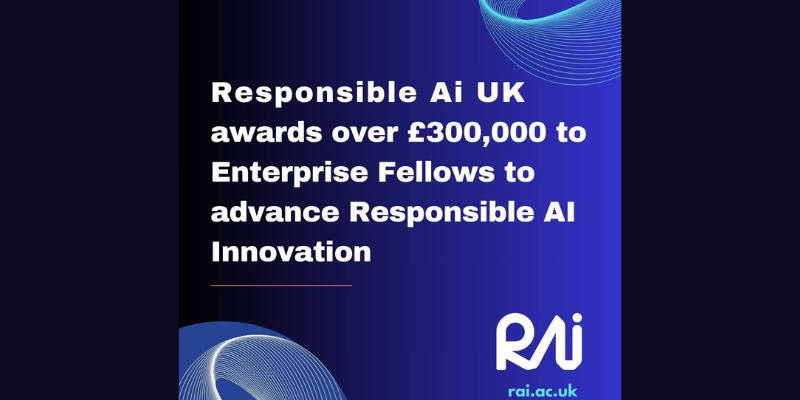
Responsible Ai UK Awards over £300,000 to Enterprise Fellows to Advance Responsible AI Innovation – Responsible AI


New £6.2 million programme to build and test new capabilities for sensitive data research

Posted on

UK Research and Innovation (UKRI) has awarded £4.94 million towards a £6.20 million programme, TREvolution, to advance the development of key technical requirements and capabilities for UK Trusted Research Environments (TREs) as part of DARE UK.

Awarded under the DARE UK (Phase 2) Transformational Programme, TREvolution will be jointly led by five leading research institutions in the UK: the Universities of Dundee, Manchester, Nottingham, Swansea and West of England.

UWE Bristol will lead on enhancing the disclosure control processes that ensure research outputs (especially AI) protect private data and keep it secure.  UWE researchers  will also play a significant role in ensuring the exciting new capabilities offered to researchers, and how these changes are managed, are acceptable to three key groups: data owners, stakeholders such as TRE staff and researchers, and mostly importantly, the public, whose data it is.. This work builds on a series of collaborations between the Computer Science Research Centre and the DRAGoN at the interface where AI meets Privacy Preservation to enable research for the public good. 

The programme of work will be delivered in collaboration with NHS Scotland, Lancashire Teaching Hospital, Durham University, Lancaster University, University College London, University of Queensland, University of Basel and University of Cape Town.

TREvolution will address challenges associated with enhancing data access and analysis within TREs – secure environments where approved researchers can access sensitive data for research to benefit the public, such as national public health and population-level surveys.

TREs in the UK are internationally renowned for establishing the Five Safes framework, but they have some limitations for researchers. The manual application processes and disclosure checks make it challenging to keep up with today’s scientific needs, like federated learning, analysis across sectors and research domains, and large-scale correlation studies.

TREvolution will address these challenges to evolve UK TRE capabilities across three themes:

  • TRE reference architecture and implementations: Standardising UK TRE architectures to enable seamless interoperability.
  • AI and semi-automated output checking: Enhancing research output review processes to ensure non-disclosure of personal information.
  • Federated analysis: Enabling secure analysis of datasets stored in multiple TREs located across the UK.

This project builds on existing work done by the delivery partners, with experience across the themes, as well as the DARE UK (Phase 1) Driver Projects, which developed initial versions of some of the key components of TREvolution.

The funding call leading up to the award invited teams that delivered specific DARE UK Driver Projects to take the projects to the next stage of maturity. A single joint bid was submitted by TREvolution, a collaboration that builds on synergies between the Driver Projects teams to enhance the components, make them fully interoperable, and transition them into capabilities ready for use in UK TREs.

After an independent panel review process involving key experts and the public, £4,940,092 was awarded, being 80% of the full economic cost (£6,150,739) to support TREvolution from March 2025 to March 2027, ensuring that the outputs developed can be tested, refined, and adopted in real-world research settings.

TREvolution is the first of three initiatives under the DARE UK (Phase 2) Transformational Programme, advancing the further development and testing of core TRE components and capabilities developed in the first phase of the DARE UK programme.

Alongside TREvolution, further funding will be provided to support the early adoption of these capabilities by UK TREs and data services and to demonstrate their application through real-world research exemplars. The goal is to showcase the potential for a connected and efficient national network of secure data infrastructures.

DARE UK Interim Director, Professor Emily Jefferson, said:

TREvolution marks a step change in our efforts to transform the UK’s secure data research ecosystem. This important work will ensure that key capabilities—such as federated analysis and enhanced output checking supporting the training of AI models—are not just theoretical advancements but practical, real-world solutions that enhance the UK’s ability to do impactful research. We look forward to working closely with the TREvolution team to advance these innovations and drive meaningful progress in how sensitive data is accessed and used for the public good.

UWE Bristol lead Professor Jim Smith commented:

At UWE Bristol, we are committed to advancing privacy-preserving AI and robust governance frameworks to ensure that the next generation of Trusted Research Environments can empower researchers while maintaining public trust. TREvolution is a crucial step towards a more secure, interoperable, and future-proof data ecosystem for research that truly benefits society. and we are excited about continuing to be a part of this vital work.

The TREvolution team will work closely with the DARE UK Delivery Team and early adopter TREs, fostering stronger collaboration and synergy as these critical capabilities are integrated into the UK’s secure data research infrastructure ecosystem.

Follow DARE UK on LinkedIn and X (formerly Twitter), and subscribe to our newsletter to follow TREvolution’s progress.


DARE UK is a data research infrastructure programme empowering data custodians, scientists, and technology experts working alongside the public to deliver a national network of secure data infrastructures for better research outcomes in the UK. DARE UK is funded by UK Research and Innovation (UKRI) under the Digital Research Infrastructure Programme and led by Health Data Research (HDR UK) and ADR UK (Administrative Data Research UK).

African Research Excellence Fund Scholar joins UWE Bristol

Posted on

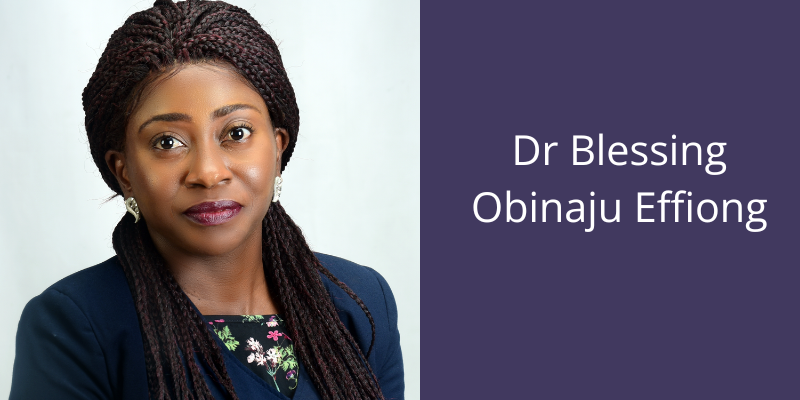
We are pleased to welcome Dr Blessing Obinaju Effiong, recipient of the 2023/24 African Research Excellence Fund (AREF) Research Development Fellowship to UWE Bristol. Dr Effiong is joining UWE Bristol on a nine-month fellowship from the University of Uyo in Nigeria where she is a Senior Lecturer in Medical Biochemistry at the Faculty of Basic Medical Sciences.

Dr Effiong’s PhD research is focused on improving infectious disease detection/monitoring using Vibrational Spectroscopy and finding alternative therapies to reduce the burden of diseased due to antimicrobial resistance. She was awarded PhD by Lancaster University where her research investigated the use and application of biospectroscopy techniques to study sublethal toxicity caused by environmental exposure to toxicants (PAHs).

She will be joining the research group of Professor Emmanuel Adukwu, Deputy Head of the School of Applied Sciences to carry out a project investigating the role of Role of Indigenous Bioactive Plant Products against Infectious Pathogens and Exploring the Use of Combination Therapy.

Dr Effiong is joining UWE Bristol as our first AREF Research Development Fellow. The AREF scheme supports emerging research leaders in Africa working on important challenges for human health and their skills development as researchers.

“Receiving the Research Development Fellowship by the African Research Excellence Fund is a significant milestone in my research journey. It validates my commitment to reducing the burden of infectious diseases and antimicrobial resistance, particularly in Low- and Middle-Income Countries where the overuse and misuse of antibiotics remain a pressing challenge.  Joining the Adukwu Research Group at The University of the West of England is an exciting opportunity to learn, collaborate, and explore alternative therapies that can address this global health issue.

While this marks a slight deviation from my Biochemistry/Toxicology background, I am eager to embrace the multidisciplinary approach of the group and expand my expertise in tackling antimicrobial resistance. I look forward to the learning and networking opportunities this fellowship provides.” 

Dr Effiong will be joining an interdisciplinary team developing and conducting internationally recognised research in antimicrobial stewardship and resistance as well as the bioactive capabilities of plants and herbal compounds.

Professor Emmanuel Adukwu commented

“I am pleased to welcome Dr Blessing Effiong to UWE Bristol and to our research group where she will be bringing her skills and talent to help us develop better understanding of the role that some bioactive herbs can play as complementary therapies. She will also be bringing her insight and experience as a recognised emerging academic leader in Africa to support our work to enable student success for our student, especially our international students.”

Celebrating British Science Week: Love & Science: Bristol’s Weekly Dose of Fascinating Science and Fun

Posted on

By George Edwards Presenter Love and Science, BCfm Radio and MSc Science Communication Student


From cockatoos dipping pasta in blueberry yogurt to unravelling the theory of dark matter, Love & Science has it all. These are just two of the many weird, wonderful and exciting science stories that feature on Love & Science – a weekly science radio show on Bristol’s local BCFM Radio.

Ever wondered where you could go to get your kick of great music, stay up-to-date on current world events and discover the bizarre world of science? Love & Science is the perfect place to go. The show, originally started by Dr Malcolm Love, a former UWE Bristol Science Communication lecturer, airs every Monday between 3-4pm on BCFM Radio 93.2 FM/DAB and Online.

Now hosted by myself – George Edwards– a recent graduate of UWE’s MSc Science Communication, the show brings you engaging updates from around the world of science in an hour filled with fascinating facts, intriguing interviews and striking stories. Whether it’s the environment or archaeology, health or space, the show has something for everyone. Still not convinced? Here are a few of our favourite episodes to get you started:

Fossilized Fish Vomit, Detangling Whales and Bristol Zoo Project Conservation

Love & Science often features interviews with scientists, conservationists or science communicators, and this episode (originally aired on Monday 3rd January 2025) was one of many.

To kick off the show, Dr Ricardo Lemos de Figueiredo, from the Bristol Zoological Society, joined us to chat about the incredible conservation work he and the team are doing in the Philippines to protect the world’s most endangered species of deer. We ran this story off the back of the birth of a Philippine Spotted Deer fawn at the Bristol Zoo Project and thank goodness we did – Ricardo brought some energising light and hope into a world of climate and biodiversity chaos!

I suppose you may also be wondering about that fossilised fish vomit though… Well, this is one of my favourite weird science stories we’ve covered. The story, brought to us by Ash Snook, explored the discovery of fossilised vomit in Denmark, which may be vital in improving our understanding of ancient fish predators. Give the episode a listen to find out more!

Spooky Science Halloween Special

Every good show needs a spooky episode, and it would have felt wrong not to run a Halloween-themed Love & Science special! This episode (originally aired on Monday 4th November 2024) was wonderfully mysterious, featuring some of our favourite spooky songs, from Thriller to Don’t Fear The Reaper, alongside four creepy science stories.

Casey Spry gave a bone-chilling description of a new spider species as Bach’s Toccata and Fugue in D Minor rumbled below her voice. We explored why humans are drawn to horror, whether it comes in the form of games, films or haunted houses at your local fair, and the reasons behind our belief in the supernatural.

To round the show off, we had a chat with Bryony Roberts from We The Curious, hearing all about their After Hours events – doesn’t that sound eerie!

California Wildfires and the Doom of the Ancient Hobbit Humans

Though we do love a bizarre science story, Love & Science routinely covers the serious ones too, to keep listeners up to date with science-related world events, be it new research into climate change, a new treatment for health conditions or, in this case, the tragic wildfires that ripped through Los Angeles in January.

The show (originally aired on Monday 13th January 2025) explored the cause behind the wildfires, tracking their progression from start to finish and diving into the scientific reasons as to why high winds and climate change may have been to blame.

We also dove into a recent archaeology revelation – a new study found that the ancient “hobbit” human species may not have been killed by volcanic eruptions after all, but ancient climate change may have been their demise – find out more by giving the episode a listen!

Brain Microbiomes, How Lizard Spit May Detect Cancer and Eclipses On-Demand

This one is for you health and physics buffs out there. We had a great time recording this episode, which originally aired on Monday 9th December 2024. We explored the outer reaches of our atmosphere, finding out how scientists are launching two satellites to create their own solar eclipses and hearing how the brain microbiome – a relatively new discovery – could be an indicator of dementia. Also, it turns out we could harness the spit from lizards to locate and detect pancreatic cancer in humans – wild!


Love & Science is just as wonderful a show for the amazing guest presenters who join me as it is for myself and our listeners. Many of our guests are students from the MSc Science Communication course at UWE, who come on the show to give radio a shot and get some practice communicating the science they love through a wonderful audio format to Bristol’s local community and beyond.

This, I feel, is what makes Love & Science different from other science radio shows – it brings together people with a wide range of interests and backgrounds to create something truly wonderful, engaging and fun.

So, how can you join the Love & Science community? Give the show a listen on 93.2 FM/DAB or listen Online via the BCFM website. Follow the show on Instagram and Bluesky for the latest updates about new episodes and finally, if you’re a budding science communicator and want to try out radio, email George to find out more.

AI and Animal Welfare: Spotlight on the Centre for Machine Vision  

Posted on

UWE Bristol research on AI and Animal Welfare was recently featured in an article in Science.org.  

The article featured the research from Professor Mel Smith, Professor of Machine Vision and Co-Director of the Centre for Machine Vision on an AI-powered system designed to recognise individual pigs emotions and monitor their emotional and physical well-being in real time.  Other members of the Centre for Machine Vision including Professor Lyndon Smith , Dr Ajmal Shahbaz, Dr Mark Hansen, Dr Wenhao Zhang , and Dr Disi Chen have also contributed to the research.

The IntelliPig system is currently being developed between UWE Bristol and Scotland’s Rural College. The system analyses the faces of pigs as they enter feeding stalls, using AI to identify any emotions the pig may be experiencing. With its ability to detect subtle facial expressions, IntelliPig can alert farmers if an animal needs immediate attention. The system is part of a larger trend where AI is used to decode animals’ emotional states—something humans have struggled with for centuries. While this technology is still evolving, it shows great promise in improving animal welfare. UWE Bristol are also working with Agsenze Ltd who hope to commercialise the technology developed as part of IntelliPig. UWE Bristol previously worked Agsenze Ltd to develop HerdVision. 

In addition to recognising emotional signs, IntelliPig also aims to provide a general animal health check, including biometric identification, assessment of body condition, and a weight estimation. 

By analysing the faces of animals—much like how researchers study human facial expressions—AI can determine the emotional wellbeing of that particular animal. The potential applications of this technology extend beyond farming, with AI already proving its effectiveness in monitoring pets, such as dogs and cats, for emotional triggers.

As the work at UWE Bristol demonstrates, the future of animal welfare could very well be shaped by AI, ensuring that animals receive individualized care based on their emotional needs. This system doesn’t just promise better care for farm animals; it could also redefine the relationship between humans and their animal companions, offering a new level of understanding and compassion. 

Professor Mel Smith commented, “The ultimate aim is to ensure that animals not only live free of stress, but that they lead happy lives, too.”  

Back to top