UWE Bristol awarded funding to support sensitive data research 

Posted on

UWE Bristol is leading one of six community groups awarded funding to advance sensitive data research from the DARE UK (Data and Analytics Research Environments UK) programme, funded by  UK Research and Innovation (UKRI).  

This new funding round builds on the achievements of the 2024 pilot funding round, which saw four community groups—three interest groups and one working group—successfully deliver activities and outputs over a five-month period. These initiatives laid the groundwork for a stronger, more collaborative sensitive data research ecosystem in the UK. 

The team led by Professor Jim Smith, Professor in Interactive Artificial Intelligence, won funding to continue the statistical disclosure control community, including data privacy practioners and developers of (semi)-automated tools to enhance the safeguarding of research outputs and reduce disclosure risks.  

This follows on from the funding received in 2023 to investigate Semi-Automated Checking of Research Outputs (SACRO). 

This funding round represents a significant step in advancing a community-led approach to sensitive data research. By empowering community groups to tackle pressing challenges, DARE UK is reaffirming its commitment to fostering collaboration, innovation, and trust in the UK’s data research ecosystem. 

DARE UK community groups hub  

UWE Bristol’s Data Research, Access and Governance Network (DRAGoN) has been endorsed by DARE UK as part of their community groups initiative. Their information is now listed on the DARE UK community hub. DARE UK community groups are collaborative initiatives co-creating pieces of work that align with the DARE UK vision. Focusing on open communication and knowledge sharing, these groups are working to enhance sensitive data research in the UK. 

The communities of practice are self-managed, community-driven, and independent but operating within the scope of the DARE UK programme. 

Public Webinar: DARE UK Community Groups: Strengthening Collaborations, Driving Impact  

DARE UK are hosting a public webinar on Monday 24 February, which will bring together all new and existing DARE UK community groups to celebrate their achievements and introduce their plans for the latest funding round.  

The event will offer a unique opportunity to explore the broader DARE UK Community Groups initiative, why it is critical to the DARE UK vision, and how it aligns with the overall programme strategy.  

UWE Bristol research evaluates the accessibility and inclusivity of voluntary carbon markets in the UK

Posted on

Dr. Rounaq Nayak, Senior Lecturer in Farming Systems, recently completed a project funded the National Innovation Centre Rural Enterprise (NICRE) that aimed to identify the mechanism whereby emerging natural capital investment markets can contribute to a successful rural economy.

 This was achieved in two ways. First, by examining how rural enterprises navigate voluntary carbon and other natural capital investment markets and how they overcome and exploit potential limitations and barriers. Secondly, by identifying priorities related to the enterprise and innovation potential of natural capital investment markets and the resources required to achieve this.

Through an infographic and animation, the project helps to inform local and regional policies and support rural enterprises’ engagement with carbon markets.

The project infographic.

The findings point to the need for clearer ethical guidelines, stronger partnerships with rural communities, and better support for diverse land ownership models.

To help address these issues, an animated guide offering ten practical tips for entering the carbon market and an infographic explaining key principles for navigating these opportunities were produced.

View the tips and view the full research report.  

SW Public Health and Criminal Justice Network: What next for Health and Justice?

Posted on

By Professor Kieran McCartan


On Friday the 24th January, we hosted the 10th Public Health and Criminal Justice network event at UWE Bristol. The event focused on “What next for Health and Justice?” and had over 80 participants from academic, health, public health, prisons, policing, probation and local government from across the southwest of England.

The role of the network is to foster collaboration in the health and justice fields, enabling attendees to see how their research, policy and practice build on each other to help produce a more integrated and synthesised system. The network, and related events, are founded on the idea that health and wellbeing are an outcome as well as a predictor of criminogenic behaviour, and that by looking at crime and offending behaviour through a health and public health lens we can produce better outcomes to reduce re-offending as well as prevent first time offending.

The network has been running for 4 years and has over 250 members. Previous events have looked at Trauma Informed Practice, Public Health approaches to sexual abuse prevention, as well as the impact of COVID-19 on health in prisons to name a few.

This event focused on emerging research, policy and practice in the southwest addressing not only mental health and wellbeing in children and young people, at of people in the prison system as well as on probation, and the development of innovative frontline service provision. The event was opened by Justin Varney-Bennett, Regional Director OHID SW & RDPH NHSE, who highlighted the unique challenges and opportunities that the southwest presented, before linking it to national policy and practice. This framed the event well and opened the conversation to be built on by our other speakers who includes,

Children Young People, Violence Prevention and Mental Health:

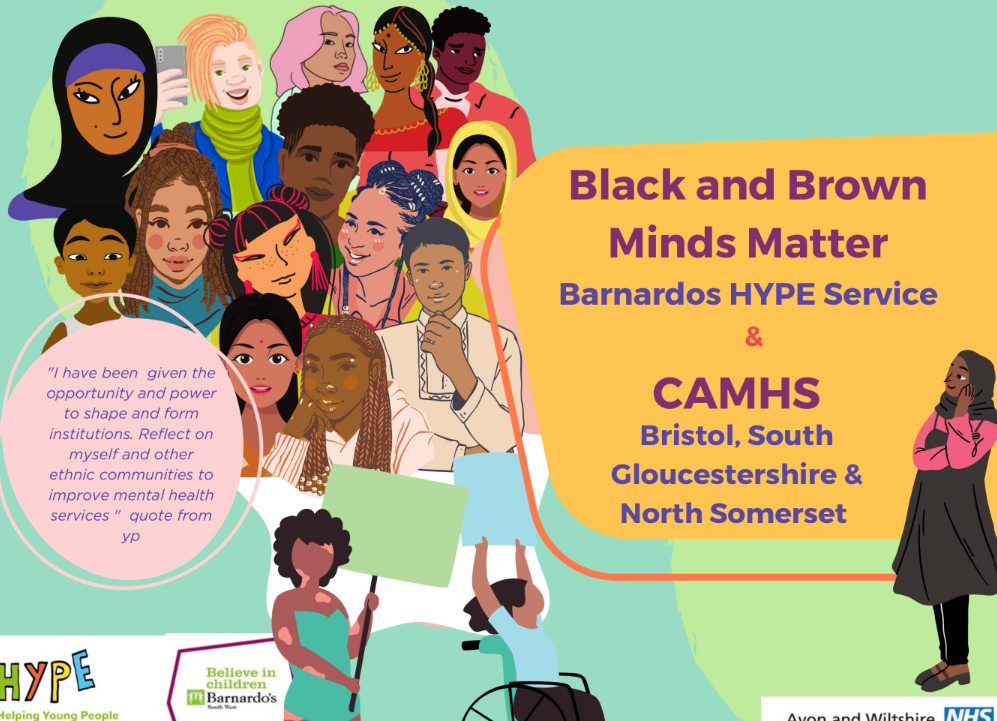
‘Improving Access and Experiences of Mental Health Services for Black and Brown Young People – Barnardo’s Black and Brown Minds Matters Group and CAMHS’ Stephen Barry, CAMHS Project Lead and Be Safe Service Clinical Manager/Lead, Cenzina Barclay, Barnardo’s Co-Production Worker, Latalia Williams, Health Champion.

View the presentation.

‘Shore: a safe place for young people worried about sexual behaviour’- Rachel Haynes, Head of Clinical Services (Children and Young People), Lucy Faithful Foundation.

View the presentation.

‘Developing Key Performance Indicator’s for understanding and responding to Sibling Sexual Behaviour and Abuse’ Kieran McCartan, UWE Bristol, Amy Adams PhD Researcher, University of Birmingham and Research Associate, UWE Bristol.

View the presentation.

The title slide from the Improving Access and Experiences of Mental Health Services for Black and Brown Young People – Barnardo’s Black and Brown Minds Matters Group and CAMHS’ presentation.

Secure Estate/Prisons & Probation – Male and Female focus:

‘Delivering effective healthcare in an inner-city Victorian reception prison- HMP Bristol’s experience’ Natalie Steadman, Deputy Governor, HMP Bristol.

View the presentation.

‘Southwest Probation Health and Justice Team’ – Laura Cairns / Becky Thomas, Health and Justice Partnership Co-ordinators, Community Integration Team, Probation SW.

View the presentation.

‘The National Review of Health and Social Care in Women’s Prisons Our Approach in the South West’ – El Woods, Women’s Pathways Lead, NHS England Health and Justice South West) On behalf of the SWWEEP Board.

View the presentation.

Children with Complex Needs: (Vanguard)

‘Trauma Responsive or Trauma Organised? Understanding how systems can become organised around chronic stress’- Andrew Nicholls Clark, Head of Health & Justice Children Programme, NHS England.

View the presentation.

‘Regional Vanguard evaluation’- Ella Rees, Research Associate, Vanguard, UWE Bristol.

View the presentation.

‘Developing and sustaining the Children Young People Framework of Integrated Care (Community) in the Southwest’- Gail Warnes, Senior Commissioning Manager, Non-Custodial and CYP, Health & Justice. Commissioning Team, NHS England – Southwest, Emma Morgan, Children and Young People Vanguard Project Manager/ Children’s performance manager.

View the presentation.

The event highlighted innovative practice across the southwest regarding health and justice, but particularly in respect to services targeted at traditionally marginalised and excluded groups (i.e., Children and young people, BAME populations, and people with a criminal recorded).  If you would like to join the network to hear more about upcoming events, please sign up.

UWE Bristol research project launches policy briefing outlining findings from a legislative and policy analysis of Welsh educational documentation 

Posted on

A collaborative research team, led by UWE Bristol, has produced a policy briefing based on findings from a legislative and policy analysis of Welsh educational documentation. The project team consists of researchers from Cardiff Metropolitan University; Swansea University, University of South Wales and UWE Bristol.  

The Economic and Social Research Council (ESRC) funded project has challenged the issue of translating policy intention into education practice with a focus on young children’s participation rights and how these are enacted in classroom contexts.  

The policy briefing recommends the following to better support young children’s participative rights in Welsh policy:  

  • Future education policy in Wales should continue to account for children’s participative rights.  
  • Children should be recognised as active rights holders in the ‘now’ in all future legislation and policy in Wales.  
  • Education policy should consider the ‘how’ of children’s participative rights.  

View the full policy briefing

Read the policy briefing in Welsh

Principal Investigator Sarah Chicken commented on the briefing:

“Findings from our policy analysis indicate a strong ongoing commitment in Wales to children’s participative rights but there is currently a gap between the policy ambition and classroom practices. The aim of this briefing is to bridge that gap by providing actionable insights for policymakers and educators” 

The team have also created a series of infographics which are designed to present the project findings in an accessible and visual manner. Currently, we have two infographics available:  


Find out more about the Children’s Participation in Schools project:  

Global Migration Network Seminar Series 2025

Posted on

The Global Migration Network, a research group at UWE Bristol chaired by Dr Emily LeRoux-Rutledge, brings together 60+ academics and practitioners from across the university working on migration-related research. The aim is to facilitate and contribute to cross-disciplinary research on migration, inform policy and public debate, and engage with users of migration research.  

The Network has a fantastic seminar series lined up for Spring 2025, and attendance is open to all. The seminars are hybrid, but you are encouraged to come in person for sociability and community (if you are able). For more information please contact emily.leroux-rutlege@uwe.ac.uk.

Seminars:

Migration and Memory, how we prepare for and cope with loss and change

Wednesday 12 February 2025, 1:00pm – 2:00pm (3S803) – Nigel Williams

After offering case examples about how migration is anticipated, and losses are worked with this session will help participants to develop their own sense of the similarities and differences between intergenerational memory running in families, groups and organisations and longer-term transgenerational memory located in culture and bodies in deeper time. Using these cases and some of our own experiences we will explore how to go about addressing first, second, third generation (and beyond) responses to the challenges of migration as a complex multifaceted experience extended in time.

Nigel Williams is a Visiting Fellow in Psychology at the University of the West of England and is author of Mapping Social Memory a Psychotherapeutic and Psycho-Social Approach, in the Palgrave Psychosocial series and has recently published a chapter on generational memory in Studying Generations, Bristol University Press edited by Helen Kinston and Jennie Bristow.


Support for ‘replacement migration’? Region-level demographics and attitudes towards immigration in Europe

Wednesday, 12 March 2025, 1:00pm – 2:00pm (4D005) – Artjoms Ivlevs

Does demographic decline make Europeans more pro-immigration? Our longitudinal, regional-level analysis, drawing on the 2008-2019 European Social Survey (278 regions in 22 countries) and the 1999-2021 German Socio-Economic Panel (16 federal states, 96 planning regions), suggests that people become more favourable to immigration as regional birth rates fall and ageing indicators worsen. While this result would support the logic of replacement migration, we also shed light on the role of the natives/foreigners balance in driving this relationship and tentatively conclude that the link between demographic decline and attitudes towards immigration could also be explained by group conflict theory.

Artjoms Ivlevs is Professor of Economics at the Bristol Business School (UWE Bristol) and a Research Fellow at the Institute for the Study of Labor (IZA). His research interests include migration and subjective well-being, and more recently tourism. Artjoms is an applied microeconomist working with large-scale survey data; much of his work focuses on the post-socialist countries of Central and Eastern Europe.


Supportive local policy, hostile national policy: the integration experiences of refugees and asylum seekers in Wales.

Wednesday, 2 April 2025, 1:00pm – 2:00pm (3S803) – Sam Parker

 In 2001, following the Immigration and Asylum Act 1999, four towns and cities in Wales became asylum dispersal locations and, as such Government has devolved responsibility in many social policy areas that impact upon refugee and asylum seeker integration. This seminar begins by outlining developments in UK immigration and asylum policy and highlights the ways in which successive Westminster governments have introduced legislation creating a ‘hostile environment’ designed to deter asylum seekers from entering the UK and encourage failed asylum seekers to leave the UK. Such policies have restricted the civil and social rights of asylum seekers whilst simultaneously the Westminster government has focused upon policies for the integration of those granted refugee status only. This seminar reports on the findings from interviews conducted with 19 refugees and asylum seekers in Wales, where in contrast to Westminster, the Welsh Government see integration as a process beginning on day one of arrival in Wales. The data are taken from a project focusing on refugee and asylum seeker integration in Wales and demonstrates how policies introduced in recent years have led to restrictions on the day-to-day lives of asylum seekers in Wales and their ability to integrate. It argues that in a system of multi-level governance, the Welsh Government’s vision of integration remains problematic when immigration and asylum remain matters reserved to the Westminster Government. It highlights ways in which Welsh Government policy diverges from that in England and argues that further use of devolved powers could be made to facilitate integration in Wales.

Sam Parker is a Senior Lecturer in Social Psychology at UWE Bristol and has previously worked at Cardiff University and Birmingham City University. Sam is also Chair of Trustees for Space4U Cardiff, a small community organisation that supports newly arrived refugees and asylum seekers in Cardiff.


Am I happier than you are? It depends on when you ask: Reflections on the need for longitudinal studies on the well-being of international students

Wednesday 14 May 2025, 1:00pm – 2:00pm (2A027) – Trang Trần

If an international student speaks English as their first language (EFiL) instead of as an additional language (EAL), would their predicted well-being be higher compared to their EAL peers? English language proficiency has been shown to significantly predict various indicators of mental health among international students. Our longitudinal data shows that during early arrival, EAL students scored significantly higher than their EFiL peers on their psychological well-being measures. While this may seem unexpected, it does align with some previous findings suggesting that UK home students’ well-being indicators are significantly lower than those of their international peers. However, further analysis of longitudinal data (collected at 3 time points over 18 months) showed that the trajectory of psychological well-being for EFil and EAL international students was reversed, with EFiL students’ wellbeing improving over time, while their EAL peers’ well-being score decreased over time. Despite the small sample, these findings invite further reflection on the importance of longitudinal studies, or at the very least, the need to contextualise psychological well-being in the timing of students’ journey, alongside other contextual factors.

Trang Trần is a Senior Lecturer in Psychology at UWE Bristol. Her research interests include international students’ coping strategies and psychological well-being.


From Harm to Hope: Examining Migrant Integration Policies and Practices in the City of Bristol

Wednesday 11 June 2025, 1:00pm – 2:00pm (4D005) – Ryan Lutz

Integration has been a heavily critiqued term with its history of creating exclusionary and racialized policies is well documented (Favell, 2022). Despite this, the term has remained and become stronger. The restrictive approach towards migrants has made way for a worrying trend of decreasing social rights, political inclusion and civil liberties for the citizens that migrants are supposed to be integrating into (de Noronha, 2022). Findings from co-produced mixed methods research, this research attempts to show that the lens of social harm (Hillyard et al., 2004) allows for a bottom-up approach to integration and investigates the efficacy of localized integration policies and how much they can make up for failures at the national level.  

Ryan Lutz is a PhD student in Social Policy at the University of Bristol’s School for Policy Studies in the UK. His research looks at integration, social harm, and the binary between citizens and migrants. Previously Ryan was an Assistant Manager of Research and Strategy at the Kennedy Center for the Performing Arts, received his master’s in public administration from the University of Southern California in Los Angeles.  


Contact the Global Migration Network for more information.  

Why UWE Bristol are so invested in Higher and degree apprenticeships

Posted on

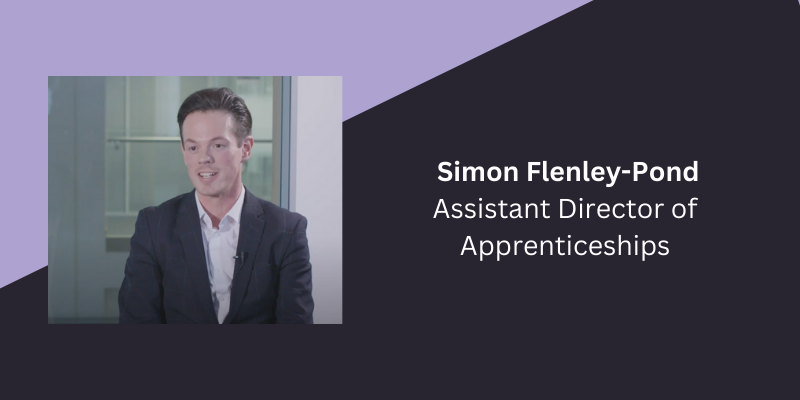
Simon Flenley-Pond, Assistant Director of Apprenticeships, explains how apprenticeships develop real-world skills to apply into the workplace and why higher and degree apprenticeships are so important for the employer, university, and apprentice.  

Find out more about our higher and degree apprenticeships and explore the many higher and degree apprenticeship courses on offer with us. 

To choose UWE Bristol as an employer means that your apprentices are going to gain from high quality teaching and learning from staff who have often got industry experience and have worked in the kind of roles that they’re delivering to the apprentices.

We also work closely with employers through the design process, so when we are designing or redesigning apprenticeships, we often work with employers to make sure that the curriculum that we’re offering is right for the role that apprentices are in, or going to be in.

And what we also do is partner with employers throughout the program. So, we take your feedback, we look at that as part of our program redesign, and we’re always looking to support your voice within our continuous improvement plans for any of our programs.

The university are really invested in apprenticeships. It speaks to our core offer around vocational learning and training. We also know that our apprenticeships are working. We’ve delivered to over 2,500 apprentices since we’ve become an apprenticeship training provider. We’re now delivering across 25 apprenticeship standards across health, science, protective services, engineering, construction, and management.

With that, we’re also delivering to over 300 employers and on a national basis. So, we know that our provision is reaching corners of the country where there perhaps isn’t provision available. We also know that apprentices and employers are benefiting from this, allowing them access to higher education that they may not have been able to get elsewhere.

The apprenticeship offer at UWE Bristol is flexible and programs are often delivered in a hybrid model. So, apprentices have the flexibility to learn online when they are perhaps local, or perhaps when they have work commitments. That is balanced out with time at the university, which is really beneficial not just to the apprentice, but also to the employer. So, for instance, apprentices will have access to lab space, which gives them the real-world skills to be able to take back into the workplace and enhance their career development. Also allowing their productivity in the workplace to be much more efficient.

What we also find with our hybrid offer is that we are reaching a broader range of employers and apprentices across the country as well.

Want to find out more?

Speak to a Partnership Manager today or find out more about our higher and degree apprenticeships.

Explore the many higher and degree apprenticeship courses on offer with us. 

Young Children’s Participation in Schools: What Needs to Change?

Posted on

By Dr. Sarah Chicken, UWE Bristol &  Dr. Jacky Tyrie, Swansea University

On Tuesday 21st of January we were delighted to participate in the Education: Insights Practice to Policy Event at the House of Lords organised by colleagues at St Mary’s University, Twickenham, London and sponsored by Lord Hastings of Scarisbrick.

The event brought together a diverse range of education experts and government ministers with the aim of drawing attention to key issues in education and to begin to discuss how these might be resolved. ‘We enjoyed talking through our research with MPs and their aides including, Ruth Jones, MP for Newport West and Islwyn, Tonia Antoniazzi, MP for Gower, Maisie Caro, parliamentary advisor to Torsten Bell, MP for Swansea West and Karin Smyth, MP for Bristol South’s aide.

We presented on aspects of our three-year project, Children’s Participation in Schools (CPiS).  This project is funded by the Economic and Social Research Council (ESRC) and involves working with children, student teachers, in service teachers and teacher-educators within the Welsh policy context. We are focusing upon the education of children between the ages of 3 and 7 as there is currently a gap within the research literature related to the enactment of participative rights for children within this age group. 

Children’s rights are a cross-cutting theme of the Curriculum for Wales, and we are exploring how young children are listened to and involved in decision making in primary education in Wales. Building on a legislative and policy analysis, we have worked with initial teacher educators (ITE), teachers, and young children themselves. Findings suggest a strong policy framework in Wales, but that more guidance is needed on how to enact participatory pedagogies in practice. ITE in Wales is not fully reflective of this and ITE educators have called for more support.

Sarah with Ruth Jones MP for Newport West and Islwyn

Enablers and barriers to practice

In classroom practice, we are finding that there are complex relationships between enablers and barriers to the enactment of participatory pedagogies. Despite barriers, such as time constraints, limited resources, and perceived curriculum limitations, our findings emphasise how receptive teachers are and the critical importance of a supportive, flexible, and collaborative environment—both within the classroom and the broader school and community context—in enabling children’s participative rights.

Our research also highlights how different expectations of teachers shape the enactment of children’s participative rights in schools. While expectations from parents, senior leadership, and government policies can create barriers, they can also act as enablers when managed collaboratively and thoughtfully. Teachers play a pivotal role in navigating these competing expectations and require support to balance curricular demands with the need for child-centred practices. Furthermore, teachers’ personal reflections underscore the significance of professional development, self-reflection, and a school-wide ethos in fostering a culture that genuinely values children’s participative rights.

Children’s voices

The voices of young children are an integral part of our project, and we have foregrounded these through our use of creative methods with our Children’s Advisory Group (CAG) who steered aspects of our data collection. The CAG members offered lots of ideas for teachers to think about related to time, the environment, and their ownership of activities and creations. These ideas were used as prompts for Initial Teacher Education (ITE) students and teacher-educators to reflect on the inclusion of children’s participative rights in ITE provision, and classroom practice and to consider how genuine and authentic participatory experiences really are for young children in schools. The group of 3- to 7-year-olds are now making recommendations of how and where we can disseminate findings. We have also consulted with focus groups of children across Wales and have found that children are not always aware that they are involved in decision making in their classrooms and schools even when this may be the case.

Sarah, Maisie Caro who is the parliamentary advisor to Torsten Bell MP for Swansea West and Jacky Tyrie

If you are interested in our research, we warmly invite you to our next online event where we will report findings from the second phase of our research. You will hear reflections from the research team, some of our teacher participants and the artist-consultant who facilitated the dialogic sessions – sign up here.

Further Reading and Resources

For those interested in exploring ideas from this project further, we recommend the following resources:


UWE Bristol academic releases book on Philosophical Foundations of Psychotherapy

Posted on

Dr James Costello, Senior Lecturer in the College of Health, Science and Society, has written a new book on “Philosophical Foundations of Psychotherapy: Radical Relationality”.

The book challenges the unhelpful misconception that philosophy is for philosophers alone, because human reality is too complex for therapists to be unaware of the foundations, difficulties, and contradictions within our value systems, ethics, and assumptions.

By retrieving attitudes from other times and other places, traversing the relational contours of history right up to contemporary thinkers and practitioners, the book argues that not only do relationships heal, but they offer the only safe harbour in life’s sea of troubles.

We spoke to James about his inspiration behind this book:

“I’ve always been interested in how work and mental health are linked. I published my first book “Workplace Wellbeing – A Relational Approach” in 2020, and this immediately led to various Government Departments inviting me to provide supportive reflective spaces for professionals working on what are often distressing Public Inquiries (i.e., highly topical Covid-19, Child Sexual Abuse).

Taking this “bigger picture” toward how society processes its trauma got me thinking about deeper questions involving psychotherapy, and the society which shapes its foundations. Perhaps through our psychological methods, are we pouring petrol on society’s flames? 

At a time when people seem to want an embodied connection with their environment, deeper engagement with their communities, something beyond “me” to believe in, and a purpose which remoralises our lives, what’s being offered?

More individualising self-mastery and empowerment – the current mouthpiece for this unhelpful myth is Mel Robbins and so called “Let Them” theory – to those of us who already feel beleaguered and abandoned by a society which progressively prizes more than anything else, getting a “good deal” out those around us.

As undoubtedly helpful philosophers are, it is important that it is the practitioners who re-formulate the foundations of what therapists do, and this is what inspired me to write this book.

Moral Pilgrims – One of Mac’s illustrations for the book. Mac is studying Graphic Arts at UWE Bristol.

And a final note. The book has been beautifully illustrated by one of our own graphic arts students here at UWE Bristol– Mackenzie Leigh Hawkins (Mac). I approached tutor Emma Levey in Arts and Design, and she suggested that students pitch for the project; Mac was the clear winner and what is more Routledge were happy to pay so it was a very “real world” experience for our students.“

Purchase the book.


James Costello, PhD, is a senior lecturer in the School of Social Sciences at the University of the West of England, UK. He is an Accredited member of the British Association for Counselling and Psychotherapy, and Senior Accredited Supervisor specializing in Groups. His experience as a therapist comes from over 20 years’ practice and consultancy across the private, third, and public sectors. He supervises psychotherapy training and has research interests more broadly in phenomenology and consciousness.

Dr Myriam Bellaouaied links service marketing to health, considering ‘healthcare staff and patients’ wellbeing in new research study

Posted on

Dr Myriam Bellaouaied Senior Lecturer in Marketing at UWE Bristol , has had her project considering ‘healthcare staff and patients’ wellbeing and impacts on the quality/provision of care and patient experience’ approved by the Integrated Care Academy (ICA) – 2024/25. 

The interdisciplinary project connecting service marketing to the healthcare sector considers the healthcare staff /patients’ wellbeing and impacts on the quality/provision of care and patient experience.  

The project brings together substantive and theoretical concepts and ideas from the disciplines of service research, marketing, methodology, public health and epidemiology. The project answers NHS healthcare staff workplace challenges, considering staff / patients’ wellbeing, and aims to build a new healthcare service model. 

The foundations of the study are intertwined with three contexts: 

 (1) The COVID-19 pandemic created a global challenge to healthcare worker wellbeing: “the need to protect the mental and physical wellbeing of health workers is critical” (Creese et al, 2021).   

(2) Transformative Service Research (TSR), addressing challenges toward healthcare services has received increasing attention in recent years for analysing how services can enhance wellbeing. 

(3) The 17 United Nations Sustainable Development Goals (SDGs) are an urgent call to take action to improve human welfare, creating potential direction for service research to achieve the third SDG that is enabling good health and wellbeing. 

To deliver the project, Myriam will work closely with the Bristol, North Somerset and South Gloucestershire Integrated Care Board (BNSSG ICB). 

Critical Thinking in Action: New Collaboration between Dr Francesco Tava and HSBC

Posted on

Dr. Francesco Tava, Associate Professor of Philosophy, has recently embarked on an exciting collaboration with HSBC’s Legal Learning Team to deliver a podcast series on critical thinking and good judgment. Recorded in December at HSBC’s global headquarters in London, the series will launch in January and be shared with HSBC’s 1,500 legal professionals across more than 60 countries.

This project highlights the transformative power of philosophical reasoning beyond academia, bringing critical thinking into the heart of global legal practice.

“Having the opportunity to demonstrate the role and value of critical thinking to a diverse audience of legal experts is invaluable”, Francesco explains. “It showcases how applied philosophical reasoning can address real-world challenges. I’m eager to develop this collaboration further, exploring opportunities for joint projects in leadership development, impactful research, and innovative learning and teaching.”


Podcast Highlights: Bridging Theory and Practice

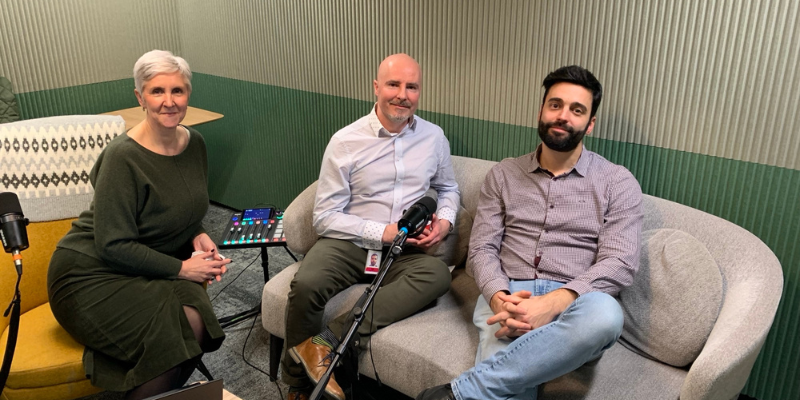
In this series, Francesco engages with Gavin Neill (Senior Legal Counsel at HSBC and Associate Lecturer at UWE’s College of Business and Law) and Rachel Yates (Engagement Manager at HSBC). Together, they explore topics such as:

  • The key traits of successful critical thinkers;
  • The practical relevance of critical thinking in business, especially in law and banking;
  • The connections between critical thinking, good judgment, and effective communication.

Reflecting on the collaboration, Rachel shared:

“We, in the Legal Learning team, were delighted to work with Francesco  on our podcast series, Beyond Core Expectations.  This is the first time we have worked with an external guest on the series and we felt honoured to listen to his insights on critical thinking.  Some particular highlights included his explanation of Socratic thinking, the relationship between good judgement and effective communication, and the practical applications for our audience in the Legal function.  I’m sure we can look forward to much critical acclaim for this season of podcasts”.

Gavin commented:

“It was great to collaborate with my UWE Bristol colleague, Francesco on this initiative.  Francesco provided a fascinating and practical insight into critical thinking, Socratic dialogue and ethical decision making, with a particular emphasis on how these skills might be applied in a banking or legal environment.  The sessions were informative and thought provoking and I’m sure they will prove valuable to my colleagues within the HSBC legal function.”


Looking Ahead: Critical Thinking for Career Development

Francesco is now keen to build on these insights by developing a professional course on critical thinking. Designed for managers and expert staff, the course would provide tangible tools for career growth and decision-making excellence.

Stay tuned for updates on this exciting initiative – and other collaborations that demonstrate philosophy’s enduring relevance in the professional world.

Back to top