

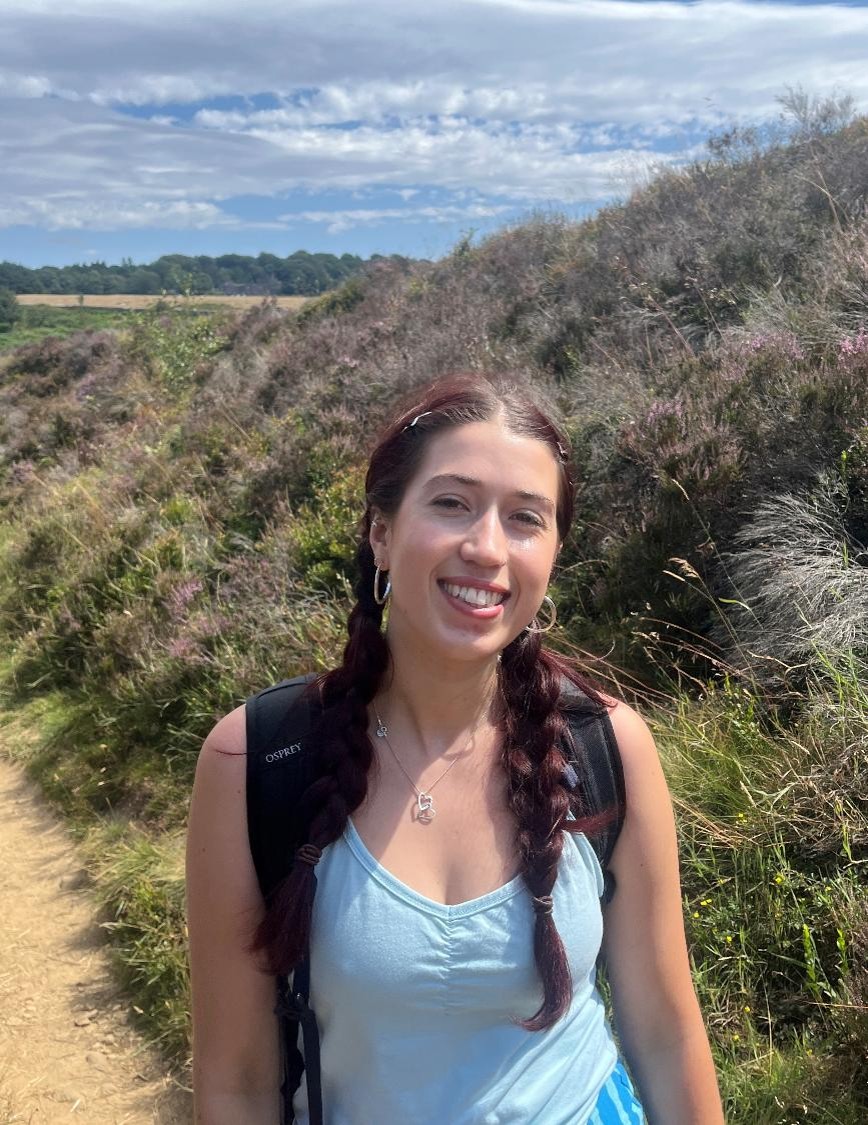
When you hear the word conservation, the first thing that comes to mind probably isn’t scrolling on Instagram or posting on Facebook. For years I assumed that a career in conservation is confined to fieldwork and data collection. It wasn’t until starting my MSc Science Communication that I realised there’s a whole world of conservation jobs beyond traditional field research, engaging different audiences with nature and conservation. As I dwelled on this, the perfect opportunity appeared in my email inbox, a UWE summer research internship working with the International Union for Conservation of Nature and Natural Resources (IUCN).
The internship itself was described as a small research project evaluating the social media outputs of the IUCN SSC Primate Specialist Group (IUCN SSC PSG) Section on Human-Primate Interactions. This would entail exploring the existing literature and using it to devise a set of recommendations to help enhance audience engagement. It was exactly what I was looking for looking for, an opportunity to further develop my research skills and apply science communication theory to a real-world conservation organisation. Even better, it would allow me to contribute to a team whose fundamental values align with my own.
As urbanisation accelerates, primate tourism popularity grows, and social media evolves, figuring out how humans and primates can coexist ethically with the fewest negative impacts is crucial. The IUCN SSC PSG Section on Human-Primate Interactions is made up of an interdisciplinary group of volunteers who are experts in their fields, ranging from social scientists to conservationists. The section draws on their diverse knowledge to help understand human-primate interactions across various contexts and settings, providing resources such as guides to responsible primate-watching and advice for conservation practitioners regarding unregulated human provisioning of primates.

I began my internship in early June by meeting with Dr Amanda Webber, who is not only Co-Vice Chair of the section, but also the leader of the Science Communication Master’s programme at UWE Bristol. During this meeting we set up a plan for the eight-week internship, it was important that it not only benefitted the IUCN SSC PSG Section on Human-Primate Interactions but also benefitted me as a science communication student. We decided it would begin with an in-depth literature review, followed by examining the existing social media accounts and their analytics. Afterwards, I would have the opportunity to use my findings to create some new social media posts that could be used and evaluated by the IUCN SSC PSG Section on Human-Primate Interactions in the future.
Throughout the three weeks I spent doing the literature review I delved into several academic areas, from primatology, biodiversity and conservation, to marketing, business and communications. I discovered that there was an apparent gap in the literature that addressed social media engagement specifically in relation to human-primate coexistence topics. This felt intimidating at first, pushing me to explore literature across vastly different disciplines. However, it challenged me in the best way and made me realise just how vital it is that this research area is explored further.
During these weeks, not only was I drawing on concepts from the MSc Science Communication modules, such as strategic communication or the importance of audience segmentation, I was also learning about human-primate interactions. Beforehand, I had never considered the complexities underlying human-primate co-existence, such as the extent to which images of primates shared on social media can have detrimental impacts on the welfare of entire primate species. It reminded me how much I love immersing myself in scientific areas that are totally new to me, and how science communication is something that will allow me to do this time and time again.
Applying my research findings to create social media posts towards the end of the internship was the most challenging yet most enjoyable part of this experience for me. This process was entirely new to me, but it required a set of skills I was keen to develop. Not only did it allow me to bring creativity to science communication, but social media content creation was a skill I’d seen listed on countless LinkedIn job descriptions. When designing the posts, my goal was to find new ways to promote the guidelines and reports from the IUCN SSC PSG Section on Human-Primate Interactions, encouraging downloads weeks or even months after their initial release. Ultimately, the internship gave me the push I needed to tackle an unfamiliar skill and whilst it was a steep learning curve, it paid off in the end when I realised how much easier it had become.
In the past eight weeks, I’ve surprised myself with just how much I can achieve. This experience has taught me to trust my own ideas and abilities. I’m leaving it with a great lesson in self-organisation and drive, and a new appreciation for what really goes into creating successful social media strategy. I am incredibly grateful for this opportunity to work on a project for a real-world conservation organisation, and I am genuinely excited to see where these new skills can take me!
Lily Fallows, MSc Science Communication, UWE Bristol