The Centre for African Social and Economic Transformation (CASET), in partnership with the University of Lagos, Covenant University, the University of Ibadan and the British Council, recently convened a Project Impact Showcase for the Bridging Borders Project themed Transnational Education Pathways between the UK and Nigeria at the Arthur Mbanefo Digital Research Centre, UNILAG, Lagos State, Nigeria.
With a focus on building the entrepreneurship education (EE) innovation infrastructure in Nigerian universities through research, capacity building and international collaboration, the event showcased the project’s impact, plans by participating faculty members to leverage knowledge and skills gained from the project to inform their curricula, and a review of the post-intervention progress to consolidate these project outcomes, enhance graduate employability and entrepreneurial capability through transnational education (TNE) partnership.
Between April and June 2025, 107 academic and professional staff from partner universities participated in 12 online training sessions designed to strengthen their capacity in experiential entrepreneurship education, innovative assessment methods and curriculum design aligned with global best practices. Post-training evaluation revealed a 30% increase in participant confidence in delivering effective EE, alongside improved pedagogical knowledge and assessment design capability. These outcomes reflect a clear shift in teaching practice rather than simply participation in training.
The project contributes to broader sector-level capacity building engagement in Nigeria, following on from a visit to Abuja in August 2025 to train, advise and support Nigerian university Vice Chancellors and the National Universities Commission (NUC) to strengthen national capacity for EE delivery. With 241 universities across Nigeria and entrepreneurship education designated as a compulsory course, the CASET’s Bridging Borders initiative provides practical tools for African higher education institutions seeking to develop effective student start-up ecosystems and address graduate unemployment.
A major milestone of the project was the signing of Memoranda of Understanding (MoUs) between UWE Bristol and the three Nigerian partner universities. These agreements formalised commitments to joint curriculum development, co-delivery of programmes, and student progression pathways, which lay a strong foundation for sustained TNE collaboration. For UWE, the partnerships expand our global engagement and research collaboration, while Nigerian partners benefit from strengthened teaching capacity and international learning opportunities.
The project delivers both individual and institutional impact, as participating faculty apply new knowledge to enhance and redesign EE curricula and explore joint short courses with UWE. More broadly, the initiative supports our RISE Beacons and the United Nations Sustainable Development Goals, particularly #SDG4 (Quality Education), #SDG8 (Decent Work and Economic Growth), #SDG9 (Industry, innovation and infrastructure) and #SDG17 (Partnerships for the Goals).
By Dr Noëlle Quénivet Director of Research and Enterprise (BLS) and Professor in International Law
At Bristol Law School, we often ask ourselves a straightforward question: who gains from our research? In other words, what is the point of it?
This question aligns squarely with UWE Bristol’s RISE ambition: research that is collaborative, applied and above all makes a positive impact on society. RISE encourages us to move beyond academic papers and towards real results, working with businesses, government bodies, local authorities and communities to address concrete problems.
At the Law School our research culture is very much a doing culture. It is co-created with beneficiaries, translated into practice and designed to bring about change. When someone mentions “research,” people often think of monographs and papers. Whilst we produce these as well, research includes much more. We are driven by intellectual curiosity and are committed to ensuring our research has meaning and value beyond academia.
Here are a few examples of what that looks like in practice.
Research that engages communities: The Windrush Inquiry Clinic
The Windrush scandal remains a critical test of whether the UK can deliver justice to those it has wronged. At Bristol Law School, our team is contributing to the design of a People’s Inquiry, drawing on insights from international justice processes while remaining acutely aware of the emotional weight of this work and the importance of storytelling for affected communities.
The project team brings together practitioners and academics including Tamara Rundle, Associate Professor Rachel Wood, Professor Gerhard Kemp and Tanvir Munim alongside colleagues from Politics and International Relations including Suwita Randhawa. Importantly, this work is also carried out with our undergraduate law students.
This is rigorous legal analysis embedded into a participatory process, designed to influence practice and policy in real time – while equipping students with valuable employability skills.
Designing law for inclusion: Deaf Legal Studies
Inclusivity is central to UWE’s values. Dr Rob Wilks’ research centres around a critique of the law’s hearing bias and argues for frameworks grounded in deaf people’s lived experience. His work emphasises sign language rights, bilingual deaf education and procedural design that prioritises accessibility.
Rather than relying on incremental adjustments, this project signals a shift towards genuine structural inclusion with the aim of transforming how Deaf people access health services, education and other essential systems. The work is firmly rooted in Deaf Legal Studies, building on the Deaf Legal Theory Wilks has developed in earlier research and offering a method for testing law against Deaf experience.
The impact of this work extends globally as Wilks is also collaborating with colleagues in Ghana.
Tackling economic crime through knowledge exchange
Dr Sam Mapston, Dr Diana Johnson, Demelza Hall and Dr Jonny Gilbert are researching key aspects of economic crime from money laundering and bribery to tax evasion and fraud. These crimes are pervasive and costly yet agencies tackling them often face a familiar problem: finding the right research at the right time.
The Economic Crime Experts Directory, launched in May 2025, is designed to close that gap. The publicly accessible directory connects academics with stakeholders across government, law enforcement, civil society and industry, enabling policy and operational decisions to be informed by current research and evidence.
In short, a knowledge exchange built by law researchers for real world users.
Law, creativity and technology: GenAI in the VFX industry
When creative technology meets law, the results can be unexpected including film screen credits! Dr Cobus Jooste works closely with Lux Aeterna VFX Studio, an award winning visual effects studio, to explore the legal and ethical challenges posed by generative AI.
Drawing on his expertise in intellectual property law, he has supported the production of RENO, a short film that acts as an experimental case study for issues such as authorship, training data, legal ethics and fit for purpose standards in GenAI assisted film making. Further, his work has enabled Lux Aeterna to deliver their own input on the Government’s consultation on AI and Copyright Law exceptions and to influence their own AI best practice guidelines which will be the core of a toolkit for the wider creative industries.
This kind of industry engaged scholarship turns legal theory into practical guidance for a fast moving sector.
Governing emerging technologies: autonomous weapon systems
Continuing the AI theme, Dr Mike Pollard has recently received funding from the VC ECR scheme to test and refine a 60 rule framework governing the deployment of autonomous weapon systems.
Working with colleagues across all three UWE colleges and engaging experts from other institutions, he is convening a series of multidisciplinary workshops to develop the first interdisciplinary manual on the use of these systems. The aim is to synthesise legal, ethical and technical perspectives into policy ready guidance.
This is law built for practice: structured collaboration producing outputs that speak directly to RISE’s commitment to shaping governance where technological change is fastest.
What this says about our research culture
Across these projects, some common threads emerge.
We co-produce from day one. Whether working with the Windrush community, VFX technologists, agencies combating economic crime or Deaf advocates, our research is designed with users. This is how complex legal insight becomes usable guidance, training, frameworks and tools.
We prioritise translation over performative impact. Expert directories operationalise knowledge exchange; legal frameworks are tested with interdisciplinary audiences; theory is used to drive practical change. This is the research to practice pipeline RISE was built to scale.
We align with and strengthen the RISE beacons. From Harnessing Creativity and Technology covering GenAI and autonomous weapons to Enriching Culture, Place and Community covering Windrush, Deaf Legal Studies and economic crime, Bristol Law School’s research underpins UWE’s mission to shape just, future ready societies.
Where next?
At the heart of all these projects lies a shared commitment to the social value of our research.
In the years ahead, we will continue working with academics, businesses, government agencies and local authorities, to produce practical research outputs and engage with the public. This is how we measure success under RISE: when our scholarship helps to improve the world, not just critique it.
Each February, UWE Bristol Secondary Education students have the opportunity to take part in a two-week teaching placement with our partner schools in Richards Bay. This year, four students travelled to South Africa to volunteer at Khula High School and Gwejobomvu Secondary School, embracing opportunities for cultural exchange, professional development and collaborative learning.
The placements offer the students a unique chance to experience teaching in a new context, working in classrooms that often have larger class sizes and fewer resources than those in the UK. Despite these challenges, the students quickly adapted, drawing on their training and creativity to support learners and contribute meaningfully to school life. As always, the warmth and generosity of our partner schools played a huge role in making the experience both rewarding and memorable.
A key feature of the February visit is our annual collaboration day with the University of Zululand (UNIZULU). This year’s theme focused on classroom behaviour management, offering a chance to share insights from Project Zulu’s recent work with partner schools and begin exploring this topic with UNIZULU colleagues. Academics from both institutions came together to compare approaches and discuss the realities of behaviour management in both countries, including the persistence of corporal punishment in some South African schools. These conversations offered valuable insights, reinforcing the value of cross‑cultural professional dialogue.
Students from UWE and UNIZULU also spent time together during the visit, touring the UNIZULU campus, attending a lecture and exchanging experiences of student life in both South Africa and the UK. The following day, the UNIZULU group visited the UWE students at their placement schools to observe lessons, share feedback and discuss pedagogies, continuing the spirit of mutual learning.
Following the collaboration day, UWE Senior Lecturer in Secondary Business Education, Nicola Rew began data collection for her master’s research, conducting interviews with educators across our partner schools in the Madadeni township. Her study will evaluate the impact of Project Zulu’s behaviour management workshops, which have been attended by hundreds of educators over the past two years. The findings will help us understand what is working well and where further support may be needed, ensuring that future workshops are informed by evidence and grounded in the experiences of our partner schools.
The team also met with school leaders in Madadeni to plan for the July-August volunteering period, during which more than 40 UWE students and staff from a range of disciplines will work alongside partner schools on eight projects across the district. These planning meetings are essential for ensuring that our work remains collaborative, responsive and aligned with the priorities of our partners.
As always, the February trip was a reminder of the depth and value of our partnerships in KwaZulu-Natal. We are grateful to all the schools, educators and academics who welcomed us so warmly, and we look forward to building on this momentum throughout 2026.
Most of us picture blood donation as simple: book an appointment, donate, have a biscuit, and your blood becomes someone else’s lifeline. But as Episode 13 of the Let’s Talk Health and Care podcast reveals, the reality is far more complex and far more fragile.
In The Fragile Lifeline: Rethinking How We Make and Move Blood, hosts Marc Griffiths and Peter Brindle are joined by Professor Wendy Phillips and Dr Helen Sanderson to explore a question that sits at the heart of healthcare resilience:
What if the future of blood supply isn’t about bigger donations but smarter manufacturing?
Why the blood supply chain is more vulnerable than we realise
Wendy and Helen unpack the hidden complexity behind every blood transfusion. Blood isn’t a single product: it’s separated into components, tested, tracked, and cross-matched with rigorous checkpoints at every stage. And because blood products are highly temperature-sensitive, even a small break in the “cold chain” can mean it becomes unusable.
The episode also highlights how disruption can ripple quickly across the system. From seasonal drops in donor numbers to extreme heat impacting storage conditions, the supply chain is under constant pressure. Wendy points to the seriousness of these risks by referencing an incident where a cyberattack on a third-party supplier had significant knock-on impacts, contributing to shortages and raising concerns about how close the system can come to critical levels.
The message is clear: blood supply is a lifeline but it’s a lifeline with weak points.
Making blood closer to where it’s needed
The conversation then shifts to the future: redistributed manufacturing – producing critical healthcare products closer to the point of need, at the scale required, when they’re required.
Dr Sanderson draws on work with defence partners to explain the logistical reality: blood products often need frequent resupply, have short shelf lives, and rely on refrigerated storage which can lead to waste even as teams must stay prepared for worst-case scenarios.
The innovation isn’t only about the blood itself, either. The episode surfaces a key (often overlooked) point: packaging is part of resilience. If essential medical packaging is sourced from a single nation or relies on fragile materials like glass, that’s another pressure point in an already delicate system.
What innovations are on the horizon?
This episode offers a genuinely fascinating glimpse of what “next” could look like and what might arrive sooner than people expect.
Among the approaches discussed:
Spray-dried plasma, currently being tested and scaled, as a more resilient alternative manufacturing route
“Walking blood banks” in deployed settings, which could provide rapid access to blood, though regulatory and ethical considerations remain
Freeze-dried components, which could reduce reliance on cold storage and simplify transport
Lab-grown red blood cells, still some way off at scale, but increasingly promising for targeted use (such as rare blood disorders)
Steps toward more universal blood, reducing inequalities caused by shortages in blood types needed by specific communities
Importantly, Wendy and Helen emphasise that innovation isn’t just “high-tech science” – it also requires the right systems around it: reliable power, robust equipment, consistent standards, workable regulation, and a skilled workforce.
UWE Bristol’s role: connecting research, regulation and real-world impact
What stands out is how strongly this work reflects UWE Bristol’s strengths: research that crosses disciplines, responds to real-world challenges, and actively shapes practice.
Wendy discusses how the Redistributed Manufacturing in Healthcare network, originally launched before COVID-19, gained new urgency as the pandemic exposed how quickly global supply chains can fail and how vital it is to secure access to critical health products. The team’s work has contributed to shaping thinking in the regulatory space around point-of-care and decentralised manufacturing – an essential step in turning innovation into safe, usable healthcare solutions.
The episode also highlights the role of workforce development, including the way universities and industry partners can collaborate to build the skills needed for future healthcare manufacturing and supply.
Listen now
If you’re interested in the future of healthcare resilience or you’ve ever wondered what really happens after a donation – this episode is worth your time.
Every January, UWE Bristol hosts a week of interactive workshops, industry talks, seminars, expert panels and bootcamps for creative students, known as Professional Practice Week (PPW).
Organised by the Careers and Enterprise Development Team, the events enable students to enrich their portfolios, develop skills, connect with professionals and explore career pathways.
This year was no exception, with a total 3,866 bookings and 1,022 unique students attending 63 in-person and online events led by 94 externals across City and Frenchay campuses – double the attendance from 2025. The diverse programme engaged students across the School of Arts, Frenchay Creative Technology programmes (Games Technology, Digital Media and Music Technology) and Architecture.
Some of the most popular sessions included the Bristol Filmmakers panel, the Strange Brew mixer event, the Museum of Roadside Magic, talk with puppeteer Josh Elwell, and Screen Industries Day with Jay Clark, storyboarder for Wes Anderson.
The interdisciplinary nature of PPW was a key focus for 2026, aimed at encouraging students to explore the programme beyond their subject areas for the latest innovations, trends and thinking in the creative and tech spaces. The inclusion of Frenchay Creative Technology students for the first time was well received, with 130 students engaging with sessions on Frenchay campus.
Beyond the fantastic industry guests and speakers, staff from across the university offered their support throughout the week – from volunteering on the day and supporting speakers to judging student designs and delivering panel sessions. The team has already received some positive feedback about the week from both students and staff and welcomes further input to help shape PPW27.
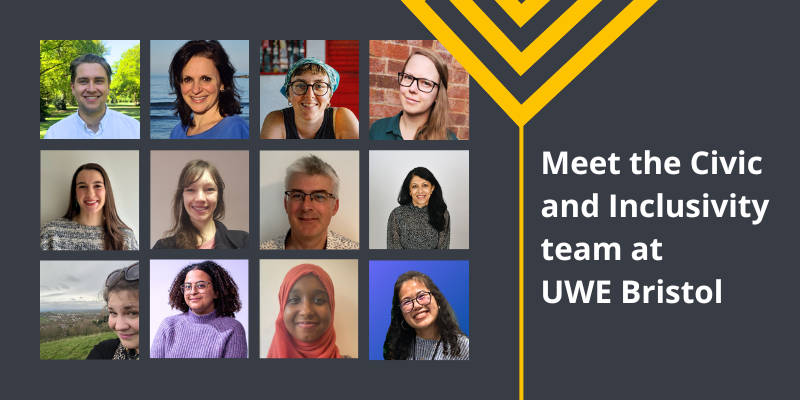
We are the Civic and Inclusivity team at UWE Bristol. Our work is shaped by a sector wide understanding that universities play a vital role in contributing to the social, economic, and environmental wellbeing of the places they serve. Our team looks to develop new opportunities for charities, communities and public sector partners. Sat within Research and External Engagement (REE) we enable these organisations to navigate UWE Bristol and all it has to offer, helping them seek out opportunities and find partnerships within the university. We work to ensure that UWE Bristol’s civic activity is purposeful, measurable, and rooted in authentic, proactive relationships with its surrounding communities.
At UWE Bristol, meaningful civic engagement is inseparable from our commitment to equity, antiracism and inclusion. The University has an Anti-Racism Strategy that acknowledges the deep-rooted inequities faced by Global Majority students and staff, outlining a clear need for accountable, institution wide action to dismantle systemic racism. Alongside this, UWE Bristol’s broader equality, diversity and inclusion (EDI) commitments prioritise creating inclusive cultures, amplifying staff and student voice, and ensuring that discrimination, bullying, and harassment are actively challenged across the institution. These commitments shape how the Civic and Inclusivity team partners with communities, supports students and works to change practice across the institution.
Bringing these elements together, the Civic and Inclusivity team works across the University. We support colleagues, students, and external partners in co‑creating initiatives that strengthen community connection, widen participation, and ensure that UWE Bristol’s civic mission contributes to positive local change. Our goal is to ensure that UWE Bristol’s role as an anchor institution is lived out in ways that benefit local people, empower marginalised voices, and enrich the University’s relationship with the communities it serves.
I’m Allan, I lead the Civic and Inclusivity team at UWE Bristol. Having worked in strategic and community-based partnerships for a number of years I lead the work to coordinate the University’s engagement with local partners across the region. I support academics to incorporate local partners into their research, meet community and charity partners to understand their needs and try to find ways to support them within the University, and work strategically across the institution to shift the ways we operate to become more inclusive and impactful for communities across the region.
I’m the Civic Development Manager at UWE Bristol, where I lead the Civic and Community Engagement Team enhancing students’ experience through in curriculum and extra-curricular activities. I work closely with academic colleagues to embed meaningful, community engaged learning in the curriculum.
I’m passionate about building purposeful, long-term partnerships with Voluntary, Community, or Social Enterprise (VCSE) organisations across Bristol and the wider region. My role focuses on connecting these partners with the university’s research, expertise, talent, and facilities, creating opportunities that enrich student learning, support community priorities, and strengthen UWE Bristol’s civic mission. Connect with me if you’re looking to develop collaborative projects, community‑engaged learning opportunities, or research partnerships that create tangible benefits for students, staff and local communities.
I’m Georgia, Civic and Community Engagement Coordinator at UWE Bristol. I focus on building mutually beneficial collaborations between charities, civic organisations, and our students. I coordinate initiatives that respond to the ambitions of our partners while giving students opportunities to share their skills, support local communities, and drive positive change.
I’m Kate, the Project Zulu Coordinator at UWE Bristol. I work closely with our partner schools in South Africa and colleagues across the university to support educational and community projects shaped by local priorities. My role includes coordinating overseas opportunities for UWE Bristol students and academics, supporting international partnerships and leading on the biennial Project Zulu Choir tours. I’m committed to building relationships that strengthen education and benefit communities in both the UK and South Africa.
I’m Samantha, a Data Analyst within the Civic and Inclusivity Team, focusing on evaluating the impact of UWE Bristol’s civic work across the City of Bristol. As part of my role, I work part of the time in the City Office at Bristol City Council, analysing the impact of the One City Plan and its approach. Alongside my skills in data analysis and insights, I bring extensive experience in public engagement and co design, ensuring that research and data collection are grounded in genuine collaboration and deliver meaningful, actionable insights
I’m Alicia, the Civic and Community Engagement Officer at UWE Bristol. I work alongside Francesca and Georgia to design, promote, and deliver a diverse range of volunteering opportunities that enhance UWE Bristol students’ employability, enrich their university experience, and support local charities and community organisations in achieving their objectives.
I lead the EDI projects team which aims to improve the experience and outcomes for students who may experience greater barriers to success, supporting UWE Bristol’s Access and Participation Plan and Anti-Racism Strategy. Many of these projects are delivered with partners within or outside of UWE Bristol, providing practice-based opportunities which help to ensure that all our students are able to succeed and thrive.
I’m Jaya the EDI Projects Co-ordinator delivering positive action programmes UWE Equity and UWE Futures supporting Global Majority students to thrive and succeed through activities such as coaching sessions, a mentoring programme and work experience opportunities.
I’m Steffie, EDI Projects Coordinator. I have led cross-university student positive action projects here at UWE Bristol for years, driving institutional change, inclusion, accessibility, and improvements in student outcomes for diverse student groups as aligned with our regulatory commitments to the Office for Students (OfS.) I’m passionate about social justice and demonstrating impact through robust evaluation. Connect with me if you’re looking for specialist knowledge and ideas about designing targeted interventions and projects that remove barriers to success.
I’m Touka Mostafa an EDI Projects Coordinator. I deliver positive action programmes such as The Equity Programme which supports Global Majority Students in thriving and achieving positive graduate outcomes through bespoke coaching sessions, skills workshops and mentoring. I also deliver and implement our Anti-Racism Strategy across REE by developing and running Anti Racist in Practice workshops.
I’m Ilwad, and I work as a Graduate Assistant on the UWE Futures Programme at UWE Bristol, assisting administration, recruitment, data and marketing. I help improve processes in these areas to increase student engagement, expand partnerships, help Global Majority students access more opportunities during their university life.
Hi, I’m Equity’s Social Media Intern, I build digital visibility for student talent and industry partnerships. Through strategic UWE Equity LinkedIn growth and storytelling, I help amplify access to opportunity and showcase programme impact.
Yan Kay, Social Media Intern
CASE STUDY One: UWE Futures Programme Providing Students with Transformative Professional Experience
UWE Bristol has ran the UWE Futures programme for three years. 23 final-year students from the College of Business and Law and School of Computing and Creative Technologies took part in the most recent week-long work experience placement across leading law firms and UWE Bristol within their professional services teams in the region.
Hosted by Bevan Brittan, Burges Salmon, Clarke Willmott, Foot Anstey, Osborne Clarke, RPC, and UWE Finance, the programme offered students the opportunity to gain invaluable industry insight, engage directly with professionals, and develop a deeper understanding of workplace culture and expectations. Students were also matched with a Mentor to provide advice and guidance until the end of the academic year.
For many of the students, this was their first experience in a professional working environment. While initially daunting, many found that the opportunity provided real-world exposure that helped them to clarify their career aspirations and next steps following graduation.
For more information about UWE Futures or to explore partnership opportunities, please contact: equity@uwe.ac.uk
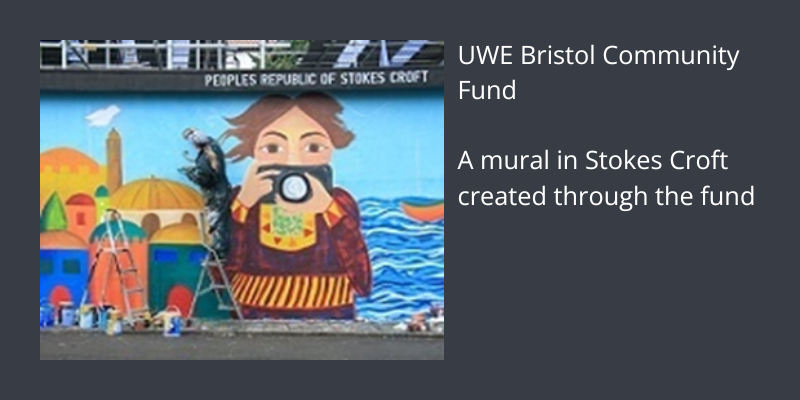
CASE STUDY 2 – UWE Bristol Community Fund, supporting students and staff to support our region’s communities
In partnership with The Quartet foundation, the Civic and Inclusivity team coordinate and distribute the UWE Bristol Community Fund which awards grants of up to £3,000 for community partnership projects.
This initiative aims to support projects which help to build relationships between staff, students and local communities. We are always looking to: develop opportunities for students to volunteer in the local community; enhance teamwork, communication and project management skills; enhance student learning through practical, community-based projects; deliver significant impact for the West of England region.
Applications must be led by a current UWE Bristol student or staff member and identify a lead community partner. If you have a good idea and are seeking a suitable community partner, the UWE Bristol Fund and civic engagement team can help with this. The project must benefit communities in the region’s four local authorities – Bristol, Bath and Northeast Somerset, North Somerset and South Gloucestershire. The fund give priority to projects that focus on schools and education, sustainability, stronger communities or health and wellbeing.
To learn more about the fund, to submit an expression of interest form or to get in touch with the team, please visit the UWE Bristol Community Fund webpages.
If you’d like to learn more about any of the work highlighted above, explore potential partnerships, or discuss how we can support your organisation or community, we’d love to hear from you. The Civic and Inclusivity team is here to help you navigate opportunities at UWE Bristol, connect with the right people, and co‑create initiatives that make a meaningful difference across our region.
Please get in touch with one of us or visit our webpages to start a conversation. We look forward to working with you.
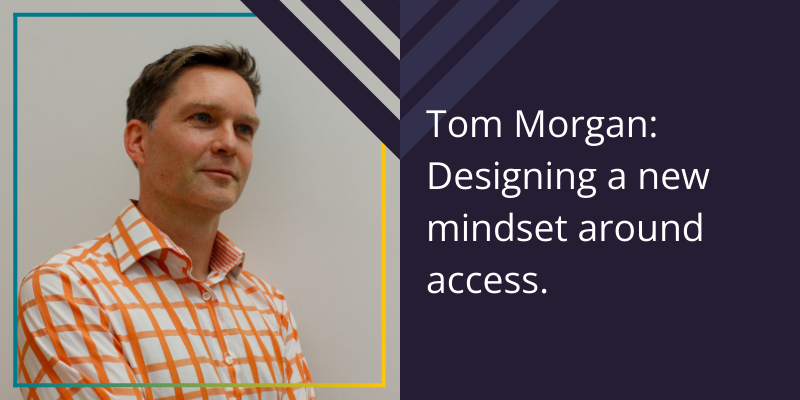
For this RISE Blog Tom Morgan, one of the founders and CEO of Supersmith to talks about the company, and the journey so far. Supersmith has been supported by UWE Bristol’s Bristol Robotics Lab (BRL) and Future Space, from concept to being moments away from launch
How we are changing the way the world thinks about mobility scooters
Tom Morgan, Founder & CEO, Supersmith
When most people picture a mobility scooter, they don’t think about innovation. They think about something medical. Functional. Bulky, maroon. Something you need, not something you want.
And that perception is exactly the problem.
At Supersmith, we believe mobility scooters shouldn’t just help people move. They should expand what’s possible. They should feel safe. They should feel empowering. And they should be designed with the same ambition and pride as any other consumer product. For many people, a traditional mobility scooter just doesn’t make them feel good. With the help of our community, that’s what we are hoping to change
Because if we’re honest this category hasn’t changed meaningfully in decades.
The Safety Gap that society has normalised
In the UK, 6.3 million people experience walking impairment. Yet traditional mobility scooters have five times more fatalities per distance travelled than motorbikes.
That statistic stopped us in our tracks.
Even more striking, over one third of mobility scooter users have tipped over at least once.
Somehow, instability has been accepted as part of the experience. Users are expected to adapt to cambers, uneven pavements and dropped kerbs. The burden of safety has been placed on the rider, not the design. Mobility scooters have long been treated as medical aids not high tech mobility systems. And when you categorise something as a “medical device,” expectations lower, design stagnates, and innovation slows. We believe that needs to change.
A Personal Mission
Supersmith was founded by myself, my wife Emily, and her cousin Dr Fred Russell-Pavier.
For us, this is personal, I’ve seen my sister live with multiple sclerosis and struggle with traditional scooters, not only because of safety concerns, but because of the social stigma attached to them. Mobility shouldn’t mean feeling exposed or diminished. It shouldn’t mean sitting far below eye level, being literally and metaphorically looked over. We all deserve better.
Her lived experience has shaped everything about how we approached design.
Engineering Confidence
Our first product, the 3Scooter, was created to tackle both stability and stigma head-on.
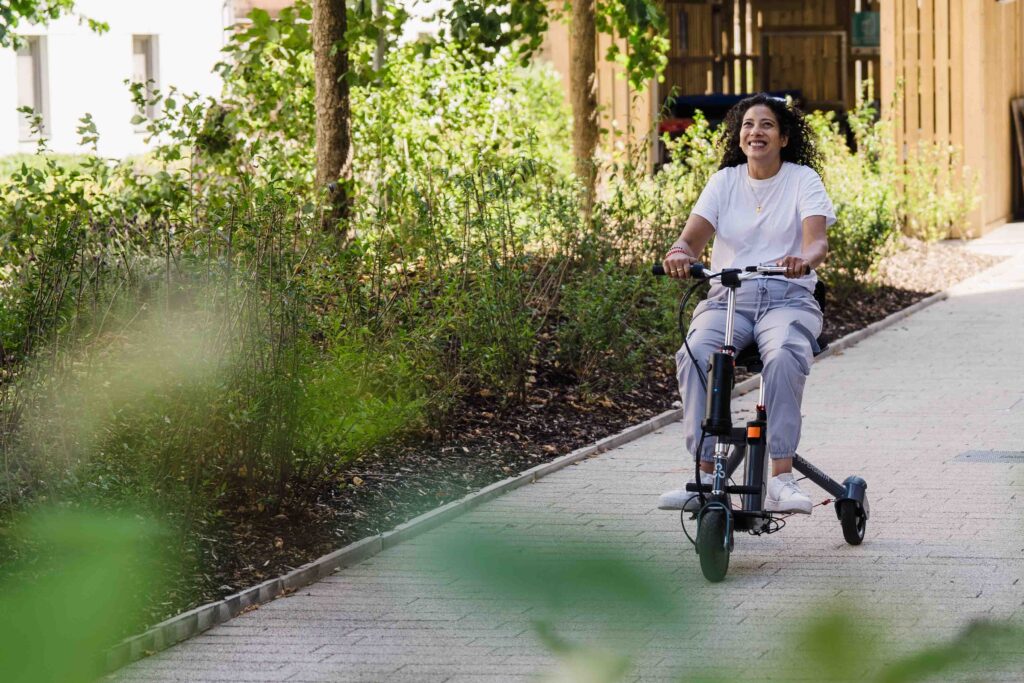
Inside every model is a patented active stabilisation system called EverLevel™ . It continuously adjusts to terrain and turns, actively adapting to maintain balance. It means you can do things that simply wouldn’t be possible on traditional 3 and 4 wheel mobility scooters without tipping.
Users can sit up to 90% of their standing height, changing not just visibility, but presence. The aesthetic blends contemporary e-scooter styling with practical functionality. It folds in around 10 seconds, can be partially used as a walker, and is lightweight enough to lift into a car boot .
“Nothing For Us, Without Us”
One of the most important principles guiding Supersmith is a mantra well known in the disability community: Nothing for us, without us .
From concept to production, our community has been involved at every stage. Not as test subjects, but as collaborators. Because if we want to change how the world thinks about mobility scooters, we have to start by listening to the people who rely on them.
Changing perception isn’t just about engineering. It’s about language, brand, distribution, and storytelling. Our ambition at Supersmith isn’t simply to launch a new scooter in 2026. It’s to shift a mindset that has been stuck for too long.
Because when you change how people think about a product, you change how they feel about using it. And when you change how someone feels about moving through the world, you start to slowly change that world, one scooter at a time. That’s the mission Emily, Fred and I are committed to alongside our incredible community team and support network.
How the UWE Bristol Ecosystem Accelerated Our Journey
Based at UWE Bristol, within the BRL Hardware Incubator, has been instrumental in turning our ambition into something tangible. The Hardware Incubator, together with Future Space, are vital components of an ecosystem which includes active investment communities, and a wide range of support, diverse skills and talent.
Building a hardware startup is complex, and access to specialist facilities, technical expertise and a collaborative innovation community has allowed us to iterate faster and achieve more. Which, when you’re trying to rethink an entire category from the ground up is vital.
As a Senior Lecturer at UWE Bristol, Dom McLernon needed a postgraduate degree for both professional credibility and to clear pathways in his current role at UWE Bristol. Before achieving his Professional Development Award MSc in 2025, Dom had already undertaken some postgraduate study, but not enough to achieve a full MSc award.
At the time, his highest qualification was a PGDip. The Professional Development Award (PDA) was the missing piece of the jigsaw. It offered an ideal route to progress to a full master’s degree, with the credits from his previous learning counting towards his overall award.
Dom talks to us about staying focused through challenges while studying, using this award as a spring-board for professional success and academic research.
Tell us about your relationship with UWE Bristol.
I work here as a Senior Lecturer in Specialist Community Public Health Nursing. I became aware of the postgraduate PDA through an academic colleague who had successfully taken the same route.
What did success look like for you after the award?
My role at UWE Bristol required a master’s degree for professional credibility, as well as the academic skills and experience necessary to support students through to full postgraduate awards.
I am now undertaking a part-time PhD in a research area that first emerged during my PDA studies. The research methods module enabled me to develop a robust research proposal on exploring religious identity among healthcare professionals and examining how NHS management respond to expressions of faith within organisational cultures that purport to promote inclusion and diversity.
Did you meet any challenges while working towards this award?
Goodness, yes! I have a very demanding role and an even busier home life with young, energetic children. The flexibility of the programme’s teaching delivery was therefore invaluable. Lectures on the PDA were recorded and available after the live sessions, which was particularly helpful when my own teaching timetable conflicted.
I was also supported by a highly dedicated and knowledgeable supervisor for my Evidence Work-Based Learning (EWBL) project, who provided guidance whenever I encountered challenges and helped me maintain a clear focus on the EWBL learning objectives I needed to meet.
What advice would you give anyone considering this award?
If you are a busy professional looking to consolidate and extend your existing qualifications, I would be very surprised if you found a programme that is more affordable or flexible than the Professional Development Award at UWE Bristol – so look no further.
The continued publication of the Jeffrey Epstein files highlights the complexity and impact of sexual abuse and exploitation. The files reinforce the need for an individual and collective understanding, to respond to, and prevent, child sexual abuse and exploitation. The challenge is the nature and extent of the abuse conveyed in the files, alongside the media allegations and reports of a range of individuals, although not found guilty of any wrongdoing, that risks distracting from the main message and central learning. Sexual abuse and exploitation can be preventable, but only if signs are understood and reports and concerns are seen as truthful and taken seriously. There then must be acknowledgment of the responsibility for all individuals to step in, and to feel confident to do so.
Prevalence of sexual abuse
Sexual abuse and exploitation are a broad array of offences and behaviours that affect women and children, which is complicated by the fact that these offences can vary by country and can be challenging to detect and prosecute transnationally. Hence, the true scale of sexual abuse is unknown due to underreporting and inconsistent terminology across organisations, different governmental organisations and countries. The UN reports that one in three women and girls (736 million) have experienced physical and/or sexual violence, mostly by intimate partners. Six per cent of women globally report non-partner sexual violence, and 15 million adolescent girls aged 15–19 have experienced and reported rape. The reality of child sexual abuse prevalence is unclear but UNICEF estimates that 1 in 8 children globally (12.7%) are sexually abused before 18. In England and Wales, one in 10 children are sexually abused before 16, though this is likely underestimated. UN data shows online gender-based violence prevalence ranges from 16–58%, with Facebook as the top platform where it occurs. So it is evident that there is a pervasive issue.
Terminology: Abuse, Exploitation and Paraphilias
In the Epstein case, the terms child sexual abuse and child sexual exploitation are often used. It is important to unpack this terminology, as it is inconsistent and not understood in the same way across public narratives. Child sexual abuse (CSA) is when a child is used for someone else’s sexual gratification, with no possibility of genuine consent. Child sexual exploitation (CSE) also involves sexual harm, but includes exchange (i.e., someone offers or gives something of value, or the child gains something from it). Both are harmful and damaging to the child, but often in CSE cases, the child can be thought of as a willing accomplice as they are in some way benefiting from it. Therefore, cultivating a blame culture around it, resulting in a lack of support. The perspective of benefiting is a misnomer as they are being groomed and abused. It is important to understand in the Epstein case both of these were happening; he was directly sexually abusing children and through exploitation was facilitating the abuse of them, as well as adult women.
Epstein has often been referred to in the press and public discourses as a paedophile. Paedophilia is a paraphilia, which is a sexual attraction to something not inherently sexual. Paedophilia is a clinical term, not a legal term or offence category, that refers to someone who is sexually attracted to pre-pubertal children. In the clinical guidance, this refers to children under 11. The term paedophile in modern socio-political and media discourses has been used to talk about all child sexual abuse, which is problematic. Based on the emerging evidence from the released files and from past lawsuits, it seems that Epstein’s preferred victims were of early to mid-puberty, so 11 -15. This means that he was more likely to be diagnosed as a Hebephile, a person who is sexually attracted to children in early puberty. Therefore, the terminology used is potentially incorrect and unhelpful in helping society understand his offenses and behaviour. The emerging evidence is that his offences were driven by power and control, not by sexual paraphilias. In addition, this means that some people may mistakenly assume that everyone linked to Epstein was a potential paedophile or a paedophilic sympathiser. This is unhelpful on many levels, but especially to their adult victims and especially to their victims who were exploited.
Society needs to understand Epstein’s behaviour as a form of exploitation and abuse, as that is what it was; it was organised criminogenic and exploitative behaviour that exploited and abused women and girls.
Learning from the Epstein case
As more of the files are published and more of the processes are uncovered, we can learn more about what Epstein did and how he facilitated the exploitation and abuse. The detailed records, images, emails, and part-work that were kept showed that it was an organised, orchestrated pattern of behaviour. It shows intent, but also a lack of trust and a need for evidence on his behalf in case one of his coworkers turned against him. Understanding the longevity of his offences is rooted in understanding the people that he associated with – powerful people with influence. However, association alone doesn’t equate to knowledge or complicity.
Epstein’s exploitation and abuse were able to continue for decades because of the socio-political fallout from any of his associates being linked to him. The context of the files, emails, and pictures provide accounts of a range of activities that raise questions about people’s connections and interactions with Epstein. They raise questions in the sociopolitical landscape about his relationships with individuals, which are difficult to prove but are subjective enough to prompt public speculation. This added to his wealth and influence, making him feel untouchable and emboldening him to continue exploiting. It also meant that society would not question him. When this is coupled with the fact that we do not talk about sexual abuse, do not believe victims, and that a lot of the abuse was facilitated through exploitation, it made the case a perfect storm. It seemed that society individually and collectively looked away.
Prevention and engagement
The main learning from the Epstein case is a simple one, as a society we need to learn about, talk about and challenge child sexual abuse and exploitation more than we do. We need to understand the nature and prevalence of child sexual abuse and exploitation so that we can be confident in challenging it, stopping the abuse and supporting victims. Which should happen through an EPiCrim (public health and criminological) framework. Taking an EPiCrim approach allows us to understand child sexual abuse and exploitation from multi-perspectives. In taking an EpiCrim approach, we focus on the internal (biological and individual/developmental psychology) and external (social and community psychology and social) causes of the abuse to prevent first-time (primary and secondary prevention) and repeat offending (tertiary and quaternary prevention) across the socio-ecological model (individual, interpersonal, community and societal). In respect to the Epstein case, both his abuse and the exploitation he facilitated, how do we read the signs of abuse, how do we engage with potential victims and harmers, how do we put the community sanctions and supports in place (both online and offline) to prevent it and how do we shift social norms to empower freer dialogue in this area?
Book: Developing and Implementing a Public Health and Criminological Approach to Tackling Sexual Abuse
Conclusions
The release of more of the Epstein files will prompt more conversations about these actions, his crimes, and his abuse and exploitation of women and girls. This needs to emerge so that victims can be supported and, if any further evidence of criminal acts are found, people are held to account for their actions. But it also needs to enable us individually and collectively to learn from the exploitation and abuse. The release of the files should give us more evidence and, therefore, confidence to speak out about sexual abuse and exploitation and to intervene before there are more victims.
Just before Christmas, UK Research and Innovation (UKRI) published its 2026–30 budget allocations, outlining significant changes to how it plans, manages and deploys funding, described by UKRI as the most substantial shift since its creation. Last week’s open letter from UKRI Chief Executive Ian Chapman adds helpful clarity, particularly around curiosity-driven research and alignment with national priorities.
For UWE Bristol researchers, these changes affect how funding is framed, assessed and positioned – even where the underlying research remains unchanged. We encourage you to read the full UKRI explainer blog to understand details behind these changes.
A new way of organising UKRI funding
UKRI’s £38.6bn budget for 2026–30 is now structured around four outcome focused areas rather than individual Research Councils:
Curiosity driven research (investigator-led, responsive mode)
Strategic government and societal priorities (mission-led, challenge-focused)
Enabling and strengthening UK R&D (infrastructure, skills, institutes, platforms)
Across the four years, this includes:
£14.5bn for curiosity-driven foundational research
£8.3bn for targeted R&D addressing government and societal priorities
£7.4bn to support innovative companies to start, scale and stay in the UK
£8.4bn for skills, talent, infrastructure and national facilities underpinning all three areas
What this means for UWE researchers:
Expect more cross-council, outcome-driven calls. When shaping projects, consider which ‘bucket’ your work sits in, and frame your plans in terms of the outcomes UKRI is now emphasising.
Growing emphasis on the Industrial Strategy and IS-8
UKRI will increasingly align its programmes with the government’s Modern Industrial Strategy, particularly its eight priority sectors (the IS8): Advanced Manufacturing; Clean Energy Industries; Creative Industries; Defence; Digital & Technologies (including AI, Quantum and Engineering Biology); Life Sciences; Financial Services; and Professional & Business Services.
More funding will flow through UKRI-managed, Industrial Strategy-aligned programmes rather than traditional council-specific routes. Exactly how this framing will shape calls, assessment processes or partnership expectations is still emerging (see this Substack for a more detailed analysis of what problems this reorganisation may be trying to solve), with more detail expected in forthcoming Strategic Delivery Plans.
What this means for UWE researchers:
It’s useful to consider how your work can be articulated in relation to the IS8, directly or indirectly, alongside its disciplinary strengths and societal relevance. You might also reflect on how your research connects to UWE’s four RISE Beacons and, through them, to IS8 sectors (e.g., how work under “Shaping integrated healthcare” links to Life Sciences and NHS transformation). Additionally, consider alignment with major national agendas such as the NHS Long Term Plan or the AI for Science Strategy, and with regional strengths and priorities in the West of England.
Fundamental research and research not aligned to IS-8 is still valued
Curiosity-driven, fundamental research remains central to the system, reflected in its substantial share of total funding. UKRI is also retaining a meaningful “wider priorities” category within its strategic and innovation portfolios, enabling investment in nationally important areas that do not fit neatly within the IS8, such as climate adaptation; environmental resilience; space; and food, animal and plant health.
What this means for UWE researchers:
If you work in discovery-led research:
continue developing proposals and articulate the originality, long-term public value and intellectual ambition of your work clearly;
look out for new responsive-mode opportunities as headroom increases later this year.
How the BID team can support you
If you’d like to explore what these changes mean for your work, Centre, School or College, the BID team can help with early conversations about alignment and positioning, horizon scanning and funder intelligence, and strategic discussions about how your research connects to the newly articulated UKRI priorities. You can find out who would be best to contact on the BID team staff intranet page. Meanwhile, if the growth in commercialisation funding has prompted thinking about how your ideas could lead to new products, services or tools, or spin-outs and social enterprises, or policy outputs, start a conversation early with the Impact and Commercialisation team.