Ben Knight Reflects on Project Zulu’s Big Year and Looks Ahead to 2026 

Posted on

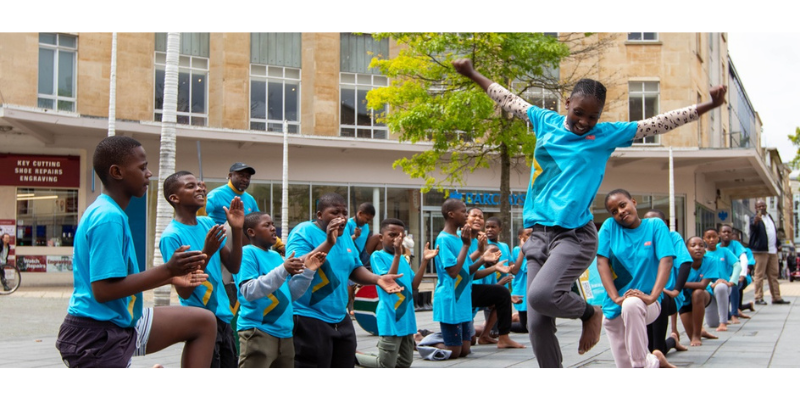
As 2025 draws to an end, it’s time to reflect on our achievements this year. Plenty has already been said and written about the 2025 Project Zulu (PZ) choir tour, but I would like to reiterate here how proud I am of the choir, their teachers, their support teams and the UWE Bristol PZ team for pulling off such a fantastic tour and raising the bar by setting a new fundraising total of £37,504.04. Tenders are already underway at Sithbelumthetho Primary School and Sipheni Senior Primary School for their development projects in solar energy and digital learning resources and we expect to begin spending tour profits on these projects in 2026. 

A few other quick-fire achievements from this year include:  

  1. Almost five hundred teachers attending professional development workshops and conferences.  
  1. Classrooms, learning resources and designated outdoor spaces previously developed with PZ choir tour funds continue to be actively used by hundreds of teachers and children. 
  1. More than 50 UWE student volunteers engaged meaningfully in PZ activities. 

2025 certainly has been action-packed and full of progress and impact. As we look forward to 2026, there are a few particular highlights. 

We’re excited to be welcoming back PZ ambassador and former Springbok rugby player Thinus Delport to lead the PZ rugby volunteer programme ‘Township Rugby’. This project took a break in 2025 and we’re delighted to be reigniting it with fresh faces from UWE’s men’s and women’s rugby union teams, working together with local rugby coaches as they teach PE, coach township school rugby teams and plan and facilitate the annual PZ rugby tournament. 

A topic which gets less attention compared to other PZ project areas is our research. As an initiative led and facilitated by various academics and embedded within a university, research is of course central to what PZ does. Collaborating with South African academics to evaluate and better understand the impact of our work is crucial. After our very successful collaboration developing a reading support app for teachers, we have this year we have extended our commitment to collaborate with colleagues from the University of Zululand (UNIZULU) for the next three years. Likely research focus will be entrepreneurship education and behaviour management interventions. Throughout 2026 a masters student will be studying the impact of PZ’s behaviour management interventions, in which hundreds of teachers have attended a workshop series exploring a wide repertoire of management strategies. This impact evaluation will help us to see what has been achieved and what is yet to be achieved in this important area. 

In February 2026 we will once again be hosted by our friends and academic colleagues at UNIZULU in Richard’s Bay. This annual gathering has always proved to be a vital source of scholarly knowledge exchange and mutual learning. This year the focus of our discussions will be classroom and behaviour management. We will be sharing details about our work with teachers in the Newcastle area and discussing challenges teachers face in this area in South Africa and the UK. We are hopeful that more ideas for research collaborations will emerge from these discussions.  

One topic we are looking forward to exploring further is the intention for students and staff from UNIZULU to pay a visit to UWE Bristol in the next few years. After several years of UWE students and staff visiting schools in the Richard’s Bay area and being hosted by UNIZULU, we are excited about the prospect of a return visit and the fruitful connections and future collaborations this may unlock. 

Altogether, there is much to be excited about for 2026 and we can’t wait to get started on it all. 

New UWE Bristol policy briefing highlights opportunities to strengthen children’s participation in Welsh teacher education

Posted on

New research from UWE Bristol is calling for stronger and more consistent support for children’s participation within Initial Teacher Education (ITE) in Wales, highlighting clear opportunities to embed children’s rights and voice more meaningfully into everyday classroom practice.

The findings are published in a new policy briefing from the Children’s Participation in Schools project, which examines how well ITE programmes prepare new teachers to support children’s participative rights – a core expectation of the Curriculum for Wales and the Welsh Government’s commitment to a rights-based education system Policy Briefing ITE.

Why this matters now

Wales has positioned itself as a global leader in children’s rights, with the Curriculum for Wales placing children’s agency, voice and participation at the heart of teaching and learning. This policy briefing arrives at a critical moment, offering timely insights into how teacher education can further strengthen this ambition in practice.

Over a 12-month period, the research team worked with ITE students and teacher educators across Wales, using enquiry-based workshops and focus groups to explore how children’s participative rights are understood, taught and enacted in both university-based and school-based teacher education.

Key findings

The research found strong alignment between the values of the Curriculum for Wales and participatory pedagogy, with teacher educators recognising the importance of children’s participation in learning. However, the briefing also highlights missed opportunities within current ITE provision.

In practice, student teachers often experience children learning about human rights, rather than through participatory classroom approaches. Participatory practice is frequently limited to formal structures such as school councils or eco-committees, rather than being embedded into everyday classroom decision-making and curriculum-making.

Despite these challenges, the findings point to significant and achievable opportunities to strengthen participatory pedagogies across ITE programmes, building on existing strengths within the Welsh policy landscape.

Supporting children’s rights through teacher education

Associate Professor Sarah Chicken, Principal Investigator for the Children’s Participation in Schools project, said:

“As Principal Investigator for the Children’s Participation in Schools Project, I am delighted to present the findings from our final phase, which examines how Initial Teacher Education (ITE) in Wales can further strengthen children’s participation in classroom practice.

Our findings come at an especially exciting time for education in Wales. The Welsh Government’s commitment to a rights-based education system—reflected in the Curriculum for Wales, which places children’s participation and agency at its core—provides a strong and progressive foundation for this work. Wales is uniquely well positioned to lead the way in embedding children’s participative rights through everyday pedagogical practice.

While our research indicates that participation is not yet consistently foregrounded within all aspects of ITE, it also highlights significant and achievable opportunities to enhance this focus across university-based and school-based provision. These opportunities reflect the strengths already present within the Welsh policy landscape and signal promising avenues for further professional learning among teacher educators.

I hope that this briefing will support ITE providers and wider partners as we collectively build on the Welsh Government’s vision—ensuring that children’s rights, voice and participation are not only valued, but actively realised throughout teaching and learning in Wales.”

Recommendations for policy and practice

The policy briefing sets out a series of recommendations aimed at supporting ITE providers, teacher educators and policymakers to strengthen children’s participation in classrooms across Wales. These include ensuring that ITE programmes actively support the development of participatory pedagogies, expanding professional learning opportunities for teacher educators, and aligning accreditation and inspection processes more closely with the expectations of the Curriculum for Wales.

By focusing on everyday classroom practice – rather than participation as a standalone activity – the briefing highlights how children’s rights can be realised consistently and meaningfully throughout teaching and learning.

Read the policy briefing

The full policy briefing is available to read online:

Find out more about the Children’s Participation in Schools project:  

South East Asia and UK Gender Equality Diversity and Inclusion Forum

Posted on

Written by Dr Tariq Umar

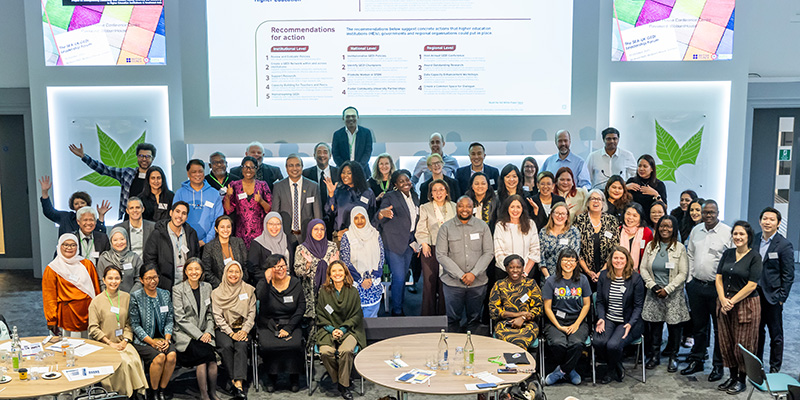
In late October 2025, academic and sector leaders from Southeast Asia and the UK gathered in London for the SEA–UK GEDI Leadership Forum, supported by the British Council and SEAMEO RIHED. Among those presenting was Dr Tariq Umar, Senior Lecturer at UWE Bristol, showcasing emerging findings from the collaborative research project, Building psychological resilience in women leaders: Strengthening support systems in Malaysian and Indonesian universities.

The Forum brought together senior university leaders, policy partners, government ministries, and researchers to reflect on progress achieved across the GEDI (Gender Equity, Diversity & Inclusivity) programme, share institutional innovations, and plan the next phase of development to advance gender-responsive leadership in higher education.

A regional challenge with global significance

Women academics and university leaders across Southeast Asia are achieving notable progress and increasingly contributing to institutional strategy, national development agendas, and the UN Sustainable Development Goals. However, many still face well-recognised pressures, including:

  • limited visibility of leadership pathways
  • conflicting expectations around professional and family roles
  • implicit gender bias and stereotypes
  • gaps in institutional support for mental health and work–life balance
  • lower access to mentoring and structured leadership development

To explore this, UWE Bristol partnered with Universiti Malaya (UM), Malaysia and Universitas Gadjah Mada (UGM), Indonesia through the funded project titled “Building psychological resilience in women leaders: Strengthening support systems in Malaysian and Indonesian Universities” to examine how women leaders sustain resilience in demanding academic environments. The project gathered survey data, focus group discussions, and leadership insights from academic, administrative, and student participants across both institutions. Earlier in September this year, the project held its public engagement event in UM, Malaysia which included the activities such as awareness sessions, trainings, panel discussion, guest lectures and meeting with the University of Malaya leadership – to share the results and recommendations arriving from the project.

What the research revealed

Initial findings from UM and UGM highlight several co-existing realities:

1. Work-life balance is the most significant barrier

A large majority of participants across both universities reaffirmed that balancing family responsibilities and leadership roles remain one of the most persistent constraints. While policies exist, implementation is uneven, and informal expectations often dissuade women from pursuing leadership opportunities.

2. Psychological resilience matters

Many participants described imposter feelings and self-doubt – not unusual for emerging women leaders navigating scrutiny, gendered norms, and multi-role pressure. However, mentoring and leadership coaching were found to significantly reduce these experiences, reinforcing the need for structured and consistent support.

3. Mental health support is growing – but needs strengthening

Although peer support was strong, formal access to psychological support was limited, particularly counselling and professional services. Respondents expressed a need for longer-term, better-communicated, and institution-wide approaches.

4. GEDI policy exists – but awareness is uneven

While staff widely acknowledged that institutional leadership values GEDI principles, not all community members feel directly connected to these policies in practice. Many reported limited awareness of existing programmes and suggested stronger communication, visibility, and continuity.

5. Institutional culture shapes aspirations

The strongest enabling factors identified across the study included:

  • Mentorship and role models
  • Supportive supervisors
  • Peer networks
  • Inclusive leadership signalling from senior management

In campuses where these were present and visible, women were more confident in pursuing promotions and opportunities.

Learning together: inside the SEA-UK GEDI Forum

Over three days, the Forum examined how universities in the UK and Southeast Asia can learn from each other to accelerate GEDI implementation.

Day one: GEDI in practice – a UK campus lens

Participants visited the Institute of Developmental Studies to explore:

  • Inclusive campus design
  • EDI-led leadership development programmes
  • Student engagement strategies
  • Governance structures for equitable policy delivery

A roundtable session allowed staff and students to compare the UK approach to Southeast Asian contexts, identifying replicable practices—from integrated reporting systems to co-designed leadership initiatives.

Day two: Action planning and knowledge exchange

During the British Council roundtable, participants discussed challenges and successes from Phase II of the programme, focusing on:

  • What meaningful impact has been achieved so far?
  • Which UK practices have already been adapted locally?
  • How can Southeast Asian insights inform work in the UK?

Breakout groups co-designed next steps, including clearer monitoring frameworks, shared digital resources, and cross-institutional mentoring models.

Day three: Public forum and policy engagement

A public dissemination event brought together more than 80 stakeholders. Through panel discussions, rapid-fire project showcases, and dialogue with policymakers, participants reflected on:

  • maintaining momentum in higher education reform
  • the value of comparative learning between the UK and Southeast Asia
  • opportunities for sustained regional collaboration in Phase III

Projects, including Dr Umar’s, demonstrated how grounded research can generate actionable solutions that help universities move from commitment to transformation.

UWE Bristol’s contribution

Dr Umar presented emerging results from the UM–UGM–UWE Bristol research, including a new modelling approach using Partial Least Squares Structural Equation Modelling (PLS-SEM). The analysis showed that:

Strong GEDI systems directly improve leadership access, mental-health wellbeing, and work–life balance among women leaders.

In other words, policies alone are not enough – how they are lived institutionally fundamentally shapes whether women feel able to lead. The findings provide practical evidence that universities benefit when:

  • leadership development includes psychological resilience
  • policies are experienced consistently across departments.
  • women are supported through mentorship and recognition.
  • mental health is normalised and resourced.
  • family commitments are not positioned as a leadership disadvantage.

This research also helps institutions benchmark progress and plan future interventions grounded in staff experience.

Looking forward

The Forum made clear that gender-responsive leadership development in higher education is advancing across the region, but momentum must be maintained. Across UM, UGM, and UWE Bristol, several shared priorities emerged:

  • Develop structured cross-institution mentoring networks
  • Increase leadership visibility and pathways for women
  • Embed psychological resilience training
  • Strengthen institutionalised support for mental health
  • Align policy, culture, and practice more closely
  • Improve programme communication and student involvement

As the GEDI programme moves into its next phase, partners aim to scale these solutions across additional universities and ministries in Southeast Asia.

A shared commitment to lasting change

The SEA-UK GEDI Forum demonstrated that transforming leadership ecosystems is not only a question of training women to lead, but of reshaping the conditions that enable leadership to flourish. This includes changing narratives, shifting perceptions, and designing institutions where confidence, aspiration, and wellbeing are supported—not tested.

With continued collaboration between UK and Southeast Asian partners, the project is well-placed to contribute to:

  • systemic institutional reform
  • stronger leadership pipelines
  • and more resilient, inclusive higher education communities.

The journey is ongoing, but the foundation laid so far marks an important step toward equitable and sustainable leadership in the region.


Back to top