
Royal Academy of Engineering funding awarded to unlock informal green engineering skills in Africa

Posted on

Written by Dr Tariq Umar

A researcher at UWE Bristol has secured new international funding to explore how informal engineering skills can help accelerate the green transition across Africa.

The project, “Unlocking informal green engineering skills in Africa: A comparative pilot for scalable recognition pathways,” is led by Dr Tariq Umar, Senior Lecturer in Civil Engineering at UWE Bristol. The initiative will work with partners in Kenya, Uganda and Ghana to better understand and recognise the skills of informal technicians, artisans and innovators who are already delivering climate and energy solutions within their communities.

Across sub-Saharan Africa, more than 80% of employment takes place in the informal economy, where technicians install solar systems, repair equipment, fabricate energy-efficient technologies and adapt climate solutions to local contexts. However, these practitioners often remain outside formal training and certification systems, limiting opportunities for professional recognition, finance, training and enterprise development.

The project will develop and pilot a scalable recognition model for informal green engineering skills, helping to bridge the gap between grassroots innovation and formal skills systems.

Working closely with training authorities, innovation hubs and community practitioners, the project will:

  • map informal green engineering practices and competencies
  • develop practical recognition pathways aligned with national skills systems
  • pilot a community-based recognition model in Uganda
  • generate policy guidance to support inclusive green skills development

The initiative forms part of wider efforts to strengthen green workforce development, climate resilience and inclusive innovation across African economies.

Dr Tariq Umar, Project Lead at UWE Bristol, said: “Across Africa, millions of technicians, artisans and grassroots innovators are already driving the green transition by installing solar systems, repairing infrastructure and adapting climate technologies to local needs. Yet their skills often remain invisible within formal training systems. This project aims to recognise and strengthen these capabilities, creating pathways that connect informal innovation with formal skills ecosystems. By doing so, we can support decent work, strengthen local green economies, and accelerate inclusive climate solutions.”

The research consortium includes partners from Kenya’s National Industrial Training Authority (NITA), GIZ Kenya, Leaf Life Solutions, 3N ENGTECH Innovations in Uganda, and the Institute for Sustainable Energy and Environmental Solutions (ISEES) in Ghana. Together, they will examine how recognition approaches can support workforce mobility, innovation and sustainable livelihoods.

Professor Washington Yotto Ochieng, CBE, EBS, CEng, FREng, FCGI, Chair of the Africa Engineers Steering Committee at the Royal Academy of Engineering, emphasised the importance of recognising grassroots innovation in the green transition: “Engineering innovation across Africa often emerges from informal systems where skilled technicians and practitioners are solving real problems in energy, infrastructure and climate adaptation. Recognising and strengthening these capabilities is essential if we are to build inclusive and resilient green economies across the continent.”

The project also aligns with UWE Bristol’s commitment to international collaboration and research addressing global sustainability challenges.

Alice Radley, Senior Manager Sustainable Development at the Royal Academy of Engineering, said: “This project reflects the Royal Academy of Engineering’s commitment to supporting inclusive and sustainable engineering solutions that are grounded in local realities. Across Africa, informal engineers and technicians are already playing a vital role in advancing green innovation and climate resilience. By recognising and strengthening these skills, we can help unlock new pathways for sustainable development, economic opportunity and a more inclusive global engineering ecosystem.”

Over the next twelve months, the research will combine stakeholder engagement, participatory mapping, competency identification and pilot testing of recognition approaches. Findings will inform policy guidance and scalable models that could be adopted across multiple African countries.

Ultimately, the project aims to help governments and partners unlock grassroots engineering capacity, strengthen pathways to decent green jobs, and support locally driven climate solutions.

If you would like to learn more about this project, please contact Dr Tariq Umar, Project Lead, at tariq.umar@uwe.ac.uk.

Strengthening global partnerships

Posted on

Written by Dr Tariq Umar

Dr Tariq Umar, Senior Lecturer in Construction Project Management, has recently taken up two Visiting Professor appointments at:

  • the Faculty of Built Environment, University of Malaya (Malaysia)
  • the Institute of Architecture and Civil Engineering, Satbayev University (Kazakhstan).

These appointments reinforce UWE Bristol’s commitment to global collaboration in built environment, architecture, civil engineering and sustainable development – reflecting our strategic ambition to foster internationally impactful research and transnational education.

Why these institutions matter – and what Dr Umar brings

University of Malaya – Faculty of Built Environment

The Faculty of Built Environment (FBE) at University of Malaya is a well-established centre for architecture, construction, real estate and built environment education. Its undergraduate and postgraduate programmes — in Architecture, Building, Estate Management, Quantity Surveying and related fields — are accredited both locally and internationally (e.g. by RIBA and other professional bodies).

Moreover, its research centre, for building, construction and tropical architecture (BuCTA), aims to produce knowledge and capacity to address local/regional challenges in construction, sustainability, and built-environment development.

Dr Umar’s Visiting Professor role at FBE-UM builds upon an existing externally funded collaboration: the gender-equality project under the Southeast Asia–UK partnership. Through that project, UWE Bristol and University of Malaya (with other partners) have been working on building psychological resilience and institutional support systems for women leaders in higher education.

With this new appointment, Dr Umar is well-placed to:

  • nurture long-term institutional collaboration, embedding gender equity and inclusive leadership in built environment academia;
  • engage across architecture, built environment and engineering disciplines to explore how sustainable design and equitable professional practices intersect;
  • support research, teaching and capacity building – particularly in areas of sustainable/tropical architecture, construction, and social equity;
  • mentor postgraduate students and early-career researchers, and help view built environment challenges through a global, equity­ focused lens.

University of Malaya leadership – Professor Dr Yvonne Lim Ai Lian, Associate Deputy Vice-Chancellor (Academic and International) at University of Malaya:

“Dr Tariq Umar’s appointment as Visiting Professor reflects our shared commitment to excellence in built-environment education and research. We look forward to working with him to advance sustainable, inclusive practices – and to benefit from his experience in international collaboration and interdisciplinary research and scholarship.”

Satbayev University — Institute of Architecture and Civil Engineering

The Institute of Architecture and Civil Engineering at Satbayev University is a leading institution in Kazakhstan for training architects, civil engineers, building-material scientists, and specialists in urban planning, BIM/construction management, transport infrastructure, and innovative building materials.

Over decades, the Institute has contributed significantly to architecture and engineering in the region, combining design, engineering, and practical construction expertise.

The UWE Bristol -Satbayev partnership initiated under a transnational education (TNE) project funded by the UK’s British Council – has explored joint teaching, research collaboration, curriculum development, and capacity building. The project aims to open pathways for shared programmes, joint research, and international exchange.

Through his Visiting Professor role, Dr Umar can contribute significantly by:

  • helping to shape curriculum development around sustainable design, civil engineering and construction management;
  • initiating joint research on urban sustainability, green construction, infrastructure resilience and climate-responsive architecture — helping Satbayev’s students and staff benefit from UWE’s global expertise;
  • supervising postgraduate research and fostering academic mobility between UWE Bristol and Satbayev University;
  • strengthening institutional capacity for international collaboration and transnational education in built environment disciplines.

Satbayev University leadership – Professor Bolat U Kuspangaliyev, Director, Institute of Architecture & Civil Engineering:
“We are pleased to welcome Dr Tariq Umar to our Institute as a visiting academic this semester. Through his teaching within the Architecture programme, he is bringing a valuable international perspective and contemporary insights into sustainable built-environment research. His contribution supports our ongoing work in curriculum development, research-led teaching, and international collaboration across civil engineering and architecture. We also appreciate his engagement with our doctoral students as an international mentor within the Department of Architecture”.

Message from UWE Bristol Leadership

Professor Elena Marco, Pro Vice-Chancellor & Head of College Arts, Technology and Environment at UWE Bristol, welcomed the appointments:

“We are proud that Dr Tariq Umar will represent UWE Bristol in these two globally significant institutions. His dual appointments not only expand our international footprint – they deepen our commitment to sustainability, equity and excellence in built-environment education and research worldwide.”

What this means for UWE Bristol – and the future of our partnerships

With Dr Umar’s Visiting Professor roles now active, UWE Bristol can look forward to:

  • strengthened institutional relationships with two dynamic partner universities in different global regions – Southeast Asia and Central Asia;
  • enhanced capacity for cross-cultural, interdisciplinary research and teaching in architecture, built environment, civil engineering, sustainability – bringing together design, technology, equity and environmental resilience;
  • greater opportunities for staff and student exchange, joint supervision, collaborative grant proposals and transnational education programmes;
  • broader dissemination of research and practice-based knowledge – contributing to global challenges of urban development, sustainable construction, infrastructure resilience and equitable leadership in academia and built environment sectors.

These appointments mark an important step in the development of ongoing and future collaborations.

If you have any questions or need further information, please contact Dr Tariq Umar (tariq.umar@uwe.ac.uk).

Championing research careers: Dr Tariq Umar represents UWE Bristol at two key British Academy events

Posted on

In late 2025, Dr Tariq Umar, from the School of Architecture and Environment at UWE Bristol, contributed his expertise and experience to two major British Academy programmes aimed at supporting Early Career Researchers (ECRs) across the UK.

Across both events – Navigating academic culture and career progression (Newcastle, 28 November 2025) and Setbacks to success: Resilience for ECRs (London, 1 December 2025) – Dr Umar provided candid insights on academic progression, resilience, and navigating the complex realities of contemporary academic life. His contributions reflect UWE Bristol’s ongoing commitment to inclusive research culture, researcher development, and sector-wide leadership.

1. Navigating academic culture and career progression

British Academy and Northumbria University, Newcastle – 28 November 2025

This full-day event brought together ECRs from diverse disciplines for a practical and collaborative exploration of academic career pathways. The programme was organised around three tailored breakout sessions—Postdoc to Lecturer, Lecturer to Senior Lecturer, and Building towards Professor—allowing attendees to focus on the transition most relevant to their stage.

Dr Umar served as a panel member in the “Lecturer to Senior Lecturer” session, where he spoke about the realities of progression at mid-career level, reflecting on:

  • the transition from early independence to leadership and influence
  • building a research portfolio that demonstrates coherence, impact and future potential
  • balancing teaching excellence with strategic research development
  • navigating institutional expectations, workload models, and progression criteria
  • developing visibility and networks within and beyond one’s discipline

He emphasised that progression is “a journey built on consistency, contribution and community,” noting the importance of mentoring, collaborative opportunities, and understanding the wider academic ecosystem.

Beyond career transitions, the event addressed essential themes that often shape academic wellbeing and sustainability. Parallel panel discussions explored work–life balance, managing hierarchical relationships, and career change, areas where Dr Umar’s own cross-sector experience between civil engineering industry and academia resonated strongly.

A signature feature of the event was the afternoon session where successful major-grant holders opened their applications for small-group discussions. This ‘behind-the-scenes’ look at winning grants gave ECRs rare access to the craft of research funding success—an area Dr Umar has contributed to as reviewer for several research councils and as an active mentor for engineers through the Institution of Civil Engineers.

2. From setbacks to success: Resilience for ECRs

British Academy, London – 1 December 2025

Two days later, Dr Umar joined a panel at the British Academy’s flagship ECR Network resilience event, From Setbacks to Success, held in London’s Carlton House Terrace. The day focused on building resilience, confidence and connection within the ECR community—addressing the emotional, structural, and professional challenges that shape early academic careers.

Dr Umar joined fellow panellists Dr Olaya Moldes, Dr Rosemary Chigevenga and Dr Sarah Howard for an open, honest conversation about rejection, imposter feelings, precarity, and career obstacles.

Drawing on his international academic and industry experience, he spoke about:

  • turning research and funding rejections into learning moments
  • maintaining purpose and motivation during periods of uncertainty
  • building networks that offer both professional and emotional support
  • recognising resilience not as an individual trait, but as a community practice
  • the importance of mentorship—both receiving it and offering it to others.

Panellists also engaged in an extended Q&A, addressing challenges raised by attendees and sharing key pieces of advice to take forward. Dr Umar underscored the message that “no researcher succeeds alone,” reinforcing the collective dimension of research careers and the value of community-building across institutions.

Showcasing UWE Bristol’s commitment to researcher development

Dr Umar’s involvement in these events demonstrates UWE Bristol’s strong and growing presence in national conversations on academic development, research culture, and support for early-career scholars. Through his research leadership, mentoring roles, outreach work, and professional engagement, Dr Umar represents the University’s values of inclusivity, collaboration and real-world impact.

His participation also highlights the increasing emphasis – both at UWE Bristol and across the sector – on supporting researchers at all stages through:

  • transparent progression pathways
  • accessible mentoring and peer learning
  • recognition of diverse career journeys
  • honest dialogue around challenges, resilience, and wellbeing.

UWE Bristol’s Research and External Engagement service continues to champion these principles through its researcher development programmes, ECR initiatives, and partnerships with national bodies such as the British Academy.

Dr Suwita Hani Randhawa gives evidence on ecocide to the Scottish Parliament

Posted on

On 11 November 2025, Dr Suwita Hani Randhawa (Senior Lecturer in Politics and International Relations, UWE Bristol) was invited to provide oral evidence to the Net Zero, Energy and Transport Committee of the Scottish Parliament, as part of its ongoing scrutiny of the Ecocide (Scotland) Bill (PDF).

Introduced on 29 May 2025 by Monica Lennon (MSP for Central Scotland), the Bill is aimed at the introduction of a new criminal offence of ecocide under Scots Law. In the Bill, ecocide is defined as causing severe environmental harm in such a way that is either reckless or intentional.

The Bill will allow for people and organisations to be convicted of ecocide. Individuals convicted of ecocide could be jailed for up to twenty years and fined, while organisations convicted of ecocide are liable to receive a fine. 

If passed, Scotland would become the first UK nation to criminalize large-scale environmental destruction as a stand-alone offence of “ecocide”. It will also position Scotland at the forefront of growing international efforts to use criminal law to deter mass environmental destruction.

As an expert on the process of criminalisation in global politics, Dr Randhawa offered insights into the interplay between domestic and global efforts to criminalise ecocide.

Her evidence has since been quoted by commentators, such as this piece published by the ENDS Report.

Read the preceedings of the Net Zero, Energy and Transport Committee’s meeting.

South East Asia and UK Gender Equality Diversity and Inclusion Forum

Posted on

Written by Dr Tariq Umar

In late October 2025, academic and sector leaders from Southeast Asia and the UK gathered in London for the SEA–UK GEDI Leadership Forum, supported by the British Council and SEAMEO RIHED. Among those presenting was Dr Tariq Umar, Senior Lecturer at UWE Bristol, showcasing emerging findings from the collaborative research project, Building psychological resilience in women leaders: Strengthening support systems in Malaysian and Indonesian universities.

The Forum brought together senior university leaders, policy partners, government ministries, and researchers to reflect on progress achieved across the GEDI (Gender Equity, Diversity & Inclusivity) programme, share institutional innovations, and plan the next phase of development to advance gender-responsive leadership in higher education.

A regional challenge with global significance

Women academics and university leaders across Southeast Asia are achieving notable progress and increasingly contributing to institutional strategy, national development agendas, and the UN Sustainable Development Goals. However, many still face well-recognised pressures, including:

  • limited visibility of leadership pathways
  • conflicting expectations around professional and family roles
  • implicit gender bias and stereotypes
  • gaps in institutional support for mental health and work–life balance
  • lower access to mentoring and structured leadership development

To explore this, UWE Bristol partnered with Universiti Malaya (UM), Malaysia and Universitas Gadjah Mada (UGM), Indonesia through the funded project titled “Building psychological resilience in women leaders: Strengthening support systems in Malaysian and Indonesian Universities” to examine how women leaders sustain resilience in demanding academic environments. The project gathered survey data, focus group discussions, and leadership insights from academic, administrative, and student participants across both institutions. Earlier in September this year, the project held its public engagement event in UM, Malaysia which included the activities such as awareness sessions, trainings, panel discussion, guest lectures and meeting with the University of Malaya leadership – to share the results and recommendations arriving from the project.

What the research revealed

Initial findings from UM and UGM highlight several co-existing realities:

1. Work-life balance is the most significant barrier

A large majority of participants across both universities reaffirmed that balancing family responsibilities and leadership roles remain one of the most persistent constraints. While policies exist, implementation is uneven, and informal expectations often dissuade women from pursuing leadership opportunities.

2. Psychological resilience matters

Many participants described imposter feelings and self-doubt – not unusual for emerging women leaders navigating scrutiny, gendered norms, and multi-role pressure. However, mentoring and leadership coaching were found to significantly reduce these experiences, reinforcing the need for structured and consistent support.

3. Mental health support is growing – but needs strengthening

Although peer support was strong, formal access to psychological support was limited, particularly counselling and professional services. Respondents expressed a need for longer-term, better-communicated, and institution-wide approaches.

4. GEDI policy exists – but awareness is uneven

While staff widely acknowledged that institutional leadership values GEDI principles, not all community members feel directly connected to these policies in practice. Many reported limited awareness of existing programmes and suggested stronger communication, visibility, and continuity.

5. Institutional culture shapes aspirations

The strongest enabling factors identified across the study included:

  • Mentorship and role models
  • Supportive supervisors
  • Peer networks
  • Inclusive leadership signalling from senior management

In campuses where these were present and visible, women were more confident in pursuing promotions and opportunities.

Learning together: inside the SEA-UK GEDI Forum

Over three days, the Forum examined how universities in the UK and Southeast Asia can learn from each other to accelerate GEDI implementation.

Day one: GEDI in practice – a UK campus lens

Participants visited the Institute of Developmental Studies to explore:

  • Inclusive campus design
  • EDI-led leadership development programmes
  • Student engagement strategies
  • Governance structures for equitable policy delivery

A roundtable session allowed staff and students to compare the UK approach to Southeast Asian contexts, identifying replicable practices—from integrated reporting systems to co-designed leadership initiatives.

Day two: Action planning and knowledge exchange

During the British Council roundtable, participants discussed challenges and successes from Phase II of the programme, focusing on:

  • What meaningful impact has been achieved so far?
  • Which UK practices have already been adapted locally?
  • How can Southeast Asian insights inform work in the UK?

Breakout groups co-designed next steps, including clearer monitoring frameworks, shared digital resources, and cross-institutional mentoring models.

Day three: Public forum and policy engagement

A public dissemination event brought together more than 80 stakeholders. Through panel discussions, rapid-fire project showcases, and dialogue with policymakers, participants reflected on:

  • maintaining momentum in higher education reform
  • the value of comparative learning between the UK and Southeast Asia
  • opportunities for sustained regional collaboration in Phase III

Projects, including Dr Umar’s, demonstrated how grounded research can generate actionable solutions that help universities move from commitment to transformation.

UWE Bristol’s contribution

Dr Umar presented emerging results from the UM–UGM–UWE Bristol research, including a new modelling approach using Partial Least Squares Structural Equation Modelling (PLS-SEM). The analysis showed that:

Strong GEDI systems directly improve leadership access, mental-health wellbeing, and work–life balance among women leaders.

In other words, policies alone are not enough – how they are lived institutionally fundamentally shapes whether women feel able to lead. The findings provide practical evidence that universities benefit when:

  • leadership development includes psychological resilience
  • policies are experienced consistently across departments.
  • women are supported through mentorship and recognition.
  • mental health is normalised and resourced.
  • family commitments are not positioned as a leadership disadvantage.

This research also helps institutions benchmark progress and plan future interventions grounded in staff experience.

Looking forward

The Forum made clear that gender-responsive leadership development in higher education is advancing across the region, but momentum must be maintained. Across UM, UGM, and UWE Bristol, several shared priorities emerged:

  • Develop structured cross-institution mentoring networks
  • Increase leadership visibility and pathways for women
  • Embed psychological resilience training
  • Strengthen institutionalised support for mental health
  • Align policy, culture, and practice more closely
  • Improve programme communication and student involvement

As the GEDI programme moves into its next phase, partners aim to scale these solutions across additional universities and ministries in Southeast Asia.

A shared commitment to lasting change

The SEA-UK GEDI Forum demonstrated that transforming leadership ecosystems is not only a question of training women to lead, but of reshaping the conditions that enable leadership to flourish. This includes changing narratives, shifting perceptions, and designing institutions where confidence, aspiration, and wellbeing are supported—not tested.

With continued collaboration between UK and Southeast Asian partners, the project is well-placed to contribute to:

  • systemic institutional reform
  • stronger leadership pipelines
  • and more resilient, inclusive higher education communities.

The journey is ongoing, but the foundation laid so far marks an important step toward equitable and sustainable leadership in the region.

Strengthening Higher Education systems through UK-Mexico collaboration

Posted on

UWE Bristol is leading a new international partnership with Universidad Tecnológica de Saltillo (UTS) the Secretaría de Educación de Coahuila (SEDUC), and Universidad Politecnica de Ramos Arizpe (UPRA) Mexico, under the British Council’s HE Connects 2025 programme.

The project, titled “Strengthening systems to improve the quality and efficiency of Higher Education Institutions in Coahuila, Mexico,” aims to build institutional capacity, enhance educational quality, and foster inclusive international collaboration across the higher education sector. This partnership is developed on the previous project “Improving soft skills, learning outcomes and employability of women students, graduates, and early career professionals in STEM” and existing relationship with the State of Coahuila (government) in Mexico.

Building capacity for quality and internationalisation

Led by Dr Tariq Umar (Senior Lecturer, School of Architecture and Environment, UWE Bristol), this initiative will co-create frameworks and tools to strengthen institutional governance, curriculum quality, and international engagement. Working closely with Mexican partners, the project will develop a strategic institutional toolkit – a bilingual resource that supports higher education institutions in Coahuila to benchmark and plan improvements in teaching, management, and global collaboration.

Over 2026, the project will deliver a series of collaborative activities, including:

  • Institutional self-assessment workshops to identify capacity gaps in quality assurance and governance.
  • Strategic toolkit co-development labs to design internationalisation and improvement frameworks tailored to local contexts.
  • Capacity-building training for academic and administrative staff focused on curriculum, leadership, and quality enhancement.
  • A UK–Mexico Policy Dialogue Forum bringing together higher education leaders and policymakers.
  • A final dissemination event to share outcomes and best practices with wider academic communities.

Supporting sustainable and inclusive higher education

The project contributes to several UN Sustainable Development Goals (SDGs), particularly SDG 4 (Quality Education), SDG 8 (Decent Work and Economic Growth), and SDG 10 (Reduced Inequalities). Through inclusive participation and gender-responsive design, the collaboration will promote equitable access to international opportunities, leadership development for women in academia, and sustainable education models.

Dr Umar explains: “This partnership is about more than system strengthening – it’s about mutual learning and shared innovation. By working alongside our Mexican colleagues, we aim to co-create practical tools that foster inclusion, sustainability, and quality improvement across the higher education sector.”

From Mexico, Dr Yolanda Soberón Rodríguez, Director of Liaison (Universidad Tecnológica de Saltillo), added: “For us, this collaboration represents an opportunity to transform institutional practices through shared knowledge and joint development. Working with UWE Bristol and the British Council enables us to strengthen our systems and open new pathways for international engagement that directly benefit our students, staff, and regional communities.”

Enhancing UWE Bristol’s international engagement

For UWE Bristol, this initiative represents a strategic step in deepening engagement with Latin America. It aligns with the UWE Bristol’s Transforming Futures agenda, expanding its global network and advancing transnational education (TNE) initiatives. The School of Architecture and Environment will particularly benefit from new opportunities to integrate global perspectives into teaching, research, and professional practice.

Expected outcomes include:

  • A co-developed institutional toolkit for quality and internationalisation, applicable across global partnerships.
  • Policy recommendations to support education reform in Coahuila and beyond.
  • Formal collaboration agreements (MoUs) establishing the foundation for joint programmes, staff exchanges, and research projects.

A shared roadmap for transformation

The partnership underscores the importance of cross-cultural collaboration in achieving systemic educational improvement. By combining UWE Bristol’s expertise in higher education quality and governance with the contextual knowledge of Mexican partners, the project will create a scalable model for international partnership and capacity development.

“The collaboration with Universidad Tecnológica de Saltillo, SEDUC and UPRA exemplifies the power of partnership in advancing inclusive and globally connected higher education,” said Matthew Jones, Dean and Head of School of Architecture and Environment (UWE Bristol). “This initiative strengthens UWE’s commitment to fostering innovation and impact through international engagement.”

Arturo Mendoza, Head of Higher Education (British Council, Mexico), commented: “Through HE Connects 2025, we are proud to support collaborations that enhance educational quality and create sustainable partnerships between the UK and Mexico. The UWE–UTS partnership demonstrates how international cooperation can lead to meaningful institutional reform and greater opportunities for students and educators alike.”

Mónica Angulo Miñarro, Project Manager for Higher Education (British Council, Mexico), added: “This project showcases the best of the HE Connects programme—co-creation, inclusivity, and long-term impact. It will help institutions in Coahuila strengthen their systems, improve teaching and governance, and connect more deeply with the global higher education community.”

Project details

Project Lead: Dr Tariq Umar, Senior Lecturer, School of Architecture and Environment (UWE Bristol)

Partners:

  • Universidad Tecnológica de Saltillo (UTS)
  • Secretaría de Educación de Coahuila (SEDUC)
  • Polytechnic University of Ramos Arizpe (UPRA)
  • COPARMEX Coahuila Sureste
  • Comité de Recursos Humanos Derramadero (Human Resource Committee of Coahuila)

Funding: British Council – HE Connects 2025 (Going Global Partnerships)

Contact

For more information, please get in touch with the Project Lead, Dr Tariq Umar (tariq.umar@uwe.ac.uk).

Research visit to University of Malaya, Malaysia

Posted on

Dr Tariq Umar, School of Architecture and Environment at UWE Bristol, visited University of Malaya (UM), Malaysia to participate in the collaborative activities of external funded project “Building psychological resilience in women leaders: strengthening support systems in Malaysian and Indonesian universities” – funded by Southeast Asian Ministers of Education Organization (SEAMEO) Regional Institute for Higher Education Development (RIHED) and the British Council.

The on-site activities were held from 17 September to 19 September 2025 at the Faculty of the Built Environment, University of Malaya. The on-site activities included awareness sessions, trainings, panel discussion, guest lectures and meeting with the University of Malaya leadership – to share the results and recommendations arriving from the project.

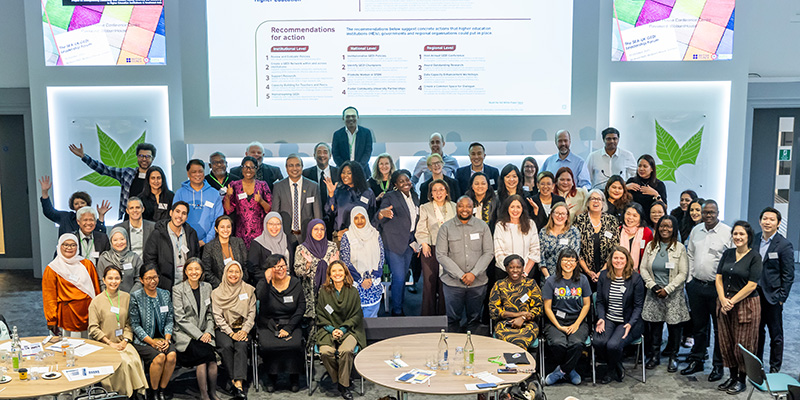
Above: Workshop (women leadership) participants

In his speech, Dr Umar highlighted the key findings of the project. He stated that, both in UM and Universitas Gadjah Mada (UGM), Indonesia, women face more obstacles and men in attaining leadership positions. This clearly highlighted the continued importance of UM and UGM commitment to gender equity.

Referring to the focus group discussion, he further stated that these challenges are not seen as barriers but as opportunities for both universities to expand mentorship programmes, support mechanism, build more structured leadership policies, promote inclusivity and ensure equal access to opportunities. Referring further to the results of the project, he stated that overall, both the organisations culture is widely supportive of women’s leadership advancement – particularly, how peers are supporting each other in routine work and in difficult situations.

Dr Umar outlined that gender considerations still influence the performance evaluation and leadership selection – negatively affecting fairness and inclusion. A major setback in this arises from the assumptions about women availability and or the higher level of scrutiny for women leaders. A way forward for this is to include leadership training, unconscious awareness, strengthening trust, leadership development pathways and creating supportive spaces for women to build confidence and leadership.

He finally touched on a very difficult aspect of the women leadership – work-life balance. He noted that, while there are several polices such as maternity leave and childcare facilities, there is a need of more flexible work arrangements, childcare option on campus and consistency across different faculties. He stated that our project findings suggest that many women declined leadership roles due to childcare or elderly dependents. He emphasised that enhancing work-life balance is not just a welfare initiative but a leadership development strategy. Supporting flexibility can expand the pool of capable women willing to take up leadership roles improving the gender, inclusion and diversity in the university.

During his visit, he had several meetings with UM leadership, including Deputy Vice-Chancellor, the Dean of Built Environment, and academics and researchers from different faculties. He also met the project team from UGM Indonesia, academics from International Islamic University, Malaysia and the founder and chairman of the Women Leadership Foundation, Malaysia. Several overlapping research interests strongly suggest that the collaboration and connections formed through this project will continue in the future – which is likely to enhance future institutional collaboration among UWE Bristol, UM, and UGM.

Project Eco Brazil: Mentoring Early Career Researchers on biodiversity and climate resilience

Posted on

As a member of the UK delegation to the State of Para, Dr Tariq Umar, Senior Lecturer from the School of Architecture and Environment (UWE Bristol) visited Brazil to mentor Early Career Researchers (ECRs) on biodiversity and climate resilience. This visit (from 9 to 13 August 2025) is part of the Eco Brazil project that aims to bridge biodiversity and climate resilience in Brazilian landscapes through capacity building, knowledge exchange and simulation modelling.

The event brought together more than fifty researchers, selected from different universities from Brazil and the UK. The visit activities took place in the Universidade Federal do Pará (UFPA) – Federal University of Para, located in the city of Belem, State of Para.

Invited as a mentor and expert facilitator, Dr Umar guided ECRs from both countries in developing research roadmaps, building methodological capacity in simulation modelling, and fostering international collaboration for biodiversity and climate resilience. He contributed to workshop sessions involving cross-country knowledge exchange, collaborative group-work, and mentorship support for participants in both conceptual and applied research planning.

Dr Umar provided expert guidance during group work and proposal development, promoting capacity building and aiding in the formulation of short- and long-term research agendas. His contributions supported deeper understanding of simulation modelling techniques for ecosystem adaptation, drawing parallels to global best practices and enhancing the workshop’s technical dynamics.

In his presentation, he stated “My research is driven by a simple belief – that sustainable infrastructure should reduce environmental impact while promoting inclusive and equitable practices. The construction sector has a vital role to play in both.”

Demonstrating the link between his research and Eco Brazil, he mentioned that “Brazil’s unique environmental and urban challenges provide a fascinating backdrop for collaboration. Through Eco Brazil, I see many opportunities to exchange knowledge on sustainable construction and inclusive urban planning.”

On future collaborations, he outlined “Brazil’s diverse climate and ecosystems offer a unique living laboratory for climate-resilient, energy-efficient infrastructure research. I’m confident our collaborations here will lead to solutions that work for both our countries.”

His contributions supported deeper understanding of simulation modelling techniques for ecosystem adaptation, drawing parallels to global best practices and enhancing the workshop’s technical dynamics. Engaging with both UK and Brazilian researchers, Dr Umar fostered the emergence of collaborative initiatives – potentially leading to joint publications, funding proposals, and sustained UK-Brazil research ties.

Engaging with both UK and Brazilian researchers, Dr Umar fostered the emergence of collaborative initiatives – potentially leading to joint publications, funding proposals, and sustained UK-Brazil research ties. Dr Umar’s mentorship contributes to lasting outcomes such as enhanced research capacity, establishment of long-term collaborations between UK and Brazilian institutions, and advancement in ecosystem adaptation strategies. These align strongly with Eco Brazil’s objectives to enable ongoing joint research, publications, and socio-environmental impact

The workshop embodies principles of ecosystem-based adaptation (EbA)—an approach that uses biodiversity and ecosystem services as climate-resilience tools, integrating community engagement and scientific insight—a global standard in environmental resilience.

Belém’s relevance as the host city is timely—it is advancing climate-adaptation strategies via urban ecosystem initiatives like NBCities (Nature-Based Cities project) that align with the workshop’s climate-resilience objectives. Later in 2025, Belem will welcome the world again as the host city for COP30, placing it at the centre of international climate action discussions.

During the visit, participants also explored the city of Belém, reflecting on its rich historical heritage, observing the ongoing repairs and renovations underway in preparation for COP30, and discussing the potential negative impacts these developments could have on the local population.

Dr Umar’s participation in the Eco Brazil Workshop not only deepened his engagement with both UK and Brazilian researchers but also resulted in the creation of a joint research action plan. He also shared insights from his current research on high-performance computing, which aims to develop a roadmap for inclusive innovation in the environment, health, and the built environment: read the blog to find out more.

Building on the connections established, the teams will work together to develop research proposals and co-author publications that advance sustainability and climate resilience. To minimise environmental impact, future collaborations will continue through online events, ensuring momentum while reducing the project’s carbon footprint.

UKRI funding secured to co-design an inclusive roadmap for future high performance computing infrastructure

Posted on

The UK Research and Innovation’s National Federated Compute Services (NFCS) NetworkPlus Flexible Fund recently awarded funding to Dr Tariq Umar, Senior Lecturer in Construction and Project Management, at the School of Architecture and Environment, UWE Bristol, to lead a major new project. Titled “Enhancing HPC adoption through user-centred design: A roadmap for inclusive innovation in environment, health, and the built environment”, the initiative will help shape a more accessible, trusted, and user-friendly future for the UK’s high-performance computing (HPC) infrastructure.

HPC systems are essential for tackling data-intensive challenges in fields such as climate science, healthcare analytics, and digital construction. However, professionals in these sectors often face barriers to adoption – including complex access processes, limited awareness, and usability issues. This project addresses these challenges by exploring the full user journey, from applying for HPC access to working with technical systems and evaluating collaboration models.

Dr Umar is joined by co-investigators, Dr Kwok Chun and Professor Jim Smith, also from UWE Bristol’s College of Arts, Technology and Environment. The interdisciplinary team brings expertise in environmental science, interactive artificial intelligence, and sustainable construction. Together, they will lead a series of workshops, surveys, focus groups, and training events with stakeholders across the built environment, environmental sciences, and NHS sectors.

Working in partnership with Imperial College London, National Taiwan University, the Vatican Observatory, Coventry University, Istanbul Technical University, and Arcadis Consulting UK, the project will also explore issues of trust, governance, and international interoperability.

The project’s outcomes will include a co-designed roadmap, actionable recommendations, and user personas to inform a more inclusive and future-ready national HPC federation, aligning with UKRI’s goals for sustainable digital research infrastructure.

The project runs from July 2025 to June 2026 and is part of UWE Bristol’s ongoing commitment to inclusive, interdisciplinary innovation in science and technology.

If you are from the built environment, environmental sciences, and health or NHS sectors and want to know more about project, or would like to get involved in the project workshops, focus group discussion or training activities, then please get in touch with project lead, Dr Tariq Umar (tariq.umar@uwe.ac.uk).

Back to top