My career top tip

Posted on

by Gundega, Student Careers Coach

As a mature student returning to the job market after more than a decade, making applications again was really out of my comfort zone, but it resulted in securing my role as a Student Careers Coach.

I learnt a lot through applying for this role that I’d like to share with you, as your Careers & Enterprise tip of the month.

It isn’t an obvious place to start an application, but I found the personality tests in the Career Toolkit significantly increased my confidence with applications and interviews. They provided insight into my core strengths and helped me understand my working style, fostering self-awareness. Crucially, the results encouraged me to emphasise skills I may have overlooked, such as adaptability, problem-solving, and empathetic communication—qualities essential in a support-based role like a Student Careers Coach.

For people at any stage of their career, I cannot emphasise enough the importance of a good CV. Having a clear understanding of my strengths and preferences was a game-changer, as I built a CV that was suitable for my specific goals and ambitions.

The CV-building tool and CV examples on Toolkit were good starting points. Then I used the step-by-step guide to highlight my achievements, transferable skills and to showcase my unique experience as assets that will undoubtedly appeal to employers. The Career Toolkit transformed what initially felt like a daunting task into an opportunity for growth and self-reflection.

Don’t take any shortcuts, and don’t expect it to be quick and easy. Instead take your time creating a CV for the ‘wonderful you’, the person you’d employ yourself!

Welcome to Wobble Week

Posted on

We know the start of university, or a new academic year, whilst exciting, can also feel a little overwhelming.  

If you’re feeling a little flat after the rush of Welcome and Freshers, and feeling a little uncertain about things, we’re here to let you know that this is completely normal. And it’s not just newbies who feel this way – everyone can feel a bit “What the hell am I doing?”, even if they’re familiar with uni life, campus… the lot!  

First year students – you might be missing home comforts or finding it difficult to adjust to a different kind of learning environment. Second years – you might be thinking “Woah, this year feels waaaay more serious than last year!” And for our international students, you may be feeling the impact of living in a new country. 

We refer to this time as ‘Wobble Week’ – a time when all students can feel a little unbalanced. Wobble Week runs from 4 November, and during this week there are lots of events and activities to help you feel more connected to our community. 

To help you feel less, well, wobbly, we can help you with everything from a chat about your mental health, signposting to support services, study support, and much more! 

However you’re feeling – it’s OK. We are here to support you. 

How to get Involved

Participate in Events: Join the various workshops and social events planned throughout Wobble Week. These activities are designed to equip you with skills and strategies to manage your time at University, or simply meet new people. 

Access Support Services: Explore the different support services available to you. From mental health and academic resources to student organisations, there are many ways to get the support you need. 

Connect with Others: Engage with fellow students, share your experiences, and support each other through the ups and downs of university life. Building a network of supportive peers can make a significant difference in your overall well-being.

Alcohol and blackouts: what’s happening in those lost hours?

Posted on

by Becky Risley

Ever woken up after a night out and can’t remember parts of the night? Or maybe you’ve had nights where whole chunks of time are missing? Sometimes we make light of these experiences or pass them off as joke, but they can be really worrying. 

So how much are students actually drinking and is it really a problem?

According to NUS SOS UK national data, 84% agreed that drinking too much too quickly can cut short a great night with 79% say they don’t like socialising with people who get very drunk and ruin the night for others.

Despite this however, 51% of those that were asked said that getting drunk means they will have a good night out and 38% say it can be difficult not to drink too much on a night out.

But what is an alcohol related blackout? And why

Alcohol-related blackouts are when you can’t remember things that happened while you were drunk. This happens because drinking too much alcohol can temporarily mess up the process of moving memories from short-term to long-term storage in your brain, specifically in the hippocampus.

There are two types of blackouts, based on how much memory is lost:

Fragmentary Blackout: This is the most common type. You might have patchy memories of events, with some parts missing. This is also called a grayout or brownout.

En Bloc Blackout: This is more severe. You can’t remember anything often for hours. The memories never form, so you can’t get them back.

When do blackouts happen?

Blackouts often result from binge drinking, which is can roughly be counted as 4 drinks for women and 5 for men within 2 hours. Science suggests blackouts usually start when your blood alcohol content hits about 0.16 percent, nearly twice the legal driving limit. At this level, your judgment and decision-making are seriously impaired, making blackouts really dangerous.

They’re more likely when alcohol enters your bloodstream quickly, like drinking on an empty stomach or consuming a lot fast. Women reach higher blood alcohol content levels faster than men, making them more prone to blackouts.

Blackouts can also occur at lower levels if you mix alcohol with other substances especially benzodiazepines.

My friend drank the same amount as me and remembers everything, why is that?

Our genetics play a big role on the likelihood of blacking out, some people are just more prone to it happening than others and everyone threshold for blackouts will be different.

Are there any long-term effects from having blackouts?

Other than the anxiety of not knowing what went on in those lost hours, research suggests that those who experience blackouts have a greater likelihood of having a dependency on alcohol late on in life. So, if you are finding you are regularly blacking out seeking support is recommended.

How can I avoid blacking out when drinking?

  1. Start Low Go Slow: drink slowly, avoid consuming large amounts of alcohol in a short period. This helps keep your blood alcohol concentration (BAC) from rising too quickly. Choosing lower alcohol drinks, such as lager tops, single spirits with lots of mixer or wine spritzers can help us pace ourselves.
  2. Eating is never cheating: having food in your stomach slows the absorption of alcohol, which can help prevent blackouts – simple as that! Eating before, during and after alcohol is always a good idea!
  3. Drink water: stay hydrated and reduce the overall amount of alcohol you consume by switching out every other drink for a glass of water.
  4. Just Say Know…your limits: everyone’s tolerance is different so it can be helpful to set yourself a limit of drinks/units before you go out for the night. Using app’s like the drink coach can help us keep track of how many drinks we have consumed.
  5. Leave the mixing to the DJ: combining alcohol with other substances, can increase the risk of blackouts.
  6. Buddy up: going out with friends who will support you to drink in a controlled way can make a big difference, make a plan and support each other to stick to it.

If you have more questions, need support or want to make a change to your alcohol use, just get in touch with me!

You can find out more about me and the UWE drug and alcohol service on our drugs and alcohol webpage.


Join the CHSS Advocate Programme and help build an inclusive community

Posted on

CHSS Widening Participation Team

Are you passionate about supporting your peers, amplifying voices, and creating a more inclusive university experience? The College of Health, Science, and Society (CHSS) Advocate Programme at UWE Bristol is your opportunity to do just that.

The CHSS Advocate Programme brings together dedicated students who want to make a difference for their peers. Advocates run student-led meetups, offer a safe space for discussions, and support students who may feel underrepresented or face barriers in university life.

Our advocates work with three key groups:

  • Neurodiverse Students
  • Race Equity Students (Black, Asian, and Racially Minoritised)
  • Mature Students

Advocates from each group host events, provide resources, and create online spaces for students to connect and engage with each other. They are dedicated to making sure that you feel heard, supported, and empowered throughout your time at UWE.

What you can expect:

  • Monthly Safe Spaces: Advocates host regular meetups where students can share their experiences, connect with one another, and amplify their voices in a supportive environment.
  • Online Communities: We’ve developed new online safe spaces, managed by the advocates, where you can access resources, participate in discussions, and find out about upcoming events. These spaces are a great way to stay connected, even if you can’t attend in person.
  • Events & Campaigns: From Black History Month to Disability History Month, our advocates are involved in key university campaigns that raise awareness and celebrate diversity.
  • Outreach Opportunities: Advocates also work closely with the wider UWE Bristol community and external organisations, ensuring the work we do has a lasting impact.

How to join:

Interested in being part of this supportive community? It’s easy to get involved! Whether you’re looking for peer support, a place to share your experiences, or simply want to connect with others, the CHSS Advocate Programme is here for you.

To join a group or attend one of our meetups, follow the link to our online space and sign up!

For more information, please email the Widening Participation Team: CHSS.WPTeam@uwe.ac.uk

Don’t hesitate to reach out to our Advocates – they’re here to support you!

Sharing your pronouns in Microsoft 365

Posted on

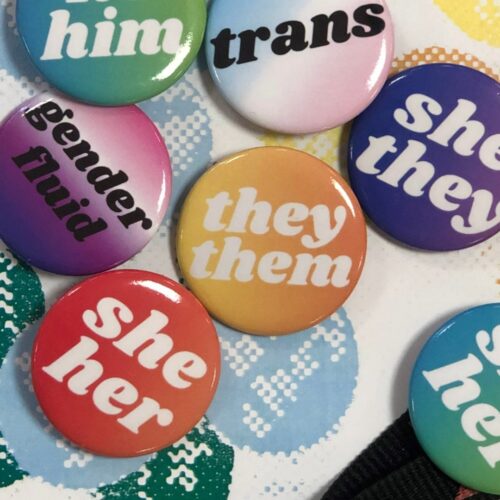
We’re happy to announce a new feature in Microsoft 365 which allows staff and students to record their pronouns against their profile card. These profile cards are displayed in applications such as Teams and Outlook for the Web and will be visible to all staff, students and guest accounts. Your pronouns will not be displayed to users outside of this organisation.

Sharing your pronouns is a great way to create a more inclusive environment by allowing everyone to feel recognised and respected. It allows people to express their gendered and non-gendered identities in a safe way, enabling them to experience fewer unintentional microaggressions. This is in line with our Trans and Non-Binary Policy, and our Trans and Non-Binary Guidance Referring to Students.

Sharing your pronouns is a personal choice and there is no pressure to do so. The use of this feature is entirely optional and gives you full control – you can add, amend or delete your pronouns at any time. Please make sure you are using this feature respectfully; misuse of this feature does not reflect our commitment to inclusivity and respect and will not be tolerated.

For detailed guidance about how you can update your profile and where pronouns will be displayed, please click here.

If you need further support, advice or information, please get in touch with the Student Support Adviser team, or the IT Service Desk for technical assistance.

My career top tip

Posted on

by Annabel, Graduate Engagement Intern

About me

Having graduated from English Language and Linguistics at UWE, I’m now working as a Graduate Engagement Intern in the Careers & Enterprise team.

My top tip

My top careers tip is to try things out! I graduated over summer and didn’t have a long-term career plan. But by trying out different things whilst at UWE, from volunteering, joining societies and gaining internships, I learnt what I did and didn’t enjoy and this really helped when making decisions about my next steps.

I wanted to make the most of my student experience so got involved in lots of things that sounded interesting. I wasn’t really thinking about where they’d take me at the time, but along the way I discovered a passion for social media and communications work, which led directly to my graduate role.

So, just get out there and try stuff!