Staying safe during festival season: Your ultimate guide

Posted on

by Becky Risley

For many of you, the end of term is more than just a break—it’s the official kick off to festival season. Whether you’re heading to a local day-fest or camping out for a long weekend, we want you to feel confident in knowing how to research the risks and reduce the harm this summer!

Pace yourself (it’s a marathon, not a sprint)

Festivals are high-energy environments. Between the dancing, the walking, and the sensory overload, your body is working harder than usual.

  • Hydrate: Locate the free water refill points as soon as you arrive and use them.
  • Refuel: Your brain needs more than just vibes to function. Sit down, grab some food, and take actual breaks away from the speakers.

Be in the know

  • The Buddy System: Make sure your friends know what you’ve taken, and check in on them, too. If someone feels unwell, knowing exactly what they’ve consumed allows medical teams to help much faster, check out the Drugs Related Emergencies resource.
  • Map it Out: Before the part starts, familiarise yourself with the medical and welfare tent, knowing where to go in an emergency.

Do your research

If you’re planning to use any substances, including alcohol. It is your responsibility to understand the effects and risks.

  • Harm reduction advice and information: Visit our drug and alcohol webpage.
  • Harm reduction guides: You can find advice on how to look after yourself before, during and after, taking certain substances via our harm reduction guide blog series. Downloadable PDF’s are also available on the webpage above.
  • Leave the Mixing to the DJ: Mixing substances is where the danger increases exponentially.
  • Alcohol is a Drug: Remember that alcohol interacts with almost everything.
  • Check Interactions: If you are considering using more than one substance, visit drugsandme for reliable, evidence-based info on how different drugs interact and how to reduce harm.

Out together, home together

Don’t be the person wandering the campsite alone at 3:00 AM.

  • The “Meeting Spot”: Pick a physical landmark (like a specific food stall—not a flag that moves!) to meet at if you get separated.
  • The Exit Strategy: Plan your journey home before you’re tired and disoriented. If you’re in a new city, pre-book your taxi or download the local transport maps.

Support and resources

You don’t have to navigate this alone. We are here to support you without judgment:

  • SU Harm Reduction: Check out the Students’ Union website for more tips and resources.
  • One-on-One Advice: Want a confidential chat? Book an appointment with UWE’s Drug & Alcohol Practitioner for professional advice, info, and support tailored to you.

Launch of a new drug testing pilot

Posted on

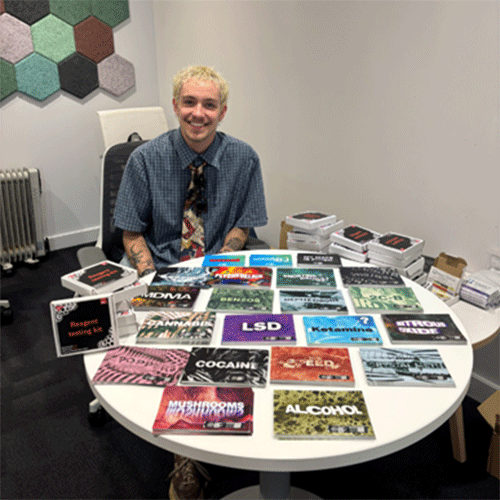
In March 2026, The Students’ Union at UWE partnered with Bristol Drugs Project (BDP) to launch a new drug testing kit pilot across Frenchay and Bower Campuses. The pilot runs on a drop-in basis so students can come along to a pop-up at a campus site of their choosing.

We launched this pilot following conversations with students at various drug and alcohol events and via online interactions, whereby they expressed an interest in testing kits. This shows a growing awareness among students of the risks associated with substance use, a desire for practical tools to mitigate those risks and the confidence and knowledge that this is a safe environment to do so.

During drop-in sessions, students picking up a kit will get the chance to speak to a practitioner from BDP for around 5 to 20 minutes (dependant on how many questions they have) who’ll ask them about their experiences with taking and testing drugs. They’ll also be shown how to use a reagent kit and be offered advice on how to interpret the result and risks associated.

The first session saw a high level of engagement at Frenchay Campus, with 30 reagent kits distributed and 17 students engaging in conversations about drug safety and harm reduction. Students not only took kits for themselves but took them home for friends.

Our second session was over at Bower Ashton Campus where we had 10 students engage in conversations and over 15 kits were given out.

If you’re interested in picking up your own at home reagent testing kit come along to one of our next pop-ups:

Frenchay Campus – The Students’ Union, Meeting Room 4
Thursday 23 April: 11:00 – 15:00
Thursday 21 May: 11:00 – 15:00

Bower Ashton Campus – B Block, Room 0B018
Thursday 7 May: 11:00 – 15:00

If you would like to find out more about our harm reduction approach to student drug and alcohol use you can:

Visit our webpages for more harm reduction advice and guidance:

How does Ketamine affect your bladder?

Posted on

by Becky Risley

Ketamine – some people use it recreationally for fun, others are drawn to it to manage mental health and trauma.

But there’s something you may not have heard about, Ketamine Bladder Syndrome, also known as Ketamine Cystitis. It’s a serious condition that can sneak up on people who use Ketamine, even those who only use it occasionally.

So, let’s talk about what it is, how to spot it early and what you can do to protect yourself.

What is your bladder and why does Ketamine affect it?

Your bladder is a round, stretchy organ behind your pelvic bone that stores urine. Think of it like a balloon—it fills up and expands, and when it’s full, you go to the bathroom. But when Ketamine breakdowns to be excreted it passes through the bladder, this can damage the cells lining it.

These protective cells (called epithelial or “umbrella” cells) normally keep urine from irritating the bladder wall. If those cells get wrecked, urine can leak deeper into the bladder lining and start doing real damage.

Early symptoms of Ketamine bladder syndrome

Watch out for these signs—they often start gradually:

  • Needing to urinate more often than usual
  • Feeling a sudden, intense need to urinate
  • Pelvic pain or pressure
  • Waking up at night to urinate

If the damage keeps getting worse, you might also experience:

  • Incontinence – urine leaking out when you’re not trying to pee
  • Blood in your urine which might look brownish orange
  • Reduced bladder capacity where your bladder becomes stiff and holds less urine
  • Erectile dysfunction (in men)

Can the damage be reversed?

Yes—if you catch it early and stop using Ketamine. In many cases, quitting can significantly reduce or even eliminate symptoms. But if the damage continues unchecked, it can become permanent, leading to lifelong bladder problems that may require surgery.

How much Ketamine is too much?

This is the tricky part: there’s no guaranteed “safe” amount. Most studies focus on people using multiple grams per day, but even moderate users (1–4 times a month) have reported symptoms.

One large survey found that over 1 in 4 Ketamine users experienced bladder issues—and 70% of them weren’t using daily. The more often and the more you use, the higher your risk of bladder damage.

What should you do if you’re having symptoms?

  • Speak to your GP – the sooner they are involved the sooner a referral to Urology services can be made if needed.
  • Stop using Ketamine – we understand it may not be that easy but you don’t have to do it alone. Book an appointment with UWE’s Drug & Alcohol Practitioner or seek support from your local drug and alcohol service.

Even if it takes weeks to feel better, many people see improvement after quitting. But be careful – you may be drawn to using more Ketamine to deal with the pain, since it has pain-relieving properties. That only makes the situation worse.

If symptoms are severe or not going away, see a doctor. There are treatments that can help reduce pain and begin healing the bladder.

Can Ketamine damage anything else?

Yes. Long-term use has also been linked to damage in other organs like the gallbladder, and research is still uncovering more.

Septum and nasal passages will be irritated and can inflamed from regular snorting of any substance, but following harm reduction advice around snorting, can reduce some of the harm.

If you still choose to use…

We get it—some people aren’t ready to stop completely. If you choose to keep using Ketamine, here are a few tips to reduce your risk:

  • Use less, less often – that alone helps a lot.
  • Stay hydrated and give your bladder time to recover between uses.
  • Book an appointment with UWE’s Drug & Alcohol Practitioner to explore more ways to reduce the harm.

We’d love to hear your thoughts on our harm reduction work related to Ketamine including how you found this blog post!

Complete our survey to give us your feedback – it only takes a couple of minutes to complete and you’ll be helping us understand the reach of our harm reduction campaigns.

Gentle January – How to avoid toxic health myths

Posted on

Many of you know by now that the New Year is an awful time to be making extreme changes to your health.

Although we are starting to turn away from ‘new year new me’ fad diets, detoxes and unsustainable work outs goals, it can be hard to not let the noise around a new year impact how we see ourselves and motivate ourselves for the year ahead. Let’s take a look at ways you can have a more gentle January, by listening to your body and being kinder to yourself.

First of all, let’s look at the harm it can cause…

Juice cleanses, keto, macros, fasting, detoxing, squat challenges, bootcamps…We’ve all heard the buzzwords around this time of year and hopefully you all know to steer well clear. Fad diets and gimmick workouts work by tapping into an idea that you need to ‘get back on track’ after the indulgence of Christmas and New Year and that setting unrealistic, harmful and unsustainable diet and exercise goals will help us ‘hack’ our way into health quickly.

Jumping into a rigorous exercise schedule can lead to injury or burn out, not to mention it’s really hard to maintain, which can also impact our mental health if we feel like we are ‘failing’.

Detoxes and strict diets can lead to nutrient deficiencies, illness, long term hunger, as well a problematic relationship with food and eating. The idea of ‘detoxing’ is also a myth in itself; we have our own built-in detox system that works 24/7 to keep us healthy – our liver and kidneys!

To add to this, January isn’t exactly a time of year where everyone is flush. Gym memberships, supplements and new diets can be expensive and rigorous exercise schedules can take away from revision and rest time if you have hand-ins and assessments through January. Try and avoid this overwhelm and give yourself a break!

Time to reframe the new year?

We shouldn’t shame ourselves for having a great time over the festive period. You’ve had a long year, worked hard and deserve to enjoy nice food and drink with friends and family.

January in the UK is a time of cold nights, wet weather and lack of sunlight. It’s no wonder you aren’t feeling motivated right now – we are in our hibernation era! Lack of sunlight can affect mood and energy levels, making it harder to stick to big lifestyle changes. Follow nature’s lead and consider moving any big changes to the spring months. More daylight and warmer temperatures naturally boost mood and energy levels. This makes it easier to get outside, exercise, and feel motivated. Spring is associated with growth and renewal. Plants are blooming and days feel brighter. This psychological ‘fresh start’ effect can make goals feel more achievable, as well as helping you feel like you have more energy and motivation.

What can I do instead?

ry and think of health and wellness as progress, not perfection. Find small, achievable wins and focus on how you feel, not how you look. This could mean small initial steps to be consistent and build healthy habits. Things like reducing your screen time, drinking more water, setting up a regular sleep pattern and making sure you get outside at least once a day is a great way to build up to other things as the year progresses.

Prioritise a varied diet, eat the rainbow and find meal ideas that keep you fuller for longer and make you feel good. Remember to speak to a GP if you think you may be deficient in any key vitamins, but a good place to start is Vitamin D, especially as the government recommends that most adults should be taking this in Autumn and Winter.

Try and find a way of moving your body that you can maintain and easily make a habit of. The NHS recommends at least 150 minutes of moderate intensity activity a week or 75 minutes of vigorous intensity activity a week. This could be anything from walking, dancing, riding bike, all the way through to exercise classes or sports. Find what feels good for your body, what you have time and energy for and go from there.

Screen time can also play a huge part in how you feel about yourself. Maybe it’s time to ‘curate’ your social media? Unfollow or mute accounts that promote extreme diets, “detoxes,” or unrealistic body goals. Remove celebs who are promoting products, schemes or diets. It’s all about money! You can also tailor your feeds to your interests to really make sure nothing is sneaking in that you don’t want to see. Try and be your own topic filter in real life too, carefully dip out or gently shut down conversations that you feel are tapping into problematic topics or habits. You can say: ‘I’d rather not talk about diets, can we change the subject?’ or ‘I’m not much of an exercise talker but I’m glad something is working for you’.

Get help if you need it 

If you’re struggling this time of year, you are not alone. We have a range of resources from self help, helplines, apps and health service teams. Find what works for you here

For further information, check out these pages on our website:

Real health is about balance, not extremes. Start the year by caring for your body and mind in sustainable ways – you’ll thank yourself later.

Drug and Alcohol Awareness Week

Posted on

We loved engaging with so many of you during UWE’s Drugs and Alcohol Awareness Week!

Drug and Alcohol Awareness Week is a key time in the harm reduction calendar, as it gives us the chance to chat to you about your alcohol and drug usage, share harm reduction information and get some insight. We do a big push on the Drug and Alcohol survey during this week as the data informs all our harm reduction work, from support interventions to campaigns and events.

This year we saw a record number of responses so a huge thank you to all that completed the survey! One student filling out the survey said, “some of these questions are really interesting… makes you think differently about alcohol use.”

The week also saw some fantastic activities hosted by The Student’s Union and UWE from pizza parties to Drink Rethink.

Not heard of Drink Rethink? This is one of our most popular events and doesn’t just take place during Drug and Alcohol Awareness Week. It’s delivered by fellow students who have been trained to use a nationally recognized evidence-based behaviour change tool AUDIT (Alcohol Use Disorders Identification Test). Our student ambassadors give out freebies such as sweet treats, unit measure cups and even mocktails.

Students who attended the event said:

“Thank you so much, this was so informative, you’re doing such important work.”

“I can’t believe how many units there are in a bottle of wine, I wouldn’t have known if it wasn’t for this.”

Sober curiosity

Posted on

January is the perfect time for a reset. For some students, that means exploring sober curiosity—a growing movement focused on questioning your relationship with alcohol and embracing mindful choices.

Whether you’re taking part in Dry January, cutting back, or simply curious, this blog is for you!

Why sober curiosity? The student perspective

According to the SOS-UK Drug & Alcohol Impact Survey, which gathered insights from over 11,800 students across UK universities, attitudes toward alcohol are shifting:

  • Many students report drinking less frequently than previous generations.
  • Health, mental wellbeing and financial savings are top motivators for reducing alcohol use.
  • A significant number of students want more alcohol-free social options on campus and our Student’s Union and Student Life Team do a great job at making sure there is something for everyone.

These findings show that sober curiosity isn’t about restriction—it’s about choice and empowerment.

Why January is the perfect time

Starting the year alcohol-free can boost your energy, improve sleep, and help you focus on your studies.

January is often a time for setting new goals and reducing alcohol can increase your motivation. And lets be honest, after an expensive December, saving extra cash is always welcome. Plus, discovering new ways to socialise without relying on alcohol is a valuable skill—especially at university. In a society where drinking is often encouraged, learning to say no when it doesn’t feel right and finding a social life beyond the pub can be empowering.

How to start your sober curious journey

Reflect on your why: journal your reasons—health, focus, finances, or curiosity.

Set realistic goals: try a month of no alcohol or maybe, alcohol-free weekdays, or just limit drinking to special occasions.

Find your community: connect with Sober Girl Society or start a sober-curious group at UWE. Bristol also has some excellent sober raves happening this January.

Explore alternatives: why not explore the range of mocktails available at The Students’ Union bar? And did you know Bristol saw the opening of its first alcohol-free bar last year?

Stay informed: There are some great books available on going sober. The Unexpected Joy of Being Sober and This Naked Mind are particularly good, or if you’d rather listen to something on the go, This Naked Mind is also a podcast.

Need some extra support?

Book an appointment with UWE’s Drug & Alcohol Practitioner.

Your harm reduction guide to Christmas

Posted on

by Becky Risley

With Christmas and the end of term around the corner, many of us will be excited to see loved ones and celebrate with friends and family. But with these celebrations sometimes comes a pressure to socialise when you’re not really feeling it or go on nights out often involving alcohol and other substances.

Here’s my top tips and advice for how to stay safe, happy, and healthy during the festive period.

Plan your night out

Many different factors can impact how alcohol and drugs affects us, such as how well we slept, what we’ve eaten and drank that day, and the environment we choose to use in.

Using any substance in an environment we’re not familiar with, or with people we don’t know or trust, can make us feel uneasy and unsafe and can change the experience of a substance. So, before a night out, think about how you’re feeling and where and who you’re going with.

Are you in a good state of mind to do this right now? Is this a safe environment for you to do this in? Who are you with? Do you feel safe with them?

It’s also a good idea to plan how you’re getting home before you go out, so you’re not left stranded at the end of the night.

Check out our drug and alcohol leaflets

We want to make sure you’re safe, whatever substance you choose to use. That’s why we’ve created a series of guidance telling you how you to look after yourself, before, during and after using a substance. Download, read and keep the leaflets below for when you need them.

Avoiding hangxiety

Hangxiety, or ‘beer fear’ is the term used to describe the crippling feeling of anxiety after a heavy drinking session. Drinking large amounts of alcohol can cause blackouts, which apart from being dangerous, can also leave us feeling very unsettled and anxious the next day when we can’t remember where we have been, who we were with or what we might have done. This along with disturbed sleep, dehydration and the natural mild levels of anxiety caused by alcohol consumption, can leave us with feelings of worry and anxiety.
Everyone can suffer from it but if you experience anxiety in everyday life, you might feel it more intensely than others.

The best thing you can do if you do find yourself with worries from the night before is to get up, drink some water, eat some food and speak to someone. Often just connecting with someone and talking about how you’re feeling can really help.

How to lessen a comedown

A comedown is the term used to describe feeling low, anxious, exhausted or emotionally fragile following a night on stimulants (MDMA, Cocaine, Amphetamine).

Which isn’t surprising when you’ve been dancing until 5am and have drunk very little water – this would mess with your sleep pattern and leave you feeling groggy and grumpy even without the effect of a substance. But whilst using drugs is always going to impact how you feel in the days after, there are things in your control which can lessen the damage.

First, avoid mixing drugs and alcohol. Different substances can have varying side effects which can impact your physical and mental health. The Students’ Union have a helpful guide on how different drugs mixed with alcohol might affect you so take a look at this if you want more information. Mixing drugs and alcohol can also make comedowns more intense and might affect you more if you experience anxiety generally.

Drinking water or isotonic drinks can also help your recovery in the days to come.

Be prepared to say no

Saying no can be challenging at times, especially during the holidays. But it’s necessary if you feel like a certain event, group of people or environment isn’t right for you. This is especially true if you’re in recovery from drugs or alcohol as it’s likely to endanger your sobriety.

Staying in one night when you’re feeling overwhelmed, or leaving a party early is ok. Some people might not understand but only you know what’s best for you in any given situation, so do what you feel is best regardless of how it might make others feel.

And my final piece of advice is to speak to me – your Specialist Drug and Alcohol Practitioner! I’m available right up until the University closes on Friday 19 Dec and will be back when the University reopens on Monday 5 January.

If you need support during the Christmas break you can access a qualified counsellor 24 hours a day 365 days a year using the Wisdom app.

Related blogs

Your harm reduction guide to Cannabis

by Becky Risley We want to make sure you’re safe, whatever substance you choose to use. That’s why we’ve created …

Your harm reduction guide to Ketamine

by Becky Risley We want to make sure you’re safe, whatever substance you choose to use. That’s why we’ve created …

Your harm reduction guide to alcohol

by Becky Risley We want to make sure you’re safe, whatever substance you choose to use. That’s why we’ve created …

Your harm reduction guide to Cannabis

Posted on

by Becky Risley

We want to make sure you’re safe, whatever substance you choose to use. That’s why we’ve created a series of guidance telling you how you to look after yourself, before, during and after using a substance.

So let’s get started…

Cannabis is a plant, used for its mind-altering effects. Different strains offer various effects, making it popular for recreational use to feel relaxed, happy, and creative. Cannabis can be consumed by smoking, eating, vaping, or using oils and sprays.

Making you aware of the harm Cannabis can cause is important so you can make informed decisions.

So, if you do decide to use Cannabis, how can you reduce the harm?

Before

Do your research

Understand the effects and risks of using cannabis, especially if your
new to cannabis use.

  • Where possible, try to understand the strain you’re smoking by finding out the levels of THC (Tetrahydrocannabinol) vs CBD (Cannabidiol).
  • Cannabis with high levels of THC and low levels of CBD will increase the risk of paranoia, agitation and dependency.

Avoid tobacco

  • If you don’t use tobacco usually, starting to use it to smoke cannabis can form a dependency on nicotine, meaning you crave it more often.

Be careful with edibles

  • Eating cannabis is a very different experience to smoking it as it takes longer to hit (up to 2 hours) and the effects will last much longer.
  • The dose can also be much harder to manage so start low
    and go slow.

Think about your mindset

  • How we’re feeling can impact our experience of using cannabis.

And setting

  • The environment you’re in can change your experience of using cannabis.
  • Think about who you are with, or whether you’re ok on
    your own.
  • Will the people you’re with be supportive and caring if
    you need some help?
  • Is this a safe and comfortable environment to use cannabis?

During

Cannabis and alcohol

  • Using alcohol and cannabis together will increase the effects of
    each substance.
  • If you plan on using both substances together start low
    and go slow.
  • It can also make you more likely to white-out. See below
    for more info.

Cannabis and psychedelics

  • Whilst using cannabis and psychedelics tend not to cause physical harm to the individual, the psychological impact can be unpredictable, even in experienced cannabis users.
  • Use with caution and as with everything, start low and go slow.

Whitey/white-out/greening out

  • If you are new to using cannabis, using a new strain or consuming a higher dose than normal, you may feel unwell.
  • You might feel sick, paranoid, dizzy or go pale.
  • To help with these symptoms you can drink some water, orange juice or a sugary drink but avoid alcohol as this will make symptoms worse.
  • You can also try laying down and taking deep breaths to fill your lungs with fresh oxygen.
  • If you’re supporting a friend, ask them what they need, do they need to talk or to be left alone for the feeling to pass?
  • Once you’ve recovered, take it easy for the rest of the day and avoid using any more cannabis or other substances even if you feel better.

After

What to expect

  • The day after using cannabis you may feel tired, lethargic or like everything is happening in slow motion.
  • Cannabis use impacts your usual sleep cycle meaning you don’t wake up feeling refreshed.
  • You might also feel dehydrated so drink plenty of water and rest if you need to.
  • It’s illegal to drive if you’re impaired by THC. Even after the effects have worn off, THC can still be detected in your system and impact your driving.
  • Taking regular breaks from cannabis will help keep your tolerance low and prevent a dependency forming, breaks could be 3-4 days or longer.

Paranoia and agitation

  • Feeling paranoid or anxious after using cannabis?
  • This could be to do with the strain of cannabis, but it could also be how your brain reacts to THC no matter what the dose.
  • Usually, these symptoms will go away within a couple of days… but the best advice is to stop using it.

How to know if you have a Cannabis dependency

  • Relying on cannabis to eat, sleep or get tasks done.
  • Using cannabis when you have planned not to, or having a high tolerance.
  • Daily use.
  • Hiding your cannabis use from friends or family.

If you have more questions, need support or want to make a change to your Cannabis use, just get in touch. You can find out more about me and the UWE drug and alcohol service on our drugs and alcohol webpage.

Your harm reduction guide to Ketamine

Posted on

by Becky Risley

We want to make sure you’re safe, whatever substance you choose to use. That’s why we’ve created a series of guidance telling you how you to look after yourself, before, during and after using a substance.

So let’s get started…

Ketamine. From a chemical point of view, Ketamine is an anaesthetic, which can make people feel dissociated from mind and body. You might hear it called K, Special K, Super K, Vitamin K and sometimes Wonk or Wobble.

It’s getting a lot of attention in the media at the moment because of the long term effects it can have on your urinary system such as severe abdominal pains, bladder and kidney damage, ulcerative cystitis and incontinence.

Making you aware of the harm Ketamine can cause is important so you can make informed decisions.

So, if you do decide to use Ketamine, how can you reduce the harm?

Before

Checked your Ket?

  • Sometimes Ket is mixed with other substances making it more dangerous such as Nitazenes.
  • Reagent kits or WEDINOS can tell you what you’re using.
  • Speak to your specialist drug and alcohol practitioner for more info on drug checking.

Crush your Ket

  • Lumps or chunks of Ket are not absorbed through the mucus membrane in the nose.
  • This can cause irritation and infections.
  • Crushing it into a fine powder before snorting can help reduce the damage to the nostrils.
  • Avoid sharing any snorting equipment to prevent the spread of germs and bloodborne viruses.

How much is too much?

  • Start low and go slow.
  • A smaller dose = euphoria, sense of calm, disorientation and confusion.
  • Large doses = risk of “k-hole” (an intense out-of-body or near-death like experience with very realistic visuals), temporary paralysis, greater risk of overdose.
  • Everyone’s tolerance is different and what might be ok for friends might be too much for you.
  • If you’re using regularly your tolerance will increase quickly.

During

Ket and alcohol

  • Ket magnifies the effects of alcohol increasing the risk of falling unconscious.
  • It reduces the gag reflex which would wake us up if we needed to be sick.
  • If a friend is going to bed after using Ket and alcohol, put them in the recovery position.

Ket and other drugs

  • Taking with depressants (GHB/GBL, benzodiazepines such as Valium, or opiates such as heroin) can cause unconsciousness and stop your breathing.
  • Taking Ket with stimulants (such as cocaine and ecstasy) may overload your heart and increase agitation and anxiety as well as accidents and injury.
  • Check out Drugsand.me to learn more about the risks of drug combinations.

How can I help a friend who is freaking out?

  • If somebody is having a bad trip when using Ket take them somewhere quiet where they feel safe.
  • Try to calm and reassure them (it will pass, the drugs will wear off).
  • This can take hours, so be patient.
  • If their breathing becomes very fast, help them control it by breathing through the nose, counting 4 on the in and 6 on the outbreath.

After

Wash your nose out

  • Wash your nose out with warm water to protect the nostrils from any further damage.

Hydrate and eat well

  • Drink plenty of water and load up on nutritious food like fruit and vegetables.

Rest

  • Using any illicit substance disrupts our usual sleep cycle.
  • Poor quality of sleep can impact on our immune system, mood and resilience to cope with problems or issues.

Speak to someone

  • If you are feeling anxious or worried in the days after using speak to your friends or someone you feel comfortable discussing it with.

Take a break

  • Regular Ket use can cause damage to the bladder and urinary tract.
  • It can also affect memory and mental sharpness because of the dissociative effects of Ket.
  • It can therefore negatively affect work, education, and relationships.

If you have more questions, need support or want to make a change to your Ketamine use, just get in touch. You can find out more about me and the UWE drug and alcohol service on our drugs and alcohol webpage.

List

Staying safe during festival season: Your ultimate guide

by Becky Risley For many of you, the end of term is more than just a break—it’s the official kick …

Launch of a new drug testing pilot

In March 2026, The Students’ Union at UWE partnered with Bristol Drugs Project (BDP) to launch a new drug testing …

How does Ketamine affect your bladder?

by Becky Risley Ketamine – some people use it recreationally for fun, others are drawn to it to manage mental …

Your harm reduction guide to alcohol

Posted on

by Becky Risley

We want to make sure you’re safe, whatever substance you choose to use. That’s why we’ve created a series of guidance telling you how you to look after yourself, before, during and after using a substance.

So let’s get started…

Alcohol. From a chemical point of view, alcohol is a broad class of organic compounds usually referred to as ethanol; a colourless, volatile liquid made by fermenting sugars from grains or fruits.

It’s the most widely used drug for altering consciousness and according to the Drugs and Alcohol Survey 2024, it’s still the most widely used substance by UWE students. Unlike other substances, it’s also the most normalised in our society and many of the negative side effects, such as blackouts or hangxiety are often shrugged off as part of the experience.

But these, as well as the other associated affects of alcohol can be harmful. So how can you reduce the harm?

Before

  • Eating before you drink will protect the stomach lining and slow down the onset rate of the alcohol.
  • This helps you pace yourself better and will hopefully avoid nausea, bloating, or general stomach discomfort.
  • Plan what are you going to drink, how much and what time you’d like to be home by.
  • Thinking about these things before you start drinking will help you achieve the night out you want!

Think about your mindset

  • How we are feeling can impact our experience of using alcohol.
  • Using alcohol when we are feeling anxious can result in us drinking quicker and more than we intended.
  • Using alcohol when feeling down or upset can have unintended consequences such as being more impulsive or getting more upset than we were before we started.
  • This can increase the risk of hurting ourselves or someone else.

And setting

  • The environment you’re in can change your experience of using alcohol.
  • Think about who you’re with, or if you’re ok drinking on your own.
  • Do you know the people you’re with? Will they be supportive and caring if you need some help?
  • Is this a safe and comfortable environment to drink?
  • Thinking about mindset and setting is a useful tool when deciding to use any drug including alcohol.

During

Safety first

  • Do not drink and drive – it’s not worth it!
  • Carry condoms.
  • Avoid drinking alone.

Pace yourself

  • Avoid drinking in rounds as you’ll have to keep pace with the fastest drinker.
  • Consider spritzers, lager tops or low percentage spirits to avoid
    drinking too much.
  • Take breaks – if it’s safe to do so, put your drink down in between sips.
  • Swap out every other drink for a non-alcoholic option to stay hydrated and pace yourself.

Do your research

  • If you plan on mixing alcohol with other substances including prescribed medication like SSRI’s (Anti-depressants), research how they will interact at drugsand.me

How do I know if my friend needs help or just needs to sleep it off?

  • If you spot these signs, your friend could have alcohol poisoning, which can be fatal if left untreated. Remember MUST HELP and then call for help:
  • Mental confusion. Unresponsive Snoring / Gasping for breath. Throwing up. Hypothermia. Erratic Breathing. Loss of consciousness. Pale or blue skin.

After

Hangxiety

  • Drinking alcohol suppresses anxiety chemicals but as it is processed and leaves the body, the anxiety chemicals can rebound coming back stronger than before.
  • Hangxiety can also be exacerbated from blacking out or having periods of time where you can’t remember what happened, which will fuel the anxiety further.
  • To try to help the feelings, get out of bed, drink a large glass of water, have a shower and speak to a trusted friend about how you’re feeling.
  • If you know alcohol affects your anxiety, consider drinking less.

Hair of dog

  • Drinking alcohol when you’re hungover is just delaying the inevitable and runs the risk of the hangover being even worse than it was initially.
  • There is no cure for a hangover other than time.

Take a break

  • The recommended weekly limit/maximum for alcohol consumption is 14 units.
  • Having multiple days off alcohol each week may help prevent you becoming reliant on alcohol.
  • Think about making plans with friends which don’t involve alcohol.

If you have more questions, need support or want to make a change to your alcohol use, just get in touch. You can find out more about me and the UWE drug and alcohol service on our drugs and alcohol webpage.

You might also be interested in…

Staying safe during festival season: Your ultimate guide

by Becky Risley For many of you, the end of term is more than just a break—it’s the official kick …

Launch of a new drug testing pilot

In March 2026, The Students’ Union at UWE partnered with Bristol Drugs Project (BDP) to launch a new drug testing …

How does Ketamine affect your bladder?

by Becky Risley Ketamine – some people use it recreationally for fun, others are drawn to it to manage mental …

Back to top