
Project Eco Brazil: Mentoring Early Career Researchers on biodiversity and climate resilience

Posted on

As a member of the UK delegation to the State of Para, Dr Tariq Umar, Senior Lecturer from the School of Architecture and Environment (UWE Bristol) visited Brazil to mentor Early Career Researchers (ECRs) on biodiversity and climate resilience. This visit (from 9 to 13 August 2025) is part of the Eco Brazil project that aims to bridge biodiversity and climate resilience in Brazilian landscapes through capacity building, knowledge exchange and simulation modelling.

The event brought together more than fifty researchers, selected from different universities from Brazil and the UK. The visit activities took place in the Universidade Federal do Pará (UFPA) – Federal University of Para, located in the city of Belem, State of Para.

Invited as a mentor and expert facilitator, Dr Umar guided ECRs from both countries in developing research roadmaps, building methodological capacity in simulation modelling, and fostering international collaboration for biodiversity and climate resilience. He contributed to workshop sessions involving cross-country knowledge exchange, collaborative group-work, and mentorship support for participants in both conceptual and applied research planning.

Dr Umar provided expert guidance during group work and proposal development, promoting capacity building and aiding in the formulation of short- and long-term research agendas. His contributions supported deeper understanding of simulation modelling techniques for ecosystem adaptation, drawing parallels to global best practices and enhancing the workshop’s technical dynamics.

In his presentation, he stated “My research is driven by a simple belief – that sustainable infrastructure should reduce environmental impact while promoting inclusive and equitable practices. The construction sector has a vital role to play in both.”

Demonstrating the link between his research and Eco Brazil, he mentioned that “Brazil’s unique environmental and urban challenges provide a fascinating backdrop for collaboration. Through Eco Brazil, I see many opportunities to exchange knowledge on sustainable construction and inclusive urban planning.”

On future collaborations, he outlined “Brazil’s diverse climate and ecosystems offer a unique living laboratory for climate-resilient, energy-efficient infrastructure research. I’m confident our collaborations here will lead to solutions that work for both our countries.”

His contributions supported deeper understanding of simulation modelling techniques for ecosystem adaptation, drawing parallels to global best practices and enhancing the workshop’s technical dynamics. Engaging with both UK and Brazilian researchers, Dr Umar fostered the emergence of collaborative initiatives – potentially leading to joint publications, funding proposals, and sustained UK-Brazil research ties.

Engaging with both UK and Brazilian researchers, Dr Umar fostered the emergence of collaborative initiatives – potentially leading to joint publications, funding proposals, and sustained UK-Brazil research ties. Dr Umar’s mentorship contributes to lasting outcomes such as enhanced research capacity, establishment of long-term collaborations between UK and Brazilian institutions, and advancement in ecosystem adaptation strategies. These align strongly with Eco Brazil’s objectives to enable ongoing joint research, publications, and socio-environmental impact

The workshop embodies principles of ecosystem-based adaptation (EbA)—an approach that uses biodiversity and ecosystem services as climate-resilience tools, integrating community engagement and scientific insight—a global standard in environmental resilience.

Belém’s relevance as the host city is timely—it is advancing climate-adaptation strategies via urban ecosystem initiatives like NBCities (Nature-Based Cities project) that align with the workshop’s climate-resilience objectives. Later in 2025, Belem will welcome the world again as the host city for COP30, placing it at the centre of international climate action discussions.

During the visit, participants also explored the city of Belém, reflecting on its rich historical heritage, observing the ongoing repairs and renovations underway in preparation for COP30, and discussing the potential negative impacts these developments could have on the local population.

Dr Umar’s participation in the Eco Brazil Workshop not only deepened his engagement with both UK and Brazilian researchers but also resulted in the creation of a joint research action plan. He also shared insights from his current research on high-performance computing, which aims to develop a roadmap for inclusive innovation in the environment, health, and the built environment: read the blog to find out more.

Building on the connections established, the teams will work together to develop research proposals and co-author publications that advance sustainability and climate resilience. To minimise environmental impact, future collaborations will continue through online events, ensuring momentum while reducing the project’s carbon footprint.
Funded Skills Programmes and Professional Development courses starting at UWE Bristol in Autumn 2025

Posted on

With autumn approaching, it’s the ideal time to invest in professional growth – for yourself or your team – and build valuable new skills. At UWE Bristol, we’re pleased to be delivering a range of programmes and courses, many of which are heavily subsidised and open to both independent learners and employees of small and medium-sized enterprises (SMEs).

Whether you’re looking to upskill, explore a new area, or support your team’s development, there’s something here for you. Take a look below to find the programme or course that fits your goals and start planning your next step.

Leadership and Management Programmes

Help to Grow: Management Course  

A 12-week, 90% funded leadership and management course for senior managers of small and medium-sized businesses (SMEs). Starts 9 September 2025. 

Leadership Fundamentals 

A 10-week, highly-subsidised programme that helps SMEs build essential leadership skills to strengthen their teams and support sustainable growth. Starts 19 September 2025. 

Coaching and Mentoring Courses

A discount for UWE Bristol Alumni is available for the Coaching and Mentoring courses listed below.

Certificate in Effective Coaching and Mentoring (ILM level 5) 

This ILM qualification aims to give you the skills and experience to develop your coaching and mentoring skills by practically completing sessions and critically reviewing these. Starts 29 September 2025. 

Certificate for Executive and Senior Level Coaches and Mentors (ILM level 7) 

This ILM qualification is ideal for senior leaders with significant responsibility for coaching and mentoring as part of their day-to-day role working with employees or colleagues. Starts 13 October 2025. 

Skills Bootcamps

Our Skills Bootcamps are short, intensive cost effective training solutions lasting between 8-12 weeks, equipping individuals with industry-relevant skills to help you futureproof your business.  

Artificial Intelligence and Digital Technologies for Manufacturing and Engineering Skills Bootcamp 

A 10-week, 90% funded high impact training programme for SMEs, designed to equip professionals with the digital expertise needed to drive innovation and efficiency in modern industry. Apply by 8 September 2025. 

Digital Built Environment: Fabrication & Manufacturing Skills Bootcamp 

A 10-week, 90% funded practical training experience designed to equip individuals with cutting-edge digital construction and manufacturing capabilities. Apply by 15 September 2025. 

Managing Projects Successfully Skills Bootcamp 

An 8-week, 90% funded programme designed to enhance project management skills including communication, leadership, teamwork, critical thinking and problem-solving abilities. Apply by 15 September 2025. 

Scaling Preparedness: Green Tech Startup Growth Skills Bootcamp 

A 9-week, 90% funded programme equipping green tech entrepreneurs, founders and emerging leaders with the advanced leadership, strategy and sales capabilities needed to scale sustainability. Apply by 8 September 2025.  

Leadership and Resilience for Creative and Cultural Work Skills Bootcamp 

A 10-week, 90% funded programme designed to help creative professionals thrive in senior roles or freelance contracts, through gaining vital business skills including networking, pitching, and accessing funding. Apply by 8 September 2025. 

Urban Greening for a Biodiverse West of England Skills Bootcamp 

A 10-week, highly-funded programme designed for professionals looking to deepen their understanding of urban biodiversity and apply innovative greening techniques to their work. Apply by 15 September 2025. 

School of Engineering Professional Development Courses

Hydrogen Fuel Cell Systems 

This one-day programme will help you develop an understanding of how hydrogen fuel cells offer a zero-emission alternative to fossil fuels, making them a promising solution for reducing greenhouse gases and combating climate change. Takes place on 16 September 2025. 

Advanced Wind Energy 

This three-day course will cover the fundamental aerodynamic theory of wind turbines, wind turbine control methods, and other relevant topics such as wind turbine noise, wind distribution and capacity factor. Starts 17 September 2025. 

Explore more Professional Development courses on a range of topics.


To find out more about the courses listed above, please contact the following teams:

Help to Grow: Management Course – helptogrow@uwe.ac.uk

Leadership Fundamentals – workforceskills@uwe.ac.uk

Skills Bootcamps – bootcamps@uwe.ac.uk

Professional Development Courses – CPD@uwe.ac.uk

UWE helps shape international Framework for Health Promoting Campuses

Posted on

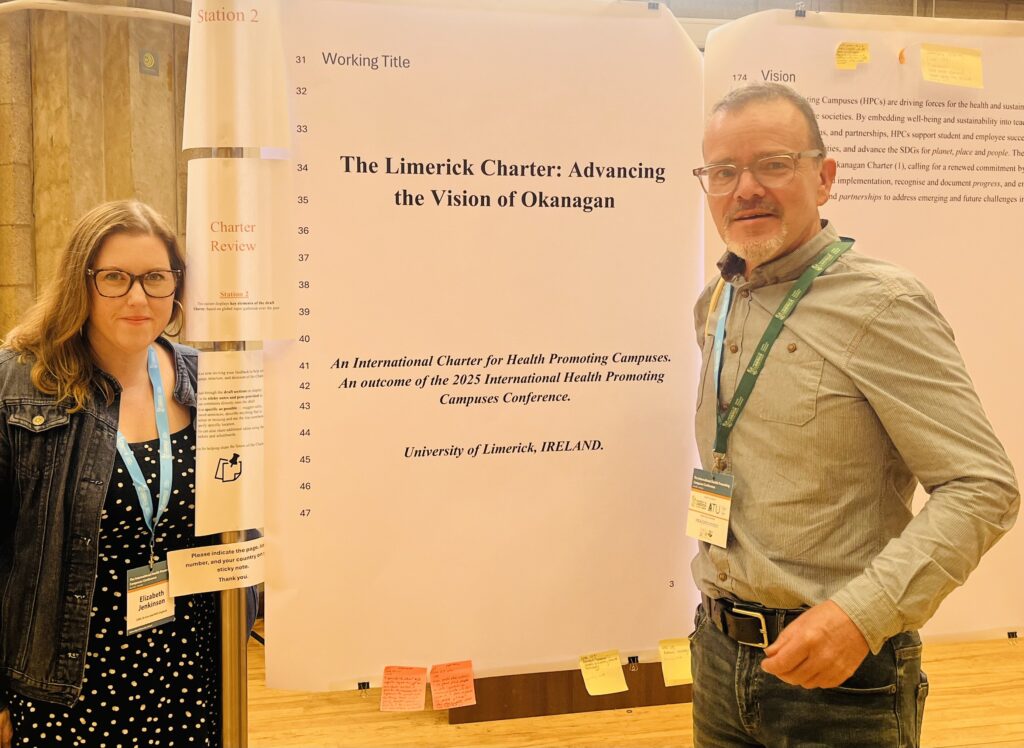
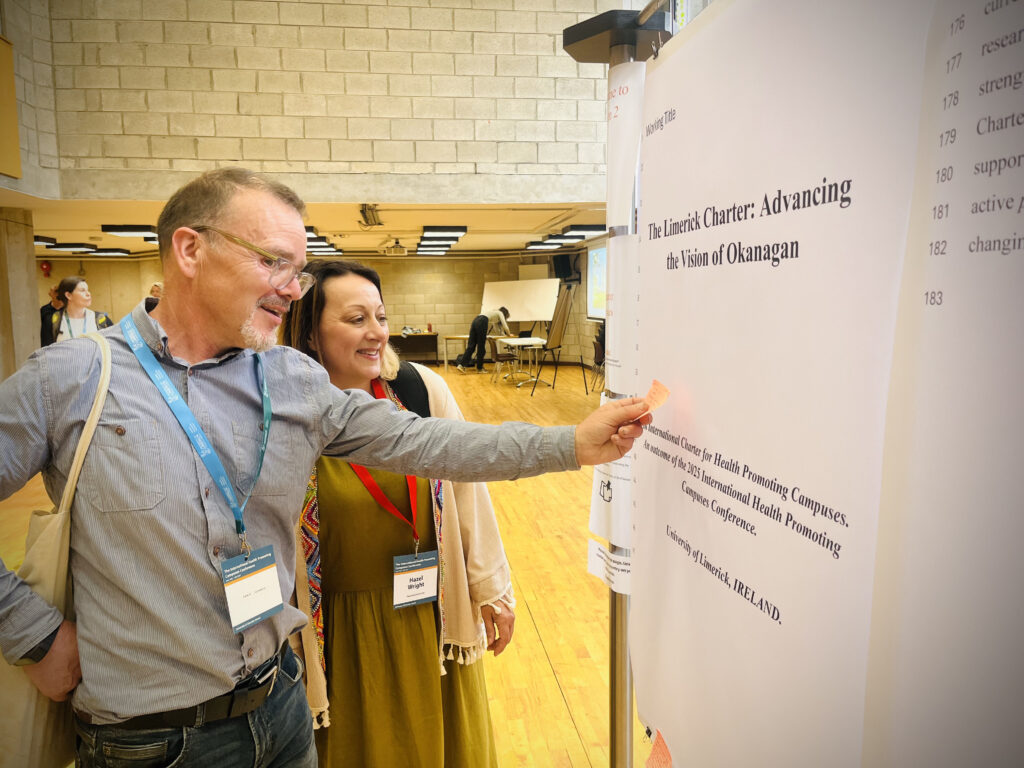
How can universities better embed health and wellbeing into everything they do – from teaching and research, to student experience and policy? That was the focus of the 2025 International Health Promoting Campuses (IHPC) Conference, hosted by the University of Limerick, where UWE Bristol helped shape a major new global framework.

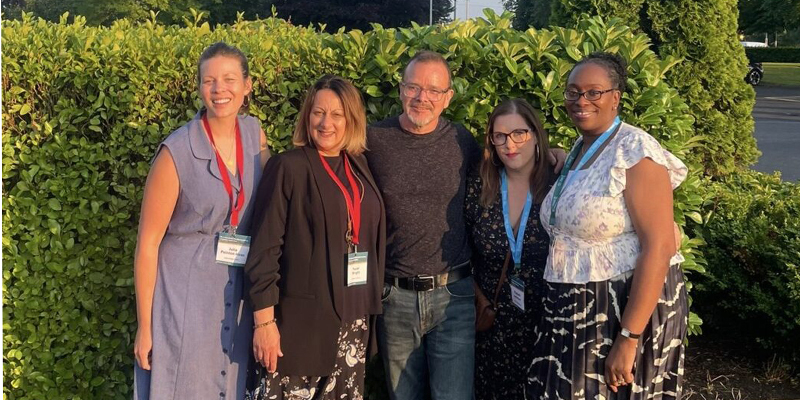
Associate Professor Dr Liz Jenkinson and Professor Mat Jones represented UWE and the UK Healthy Universities Network at the four-day conference in Ireland, which welcomed over 400 delegates from six continents. Participants included students, researchers, policy-makers, and global organisations such as WHO, UNESCO, and the International Union for Health Promotion and Education.

The result? A newly launched Limerick Framework for Action – a shared roadmap for higher education institutions to take action on health, wellbeing, and sustainability across campus life.

“UWE Bristol is recognised as an international leader in promoting health and wellbeing – thanks to our strong foundations in local and global collaboration. The conference was a vital opportunity to combine forces with peers around the world. The Limerick Framework offers a powerful international focus to help us scale up action and amplify future impact.”

Dr Liz Jenkinson

The Framework was co-developed with representatives from universities across the UK, Canada, Europe, Asia and Australia, and endorsed at the conference’s closing ceremony as a future-facing guide to institutional transformation.

UWE’s Contribution

As long-standing members of the UK Healthy Universities Network, Dr Jenkinson and Prof Jones shared insights from UWE’s Healthy University Group, which supports cross-university efforts on staff and student wellbeing. They collaborated with colleagues from Teesside, King’s College London, and UCLan to ensure the UK’s leadership and learning helped shape the international agenda.

“This isn’t just academic discussion – delegates from around the world are sharing actionable strategies to build healthier campus communities and environments. We’re proud of what was accomplished here in Limerick.”

Dr Matt Dolf, Co-Chair of the IHPC Network and Director of Wellbeing Strategy at the University of British Columbia

SmartSocks® land at UWE Bristol to support innovative ageing research

Posted on

The first delivery of SmartSocks®DISCOVERY – sensor-embedded wearable socks developed by Bristol health-tech company Milbotix – has arrived at UWE Bristol. These smart wearables will play a key role in the university’s ageing and assistive tech research, as part of the SAW-Health project led by the Bristol Robotics Laboratory (BRL).

Funded by the Medical Research Council, the two-year SAW-Health project is exploring how socially assistive robotic systems can support older adults’ physical, emotional and social wellbeing. UWE is collaborating with AgeUK and the ExtraCare Charitable Trust on the project, which centres around developing a next-generation robotic walking aid that promotes independence and meaningful social interaction in later life.

The SmartSocks® – which look and feel like ordinary socks – are anything but. Embedded with discreet sensors, they monitor skin temperature, heart rate, movement and more, providing real-time insights that will help researchers better understand daily routines, emotional states, and mobility patterns. Because they’re non-invasive and machine-washable, they’re especially valuable for people who may struggle with or reject bulkier devices like wristbands or chest straps.

“Receiving the first SmartSocks® from Milbotix marks an exciting milestone for our research at Bristol Robotics Laboratory. These innovative sensors will allow us to monitor gait patterns in real time, which is vital for progressing our work on walking assistive technologies. By integrating SmartSocks® with our smart walkers and exoskeleton systems, we can start to develop responsive solutions that actively support mobility and independence in older adults and users with neurological impairments.”

Dr Carlos Cifuentes, Associate Professor in Human-Robot Interaction at UWE Bristol.

The SAW-Health team are taking a co-design approach throughout – involving older adults, carers and healthcare professionals in shaping the design of the robotic walker and testing it in real-world settings. The physiological and movement data collected by the SmartSocks® will feed directly into this work, helping the team evaluate user interaction and real-world use.

The socks arrived as a full research-ready kit – including multiple pairs, swappable sensors, a charger and access to a cloud-based data dashboard – and are now ready to be put to work.

“It’s an honour to see SmartSocks®DISCOVERY supporting such vital research. This handover represents an exciting milestone for Milbotix and aligns closely with our mission to improve the lives of older adults through intelligent, wearable technology. We’re proud to support UWE’s innovative and impactful work.”

Dr Zeke Steer, CEO and Founder of Milbotix.

SmartSocks®DISCOVERY is now available to other researchers and students through milbotix.com/shop, including a low-cost starter kit suitable for student and postgraduate projects.

“Touching Time”: UWE Bristol co-hosts international symposium on embodied time and experience

Posted on

What might it mean for time to be felt or embodied? How can the study of time help us understand complex lived experiences such as ageing, illness, incarceration or displacement?

These were just some of the questions explored at Touching Time: Duration, Bodies, Politics – a two-day international symposium co-organised by Dr Jessie Stanier, Lecturer in Philosophy at UWE Bristol, with the British Society for Phenomenology (BSP) and partners in the Netherlands. Held on 23–24 June 2025, the event welcomed nearly 70 in-person and online participants.

The symposium brought together interdisciplinary thinkers to explore how time is experienced, shaped, disrupted, or resisted – through bodies, relationships, institutions, and creative practice.

Event highlights

  • An opening exercise using a strand of red yarn to explore tension, connection, and collective time
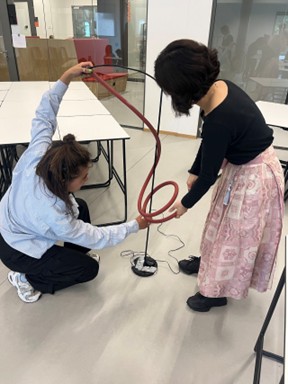
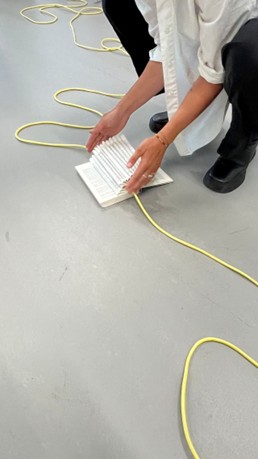
  • Two interactive workshops featuring kinetic sculpture and creative writing
  • A closing dance performance, developed and performed during the symposium
  • Panels and keynotes covering topics such as: affect and ageing across the life course; colonialism, memory and displacement; chrononormativity and care; psychoanalysis, pedagogy, and politics of time.
Above: Participants explore embodied time and interconnection through a kinetic sculpture workshop at the Touching Time symposium.

Touching Time: Duration, Bodies, Politics

The event drew together 2 keynote speakers – Prof Lisa Baraitser (Birkbeck, University of London) and Dr David Ventura (Newcastle University) – and 10 panel speakers, bridging philosophical phenomenology with other intellectual traditions including aesthetics, psychosocial theory, anthropology, queer theory, affect studies, and literary analysis.

Above: A creative writing workshop invites participants to engage with time physically, using unconventional materials and movement.

About the symposium

The Touching Time symposium is part of the BSP’s International Symposium series, an annual event spotlighting innovative phenomenological research around the world. Jessie Stanier has chaired these events since 2022.

This year’s event was co-sponsored by the Department of Culture Studies at Tilburg University and the Netherlands Institute for Cultural Analysis, making participation free for all delegates.

It also builds on a growing relationship between UWE Bristol and the BSP. UWE hosted the BSP’s annual conference on Frenchay Campus last year – part of wider efforts to foster international dialogue and raise the profile of UWE’s philosophy research.

UKRI funding secured to co-design an inclusive roadmap for future high performance computing infrastructure

Posted on

The UK Research and Innovation’s National Federated Compute Services (NFCS) NetworkPlus Flexible Fund recently awarded funding to Dr Tariq Umar, Senior Lecturer in Construction and Project Management, at the School of Architecture and Environment, UWE Bristol, to lead a major new project. Titled “Enhancing HPC adoption through user-centred design: A roadmap for inclusive innovation in environment, health, and the built environment”, the initiative will help shape a more accessible, trusted, and user-friendly future for the UK’s high-performance computing (HPC) infrastructure.

HPC systems are essential for tackling data-intensive challenges in fields such as climate science, healthcare analytics, and digital construction. However, professionals in these sectors often face barriers to adoption – including complex access processes, limited awareness, and usability issues. This project addresses these challenges by exploring the full user journey, from applying for HPC access to working with technical systems and evaluating collaboration models.

Dr Umar is joined by co-investigators, Dr Kwok Chun and Professor Jim Smith, also from UWE Bristol’s College of Arts, Technology and Environment. The interdisciplinary team brings expertise in environmental science, interactive artificial intelligence, and sustainable construction. Together, they will lead a series of workshops, surveys, focus groups, and training events with stakeholders across the built environment, environmental sciences, and NHS sectors.

Working in partnership with Imperial College London, National Taiwan University, the Vatican Observatory, Coventry University, Istanbul Technical University, and Arcadis Consulting UK, the project will also explore issues of trust, governance, and international interoperability.

The project’s outcomes will include a co-designed roadmap, actionable recommendations, and user personas to inform a more inclusive and future-ready national HPC federation, aligning with UKRI’s goals for sustainable digital research infrastructure.

The project runs from July 2025 to June 2026 and is part of UWE Bristol’s ongoing commitment to inclusive, interdisciplinary innovation in science and technology.

If you are from the built environment, environmental sciences, and health or NHS sectors and want to know more about project, or would like to get involved in the project workshops, focus group discussion or training activities, then please get in touch with project lead, Dr Tariq Umar (tariq.umar@uwe.ac.uk).

UWE Bristol named Training Provider of the Year at the Enginuity Skills Awards

Posted on

UWE Bristol is delighted to announce that we have won Training Provider of the Year at the Enginuity Awards 2025!

The Training Provider Skills Champion of the Year award recognises outstanding commitment to learning and skills development that supports sustainable engineering and manufacturing growth through partnerships between providers and employers.

Since 2017, UWE Bristol has supported over 1,000 Engineering and Built Environment apprentices, with achievement rates up to 100%. Our Women in Industry project addresses skills and diversity gaps by partnering with employers and STEM networks, boosting female applicants by 60% in a year.

We are so proud of our Apprenticeship programmes, and the opportunities they provide for increasing access and participation and addressing under-representation. This award reflects so much hard work and dedication from so many people, underpinned by the critical projects that UWE Bristol delivers such as the Women Like Me project.

Simon Flenley, Assistant Director of Research & External Engagement (Skills) at UWE Bristol

Continuing on from our success at the Enginuity Awards, we are also thrilled to have been shortlisted for University of the Year at the Multicultural Apprenticeship Awards.

The prestigious Multicultural Apprenticeship Awards aim to showcase the range of talent and hard work within multicultural communities that is made possible with the contribution and support of employers and learning providers. 

As part of our commitment to diversifying participation, UWE Bristol recognises the importance of its apprenticeship offer to reach those communities and groups who do not typically access higher education. 

We are committed to improving the opportunities for residents across our city, region, and beyond. Our outreach work aims to connect with all communities to improve the understanding of the offers that are available. In doing so, we are proud of our continued work with employers, who are at the heart of increasing social mobility with apprenticeship programmes. Our research activities and projects, such as those like Women Like Me, led by Dr. Laura Fogg-Rogers, address the inequalities faced by under-represented groups.

At Babbasa, we believe all young people regardless of background, deserve the chance to realise their professional ambitions. Through our partnership with UWE’s Centre for Apprenticeships, we’re bridging the gap between aspiration and opportunity by empowering employers with inclusive practices, uplifting young voices, and creating pathways to a fairer, more representative workforce.

Sangeetha Wynter, Head of Services at Babbasa

Whilst we acknowledge there is still a lot of work to be done in this area, this recognition is a fantastic opportunity to build on the work already being done in this area. We look forward to the Awards ceremony on 7 November.

Find out more about Apprenticeships at UWE Bristol.

Celebrating connection, collaboration and creativity at the first College of Business and Law Research Conference 

Posted on

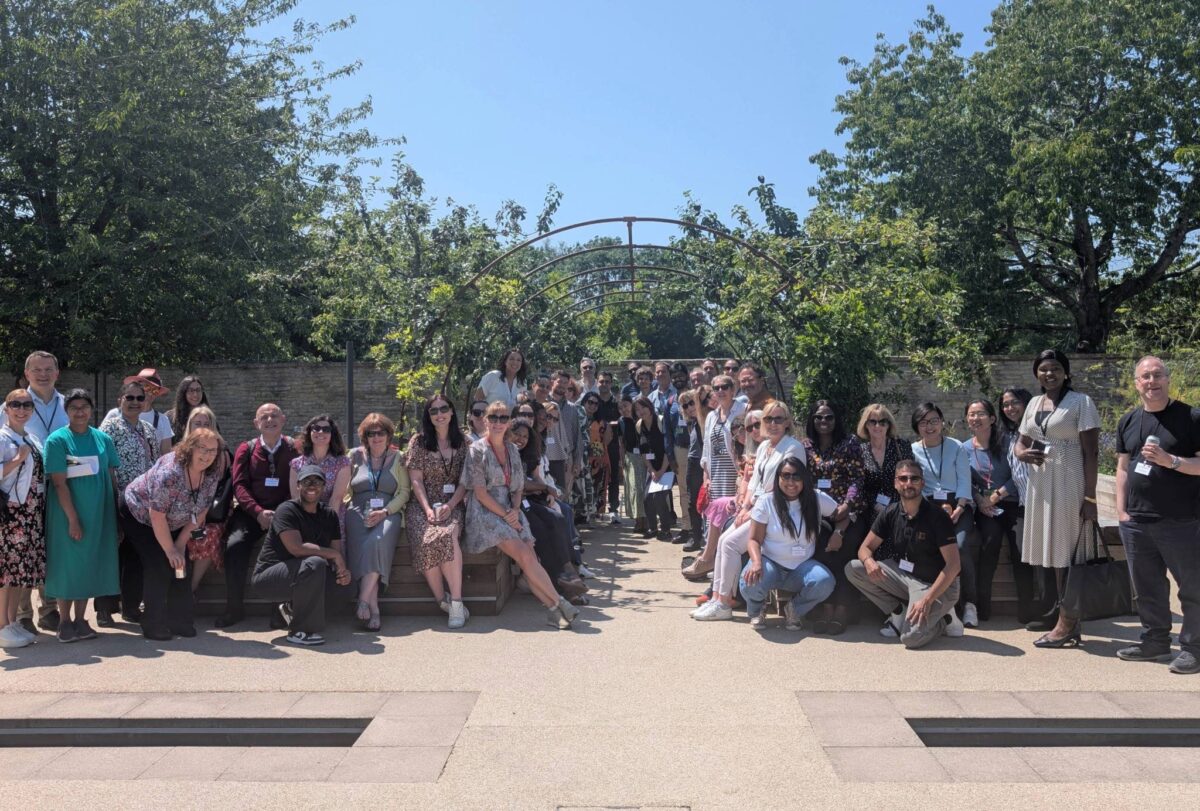
On 18 June, colleagues from across the College of Business and Law came together for the first annual CBL Research Conference – an energising day dedicated to showcasing the breadth and depth of research taking place across the college and with partner institutions. 

Themed around People, Work and Organisations, the programme brought together academics, early career researchers and doctoral candidates exploring everything from green jobs and AI-driven place branding to maternity leave during Covid-19 and police interviews with victims of rape. The day offered a vibrant mix of theory, practice, personal storytelling and policy insight. 

Held at Frenchay Campus, the conference was the result of months of work by a passionate organising committee: Dr Jenna Pandeli, Dr Tinkuma Edafioghor, Dr Hugh Waters, Professor Richard Bolden, Dr Pawel Capik, Briony Whitaker and Sophie Marsh. Their aim? To create space for connection and joy in research, and to spotlight the creative, impactful work happening across the college. 

Highlights from the day 

  • Keynote speaker Professor Hazel Conley opened the conference with a powerful and thought-provoking talk reflecting on 25 years of researching Equality, Diversity and Inclusion in higher education. Drawing on historical and contemporary data, Hazel made a compelling case for why EDI research matters more than ever – despite, and perhaps because of, ongoing backlash and political resistance. 
  • Conference sessions spanned diverse topics, including: 
  • Organisational resilience and social capital in SMEs 
  • The lived experiences of maternity leave in extreme contexts 
  • Volunteering in crisis settings, sustainability at music festivals, and informal career barriers in male-dominated industries 
  • Leadership for systems change and healthcare improvement across global contexts 
  • Engagement was a key thread, with in-person and online presentations from UWE researchers and partner institutions including Taylors University (Malaysia) and Villa College (Maldives). Delegates were encouraged to vote throughout the day to recognise exceptional contributions across three categories. 

Celebrating research excellence 

Congratulations to the recipients of this year’s inaugural conference awards: 

  • Best Overall Paper – Dr Mahwish Khan 
  • Greatest Potential Impact – Sophie Marsh and Pujan Ghosh 
  • Best Early Career Researcher (ECR) – Briony Whitaker 

These awards celebrated not only academic rigour but also the potential to make meaningful change—whether in policy, practice or community. 

A moment to reflect and reconnect 

From the opening coffee to the sun-soaked lunch in the walled garden, the conference buzzed with energy and exchange. The day was not only a showcase of research, but a reminder of what academic communities can be when we make time to come together: collaborative, curious and full of possibility. 

We’re already looking forward to seeing how this new annual tradition evolves – and to the ideas, partnerships and projects it helps spark along the way. 

Launch of the Economic Crime Experts Directory

Posted on

By Dr Diana Johnson

On Thursday 26 June 2025, Dr Diana Johnson and Dr Sam Mapston hosted a launch event for a newly created ‘Economic Crime Experts Directory’ at the Bristol Business School building, UWE Bristol.

The Directory is situated on the UWE Bristol website and can be accessed using the link below:

The Directory aims to facilitate connections between academics who publish research about economic crime with stakeholders, such as the government, law enforcement, civil society and policy makers, who may find the research useful.

The launch event featured two keynote speakers: Holly-Anne Brennan, Head of the International Illicit Finance Team in the Economic Crime Directorate, Home Office and Professor Michael Levi, Cardiff University.

Above: Holly-Anne Brennan, Head of Illicit Finance (Home Office) giving a keynote address.
Above: Professor Michael Levi (Cardiff University) giving a keynote address.

There was also a panel discussion which discussed both the advantages and the problems associated with stakeholders finding relevant research. The panel, chaired by Diana, comprised representatives of various stakeholders and one academic:

Above: Panel discussion on the use of academic research by stakeholders.

The event was attended by over 60 representatives from government, law enforcement, academia, civil society and the private sector, with plenty of opportunities for networking. It has received extremely positive feedback from attendees.

Above:  Drs Sam Mapston (left) and Diana Johnson (right) hosting the launch of the Economic Crime Experts Directory.

If you have any queries about this Directory, or if you would like to be added to it as either an expert or a stakeholder, please contact the Directory designers on the email addresses below: