Programme Spotlight: Dr. Tinkuma Edafioghor, 100 Black Women Professors Now

Posted on

Following the success of the 2024 cohort, UWE Bristol is renewing its partnership with the Women’s Higher Education Network (WHEN) for the 2026 cohort of the 100 Black Women Professors Now programme, addressing career progression gaps for global majority staff as part of our commitment to becoming an anti-racist institution.

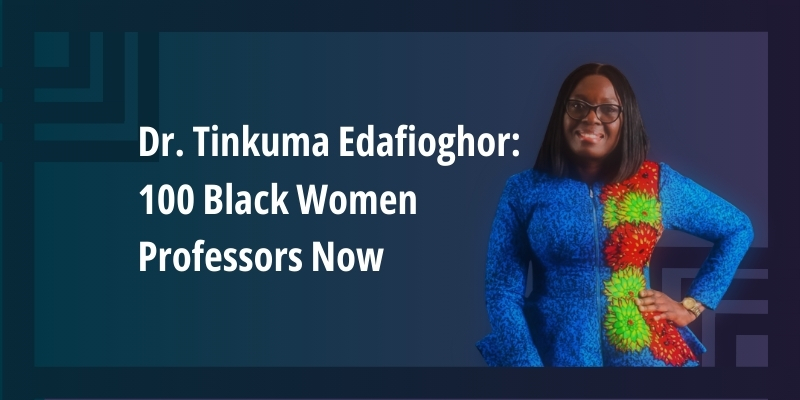
Throughout this month we will spotlight the achievements of the 100 Black Women Professors now 2024 alumni Starting with Dr. Tinkuma Edafioghor, a Senior Lecturer in Human Resource Management at UWE Bristol Business School and member of Human Resources, Work and Employment research group (HRWE)


A Foundation Built on Passion

Tinkuma’s doctoral research, “The Antecedents and Consequences of Organizational Resilience: An Investigation of SMEs in Nigeria,” reflects her deep commitment to exploring the intersection of human resource management and organizational resilience, these themes continue to drive her research today. With over eight years of experience in higher education, Tinkuma teaches across undergraduate and postgraduate modules while supervising student dissertations. Her current research focuses on organizational resilience and employee wellbeing, areas she believes are critical to business success and sustainability in today’s dynamic environment.

Like many academics, Tinkuma faced significant challenges early in her career. Balancing research demands, teaching responsibilities, and administrative duties while maintaining work-life balance proved demanding. The competitive nature of securing research funding and getting published added another layer of complexity.

“I overcame these challenges by seeking mentorship from senior colleagues who shared their insights on effective time management and research strategies,”

This experience taught her the invaluable lesson of focusing on what she could control while actively seeking support from her professional network.

The Transformative Impact of 100 BWPN

As one of six Black female academics who became pioneers of UWE’s 100 BWPN programme she experienced unprecedented levels of support and encouragement.

“Connecting with like-minded professionals, learning from their experiences and sharing insights has expanded my perspective and enriched my teaching and research,” she explains. The programme provided what she describes as “a hierarchy of support” that she had never experienced in her combined years working in higher education.

Current Research and Impact

Tinkuma’s current work includes an EDICa Funded Project titled “The Impact of Hybrid Working on Black Women Academics: Productivity and Visibility in the Post-COVID Higher Education.” This research continues her commitment to understanding and addressing the specific challenges faced by underrepresented groups in academic settings.

Her research expertise spans Human Resource Management, International HRM, and Organizational Resilience, with particular focus on talent management, employee engagement and wellbeing, leadership and change management, and strategic HRM alignment.

A Vision for the Future

Through her work with the 100 BWPN programme and the Safe Space Initiative, Tinkuma embodies the African philosophy of Ubuntu: “I am what I am because of who we all are.” Her journey demonstrates how individual transformation can catalyze systemic change, creating pathways for future generations of Black women in academia.

As she continues to research, teach, and mentor others, Dr. Tinkuma Edafioghor stands as a reminder that when institutions invest in supporting underrepresented voices, we strengthen the community as a whole.


UWE staff can apply to join the 25/26 cohort of this programme. Applications are open now, closing 19 Oct 2025.

Innovation with impact – exploring robotic solutions for dementia care: in conversation with Dr Carlos Cifuentes

Posted on

In early October, the Bristol Robotics Laboratory (BRL) will host the 2nd Workshop on Enabling Independence with Robotic Solutions for Enhanced Wellbeing. The event brings together experts from sociology, psychiatry, gerontology, dementia care, and robotics to explore how socially assistive robots can support independence, dignity, and wellbeing for people living with dementia.

We spoke to Dr Carlos Cifuentes, Associate Professor in Human-Robot Interaction at BRL, about why this work matters, how it connects to UWE Bristol’s RISE priorities, and what to expect from the workshop.

Can you give us a short overview of the workshop – what it’s about and who it’s for?

This workshop will explore the evolving role of technologies in supporting individuals living with dementia, focusing on human-robot interaction, cognitive support, and the lived experience of dementia in care environments. Bringing together experts in sociology, psychiatry, gerontology, dementia care and robotics, the event will showcase interdisciplinary perspectives on how socially assistive robots can be designed to meaningfully engage with the cognitive, emotional, and social needs of individuals with dementia.

The goal is to foster dialogue around how technology can enhance dignity, autonomy, and quality of life while supporting caregivers in delivering person-centred care.

Why is it important to look at robotics in the context of independence, ageing and dementia?

The increase in the ageing population is inevitable, and care homes are facing a lack of long-term caregivers. Robotics can help address the dual challenges of promoting independence, supporting caregivers, and building sustainable models of future care.

This is the second edition of the workshop. What’s new or different this year?

The first workshop focused on how robotics can enhance wellbeing in ageing populations more broadly. The second edition goes deeper into dementia care, examining human-robot interaction, cognitive support, and the lived experience of dementia in care settings.

Can you share a highlight or example of the technologies being presented or demonstrated?

We have developed a smart assistive walker (Zimmer frame) that can guide people living with dementia while walking in their homes or outdoors. It also helps guide users in performing daily activities, such as preparing a cup of tea or finding specific places. Additionally, it monitors walking patterns and provides alarms to family members and caregivers when needed.

We have also created tablet-based software that integrates with a social robot to deliver reminiscence therapy and promote physical activity for people living with dementia.

How are older adults, carers or practitioners involved in shaping these robotic solutions?

We work closely with care homes and charities. Focus groups and co-design sessions are central to our process, enabling us to gather insights and optimise technologies to better support older adults, people living with dementia, and their caregivers.

Why is the interdisciplinary approach so valuable?

The interdisciplinary approach helps us develop more suitable technologies. Gerontology and psychiatry provide insights into the behavioural modes of people living with dementia. Sociology helps us run focus groups and co-design sessions. Robotics then translates this knowledge into feasible technological solutions.

What role does BRL and UWE Bristol play in leading this kind of innovation?

The assistive robotics group at UWE is leading the co-creation of these technologies, connecting users’ expectations with innovative solutions to empower carers and family members. We are developing an ecosystem that integrates tech innovators in the UK to accelerate translation and improve affordability.

How does this work connect to UWE’s RISE priorities?

We are aligned with RISE priorities, working closely with users to develop simple and reliable solutions that can transform care delivery for people living with dementia. This reflects both Innovation with Impact and Shaping integrated healthcare, helping address the ongoing challenges faced by the NHS.

What do you hope participants will take away from the workshop?

I hope participants will witness our technologies in action and gain a better understanding of the importance of interdisciplinary research in dementia care. We also hope to foster new collaborations and inspire more people to join this field of research.

Finally, what’s next for this area of research?

The next step is to deploy these technologies in care homes so people living with dementia can experience them over the long term. The greatest opportunity for impact is to reduce the pressure and burden on caregivers, while ensuring that everyone has access to dignified, person-centred care.

🔗 Want to know more?
Explore some of the team’s recent research on socially assistive robotics and dementia:

Gerontechnology Journal – Robotic Assistive Technology

IEEE Xplore: Smart Walker for Cognitive Support

IEEE Xplore: Reminiscence Therapy with Robots

Frontiers in Robotics and AI – Socially Assistive Robotics

📅 Workshop details:
Date: Friday 3 October 2025
Time: 10:00 AM
Location: Seminar Room OT145, Bristol Robotics Laboratory, UWE Bristol
Registration is required.

📌 RISE connection: This work exemplifies Innovation with impact by co-designing robotic solutions that address real-world challenges in dementia care. It also contributes to Shaping integrated healthcare, one of our four RISE beacons, by bringing technology, health expertise, and lived experience together to improve independence, dignity and quality of life.

Research with purpose – the Visible Difference Support Hub

Posted on

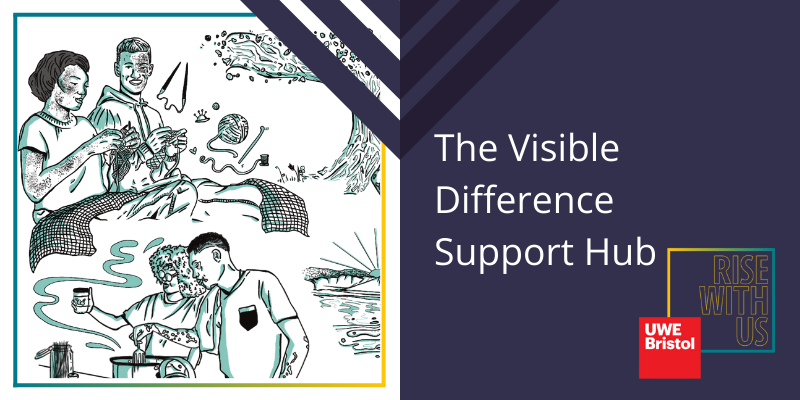
Living with a visible difference, such as alopecia, eczema, burns and skin conditions can affect confidence, wellbeing, and everyday experiences, from school life to social media. For many years, UWE researchers have been working with charities and people with lived experience to create resources that make a difference.

Now, for the first time, those resources are all brought together in one place: the Visible Difference Support Hub.

“We wanted this to be research that makes a difference. The hub is about wanting to make a positive difference to people living with visible differences – making the outputs from our research accessible to everybody.” – Professor Diana Harcourt

Until now, resources for people with visible differences were scattered, failed to address today’s realities such as social media and were rarely based on rigorous scientific research. The Hub changes that. It offers inclusive, modern, evidence-based and accessible guidance for:

  • Children and young people
  • Adults
  • Parents and carers
  • Teachers and professionals
Illustration of three people with visible differences standing together by the water at sunset. One person raises their arm joyfully towards the sky, while the others stand close, smiling. The sun is setting behind mountains in the background, with rays stretching across the sky and reflections shimmering on the water.

Bringing Research, Practice and Experience Together

The Hub represents years of UWE research, shaped by collaboration with charities, healthcare professionals, and advisory groups.

“Charities have informed it a lot, from helping to recruit volunteers, to being on advisory groups. This is our way of giving back, offering them something they can offer to the people who use their services.” – Diana Harcourt

From the colours chosen (carefully selected to be inclusive and non-triggering) to the accessibility of the design, the Hub has inclusivity “baked in there from the beginning”.

Real Impact

Feedback so far has been overwhelmingly positive. Users describe the Hub as inclusive, accessible, seamless, and modern.

Spotlight: The Visible Difference Parenting Toolkit

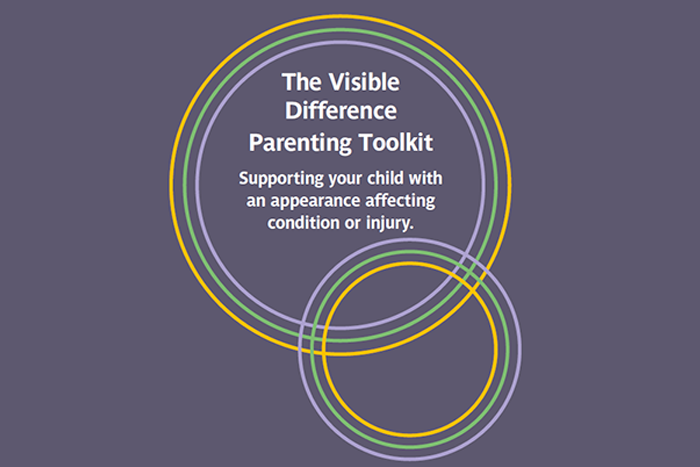
One example of the Hub’s impact is the Parenting Toolkit, designed to help parents and carers support children with visible differences. It offers guidance on building confidence, navigating conversations, and tackling challenges in everyday life.

Cover image for the Visible Difference Parenting Toolkit. It features overlapping yellow, green, and purple circles on a dark purple background, with white text reading: “The Visible Difference Parenting Toolkit – Supporting your child with an appearance affecting condition or injury.”

Looking Ahead

The Hub is just the beginning. Future developments include:

  • Adding new and translated resources
  • Launching the Loving Action podcast series for adults with visible differences navigating relationships
Illustration of an adult and child with a visible difference walking together. The adult holds a flower-patterned umbrella, while the child rides a scooter. A winding path with a hopscotch game is visible on the ground ahead of them.

Acknowledgements

The Hub was developed with support from UWE’s Impact Fund in 2024, with web development by Neil Robert Leonard and illustrations by Abbi Bayliss.

“It’s been a team effort – past and present researchers, charities, and creative collaborators have all helped shape the Hub.” – Diana Harcourt

Explore the Hub

The Visible Difference Support Hub is free, open, and designed to be shared.

👉 Visit the Visible Difference Support Hub

📌 RISE connection: This blog aligns with Research with Purpose and Enriching culture, place and community by demonstrating how UWE research is making a tangible, positive difference in people’s lives.

Developing and implementing a public health and criminological approach to tackling sexual abuse

Posted on

A new book from UWE Bristol colleagues is shining a light on how we can take a fresh approach to preventing sexual abuse.

Content note: This blog discusses sexual abuse and prevention.

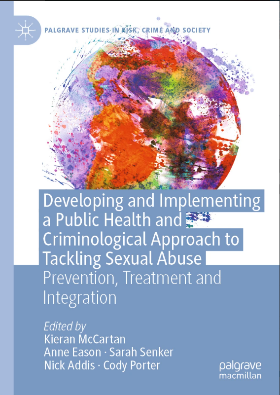
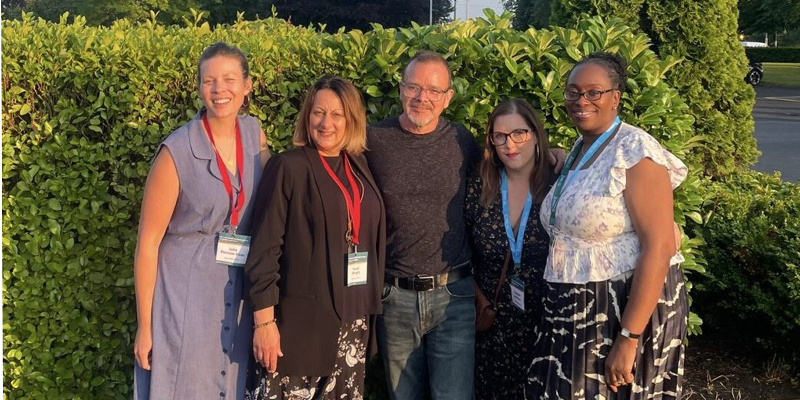
The book, Developing and Implementing a Public Health and Criminological Approach to Tackling Sexual Abuse, has been written by Professor Kieran McCartan, Dr Anne Eason, Dr Sarah Senker, Dr Nick Addis, and Dr Cody Porter. It brings together years of research and collaboration across different academic disciplines, supported in part by a UWE Emerging Research Excellence (ERE) grant.

A new way of thinking

The authors argue that tackling sexual abuse should not be left solely to after-the-fact responses in the criminal justice system. Instead, they suggest adopting a public health and criminological model known as Epidemiological Criminology (EpiCrim).

EpiCrim looks at prevention through the socio-ecological model – from individual and interpersonal relationships, right through to communities and society. This means focusing on:

  • Preventing first-time offending,
  • Reducing repeat offending, and
  • Addressing the life experiences and trauma that can lead to harmful behaviour.

By framing sexual abuse as a behaviour that can be prevented, treated, and understood, this approach encourages earlier interventions and more proactive solutions, alongside continued support for victims.

Book cover of “Developing and Implementing a Public Health and Criminological Approach to Tackling Sexual Abuse: Prevention, Treatment and Integration.” The design features a colourful abstract globe illustration in red, purple, orange, and green on a white and blue background. Authors listed: Kieran McCartan, Anne Eason, Sarah Senker, Nick Addis, and Cody Porter. Published by Palgrave Macmillan.

From research to practice

The book explores the roots of sexual abuse, how and where it happens, how society responds, and how people can be supported to safely re-enter communities after conviction. It highlights evidence from service users, victims, professionals, and policymakers, showing that prevention is possible with the right structures in place.

To help turn research into action, the UWE team have also created a policy briefing aimed at practitioners and policymakers. It makes clear recommendations, such as:

  • Broadening prevention beyond individuals to communities and society,
  • Coordinating multi-agency responses,
  • Embedding trauma-informed approaches, and
  • Expanding and funding victim support services.

These recommendations were also shared at a dedicated UWE Bristol conference, supported by a visual infographic designed to capture the key themes.

Sharing knowledge more widely

Before the book was published, Professor McCartan joined the UWE Let’s Talk Health and Care podcast to discuss the research and its real-world impact. The message is clear: sexual abuse is preventable, and change is possible if we take a more holistic, evidence-based approach.

Find out more

📘 Read the book

🎧 Listen to the podcast

UWE Bristol win funding to use Deep Learning to create a Holistic Assessment of Animal Welfare  

Posted on

The Centre for Machine Vision (CMV) at UWE Bristol have recently won funding to investigate towards a Holistic Assessment of Animal Welfare using Emotion and Deep Learning, building on prior work from CMV.  

The project aims to develop technology for automated assessment of animal emotional wellbeing through the interpretation of body language, informed by work in human activity and emotion recognition using AI. Body posture and movement, which together characterise a wider body language, manifest as varying body shapes/poses and movements. The team will utilise human eye tracking to identify holistic spatial temporal animal features linked to perceived animal emotional states, then apply this knowledge via a novel form of supervised machine learning. 

The project comprises of five partners including BOKU University, Scotland’s Rural College, University College Dublin, Linnaeus University and UWE Bristol.

The call was run by the European Partnership on Animal Health and Welfare with each partner funded by their national funder, DEFRA in UWE Bristol’s case.  

The total grant is €1,459,800, with €492,000 allocated to CMV/UWE. There has also been a spinout InnovateUK project, “Pig Health Station” aimed at realising a commercial product, arising from the work. 

The interdisciplinary team will explore computer vision-based machine learning techniques to train machine models with numerous examples of pig body language corresponding to different animal emotional states (ground truth), such as positive emotions associated with reward or negative emotions caused by unfamiliar environments. With extensive examples including structured treatments and environments to create a spectrum of emotional experiences, they aim to correlate specific animal stances and movements with given emotions and levels of arousal. 

Through a system of detected trends and alerts, AI enabled automation could offer a powerful means to identify animals needing follow-up interventions in a timely manner, ensuring animal wellbeing, reducing production costs (e.g. treatments, morbidity) and antimicrobial usage (e.g. fewer blanket treatments). 

The project will be led by Associate Professor of Computer Vision and Machine Learning Dr Wenhao Zhang, Lecturer in Robotics and Machine Vision Dr Disi Chen and Professor of Machine Vision Professor Melvyn Smith.  

14 UWE Bristol academics named among world’s top scholars by ScholarGPS

Posted on

Fourteen UWE Bristol academics have been recognised as leading experts in their fields by ScholarGPS, which ranks the most productive and influential researchers globally based on the impact of their published work.

Spanning disciplines including Psychology, Computer Science, Engineering, Linguistics and Biomedical Sciences, the list celebrates both long-term research excellence and recent impact across the past five years.

ScholarGPS rankings are based on comprehensive publication and citation data, offering an independent view of scholarly productivity and influence. Recognition in these rankings highlights the quality and global reach of UWE’s research activity.

UWE’s top-ranked scholars:

Lifetime rankings (All Fields):

Top scholars (Prior five years):

We are proud to see our colleagues impactful research being recognised and shared across the world, working across areas as diverse as fungal computing, emergency medicine and climate change activism. Every citation in Google Scholar reflects not just the quality of their work, but also the commitment, creativity and collaboration that drive research at UWE Bristol.

Philippa Shelton, Assistant Director of Research an External Engagement.

Project Eco Brazil: Mentoring Early Career Researchers on biodiversity and climate resilience

Posted on

As a member of the UK delegation to the State of Para, Dr Tariq Umar, Senior Lecturer from the School of Architecture and Environment (UWE Bristol) visited Brazil to mentor Early Career Researchers (ECRs) on biodiversity and climate resilience. This visit (from 9 to 13 August 2025) is part of the Eco Brazil project that aims to bridge biodiversity and climate resilience in Brazilian landscapes through capacity building, knowledge exchange and simulation modelling.

The event brought together more than fifty researchers, selected from different universities from Brazil and the UK. The visit activities took place in the Universidade Federal do Pará (UFPA) – Federal University of Para, located in the city of Belem, State of Para.

Invited as a mentor and expert facilitator, Dr Umar guided ECRs from both countries in developing research roadmaps, building methodological capacity in simulation modelling, and fostering international collaboration for biodiversity and climate resilience. He contributed to workshop sessions involving cross-country knowledge exchange, collaborative group-work, and mentorship support for participants in both conceptual and applied research planning.

Dr Umar provided expert guidance during group work and proposal development, promoting capacity building and aiding in the formulation of short- and long-term research agendas. His contributions supported deeper understanding of simulation modelling techniques for ecosystem adaptation, drawing parallels to global best practices and enhancing the workshop’s technical dynamics.

In his presentation, he stated “My research is driven by a simple belief – that sustainable infrastructure should reduce environmental impact while promoting inclusive and equitable practices. The construction sector has a vital role to play in both.”

Demonstrating the link between his research and Eco Brazil, he mentioned that “Brazil’s unique environmental and urban challenges provide a fascinating backdrop for collaboration. Through Eco Brazil, I see many opportunities to exchange knowledge on sustainable construction and inclusive urban planning.”

On future collaborations, he outlined “Brazil’s diverse climate and ecosystems offer a unique living laboratory for climate-resilient, energy-efficient infrastructure research. I’m confident our collaborations here will lead to solutions that work for both our countries.”

His contributions supported deeper understanding of simulation modelling techniques for ecosystem adaptation, drawing parallels to global best practices and enhancing the workshop’s technical dynamics. Engaging with both UK and Brazilian researchers, Dr Umar fostered the emergence of collaborative initiatives – potentially leading to joint publications, funding proposals, and sustained UK-Brazil research ties.

Engaging with both UK and Brazilian researchers, Dr Umar fostered the emergence of collaborative initiatives – potentially leading to joint publications, funding proposals, and sustained UK-Brazil research ties. Dr Umar’s mentorship contributes to lasting outcomes such as enhanced research capacity, establishment of long-term collaborations between UK and Brazilian institutions, and advancement in ecosystem adaptation strategies. These align strongly with Eco Brazil’s objectives to enable ongoing joint research, publications, and socio-environmental impact

The workshop embodies principles of ecosystem-based adaptation (EbA)—an approach that uses biodiversity and ecosystem services as climate-resilience tools, integrating community engagement and scientific insight—a global standard in environmental resilience.

Belém’s relevance as the host city is timely—it is advancing climate-adaptation strategies via urban ecosystem initiatives like NBCities (Nature-Based Cities project) that align with the workshop’s climate-resilience objectives. Later in 2025, Belem will welcome the world again as the host city for COP30, placing it at the centre of international climate action discussions.

During the visit, participants also explored the city of Belém, reflecting on its rich historical heritage, observing the ongoing repairs and renovations underway in preparation for COP30, and discussing the potential negative impacts these developments could have on the local population.

Dr Umar’s participation in the Eco Brazil Workshop not only deepened his engagement with both UK and Brazilian researchers but also resulted in the creation of a joint research action plan. He also shared insights from his current research on high-performance computing, which aims to develop a roadmap for inclusive innovation in the environment, health, and the built environment: read the blog to find out more.

Building on the connections established, the teams will work together to develop research proposals and co-author publications that advance sustainability and climate resilience. To minimise environmental impact, future collaborations will continue through online events, ensuring momentum while reducing the project’s carbon footprint.

UWE helps shape international Framework for Health Promoting Campuses

Posted on

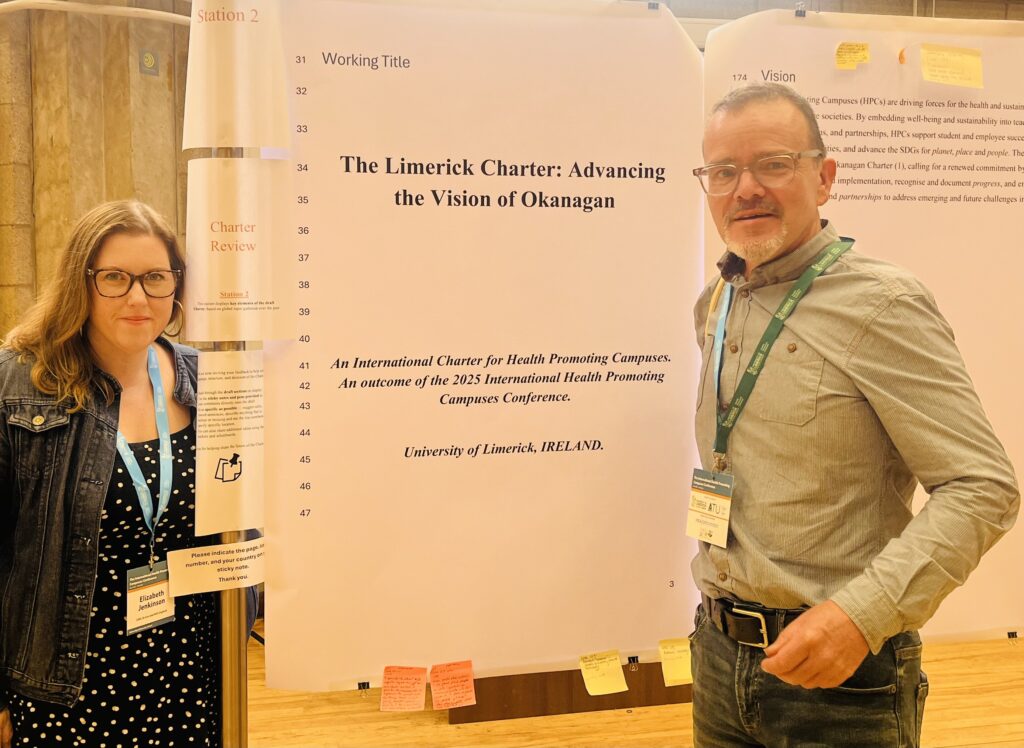
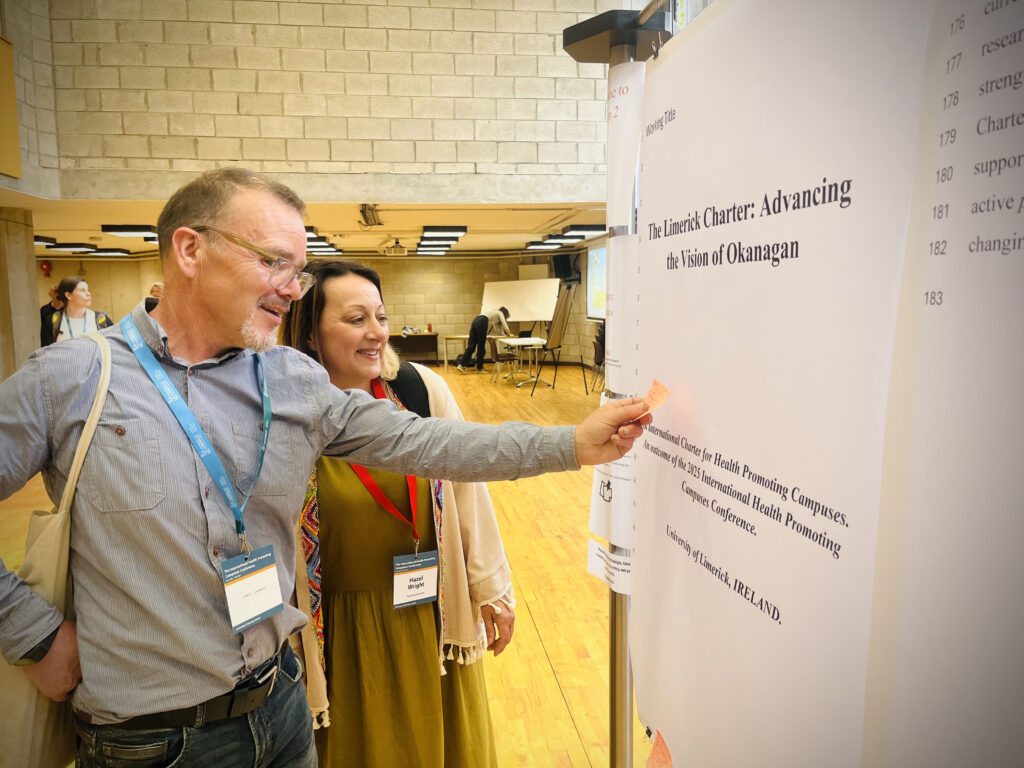
How can universities better embed health and wellbeing into everything they do – from teaching and research, to student experience and policy? That was the focus of the 2025 International Health Promoting Campuses (IHPC) Conference, hosted by the University of Limerick, where UWE Bristol helped shape a major new global framework.

Associate Professor Dr Liz Jenkinson and Professor Mat Jones represented UWE and the UK Healthy Universities Network at the four-day conference in Ireland, which welcomed over 400 delegates from six continents. Participants included students, researchers, policy-makers, and global organisations such as WHO, UNESCO, and the International Union for Health Promotion and Education.

The result? A newly launched Limerick Framework for Action – a shared roadmap for higher education institutions to take action on health, wellbeing, and sustainability across campus life.

“UWE Bristol is recognised as an international leader in promoting health and wellbeing – thanks to our strong foundations in local and global collaboration. The conference was a vital opportunity to combine forces with peers around the world. The Limerick Framework offers a powerful international focus to help us scale up action and amplify future impact.”

Dr Liz Jenkinson

The Framework was co-developed with representatives from universities across the UK, Canada, Europe, Asia and Australia, and endorsed at the conference’s closing ceremony as a future-facing guide to institutional transformation.

UWE’s Contribution

As long-standing members of the UK Healthy Universities Network, Dr Jenkinson and Prof Jones shared insights from UWE’s Healthy University Group, which supports cross-university efforts on staff and student wellbeing. They collaborated with colleagues from Teesside, King’s College London, and UCLan to ensure the UK’s leadership and learning helped shape the international agenda.

“This isn’t just academic discussion – delegates from around the world are sharing actionable strategies to build healthier campus communities and environments. We’re proud of what was accomplished here in Limerick.”

Dr Matt Dolf, Co-Chair of the IHPC Network and Director of Wellbeing Strategy at the University of British Columbia

SmartSocks® land at UWE Bristol to support innovative ageing research

Posted on

The first delivery of SmartSocks®DISCOVERY – sensor-embedded wearable socks developed by Bristol health-tech company Milbotix – has arrived at UWE Bristol. These smart wearables will play a key role in the university’s ageing and assistive tech research, as part of the SAW-Health project led by the Bristol Robotics Laboratory (BRL).

Funded by the Medical Research Council, the two-year SAW-Health project is exploring how socially assistive robotic systems can support older adults’ physical, emotional and social wellbeing. UWE is collaborating with AgeUK and the ExtraCare Charitable Trust on the project, which centres around developing a next-generation robotic walking aid that promotes independence and meaningful social interaction in later life.

The SmartSocks® – which look and feel like ordinary socks – are anything but. Embedded with discreet sensors, they monitor skin temperature, heart rate, movement and more, providing real-time insights that will help researchers better understand daily routines, emotional states, and mobility patterns. Because they’re non-invasive and machine-washable, they’re especially valuable for people who may struggle with or reject bulkier devices like wristbands or chest straps.

“Receiving the first SmartSocks® from Milbotix marks an exciting milestone for our research at Bristol Robotics Laboratory. These innovative sensors will allow us to monitor gait patterns in real time, which is vital for progressing our work on walking assistive technologies. By integrating SmartSocks® with our smart walkers and exoskeleton systems, we can start to develop responsive solutions that actively support mobility and independence in older adults and users with neurological impairments.”

Dr Carlos Cifuentes, Associate Professor in Human-Robot Interaction at UWE Bristol.

The SAW-Health team are taking a co-design approach throughout – involving older adults, carers and healthcare professionals in shaping the design of the robotic walker and testing it in real-world settings. The physiological and movement data collected by the SmartSocks® will feed directly into this work, helping the team evaluate user interaction and real-world use.

The socks arrived as a full research-ready kit – including multiple pairs, swappable sensors, a charger and access to a cloud-based data dashboard – and are now ready to be put to work.

“It’s an honour to see SmartSocks®DISCOVERY supporting such vital research. This handover represents an exciting milestone for Milbotix and aligns closely with our mission to improve the lives of older adults through intelligent, wearable technology. We’re proud to support UWE’s innovative and impactful work.”

Dr Zeke Steer, CEO and Founder of Milbotix.

SmartSocks®DISCOVERY is now available to other researchers and students through milbotix.com/shop, including a low-cost starter kit suitable for student and postgraduate projects.

“Touching Time”: UWE Bristol co-hosts international symposium on embodied time and experience

Posted on

What might it mean for time to be felt or embodied? How can the study of time help us understand complex lived experiences such as ageing, illness, incarceration or displacement?

These were just some of the questions explored at Touching Time: Duration, Bodies, Politics – a two-day international symposium co-organised by Dr Jessie Stanier, Lecturer in Philosophy at UWE Bristol, with the British Society for Phenomenology (BSP) and partners in the Netherlands. Held on 23–24 June 2025, the event welcomed nearly 70 in-person and online participants.

The symposium brought together interdisciplinary thinkers to explore how time is experienced, shaped, disrupted, or resisted – through bodies, relationships, institutions, and creative practice.

Event highlights

  • An opening exercise using a strand of red yarn to explore tension, connection, and collective time
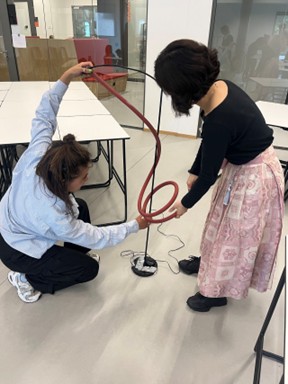
  • Two interactive workshops featuring kinetic sculpture and creative writing
  • A closing dance performance, developed and performed during the symposium
  • Panels and keynotes covering topics such as: affect and ageing across the life course; colonialism, memory and displacement; chrononormativity and care; psychoanalysis, pedagogy, and politics of time.
Above: Participants explore embodied time and interconnection through a kinetic sculpture workshop at the Touching Time symposium.

Touching Time: Duration, Bodies, Politics

The event drew together 2 keynote speakers – Prof Lisa Baraitser (Birkbeck, University of London) and Dr David Ventura (Newcastle University) – and 10 panel speakers, bridging philosophical phenomenology with other intellectual traditions including aesthetics, psychosocial theory, anthropology, queer theory, affect studies, and literary analysis.

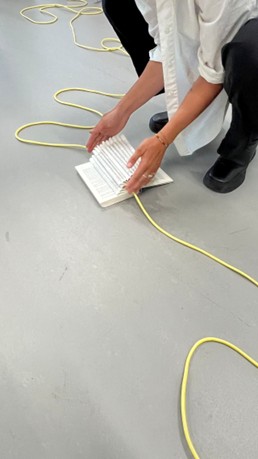
Above: A creative writing workshop invites participants to engage with time physically, using unconventional materials and movement.

About the symposium

The Touching Time symposium is part of the BSP’s International Symposium series, an annual event spotlighting innovative phenomenological research around the world. Jessie Stanier has chaired these events since 2022.

This year’s event was co-sponsored by the Department of Culture Studies at Tilburg University and the Netherlands Institute for Cultural Analysis, making participation free for all delegates.

It also builds on a growing relationship between UWE Bristol and the BSP. UWE hosted the BSP’s annual conference on Frenchay Campus last year – part of wider efforts to foster international dialogue and raise the profile of UWE’s philosophy research.

Back to top