Have you ever wondered about the future of the healthcare industry? Who is taking us with them? Let’s Talk Health and Care Podcast (LTH&C), a part of the Integrated Care Academy (ICA) at UWE Bristol, aims to unveil the answers to these key questions and introduce you to the academics, researchers, founders and community leaders driving this change. Meet the people working to tackle real-world challenges with compassion and determination from the bottom up.
Professors Marc Griffiths and Peter Brindle sit down with academics, founders and community leaders who have identified real opportunities for change and who are working incredibly hard to implement that change. In the wake of the NHS England 10-Year Health Plan, the healthcare industry is actively searching for innovative solutions to complex problems.
“the NHS now stands at an existential brink” where “the choice for the NHS is… reform or die”.
Department for Health and Social Care, 2025
How can one conversation change the trajectory of your career?
In episode 8, Dr Appolinaire Etoundi explained how one conversation at a swimming pool changed his career. He discusses how, by blending engineering with healthcare he is now able to improve accessibility and independence for amputees and people with disabilities. Now, his work has helped to reduce the cost of prosthetics by up to 80%, with devices costing less than £500. This is the meaningful impact and innovation the podcast continues to spotlight. Listen now to hear Dr Etoundi explain how this happened.
One theme which comes up repeatedly is that healthcare is a complex industry inextricably linked with other industries, ranging from engineering to technological development, to community centres, to educational institutions. The ICA bridges all these industries and more, promoting a collaborative healthcare environment, fit for the future.
Intervention through community
In episode 10, we explore how we can prevent acute health issues requiring hospital treatment further down the line. Both our guests, Mark Graham and Jo Poole, emphasise the importance of neighbourhood-based health for building trust and a boundary-less workforce, bridging the gap between community and healthcare. Find out more about how this community centre acts as a one-stop community hub, and the impact it is having.
This boundary-less mindset can be applied when tackling cultural change, like systemic racism. In episode 2, Noor Nixon and Professor Anthony Hill discuss the Inclusive Training Within Practice Project, highlighting the challenges Black, Asian and Minority Ethnic students and staff face, and what a multi-system initiative can achieve. This is echoed with Caafi Health in episode 4, who exemplify a community-logic model, where healthcare is powered by the community, for the community. Listen to episodes 2 and 4 to find out how systemic discrimination is holding health and care back.
“We learned that the idea that health challenges are deeply social rather than just medical.”
Huda Hajinur, Co-founder and Director of Caafi Health, episode 4.
Listen to the podcast and find out how the latest research and collaborative problem solving is changing the way we interact with healthcare. Episodes are available on SoundCloud, Spotify and Apple Podcasts.
At a time when universities are coming under scrutiny to be more than just places of academic teaching and research, UWE Bristol is continuing to actively embed its civic ambition across the institution. Our role in Bristol One City reflects this commitment. Given our role within the region, the latest One City Gathering, which focused on building an inclusive, equitable and sustainable economy, was especially relevant. Some of the team that attended have reflected on the discussions they had and what it means for UWE Bristol and our work within the city.
Across the day, a consistent theme emerged: ask communities what they want and need to thrive, then take action that both includes and enables them. The desire for collective, collaborative action was powerful, running through every session and conversation. The One City Gathering’s keynote speaker, Andy Haldane CBE, summarised it as a need to move beyond co-creation to something more equitable, ensuring all affected parties have a place at the table and everyone leaves equipped with the skills and knowledge to continue growing.
Credit: Bristol City Office
The four workshops covered Bristol’s response to helping those Not in Employment Education or Training (NEETs), how we can tackle the gender, race and disability pay gaps, delivering a circular economy that provides economic opportunity and discussion about meaningful community development in light of the upcoming Pride in Place and Pride of Place programmes in Hartcliffe.
One contributor to the NEET workshop noted how quickly young people calibrate their aspirations to what they perceive as attainable, what opportunities are visible, and what fits-in with their peers; this was identified as a leading factor in why some Bristol wards sadly continue to experience persistently low social mobility. Addressing this is a key aim for Bristol One City’s partners, highlighted by the goal that no-one’s future prospects should be defined by where they have come from. Colleagues reflected on the recent Milburn report and discussed the challenge locally. What is clear is that Bristol has a substantial number of impactful initiatives, but these need better coordination to make them attainable to employers, trainers, and those at risk of becoming NEET. The result will be not only improved individual outcomes but also stronger societal outcomes, increased capacity for local organisations, and a stronger regional economy as more people are able to contribute, regardless of their background.
Credit: Bristol City Office
The Civic and Inclusivity team are actively trying to tackle many of the issues raised in the pay gap discussion. UWE Bristol is working towards becoming an anti-racist university , acknowledging this will require continued effort and listening. Further, our team has been building understanding around how our disabled and global majority students can be better supported in placements, mentorship programmes and bespoke extra-curricular opportunities to ensure that those who have been left behind in the past have more equitable opportunities to succeed in the future and reward gaps are reduced.
The key takeaway from the One City Gathering was clear: trust is built through listening, and impact is sustained through collaboration. Our connections and our communities are our biggest strengths. Our huge thanks goes to Bristol One City for arranging such a packed morning that enabled connections between such a diverse audience. At UWE Bristol, we are keen to build on this momentum, collaborating with partners to connect talent, share knowledge and create opportunities. If you are interested in collaborating with us, please contact us at uwebusiness@uwe.ac.uk or volunteering@uwe.ac.uk.
This blog is guest written by Johnathan Hall, Business Partnerships Manager for Health and Social Care. Reflecting on key themes from UWE Bristol’s Festival of Research to explore how stronger collaboration between universities and health organisations can help tackle pressing challenges such as health inequalities and digital integration.
This week was UWE Bristol’s Festival of Research. Bringing together colleagues from across the university to collaborate, learn and explore some key themes that run thought research. I wanted to take a moment to reflect on a few ideas that came out of the opening address, specifically how UWE Bristol can work with organisations to collaborate more effectively and align around common goals.
Personally, I’ve worked within the NHS and supported health delivery for around 15 years, so my ears very much pricked up during Professor Sanjoy Shah’s keynote. Sanjoy is Joint Clinical Director for Green and Sustainable Healthcare at Bristol NHS Group, an intensive care consultant and a visiting professor at UWE.
He shared some really important insights into health inequalities across Bristol and the stark differences within the region. For example, residents in the most deprived areas of Weston-Super-Mare can expect to live around 10 fewer years in good health compared to those in Clifton. That really brings home the scale of the challenge.
Sanjoy also spoke about the frustrations he and his colleagues face with technical systems that don’t talk to each other, highlighting that as many as four different systems may be needed to build a full picture of a patient.
Solutions to challenges like these need to be developed rapidly and aligned with the NHS 10 Year Plan . This is where university collaboration and research are critical and can make a real difference. Universities have a major role to play in supporting health organisations to develop practical, real-world solutions to issues that directly impact care delivery.
This also closely aligns with some of the key themes coming through NHS Confed Expo last week. As with all sectors, AI is firmly on the agenda and is seen as a key enabler in delivering the 10 Year Plan, as well as helping to automate process-driven tasks.
While many people across the health sector are already using AI in some form, its formal integration into business-as-usual is still in the early stages. However, as momentum builds, it’s clear that adoption is about to accelerate.
There’s also a real need to ensure that AI and wider innovation are introduced into the health environment in a clear, coordinated way. As Sanjoy highlighted during the Festival of Research, there are already multiple digital platforms in use to manage patient care. Without careful planning, there’s a risk that new AI solutions will simply add to this complexity rather than help resolve it.
Again, this is where universities can play a crucial role—as facilitators and conveners, bringing partners together and helping to navigate these challenges.
UWE Bristol is well positioned to continue stepping up and supporting collaboration with the health sector in a range of ways, through undergraduate programmes and apprenticeships that develop the future workforce, CPD that supports current staff, research across a wide range of health topics and innovation activity within the University Enterprise Zone. Bringing partners together through the Integrated Care Academy is another great example of how this collaboration can come to life.
At the heart of all of this is research, it helps to drive informed, forward-thinking decisions. The Festival of Research felt like a brilliant forum to bring these strands together, highlighting not only the importance of research, but also showcasing the breadth of impactful work already underway.
If you’d like to explore how your organisation could benefit from partnering with UWE Bristol, the Business and Alumni Partnerships team would be happy to start a conversation. Whether it’s workforce development, research collaboration or innovation support across any sector, you can get in touch at uwebusiness@uwe.ac.uk.
This week is World Continence Week (15th to 21st June 2026) and researchers from UWE Bristol’s School of Health and Social Wellbeing are working to promote better bladder and bowel health at UWE Bristol and across the region. Bladder and Bowel leakage affects about 1 in 5 adults, which is about as common as hay fever, but is an issue that people are often reluctant to discuss.
Led by Prof. Nikki Cotterill, we are working with the Bristol Active City Network to raise awareness of how bladder and bowel leakage can affect people’s ability to get out and about and engage in exercise and other activities. For World Continence Week Nikki will be leading a webinar for the network, building upon previous engagement work with them on a pathway redesign project, aiming to help people to talk about bladder and bowel leakage and to access available self-help. In particular, bladder and bowel leakage can be the difference between taking part in exercise or being too embarrassed or worried about an accident. Addressing this, provides an opportunity to keep people in the activities they enjoy and socialising with friends and family.
A key resource to raise awareness and promote self-help is the CONfidence app, a self-help app developed by UWE Bristol researchers in conjunction with the Bladder and Bowel Confidence Health Integration Team (BABCON HIT) and Expert Self Care. The app has been downloaded by almost 20,000 people and has reached 20 countries. This App has been Co-created with people who have experienced leakage symptoms and national experts specialising in bladder and bowel care. Anyone experiencing bladder and bowel leakage can download the app for free. This gives access to practical advice and information on how to improve their bladder and bowel health.
Further tackling taboos, UWE Bristol has spearheaded the Boys Need Bins campaign, aiming to raise awareness about incontinence in men and the need for bins in men’s toilets. UWE Bristol is taking part in a pilot placing sanitary waste bins in men’s toilets across the Frenchay campus. This allows for the disposal of incontinence products including incontinence pads, stoma care items or other medical and sanitary products. Researchers are working with system partners to roll this out in other organisations across Bristol aiming for a ‘Boys need Bins Bristol’.
We need to talk more about bladder and bowel health to break down the stigma preventing symptom improvement. We are always keen to hear from anybody with an interest in this area, so please do contact Prof Nikki Cotterill with any thoughts or suggestions this World Continence Week: nikki.cotterill@uwe.ac.uk.
Black voices remain underrepresented across many areas of health economics, research leadership and policy decision-making. The newly launched Black Health Economists’ Network (BHEN), founded by Dr Chizoba Esio-Bassey at UWE Bristol, aims to help change that.
BHEN is a new platform that brings together Black researchers, students, practitioners, policy professionals and allies working across health economics and related fields.
BHEN was created from a simple but important need: to build a supportive and visible community where Black health economists and those interested in the field can connect, collaborate, share opportunities and contribute to shaping more equitable health systems and research.
Health economics plays a major role in informing decisions about healthcare funding, access, prevention, medicines, public health interventions and policy. Yet Black voices remain underrepresented across many areas of academia, research leadership and decision-making spaces. BHEN aims to help address this gap by creating opportunities for networking, mentorship, collaboration, knowledge exchange, stakeholder and community engagement.
Inaugural Research and Networking Event
BHEN is excited to host its Inaugural Research and Networking Event on:
Whether you are an established academic, early-career researcher, student, policymaker or simply interested in health economics and equity, you are welcome to join this event.
Registered participants will receive the joining link closer to the event date.
Acknowledgements
The BHEN team would like to express their sincere gratitude and thanks to Professor Marc Griffiths and the ICA for their support and encouragement in helping make this inaugural event possible through funding. Their contribution has helped BHEN take an important first step in building this network and creating space for meaningful engagement and collaboration.
The BHEN team would also like to thank the Centre for Public Health and Wellbeing (CPHWB) for their guidance and backing.
It has now been 3 years since the Arts and Humanities Research Council (AHRC) Impact Accelerator Account (IAA) opened at UWE, supporting knowledge exchange and impact emerging from arts and humanities-based research.
Since then, seven IAA funding calls have awarded 85 grants to projects involving 116 UWE staff members, ranging in size from £1k to £23k. These projects represent a huge range of disciplines within arts and humanities research, including law, media studies, visual arts, music, philosophy, history, political sciences, theatre and architecture. This funding is supporting academics to run projects that respond swiftly to emerging opportunities, strengthen collaboration with non-academic stakeholders, and accelerate the translation of research outputs into real-world impact.
This work has seen an incredible 199 new partners taking part in collaborative proposals, and the delivery of 260 collaborative activities with organisations such as Global Goals Centre, Bristol Woman’s Voice, MISFITS theatre and the Lords Research Service. Across the IAA funded projects, 49,000 people have taken part in knowledge exchange and impact events such as industry roundtables, training courses, school workshops, theatre performances and focus groups.
IAA funding has successfully supported UWE academics to make strong partnerships with industry, improving their processes, sustainability and commercial positioning. Tavs Jorgensen is setting up a commercial venture which looks to transform the brick and tile manufacturing industries; Sofie Boons is working to make the jewellery sector more sustainable in their gemstone production; and Jac Fennell is integrating wearable tech from Milbotix’s SmartSocks® (an SME in UWE Enterprise Zone) into HUG (a soft comforter designed for those living with dementia).
The work of the IAA projects is creating change at a local, national and international level. Documentary film maker Judith Aston and public policy expert Laura De Vito have been working very closely with the Avonmouth community to co-create a theory of change for this contested area of Bristol, while Jack Lowe has developed a digital game that supports cultural heritage organisations to include more diverse perspectives in the stories they tell about place and local heritage. Lisa Mol’s expertise in heritage and climate change conservation in war zones has supported charity Heritage for Peace to continue their work in Yemen, and Peter Clegg collaborated with police forces in The Sovereign Base Area of Cyprus to explore how accredited higher education training could assist them with navigating their nuanced context.
One of UWE’s strengths is in inclusive innovation and we see this in many of the IAA funded projects. Tom Mitchell working closely with the charity Drake Music to co-design and fabricate a new accessible digital musical instrument, and Amy Saleh prioritised equality in her project delivery by only using global majority suppliers (catering, filmmakers, designers etc.) for her project ‘Lit Legacies’, which designed educational materials to tackle the ‘teaching barriers’ in Black British literature.
Many of the IAA projects have been successful in translating their research into changes within policy and professional practice. Suwita Hani Randhawa brought together key political and civic actors to develop new policy insights around ecocide and is now an adviser to the Scottish Parliament to further influence policy changes. Verity McIntosh worked with Watershed in the build-up to the launch of their immersive gallery space Undershed, to ensure the experience design centres access and inclusion for all users.
The range of projects funded through the IAA reflect the diversity of UWE Bristol research and how we are ensuring our engaged arts and humanities research to have commercial, social and cultural impact. Support for impact development is always available for UWE academics and current IAA projects continue to develop their impact work, so there will be even more to celebrate over the coming year!
Visit the RISE page to find out more about how UWE research is driving societal improvement and transforming futures for the better. For more information on UWE Bristol’s arts and humanities research, impact or our Impact Acceleration Account, please do get in touch.
Metrea is a global defence company specialising in intelligence, surveillance, reconnaissance and advanced technology solutions for national security partners worldwide. Through a Knowledge Transfer Partnership (KTP) with UWE Bristol’s Centre for Machine Vision, the company worked to develop AI-powered software capable of detecting, tracking and classifying objects in orbit using airborne imagery.
About the Knowledge Base:
Researchers from UWE Bristol’s Centre for Machine Vision brought expertise in computer vision, machine learning and object modelling. Working alongside Metrea, the team helped develop and test innovative AI approaches capable of analysing complex orbital imagery, transforming early-stage research into a commercially viable solution.
Mark Hansen (UWE), Izaak Stanton (UWE Research Associate), Lyndon Smith (UWE), Chris Dunn (Metrea), Louis Aberdeen (KTP Associate), Ryan Gery (Previous Company Supervisor), and Ria Eyers (UWE) during a tour of the Engineering School.
About the KTP Associate:
KTP Associate Louis Aberdeen joined the project after graduating with a degree in Mathematics from the University of Bath. During the two-year partnership, Louis led much of the technical development, applying expertise in machine learning, optimisation and computer vision to help create a new AI-driven platform for space-domain analysis.
The experience enabled Louis to develop specialist skills in deep learning, image analysis and research translation, ultimately leading to a role as a Machine Learning Engineer.
Louis Aberdeen (KTP Associate) at the Louis Aberdeen (KTP Associate) at Farnborough Bristol Robotics Laboratory
About Innovate UK:
Innovate UK is part of UK Research and Innovation, is the UK’s innovation agency. Their mission is to help companies to grow through their development and commercialisation of new products, processes and services, supported by an outstanding innovation ecosystem that is agile, inclusive and easy to navigate.
The Challenge the KTP addressed
Tracking and identifying objects in orbit is becoming increasingly important as space becomes more congested. Existing methods can be expensive, technically complex and difficult to deploy at scale. Metrea wanted to explore whether AI and machine vision techniques could be used to improve the detection and classification of orbital objects using airborne imagery.
Ryan Gerry (previous Company Supervisor) and Louis Aberdeen (KTP Associate) at the International Space Show – Farnborough
The solution
Researchers from UWE Bristol’s Centre for Machine Vision worked alongside Metrea to develop new machine-learning approaches capable of detecting and classifying objects from airborne imagery.
The project combined expertise in computer vision, artificial intelligence and image analysis to create an analytical pipeline that could process complex imagery and identify objects of interest with greater speed and accuracy.
Throughout the partnership, the team iteratively tested, refined and validated the technology, including operational trials in real-world environments.
An example reconstructed output image of the international space station
The Benefits of the KTP:
The partnership delivered significant benefits for both Metrea and UWE Bristol.
For Metrea, the project accelerated the development of innovative AI capabilities, helping the company move a promising concept towards commercial readiness. The work strengthened Metrea’s ability to analyse and interpret orbital imagery, creating opportunities for future applications in defence, security and space operations.
For UWE Bristol, the partnership provided an opportunity to apply cutting-edge machine vision research to a real-world challenge. The project generated new knowledge, strengthened industry collaboration and created opportunities for future research in artificial intelligence, image analysis and space technologies.
The KTP also delivered a substantial professional development opportunity for KTP Associate Louis Aberdeen. During the project, Louis developed specialist expertise in machine learning, computer vision and software development, gaining experience of translating research into practical solutions for industry.
The success of the partnership demonstrates how Knowledge Transfer Partnerships can bridge the gap between academic research and commercial innovation, helping businesses access specialist expertise while creating lasting impact for researchers, graduates and industry partners alike.
Metrea – Chris Dunn (Company Lead) talk at the Centre for Machine Vision, Bristol Robotics Laboratory.
Impact:
The partnership delivered significant benefits for Metrea, UWE Bristol and KTP Associate Louis Aberdeen.
For Metrea, the project transformed LASSO from a data collection tool into a sophisticated analytics platform capable of generating operationally valuable insights. This work directly supported Ministry of Defence feasibility studies worth more than £1 million and opened opportunities for future software licensing, data sales and commercial applications.
The project also increased Metrea’s visibility across the defence and space sectors, with the technology showcased to organisations including NATO and the UK Ministry of Defence. Beyond its original focus on Space Domain Awareness, the research created opportunities for wider applications in Maritime Domain Awareness and signals intelligence.
For UWE Bristol’s Centre for Machine Vision, the partnership generated new research outputs, including peer-reviewed publications and a new area of applied research at the intersection of computer vision and space technologies. The project strengthened relationships with industry partners and created opportunities for future collaboration and research funding.
KTP Associate Louis Aberdeen played a central role in the project’s success, leading the technical development from image simulation through to advanced analytical techniques. The experience included operational data-collection flights in Florida, academic publishing opportunities and engagement with senior stakeholders across the business. Following the completion of the KTP, Louis secured a role as a Machine Learning Engineer, demonstrating the programme’s impact on graduate development and career progression.
Collectively, the project demonstrated how academic expertise and industry collaboration can accelerate innovation, transforming research into practical solutions with commercial, societal and strategic value.
ERS-2 (ESA) during re-entry period
What the partners have to say… “This was our first time working with a KTP and it has proved to be a very worthwhile venture. UWE Bristol was able to provide Metrea with an exceptional Associate who was able to adapt rapidly to the continued changing business demands throughout his period of work with us. His knowledge and adaptability provided rapid analytical outputs and support products to our customers and was most welcome as we used them across the globe tackling some of the most complex and wicked security problems faced today”. – Chris Dunn: Solution Architect at Metrea.
Returning Aircraft at Tampa test facility
What the Knowledge Base partner has to say… “This was a highly ambitious KTP that has delivered excellently against its plan, in no small part down to the exceptional adaptability of the associate, Louis. It has been a pleasure for the academic team at the CMV to work with Metrea and especially with Louis and see him develop so much over the course of the KTP. The projects that Louis worked on while at Metrea have the potential to have a real impact on international defence as well as giving the CMV its first foray into space. We wish Louis the very best for his future and look forward to working with Metrea again.” Prof Mark Hansen.
KTP Associate… “The KTP has been a fantastic opportunity to develop both my technical and professional skills. Working to foster collaboration between the industry partner and knowledge base results in an outcome greater than the sum of its parts. A personal highlight was getting into the hangar with my KTP supervisor Ryan to troubleshoot the integration of LASSO into Metrea’s aircraft, crawling around on the floor checking we had all the correct port connections” Louis Aberdeen (KTP Space Data Analyst Associate).
Louis Aberdeen (KTP Associate) using a flight simulator at UWE Engineering School.
From the Knowledge Transfer Adviser: “This innovation project has been very successful in enabling new revenue streams now and in the future for the Company as well as achieving significant societal benefits in early detection of fire, people smuggling and defence/space problems enabling early detection and real time actions to be taken
Louis has led the project with drive and determination and has successfully covered the technical and commercial challenges through excellent communication skills and innovative thinking.
The development of the deep learning-based image recovery system by the team is based on wide ranging technology integration into a working and practical system with a strong commercial focus and is a great example of how the KTP methodology works to achieve breakthrough solutions at pace”. Paul Spenley (Knowledge Transfer Adviser – IUK)
The Bristol 3D Medical Centre, Integrated Care, and the Power of Collaboration with UWE Bristol
Written by Professor Marc Griffiths
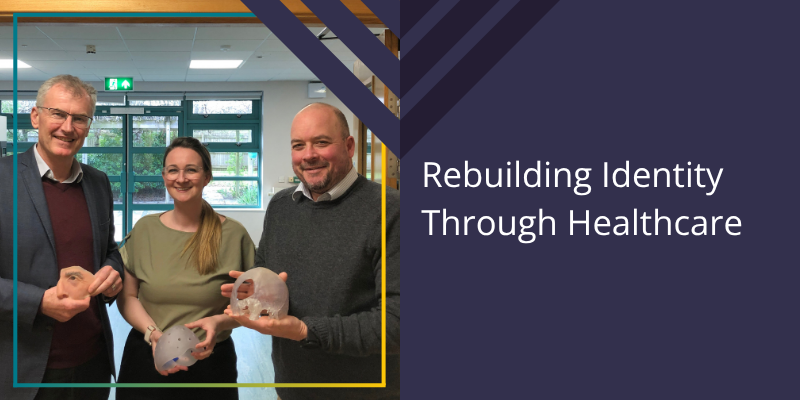
Healthcare can do more than treat illness; it can transform lives. Nowhere is this clearer than at the Bristol 3D Medical Centre, a pioneering NHS facility where innovation, compassion and collaboration come together, redefining reconstructive care through advanced digital technologies, artistry and patient‑centred practice.
As explored in Episode 14 of the Let’s Talk Health and Carepodcast, recorded on site at the Centre, the Bristol 3D Medical Centre is the first NHS facility in the UK to bring 3D scanning, digital modelling and 3D printing together under one roof. But what’s particularly striking is its significance extends well beyond technological firsts. It represents a new model of integrated, innovation‑led care that sits squarely within the ambitions of the Integrated Care Academy at UWE Bristol.
What Makes the Bristol 3D Medical Centre Different?
Located within a residential community rather than a traditional hospital environment, the Bristol 3D Medical Centre operates at the intersection of:
Advanced engineering and digital design
Clinical expertise and patient safety
Artistry, craftsmanship and empathy
Psychological rehabilitation and wellbeing
Under the leadership of Amy Davey, Lead Reconstructive Scientist and Lab Manager, the Centre delivers a fully integrated pathway, from ultra‑high‑resolution facial scanning and digital sculpting, through to 3D printing in biocompatible materials such as resin and PEEK, and finally to the meticulous hand‑finishing of bespoke prostheses.
Critically, the Centre treats patients from infancy through to older age, supporting individuals affected by cancer, trauma, congenital difference and complex surgical intervention. The outputs are not ‘off‑the‑shelf’ devices; they are deeply personalised interventions designed around function, appearance, identity and confidence.
Positive Outcomes
The outcomes associated with the work of the Bristol 3D Medical Centre are striking – and deeply human. Patients do not come simply to “replace” what has been lost. As highlighted in the podcast, the Centre plays a pivotal role in helping people rebuild confidence, regain capability in their day-to-day lives, and improve their overall quality of life.
This includes supporting individuals to re-enter social life and employment, feel more confident interacting with others, and navigate the psychological transition following trauma or cancer. The Centre also helps reduce the need for further invasive surgery and enables smoother, less distressing rehabilitation pathways.
From infants benefitting from non-invasive helmet therapy that avoids surgical risk, to adults rebuilding facial identity following cancer treatment, the Centre demonstrates how innovative technology can directly translate into better outcomes – emotionally, socially and clinically.
This focus on rehabilitation, therapy and long-term wellbeing aligns closely with integrated care principles, where success is defined not only by clinical intervention, but by lived experience and sustained outcomes.
Integrated Care in Action
The Bristol 3D Medical Centre exemplifies the core themes of the Integrated Care Academy at UWE Bristol, blending clinical science, engineering, design and digital skills to translate research and technology into real-world clinical impact. Located within a community-embedded environment, the Centre supports hospital services, community rehabilitation and regional pathways, demonstrating how innovation in practice can strengthen system integration and place-based care.
As discussed in the podcast, the Centre already supports surgical planning, reduces theatre time, and enables clinicians to take an innovation-first approach before patient operations. This system-level value highlights how innovation at the point of care can positively influence efficiency, safety and patient flow across the wider system.
Just a few miles away, UWE Bristol brings together complementary strengths in robotics, advanced and additive manufacturing, health technologies, psychology and workforce development. Existing collaborations with Bristol Robotics Laboratory, where Amy Davey acts as an industrial mentor to doctoral researchers, alongside wider links with engineering and health research communities, reflect a shared ambition to bridge the gap between research and real-world healthcare application.
Looking Ahead
Looking to the future, UWE Bristol is well placed to deepen and extend collaborative workstreams with the Bristol 3D Medical Centre through an innovation-first model. This includes co-developed research focused on applied clinical challenges, translational pathways from robotics, materials science and digital health into patient care, and new approaches to workforce education, training and medical device innovation.
As Amy Davey reflects in the podcast, the Centre itself has the space, ambition and openness to grow into a regional hub and national centre of excellence. UWE Bristol – through the Integrated Care Academy – is a natural partner in shaping that future.
The Bristol 3D Medical Centre is more than a technological success story. It shows what is possible when innovation is driven by patient need, supported by integrated systems and strengthened through collaboration with higher education.
As the Integrated Care Academy continues to champion new ways of working across health, care, technology and education, the Bristol 3D Medical Centre stands as both proof of concept and inspiration – showing how research and innovation, when embedded in care, can genuinely change lives.
The UWE Bristol x Hitachi Female Talent Initiative in Transport, Logistics and Technology event brought together over 30 students and five external speakers to explore careers, challenge assumptions and share honest conversations about the sector. With speakers from industry and academia, the event focused on career pathways, and why diversity of people and perspectives matters more than ever.
To open the session, Anna Maudet, Head of Bid Management at Hitachi ZeroCarbon, posed the question…
What first comes to mind when you hear “transport and logistics”?
…and as responses were gathered through a live word cloud, many were quick to point out visual and operational associations such as ‘trucks’, ‘trains’, ‘freight’, ‘lorries’, ‘hard hats’ and ‘clipboards’. Other responses focused more on representation, with several participants simply answering ‘men’. Taken together, these responses suggest that the sector is commonly perceived as heavy, operational, and male dominated.
Squiggly Careers
Following some initial icebreakers, Sarah Behenna (UWE Bristol) chaired the next session, which began with industry speakers Maria Perrotti (Hitachi), Isabella Panovic (Innovate UK) and Amber Gunter (Steer), alongside two UWE Bristol academics, Daniela Paddeu and Glenn Lyons, sharing and discussing as a panel their routes into the transport and logistics sector.
What stood out most was the shared theme of “squiggly careers”, with no speaker describing a neat or linear journey into transport or logistics. Instead, the discussion highlighted how a career spent moving between sectors and interests can be a positive rather than a negative.
Dr Daniela Paddeu, Associate Professor of Sustainable Freight Futures at UWE Bristol, discussed how her initial interest in transport and logistics was driven by the innovative technologies which drive cost reduction of system efficiencies, but has since come to be far more interested by the humans behind these systems: the drivers, the planners, the local SMEs who are integral to the supply chain, each with their own experiences and needs.
Conversations around state‑of‑the‑art innovation also featured strongly, with Isabella from Innovate UK outlining the Zero Emission HGV and Infrastructure Demonstrator (ZEHID) programme, and Anna from Hitachi ZeroCarbon describing their role as the principal partner of GRIDSERVE, which aims to deliver one of the most advanced eHGV charging networks in the world.
Alongside excellent technical questions around charging speed and infrastructure, students asked equally important questions about societal challenges: how do drivers feel about this transition, and how does this technology change day‑to‑day working lives?
Representation Shapes Outcomes
Following the panel and Q&A session, the room was split up into roundtable discussions facilitated by the expert speakers, which focused on where perceptions of the transport and logistics sector come from which including responses about media portrayal, lack of visible role models, gendered job descriptions and workplace cultures that don’t always feel welcoming.
Professor Glenn Lyons also noted how colleagues at UWE Bristol’s Centre for Transport & Society refuse to take part in “manels”, i.e. event panels with an all-male line-up, and instead used these instances as opportunities to engage with those making these decisions.
Hitachi also shared practical examples of how exposure can change perceptions, including their student discovery weeks and summer placements that allow participants to spend time across different parts of the organisation and see the full breadth of roles available. By the end of the event, it was great to hear that perceptions had notably shifted. When asked how likely they were to pursue a career in transport and logistics, the overwhelming majority of students selected likely or very likely!
This event was organised in partnership between Anna Maudet (Hitachi ZeroCarbon) and colleagues at UWE Bristol (Daniela Paddeu, Sarah Behenna, Amina Hamoud, and Robert Hicks), with the support of School of Architecture and Environment and School of Engineering Athena Swan self-assessment teams (AS SAT), who sponsored the event.
Dr Karan Vickers-Hulse, Dr Jane Carter and Dr Sarah Whitehouse have been successful in securing funding from the British Academy to deliver a three-day writing and mentorship workshop for early career researchers in South Africa. These workshops will be planned and delivered alongside academics from four universities in South Africa and will focus on early career researchers with an interest in teacher education, social justice, equity, and decolonising knowledge production. The project aims to build capacity in academic writing, publishing, and grant development while creating sustained international research networks and increasing the visibility of African scholarship.
The project builds on existing partnerships with the University of Zululand in KwaZulu-Natal, which were developed through connections with Project Zulu and sustained during previous British Academy funding. The team has reached out to academics in other institutions in South Africa to ensure that they can build a sustainable early career researcher network across universities in South Africa. The bid aligns closely with Project Zulu by extending a shared commitment to educational equity and aims to strengthen the research and teacher education ecosystem that underpins long-term, systemic change in South Africa.