Imagine being able to grow your own gemstones? Well Research Associate, Sofie Boons, from the Centre for Fine Print Research at UWE Bristol has been awarded a research grant from DAAD to try and work out how to grow innovative bespoke crystals for jewellery designers and wider applications in industry.
Man-made crystals already drive innovations in a range of industries, however they have not yet been adopted by the world-wide jewellery industry which is fearful of a significant disruption to the market by these ‘fakes’.
Sofie will work in collaboration with the Trier University of Applied Sciences, Department of Gemstones and Jewellery in Idar-Oberstein and Electro-Optics Technology Inc to explore the unique possibilities that these new materials provide beyond imitation. She will undertake tests on the viability, limitations and use of innovative and experimentally grown crystals in the production of a range of contemporary jewellery.
As world-wide pressure increases due to a reduced supply of mined gemstones, the environmental damages due to mining, increased competition from countries with lower labour costs and an increase in research, investment and skills being applied to the enhancement and innovation of grown crystals in other industries this is a perfect time to undertake this research so the jewellery industry can take advantage of the opportunities bespoke man-made crystals could offer to support the move to specialist and innovative designs, which the area is currently making.
With sustainability becoming more and more important to consumers and industry, the potential environmental benefits man-made gemstones provide; their traceability and the transparent labour practices involved, should be of huge value around the world.
Dr. Daniel Rytz from Electro-Optics Technology Inc describes the research as being an ‘opportunity for innovation, which in turn could lead to benefits for the wider jewellery industry’.
About the partners:
Electro-Optics Technology (EOTech) has been producing components for manufacturers worldwide since 1987. EOTech designs, grows, and fabricates laser crystals for the world’s leading laser manufacturers. EOTech’s high quality standard in manufacturing laser and nonlinear crystals are the result of intensive research and development activities to improve crystal growth processes and develop new materials.
Trier University of Applied Sciences – Dept. of Gemstones and Jewellery in Idar-Oberstein is unique in the world for its specialisation in gemstones. Its studios, extensive library and connections with the industry in Idar-Oberstein, in addition to its key role in the global contemporary jewellery field through for example its bi-annual Schmuck Denken (Thinking Jewellery) symposium, places it at the forefront of gemstone research.
About the funder:
Deutscher Akademisher Austauschdienst (DAAD) (German Academic Exchange Service) is the world’s largest funding organisation for the international exchange of students and researchers. Change by exchange is the motto of the DAAD. Exchange promotes understanding between countries and individuals and helps secure the peace. New scientific findings enable us to meet global challenges. Cooperation contributes to political and social progress. Change by exchange is our contribution to shaping a global society that finds solutions to the pressing issues of tomorrow.
Dr Mary Alice Young, Senior Lecturer and Researcher of Transnational Organised Crime from UWE Bristol has been invited to a series of engagements and placements around the world to share her expertise and research.
Dr Young has also been successful in applying for funding to undertake a project which focuses on exploring the resilience of transnational organized crime in the pandemic and post-pandemic world. She has also incorporated Dr Amber Philips from UWE Bristol Criminology to assist with the project.
This month, Dr Young and Dr Simon Sneddon (Law, Northampton) chaired the annual Transnational Organized Crime stream for the Socio-Legal Studies Association conference.
These appointments will initially begin as virtual residences with a focus on existing research projects, and will also see Dr Young contributing guest lectures.
Dr Young has been appointed as an editor for the Journal of Financial Crime, the Journal of Money Laundering Control and, the European Review of Organised Crime. Dr Young has recently submitted an editorial for the former, and is being mentored by Professor Barry Rider (Cambridge) to undertake wider research dissemination duties.
A Centre for Fine Print Research project, led by Associate Professor Fabio D’Agnano, has been selected as Best Practice at EU Industry Days 21, a flagship event of the EU Commission. The project featured in the main exhibition of the fourth edition of the European Industry Days 2021 which took place virtually 23-26 February 2021.
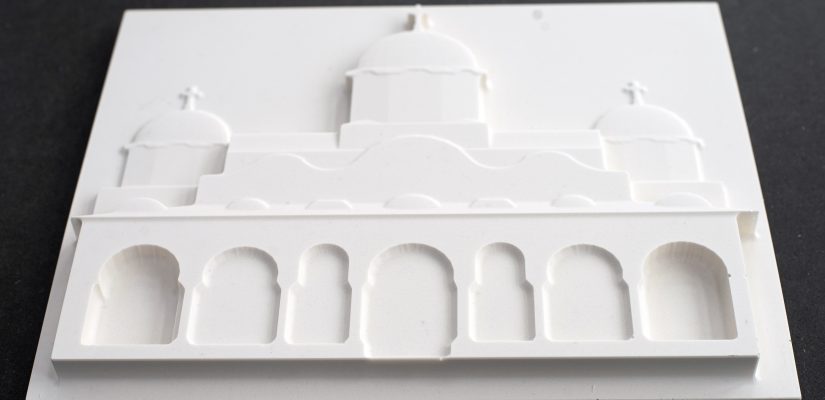
The UNESCO4ALL TOUR project was undertaken with the aim of producing replicas to be displayed at four UNESCO World Heritage sites (Basicica Aquileia, Alhambra Palace, Sibenik Cathedral, Rila Monastery) to aid visually impaired audiences.
The scope of the research was to develop accessible, innovative, transnational cultural tourism artefacts and experiences by integrating tactile exploration with audio data.
Researchers tested a high-tech “ring” detection of Near Field Connectivity (NFC) tags integrated into 3D printed artefact replicas. NFC sensors located on tactile surfaces are triggered to communicate wirelessly with a smart device (through an app for tablets or mobile phones).
The team found innovative solutions for the production of three-dimensional models for tactile exploration. This required translating real objects into digital models through photogrammetry, digital 3D modelling and digital sculpting. Digital models were then built using a variety of materials and techniques including Computer Numerically Controlled (CNC) routing, laser cutting and engraving, and resin 3D printing. One of the main challenges was to create a precise replica of an artefact, of considerable size and at reasonable expense. In addition, the material used needed to be easy to maintain and pleasant to touch.
Watch the video below to learn more about the project:
Replicas will be sited at four UNESCO World Heritage sites and findings will be disseminated via conferences and public talks in 2021.
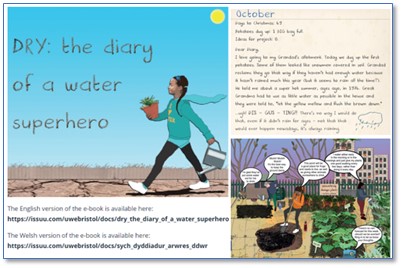
An exciting competition for school children has been launched by UWE Bristol academics in collaboration with Waterwise. Based on the award winning book DRY: The Story of a Water Superhero, the competition provides an ideal opportunity to engage young people to think about water use and enable positive behaviour change.
Having won the Geography Association’s Silver Award, the book written as a young girl’s diary, has been published by the Drought Risk & You (DRY) Project (UWE Bristol), which is funded by the Natural Environment Research Council (NERC). The story runs over the course of a year and tells how an ordinary schoolgirl in the UK transforms into a water superhero when a dry summer and winter with little rainfall lead to drought. Seeing life through ‘water goggles’, the girl shares her new-found love of water with her school and community, as the drought progresses.
The story and accompanying teacher notes were created by Professor Lindsey McEwen, who heads the DRY project and is Professor of Environmental Management and Director of the Centre for Water, Communities and Resilience at the UWE Bristol, Dr Verity Jones, Senior Lecturer in Education at UWE; Sarah Whitehouse, Senior Lecturer in Education & Humanities at UWE and Dr Sara Williams, an environmental psychologist and researcher. The illustrations by artist Luci Gorell Barnes play a key role in projecting the relevance of the story and the science behind it.
The curriculum-led competition is a creative challenge for children to read and enjoy the engaging STEM book and use their imagination to illustrate what their community would look like if we all used water more wisely. It also offers an ideal opportunity to embed geography, science and PSHE into real-world learning, informed by evidence-based scientific research. Which can be carried out in lessons / activities or set as a homework assignment. It is also ideal for out-of-school activity groups.
The aim of the competition is to:
Raise awareness of the importance of treating water as a precious resource in the face of climate change, based on the research of the Drought Risk and You (DRY) Project
Teach the causes of and impacts of drought in the UK
Prompt changes in behaviour to use water more wisely – inspiring children to be agents of change, to protect our communities and our planet, carrying the message back to their homes and families
To give them the confidence and background knowledge to engage with some of the themes and messages of COP26, the world’s biggest climate change summit being hosted by the UK in Glasgow in November
Communicate the accessible science behind the DRY Project, part of the NERC-funded About Drought programme
The competition is open to 5-9 and 10-13 year olds entries must be submitted between May 1st-28th 2021
UWE Bristol’s Dr Vadim Zverovich, Senior Lecturer in Operational Research, has recently had his new book published – Modern Applications of Graph Theory. The book discusses many cutting-edge applications of graph theory, such as traffic networks, navigable networks and optimal routing for emergency response, placement of electric vehicle charging stations, and graph-theoretic methods in molecular epidemiology. Due to the rapid growth of research in this field, the focus of the book is on the up-to-date development of these applications and the mathematical methods used to tackle them.
One of the topics discussed in the book is devoted to the well-known Braess’ paradox in traffic networks. Braess’ Paradox illustrates situations when the addition of another road link or route, with the intention of improving traffic flow, actually has the opposite effect of causing more congestion. This is because drivers generally choose their own driving routes when making their travel plans, without thinking about the traffic flow for all drivers, so that the road system as a whole does not operate optimally.
Deeper insight into this paradox from the viewpoint of the structure and characteristics of road networks may help transport planners to avoid the occurrence of Braess-like situations in real-life networks. If the analysis of all performance measures in a road network is done before the construction of a new road, then a huge amount of money and time can be saved. One relevant example is a demolition of a motorway section in Seoul in 2003, which improved travel time in the local network and resulted in a restoration of a river under the motorway (see Figure 2). The demolition and restoration costs were £201 million, not including very high construction expenses and upkeep of the river. Although it is generally believed that this is a real-life example of Braess’ paradox, it was not proved mathematically that the paradox actually occurred in this road network.
“The Cheonggyecheon river in Seoul: before (left picture) and after (right picture)
A generally accepted belief is that Braess’ paradox is wide spread. This was confirmed by some researchers who claimed that the likelihood of the paradox is 50%, or even higher under some assumptions. However, Dr Zverovich proved mathematically that typical probabilities for Braess’ paradox to occur in classical road network configurations do not exceed 10%. In addition, the probability of Braess’ paradox to occur is 6% in the classical network configuration consisting of motorway sections and class A roads. Notice that for traffic networks consisting of motorway sections, class A roads or a mixture of both, statistical tests showed that the distribution of parameters of travel time functions follow the Erlang-k distribution for small values of k.
Examples of the Erlang-k distribution for the parameters of travel time functions of motorway sections and class A roads.
Congratulations to Dr Vadim Zverovich on his recent book success.
We’re living through a Climate and Ecological Emergency and we urgently need to reduce carbon emissions. And yet society seems frozen into inaction. Could a new modelling and communication approach help to gather momentum?
In a journal paper recently released, the research team detailed their innovative method to bring these results together, through citizen-centred source apportionment. Traditional methods for monitoring air pollution and carbon emissions look at what is creating the emissions (vehicles, heating etc), and where the emissions end up (pollution hot spots).
Focus on Who and Why
This new approach focusses on who is burning fossil fuels and why they are doing so. This means we can understand the human dimension of emissions to improve policymaking, accounting for demographics (gender or age groups), socio-economic factors (income/car ownership) and motives for specific behaviours (e.g., commuting to work, leisure, shopping, etc.).
The modelling produced some surprises when applied to traffic in Bristol – as leisure travel accounted for the most km travelled, and therefore the most emissions per year. Local councils usually focus on school traffic or commuting, but this provides a new way to approach emissions reduction. Policymakers plan to look at ways to reduce car use for leisure travel, for instance locating leisure venues near to public transport or cycling paths, or even considering plans for 15 minute cities, where any necessary city amenities are within a 15 minute walk from homes.
Figure 1. (a) This infographic presents the relative contribution of each motive to total kilometres travelled by car in Bristol in 2015. It was designed to highlight recognisable social practices and activities. Figure 1. (b) This social card links to the data and was designed to resonate with activities that people do every day that contribute to carbon emissions and air pollution.
For science communicators, there is also much to think through as well. The modelling showed that emissions are not evenly produced; certain types of people produce more emissions than others, and some feel the effects of pollution more than others. For instance, men travel by car more than women, and people who earn over £50,000 per year tend to own more cars, and therefore drive far more often.
Figure 2. Infographic (top) and social card (bottom) showing differences in air pollution produced through men’s and women’s different travel habits.
Perceptions of ‘sensible’ climate action vary between groups
We therefore need a far more nuanced approach to communicating about climate action. Climate Outreach have done some excellent work on this topic, with their work on seven segments of British society and their attitudes to climate action. Science communicators need to focus on the segments polluting the most, and tailor communications showing the benefits of each relevant action they can take.
The UWE team’s new journal paper take this further using social psychology theories, explaining how the social contexts of the groups to which we belong influence what we perceive to be ‘normal’ in society. This means that cultural realities can change between social groups, cities, regions and countries. This ‘Overton Window of Political Possibility’ can shift over time so that an idea moves from unthinkable to radical, to acceptable, to sensible, to popular and finally into policy. For example, a climate change policy which is considered quite sensible in one city, such as an extensive network of segregated bike lanes allowing for cars to be curtailed in the city centre (Amsterdam in the Netherlands), may be considered to be quite radical in another city (such as Bristol, U.K.).
Science communications needs to focus on group lived experience of this ‘normality’, in order to understand more about why our day-to-day behaviours happen, and how we can change if we see others doing the same. Politicians will generally only pursue policies that are widely accepted throughout society as legitimate policy options, or otherwise, they may risk losing popular support and become unelectable. In order to introduce new policies, we therefore need to show how an idea can be communicated so that it resonates with what is deemed ‘acceptable’ or ‘sensible’ to the majority of citizens.
People like me create emissions, and people like me can take action
The UWE team showed how social cognitive theory can be used to help improve individual and collective self-efficacy for climate action. Using an example of more women cycling to activities, we need to focus on:
Vicarious experiences (i.e., comparisons of capability to others, modelling and observing)—a woman deciding whether to cycle will be influenced by whether other women cycle; if this is considered a ’normal’ thing for women to do, then other women will likely join in.
Mastery or performance accomplishments (i.e., experiences of relevant success)—a beginner female cyclist will be more likely to continue cycling if they have a positive experience cycling on main roads; they will then have a memory to recall about their ability to cycle alongside cars.
Verbal persuasions (positive feedback from peers and supervisors, coaching)—to continue cycling, the female cyclist would need to receive direct positive feedback on this activity.
Emotional arousal – both vicarious (indirect) and mastery (direct) experiences can influence our emotional states. To improve self-efficacy for an activity, we need to experience positive emotional responses. Therefore, the woman would need to feel that she is capable and confident at cycling and that other people approve or admire her behaviour.
So climate action needs positive (and relevant) role models, alongside positive press or communications (in relevant media) in order to help change our behaviours.
The ClairCity project showed how new thinking about the role of people in relation to air pollution and carbon emissions can widen options for action, leading to more acceptable and effective policies. Climate communications should draw on social learning in order to tailor communication efforts towards relevant groups. Ultimately, we need to become more aware that ’people like me’ create emissions and, equally, ‘people like me’ can take action to reduce emissions.
Fogg-Rogers, L.; Hayes, E.; Vanherle, K.; Pápics, P.I..; Chatterton, T.; Barnes, J.; Slingerland, S.; Boushel, C.; Laggan, S.; Longhurst, J.. Applying Social Learning to Climate Communications—Visualising ‘People Like Me’ in Air Pollution and Climate Change Data. Sustainability 2021, 13(6) 3406 doi.org/10.3390/su13063406
The special issue of LINKs will serve well as a light-touch introduction to unconventional computing for people not familiar with computing and might inspire artists and humanitarians to enter the field.
Unconventional computing is the future of computers. It is the most high speed and capacity which a computer will handle. A way to understand this theory is across its expressivity in the art as seen in Genaro Martínez, Andy Adamatzky, Marcin Schroeder’s research on the art of unconventional computing with cellular automata.
Genaro Martínez shares some of his research images below:
“Cellular automata and Turing machines are both abstract models:
It is the result of a binary collision between two particles in a three-dimensional space. So, later of 112 generations the result is a propagation of symmetric patterns self-replicating, as demonstrated above.
They are related to patterns in the universe or in nature. In this case, a three-dimensional cellular automaton reproduces one of these patterns from a collision of particles. It is related in physics (big bang theory) where the construction of a universe (artificial in this case) begins later of the collision and expands forever.
The above image is a Turing machine in colours. Typically, a Turing machine works in one dimension and shows the steps of an algorithm, in the sense abstract. This is as if you could see step by step how your computer calculates data. Of course, it is not evident for the final user, but in computer science, our picture shows a pictorial representation as a Turing machine works but in two dimensions for a computable process.”
Research from other UCL members was also included in the special edition:
Andy Adamatzky and Irina Petrova’s research on Fungal Grey Matter looks at recent discoveries that the electrical activity of fungi is similar to neurons. They briefly overview their discoveries on sensing and computing with fungi.
In the special issue, Andrew Adamatzky, Anna Nikolaidou, Antoni Gandia and Alessandro Chiolerio briefly reviews their ideas on Living wearables from slime mould and fungi. They argue that Living wearables offer a new spectrum of performance possibilities such as reactiveness, adaptiveness, and sensing capabilities. Whilst also being harmless to the environment, biodegradable and they can even nurture the cultivation of new materials in their end of life.
Finally, UCL member Richard Mayne shares his research on Collapsing the wave function on postquantum unconventional computing. His research examines what quantum computing is, why we need to be aware of it and whether there is a role for unconventional computing in a postquantum world.
All the research mentioned in the special edition of LINKs can be viewed here.
The UCL was founded by Professor Andy Adamatzky in 2001 as a response to an urgent need to develop computers for next century. Their research looks at novel computational techniques, architectures and working prototypes of non-linear media based computers.
Nidor Diagnostics is working with its industrial partner to carry out final validation of a new diagnostic for irritable bowel syndrome (IBS) before commercial launch.
Nidor is spin-out company between the University of Liverpool, UWE Bristol, the University of Bristol and The Wellcome Trust.
The company was established to develop a medical diagnostic device to improve the diagnosis of bowel disorders. The device, named Inform ™, can detect the volatile organic compounds in patient samples, in order to diagnose and monitor a range of medical conditions.
The company has recently agreed to partner with an accredited clinical laboratory, licensed to undertake trials for regulatory work. In addition, Nidor has received £75,500 funding from the Liverpool City Region Future Innovation Fund to build its first instruments to be trialled and validated by the laboratory. For the first time ever, Nidor Diagnostics will be able to positively diagnose IBS and help patients to get the correct treatment.
IBS has a huge impact on the lives of patients, bringing cramps, severe pain and unpredictable bowel habits. Despite being a common condition, there is currently no test to definitively diagnose the condition, with many doctors instead performing numerous tests to rule out other conditions.
Over-investigation of symptoms related to IBS can also prove costly and potentially dangerous. Patients often perceive that an IBS diagnosis is only made when doctors don’t know what is wrong..
Previous studies from the University of Liverpool’s Professor Chris Probert, co-inventor of the new diagnostic technology, have repeatedly shown that the gas pattern from stool samples can be used to separate patients with IBS from those with healthy bowels as well as those with inflamed bowels.
Ben De Lacy Costello, Associate Professor of Biosensing and Diagnostics at UWE Bristol and UWE co-inventor of the technology said: “Myself and Professor Norman Ratcliffe had an interest in the changes in smell induced by disease processes and making sensor systems to detect these changes. Our long running collaboration the University of Liverpool gave this work a clinical focus and it is great to see commercial diagnostic tests being developed by Nidor on the back of this collaborative research effort”
Nidor is planning to be able to launch its first services in late 2021.
The Active Living Architecture: Controlled Environment (ALICE) project has been recognised by the European Commission’s Innovation Radar team has an Innovation Highlight and will be showcased on their website.
The project, which follows on from the Living Architecture research programme, is a joint venture between UWE Bristol, Newcastle University and Translating Nature.
The aim of ALICE is to introduce and familiarise sustainably-minded promotors such as architects, designers, engineers, “green” businesses and their clients, to advocate the use live microbes as processors of waste within our homes and cities.
ALICE aims to provide a publicly accessible interface that is activated by household waste, namely urine and grey water. It exploits the properties of the integrated bioreactor system developed for the Living Architecture (LIAR) project. Creating a useable context and habitat that can be exhibited at biennales or festivals and explored by these audiences. ALICE catalyses a conversation about the future of sustainability in homes and public buildings, as well as the lifestyle changes implicit in adopting this new generation of utilities.
ALICE is a highly personal experience where ‘users’ may understand how waste can be dealt with differently in the home by putting it to good use. ALICE takes the form of a cabin and through a digital interface that translates data into graphical animations, participants will be able to see how their waste ‘enlivens’ the cabin’s performance. For example, turning on LEDs, or charging small mobile devices.
Conceptually, ALICE may be likened to the ‘tamagotchi pet’, a digital toy that flourishes through the owner’s digital care and attention. In this way, ‘care’ for ALICE is through its feeding and engagement with audiences. The system will also collect data that will help the innovators better understand the performance and potential usage of such a system outside the laboratory space so that appropriate prototypes for market can be developed.
UWE Bristol lead for the project Ioannis Ieropoulos, Professor of Bioenergy and Self-Sustainable Systems and Director of the Bristol BioEnergy Centre, at the Bristol Robotics Laboratory, commented on the project: We are delighted for this recognition by the European Commission, which is an important milestone in our endeavour to make this technology widely available. The work of our partners has enabled the successfully translation of a complex technology into a visual representation that is highly appealing to a wide audience and this could have only been achieved through open-minded collaboration. We very much look forward to seeing this installed in everyone’s home.
Congratulations to Ioannis and the team for the recognition of their project.
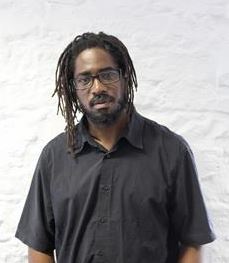
Associate Professor in Cultural Interdisciplinary Practice and UWE Bristol alum, Dr Shawn Sobers, has been awarded an Arts and Humanities Research Council (AHRC) Equality, Diversity and Inclusion (EDI) Engagement Fellowship alongside nine other humanities researchers. The funding is to further the impact of their EDI research.
Fellows will work with communities to explore topics including the loneliness epidemic in LGBTQ+ communities and the forgotten relationship between the city of Bath and Ethiopian culture. The fellows will be supported by a total investment of over £850,000 which will be used to engage diverse audiences with their outstanding research.
Shawn’s research project looks at Ethiopian Emperor Haile Selassie I who lived in Bath, and is considered God incarnate by members of the Rastafari faith. This interdisciplinary project uses the legacy of Emperor Haile Selassie I and his connection to Bath as the basis of a seven-month series of events celebrating openness and cultural inclusivity. It will build connections between local communities and encourage conversation and cross-cultural connections.
Research into the arts and humanities can bring new perspectives to the way we think about contemporary challenges. When such research is rooted in engagement with the communities and issues affecting the public, it can drive real-world change. This funding will enable EDI Engagement Fellows to develop a range of exciting engagement opportunities including community workshops and a bespoke festival. These opportunities will connect existing academic research with communities across the UK to deliver research with a tangible impact on society and help shape future EDI policies.
Other research includes:
Professor Anna Fox, who will host a series of innovative workshops and mentorship activities to drive awareness of women’s unheard stories using photography and story-telling practices.
Dr Patricia Noxolo, whose work will include three artistic provocations designed to provoke discussion about everyday negotiations between security and insecurity that different races experience.
Professor Christopher Smith, AHRC Executive Chair, said:
“Learning about our heritage and culture and participating in the arts can deepen our perception of our history and of ourselves.
“These fellowships will enable researchers to connect their scholarship with diverse communities across the UK and bring about positive change.
“Arts and humanities research has tremendous potential to help people to embrace different viewpoints and to build a fairer, more inclusive society.”
AHRC has a longstanding commitment to upholding the principles of equality, diversion and inclusivity in all activities and AHRC is committed to creating a more inclusive research and innovation environment.
Congratulations to Shawn on this achievement.
About the Arts and Humanities Research Council The Arts and Humanities Research Council (AHRC), part of UK Research and Innovation, funds internationally outstanding independent researchers across the whole range of the arts and humanities: history, archaeology, digital content, philosophy, languages and literature, design, heritage, area studies, the creative and performing arts, and much more. The quality and range of research supported by AHRC works for the good of UK society and culture and contributes both to UK economic success and to the culture and welfare of societies across the globe. ahrc.ukri.org.