Clean Air Day: Clearing the Air: Understanding Current UK and EU Legislation on Air Pollution

Posted on

20 June 2024 is Clean Air Day. To celebrate we are sharing this blog post from MSc Environmental Consultancy student Jozie Beattie:

The quality of our air is a critical concern affecting both public health and the environment. To address these issues both the UK and EU have published legislation aimed at improving air quality. This blog post aims to explore how these measures are shaping efforts to reduce air pollution and ultimately promote cleaner, healthier air for all.

EU Air Quality Standards Directive 2008/50/EC

This directive merges different ambient air quality legislation in the EU into one. It was established in 2008 and includes target values and thresholds for several pollutants such as sulphur dioxide and particulate matter. This directive is also used in the UK.

Since 2008, a lot has changed in the environment, especially types and levels of air pollutants. Thus, the directive could seem outdated. The EU has stated its intent to update the directive to be in line with the WHO guidelines (Kuula et al, 2022) would result in some drastic changes, such as limit values for PM2.5 reducing by more than half.

This directive is legally binding for all EU countries, as well as the UK. The UK breached this directive on several occasions. The European Commission argues the UK has consistently exceeded annual NO2 limits in 16 areas and has not minimised the period of NO2 limit exceedance, since 2010 (Herbert and Woodliffe, 2021) As a result, the UK was ordered to update air quality management plans immediately, to meet these targets.

The human effect of these breaches resulted in an inquest into Ella Adoo Kissi-Debra’s death. Ella was just 9 years old in 2013 when she died of acute respiratory failure via asthma attack. She was the first person in the UK to have air pollution listed as a cause of death (BBC, 2020).

WHO Air Quality Guidelines

Table 1: WHO Air Quality Guidelines (WHO, 2021a)
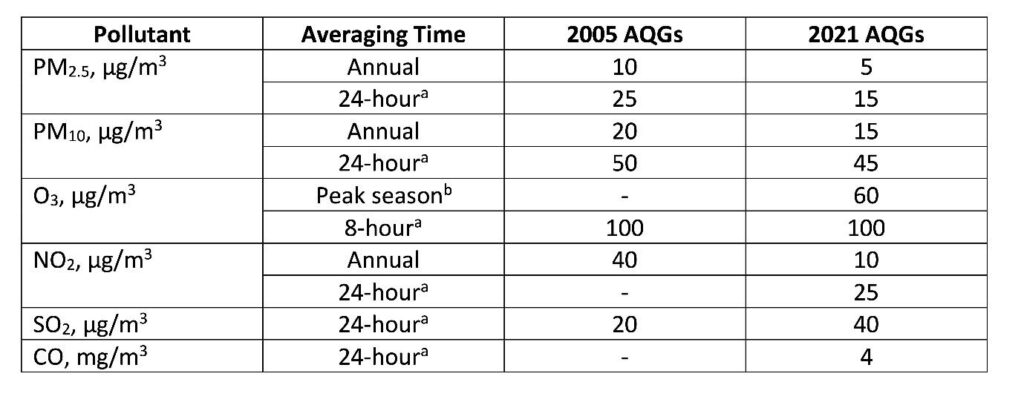
The World Health Organisation (WHO) has set targets for governments all over the world that aim to reduce air pollution and improve human health. These recommend levels of several common pollutants such as PM 2.5, PM 10 and NO2, to name a few.

The first guidelines were released in 1987, again in 2005, and most recently in 2021 – see the image above. Since 2005, targets have changed drastically in response to air quality levels. These guidelines have been created by a team of experts who have intensely monitored and evaluated air quality, while consulting with others globally. This makes the targets popular with government bodies and allows the public accurate information to rely on (WHO, 2021b).

However, these targets are simply guidelines. They are not standards and are not legally binding, so do not have to be met by law. This leads to variability in air quality management practices globally (Hausfeld, 2021). As well as this, they do not provide specific guidance on implementation measures, leaving room for interpretation depending on the country’s context. While this does ensure guidelines are not generalised standards, it can leave governments lost as to how to achieve these ambitious targets (Burki, 2021).

2021 Environment Act

Figure 2 – (Mendes, 2021)

The 2021 Environment Act was published in the UK after the UK left the EU, to consolidate rules on environmental protection that were at risk of being lost. The act covers the protection of air quality, as well as nature, water, and biodiversity etc.

For air pollution, the act proposes to change air quality targets, for example reducing PM2.5 by over a third compared to 2018 levels (DEFRA, 2022). As well as changes in regulation relating to local air quality management frameworks, smoke control area enforcement and environmental recall of vehicles.

This act is legally binding, meaning regulations must be followed by governments, local authorities, businesses, and the public. This signifies a robust framework for addressing a range of environmental issues and holds everyone accountable. The act introduced the ‘Office for Environmental Protection’ who can ensure law is complied with.

Although the act is law, it can be argued that it does not meet the ambition that the government promote, particularly around clean air. The act set a duty for the government to bring forward 2 air quality targets by October 2022 – however the government failed to meet this deadline (Client Earth, 2022). As well as this, insufficient public consultation took place for long term targets, it lacked critical information and was of insufficient length which meant the public were not adequately engaged (Lee, 2023).

UK Clean Air Strategy 2019

Figure 3 – (Gowling WLG 2019)

This 2019 strategy details the UKs approach to tackling all sources of air pollution, with the goals of improving air quality, safeguarding nature, and enhancing the economy. It works alongside the Industrial Strategy, Clean Growth Strategy and 25-year Environment Plan. It sets out actions and methods to reduce emissions for all relevant bodies to follow (DEFRA, 2019).

This robust strategy involved extensive consultation and took on board initial feedback to improve the strategy and extend ambition further. As well as this, it integrates monitoring and actions to provide accurate data and ensure progress is consistent.

However, the Clean Air Strategy has been criticised for its lack of funding. A group of local government leaders – UK100 stated that the Clean Air Fund of £220 million was not enough, the strategy does emphasise that additional funds are available but falls short of the £1.75 billion that was initially suggested. Without sufficient funding, the strategy cannot be implemented fully and ultimately the pressing public health issue will not be addressed (The Lancet, 2019).


References

BBC (2018) What is the EU? – CBBC Newsround www.bbc.co.uk [online]. Available from: https://www.bbc.co.uk/newsround/21164710. [Accessed 11 May 2024].

BBC (16th December 2020) Ella Adoo-Kissi-Debrah: Air pollution a factor in girl’s death, inquest finds BBC News [online]. Available from: https://www.bbc.co.uk/news/uk-england-london-55330945. [Accessed 11 May 2024].

Burki, T. (2021) WHO introduces ambitious new air quality guidelines. The Lancet [online]. 398 (10306), p. 1117. [Accessed 8 May 2024].

Client Earth (2022) The UK Environment Act – what’s Happening now? www.clientearth.org. 1 April 2022 [online]. Available from: https://www.clientearth.org/latest/news/why-the-uk-environment-bill-matters/.[Accessed 5 May 2024].

Defra (2022) Environment Act 2021: Environmental Targets – Defra in the Media deframedia.blog.gov.uk. 17 March 2022 [online]. Available from: https://deframedia.blog.gov.uk/2022/03/17/environment-act-2021-environmental-targets/.[Accessed 11 May 2024].

Department for Environment, Food & Rural Affairs (2019) Clean Air Strategy 2019 GOV.UK. 14 January 2019 [online]. Available from: https://www.gov.uk/government/publications/clean-air-strategy-2019. [Accessed 5 May 2024].

Gowling WLG (2019) UK Clean Air Strategy 2019 – Issues for Business Gowling WLG. 2019 [online]. Available from: https://gowlingwlg.com/en/insights-resources/articles/2019/uk-clean-air-strategy-2019-issues-for-business/.. [Accessed 8 May 2024].

Hausfeld (2021) WHO launches more stringent Air Quality Guidelines Hausfeld. 2021 [online]. Available from: https://www.hausfeld.com/en-gb/what-we-think/perspectives-blogs/who-launches-more-stringent-air-quality-guidelines/ [Accessed 11 May 2024].

Herbert and Woodliffe (2021) The CJEU Finds that the UK Breached its Obligations under the Air Quality Directive Ropewalk Chambers. 2021 [online]. Available from: https://ropewalk.co.uk/blog/the-cjeu-finds-that-the-uk-breached-its-obligations-under-the-air-quality-directive/.[Accessed 11 May 2024].

Kuula, J. et al. (2022) Opinion: Insights into updating Ambient Air Quality Directive 2008/50/EC. Atmospheric Chemistry and Physics [online]. 22 (7), pp. 4801–4808. [Accessed 5 May 2024].

Lee, M. (2023) The Aarhus Convention 1998 and the Environment Act 2021: Eroding Public Participation. The Modern Law Review [online]. [Accessed 5 May 2024].

Mendes, S. (2021) Environment Act 2021: UK’s New Protection Plan Iceclog. 23 November 2021 [online]. Available from: https://iceclog.com/environment-act-2021-uks-new-protection-plan/ [Accessed 11 May 2024].

The Lancet (2019) New strategy for clean air in the UK—is it enough? The Lancet Respiratory Medicine [online]. 7 (3), p. 187. . [Accessed 12 May 2024].

WHO (2021a) What are the WHO Air quality guidelines? World Health Organization. 22 September 2021 [online]. Available from: https://www.who.int/news-room/feature-stories/detail/what-are-the-who-air-quality-guidelines. . [Accessed 8 May 2024].

WHO (2021b) WHO global air quality guidelines. Geneva Who. . [Accessed 8 May 2024].

Clean Air Day: Methods of Assessing Air Quality – Pros and Cons

Posted on

20 June 2024 is Clean Air Day. To celebrate we are sharing this blog post from MSc Environmental Management student Kirsten Commesso:

Air pollution stands as one of the most significant challenges of our time. Implications include impacts on the environment and human health. Particulate Matter (PM), for example, poses serious risk to human health as they infiltrate the respiratory system and can cause respiratory and cardiovascular diseases and increased risk of cancer. Many pollutants can be monitored, and current and future projections can be modeled to see if mitigation measures are working to limit exposure to these harmful particles. While monitoring systems and models offer an excellent insight into the air quality of an area, some systems work best in specific sampling locations over others (Manisalidis et al., 2020). Initial screening is completed to see which pollutants need to be monitored and which methods are best suited.

Figure 1: Diffusion tube in London (City of London, 2023)

Passive Sampling

Passive sampling refers to a method of collecting air samples without the need for active pumps or power sources. Rather, passive samplers rely on the natural diffusion of gases and particles from the surrounding air into a sampling device. An example of passive sampling are diffusion tubes (Figure 1). Additional advantages include low costs, small/light weight, and easy to implement in numerous sampling sites. Moreover, they can easily be implemented by non-specialists which allows the data to be spatial and long-term (Pienaar et al., 2015). Passive sampling does have limitations which include the accuracy and limited ability to look at data for a specific day or week. In the end, the tubes are collected from the sites every month and data is processed in a laboratory (Cheshire East Council, 2021).  

Low-Cost Sensor Systems

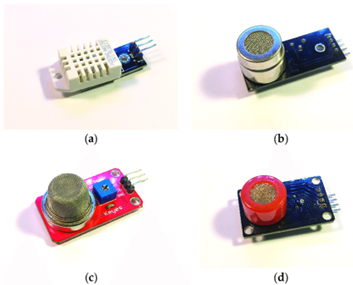
Figure 2: Examples of low-cost sensors (Hernandez de la Iglesia et al., 2018)

Low-cost sensor systems (Figure 2) are low power devices that can range from a few hundred pounds for devices that measure a single pollutant to multi-pollutant systems that can cost several thousand pounds. Compared to passive sampling, low-cost sensor systems can provide highly time resolved data (Welsh Government, 2024). This allows for authorities to identify sources of pollution and provide a more accurate assessment of exposure. One of the downsides of low-cost sensor systems is that they will require re-calibration for the long-term operation of these devices. But, overall, they are an effective option for indicative measurements (Penza et al., 2017).

Active (Semi-Automatic) Sampling

In this type of method, pollutant samples are collected by physical or chemical means and then sent to the laboratory for analysis. The sampling device (Figure 3) draws air through a filter or other collection medium and captures the particles suspended in the air (Welsh Government, 2024). Semi-automatic suggests that some aspects of the process are automated, but there are still steps that require manual intervention, for example setting up the equipment and handling collected samples. The positives with this sampling method include easy operation and that there are historical datasets available on U.K. government networks (Welsh Government, 2024). A drawback to this method is that it can be a more laborious process which includes special handling of the sample while in transit from the site to the laboratory and then an analysis is performed (National Research Council (US), 1981).

Figure 3: Active sampling sensor (Coghlan)

Automatic Point Monitoring

These air quality monitoring systems are usually the most advanced and costly of the methods. They use automatic analyzers to draw in ambient air and then measure the concentration of the pollutant in the sampled air at specific locations (Welsh Government, 2024). These measurements are often transmitted in real-time to a central database and provide measurements with very fine accuracy and fast data collection. In order to ensure that the data produced is reliable, a high quality of operation is required. This includes operator training, regular maintenance and calibration, and detailed QA/QC procedures per the set standards. Due to all these factors, the operation of automatic point monitoring is particularly expensive and the system itself can be quite large (Northern Ireland Air, 2024).

Remote Optical/Long-Path Monitoring

This method of air quality sampling uses a method called long-path spectroscopic technique in order to make real time measurements of the concentration of numerous pollutants seen between the light source and the detector (Welsh Government, 2024). These types of instruments use Differential Optical Absorption Spectroscopy (DOAS) (Figure 4). A light source is a crucial component of an DOAS instrument because it determines the instrument’s range and it has a significant impact on the instrument’s performance (Duan et al., 2022). This type of technology is especially useful because it can be used near sources and can measure multiple pollutants at a time. The issues that come with this type of technology include the high cost of the devices and that a trained operator is required for operation.

Figure 4: View of the DOAS technology (Duan et al., 2022).

Overview of Dispersion Modeling

Dispersion modeling utilizes mathematical formulas to characterize the atmospheric processes that disperse emissions of pollutants. This type of modelling can be used to predict concentrations at selected locations. Models are completed within national standards (US EPA, 2023). Dispersion models can take on many forms including simple graphs and tables, but can also be more complex with many inputs, as seen in computer software. Some examples of these are ADMS, SCREEN and AERMOD. A program used to assess road traffic is ADMS-Roads. This model can be used to investigate air pollution problems due to networks of roads but may also be in combination with industrial sites (CERC, 2024). Models cover many types of sources including point sources, line sources, road traffic sources (Figure 5), airport sources (ADMS-Airport), liquid spills (LSMS) and long-range transport (US EPA CALPUFF). In each program, pollutant concentrations are measured using contaminant emission rates, characteristics of the emission source, topography, meteorology of the area and background concentrations (US EPA, 2023).

Figure 5: Example of an ADMS-Roads model (CERC, 2024).

References

Cambridge Environmental Research Consultants (CERC). (2024). ADMS-Roads. [online]. Available on: CERC > Environmental software > ADMS-Roads model. [Accessed on 9 May 2024].

Cheshire East Council (2021). Passive Diffusion Tubes. [online]. Available on: Diffusion Tube Monitoring (cheshireeast.gov.uk). [Accessed 9 May 2024].

City of London (2023). Air Quality Monitoring. [online]. Available on: Air Quality Monitoring – City of London. [Accessed 10 May 2024].

Duan, J., Qin, M., Fang, W., Liao, Z., Gui, H., Shi, Z., Yang, H., Meng, F., Shao, D., Hu, J., Han, B., Xie, P. and Liu, W. (2022) Detection of Aircraft Emissions Using Long-path Differential Optical Absorption Spectroscopy at Hefei Xinqiao International Airport. Remote Sensing [online]. 14 (16), p. 3927. [Accessed 11 May 2024].

Hernandez De La Iglesia, D., De Paz, J.F., Villarrubia, G., Barriuso, A.L. and Bajo, J. (2018) A Context-aware Indoor Air Quality System For Sudden Infant Death Syndrome Prevention. Sensors [online]. 18 (3), p. 757. [Accessed 11 May 2024].

Manisalidis, I., Stavropoulou, E., Stavropoulos, A. and Bezirtzoglou, E. (2020) Environmental and Health Impacts of Air Pollution: A Review. Public Health [online]. 8 [Accessed 11 May 2024]

National Research Council (Us) Committee on Indoor Pollutants, (1981) Monitoring and Modeling of Indoor Air Pollution. National Library For Medicine [online]. [Accessed 10 May 2024].

Northern Ireland Air. (2024). Monitoring Air Pollition [online]. Available on: Monitoring air pollution – Northern Ireland Air (airqualityni.co.uk). [Accessed 10 May 2024].

Penza, M., Suriano, D., Pfister, V., Prato, M. and Cassano, G. (2017) Urban Air Quality Monitoring with Networked Low-cost Sensor-systems. Proceedings of Eurosensors [online]. 1 (4) [Accessed 11 May 2024].

Pienaar, J.J., Beukes, J.P., Van Zyl, P.G., Lehmann, C.M.B. and Aherne, J. (2015) Chapter 2 – Passive Diffusion Sampling Devices For Monitoring Ambient Air Concentrations. Comprehensive Analytical Chemistry [online]. 70, pp. 13-52. [Accessed 10 May 2024].

US EPA. (2023). Air Quality Dispersion Modelling. [online]. Available on: Air Quality Dispersion Modeling | US EPA. [Accessed on 10 May 2024].

Welsh Government. (2024). Air Quality in Wales – Monitoring Methodologies. [online]. Available on: Monitoring Methodologies | Air Quality In Wales (gov.wales). [Accessed 10 May 2024].

UWE Bristol announce Knowledge Transfer Partnership with a pioneering nurse call systems business

Posted on

UWE Bristol has been successful in securing grant funding from Innovate UK to form a new 36-month Knowledge Transfer Partnership (KTP) with a pioneering nurse call systems business.

They are trusted by leading healthcare trusts, hospitals, and care home operators to deliver dependable 24/7 nurse care systems that make life better for patient and residents, and for those charged with protecting them.

The project aim is to accelerate the businesses in house capability to revolutionise and innovate the quality of care provided for residents in social and health care settings using cutting-edge AI, machine vision and machine learning techniques.

The project is in collaboration with UWE Bristol academics Wenhao Zhang, Mel Smith and Lyndon Smith.  Wenhao Zhang is Associate Professor of Computer Vision and Machine Learning, Mel Smith is Professor of Machine Vision and Lyndon Smith is a Professor in Computer Simulation and Machine Vision.

Innovative research project receives funding to explore climate change through a theatre-based approach

Posted on

UWE Bristol have been successful in receiving funding from the UKRI ESRC to support an international research project that will examine options for climate mitigation and adaptation among communities who face water insecurity (e.g. shortage, inundation, poor water quality).

The project will see UWE Bristol work with University of Saskatchewan (USask), University of New Hampshire, Helmholtz Centre for Environmental Research, Technical University of Dresden and University of Alberta over the next 4 years. 

The innovative project received $1.5million through the New Frontiers In Research Fund International program intended to support interdisciplinary, “high-risk high-reward” research projects with international collaborators.  

The project titled “Climate Collaboratorium: Co-creation of Applied Theatre Decision Labs for Exploring Climate Change Adaptation and Mitigation,” aims to expand current engagement to engage with water-insecure communities. Through this unique applied theatre-based approach, the project will develop strategies to effectively communicate solutions for water and climate-related challenges at the often-overlooked community level.   

The project will begin with mixed media workshops in less heard, water-insecure communities bringing different knowledge together to generate ideas on adapting to climate change. In the UK case-study, researchers will be working across generations with urban communities alongside cultural and water security partners in the River Severn catchment. 

The College of Arts, Technology & Environment building fund have brought an interdisciplinary team together for this silo-breaking research to promote Sustainable Development Goal 13 for climate change action.  

The project will see the Centre for Water, Communities and Resilience, work in collaboration with the acta Community Theatre Company.  

Sarah Berridge, Senior Lecturer in Drama at UWE Bristol, commented on the funding:  

“This is an opportunity to share authentic stories and insights of universal significance and relevance, both locally and internationally, developing research and innovative practice and essentially – ‘theatre’, that will have impact beyond our respective institutions.” 

Carla Orosz, head of USask’s Department of Drama, will be part of the design and script development team that will help turn data from the workshops into shows.  

Orosz said this kind of project was an excellent example of combining environmental science, social science, and theatre in an effective way by integrating theatre directly with the project.  

“Art is more accessible than a research paper … it’s a thing we interact with almost daily,” she said. “I think when we’re bringing arts and science together this way, we’re helping our general public get that important information out wider.” 

UWE Bristol receives funding to investigate whether on-demand buses can improve access to opportunity in rural areas  

Posted on

Image credit: Vinita Nawathe

UWE Bristol has been successful in receiving funding from UKRI and their Creating Opportunities Evaluation Development Fund to look at the role of Demand Responsive Transport (DRT) in connecting people to opportunities in less densely populated areas.  

The project, led by Professor of Travel Behaviour, Kiron Chatterjee,  and Research Fellow, Dr Eda Beyazit Ince, will assess DRT’s impact in unlocking educational, employment and social opportunities for residents in rural areas. DRT is being considered as an alternative to traditonal timetabled buses in many areas which have seen falling passenger numbers and cuts in services over a long period of time. It offers the promise of a more convenient service taking people where they want and when they want.  

UWE Bristol is joined in the project by the University of Leeds who will provide economics expertise via Associate Professor, Daniel Johnson. The research will focus on DRT schemes operating in Essex, Gloucestershire and Nottinghamshire and the county councils for these three areas are project partners along with CoMoUK (national charity for shared transport) and Transport East (host of Rural Mobility Centre of Excellence).

Image credit: Vinita Nawathe

The project will focus on areas exhibiting multiple dimensions of deprivation, such as low employment rates, low income, prolonged health problems and low life expectancies. The project has three main objectives:  

1. To apply an innovative, participatory methodological framework to measure the impact of public transport on life-defining economic, social and health outcomes. 

2. To estimate the social value of DRT schemes and bus services more generally in areas of rural deprivation and their contribution to reducing place-based inequalities. 

3. To inform policy in relation to the future of DRT and broader public transport services 

In each of the DRT operating areas in Essex, Gloucestershire and Nottinghamshire the project will carry out surveys and interviews with residents to find out whether they use the DRT, what they use it for and the value they place on its availability to their community.  

Professor Kiron Chatterjee commented:

DRT is not a cheap option for providing a public transport option to areas otherwise lacking public transport. But it could offer a lifeline for those unable to drive and make the difference in them getting to college, a job, a health appointment or simply getting out of the house to meet other people. There is a need to understand the social value of DRT to put against the cost of provision and assess whether it is a worthwhile investment of public money.   

Dr Ed Beyazit Ince commented:

We are excited to investigate the less explored areas of transport provision through the case of DRT, uncovering the wide range of opportunities it may offer beyond transport benefits only. 

Join academics from University Campinas, Brazil to discuss future collaborations

Posted on

Photo: Professor Ana Elisa Spaolonzi Queiroz Assis

Academics from University Campinas, Brazil will visit UWE Bristol on 2nd July to talk about their work and ways we can collaborate. The Education and Childhood Research Group (ECRG) will be hosting Professor Ana Elisa Spaolonzi Queiroz Assis and her colleagues in a visit.  

As part of the visit, Prof Ana Elisa Spaolonzi Queiroz Assis will be giving a keynote address titled ‘The watershed as a pedagogical matrix: a formative experience’.

Proposed timeline:

  • 10.30 – Welcome
  • 11.45- 12 – Tour of campus
  • 12 – 12.30 – Keynote by Prof Ana Elisa Spaolonzi Queiroz Assis – 3×10⁵
  • 12.30 – 1.30 Lunch and Learn
  • 1.30 – 2.30 Discussion around future collaboration

Ana will discuss the use of the watershed basin as a pedagogical matrix. She will explore four main elements identified in Paulo Freire’s pedagogy: i) what I know, ii) how I know it, iii) how much I know and iv) what I know it for, associated with elements such as Community Identity, Territory and Environmental Education.

Prof. Dr. Ana Elisa Spaolonzi Queiroz Assis is a Professor at Unicamp’s School of Education and coordinator of the Higher Interdisciplinary Training Programme. Ana will be joined by:

  • Prof. Dr. Luis Renato Vedovato
  • Prof. Dr. Tatiana Giovanelli Vedovato
  • Prof. Dr. Guilherme Perez Cabral

Prof Ana Elisa Spaolonzi Queiroz Assis is leading the visit. Profs Vedovato and Cabral are from law, and work with education.  Prof Vedovato considers multidimensional poverty and human dignity, as well as energy regulation and transition for social justice, and Prof Cabral is interested in the right to education and international bodies.

We really hope you will join us as this is a great opportunity to find out about interesting research, share your own work and begin conversations about possible international collaborations.

Further information will be circulated but, in the meantime, please put a place holder in your calendar and do try and come along to all / part of the activities.

Lyons Davidson Solicitors and UWE Bristol Knowledge Transfer Partnership project update

Posted on

Lyons Davidson Solicitors and UWE Bristol are nearing completion of their 2nd Knowledge Transfer Partnership (KTP), focussing on emerging technology to develop an AI/Machine Learning system which will streamline their business.

The provision of legal services is in a period of rapid transition and the project is responding to a business challenge created by new legislation that will be critical in future proofing Lyons Davidson.

The company embraces innovation and technology, to deliver efficient and effective legal solutions with a client-centric approach, and their goal is to work toward an automated claims process putting client experience at its core.

The projects’ emphasis on fusing Machine Learning and other learning paradigms to create useful predictive models is complementary to the previous, successfully completed KTP, which embedded expertise in a different form of AI.

The project aims to create a new AI/Machine Learning system, which will predict likely settlement values and help to advise customers on compensation offers. The ability to automate settlement of claims will improve and shorten the decision-making process, giving Lyons Davidson a competitive edge.

UWE Bristol Academics working in this partnership are Jim Smith, Professor of Interactive Artificial Intelligence and Deputy Director of the Computer Science Research Centre, and Dr Mehmet Aydin, Senior Lecturer in Computer Science.

Professor Jim Smith tells us that “the project is addressing how to build and deploy explainable AI systems that can learn predictive models from historical records, such as likely settlement values for a range of insurance claims. A key part of the project is to make these systems interactive, so that company staff can query and recommend changes, so that the models can rapidly adapt in response to human expertise.”

The KTP office team at UWE caught up with Jan Klimaszewski, who is working on the project as associate and Software Engineer in Artificial Intelligence.

What type of AI / Machine Learning is being used within this Knowledge Transfer Partnership project?

We use a Pieciewiese linear regression tree (PL Tree). It is made up of two models a decision tree which provides a set of rules and linear regression) but is also a model in itself. It is a set of rules where the output is a mathematical equation. In general, every decision tree regressor is a set of rules with an output as a mean of some values, but for a PL tree the value is a mathematical equation.

We use active learning that includes human involvement, Case Handlers provide data over time and will be able to flag incorrect predictions as they arise. The model will then adapt a pattern, noticing that something has changed and will try to correct itself to make the right prediction.

How does this model work?

The architecture of the model includes input of parameters including injury types, accident types, general damages (tariff injuries, tariff and non-tariff costs) and special damages. It considers prognosis, length of injury and tariff type.

When a Case Handler uses the model, they input the case details using drop down menus and text boxes. They then click predict and the model will return a mathematical equation. It works out each section of the claim, so there could be a final calculation made up of several equations depending on the rule set.

How has AI / Machine Learning been developed within this project?

We analysed data using various statistical methods. After this we tested against various Machine Learning models; Random Forest and a simple decision tree. We used Machine Learning techniques such as cross validation to evaluate the model and to find the best possible parameters and performance. We used a technique called Gridsearch which allowed us to find the best possible set up and to see if the model had improved or not. These steps were repeated until we had a model that was not over or under fitting.

It is essential to have low error rates in the decision tree, so we used 4 different types of metrics to assess the model (mean absolute error, mean squared error, root mean squared error and r squared error).

We decided to use the PL tree because simple trees and Random forest were too simplistic and performing with low accuracy.

The team got to the point where we had everything, but the model was stopping us progressing further. Research was carried out on other Machine Learning models, one of which used genetic trees, but this was too complex for the solution. We decided to use a PL Tree which provides us with everything required.

The entire journey was about training, testing, comparing models and trying different approaches with data. The team are currently focussing on data preprocessing. Data preprocessing refers to the technique of preparing raw data to make it suitable for building and training Machine Learning models. – Right now we are in the testing phase

What will this mean for Lyons Davidson going forward?

This will make the the negotiation process more efficient. The system will provide guidance to the case handler and allow offers and counteroffers to be made quicker and more consistently.  It will also provide a framework to provide more automation within the offer process and help reduce touchpoints on the claim for case handlers.

Is there anything else that you would like to tell us about the project?

The relationship between the business and the academic team has strengthened the project and made it possible to execute.

UWE Bristol logo

In summary, the first stage of this knowledge transfer partnership has established a software development framework, creating data tools to present the initial idea of the project. It was then ensured that data is pre-processed without concerns and Case Handlers can generate their own unique rules as needed. A generic re-useable ‘data-dictionary’ framework was created for storing meta-data that allows users to explore and edit.Ongoing knowledge exchange with case handlers will ensure that the data is utilised correctly, and that the input process is designed in the most efficient manner.

A functional model has been created, capable of predicting settlement value ranges. The overall aim is to accurately predict insurer behaviour and achieve the best result for clients in the quickest time.

Centre for Transport & Society Symposium 2024  

Posted on

Join the Centre for Transport & Society (CTS) for their annual symposium on Thursday 18th July 2024 on Frenchay Campus.  

This free symposium will feature talks, a panel, and workshops on the topics of governance and equity; transport planning and placemaking; technological change; travel behaviour and the mobility experience. 

The Centre have lined-up an exciting and thought-provoking array of talks and workshops which builds their four research strategic themes:

  • Governance and equity
  • Transport planning and placemaking
  • Technological change
  • Travel behaviour and the mobility experience

The symposium promises to be an opportunity to engage with transport research and its relevance to policy.

Programme

After the welcome and symposium opening, there will be a keynote talk by Councillor Ed Plowden, new Chair of Bristol City Council’s Transport and Connectivity Committee, followed by two breakout sessions:

  • Travel behaviour and the mobility experience, examining active travel as daily practice and potential
  • Governance and technological change, considering a wide array of tools for better performing transport systems (drone deliveries, public transport automation, and more inclusive Sustainable Urban Mobility Plans).

The second part of the morning will be a plenary session presenting Triple Access Planning. Followed by a panel in which the panellists (to be announced next week) will imagine themselves as special advisers and brainstorm ways to brief the new Government’s Secretary of State for Transport.

The symposium will break for lunch with an optional NetWalk.

In the afternoon, you will have the choice between three workshops, in which you can:

  • Learn how to use systems thinking for decarbonising freight while considering uncertainty.
  • Examine automated bus services from the policy and planning perspectives and provide input to help frame next steps on the research agenda. Or
  • Think about the decision-making processes that can deliver more walkable environments, and brainstorm policies’ and tools’ desirable evolution.

You can see the programme below:

Register your space.

UWE Bristol and Santorini Scientific Ltd announce new Accelerated Knowledge Transfer project

Posted on

UWE Bristol with Santorini Scientific Ltd have been successful in securing grant funding from Innovate UK to form a new 3-month Accelerated Knowledge Transfer (AKT) project titled: Accelerating development of a multi-sensor, multi-culture cell model for evaluation of heart transplant rejection to enable personalised treatment.

Santorini Scientific state that their mission is to drive and implement medical advances which will allow heart transplant patients to live their lives to the fullest. They have identified the following three streams to improve quality of life for heart transplant patients: 3D Bioprinting the world’s first transplantable human heart, using T cell Therapy to achieve allograft tolerance, and early modelling and detection of rejection. 

Heart transplant rejection affects more than 50% of transplant patients. The pioneering approach of this project is to develop a laboratory based biological vascular model with sensors to monitor biological indicators of rejection, which addresses this critical challenge. Thus, through greater understanding of relevant biological processes, personalised treatment will be improved, and new effective drugs developed.

Dr Alex Yue is Head of Instrumentation at the Institute of Bio-Sensing Technology at UWE Bristol, and will be leading on this project. He is a highly proficient electronic engineer with both academic and industrial R&D experience, with specialist expertise in sensor systems and instrumentation for medical applications.

Dr Tom Draper and Dr David Ferrier will be joining this imminent project as associates, bringing a vast array of expertise. Dr Draper has specialisms in nanotechnology, molecular biology, and fluidic system design, and Dr Ferrier in biosensor technology.

Accelerated Knowledge Transfers are ‘designed to build an intensive partnership with a specialist academic team to deliver a short, and targeted intervention to accelerate the evaluation or development of an innovation project or concept, which has the potential for significant impact for the Business Partner.’

Dr Myriam Bellaouaied presents at Academy of Marketing Science 2024 Annual conference

Posted on

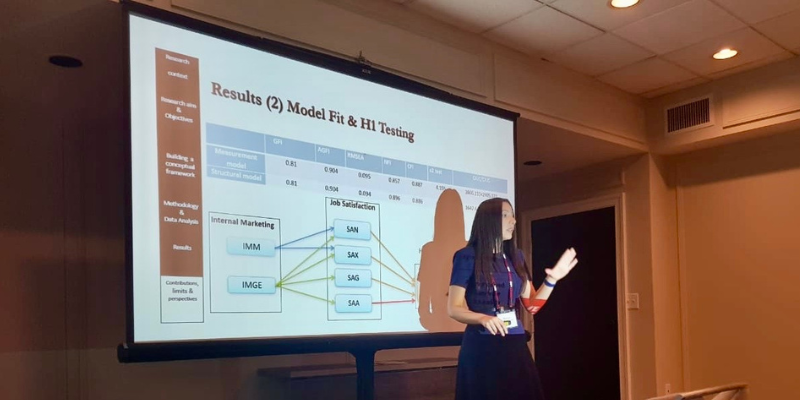
In late May, Dr Myriam Bellaouaied, presented at the Academy of Marketing Science 2024 Annual conference in Florida.

Dr Bellaouaied, who is a Senior Lecturer in Marketing in the College of Business and Law, presented her research on “Internal Marketing and Perceived service quality: The mediating role of Frontline employees’ satisfaction in service industries”.

In the light of the role of “frontline service employees”, has become a differentiating element, the research considers the Internal Marketing as an alternative to the service performance and examines the relationships among Internal Marketing, Frontline service employees’ satisfaction and Perceived service quality. An attempt to conceptualize and develop a measurement scale of the “IM” concept is also developed in this research.

Dr Bellaouaied commented on the dual perspective, that of Marketing and Human Resources, which is particularly interesting to allow to build a model reflecting an interaction through the Internal Marketing impact. Combining Structural Equation Modelling and Dyadic Data Analysis techniques to address the research questions, was also discussed through the methodological contributions of this research.

Dr Bellaouaied has also been recently invited to take a scientific role in the Academy of Marketing Science as an associate curator for AMS Sparks , their online platform to build the bridge between research and businesses.

Back to top