Letters in Applied Microbiology Early Career Scientist Research Symposium

Posted on

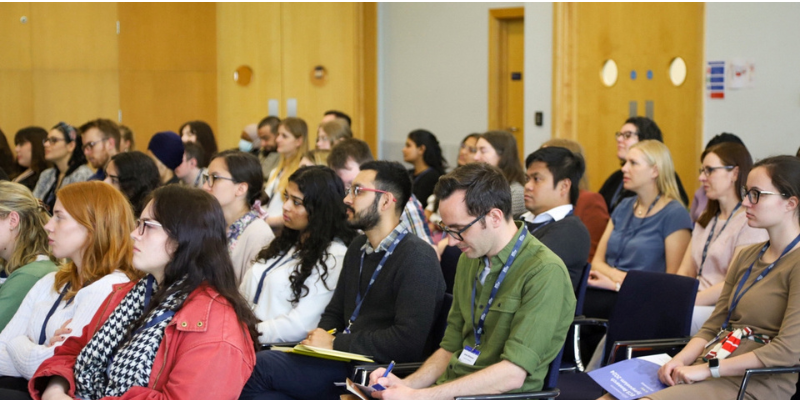
The 13th Letters in Applied Microbiology Early Career Scientist Research Symposium was held at UWE Bristol in May.

The symposium offers emerging microbiologists a unique platform to present their research, connect with colleagues, and gain insights from experienced professionals in the field.

The event welcomed early career researchers from several countries, universities and research institutes providing a great platform for networking and interactions – an enriching space for UWE researchers and students.

Two of our PhD students, Harsh Modha and Alex Cooper, were selected to deliver oral presentations and many of our postgraduate researchers, masters by research and undergraduate students presented research posters. One of our MRes students, Jisa Salim, was awarded the best poster prize across the whole symposium.

Several of our students were invited by Applied Microbiology International to write articles for their monthly online magazine, The Microbiologist. The articles highlight the high quality of Microbiology teaching and research taking place at UWE Bristol:

Professor Emmanuel Adukwu, Deputy Head of School of Applied Sciences (SOAS), who attended the event and Chaired the lunch time session commented:

It was great to see many of our students attending the Letters in Applied Microbiology ECS conference and in particular the number of undergraduate and masters students in attendance.

What was really impressive was to see several SOAS/UWE students presenting really impactful research from the breadth of the ongoing work within our research laboratories. It was really impressive.

Knowledge Transfer Partnership Associate Spotlight: Rasheed Lawal

Posted on

In this Knowledge Transfer Partnership (KTP) spotlight, Rasheed Lawal shares his experiences as our KTP associate for our African Agricultural KTP (AAKTP) with Obafemi Awolowo University and Taro Agric Farm.

An AAKTP is a four-way collaboration between a university in the UK, a university in Nigeria, a business and a recent graduate, known as the associate. The AA KTP aims to solve a particular challenge or problem which will help an agricultural business innovate and grow.

Our African Agricultural KTP with Obafemi Awolowo University (OAU) and Taro Agric Farm looks at the application of data-enabled innovations to commercial chicken production in Nigeria:

My family are in the poultry business, and I did my undergraduate thesis on analysing livestock data to view trends and generate insights. The opportunity to develop my career further, and learn more about Data Science & Analytics and implement that into the livestock industry attracted me to the role.

The role excites me as I’m keen to know about leveraging IoT devices and data analytics to monitor and optimize various aspects of chicken farming including environmental conditions, feed and water consumption, health conditions, enhancing growth rates, feed efficiency, promoting animal welfare and overall profitability for poultry farmers in Nigeria. Whilst also undertaking knowledge-sharing activities, such as seminars and training sessions, to disseminate best practices and build capacity among stakeholders in the production value chain.

The partnership between UWE, OAU and Taro Agric involves a collaborative effort to conduct research aimed at enhancing broiler productivity and chicken welfare in Nigeria through data-enabled innovations and IoT applications. UWE provides expertise in data analytics and the possibility of IoT technologies, while OAU and Taro Agric contribute industry knowledge, resources, agricultural research, and on-the-ground implementation support. The Innovate UK funding has allowed for the acquisition of necessary infrastructures, data collection tools and personnel to support research activities, as well as capacity building and skill development which will contribute to the sustainability and long-term impact of the project. So, I can say that the partnership is working well so far!

So far there are numerous benefits of the project:

The valuable hands-on experience in implementing data-enabled innovations and IoT applications in broiler production, which enhances

  • Skill sets and prepares one for future roles in agricultural technology and related fields.
  • The exposure to an interdisciplinary learning approach that combines expertise in data analytics, IoT technologies and livestock.
  • The project provides opportunities for professional development and capacity building, including training in data analytics tools, IoT device integration, project management and communication skills which are transferable and valuable for career advancements in various sectors.
  • Networking opportunities, contribution to impactful research, and exposure to global challenges and opportunities facing the livestock sector.

I am really enjoying working on the project so far. Some highlights and achievements include:

  • Being part of a project that explores innovative solutions in the broiler industry through technology.
  • Working alongside a diverse team of collaborators where ideas are shared and expertise is leveraged to achieve common goals.
  • Opportunities for learning and personal growth including capacity building/development.
  • Problem-solving and contributing positively to the welfare, sustainability and productivity of broiler production in the industry.
  • Networking opportunities and access to industry contacts, conferences and events.

I appreciate the extensive expertise and resources that UWE brings to the project, particularly in the areas of data analytics and IoT technologies, as well as the industry insight and practical support by OAU and Taro Agric; the open communication, mutual respect and willingness to work together towards a common goal, the financial and logistical support from everyone including funding for equipment, travel expenses and fieldwork activities which demonstrates a strong commitment to the success of the project.

UWE Bristol logo

UWE Bristol and Milbotix Ltd announce new Regional Innovation Fund project

Posted on

UWE Bristol with Milbotix Ltd have been successful in securing grant funding from Research England’s Regional Innovation Fund (RIF) to form a new 3.5-month project. The project will look at advancing the integration of kinematic and kinetic sensors for holistic healthcare monitoring in aging adults.

Milbotix was founded to improve access to digital technologies for people with unmet needs related to dementia and other neurocognitive diseases. Milbotix founder Zeke Steer conceived of the SmartSocks® after witnessing his great grandmother’s journey with dementia and escalating agitation and aggression.

This project seeks to collect a simulated falls dataset from healthy individuals using motion capture equipment and a range of wearable pressure and IMU devices including Milbotix’s SmartSock® prototype. This enhancement delivers precise falls detection and gait tracking capabilities. Our solution prioritizes safety with technological precision for older adults’ healthcare.

Professor Carlos Cifuentes, Associate Professor in Human-Robot Interaction, will be leading on this project. He is an expert in robotics and sensing technologies for gait assistance and rehabilitation, alongside human robot interaction. He has studied the clinical conditions and pathologies and the mechanisms stimulating the patients’ recovery and quality of life.

Ben Allen and Yikun Wang will join as associates on the project. Mr Allen is a current PhD student at Bristol Robotics Laboratory, and is a versatile electronics engineer, specialising in robotics, and Mr Wang holds an MSc degree in robotics and a BEng degree in Electronic Engineering, bringing expertise to the team in developing assistive robots for older adults.

The Regional Innovation Fund (RIF) is a program designed to support universities in developing innovative projects that have the potential to positively impact their local communities or regions. These funds are allocated by regional or national governments to encourage research, development and collaboration between universities and local industries to spur economic growth and innovation.


Contribution to the UN 2030 sustainable development goals

UWE Bristol is proud to align our research to the UN sustainable development goals. The above research aligns with the following goals:

The JOY Trail project presents Rye Lane: A special screening and panel discussion

Posted on

The JOY Trail project is hosting a special screening of the award-winning Rye Lane, followed by a panel discussion at the Easton Community Centre on Friday 31st May, 7pm – 10pm.  The JOY trail brings you the screening in conjunction with their community partners Come The Revolution, Eastside Community Trust, DET Entertainment and Creative Connex CIC.

Doors open at 7pm with the film being shown at 7.30pm. Following the film, the panel discussion featuring local Black creatives, educators, and community leaders, will dig deep into the film’s themes. The panel will particularly focus on the importance of Black joy and how it can be cultivated in our communities. The evening will end with a special poetry reading and a very special announcement from the JOY trail project.

The Black JOY Trail project is a research project between UWE Bristol Senior Lecturer Emma Thomas and Mentor Tanisha Hicks-Beresford. The aim of the project is to disrupt the dominant, single narrative of Black trauma and social justice stories in education by centring, cultivating and celebrating Black joy.

The project helps school children to learn about stories of Black joy in their local area. Children participate in workshops run in-situ by community experts and explore Black joy through ‘joyous’ food, music, art, literature, horticulture and technology. Children record their learning in individual scrapbooks which support the children to create an emotional map of their Black joy trail; a powerful, personal representation of their local area through the lens of Black joy.

The project expands learning experiences beyond stereotypes and empowers children to see themselves as agents of positive change. The JOY trail collaborates with experts across Bristol, valuing community knowledge so Bristol’s children can learn about local people, places and stories of Black joy.

The film screening is one of many events planned by the Black JOY project and tickets purchased will directly support the JOY trail’s mission to bring Black joy into local schools and empower future generations.

Tickets £5.50, £2.50 concessions. 

Buy your tickets

Fully funded doctoral studentships in the creative and digital technologies sectors

Posted on

Creative and digital technologies postgraduate research opportunities at UWE Bristol

The University of the West of England, Bristol is offering 5 fully-funded doctoral studentships in the creative and digital technologies sectors.

The creative industries is now a sector of convergence for novel technologies including immersion, motion tracking, visualisation and advanced manufacturing. Supporting and advancing addressing the challenges of net zero, circular economy or sustainable production through true interdisciplinary practice. Following recent success with an URKI Future Leader Fellowship and AHRC Creative Research Capability (CResCa) we are delighted to offer a suite of complimentary doctoral studentships in this area.

We are inviting applications from well-qualified students whose research interests connect with ours, and are looking to work with research topics including these:

  • Creative interaction with gestural technology
  • Performative robotics
  • Digital design and fabrication with generative AI
  • Large scale design and fabrication with 6 axis robotic arms
  • Tactile interaction with wearable technology
  • Sustainable digital design and fabrication
  • Accessible and assistive technologies for creative applications
  • Democratisation of design and technology
  • Photogrammetry, 3D scanning and reverse engineering
  • 3D printing with bio-composites
  • Shape changing and deformable interfaces
  • Digital toolmaking
  • Meta-design for creative technology

Successful applicants will have the opportunity to utilise UWE’s brand new facility based on Frenchay Campus “The Bridge – A Creative Studio for Physical-Meta Production”. This new space is for interdisciplinary, practice-based, design-led creative research which will drive the adoption of emerging technologies in the arts and humanities to stimulate novel forms of creative expression and production. See more about The Bridge Technical Capabilities below:

Please email Tavs Jorgensen or Tom Mitchell for more information.

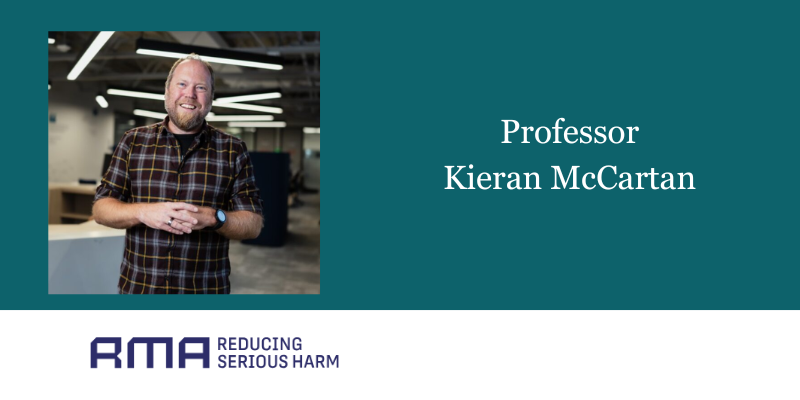
UWE Bristol Professor appointed to the RMA Reducing Serious Harm Board

Posted on

Professor of Criminology at UWE Bristol, Kieran McCartan has recently been appointed to the RMA Scotland Reducing Serious Harm Board.

The RMAS works across Scotland to reduce the risk of serious harm posed by violent and sexual offending. To protect the public, they make sure that effective risk assessment and risk management practices are in place. They advocate for a shared approach to risk that is evidence-based, defensible, and proportionate. Effective risk assessment and management can reduce the risk of serious harm to the public and give individuals the best chance of returning to the community and leading crime-free lives.

Alongside the other new appointment Dr Alain Zysset, Senior Lecturer at the University of Glasgow, Kieran will be now responsible for the helping to set the strategic direction of the RMA. With the recent publication of their 2024-2029 Corporate Plan, the Board will ensure that the work of the RMA continues to contribute towards making Scotland safer.

Kieran’s specific role on the board will be to advise and consult on research and evidence. Kieran researches a range of areas including the prevention of a response to sexual abuse, as well as trauma-informed practice.

Kieran commented “I am pleased and honoured to have been appointed to the board of the Risk Management Authority, Scotland (RMA). I look forward to joining the board and supporting them in their important work in promoting recovery and resistance from crime and protecting communities from further offending.”

Congratulations to Kieran on this appointment.

Would you like help evaluating impact?

Posted on

If you are a Voluntary, Community or Social Enterprise organisation based in the West of England region, UWE Bristol invite you to register for a free in-person workshop delivered by Dr Jackie Barker and Rob Tucker from the College of Business and Law.

The benefits from attending this free workshop

• Understanding the difference between outputs, outcomes and impact
• Identifying different sources of impact
• Determining when to measure impact
• Identifying different standards of evidence
• Selecting appropriate data collection methods
• Exchanging ideas around impact with other workshop participants
• Drafting an impact evaluation plan for your organisation or project with experts

Eligibility

This opportunity is open to Voluntary, Community and Social Enterprise (VCSE) organisations based in the West of England region.

Requirements

You will be asked to complete some preparation to maximise the value of the workshop. We anticipate this will take no longer than 15 minutes. The preparation materials will be emailed to you one week before the workshop.

You will also be asked to complete pre- and post-workshop feedback surveys to evaluate the impact of these sessions.

How to Book

Booking is now open. The limited places will be offered on a first come first served basis, so book now to avoid disappointment. If both workshops are full, there will be an opportunity to go on a waiting list for future workshops.

Eligible organisations can book a place at one of the following workshop dates (both locations are fully accessible):

Further Information  

Please contact Jackie or Rob for further information:

Spotlight on UWE Bristol’s Commonwealth PhD Scholar: Marzia Dulal

Posted on

Marzia Dulal was awarded the prestigious Commonwealth PhD Scholarship for 2021 in the UK, which enabled her to join UWE Bristol in September 2021. She is currently undertaking a PhD at the Centre for Print Research.

Funded by the UK Foreign, Commonwealth & Development Office, Commonwealth PhD scholarships contribute to the development needs of Commonwealth countries by supporting research that will have a developmental impact. They also enhance individual teaching and research capacity leading to increase institutional capacity in academic and other sectors in Commonwealth countries and will contribute to UK higher education and research by attracting high-calibre international applicants and encouraging links and collaboration, and are aimed at those who could not otherwise afford to study in the UK.

Marzia’s research focus is sustainable wearable electronic textiles. Her aim is to contribute to the sustainable development goals in health and well-being, innovation, and responsible consumption.  

She has an MSc and BSc in Textile Engineering from Bangladesh University of Textiles (BUTEX), Dhaka, Bangladesh. 

“My research proposes a sustainable approach to producing e-textiles for the monitoring of human vital signs with the aim of overcoming the challenges of fabric deterioration, particularly at the end-of-life processings.”

The first stage of Marzia’s research has been to investigate the sustainability analysis of e-textiles, from the sourcing of potential materials through to manufacturing and end-of-life disposal alternatives. Through this, she has increased the understanding of the environmental impact of wearable e-textiles, forming the basis for responsible end-of-life solutions

The second stage of her research has involved exploring multifunctionality of wearable e-textilesand looking for creative ways to incorporate cutting-edge functions into textiles. This involves integrating smart materials and technologies into textiles to improve their performance and adaptability for a range of applications, such as sensing, energy storage, or providing heating.

Jointly, these projects will contribute to the creation of adaptable and environmentally-friendly textile solutions, pushing the frontiers of usefulness and innovation to support the healthcare sector and provide a blueprint for transforming the textile industry more widely.

“E-textiles allow medical professionals to provide individualised patient care with the ability to take preventative measures if a patient’s health starts to decline.”

Developing sustainable e-textiles that will transform the textile industry requires expertise in materials, textiles, and electronics. This can only be achieved through collaboration with specialists in these fields and in cooperation with wider stakeholders such as the consumer groups that drive change within the industry.

“As an academician and researcher, I have the privilege and opportunity to convene a research group at my university which can take this innovative work further and support other researchers striving to achieve sustainable e-textiles that bridge the gap between technological advancement and responsible consumption.

Together, we can instigate a revolutionary change in the textile industry, aligning environmental sustainability and social empowerment to create innovative e-textiles with the power to improve health and wellbeing for all.”

Adapted from this Common Knowledge Article.

UWE Bristol and Synoptix Ltd announce new Regional Innovation Fund project: Leveraging Industry 4.0 Visualisation for Cross-Sector Systems Engineering Excellence in UK Industry

Posted on

UWE Bristol with Synoptix Ltd have been successful in securing grant funding from UKRI Regional Innovation Fund (RIF) to form a new 3.5-month project.

Synoptix is a Systems Engineering Consultancy business, deploying multi-disciplinary systems engineering teams and professional services in order to define and deliver projects.

This project aims to improve comprehension and reduce complexity of data problems through the leveraging of Industry 4.0 visualisation techniques for cross-sector systems engineering. This will enhance stakeholder engagement and comprehension during the design process thus reducing cost, time and increasing the quality of an engineered system.

The Project’s innovation involves the development of an Extended Reality (XR) visualisation tool tailored for Model Based Systems Engineering (MBSE). The tool aims to simplify complex engineering models by providing a visually intuitive representation. As part of the MBSE approach a large data set of linked information is created and defined views are created to show this information, however the approach lacks an easy way to visualise and interact with the information (other than the defined views) and can require a large amount of cognitive overload to remember information between views. The driving need behind this innovation is the demand for improved comprehension of the system and in decision-making. With the rising complexity in engineering projects, timely and accurate decisions are crucial.

UWE Bristol academics Dr Zeyad Al-Shibaany, and Dr Marianthi Leon will be joining the project from the School of Engineering. Dr Al-Shibaany will lead on the project and is an Associate Professor in Digital Manufacturing, Associate Director for Digital and Intelligent Systems, Chartered Engineer, and Fellow of the Chartered Management Institute. He has more than 15 years of experience in applying AI in industrial applications. Dr Leon currently leads the Smart & Sustainable Infrastructures (Civil Engineering) within the UWE Engineering department. Her expertise is focused on facilitating collaborations through digital innovations, with a particular emphasis on Digital Twins.

Yaser Al-Obaidi and Daniel M. D. Bellamy will join as associates on the project. Mr Al-Obaidi is a post graduate researcher at the School of Engineering at UWE Bristol, with experience of Industry 4.0 and Digital Twin technologies, and Mr. Bellamy is a graduate tutor and PhD student at UWE with 5 years of experience researching automation.

Alex Somers, Dan Allen and Pete Douglas from Synoptix, will be providing industry insight and knowledge throughout the duration of the project. Mr. Allen is an Incorporated Engineering (IEng) has two years of experience in applications of MBSE in industry, and Mr. Somers has experience developing concepts for Digital Twins alongside applications of MBSE. Mr. Douglas is the MBSE Champion for Synoptix and is a Chartered Engineer (CEng) with 20+ years of industry experience in applications of MBSE, systems thinking, systems architecture and requirement management for various roles, namely Rolls Royce.

The Regional Innovation Fund (RIF) is a program designed to support universities in developing innovative projects that have the potential to positively impact their local communities or regions. These funds are allocated by regional or national governments to encourage research, development and collaboration between universities and local industries to spur economic growth and innovation.

UWE Bristol logo

UWE Bristol research helps to restore historic pub 

Posted on

Research embedded within restorative ceramic tile company Craven Dunnill Jackfield, by the Centre for Print Research (CFPR) via a Knowledge Transfer Partnership, has helped to restore a beloved British pub.  

Back in 2001, a historic pub in the heart of the community in Wolverhampton was destroyed by developers before the pub could be listed as a heritage site.  

Despite the people of Wolverhampton being keen to resurrect their treasured pub, little was left of the original. However, the remnants were recovered and stored in a museum, where experts at Craven Dunnill Jackfield would later 3D scan them to help restore the pub to its full glory.  

The Knowledge Transfer Partnerships (KTP) scheme is a UK-wide programme helping businesses to improve competitiveness and productivity. A recent graduate is placed within an organisation to help solve a business problem, with access to academic expertise. 

Craven Dunnill Jackfield undertook a KTP with UWE Bristol’s Centre for Print Research in 2021, which aimed to apply 3D technologies, specifically 3D scanning, to modernise the ceramic restoration process. The KTP was incredibly successful and opened up new revenue streams for Craven Dunnill Jackfield. The company saw a vast improvement in product development time from 2 weeks of model making, down to 4 days. Furthermore, reduced development costs on specific projects by up to 79%.  

Associate Professor and academic lead on the project, David Huson commented:  

“The Craven Dunnill Jackfield, CFPR/UWE KTP project shows that a committed Company and Academic team combined with an excellent, dedicated Associate can overcome the difficulties and adversities of operating during a pandemic to drive through to success. The project has been very successful and has exceeded the expectations of both partners.“

Craven Dunnill Jackfield used the knowledge learned through the KTP to help restore the pub to its former self.  

Craven Dunnill’s Jed Hammerman 3D scanning ceramic tiling

Jed Leonard-Hammerman, 3D Technologies Specialist Craven Dunnill Jackfield commented:

“This project is a perfect example of how 3D technology can enhance traditional processes without replacing them. It validated the processes developed during the KTP and will be used as a framework for future restoration projects at Craven Dunnill Jackfield.”

Tasked with recreating the original pub’s decor using period photos as a guide, Craven Dunnill Jackfield were able to scan the remnants and use photos to help with the restoration.  

Find out more about the details of the pub restoration https://www.artec3d.com/cases/craven-dunnill-pub-restoration  

Back to top