UWE Bristol successfully awarded a South West Doctoral Training Partnership ESRC Postdoctoral Fellowship

Posted on

UWE Bristol have successfully been awarded a South West Doctoral Training Partnership (SWDTP) Postdoctoral Fellowship funded by the Economic & Social Research Council (ESRC).

The fellowship was awarded to Dr Freya Wise, who will be joining UWE Bristol to look at “Low carbon residential retrofit: considering the resident as well as the carbon”.

Energy use in buildings is responsible for 27% of global emissions. Retrofitting existing buildings to reduce their energy demand and associated carbon emissions is critical to mitigate devastating climate change. However, standard retro approaches often focus exclusively on technical and financial aspects, failing to consider residents’ preferences and behaviours. These approaches are often inappropriate for the 20-30% of UK homes with heritage value.

Freya’s interdisciplinary PhD examined heritage homes and their residents, identifying holistic solutions to reduce carbon while retaining heritage. The fellowship will consolidate and extend Freya’s PhD research and enhance its wider impact and usability.

Fellowships are aimed at providing a development opportunity for those in the immediate postdoctoral stage of their career, to provide the opportunity to consolidate their PhD through developing publications, their networks, and their research and professional skills.

Freya commented:

“I’m really looking forward to working in the multidisciplinary environment at the Centre for Architecture and Built Environment Research at UWE Bristol on this excellent opportunity to consolidate and extend my PhD work on reducing carbon from heritage buildings while retaining their heritage values and increase its reach and impact.”

As part of the fellowship, Freya will be mentored by Dr Laura De Vito  Senior Research Fellow, Air Quality Management Resource Centre and Professor Alice Moncaster, Professor of Sustainable Construction.

Laura commented:

“Freya’s interdisciplinary research is cutting-edge and addresses an important sustainable development topic. I look forward to supporting her in fully realising its policy impact potential and connecting her with other interdisciplinary environmental academics”

Alice commented:

“I’m delighted that Freya has been awarded this Fellowship.  Her socio-technical doctoral research into reducing carbon from heritage buildings while retaining their heritage values is both important and novel, and is already becoming well-known across the heritage retrofit sector.  This opportunity will ensure its further impact in academic, practice and policy levels, and support Freya on the next steps of a stella academic career.”

Freya’s Fellowship will be 2 years part time starting in November 2024

The South West Doctoral Training Partnership consists of eight South-West universities. The SWDTP focuses on collaboration between the universities, which includes sharing best practice, resources and academic knowledge.

UWE Bristol research project to be shown at V&A Museum as part of London Design Festival

Posted on

A collaborative research project, with support from UWE Bristol, has been asked to exhibit at V&A Museum as part of the London Design Festival.

The SIM Project uses the SIM card as a platform to shape new ways of sharing and archiving stories of migration. A SIM card is many things. An international ID card held within our smartphones, a repository of personal data, and a tool for intimate connection. They have a symbolic meaning too. They provide a bridge to transnational, as well as local networks to give us a portable sense of belonging.

The project is inspired by conversation and craft with refugees and people who are seeking sanctuary. The growing mobile collection includes over 150 unique artefacts created at free workshops in 8 countries. Participants make a screenshot from the image archive on their phone, which is transferred onto a sim-scale glass model. In turn, metal frames are etched, polished and stamped with ID numbers of personal significance.

The wearable SIM artworks tell stories and ask questions about notions of home, identity and how people relate to each other through digital devices. 

‘As an immigrant, I don’t really have roots, I have tendrils, which stretch to different places in the world where there are people I love’

Argentinian project artist, Cyprus, 2022

Frank Menger, Research Fellow and Senior Lecturer and Sofie Boons, Senior Lecturer, both from the Centre for Print Research at UWE Bristol, are collaborators on the project.

The project will also be shown at the Portland B-side Festival in September.

Three zebra crossings installed in Nepal thanks to a joint project between Explorer Scouts and UWE Bristol

Posted on

Improving road safety for the Nepalese community was just one of the activities undertaken by twenty-four Explorer Scouts from Cabot District (Bristol North West), who recently ran a camp in the Chitwan area of Nepal for 300 local Scouts.

As well as creating fun workshops for Scouts of all ages, Scout Leader Fiona Lawrence, Director of Business Development and Partnerships at UWE Bristol, linked up with colleague Professor Julie Mytton, who is leading a NIHR funded road safety research programme in Nepal, to see how road safety could be incorporated into the camp’s activities.

Working with Nepalese researchers from UWE Bristol and Kathmandu Medical College, the Explorers ran an activity for the Nepalese Scouts to identify unsafe roads in their communities and a first aid demonstration, showing what they should do if they came across someone hurt in a road crash. At the end of the camp, the Nepalese Scouts wanted to do something to make their roads safer and decided that they needed safe crossing places near their school. The Bristol Explorers were able to fund the road paint and the local mayor gave permission for the Scouts to paint three new zebra crossings in their communities.

Fiona said: “This was a great opportunity for our Explorers to work with researchers and Scouts in Nepal to make a real difference for the community. They absolutely loved it. We are hoping that this partnership will continue long into the future and be sustainable.”

Rob Laurence, Party Leader for Cabot District Scouts, said: “We were thrilled to visit Nepal once again and share in so many experiences with the Chitwan Scouts and the local community, building friendships that will last a lifetime. Our brilliant team of Explorers were able to use their training and share their knowledge with the local Scouts, whilst experiencing such a warm and hospitable welcome to a very different culture and way of life – all made possible through the worldwide Scouting community.”

Professor Julie Mytton said: “Road traffic crashes are the leading cause of death in young men in Nepal. This was a fantastic example of how young people can make a real difference by advocating for safer roads in their local area”.

Hari Bhandary, Founder/Director of Clinic Nepal in Meghauli, Chitwan, and the host of the Scout camp said: “Once again, we were delighted to welcome the Explorer Scouts from Bristol. Scouts in Chitwan have been involved in many community projects in recent years. This was an excellent opportunity for them to help the research team understand young people’s awareness of road safety and how Scouts could help their local communities and make a difference”.

George Weeks, Bristol Explorer, said: “It was an amazing experience which I will remember for the rest of my life”.

To enable the camp to go ahead, the Explorer Scouts raised over £15,000 by washing cars, bake sales and putting on quiz nights. They have a long-standing partnership with the Friendship Scout Troop in Chitwan and have visited Nepal three times over nine years. Camps were postponed during Covid and this was the first time since the pandemic that the Explorers had been able to visit.

For further details contact project officer Dio Kordopati at dio.kordopati@uwe.ac.uk.

UWE Bristol student makes it to UK final of Three Minute Thesis

Posted on

UWE Bristol are delighted to announce that our PhD student Charlie Gerlis has made it through to the UK national final of Three Minute Thesis (3MT®) 2024.  

3MT® challenges postgraduate researchers to explain their research and its importance compellingly, using non-specialist language and all in just three minutes. From its origins at The University of Queensland back in 2008 3MT®has mushroomed into an international phenomenon, with postgraduate researchers at over 900 universities in 85 countries taking part this year.  

Charlie is a second-year PhD researcher based in UWE Bristol’s Centre for Health and Clinical Research, where her research is funded by Versus Arthritis and supervised by Professor Fiona Cramp (Director of Studies), Dr Alice Berry, Dr Michael Loizou and Dr Serena Halls. Drawing upon her extensive experience as an NHS physiotherapist, Charlie’s presentation on ‘Digital support to promote physical activity for people with rheumatoid arthritis’ is one of only six out of 846 entries nationally to have reached the UK 3MT® 2024 final.

Charlie said “I’m looking forward to taking part in the 3MT final and having the opportunity to virtually meet the other finalists and hear about their research. The experience so far has improved my ability to consolidate and explain my research to others.” 

Caption: Charlie taking part in the competition at UWE Bristol  

Researcher Development Manager Dr Helen Frisby, who organises UWE Bristol’s annual institutional 3MT® event, said “communicating your research succinctly and engagingly is an essential skill, and to do it in front of an audience without notes while the clock ticks down is no mean feat! We’re very proud indeed of you Charlie, and wish you all the best for the final.” 

The UK 3MT® final will be broadcast online at 12:30pm on Wednesday 2 October 2024. Find out more and to book your seat. After the final, people will be able to vote for the people’s choice award. The vote will open on 2nd October until 4th October.

Very best of luck representing UWE Bristol Charlie, we’re all cheering you on! 

The Centre for Public Health and Wellbeing Showcase Conference

Posted on

The Centre for Public Health and Wellbeing held its annual Showcase Conference online on 2nd July 2024, followed by a meeting of its advisory board. Using a quick-fire format presentations and discussant responses providing external stakeholders, alumni, students and staff colleagues with the opportunity to gain valuable insight into building capacity and collaborative working generate research with impact on healthier lives, healthier communities and healthier environments. There were also presentations and discussions around collaborative research across UWE, teaching and learning and the postgraduate research environment including delivery of multidisciplinary public health in Hainan China. 

Part of public health work is about preventing ill health and keeping people out of hospital through preventative interventions. But it’s also about empowering people. Involving and engaging – giving people agency, building trust. Our research starts with the priorities and needs of communities. Giving them control over their ability to make their own decisions and respond to change in the way that they need to.

Public health is about raising people up, so that everyone can be well and do well. For example, ‘Tackling Root Causes of Unequal Urban Development (TRUUD) funded by the UK Prevention Research Partnership has led to the creation of powerful and hard-hitting films that bring home what it means to live in poor housing. Production was led by Centre members Dr Jo White and Dr Andy Gibson.

There are three films in total, https://truud.ac.uk/living-in-unhealthy-places/ and they’ve already been used as part of conversations with civil service servants at national government to try and influence a decision making there. Some anti-poverty campaigners are interested in using them as part of a new way of doing deliberations with the public about the impact of urban environments on health and wellbeing.

Watch the showcase below:

“Nobody wants to fund menopause”: UWE Bristol helps to fund Vagina Museum for menopause exhibition

Posted on

UWE Bristol has helped to fund a Vagina Museum exhibition about the menopause led by Dr Marie Mulvey-Roberts, Professor in English Literature (College of Arts, Technology and Environment). However, the Vagina Museum is lacking crucial funding to launch the exhibition and has launched a public fundraising campaign to help.

The world’s first bricks-and-mortar museum dedicated to vaginas, vulvas and the gynaecological anatomy said that it had approached more than 15 arts and heritage funders, and none chose to support the project.

Last year, the Vagina Museum successfully raised more than £90,000 in an emergency crowdfunding campaign to secure their new premises in Bethnal Green which opened in late 2023 with an exhibition about endometriosis. This exhibition was visited by more than 13,000 people. 83% of visitors said they felt the exhibition succeeded in breaking stigma and misconceptions about this common disease.

The exhibition “Menopause: What’s Changed?”, which Marie Mulvey-Roberts proposed on behalf of SAMS (Scholarly Association for Menopausal Studies) and for which she is a consultant curator, is scheduled to open on 18th October 2024, which is World Menopause Day. She was successful in obtaining funding from through our Arts and Humanities Research Council Impact Acceleration Account.

The exhibition will explore menopause in the past; how menopause became medicalised; and personal experiences of menopause including LGBT+ experiences and early menopause. The exhibition aims to shatter stigma, confront myths, and normalise this common life event.

Zoe Williams, Interim Director of the Vagina Museum said:

“We’ve tried almost every avenue for funding this exhibition. Menopause is a conversation that must be had. I cannot believe that none of the funders we approached were interested in supporting an exhibition about a common life event which happens to half of us.

It’s shocking that nobody wants to fund menopause. Even as media attention on menopause and public demand for information grows, it just doesn’t seem to be a priority for funders.

We’d have preferred not to find ourselves in a position of asking the public for money to support this project, but this is the only option left available if we are to make Menopause: What’s Changed? happen.”


About the fundraising campaign

The public fundraising campaign has a page on GoFundMe. The Vagina Museum has previously used the platform in other fundraising campaigns to great success. The fundraising page can be found: https://www.gofundme.com/f/r9tszw

About menopause

Menopause is when the menstrual cycle ends. Menopause is associated with a change in hormone levels. It most commonly happens due to age. On average, menopause happens at age 51. However, it can occur earlier or later, and be brought on by causes such as surgery or cancer treatment.

Dr Jane Meyrick announced as Researcher in Residence at the Bridge SARC 

Posted on

Leading expert on sexual violence, Dr Jane Meyrick has won funding to become the Researcher in Residence at the Bridge Sexual Assault and Rape Centre (SARC), in Bristol, match funded from the Bristol, North Somerset and South Gloucestershire Integrated Care Board. The Bridge SARC in Bristol is leading part of an NHS England funded pathfinder project to improve access to therapeutic support for people who have been sexually abused, especially for those with complex care needs in collaboration with SARSAS https://www.sarsas.org.uk/  Kinergy, https://www.kinergy.org.uk/,  Womankind https://www.womankindbristol.org.uk/ and The Southmead Project https://www.southmeadproject.org.uk/.  

The Researcher in Residence collaboration builds on previous award-winning co-production work that put patients at the heart of re-designing their care and currently is looking at barriers to care for adults’ survivors with SARSAS (Somerset and Avon Rape and Sexual Abuse Support). 

The funding will see Jane work with the Bridge one day a month to support the SARCs research programme. The knowledge generated through this work will improve direct service delivery and inform development of ambitious, grant funded research projects that further increase understanding around how to provide high quality, empowering care for very vulnerable and often socially marginalised patients who have been raped and sexually assaulted.  

Jane commented: “I am thrilled to have won this funding. For us the Researcher in Residence funding will help to formalise the joint work I have already been doing with the Bridge that supports evidence-based practice in this NHS service. We have demonstrated the value of this type of collaboration for both the Bridge and their clients (https://srh.bmj.com/content/49/4/311).

 The team will liaise around a range of research projects and I will be supporting the research work of staff at the Bridge in a way that really captures the benefits of academic practice collaboration that first came about through the SHIP HIT”.

https://www.bristolhealthpartners.org.uk/health-integration-teams/sexual-health-improvement-programme-ship/more-about-ship/ 

Epi Crim approaches to understanding and responding to sexual abuse event

Posted on

By Professor Kieran McCartan

On Friday the 28th June 2024 we held a professional workshop at UWE Bristol on Epi Crim approaches to understanding and responding to sexual abuse.  The workshop was based on research activities that took place across UWE Bristol over the past 5 years, with colleagues from criminology, sociology, psychology, law, and computer science being involved (incl. Professor Kieran McCartan, Dr. Nick Addis, Dr. Helen Bovill, Dr. Paul Gavin, Dr Finn MacKay, Charlotte Kite, Duncan McPhee, Dr Jane Meyrick, Dr Chris Pawson, Dr Amber Phillips, Dr Cody Porter , Ella Rees, Dr Sarah Senker, Dr Zoe Thomas, Prof Philip Legg, Ian Johnstone).

Internally the research was supported by UWE internal funding through the Emerging Research Excellence scheme as well as other, related streams, and supported by a range of externally funded research projects, like the Prevent 2 protect EU Horizon 2020 funding. Over the course of the research wi have had support and collaboration from external organisations (incl., European Commission, Circles Southwest, NSPCC, Together for Childhood,  BNSSG, Avon & Somerset police, HMPPS, Thriving Survivors, HMP Grendon, HMP Leyhill, Office of the Regional Director of Public Health South West NHS England, SARSAS/Rape crisis) & academics (incl. Professor Hazel Kemshall, DeMontford University;  Professor Sarah Brown, University of the Sunshine Coast; Professor Geri Ackerman, Cardiff Met University/HMP Grendon;  Dr Maggie Brennan, Dublin City University; Professor Kelly Richards, Queens land University of Technology; Dir. Sophie King-Hill  & Amy Adams, University of Birmingham).

Oliver Mackier from the NSPCC shares his reflections from the event

The aim of the workshop was to bring professionals, policymakers and academics together to reflect upon on the emerging Epi Crim evidence base influences regional, as well as national, sexual abuse prevention.

Epi Crim is a public health apparoach to understanding crime and offending behaviour. It states that when we think about crime, we need to do it along three axes, the socio-ecological (individual, interpersonal, community, and societal), the four prevention levels (primary, secondary, tertiary, and quaternary) and across the multi-agency domain.

It argues that we need a holistic approach to understanding the underlying behaviour, and that crime is as much a personal and behavioural issue as it is a social one. Therefore criminality, including but not limited to sexual abuse, can be prevented.

Rachel Campbell from Public Health South West shares her views of the conference

The workshop focused on a range of topics in the prevention of and response to sexual offending including, the role of trauma informed practice with people convicted of sexual offence; interventions with populations at risk of offending sexually; the impact of treatment, rehabilitation and integration back into the community; how to support staff working with this population; the role of restorative justice in recovery from sexual abuse; and how we determine and measure success in the outcomes of interventions.

The workshop consisted of 11 10-minute presentations followed by at table discussions and feedback. The attendees consistent of regional and national policy makers and practitioners for children’s charities, violence reduction units, public health, police, third sector charities, prison and probation. The attendees reflected the multi-agency and multi-disciplinary nature od the prevention of sexual abuse and stressed a willingness to work together on this topic.

David Russell from Thriving Survivors shares his views of the event

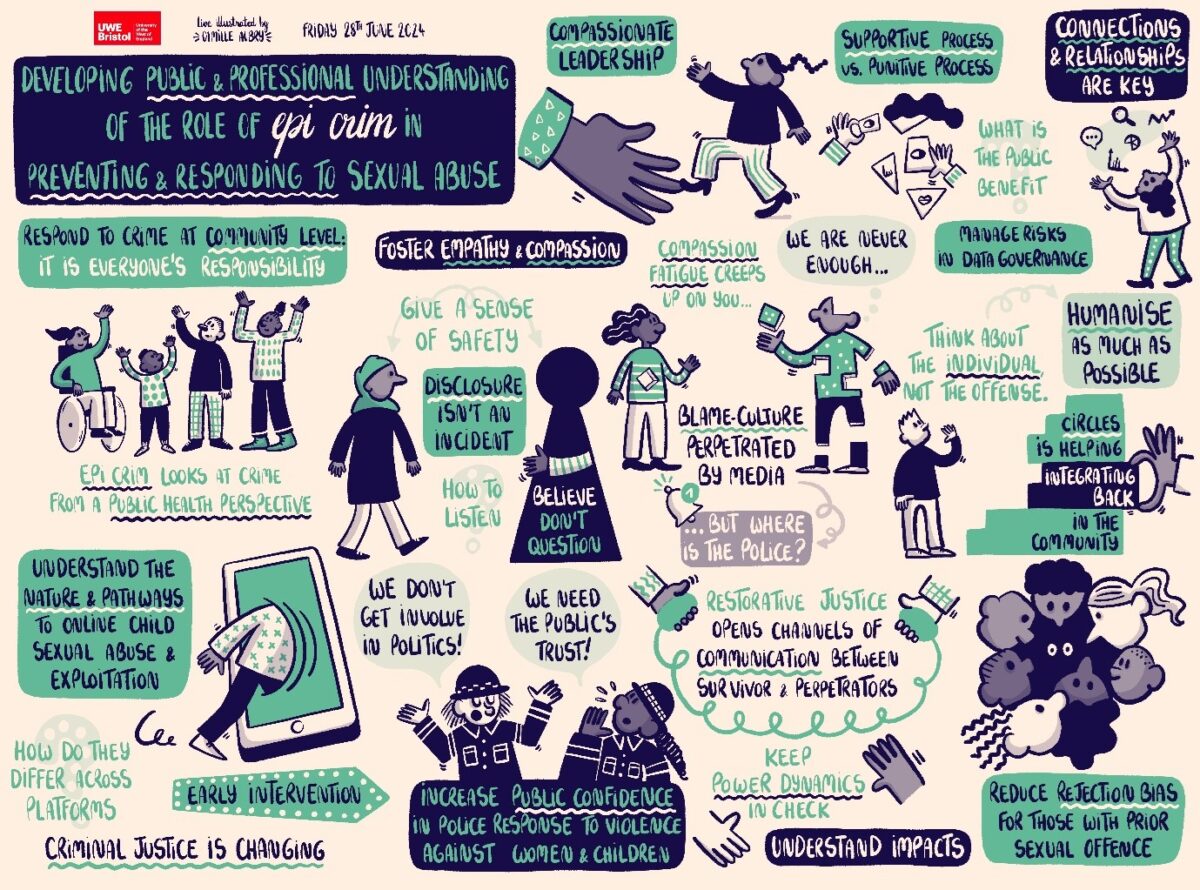
The event was stretched by professional artist Camilla Aubry who produced an infographic (see above) that can be used to highlight the main themes of the day and is complemented by a series of vox pop clips from attendees on the relevance of the event for their work. The next step in the research is a forthcoming book with Palgrave MacMillian, due out early 2025, and a series of emerging research partnership projects.


Hear from other delegates:


Hear my reflections from the event:


The first ALIBSA Annual Congress 2024: Stakeholder Engagement Workshop, 1st July 2024, The Watershed (Bristol)

Posted on

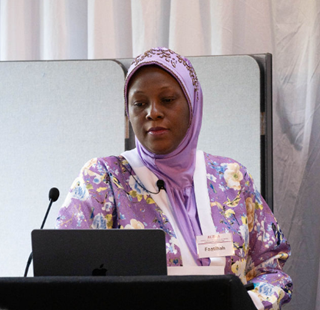
The Ageing Lifestyle in Blacks and Asians (ALIBSA) webinar was launched in February 2023. It is a monthly series aimed at addressing health inequalities and enhancing the well-being of South Asian and Black older adults globally. The webinar was founded by Dr Faatihah Niyi-Odumosu, an Associate Professor of Physical Activity and Health Promotion at the University of West of England, Bristol, and co-hosted by Alosh K Jose, the CEO of Cricketqube, a community-driven cricket business initiative that serves ethnic minority communities, older adults with Parkinson’s and several care homes in Newcastle.

On 1st July 2024, ALIBSA members, representatives from the older Black and Asian communities, health and social care providers, community leaders and academics gathered for their first in-person event at the Watershed, featuring six keynote speakers and roundtable discussions. Attendees were asked to consider:

  • The most common health-related issues affecting them and their families.
  • The barriers they faced when trying to access health services.
  • And for the service providers, the barriers they face when delivering health services.

Some of the most common health-related issues included:

  • Cardiovascular disease (and high blood pressure)
  • Cancer
  • Type 2 diabetes
  • Obesity

In terms of barriers faced, many common issues were raised that affect people across different demographics:

  • Difficulty in reaching a GP
  • Lack of continuity of care (seeing a different GP each time)
  • Long waiting times for ambulances
  • Lack of availability of an NHS dentist
  • Inadequate sharing of patient information between different NHS services

However, some barriers were particularly keenly felt among the Black and Asian attendees and included:

  • Lack of culturally diverse and aware staff
  • Resulting in a lack of cultural sensitivity towards patients
  • Health services targeting Black and Asian people often being found in mobile units rather than being integrated within the NHS’s main infrastructure.
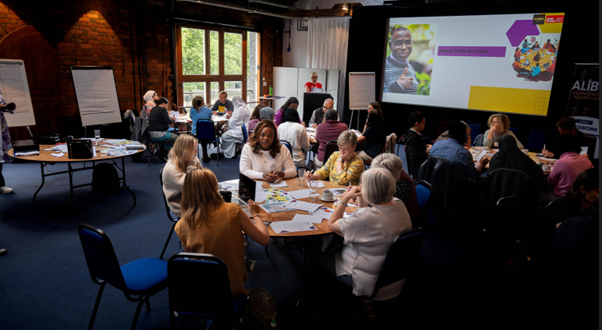
The ALIBSA conference in full swing

An insufficient number of translators within the NHS was also highlighted as being a major barrier in terms of vital health information being passed on and accurately understood by patients from some of these communities.

Linguistic barriers can affect a patient’s confidence when seeing a doctor and can lead to a feeling of not receiving appropriate care. This may make some communities feel shut out and ignored. Being bombarded by medical jargon doesn’t help and can have a major bearing on patients’ experience and the quality of healthcare they receive. This may lead to a reluctance to return to see a doctor, which has a knock-on effect on health outcomes.

After the workshop, attendees were full of praise with some noting “the value in working together…and promoting co-production and collaboration to address priority issues.” Others emphasised that “we are not alone – everyone experiences similar issues.”

One attendee remarked that “lots of organisations are working around the same issues from slightly different perspectives but there is little or no collaboration/coordination.”

Hence why ALIBSA is unique in providing a platform to consolidate ideas and collaboration with the public, health and social care providers and organisations, researchers and policy makers.

Another attendee hoped that “service providers and policymakers listen and understand the needs of different communities,” whilst someone else wanted to ensure that “impact is measured, and people can see how needs are being addressed and changes are made to reflect people’s experiences.”

(ALIBSA hopes to contact organisations in six months to find out what changes to practice they may have made since attending).

Dr Niyi-Odumosu at the event

Speaking after the event, Dr Niyi-Odumosu was delighted with the outcome and numbers (45) who attended:

“I was humbled by the turnout and by the calibre of people who attended from across the country including Newcastle, Coventry, Derby, Leicester, Bath, and locally. ALIBSA is at the forefront of facilitating and translating vital research into the Black and Asian communities. Its monthly webinars have laid a solid foundation for the work we are doing with diverse communities.

“The passion for community and stakeholder engagement and knowledge transfer is apparent. Understanding common health needs and barriers to accessing healthcare is essential for improving health outcomes. This can only be achieved by bringing communities together and opening channels of communication and by creating a support system where people can feel reassured rather than judged.

“As a result of this workshop, attendees have been signposted to research participation/recruitment to increase the diversity and representation of health data from these communities. It has also created potential opportunities for branches of ALIBSA networks in other centres.

“I have also been approached by a Professor from Canada (Université de Montréal) to talk about ALIBSA, with a view to his institution replicating this model.

“The next steps will involve analysing and disseminating the data from the workshop. We (the ALIBSA team including Alosh Jose (CEO Cricketqube), Oluwatobi Fatola, Dr Gisele Abiseggue, Dr Abolanle Adesope, and Dr Zheng Ma) are looking to continue to expand ALIBSA, hoping our work has a significant impact on health and social care professionals and policymakers, ensuring that Black and Asian peoples’ concerns and needs are listened to and met.”

“We also aim for ALIBSA to serve as a platform for research participation, diversity and inclusion, as well as for translating research into practice for these communities. ALIBSA aligns with the UWE Strategy 2030 as a hub.”

Celebrating UWE Bristol’s research and internship collaboration with the University of Reunion Island

Posted on

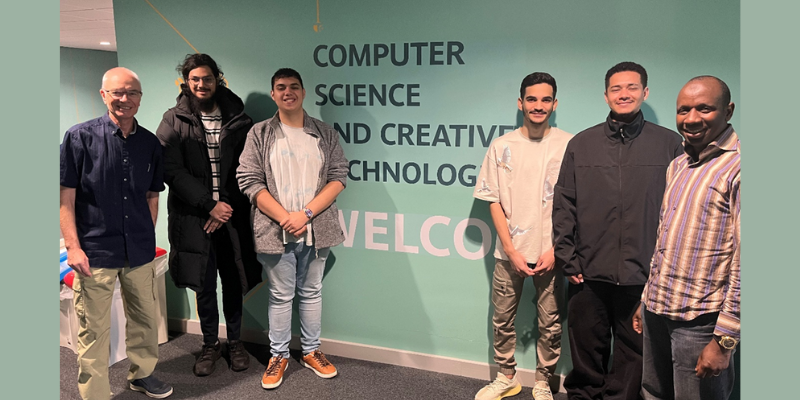
Image: From right to left, Abdullahi Arabo from UWE, Mehe, Maxens and Lukas  from University Institute of Technology (UIT)  of Reunion Island, Mohammad from ESIRIO University of Reunion Island and David from University Institute of Technology (UIT)

This year marks the 6th anniversary of UWE Bristol’s research and internship collaboration with the University of Reunion Island (started in 2018), supported by Erasmus+ and other funding sources. To date, this collaboration has raised more than £165,000 to cover interns’ expenses during their stay in the UK, plus other findings that allowed UWE Bristol’s Abdullahi Arabo to visit the Island for collaborations research and development as well as teaching. This is part of Abdullahi Arabo’s initiative of CyberSkool, creating an environment that mentors, nurture and inspire future cyber talents globally.

This is only the start – the team are aiming to expand this further year by year to include Abdullahi visiting both institutions in the Island for sharing excellence in research and development, as well as teaching and learning pedagogy within cyber science and cyber engineering. This summer, Abdullahi is hosting four interns working on various cutting-edge research and development projects aimed at fostering the rapid development of cyber security ecosystem. The aim is to provide an environment via CyberSkool that allows interns, other interested students, mentees and individuals to explore, nurture, and inspire young talents within cyber science and cyber engineering to reduce the skills shortage within the cyber ecosystem.

This collaboration has led to several publications, external and internal research funding, and interest from researchers’ other institutions globally. More importantly, it has mentored and inspired over 20 young cyber professionals who have become CyberSkool inspirers who are helping other globally and recruiting interns for CyberSkool.

A summary of some of the excellent research work conducted by this year’s interns can be found below. The research includes advancements and development of automated penetration testing tools powered by machine learning:

Mahé’s research project aims to fully automate the evaluation of machine and server security in the field of cybersecurity. To achieve this, the team have developed a tool in Python. This tool automatically manages the launch of an Nmap scan to detect open ports and services, utilises techniques to discover hidden directories on the web, analyses potential vulnerabilities in WordPress, and extracts metadata from images on web pages. Finally, it automatically generates a detailed report. The entire process is fully automated.

Maxens Barbier research focuses on cyber security, specifically on the application of large language models (LLMs) for phishing detection in emails. This involves fine-tuning these models to improve their accuracy in identifying malicious content, thereby contributing to the development of more robust cyber security measures. This project not only broadens my expertise in artificial intelligence and network security but also provides valuable practical experience in a critical area of technology.

Lukas’s project integrates Large Language Models with Selenium-based web scraping to enhance profile building. By allowing the LLM to view and navigate web pages like a human, it can extract relevant information naturally. Data collected is stored in a structured database to generate detailed profiles. Despite limitations like text extraction hallucinations, our goal is to build an ethical, predictive data framework. This proof-of-concept highlights how online digital footprints can be used to create profiles, emphasizing the potential for misuse by malicious actors.

Mohammad’s research project focuses on detecting phishing attacks using artificial intelligence. Initially, conducting thorough research on phishing, artificial intelligence, and the combination of these two fields. Subsequently, this will develop a tool that uses artificial intelligence to detect phishing.

Also one of our MSc students mentored within the scheme Tunde Oduguwa has successfully showcased their final year MSc Cyber Security Project at the ‘Cluster on Tour: Commercialising Innovation – Research Project to Business Venture’ event, organised by Cynam and hosted by Cardiff University Cyber Innovation Hub on April 25, 2024. Additionally, the output of the same research on “Passwordless Authentication” has been disseminated and published in Journal of Cybersecurity and Privacy. 2024; 4(2).

Back to top