


The Ageing Lifestyle in Blacks and Asians (ALIBSA) webinar was launched in February 2023. It is a monthly series aimed at addressing health inequalities and enhancing the well-being of South Asian and Black older adults globally. The webinar was founded by Dr Faatihah Niyi-Odumosu, an Associate Professor of Physical Activity and Health Promotion at the University of West of England, Bristol, and co-hosted by Alosh K Jose, the CEO of Cricketqube, a community-driven cricket business initiative that serves ethnic minority communities, older adults with Parkinson’s and several care homes in Newcastle.
On 1st July 2024, ALIBSA members, representatives from the older Black and Asian communities, health and social care providers, community leaders and academics gathered for their first in-person event at the Watershed, featuring six keynote speakers and roundtable discussions. Attendees were asked to consider:
- The most common health-related issues affecting them and their families.
- The barriers they faced when trying to access health services.
- And for the service providers, the barriers they face when delivering health services.
Some of the most common health-related issues included:
- Cardiovascular disease (and high blood pressure)
- Cancer
- Type 2 diabetes
- Obesity
In terms of barriers faced, many common issues were raised that affect people across different demographics:
- Difficulty in reaching a GP
- Lack of continuity of care (seeing a different GP each time)
- Long waiting times for ambulances
- Lack of availability of an NHS dentist
- Inadequate sharing of patient information between different NHS services
However, some barriers were particularly keenly felt among the Black and Asian attendees and included:
- Lack of culturally diverse and aware staff
- Resulting in a lack of cultural sensitivity towards patients
- Health services targeting Black and Asian people often being found in mobile units rather than being integrated within the NHS’s main infrastructure.
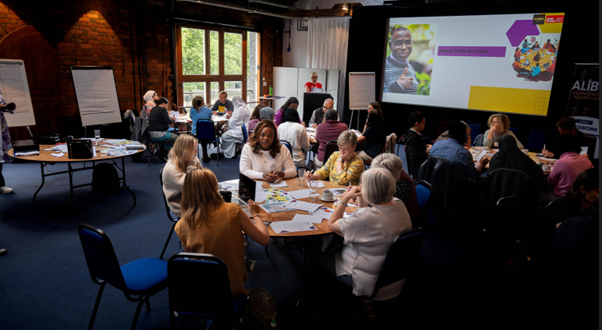
An insufficient number of translators within the NHS was also highlighted as being a major barrier in terms of vital health information being passed on and accurately understood by patients from some of these communities.
Linguistic barriers can affect a patient’s confidence when seeing a doctor and can lead to a feeling of not receiving appropriate care. This may make some communities feel shut out and ignored. Being bombarded by medical jargon doesn’t help and can have a major bearing on patients’ experience and the quality of healthcare they receive. This may lead to a reluctance to return to see a doctor, which has a knock-on effect on health outcomes.
After the workshop, attendees were full of praise with some noting “the value in working together…and promoting co-production and collaboration to address priority issues.” Others emphasised that “we are not alone – everyone experiences similar issues.”
One attendee remarked that “lots of organisations are working around the same issues from slightly different perspectives but there is little or no collaboration/coordination.”
Hence why ALIBSA is unique in providing a platform to consolidate ideas and collaboration with the public, health and social care providers and organisations, researchers and policy makers.
Another attendee hoped that “service providers and policymakers listen and understand the needs of different communities,” whilst someone else wanted to ensure that “impact is measured, and people can see how needs are being addressed and changes are made to reflect people’s experiences.”
(ALIBSA hopes to contact organisations in six months to find out what changes to practice they may have made since attending).
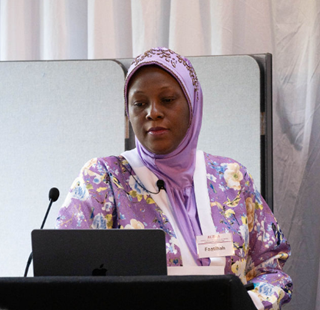
Speaking after the event, Dr Niyi-Odumosu was delighted with the outcome and numbers (45) who attended:
“I was humbled by the turnout and by the calibre of people who attended from across the country including Newcastle, Coventry, Derby, Leicester, Bath, and locally. ALIBSA is at the forefront of facilitating and translating vital research into the Black and Asian communities. Its monthly webinars have laid a solid foundation for the work we are doing with diverse communities.
“The passion for community and stakeholder engagement and knowledge transfer is apparent. Understanding common health needs and barriers to accessing healthcare is essential for improving health outcomes. This can only be achieved by bringing communities together and opening channels of communication and by creating a support system where people can feel reassured rather than judged.
“As a result of this workshop, attendees have been signposted to research participation/recruitment to increase the diversity and representation of health data from these communities. It has also created potential opportunities for branches of ALIBSA networks in other centres.
“I have also been approached by a Professor from Canada (Université de Montréal) to talk about ALIBSA, with a view to his institution replicating this model.
“The next steps will involve analysing and disseminating the data from the workshop. We (the ALIBSA team including Alosh Jose (CEO Cricketqube), Oluwatobi Fatola, Dr Gisele Abiseggue, Dr Abolanle Adesope, and Dr Zheng Ma) are looking to continue to expand ALIBSA, hoping our work has a significant impact on health and social care professionals and policymakers, ensuring that Black and Asian peoples’ concerns and needs are listened to and met.”
“We also aim for ALIBSA to serve as a platform for research participation, diversity and inclusion, as well as for translating research into practice for these communities. ALIBSA aligns with the UWE Strategy 2030 as a hub.”