Advance your research career: ESRC Postdoctoral Fellowships 2026 now open via SWDTP

Posted on

The Economic and Social Research Council (ESRC) has launched its Postdoctoral Fellowship Scheme for 2026. These nine-month Fellowships (eighteen months if part-time) aim to provide a development opportunity for those at the immediate postdoctoral stage of their career, giving applicants the opportunity to consolidate their PhD through developing publications, expanding their networks, as well as their research and professional skills. 

These ESRC Fellowships are only available to universities that are part of a Doctoral Training Partnership (DTP). UWE Bristol is a member of the South West DTP (SWDPT), which allows us to submit up to four applications for consideration by the SWDTP. The SWDTP will assess approximately 38 applications from its partners and select five candidates for approval by the ESRC: SWDTP ESRC Postdoctoral Fellowships process. 

This is a great opportunity to have an ESRC-funded postdoc fellowship at UWE Bristol, and we will offer full support in the application development process for up to four candidates successful at EOI stage. 

Eligibility  

The Postdoctoral Fellowship is open to all who: 

  • undertook their PhD at a UK university or research organisation,  and
  • have been awarded a PhD or have passed their viva voce with minor amendments by the 1 June 2026 and have been awarded their PhD by the fellowship start date of 1 October 2026.

All those who have been awarded their PhD and are on a fixed-term contract are also eligible to apply provided they have no more than 15 months’ full-time equivalent active postdoctoral experience, measured from their viva pass date to the closing date for the competition. 

Activity 

The fellowship will start on 1 October 2026 and last for 9 months full-time, or 18 months if part-time. Funding will cover the fellow’s salary (£38,783 – £46,049 pro-rata), indirect and estate costs, and up to £7,500 for all other costs.  

Fellowships undertaken at UWE Bristol must be in 1 of the 6 Pathways hosted at UWE Bristol: 

  • Climate Change, Sustainability and Society 
  • Health, Wellbeing and Society  
  • Sociotechnical Futures & Digital Methods 
  • Education 
  • Management and Business 
  • Social Policy 

The deadline to send your Expression for Interest (EOI) to UWE Bristol is 13 April 2026, 17:00 BST

Applicants selected at EOI stage will receive support from UWE Bristol’s Research and External Engagement team as well as their mentor to help develop their full application. Note that only one application to a single DTP is permitted.

If selected at the EOI stage, the deadline to send your full application to SWDTP through UWE Bristol is 1 June 2026, 23:59 BST

Next steps for applicants 

  1. Check that your project compliments one of the 6 Pathways held by UWE Bristol.
  2. Check your eligibility
  3. Watch the ESRC webinar and familiarise yourself with the application process [SWDTP Postdoctoral Fellowship Applications – Online Information Session Tickets, Monday, Mar 30, 2026 from 1 pm to 2 pm GMT+1 | Eventbrite]
  4. Do you have a mentor? Applicants need to have a Fellowship mentor to support them in developing the Full Stage application. If you do not already have a mentor, please consider who is working in the Pathway at UWE Bristol and may be appropriate to support you. 

The SWDTP also provides a supervisor database if needed.  

If you need help finding an appropriate mentor, please contact research@uwe.ac.uk at the earliest opportunity so you can discuss your potential project with them. 

Timelines are short, and therefore we suggest that you only apply if you can work on the Full Stage application during May 2026. 

Application form and attachments required 

EOI Application Form:

Please save and download a copy of the application form first using the link below and fill it in after you have downloaded your own copy.

SWDTP PDF EoI Form 2026 – final.docx

Attachments required: 

  • Completed EoI application form
  • 2-page CV, including a list of your publications, minimum font size 11 
  • Reference list for any citations in the Case for Support (optional). 

Please send your application form and all attachments to Research@uwe.ac.uk. In the email subject please use the protocol “ESRC SWDTP Fellowship FIRST NAME & SURNAME” before the deadline on 13 April 2026, 17:00 BST.

Documents and links 

Appreciating this is a very tight deadline, we recommend you familiarise yourself with familiarise with the ESRC Full Stage application form in advance:

UWE ESRC SWDTP PDF EOI application form 2026:

UWE ESRC SWDTP PDF EOI application form 2026.docx

UWE ESRC SWDTP PDF EOI guidance:

SWDTP PDF Call Specification 2026:

ESRC SWDTP PDF Full Stage Application form 2026:

Please save and download a copy of the application form first using the link below and fill it in after you have downloaded your own copy.

ESRC SWDTP PDF Full Stage Application form 2026.docx

ESRC PDF FAQs:


Contact Research@uwe.ac.uk if you have any further questions. 

Ben Knight Reflects on Project Zulu’s Big Year and Looks Ahead to 2026 

Posted on

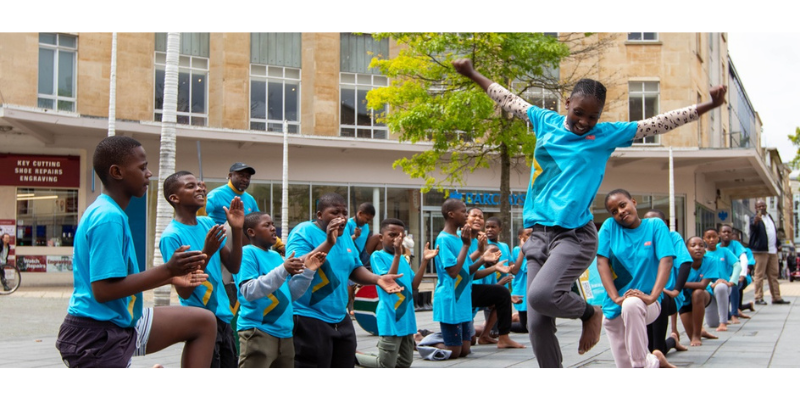
As 2025 draws to an end, it’s time to reflect on our achievements this year. Plenty has already been said and written about the 2025 Project Zulu (PZ) choir tour, but I would like to reiterate here how proud I am of the choir, their teachers, their support teams and the UWE Bristol PZ team for pulling off such a fantastic tour and raising the bar by setting a new fundraising total of £37,504.04. Tenders are already underway at Sithbelumthetho Primary School and Sipheni Senior Primary School for their development projects in solar energy and digital learning resources and we expect to begin spending tour profits on these projects in 2026. 

A few other quick-fire achievements from this year include:  

  1. Almost five hundred teachers attending professional development workshops and conferences.  
  1. Classrooms, learning resources and designated outdoor spaces previously developed with PZ choir tour funds continue to be actively used by hundreds of teachers and children. 
  1. More than 50 UWE student volunteers engaged meaningfully in PZ activities. 

2025 certainly has been action-packed and full of progress and impact. As we look forward to 2026, there are a few particular highlights. 

We’re excited to be welcoming back PZ ambassador and former Springbok rugby player Thinus Delport to lead the PZ rugby volunteer programme ‘Township Rugby’. This project took a break in 2025 and we’re delighted to be reigniting it with fresh faces from UWE’s men’s and women’s rugby union teams, working together with local rugby coaches as they teach PE, coach township school rugby teams and plan and facilitate the annual PZ rugby tournament. 

A topic which gets less attention compared to other PZ project areas is our research. As an initiative led and facilitated by various academics and embedded within a university, research is of course central to what PZ does. Collaborating with South African academics to evaluate and better understand the impact of our work is crucial. After our very successful collaboration developing a reading support app for teachers, we have this year we have extended our commitment to collaborate with colleagues from the University of Zululand (UNIZULU) for the next three years. Likely research focus will be entrepreneurship education and behaviour management interventions. Throughout 2026 a masters student will be studying the impact of PZ’s behaviour management interventions, in which hundreds of teachers have attended a workshop series exploring a wide repertoire of management strategies. This impact evaluation will help us to see what has been achieved and what is yet to be achieved in this important area. 

In February 2026 we will once again be hosted by our friends and academic colleagues at UNIZULU in Richard’s Bay. This annual gathering has always proved to be a vital source of scholarly knowledge exchange and mutual learning. This year the focus of our discussions will be classroom and behaviour management. We will be sharing details about our work with teachers in the Newcastle area and discussing challenges teachers face in this area in South Africa and the UK. We are hopeful that more ideas for research collaborations will emerge from these discussions.  

One topic we are looking forward to exploring further is the intention for students and staff from UNIZULU to pay a visit to UWE Bristol in the next few years. After several years of UWE students and staff visiting schools in the Richard’s Bay area and being hosted by UNIZULU, we are excited about the prospect of a return visit and the fruitful connections and future collaborations this may unlock. 

Altogether, there is much to be excited about for 2026 and we can’t wait to get started on it all. 

Research with purpose: The impact of hybrid working on Black women academics: navigating visibility, care and change

Posted on

When we talk about hybrid working in higher education, the conversation often centres on flexibility and productivity. But for Black women academics, one of the most under-represented groups in UK universities, the reality is far more complex.

A new study led by Dr Tinkuma Edafioghor and Dr Ifeoma Dan-Ogosi explores how hybrid working affects the visibility, wellbeing, and career progression of Black women in academia. Funded by the EDI Caucus, their project, The Impact of Hybrid Working on Black Women Academics: Productivity and Visibility in Post-COVID Higher Education, is shedding light on the unseen labour and unspoken rules that continue to shape academic life.

Earlier this year, the pair presented their early findings at the European Sociological Association Interim Conference in Lund, Sweden, a milestone that signalled both the international reach and urgent relevance of their work.

“Hybrid working doesn’t necessarily create new problems but it can amplify existing ones.”

Dr Edafioghor explained that the project is about more than just flexible working patterns; it’s about understanding how equity is (or isn’t) built into the systems universities rely on.

“We’re looking at things like visibility, career progression, emotional wellbeing, productivity, and how people balance work with their personal lives,” she said.
“We already know that Black women are one of the most under-represented groups in UK academia. Because of that, they often face challenges around being seen, being heard, and being recognised. Hybrid working doesn’t necessarily create new problems, but it can amplify things that were already there if institutions don’t intentionally build equity into their hybrid models.”

The team is conducting in-depth interviews and focus groups with Black women across different universities, disciplines, and career stages – using a co-design approach so participants can directly shape the questions and the recommendations that will follow.

At its heart, this project fills a critical evidence gap. While post-COVID research on hybrid working has been extensive, very little focuses specifically on Black women.

“We wanted to make sure the evidence isn’t just theory – it’s grounded in the real lived experiences of people working in these hybrid systems,” Dr Edafioghor explained.

The study’s innovation can be described as two-fold.

First, the project takes an intersectional, evidence-based look at hybrid working, showing that while many academics value flexibility, experiences of it are shaped by race, gender, and structural position.

“The model itself isn’t the problem,” she explained. “But people experience it differently depending on their position in the system and equity has to be intentionally built in.”

Second, the co-design methodology sets this project apart. Instead of being about people, it’s being developed with them. Black women academics have been central in shaping the questions, the analysis, and the emerging recommendations.

One of the strongest insights to emerge is the sheer range of skills Black women deploy daily that often go unrecognised:

  • Emotional labour – being the person colleagues and students turn to for support.
  • Pastoral care and mentoring – providing guidance that requires emotional intelligence and problem-solving.
  • Navigating unwritten rules – reading and interpreting institutional culture to progress.
  • EDI work – facilitating inclusion and cultural change, often on top of existing workloads.
  • Balancing academic and caring roles – mastering time management and boundary-setting.

“These are not just traits or strengths,” Dr Edafioghor emphasised. “They’re professional skills that universities depend on. But because they’re not formally recognised, Black women can end up overstretched, undervalued, and less visible even though they’re contributing enormously.”

The findings have clear implications for how universities design equitable systems.

“Our research can inform policy, workload allocations, hybrid working guidelines, leadership training, and promotion frameworks,” Dr Edafioghor said. “There’s a real opportunity for institutions to take this evidence and redesign hybrid working in a way that is fairer and more inclusive.”

The team is already sharing insights with partners such as WHEN (Women’s Higher Education Network), Studies in Higher Education, and EDICa, ensuring that UWE Bristol’s research reaches national and sector-wide audiences.

Emerging Findings

Four key themes are beginning to stand out:

  1. Intersectionality matters.
    Hybrid work doesn’t affect everyone the same. Race, gender, migration status, and even visa pressures shape what hybrid work feels like.
  2. The unwritten rules persist.
    Informal norms about visibility and belonging continue to influence progression – just less overtly.
  3. Mentoring and clarity are crucial.
    Guidance from mentors who understand intersectional experiences is a lifeline for many participants.
  4. The emotional toll is real.
    Behind composure lies exhaustion. One participant reflected:

“I tell them I’m probably crying inside, but I’m still smiling outside, which is something, I think Black women as mothers, we tend to do a lot of.”

“It’s about understanding the full picture.”

Both researchers are clear: the study isn’t about criticising hybrid working; it’s about improving it.

“We’ve lived many of these dynamics ourselves,” Dr Edafioghor said. “We saw that hybrid working brought a lot of benefits, but Black women’s voices weren’t really part of the big conversations universities were having about it. So for us, it’s about understanding the full picture; what’s working well, what still needs attention, and how universities can make hybrid working more equitable.”

Presenting at the ESA Conference was a defining moment for the project.

“It meant a lot,” Dr Edafioghor shared. “It showed that the experiences of Black women academics resonate not just in the UK but internationally too. People were really engaged. It reinforced that we’re contributing something important to the global conversation on equity and hybrid work. It also positioned UWE as a university producing research that genuinely matters.”

Looking Forward

As the study progresses, its impact is already clear: opening up conversations about the future of work, representation, and wellbeing in higher education.

By centring lived experience and applying an intersectional lens, Dr Edafioghor and Dr Dan-Ogosi are not just analysing the system – they’re helping to reshape it.

Their work stands as a reminder that inclusion must be designed in, not assumed.


This project is funded by the EDI Caucus and supported by Professors Susan Durbin and Hazel Conley (UWE Bristol) and Professor Tessa Wright (Queen Mary University of London).

Back to top