


By Professor Kieran McCartan
The continued publication of the Jeffrey Epstein files highlights the complexity and impact of sexual abuse and exploitation. The files reinforce the need for an individual and collective understanding, to respond to, and prevent, child sexual abuse and exploitation. The challenge is the nature and extent of the abuse conveyed in the files, alongside the media allegations and reports of a range of individuals, although not found guilty of any wrongdoing, that risks distracting from the main message and central learning. Sexual abuse and exploitation can be preventable, but only if signs are understood and reports and concerns are seen as truthful and taken seriously. There then must be acknowledgment of the responsibility for all individuals to step in, and to feel confident to do so.
Prevalence of sexual abuse
Sexual abuse and exploitation are a broad array of offences and behaviours that affect women and children, which is complicated by the fact that these offences can vary by country and can be challenging to detect and prosecute transnationally. Hence, the true scale of sexual abuse is unknown due to underreporting and inconsistent terminology across organisations, different governmental organisations and countries. The UN reports that one in three women and girls (736 million) have experienced physical and/or sexual violence, mostly by intimate partners. Six per cent of women globally report non-partner sexual violence, and 15 million adolescent girls aged 15–19 have experienced and reported rape. The reality of child sexual abuse prevalence is unclear but UNICEF estimates that 1 in 8 children globally (12.7%) are sexually abused before 18. In England and Wales, one in 10 children are sexually abused before 16, though this is likely underestimated. UN data shows online gender-based violence prevalence ranges from 16–58%, with Facebook as the top platform where it occurs. So it is evident that there is a pervasive issue.
Terminology: Abuse, Exploitation and Paraphilias
In the Epstein case, the terms child sexual abuse and child sexual exploitation are often used. It is important to unpack this terminology, as it is inconsistent and not understood in the same way across public narratives. Child sexual abuse (CSA) is when a child is used for someone else’s sexual gratification, with no possibility of genuine consent. Child sexual exploitation (CSE) also involves sexual harm, but includes exchange (i.e., someone offers or gives something of value, or the child gains something from it). Both are harmful and damaging to the child, but often in CSE cases, the child can be thought of as a willing accomplice as they are in some way benefiting from it. Therefore, cultivating a blame culture around it, resulting in a lack of support. The perspective of benefiting is a misnomer as they are being groomed and abused. It is important to understand in the Epstein case both of these were happening; he was directly sexually abusing children and through exploitation was facilitating the abuse of them, as well as adult women.
Epstein has often been referred to in the press and public discourses as a paedophile. Paedophilia is a paraphilia, which is a sexual attraction to something not inherently sexual. Paedophilia is a clinical term, not a legal term or offence category, that refers to someone who is sexually attracted to pre-pubertal children. In the clinical guidance, this refers to children under 11. The term paedophile in modern socio-political and media discourses has been used to talk about all child sexual abuse, which is problematic. Based on the emerging evidence from the released files and from past lawsuits, it seems that Epstein’s preferred victims were of early to mid-puberty, so 11 -15. This means that he was more likely to be diagnosed as a Hebephile, a person who is sexually attracted to children in early puberty. Therefore, the terminology used is potentially incorrect and unhelpful in helping society understand his offenses and behaviour. The emerging evidence is that his offences were driven by power and control, not by sexual paraphilias. In addition, this means that some people may mistakenly assume that everyone linked to Epstein was a potential paedophile or a paedophilic sympathiser. This is unhelpful on many levels, but especially to their adult victims and especially to their victims who were exploited.
Society needs to understand Epstein’s behaviour as a form of exploitation and abuse, as that is what it was; it was organised criminogenic and exploitative behaviour that exploited and abused women and girls.
Learning from the Epstein case
As more of the files are published and more of the processes are uncovered, we can learn more about what Epstein did and how he facilitated the exploitation and abuse. The detailed records, images, emails, and part-work that were kept showed that it was an organised, orchestrated pattern of behaviour. It shows intent, but also a lack of trust and a need for evidence on his behalf in case one of his coworkers turned against him. Understanding the longevity of his offences is rooted in understanding the people that he associated with – powerful people with influence. However, association alone doesn’t equate to knowledge or complicity.
Epstein’s exploitation and abuse were able to continue for decades because of the socio-political fallout from any of his associates being linked to him. The context of the files, emails, and pictures provide accounts of a range of activities that raise questions about people’s connections and interactions with Epstein. They raise questions in the sociopolitical landscape about his relationships with individuals, which are difficult to prove but are subjective enough to prompt public speculation. This added to his wealth and influence, making him feel untouchable and emboldening him to continue exploiting. It also meant that society would not question him. When this is coupled with the fact that we do not talk about sexual abuse, do not believe victims, and that a lot of the abuse was facilitated through exploitation, it made the case a perfect storm. It seemed that society individually and collectively looked away.
Prevention and engagement
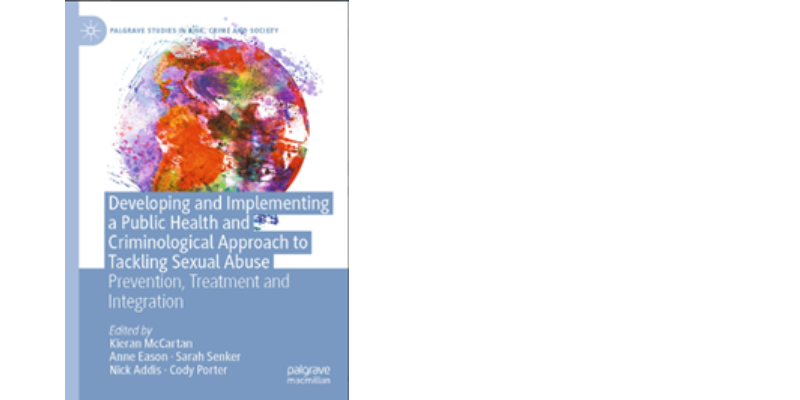
The main learning from the Epstein case is a simple one, as a society we need to learn about, talk about and challenge child sexual abuse and exploitation more than we do. We need to understand the nature and prevalence of child sexual abuse and exploitation so that we can be confident in challenging it, stopping the abuse and supporting victims. Which should happen through an EPiCrim (public health and criminological) framework. Taking an EPiCrim approach allows us to understand child sexual abuse and exploitation from multi-perspectives. In taking an EpiCrim approach, we focus on the internal (biological and individual/developmental psychology) and external (social and community psychology and social) causes of the abuse to prevent first-time (primary and secondary prevention) and repeat offending (tertiary and quaternary prevention) across the socio-ecological model (individual, interpersonal, community and societal). In respect to the Epstein case, both his abuse and the exploitation he facilitated, how do we read the signs of abuse, how do we engage with potential victims and harmers, how do we put the community sanctions and supports in place (both online and offline) to prevent it and how do we shift social norms to empower freer dialogue in this area?
Conclusions
The release of more of the Epstein files will prompt more conversations about these actions, his crimes, and his abuse and exploitation of women and girls. This needs to emerge so that victims can be supported and, if any further evidence of criminal acts are found, people are held to account for their actions. But it also needs to enable us individually and collectively to learn from the exploitation and abuse. The release of the files should give us more evidence and, therefore, confidence to speak out about sexual abuse and exploitation and to intervene before there are more victims.