
UWE helps shape international Framework for Health Promoting Campuses

Posted on

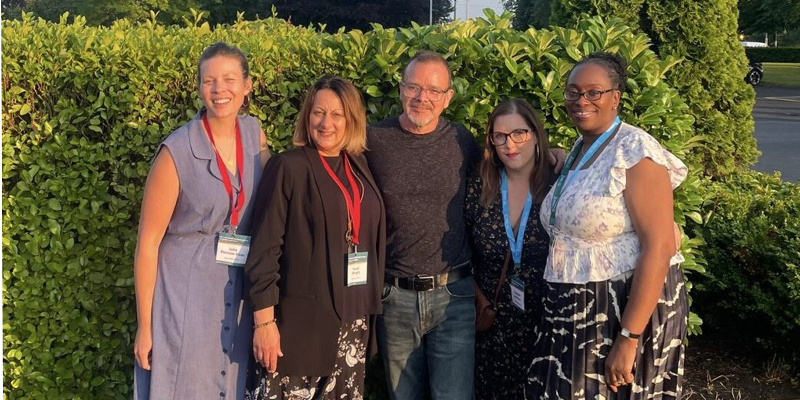
How can universities better embed health and wellbeing into everything they do – from teaching and research, to student experience and policy? That was the focus of the 2025 International Health Promoting Campuses (IHPC) Conference, hosted by the University of Limerick, where UWE Bristol helped shape a major new global framework.

Associate Professor Dr Liz Jenkinson and Professor Mat Jones represented UWE and the UK Healthy Universities Network at the four-day conference in Ireland, which welcomed over 400 delegates from six continents. Participants included students, researchers, policy-makers, and global organisations such as WHO, UNESCO, and the International Union for Health Promotion and Education.
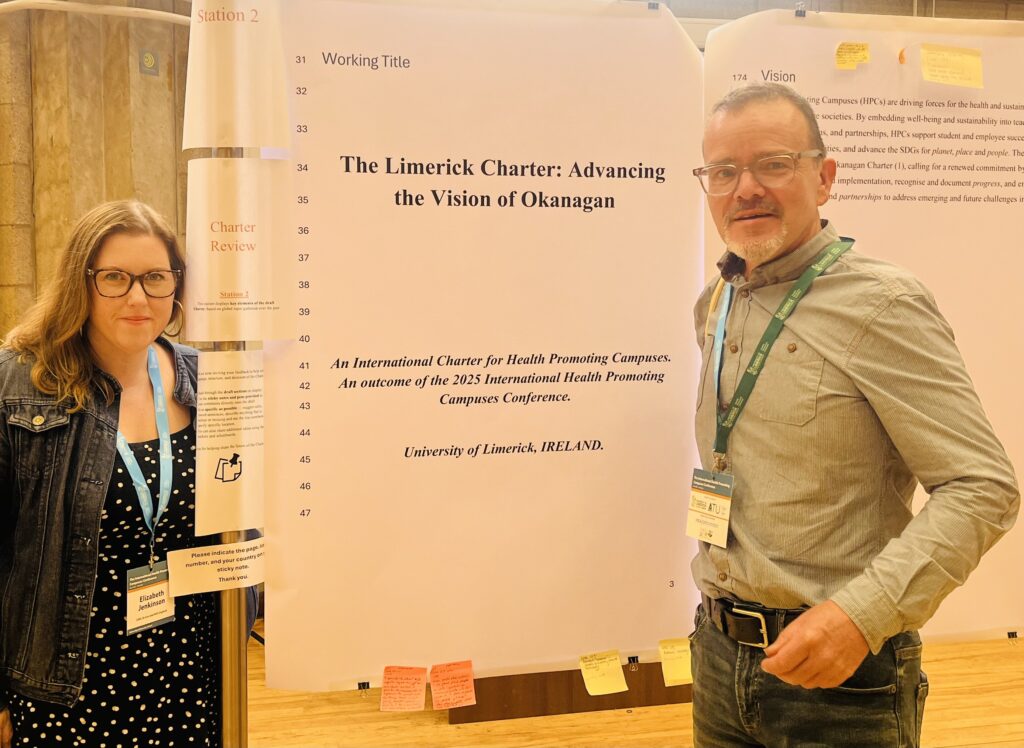
The result? A newly launched Limerick Framework for Action – a shared roadmap for higher education institutions to take action on health, wellbeing, and sustainability across campus life.

“UWE Bristol is recognised as an international leader in promoting health and wellbeing – thanks to our strong foundations in local and global collaboration. The conference was a vital opportunity to combine forces with peers around the world. The Limerick Framework offers a powerful international focus to help us scale up action and amplify future impact.”

Dr Liz Jenkinson

The Framework was co-developed with representatives from universities across the UK, Canada, Europe, Asia and Australia, and endorsed at the conference’s closing ceremony as a future-facing guide to institutional transformation.
UWE’s Contribution

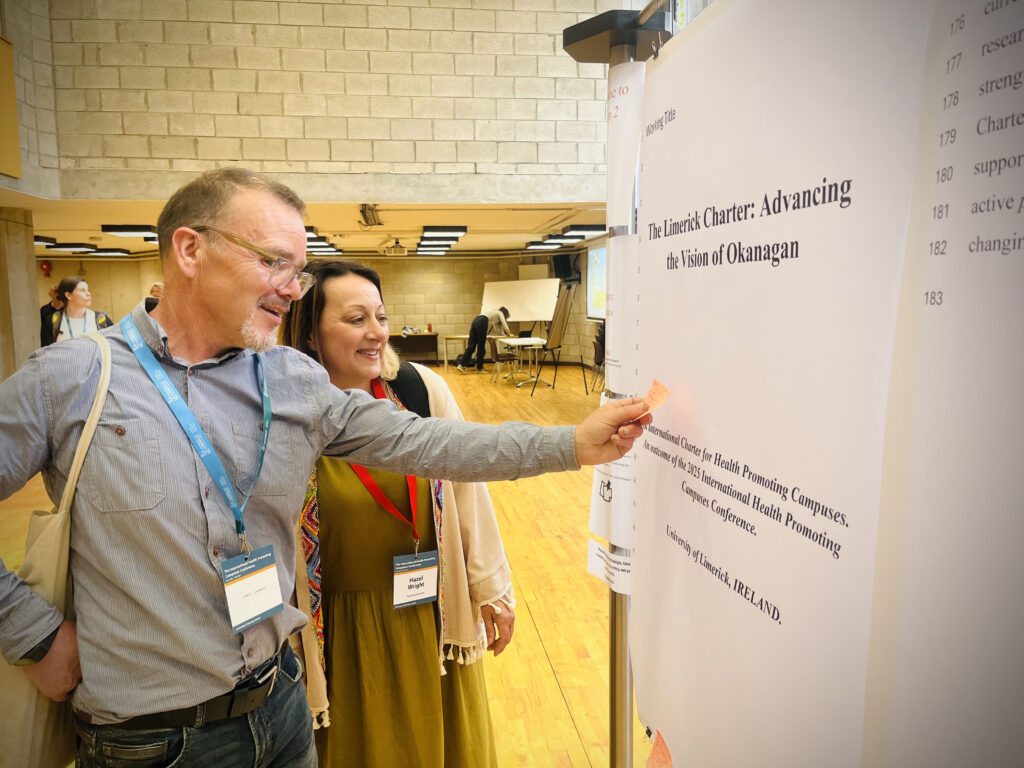
As long-standing members of the UK Healthy Universities Network, Dr Jenkinson and Prof Jones shared insights from UWE’s Healthy University Group, which supports cross-university efforts on staff and student wellbeing. They collaborated with colleagues from Teesside, King’s College London, and UCLan to ensure the UK’s leadership and learning helped shape the international agenda.

“This isn’t just academic discussion – delegates from around the world are sharing actionable strategies to build healthier campus communities and environments. We’re proud of what was accomplished here in Limerick.”

Dr Matt Dolf, Co-Chair of the IHPC Network and Director of Wellbeing Strategy at the University of British Columbia


SmartSocks® land at UWE Bristol to support innovative ageing research

Posted on

The first delivery of SmartSocks®DISCOVERY – sensor-embedded wearable socks developed by Bristol health-tech company Milbotix – has arrived at UWE Bristol. These smart wearables will play a key role in the university’s ageing and assistive tech research, as part of the SAW-Health project led by the Bristol Robotics Laboratory (BRL).

Funded by the Medical Research Council, the two-year SAW-Health project is exploring how socially assistive robotic systems can support older adults’ physical, emotional and social wellbeing. UWE is collaborating with AgeUK and the ExtraCare Charitable Trust on the project, which centres around developing a next-generation robotic walking aid that promotes independence and meaningful social interaction in later life.

The SmartSocks® – which look and feel like ordinary socks – are anything but. Embedded with discreet sensors, they monitor skin temperature, heart rate, movement and more, providing real-time insights that will help researchers better understand daily routines, emotional states, and mobility patterns. Because they’re non-invasive and machine-washable, they’re especially valuable for people who may struggle with or reject bulkier devices like wristbands or chest straps.

“Receiving the first SmartSocks® from Milbotix marks an exciting milestone for our research at Bristol Robotics Laboratory. These innovative sensors will allow us to monitor gait patterns in real time, which is vital for progressing our work on walking assistive technologies. By integrating SmartSocks® with our smart walkers and exoskeleton systems, we can start to develop responsive solutions that actively support mobility and independence in older adults and users with neurological impairments.”

Dr Carlos Cifuentes, Associate Professor in Human-Robot Interaction at UWE Bristol.

The SAW-Health team are taking a co-design approach throughout – involving older adults, carers and healthcare professionals in shaping the design of the robotic walker and testing it in real-world settings. The physiological and movement data collected by the SmartSocks® will feed directly into this work, helping the team evaluate user interaction and real-world use.

The socks arrived as a full research-ready kit – including multiple pairs, swappable sensors, a charger and access to a cloud-based data dashboard – and are now ready to be put to work.

“It’s an honour to see SmartSocks®DISCOVERY supporting such vital research. This handover represents an exciting milestone for Milbotix and aligns closely with our mission to improve the lives of older adults through intelligent, wearable technology. We’re proud to support UWE’s innovative and impactful work.”

Dr Zeke Steer, CEO and Founder of Milbotix.

SmartSocks®DISCOVERY is now available to other researchers and students through milbotix.com/shop, including a low-cost starter kit suitable for student and postgraduate projects.

“Touching Time”: UWE Bristol co-hosts international symposium on embodied time and experience

Posted on

What might it mean for time to be felt or embodied? How can the study of time help us understand complex lived experiences such as ageing, illness, incarceration or displacement?

These were just some of the questions explored at Touching Time: Duration, Bodies, Politics – a two-day international symposium co-organised by Dr Jessie Stanier, Lecturer in Philosophy at UWE Bristol, with the British Society for Phenomenology (BSP) and partners in the Netherlands. Held on 23–24 June 2025, the event welcomed nearly 70 in-person and online participants.

The symposium brought together interdisciplinary thinkers to explore how time is experienced, shaped, disrupted, or resisted – through bodies, relationships, institutions, and creative practice.

Event highlights

  • An opening exercise using a strand of red yarn to explore tension, connection, and collective time
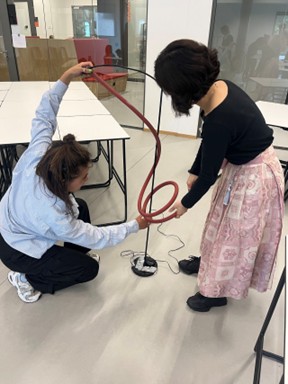
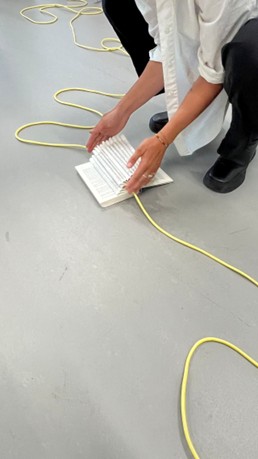
  • Two interactive workshops featuring kinetic sculpture and creative writing
  • A closing dance performance, developed and performed during the symposium
  • Panels and keynotes covering topics such as: affect and ageing across the life course; colonialism, memory and displacement; chrononormativity and care; psychoanalysis, pedagogy, and politics of time.
Above: Participants explore embodied time and interconnection through a kinetic sculpture workshop at the Touching Time symposium.

Touching Time: Duration, Bodies, Politics

The event drew together 2 keynote speakers – Prof Lisa Baraitser (Birkbeck, University of London) and Dr David Ventura (Newcastle University) – and 10 panel speakers, bridging philosophical phenomenology with other intellectual traditions including aesthetics, psychosocial theory, anthropology, queer theory, affect studies, and literary analysis.

Above: A creative writing workshop invites participants to engage with time physically, using unconventional materials and movement.

About the symposium

The Touching Time symposium is part of the BSP’s International Symposium series, an annual event spotlighting innovative phenomenological research around the world. Jessie Stanier has chaired these events since 2022.

This year’s event was co-sponsored by the Department of Culture Studies at Tilburg University and the Netherlands Institute for Cultural Analysis, making participation free for all delegates.

It also builds on a growing relationship between UWE Bristol and the BSP. UWE hosted the BSP’s annual conference on Frenchay Campus last year – part of wider efforts to foster international dialogue and raise the profile of UWE’s philosophy research.

Celebrating connection, collaboration and creativity at the first College of Business and Law Research Conference 

Posted on

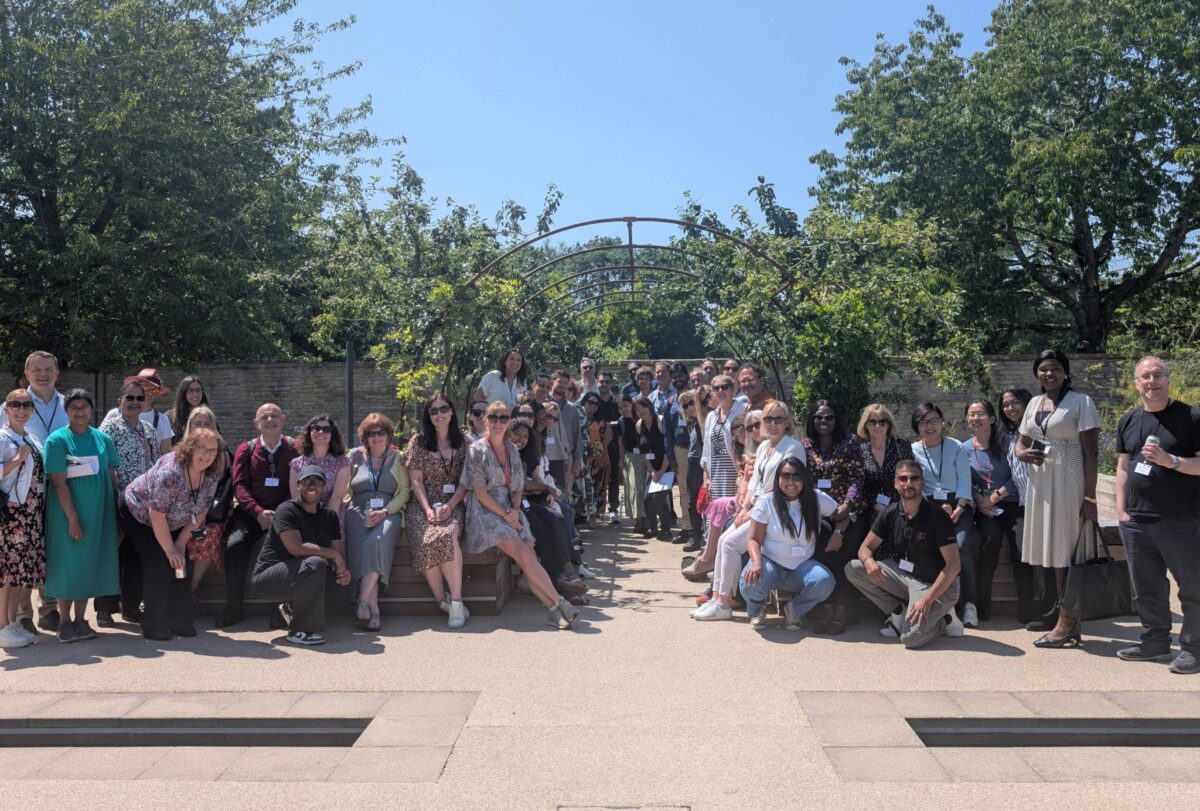
On 18 June, colleagues from across the College of Business and Law came together for the first annual CBL Research Conference – an energising day dedicated to showcasing the breadth and depth of research taking place across the college and with partner institutions. 

Themed around People, Work and Organisations, the programme brought together academics, early career researchers and doctoral candidates exploring everything from green jobs and AI-driven place branding to maternity leave during Covid-19 and police interviews with victims of rape. The day offered a vibrant mix of theory, practice, personal storytelling and policy insight. 

Held at Frenchay Campus, the conference was the result of months of work by a passionate organising committee: Dr Jenna Pandeli, Dr Tinkuma Edafioghor, Dr Hugh Waters, Professor Richard Bolden, Dr Pawel Capik, Briony Whitaker and Sophie Marsh. Their aim? To create space for connection and joy in research, and to spotlight the creative, impactful work happening across the college. 

Highlights from the day 

  • Keynote speaker Professor Hazel Conley opened the conference with a powerful and thought-provoking talk reflecting on 25 years of researching Equality, Diversity and Inclusion in higher education. Drawing on historical and contemporary data, Hazel made a compelling case for why EDI research matters more than ever – despite, and perhaps because of, ongoing backlash and political resistance. 
  • Conference sessions spanned diverse topics, including: 
  • Organisational resilience and social capital in SMEs 
  • The lived experiences of maternity leave in extreme contexts 
  • Volunteering in crisis settings, sustainability at music festivals, and informal career barriers in male-dominated industries 
  • Leadership for systems change and healthcare improvement across global contexts 
  • Engagement was a key thread, with in-person and online presentations from UWE researchers and partner institutions including Taylors University (Malaysia) and Villa College (Maldives). Delegates were encouraged to vote throughout the day to recognise exceptional contributions across three categories. 

Celebrating research excellence 

Congratulations to the recipients of this year’s inaugural conference awards: 

  • Best Overall Paper – Dr Mahwish Khan 
  • Greatest Potential Impact – Sophie Marsh and Pujan Ghosh 
  • Best Early Career Researcher (ECR) – Briony Whitaker 

These awards celebrated not only academic rigour but also the potential to make meaningful change—whether in policy, practice or community. 

A moment to reflect and reconnect 

From the opening coffee to the sun-soaked lunch in the walled garden, the conference buzzed with energy and exchange. The day was not only a showcase of research, but a reminder of what academic communities can be when we make time to come together: collaborative, curious and full of possibility. 

We’re already looking forward to seeing how this new annual tradition evolves – and to the ideas, partnerships and projects it helps spark along the way. 

Back to top