We spoke with Dr Faatihah Niyi-Odumosu (MBChB, MSc, PhD, PGCTHE, FHEA), Associate Professor of Physical Activity and Health Promotion, School of Applied Sciences, College of Health Science and Society, UWE Bristol, about a new collaboration designed to strengthen independence and wellbeing among older adults and people requiring reablement support.
About the project
Happy Care Ltd first approached UWE Bristol looking for innovative ways to help their service users regain independence and improve their quality of life. Through their hospital discharge work, they identified a gap in how reablement could be supported more holistically.
From there, the partnership developed naturally, bringing together:
UWE Bristol (Associate Prof Faatihah Niyi-Odumosu) – leading on the research and evaluation framework.
Happy Care Ltd (Ahmed Ibrahim, Fadumo Farah, Ayan Buleh, and Natnael Guliano) – embedding the work within their care provision and providing access to service users.
Wesport (West of England Sport Trust) (Kirsty Brown) – contributing expertise in inclusive physical activity and programme design.
Together, the partners are developing and evaluating approaches to reablement through everyday physical activity.
What “developing and evaluating reablement” looks like
In practice, this means supporting individual clients in their own homes. Carers from Happy Care help build independence and mobility into daily routines i.e. reducing sitting time, encouraging regular movement, and supporting everyday tasks that promote confidence and autonomy.
A key focus is educating carers to understand how small, consistent actions can make a big difference to physical and psychological wellbeing. Alongside this, the team is gathering evidence and feedback to evaluate the impact on clients, families, and carers.
Aims and outcomes
The Happy Care Project aims to:
Improve independence, confidence, and quality of life for service users.
Equip carers and families with practical tools to support reablement.
Demonstrate the value of regular physical activity within reablement settings.
Develop a model that can be shared across Bristol and the Southwest, influencing both practice and policy.
Building evidence and influencing practice
By systematically evaluating the programme, the project is generating an evidence base that shows how physical activity can be effectively embedded into reablement services. This work could help inform local commissioning decisions and shape future models of care, demonstrating how reablement through movement (and regular physical activity) can reduce longer-term health and care needs.
If successful, the model could be replicated across social-care providers in Bristol and beyond.
Early progress and next steps
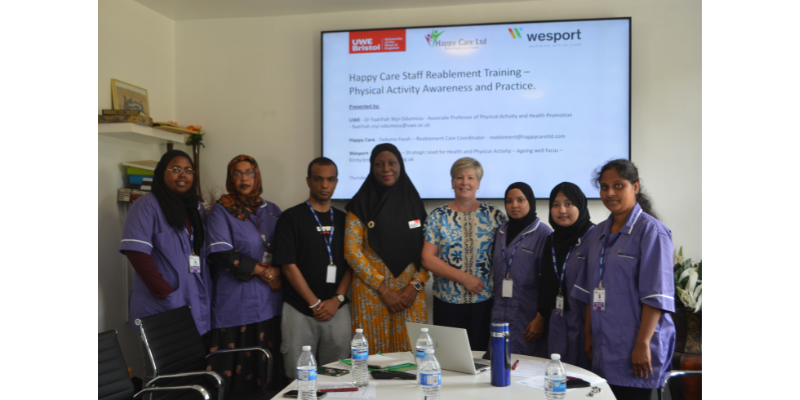
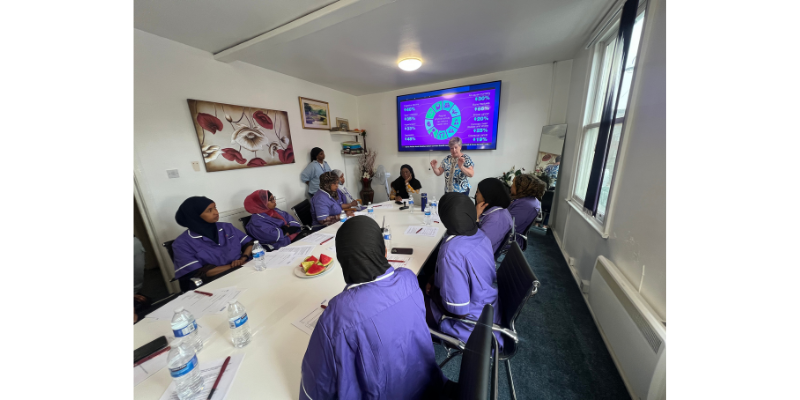
The team has delivered its first training workshop to carers, focusing on the knowledge and confidence needed to integrate physical activity into care routines. Feedback and evaluation from this session will be shared in a follow-up blog.
Although still in its first year, the project is already helping to strengthen connections between health research, social care, and community wellbeing.
Looking ahead, the team plans to explore internal UWE funding opportunities and engage MSc Health Psychology placement students and final-year undergraduates to support evaluation and data collection.
UWE Bristol has been recognised at the 2025 Innovate UK Knowledge Transfer Partnership (KTP) Awards, marking the 50th anniversary of the UK’s longest-running innovation programme.
The partnership between UWE Bristol, Obafemi Awolowo University (OAU) in Nigeria, and Taro Agric Farm (TAF) was named winner of the African Agriculture KTP Award for its work applying data-enabled innovation to transform poultry farming in Nigeria.
Led by Professor Kamran Munir, Professor of Data Science at UWE Bristol, and Professor Saidu Oseni, Professor of Animal Sciences at OAU, the collaboration has transformed poultry production through the use of Internet of Things (IoT) sensors, dashboards, and predictive analytics.
About Taro Agric Farm
Taro Agric Farm (TAF) is a broiler-chicken production company based in southwest Nigeria with more than a decade of experience in commercial poultry farming. Operating concurrent batches of 2,000 birds per cycle, TAF runs multiple production centres across Osun and Oyo States.
Beyond production, the company provides consulting services, training, and capacity building for poultry farmers, supporting every stage of the broiler-chicken value chain-from input supply and production to processing, distribution, and marketing.
Through the African Agriculture KTP (AAKTP), TAF integrated smart technologies such as IoT-enabled sensors, real-time data storage systems, and predictive analytics, positioning itself as one of the leaders in digital and sustainable poultry farming in Nigeria.
Tackling sector-wide challenges through innovation
The Knowledge Transfer Partnership (KTP) between TAF, OAU, and UWE Bristol set out to apply data-enabled innovations (DEI) to commercial chicken production and to optimise business operations.
Nigeria’s poultry industry faces long-standing challenges such as high mortality rates, inefficient management practices, limited data use, and poor environmental conditions affecting bird welfare and productivity. Previously, farms relied on manual data collection and intuition rather than real-time monitoring, which often led to delayed interventions and losses.
To address these issues, the project introduced IoT technology, smart sensors, and a cloud-based dashboard for continuous monitoring of key welfare and environmental parameters, including temperature, humidity, air quality, and toxic gases.
Project activities included setting up and testing the IoT platform, configuring sensor nodes, creating a real-time database, developing dashboards to track key performance indicators (KPIs), and holding a stakeholder engagement workshop with around 100 participants to promote adoption across the sector.
Transformative results
The KTP has delivered measurable improvements in productivity, efficiency, and profitability at Taro Agric Farm.
Staff gained hands-on expertise in deploying sensor nodes to monitor broiler health and welfare.
A smart-farm infrastructure was installed, combining Wi-Fi, inverters, smart cameras, and sensor clusters for remote monitoring and improved decision-making.
A MySQL database now tracks and analyses data on performance, costs, and returns, supporting evidence-based planning.
A real-time decision-support dashboard enables proactive management of poultry welfare and performance.
Staff training in KPI tracking has enhanced consistency and forecasting accuracy.
As a result, sales turnover is expected to grow by 30 – 40% within three years, and profit before tax by 20%, driven by improved efficiency and scalability.
The collaboration also led to the creation of a Data-Enabled Innovation (DEI) Lab within OAU’s Department of Animal Sciences, and integration of digital agriculture into the university’s curriculum – embedding long-term change in teaching and research.
Wider industry impact
The project’s influence extends across Nigeria’s poultry sector:
100+ poultry farmers and industry professionals trained in data-driven farming.
19 undergraduate and 2 MSc research projects launched on digital poultry innovation.
Findings presented at the Nigerian Poultry Show 2024, positioning TAF as a leader in smart farming.
Increased demand for TAF’s consultancy services from farms keen to adopt similar digital systems.
Continuous, solar-powered IoT system operation achieved through inverter installation.
Voices from the partnership
“The KTP experience was truly transformative for me. It provided a unique opportunity to bridge the gap between academic research and real-world business applications. Through hands-on engagement with IoT sensors and data analytics, I have gained invaluable expertise in optimising broiler production through data-driven decision-making. The mentorship and collaboration have strengthened my skills in AI, machine learning, and predictive modelling—all crucial for the future of precision livestock farming.”
– Rasheed Lawal, KTP Associate
“This KTP was a game-changer for our business. Before the partnership, we relied on manual processes with limited real-time insight. Now, IoT-driven smart farming technologies allow us to monitor flock health, predict performance trends, and optimise efficiency. Productivity has increased, mortality reduced, and costs cut. We’re now recognised as one of Nigeria’s leading smart poultry farms and plan to expand AI-driven automation for disease detection, weight prediction, and feed optimisation.”
“The KTP was an excellent opportunity to blend academic research with industry application. At OAU, we’ve long been committed to advancing precision livestock farming, and this project allowed us to demonstrate the power of digital transformation in practice. The training delivered to students is already inspiring new courses in AI, computer vision, and smart farming.”
– Professor Saidu Oseni, Professor of Animal Sciences, Obafemi Awolowo University, Nigeria
“This has been a transformative collaboration between TAF, OAU, and UWE Bristol. By applying data-enabled innovations, we’ve tackled challenges such as high mortality and inefficient farm management. TAF staff have gained advanced digital-farming skills, and OAU has enhanced its curriculum and research capacity. This partnership exemplifies how innovation and collaboration can drive sustainable agricultural development.”
– Professor Kamran Munir, Professor of Data Science, University of the West of England, Bristol
A model for global collaboration
As Innovate UK marks 50 years of KTP, this award highlights how international partnerships can combine academic expertise, business insight, and innovation to create lasting social and economic impact.
From real-time environmental monitoring to AI-driven productivity gains, the Taro Agric Farm partnership demonstrates how research can be turned into practical solutions – improving livelihoods, strengthening industry resilience, and setting a new benchmark for digital agriculture across Africa.
Funding is available for UWE Bristol innovators to deliver scalable pilot innovation projects in collaboration with external partners. Demonstrating potential for significant impact, projects must align with the mission of the Integrated Care Academy (ICA) and its core priorities. Successful projects will focus on the three shifts, as identified in Lord Darzi’s review of the NHS:
Moving care from hospital to community
Implementing digital transformation
Shifting from treatment to prevention
Professor Darren Reynolds (Pro Vice-Chancellor for Research & Knowledge Exchange) along with Professor Marc Griffiths (Pro-Vice Chancellor for Regional Partnerships, Engagement & Innovation), Dr Peter Brindle and Nicola Temple (Head of Innovation and Impact) introduce the Integrated Care Academy (ICA) Innovation Grants 2025.
Key dates
The scheme is now open, and all applications must be submitted by 8 December 2025, midday.
All activities must be fully completed (including budget spend) by 31 July 2026.
Project size and scope
UWE Bristol innovators can apply for grants of between £5,000 and £15,000 (which can include funding for time).
All projects must be deliveredin collaboration with an external partner.
We are looking to fund projects that have the potential to deliver high-impact solutions that:
Address real-world challenges in integrated care
Have clear potential for scaling beyond the project
Demonstrate innovation in approach or application
Include meaningful stakeholder engagement
Show potential for securing future external funding
How can people with lived experience help shape better, fairer policy? That’s the question explored by Dr Rounaq Nayak, whose 18-month Economic and Social Research Council (ESRC) Policy Innovation Fellowship examined how experts-by-experience can be meaningfully involved in knowledge mobilisation for policy and practice.
From November 2023 to April 2024, Dr Nayak was seconded to the Wales Centre for Public Policy (WCPP) to investigate how knowledge brokering organisations (KBOs) – such as the What Works Network – can embed lived experience into their work. While co-production is well established in health policy, practice elsewhere remains emergent. This fellowship set out to understand how involvement can be done ethically, effectively and with impact.
Exploring practice and principles
Working with colleagues Dr Katie Crompton and Dr Alex Jones, and in collaboration with WCPP and three What Works Centres – the Centre for Ageing Better, Youth Futures Foundation, and Centre for Homelessness Impact – the team conducted:
interviews with What Works and evidence centres,
a rapid review of current practice, and
an Insight Note distilling implications for those seeking to involve lived-experience experts in knowledge mobilisation.
Their findings show growing recognition of the value that lived-experience perspectives bring, enriching evidence with real-world insight and helping create policies with greater reach and relevance. Yet they also highlight the risks of tokenism, over-burdening individuals, and ethical concerns if involvement is not well supported.
Principles for ethical and effective engagement
The report outlines a series of guiding principles for knowledge brokering organisations, including:
safeguarding and fair remuneration,
clarity on purpose and participation,
building reciprocal and trusting relationships,
allocating time and resources from the outset,
planning clear pathways to impact, and
ensuring equity, diversity and inclusion in who participates and how.
Research with purpose
This fellowship reflects UWE Bristol’s commitment to Research with purpose – research that informs practice, shapes decision-making and centres people’s lived realities.
By working across academia, government and evidence organisations, Dr Nayak’s work is helping redefine what inclusive and ethical policymaking can look like.
In early October, the Bristol Robotics Laboratory (BRL) will host the 2nd Workshop on Enabling Independence with Robotic Solutions for Enhanced Wellbeing. The event brings together experts from sociology, psychiatry, gerontology, dementia care, and robotics to explore how socially assistive robots can support independence, dignity, and wellbeing for people living with dementia.
We spoke to Dr Carlos Cifuentes, Associate Professor in Human-Robot Interaction at BRL, about why this work matters, how it connects to UWE Bristol’s RISE priorities, and what to expect from the workshop.
Can you give us a short overview of the workshop – what it’s about and who it’s for?
This workshop will explore the evolving role of technologies in supporting individuals living with dementia, focusing on human-robot interaction, cognitive support, and the lived experience of dementia in care environments. Bringing together experts in sociology, psychiatry, gerontology, dementia care and robotics, the event will showcase interdisciplinary perspectives on how socially assistive robots can be designed to meaningfully engage with the cognitive, emotional, and social needs of individuals with dementia.
The goal is to foster dialogue around how technology can enhance dignity, autonomy, and quality of life while supporting caregivers in delivering person-centred care.
Why is it important to look at robotics in the context of independence, ageing and dementia?
The increase in the ageing population is inevitable, and care homes are facing a lack of long-term caregivers. Robotics can help address the dual challenges of promoting independence, supporting caregivers, and building sustainable models of future care.
This is the second edition of the workshop. What’s new or different this year?
The first workshop focused on how robotics can enhance wellbeing in ageing populations more broadly. The second edition goes deeper into dementia care, examining human-robot interaction, cognitive support, and the lived experience of dementia in care settings.
Can you share a highlight or example of the technologies being presented or demonstrated?
We have developed a smart assistive walker (Zimmer frame) that can guide people living with dementia while walking in their homes or outdoors. It also helps guide users in performing daily activities, such as preparing a cup of tea or finding specific places. Additionally, it monitors walking patterns and provides alarms to family members and caregivers when needed.
We have also created tablet-based software that integrates with a social robot to deliver reminiscence therapy and promote physical activity for people living with dementia.
How are older adults, carers or practitioners involved in shaping these robotic solutions?
We work closely with care homes and charities. Focus groups and co-design sessions are central to our process, enabling us to gather insights and optimise technologies to better support older adults, people living with dementia, and their caregivers.
Why is the interdisciplinary approach so valuable?
The interdisciplinary approach helps us develop more suitable technologies. Gerontology and psychiatry provide insights into the behavioural modes of people living with dementia. Sociology helps us run focus groups and co-design sessions. Robotics then translates this knowledge into feasible technological solutions.
What role does BRL and UWE Bristol play in leading this kind of innovation?
The assistive robotics group at UWE is leading the co-creation of these technologies, connecting users’ expectations with innovative solutions to empower carers and family members. We are developing an ecosystem that integrates tech innovators in the UK to accelerate translation and improve affordability.
How does this work connect to UWE’s RISE priorities?
We are aligned with RISE priorities, working closely with users to develop simple and reliable solutions that can transform care delivery for people living with dementia. This reflects both Innovation with Impact and Shaping integrated healthcare, helping address the ongoing challenges faced by the NHS.
What do you hope participants will take away from the workshop?
I hope participants will witness our technologies in action and gain a better understanding of the importance of interdisciplinary research in dementia care. We also hope to foster new collaborations and inspire more people to join this field of research.
Finally, what’s next for this area of research?
The next step is to deploy these technologies in care homes so people living with dementia can experience them over the long term. The greatest opportunity for impact is to reduce the pressure and burden on caregivers, while ensuring that everyone has access to dignified, person-centred care.
🔗 Want to know more? Explore some of the team’s recent research on socially assistive robotics and dementia:
📅 Workshop details: Date: Friday 3 October 2025 Time: 10:00 AM Location: Seminar Room OT145, Bristol Robotics Laboratory, UWE Bristol Registration is required.
📌 RISE connection: This work exemplifies Innovation with impact by co-designing robotic solutions that address real-world challenges in dementia care. It also contributes to Shaping integrated healthcare, one of our four RISE beacons, by bringing technology, health expertise, and lived experience together to improve independence, dignity and quality of life.
Living with a visible difference, such as alopecia, eczema, burns and skin conditions can affect confidence, wellbeing, and everyday experiences, from school life to social media. For many years, UWE researchers have been working with charities and people with lived experience to create resources that make a difference.
Now, for the first time, those resources are all brought together in one place: the Visible Difference Support Hub.
“We wanted this to be research that makes a difference. The hub is about wanting to make a positive difference to people living with visible differences – making the outputs from our research accessible to everybody.” – Professor Diana Harcourt
Until now, resources for people with visible differences were scattered, failed to address today’s realities such as social media and were rarely based on rigorous scientific research. The Hub changes that. It offers inclusive, modern, evidence-based and accessible guidance for:
Children and young people
Adults
Parents and carers
Teachers and professionals
Bringing Research, Practice and Experience Together
The Hub represents years of UWE research, shaped by collaboration with charities, healthcare professionals, and advisory groups.
“Charities have informed it a lot, from helping to recruit volunteers, to being on advisory groups. This is our way of giving back, offering them something they can offer to the people who use their services.” – Diana Harcourt
From the colours chosen (carefully selected to be inclusive and non-triggering) to the accessibility of the design, the Hub has inclusivity “baked in there from the beginning”.
Real Impact
Feedback so far has been overwhelmingly positive. Users describe the Hub as inclusive, accessible, seamless, and modern.
Spotlight: The Visible Difference Parenting Toolkit
One example of the Hub’s impact is the Parenting Toolkit, designed to help parents and carers support children with visible differences. It offers guidance on building confidence, navigating conversations, and tackling challenges in everyday life.
Looking Ahead
The Hub is just the beginning. Future developments include:
Adding new and translated resources
Launching the Loving Action podcast series for adults with visible differences navigating relationships
Acknowledgements
The Hub was developed with support from UWE’s Impact Fund in 2024, with web development by Neil Robert Leonard and illustrations by Abbi Bayliss.
“It’s been a team effort – past and present researchers, charities, and creative collaborators have all helped shape the Hub.” – Diana Harcourt
Explore the Hub
The Visible Difference Support Hub is free, open, and designed to be shared.
📌 RISE connection: This blog aligns with Research with Purpose and Enriching culture, place and community by demonstrating how UWE research is making a tangible, positive difference in people’s lives.
A new book from UWE Bristol colleagues is shining a light on how we can take a fresh approach to preventing sexual abuse.
Content note: This blog discusses sexual abuse and prevention.
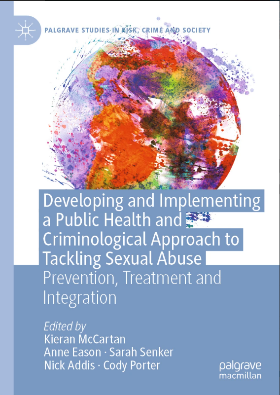
The book, Developing and Implementing a Public Health and Criminological Approach to Tackling Sexual Abuse, has been written by Professor Kieran McCartan, Dr Anne Eason, Dr Sarah Senker, Dr Nick Addis, and Dr Cody Porter. It brings together years of research and collaboration across different academic disciplines, supported in part by a UWE Emerging Research Excellence (ERE) grant.
A new way of thinking
The authors argue that tackling sexual abuse should not be left solely to after-the-fact responses in the criminal justice system. Instead, they suggest adopting a public health and criminological model known as Epidemiological Criminology (EpiCrim).
EpiCrim looks at prevention through the socio-ecological model – from individual and interpersonal relationships, right through to communities and society. This means focusing on:
Preventing first-time offending,
Reducing repeat offending, and
Addressing the life experiences and trauma that can lead to harmful behaviour.
By framing sexual abuse as a behaviour that can be prevented, treated, and understood, this approach encourages earlier interventions and more proactive solutions, alongside continued support for victims.
From research to practice
The book explores the roots of sexual abuse, how and where it happens, how society responds, and how people can be supported to safely re-enter communities after conviction. It highlights evidence from service users, victims, professionals, and policymakers, showing that prevention is possible with the right structures in place.
To help turn research into action, the UWE team have also created a policy briefing aimed at practitioners and policymakers. It makes clear recommendations, such as:
Broadening prevention beyond individuals to communities and society,
Coordinating multi-agency responses,
Embedding trauma-informed approaches, and
Expanding and funding victim support services.
These recommendations were also shared at a dedicated UWE Bristol conference, supported by a visual infographic designed to capture the key themes.
Sharing knowledge more widely
Before the book was published, Professor McCartan joined the UWE Let’s Talk Health and Care podcast to discuss the research and its real-world impact. The message is clear: sexual abuse is preventable, and change is possible if we take a more holistic, evidence-based approach.
Fourteen UWE Bristol academics have been recognised as leading experts in their fields by ScholarGPS, which ranks the most productive and influential researchers globally based on the impact of their published work.
Spanning disciplines including Psychology, Computer Science, Engineering, Linguistics and Biomedical Sciences, the list celebrates both long-term research excellence and recent impact across the past five years.
ScholarGPS rankings are based on comprehensive publication and citation data, offering an independent view of scholarly productivity and influence. Recognition in these rankings highlights the quality and global reach of UWE’s research activity.
We are proud to see our colleagues impactful research being recognised and shared across the world, working across areas as diverse as fungal computing, emergency medicine and climate change activism. Every citation in Google Scholar reflects not just the quality of their work, but also the commitment, creativity and collaboration that drive research at UWE Bristol.
Philippa Shelton, Assistant Director of Research an External Engagement.
You can learn more about the methodology and explore the full rankings on the ScholarGPS website.
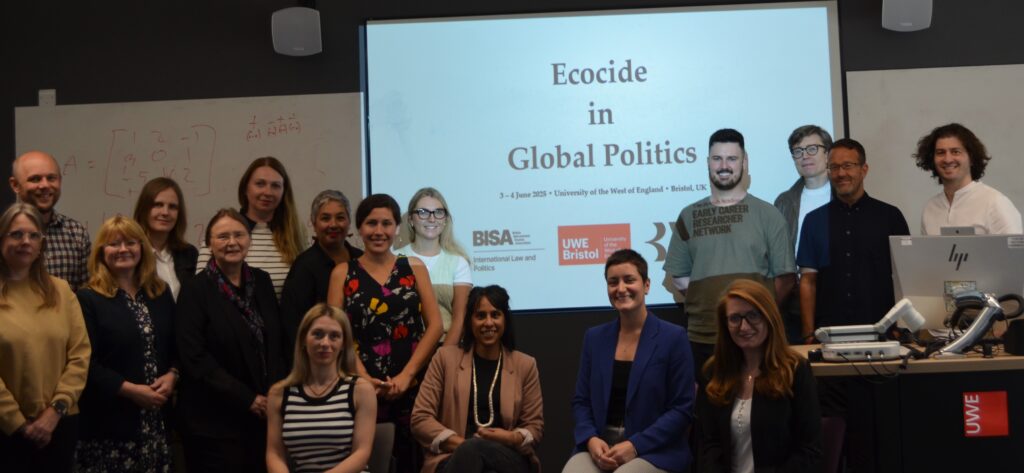
In June 2025, UWE Bristol hosted the UK’s first dedicated research workshop on Ecocide in Global Politics, bringing together early career researchers from across the country to explore this urgent and emerging issue.
The event was convened by Dr Suwita Hani Randhawa, Senior Lecturer in Politics and International Relations, with support from the British Academy and the British International Studies Association (BISA). Held on UWE Bristol’s Frenchay Campus, the two-day workshop explored the conceptual, legal and political dimensions of ecocide, alongside its implications for activism, resistance, and pedagogy.
Keynote speakers included Professor Damian Short (School of Advanced Study, University of London) and Jojo Mehta (Co-founder and CEO of Stop Ecocide International). Their sessions focused on strategies for impactful research and how to translate academic work into policy change – key themes for the early career scholars in attendance.
The workshop also marked the start of a broader initiative: to establish a formal Ecocide Researchers Network in the UK. Dr Randhawa is now leading next steps, including external funding bids for a dedicated research centre and an academic journal on ecocide.
Research meets real-world impact
The event took place just days after the Ecocide (Scotland) Bill was introduced at the Scottish Parliament. Dr Randhawa, as a member of the Bill’s Expert Advisory Group, played a key role in shaping its content.
If passed, the Bill would make it a criminal offence to cause widespread, long-term or irreversible environmental damage – with up to 20 years in prison for individuals and unlimited fines for corporations. The Bill positions Scotland as a leader in international efforts to criminalise ecocide, following recent developments from the EU, Pacific Island nations, and international courts.
Supporting change through research and education
This growing momentum is mirrored in Dr Randhawa’s own research and teaching. With support from the British International Studies Association, she recently completed archival work on the diplomatic history of ecocide at the United Nations. Further funding from the Arts and Humanities Research Council (AHRC) and UWE Bristol’s Higher Education Innovation Fund (HEIF) is enabling her to deliver targeted impact activity with local and national policy-makers.
Alongside this, Dr Randhawa introduced a new undergraduate module on ecocide for Politics and International Relations students at UWE Bristol — one of the first of its kind in the UK. The module has been praised for combining global political theory with real-world environmental challenges. It will run again next academic year, and colleagues interested in collaboration are invited to get in touch.
This workshop was made possible through the support of:
The British International Studies Association (BISA)
The British Academy Early Career Researcher Network
The College of Arts, Technology and Environment and College of Health, Science and Society at UWE Bristol
To connect with Dr Suwita Hani Randhawa or learn more about the Ecocide Researchers Network, email: suwita.hanirandhawa@uwe.ac.uk
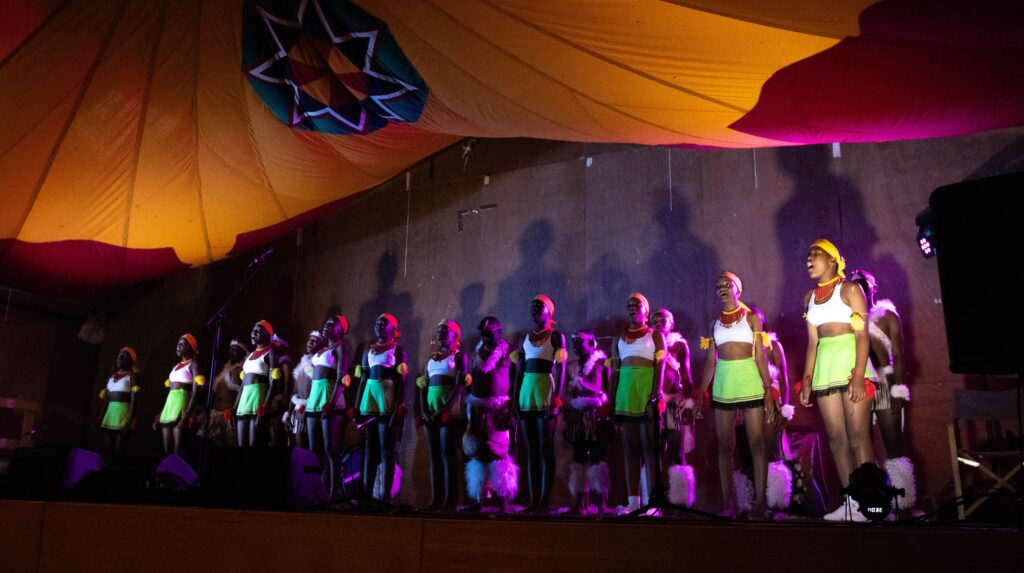
Over three unforgettable weeks in May and June, the 2025 Project Zulu Choir Tour brought energy, rhythm and joy to audiences across the South West and Wales.
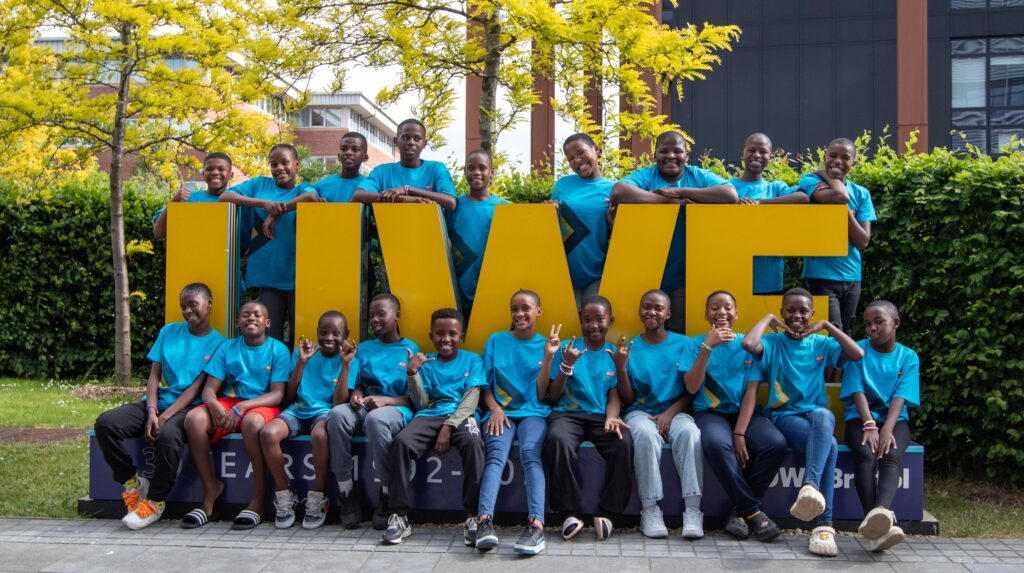
Twenty young performers and five teachers from Sipheni Senior Primary School and Sithobelumthetho Primary School in Madadeni Township, South Africa, travelled to the UK to share traditional Zulu music and dance. They filled every venue with their energy and joy and were met with heartfelt applause.
Thanks to the incredible generosity of concert audiences, supporters and local partners, the tour raised over £34,000 – the highest amount in Project Zulu’s history! These funds will directly benefit Sipheni and Sithobelumthetho schools, helping to harness solar energy and transform digital learning through better classroom technology and resources. The improvements will support long-term educational outcomes for learners now and in the future.
During their stay, the choir toured Bristol, Bath, Cardiff and Pembrokeshire, with standout performances including a show-stopping Gala Concert at Bristol Beacon. Hosted by Britain’s Got Talent finalist Innocent Masuku – who also joined the choir on stage, the event was a powerful celebration of voice, culture and connection. Other highlights included a performance at a Bristol Bears rugby match and a special community concert in St Davids, supported by Celtic Camping and the St Davids Penknife Club.
But the tour wasn’t just about the music. It offered a wonderful opportunity for connection and cultural exchange. Choir members stayed with local host families, took part in school workshops, joined lessons, and made live appearances on BBC Radio Bristol. For many, it was a trip of firsts – first ferry rides, first game of 10-pin bowling, and first tastes of British foods.
One host family shared:
“We are glad we took part in Project Zulu. It was an amazing experience – the boys were so helpful and filled our house with laughter. We miss the sound of drumming and singing. The supermarket is just not the same without them dancing and singing in the middle of the shop.”
The 2025 tour was only made possible by the kindness and support of so many people – host families, volunteers, venues, schools and partners. Your enthusiasm, time and care helped create lifelong memories for the choir and everyone involved.
Thank you to all who supported the tour. Your impact will continue to be felt in the classrooms of Madadeni and in the stories shared long after the tour has ended.
If you’d like to help continue this work, you can donate to Project Zulu and support future tours and educational development in Madadeni. Every contribution helps create more opportunities for young learners and cultural exchange.