

In June 2025, UWE Bristol hosted the UK’s first dedicated research workshop on Ecocide in Global Politics, bringing together early career researchers from across the country to explore this urgent and emerging issue.
The event was convened by Dr Suwita Hani Randhawa, Senior Lecturer in Politics and International Relations, with support from the British Academy and the British International Studies Association (BISA). Held on UWE Bristol’s Frenchay Campus, the two-day workshop explored the conceptual, legal and political dimensions of ecocide, alongside its implications for activism, resistance, and pedagogy.
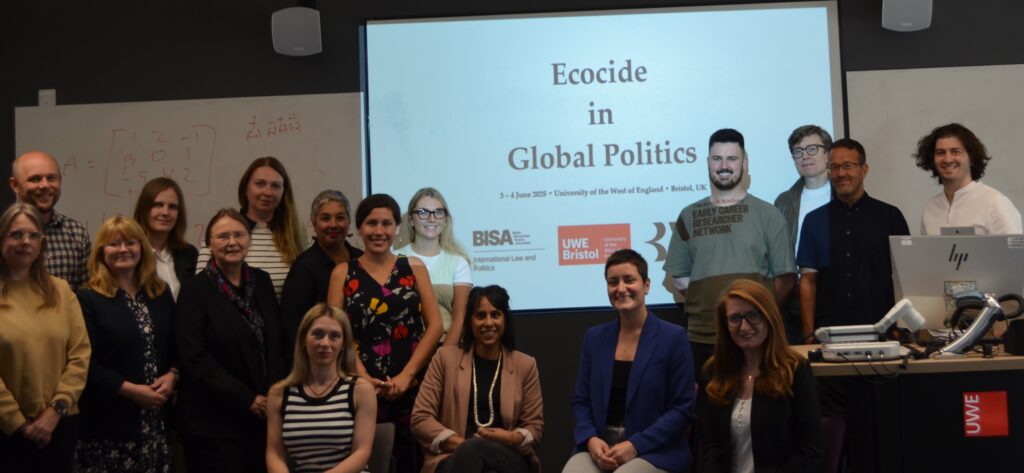
Keynote speakers included Professor Damian Short (School of Advanced Study, University of London) and Jojo Mehta (Co-founder and CEO of Stop Ecocide International). Their sessions focused on strategies for impactful research and how to translate academic work into policy change – key themes for the early career scholars in attendance.
The workshop also marked the start of a broader initiative: to establish a formal Ecocide Researchers Network in the UK. Dr Randhawa is now leading next steps, including external funding bids for a dedicated research centre and an academic journal on ecocide.
Research meets real-world impact
The event took place just days after the Ecocide (Scotland) Bill was introduced at the Scottish Parliament. Dr Randhawa, as a member of the Bill’s Expert Advisory Group, played a key role in shaping its content.
If passed, the Bill would make it a criminal offence to cause widespread, long-term or irreversible environmental damage – with up to 20 years in prison for individuals and unlimited fines for corporations. The Bill positions Scotland as a leader in international efforts to criminalise ecocide, following recent developments from the EU, Pacific Island nations, and international courts.
Supporting change through research and education
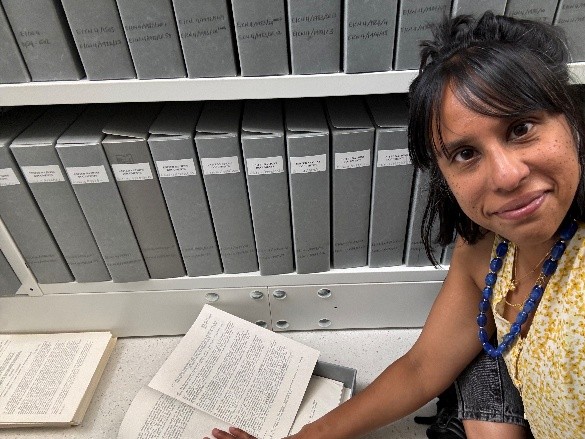
This growing momentum is mirrored in Dr Randhawa’s own research and teaching. With support from the British International Studies Association, she recently completed archival work on the diplomatic history of ecocide at the United Nations. Further funding from the Arts and Humanities Research Council (AHRC) and UWE Bristol’s Higher Education Innovation Fund (HEIF) is enabling her to deliver targeted impact activity with local and national policy-makers.
Alongside this, Dr Randhawa introduced a new undergraduate module on ecocide for Politics and International Relations students at UWE Bristol — one of the first of its kind in the UK. The module has been praised for combining global political theory with real-world environmental challenges. It will run again next academic year, and colleagues interested in collaboration are invited to get in touch.
This workshop was made possible through the support of:
- The British International Studies Association (BISA)
- The British Academy Early Career Researcher Network
- The College of Arts, Technology and Environment and College of Health, Science and Society at UWE Bristol
To connect with Dr Suwita Hani Randhawa or learn more about the Ecocide Researchers Network, email: suwita.hanirandhawa@uwe.ac.uk