

International Women’s Day 2026: Challenging Gender-Based Violence

Posted on

By Chathushka Kiriella 

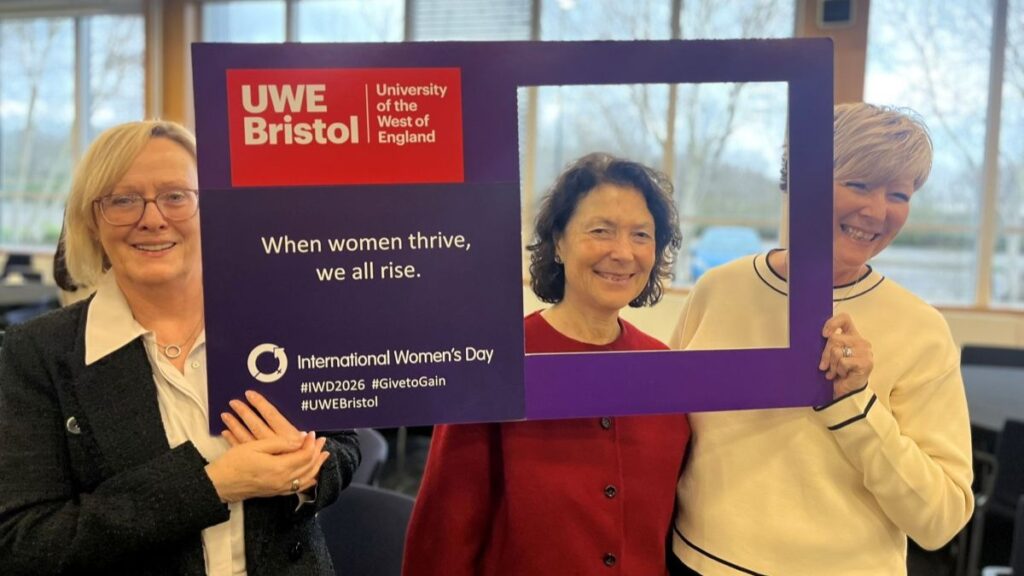
This event, hosted by UWE Bristol, on 6 March 2026, brought together researchers, practitioners and students to explore an urgent theme: challenging gender-based violence. Almost two months on, it is important that these conversations do not lose momentum. The issues raised throughout the event remain pressing for both individuals and institutions, reminding us that International Women’s Day should not mark the end of the conversation, but rather encourage continued reflection, discussion and action.

The event combined a powerful keynote with a thought-provoking panel discussion and interactive stands, offering both critical insight and practical reflection on how change can happen.

Alternative strategies to halve violence against women and girls? 

Keynote by Professor Sylvia Walby – OBE FBA FAcSS, Royal Holloway, University of London 

The keynote from Professor Sylvia Walby set the tone for the day, highlighting the systemic causes of violence against women and girls and alternative strategies to reduce it.

A central message was the importance of specialised support services. Across Britain, hundreds of organisations support survivors of domestic and sexual violence but despite recognition in government strategies, these services receive only a fraction of the funding they need. Professor Walby also drew attention to the importance of gender inequality. While violence against women and girls is widely understood as both a cause and consequence of inequality, this connection is not always visible in official strategies.

Another key theme was how we understand violence itself. Rather than isolated incidents, Professor Walby framed violence as part of a broader social system, linked to institutions such as the economy, the state and civil society. She also highlighted challenges in measuring violence, noting that current data is fragmented and often under-reports the true scale of the problem and its gender dimension. This lack of clear data makes effective policy responses difficult.

Perhaps most striking was the imbalance in funding: while the economic cost of domestic abuse in the UK is estimated at £66 billion, only a tiny proportion is invested in specialised support services. Instead, the focus is on policing and criminal justice.
Panel discussion: insights from UWE researchers

The powerful keynote was followed by a panel discussion which brought together academics from UWE Bristol’s College of Business and Law including Duncan McPhee (Associate Professor), Sophie Marsh (Lecturer in Law) from the Bristol Law School, and Chloe Tarrabain (Senior Lecturer in Organisational Studies) and Stefano Gasparri (Senior Lecturer in HRM) from the Bristol Business School. Each highlighted their research expertise in different aspects of gender-based violence and contributed to discussion which brought to the fore the many shared challenges across policing, the justice system, workplaces and wider society.

A strong theme that emerged was the lack of progress, despite years of research and policy attention. Duncan McPhee reflected on over two decades of work in rape and domestic abuse investigations, noting how many of the same issues particularly around policing failures and limited support for victims remain unresolved. This was especially evident in research on sex workers, where deep mistrust of police continues to act as a barrier to reporting violence.

The discussion also highlighted the complex realities victims face when engaging with the criminal justice system. Sophie Marsh focusing on police interviews with rape survivors noted that, although efforts have been made to reduce trauma such as recording interviews for use in court many survivors still report negative experiences. It was suggested that a key issue is the lack of consistent support throughout the process. At the same time, police officers themselves face competing pressures, balancing the need for trauma-informed approaches with demands to gather evidence quickly and meet legal expectations.

Beyond formal systems, the panel explored how stigma shapes survivors’ everyday lives, particularly in professional environments. Chloe Tarrabain emphasised that victims are often navigating multiple identities as employees, colleagues and professionals while dealing with abuse. Fear of judgement or being perceived as less capable can prevent disclosure, leading individuals to adopt coping strategies such as avoidance or carefully managing how they present themselves at work. These insights highlighted the often invisible emotional labour involved in maintaining a sense of normality.

The conversation also turned to how gender-based violence is framed more broadly. Stefano Gasparri argued that the use of gender-neutral language in policy can obscure the reality that such violence is deeply connected to gendered power imbalances. Workplace sexual harassment, for example, is often treated as a procedural issue rather than recognised as a form of violence. The role of men in addressing these issues was also discussed, with emphasis on the importance and ongoing challenges of encouraging meaningful male allyship.

Taking action: interactive stands

Beyond these discussions, the event also highlighted practical ways to support gender equality.

One example was the presence of Smart Works, an organisation set up to help unemployed women back into work, including coaching, providing ‘ready for work’ clothing and building confidence. Donations of professional clothing were collected to help unemployed women prepare for interviews, an initiative that directly supports economic independence.

A stand organised by Vanda Papafilippou and Chathushka Kiriella invited participants to take part in a “Give to Gain” pledge aligned with the International Women’s Day 2026 theme. Attendees wrote personal commitments to advancing gender equality, contributing to a shared sense of responsibility and action.

These pledges ranged from professional commitments, such as “giving time to mentor others through every step of their journey” and “putting more effort into supporting women through flexible working practices”, to wider reflections on community and culture, including “passing empathy on to future generations” and simply encouraging women to “be kind to each other.”

Final reflections

The event made clear that gender-based violence is not an individual issue; rather, it is systemic, structural, and deeply embedded in society. From gaps in funding and policy to stigma and institutional barriers, the challenges are complex. But the research and discussions at this event also pointed toward solutions: better support services, stronger community engagement, more inclusive policies, better data, more research and a willingness to confront uncomfortable truths.

Most importantly, the event reinforced that meaningful change requires collective effort across researchers, institutions, communities and individuals.

Breaking barriers: what HR professionals need to know about disabled students and placements

Posted on

By Dr Hilary Lowe

Placements are a key part of employability in higher education. They give students real world experience and help employers spot future talent. However, for disabled students, placements can involve barriers that are not always visible.

In a recent systematic literature review co-authored with Dr Laura William from the University of Greenwich and published in Studies in Higher Education1, we explored these challenges in detail. In this blog post, we focus on what the findings mean for HR professionals and placement providers and why inclusive pathways into work matter.

Why building awareness of disability and placements matters for HR and workforce planning

Many employers use placements to build talent pipelines and assess potential recruits. Yet there remains a 27.9 percent employment gap between disabled and non disabled people, alongside widening pay gaps. These inequalities often begin long before formal recruitment.

Placements are frequently a student’s first interaction with an employer. This makes HR teams central to shaping experiences that can influence confidence, skills development and long term career outcomes. Inclusive placements are therefore not just beneficial for students, they are critical for fair workforce planning.

Four key barriers HR should address

Our review of the existing literature identified four connected themes that affect disabled students’ access to and experiences of placements.

1. Organisational processes and systems: The most significant barrier is the lack of timely and effective reasonable adjustments. While the Equality Act 2010 places a legal duty on employers to remove barriers, this duty is often reactive and poorly understood.

Students describe delays, inconsistent support and anxiety about disclosing a disability. For HR professionals, this points to the importance of proactive policies, clear communication and training for managers so adjustments are put in place quickly and confidently.

2. Low expectations: Disabled students often face assumptions about what they can or cannot do. These low expectations can damage confidence and limit opportunities to learn and progress.

Employers who underestimate students’ potential risk missing out on skilled and motivated talent. HR professionals can help by challenging bias, promoting inclusive recruitment practices and designing placements that focus on strengths rather than perceived limitations.

3. Bio-social factors: Many students manage health related needs alongside placement demands. Balancing work and impairment can be particularly difficult when placements are inflexible.

Rigid schedules and limited understanding from supervisors can make challenges worse. HR teams can reduce these pressures by supporting flexible working, enabling access to healthcare where possible and recognising that disability often intersects with factors such as gender, age or cultural background.

4. The nature of the placement: Some placements involve poorly defined tasks, pressure to over perform or feelings of isolation. These conditions can be especially challenging for disabled students.

Inclusive placement design can make a significant difference. This includes meaningful tasks, clear expectations and visible support networks. When placements are well structured, both students and employers benefit.

Implications for HR practice

These barriers reflect wider patterns of disablism in the labour market. For HR professionals, the message is clear. Inclusive placement practices are not only about legal compliance, they are a strategic priority.

By building accessibility and equity into early career programmes, organisations can reach a wider talent pool, improve diversity and strengthen their reputation as inclusive employers.

Our next steps: empirical research

Before starting the systematic review, we established an Advisory Group that brought together placement officers, academics and employer representatives. This helped ensure the research was grounded in practical experience and informed by different perspectives.

As we move into the next phase of our research, we will continue working with this group to gather lived experiences from disabled students and placement providers. This collaborative approach will allow future recommendations to reflect real world insights and support the development of HR policies, employer training and inclusive placement design.

  1. Read the full article here:
    William, L., & Lowe, H. (2025). Barriers and challenges for disabled students when engaging with non-compulsory placements: a systematic literature review. Studies in Higher Education, 1–16.
    ↩︎

Empowering Change Across Borders: The HR, Work and Employment (HRWE) Group’s  International Women’s Day Celebrations 

Posted on

By Chathushka Kiriella, Tinkuma Edafioghor, Vanda Papafilippou and Susan Durbin 

The last couple of weeks have been an incredibly busy and productive time for for HRWE group members as we celebrated International Women’s Day with a series of inspiring events. We wanted to share what we have been doing to Inspire Inclusion and Accelerate Action, the theme of this year’s International Women’s Day and one that resonates with us all as we continue to address gender inequalities and to celebrate women’s achievements and actions.  

The celebrations began within the University with a ‘pledge campaign’ where we asked staff and students to commit to how they would promote gender equality and to reaffirm their commitment to fostering gender inclusivity. Midweek, we hosted an international women’s day celebration event featuring powerful speeches from influential leaders, highlighting the importance of diversity in the workplace. Our activities then turned externally  to an event in London, hosted by the Royal Aeronautical Society’s Women in Aviation, Aerospace and Space Committee, highlighted and honouring the achievements of women in the industry; and a further event in Paris, France, hosted by the Royal Aeronautical Society’s Paris Branch, where we engaged with more incredible women from the aviation sector, sharing experiences and discussing ways to drive inclusive change. These events provided an excellent platform for networking, learning, and celebrating progress toward gender equality. In this blog, we will take a closer look at each event, sharing key moments and takeaways from this inspiring celebration. 


Vanda standing with Andrew Simpson ''Together we can forge Woman's Equality''

To celebrate International Women’s Day, Dr. Vanda Papafilippou and Ms. Chathushka Kiriella organised an interactive event aimed at promoting gender equality and inclusivity within the College of Business and Law (CBL) and wider University of the West of England (UWE Bristol) community. Staff and students participated by adding their personal pledges for gender equality to notice boards in the Atrium area. Organising such an event was crucial for several reasons: it made International Women’s Day more relevant by actively engaging staff and students, prompting them to reflect on their own experiences and the importance of gender equality in their personal and professional lives, and creating a space for open discussions about gender equality. By gathering pledges, the event provided tangible evidence of our community’s commitment to gender equality, which will inform future actions and initiatives, including our Athena SWAN application. 

Many pledges emphasised the importance of supporting gender equality in all areas: workplace, home, and community, highlighting that “the future is dependent on the continued development of gender equality” and that “women should not feel their gender is a barrier to work or education”. Staff and students expressed their commitment to empowering and supporting women and trans women in their personal and professional lives, saying “I pledge to support all women in work and home life,” “I pledge to continue to promote gender equality in my life and my teaching”.  Recognising and celebrating women’s achievements was also a key theme, highlighted by pledges such as “I pledge to make time to celebrate all women’s achievements”. Many pledges also called for active advocacy and taking action to promote gender equality with commitments like “I pledge to raise my voice,” “speak more about it encourage more open talks” and “I pledge to support our amazing UWE female students advocating for themselves and stand up when facing any sort of injustice or devaluing behaviour”. Finally, a great number of participants focused on the need for “equal pay, promotion, career opportunities for everyone” pledging to mentor colleagues and enabling them to reach their full potential. 


Midweek on March 5th, HRWE group members gathered to celebrate International Women’s Day (IWD) in their own unique style at Bristol Business School, UWE. A ‘grand potluck’ was organized, featuring a themed cake. The event began with a welcome speech by Chathushka Kiriella, who emphasized the importance of accelerating action—both in the workplace and in personal life. Whether big or small, committing to action was a key takeaway from her speech. The group lead, Professor Susan Durbin, then addressed the gathering, highlighting the significance of celebrating women and their contributions. 

The event featured three inspiring talks by Dr. Vanda Papafilippou, Dr. Tinkuma Edafioghor, and Dr. Stefano Gasparri. Dr. Papafilippou discussed UWE Bristol Business School’s application for the Athena Swan award and shared key insights into gender equality initiatives at UWE Bristol. Dr. Edafioghor shared her personal experience with the 100 Black Professors Scheme, highlighting the invaluable support she had received as a mentee. Her speech was deeply inspiring and underscored the importance of strong support networks for women. Dr. Gasparri spoke about the crucial role men must play in shifting from bystanders to “man-allies” in protecting women from sexual harassment, sharing key findings from his recent research. The event was filled with inspiration, empowerment, and a strong sense of community. 

The IWD celebrations then expanded to London, where Professor. Susan Durbin, Dr. Tinkuma Edafioghor, and Ms Chathushka Kiriella attended the International Women’s Day event organized by the women in Aviation, Aerospace and Space Committee, Royal Aeronautical Society, London. The event featured inspiring talks by women leaders, panel discussions, and networking sessions. The event was opened by Christine Matthews, WAASC Chair, with a welcome speech from Sameer Savani, GKN, who sponsored the event. Speakers included, Celia Pelaz, COO and Theresa Condor, CEO At Spire Global. There was also a panel event on ‘Voices of the Future” with Maleha Khan, UK Space Agency, Alice Goodwin, Virgin Atlantic and Janine Hornsby, CEO – Air League. The keynote speech was delivered by Former Boeing VP Pam Valdez, who shared the incredible journey of Hedy Lamarr as an inventor—an inspiring story to hear on International Women’s Day. The day rounded off with Professor Susan Durbin presenting on  ‘women’s safety at work’ with Kathleen Lowe, COO, Force Air Defence and Judith Milne, Little Blue Private Jets Limited. The importance of mentoring in this highly male-dominated sector was a theme throughout the day, the alta mentoring platform  being highlited and promoted by the UWE team.  

The final event, sponsored by the University of the West of England and run in parallel with the London event, was the Royal Aeronauticial Society’s Paris Branch IWD event, on 11th March, 2025. The event was base upon an expert panel of six women leaders from the aviation industry, with a focus on actions to improve gender diversity and inclusion and advice from panel members’ experiences of what does and does not work to achieve this. The panel, moderated by Carine Petitdemange, Logix Aero, comprised Yannick Assouad, Thales, Judith Milne, Eastwinds Resort, Anne-Segolene Abscheidt, IPSA, Ann-Marie Matheus Ochoa, Eutelsat and Space women Alliance, Claire Barcham, UK Space Agency and Professor Susan Durbin, UWE. The event was opened by the Branch Chair (David Cooke) and an introduction by Dr Susanne Svensdotter.  

The panel discussed key challenges, including the decline in STEM participation due to educational reforms in France and the importance of fostering interest in STEM from an early age, with parents playing a key role. Panellists emphasised the importance of creating supportive communities, promoting mentorship, and addressing barriers such as visa restrictions and language challenges for international female talents. They critiqued superficial diversity policies, advocating for meaningful cultural change, inclusive language, and environments where women succeed on merit, not quotas. Reverse mentorship was suggested to challenge traditional perspectives, and the importance of diverse career paths beyond engineering — such as HR and data analysis — was highlighted. Intersectionality and microaggressions were acknowledged as significant hurdles for women from diverse backgrounds, with advice to leverage networks and speak out against inappropriate behaviours. David Cooke closed the event with a powerful statement: “The future of humanity is in the hands of women,” leaving attendees inspired to drive lasting change in the industry. 

UWE Comets Cheerleading team posing ''Together we can forge Woman's equality''

The past few weeks of International Women’s Day celebrations have been a testament to the power of collective action in promoting gender equality and inclusivity. From pledge campaigns and interactive discussions to thought-provoking speeches and global networking events, the HRWE group has played a pivotal role in fostering dialogue and inspiring change. The celebrations in Bristol, London, and Paris have provided valuable platforms for sharing experiences, advocating for systemic progress, and emphasizing the importance of mentorship and community support. As we reflect on these impactful events, it is clear that the journey toward gender equality requires continuous effort, collaboration, and commitment. By championing these conversations and supporting one another, we can continue to break barriers and create a more inclusive future for all. 


Formidable Females in Future Flight: Inspiring women through my podcast series 

Posted on

Jo Moses, Founder of Berello

Jo is the founder of Berello, with over 20 years of experience in recruitment and executive search specialising in Aviation, and aerospace, life sciences and pharma, B2B Tech and service, retail and consumer and the public sector.

Known for her dedication to exceptional service, she believes in going above and beyond to serve both clients and candidates throughout the recruitment process. Her approach centres on deep understanding and clear communication, helping both parties connect more effectively

Berello work with companies making a positive impact in the world. They begin every search holistically as to find the best possible talent . They are meticulous in their research to uncover the person that will make the difference for the organisations they work with. 


Jo’s Story

Hiring within the space and aerospace sector, I have found a fabulous and sincere community of individuals. Professionals in this sector are often driven by curiosity and a desire to advance technology, pushing at the boundaries of what is possible, while maintaining an absolute “safety first” culture. They are often very loyal to the projects and companies they are working within and it is usual for individuals to work for the same company for many years. This is one of the reasons, I believe, that organisational cultures can seem to evolve quite slowly, particularly in larger companies.   

This sector boasts some of the largest corporations in the world, their incredible histories and technologies drawing many enquiring minds to join them. The size of these companies, their histories and lengthy individual tenures, seem to combine to create almost indelible organisational cultures. In my view this brings many great advantages, together with some limitations.

One limitation I have noticed is the very low level of gender diversity, particularly in technical leadership roles. It is still relatively uncommon to find a female Chief Engineer or Chief Technology Officer. This is changing and there are many spectacular examples of female leaders, just a lot fewer than men. 

Woman figure in recording studio. On air sign lit to signify recording.

I was inspired to launch my podcast series “Formidable Females in Future Flight” while delivering a search for a role where the talent pool was almost exclusively male. This was not at all to discredit any of these wonderful men, just to highlight more female role models. As we often say within the Royal Aeronautical Society Women in Aviation, Aerospace and Space Committee, “you can’t be what you can’t see”. 

Through my podcast series, I have been privileged to meet inspiring women from all around the world and from many different companies. I always like to ask the guest speaker about what drew them to this sector and their career choice. Interestingly, anyone who consciously chose engineering or other technical roles as their path, seems to have one thing in common, and that is the importance of early inspiration.

It is well documented that girls often self-select away from STEM subjects as soon as they have the chance. By the same token, many of the women I have met, through my podcast series, were inspired by a what they felt was a profound experience as a much younger child (primary/elementary or even pre-school age.) This has included visiting an airshow, living on a flight path or close to an air base, going in a flight simulator with Granddad, sitting with their uncle to watch aircraft, following in the footsteps of family members, etc. They can be relatively simple experiences, but they have changed the whole course of someone’s life. I was keen to capture some of these stories in order to further encourage and empower women to pursue and build their careers in these fabulous sectors. 

Please enjoy this snippet video that captures some of the exciting stories shared with me.


For more information on the work Jo Moses does you can find her Podcast, Formidable Females in Flight here or information on her work in Belrello here.

Invisible Work on Maternity Leave: How the Covid Pandemic intensified and exposed the unpaid work of Mothers

Posted on

Dr Jenna Pandeli, Dr Chloe Tarrabain and Dr Mahwish Khan

In this blog, we draw upon our own research that explored the experiences of new mothers on maternity leave during the pandemic. We unravel the immense layers of unpaid work that mothers undertake and define this as ‘Invisible Work’. Our work aids understanding of the complex layers of emotion work, physical work, and mental load that women are expected to undertake during maternity leave.

What is Invisible Work?

The term ‘Invisible Work’ was developed by feminist academic Arlene Kaplan Daniels (1987) to describe women’s unpaid labour, such as housework and volunteer work. The concept has since been expanded and used to describe lots of different types of work (not just ‘women’s work’); work that is not valued economically, legally, culturally and work that is socially marginalized, physically out of sight or some combination thereof (Hatton, 2017). Invisible Work is unseen, unacknowledged and neither defined nor recognized or compensated as labour (Kaplan, 2022). Examples of Invisible Work have included prison labour (Pandeli et al, 2019), ‘dirty work’ (Duffy, 2007; Simpson et al., 2012), sex work (Kotiswaran, 2011), student internships (Hatton, 2017), emotion work and so on. Essentially, Invisible Work is being undertaken everywhere, but because this type of work is hidden in some shape or form, this obscures the fact that work is being performed and therefore this contributes to its economic devaluation.

So, what does ‘Invisible Work’ have to do with maternity leave and the pandemic?

For families, the pandemic meant a collapse of the boundaries between public and private space, where work, childcare and personal time all happened within the home. Research on parenting during the pandemic shows how the lack of separation between these spaces impacted mothers in a more pronounced way than fathers. Findings suggest that mothers experienced far greater anxieties and a greater sense of responsibility for their child’s safety (Ben Yaakov and Ben-Ari, 2021) often assuming accountability for making decisions and warding off the virus (Dutta et al., 2020; Kelly and Senior, 2021), and had an increased mental load (Dean et al. 2021; Kelly and Senior, 2021) than their male counterparts. Maternity leave makes this collapse of boundaries more extreme. Women having babies and taking maternity are removed from the economic labour market and confined to the domestic space. Without respite through social interaction, family and professional support, these women sat at the sharp end of the Covid pandemic. They were completing vast layers of unpaid work – emotional, physical and mental.

Dr Jenna Pandeli, Dr Chloe Tarrabain and Dr Mahwish Khan, all researchers at the University of the West of England gave birth (each to their first child) during the lockdowns of the global pandemic in 2020. Their experiences were understandably distressing, emotional and painful. On returning to work, they joked that they felt like they were ‘on holiday’ – being back at work felt like a holiday, which really made them realise that they had undertaken real, sweated labour while on maternity leave…exhausting, stressful and all-consuming labour…If their (professional, stressful, busy) paid jobs felt like relief/a break, what the hell had they been doing on maternity leave!? As a result, they undertook research, using their own experiences as well as interviewing 13 women who had given birth in 2020 to gain a deeper understanding of the type of work they were undertaking whilst on maternity leave in a pandemic.

What type of work were mothers undertaking on maternity leave in the pandemic?

Their research found that new mothers were undertaking significant layers of work during their maternity leave in the pandemic that included such things as:

  • Managing the expectations of maternity leave versus the reality of their experiences
  • Struggling to be heard and advocate for themselves in the absence of support
  • Managing safety, fear, and risk to keep themselves and their babies safe during the pandemic
  • Managing boredom, monotony, and loneliness due to isolation, restrictions, lockdown, and the confinement of motherhood more generally
  • Managing the relentlessness of caring for a baby whilst never being able to ‘switch off’
  • Managing and worrying about societal expectations of being the ‘ideal mother’

The Covid-19 pandemic dramatically altered the expectations and experiences of mothers during their maternity leave; adjusting to these changes and managing their expectations took its toll. Initially anticipating a period of bonding and shared joy, many women found themselves isolated, with limited social interactions and a sense of stolen moments. The absence of crucial social support networks left mothers mourning the maternity leave they had envisioned. The emotional and mental work needed to manage these expectations was often overlooked.

Many mothers felt that their experiences were devalued, leading to feelings of abandonment and disempowerment. Without adequate professional and social support, they had to navigate complex healthcare decisions and the challenges of early motherhood largely on their own, often feeling dismissed. They encountered the usual trope of being considered overly emotional, irrational, and hysterical. Their struggles were not treated as legitimate, and they were forced to ‘just get on with it’ at every stage. Fielding-Singh and Dmowska (2022) have shown us that women experience gaslighting during pregnancy, childbirth, and postpartum; their realities are denied and thereby destabilized; mothers are rendered non-credible, and their experiences are not taken seriously. Even large organisations are now starting to acknowledge gender bias in healthcare and pain (See Nurofen’s recent ‘See My Pain’ Campaign here: See My Pain | Nurofen). Therefore, women were forced to undertake intense amounts of labour in order to advocate for themselves and their children during this time, and ensure their voices were heard.

Balancing the risks posed by the pandemic with their emotional wellbeing became a complex challenge for many mothers on maternity leave during this time. The lifting of restrictions introduced new fears and anxieties e.g. ‘Restrictions have eased but is it actually safe to go out?’ or ‘I had planned to meet a friend outside for coffee, but she has been in contact with someone who has covid – should I cancel plans?’ Constantly having to make these decisions with limited information, not only for themselves but also to protect their baby only added to their emotional burden and decision fatigue.

Additionally, loneliness and monotony became prominent features of maternity leave during covid as the absence of social support intensified feelings of isolation. Women had to form networks, reach out, socialise while physically and mentally exhausted in order to manage their mental health on maternity leave. Organising coffee meetups or play dates with the added pressure or masks, navigating lockdown rules and restrictions, lateral flow tests etc. was challenging and exhausting, albeit necessary for survival.

Mothers felt immense, relentless pressure to meet unrealistic expectations of being the ‘perfect’ mum, which was exacerbated by the lack of social support, resulting in feelings of exhaustion, guilt, shame, and a distorted sense of self-worth. Society tells us:

“You must feed your child healthy, home-cooked food, but you must still make time to play with them, you must not use screen time, but you must ensure your home is always clean. You must be a calm and gentle parent, but you must parent without support. You cannot use soothers, but your child must nap independently…. actually, don’t let your child nap independently enjoy this time together and have contact naps. You should breastfeed but not for too long. You should go back to work after your maternity leave, but if you do go back, you are neglecting your child. You must ensure you have some ‘me time’ but only after everyone else in your household is sorted and your chores are done. Motherhood is a blessing, and you must enjoy every minute so please don’t complain…. oh, and by the way, when are you going to have another child?’

These are the constant messages, often conflicting and confusing, that women are bombarded with on a daily basis. Mothers are expected to strike exactly the right balance in all areas of their child’s life and development and are considered failures if they can’t meet these impossible expectations, whilst isolated and doing it all alone. Inevitably, this pressure leads to burnout for many mothers.

These are just a handful of examples of the emotional, physical, and mental work taking place whilst on maternity leave and well into motherhood.

What does this tell us about maternity leave more generally? are these experiences only relevant to the pandemic?

Overall, the research argues that these experiences are not necessarily unique to the pandemic, instead what was discovered was the Invisible Work of maternity leave more generally. The pandemic allowed us to see more clearly the work that new mothers were forced to undertake whilst on maternity leave. Covid-19 exacerbated the difficult experiences of motherhood, isolating mothers, removing support, and pushing Invisible Work to an almost unbearable extreme. But we can learn from these experiences as we can now see more clearly the multiple layers of work being undertaken on maternity leave.

You can find out more about this research, read the full report and see the recommendations we make to organisations, policymakers and families going forward here. Please get in touch with Jenna Pandeli if you would like to know more.


References

Ben-Yaakov, O. and Ben-Ari, O.T (2022) Covid-19-Related anxieties and parenting stress among first-time mothers and fathers in their first year of parenthood. Psychology & Health, 37(11),1327-1341.

Dean, L., Churchill, B., & Ruppanner, L (2021) The mental load: building a deeper theoretical understanding of how cognitive and emotional labor overload women and mothers. Community, Work & Family, 25(1), 13-29.

Duffy M (2007) Doing the dirty work: gender, race, and reproductive labor in historical perspective. Gender & Society, 21(3): 313–36.

Dutta, M., Agarwal, D., & Sivakami, M. (2020 The “invisible” among the marginalised: Do gender and intersectionality matter in the Covid-19 response. Indian Journal of Medical Ethics, 5(4), 302-308.

Fielding-Singh, P. & Dmowska, A (2022) Obstetric gaslighting and the denial of mothers’ realities. Social Science & Medicine, 301: 1-8.

Hatton, Erin (2017). Mechanisms of invisibility: rethinking the concept of Invisible Work. Work, Employment and Society, 31(2): 336–351.

Kaplan Daniels, Arlene (1987). Invisible Work. Social Problems, 34(5): 403–415.

Kaplan, Amit (2022). ‘Just Let it Pass by and it Will Fall on Some Woman’: Invisible Work in the Labor Market. Gender & Society, 36(6): 838-868.

Kelly, S., & Senior, A (2021) Towards a feminist parental ethics. Gender, Work & Organization, 28(2): 807-825.

Kotiswaran P (2011) Dangerous Sex, Invisible Labor: Sex Work and the Law in India. Princeton, NJ: Princeton University Press.

Pandeli, J., Marinetto, M. and Jenkins, J., 2019. Captive in cycles of invisibility? Prisoners’ work for the private sector. Work, Employment and Society, 33(4): 596-612.

Simpson R, Slutskaya N, Lewis P, Höpfl H (eds) (2012) Dirty Work: Concepts and Identities. London: Palgrave Macmillan.

Studying at Soft Play: Giving Student Parents in HE a Voice

Posted on

Stress in students is well-documented in the literature as having negative effects on cognitive, emotional and physical health.  We’re all aware of the great stress most of our students are under, juggling paid work with university work, the ever-rising cost of living, negotiating personal relationships and trying to carve out time for a social life.  But add into the mix, the challenges associated with being a parent, and the stress triggers are amplified.  This blog post by Dr Hilary Drew discusses a new research project, in collaboration with Cardiff Metropolitan and Aberystwyth universities, investigating how students, who are also parents, juggle the demands of family, university work and sometimes paid work and how their ability to complete their chosen programme of study is affected.


What do we know?

Student parents in Higher Education (HE) are not a new phenomenon. Widening participation strategies since the late 1990s have deliberately targeted mature students, a demographic more likely to have caring responsibilities for dependent children than the under-21s (Brooks, 2012).  We know that student parents typically come from disadvantaged socio-economic backgrounds and may experience intersectional inequality due to class, gender, disability or ethnicity (Moreau, 2016; Arday, 2017).  Furthermore, in latter years, the number of international students, especially at postgraduate level, has increased. Many of these students are also likely to have dependents, as highlighted by changes to student visa requirements from January 2024, impacting students with dependents.

Whilst we can estimate that there has been an increase in the number of students who fall into the category of being most likely to have parental responsibilities, there are no exact figures available. This is not surprising, as there is no requirement to collect data about student parents, either at institutional or national level.  The Higher Education Statistics Agency (HESA) does not require that universities collect data on caring responsibilities, and many universities do not systematically collect information on student parents.

Hidden Figures

In our provisional enquiries here; at UWE Bristol, we contacted a number of different services across the university to find out whether or not our institution collects any data on student parents, as well as to ascertain the extent to which students with dependents are visible at UWE Bristol.  However, in line with the literature, and in common with the findings of the two other institutions in our research project, we were unable to piece together a conclusive picture of student parents at our institution.  Nevertheless, many student-facing services admitted that more information about student parents would assist them greatly in designing and delivering more targeted support and other initiatives.

Our enquiries about student parents bounced around the university; for example, we were directed to the Student Advice Team, as they support students facing both personal and academic challenges. We were recommended to contact Halley Nursery, but obviously this did not give us a full picture, because students can use other childcare services.  We also spoke to Student Money Services as students may access the Enhanced Childcare Bursary, amongst other university service providers.  Evidently, a further obstacle in obtaining this information is GDPR issues, as services are not able to share sensitive data on individual students and there is no central system where all the different pieces of information about students are captured.

‘That’ Gap

The conflicting demands of being a student and a parent are already well-documented in the literature, as well as, in some cases, undertaking paid work. It is widely reported that balancing parenting and academic work requires careful planning, in contrast with the widespread assumption that students’ lifestyles are hedonistic (Hodge, 2002). Moreover, unequal gender responsibilities at home, which we see elsewhere in society, also play a role here (Connell 2013; Osborne et al., 2004). Student-mothers report needing to develop coping strategies to manage their academic workload.  These include studying when children are at school or nursery, or in bed and restricting any non-university or non-child-related activities (Moreau and Kerner, 2015).  We’ve met parents of younger children who have even admitted to taking study notes along to soft play! Student-mothers admitted feeling guilty about trying to juggle motherhood and their studies; whereas Brooks (2015; 2012) found that student-fathers did not report feelings of guilt about being a student and a parent.

Since most universities are not set up to support students with dependents (Moreau, 2016), once on campus, we see student parents facing a myriad of challenges due to  HE structural and policy barriers (poor on-site childcare facilities; restrictive ‘no child on campus’ policies; late availability of timetables; lectures scheduled too early or too late (Osborne et al., 2004; Alsop et al. 2008; Brooks, 2012; Brooks, 2015; Moreau and Kerner, 2015; Moreau 2016).

Where Next?

Building on the work of Claire Evans (Cardiff Metropolitan University) on student parents during the pandemic (Evans, 2023 Forthcoming),  Hilary Drew[1], Damian Whittard[2], Mahwish Khan[3] and Lucy Venables[4] from UWE, together with Dr Evans[5] and Megan Williams[6] (Aberystwyth University) have gained ethical approval to find out more about students with dependents and are seeking funding to begin work on a project, entitled A Cross-Institutional Analysis of Student Parents’ Experience of Studying in Higher Education.

The overarching aim of the research is to examine parental provision at the three institutions, with the aim of encouraging our institutions to make student parents visible and to use their voices and experiences to inform policy and practice. Across the three institutions (Cardiff Metropolitan University, UWE and Aberystwyth University), we will focus on two key research questions:

To determine how being a student-parent affects engagement with the programme of study;

To determine what kind of initiatives help or hinder student-parents to pursue their HE goals.

Given the exploratory nature of the research questions, a qualitative approach will be adopted. To that end, a series of semi-structured interviews, lasting approximately 60 minutes, will be undertaken. In order to ensure that we can be as flexible as possible, and can fit into the participants’ already busy lives, these interviews will be performed on-line via Teams, telephone or in-person, according to the availability of the participants.  For more information about the study and how to participate, please see our Sway presentation and/or get in contact with Dr Hilary Drew hilary.drew@uwe.ac.uk .


References

Alsop, R., Gonzalez‐Arnal, S. and Kilkey, M. (2008). The widening participation agenda: The marginal place of care. Gender and Education20(6), pp.623-637.

Arday, J. (2017). Exploring black and minority ethnic (BME) doctoral students’ perceptions of an academic career. University and College Union.

Brooks, R. (2012). Student-parents and higher education: a cross-national comparison. Journal of Education Policy27(3), pp.423-439.

Brooks, R. (2015). Social and spatial disparities in emotional responses to education: feelings of ‘guilt’ among student‐parents. British Educational Research Journal41(3), pp.505-519.

Connell, R. (2013). Gender and power: Society, the person and sexual politics. John Wiley & Sons.

Evans, C. (2023) ‘Failing as a parent, failing as a student’: the challenges faced by student parents in the COVID-19 pandemic. Forthcoming.

Hodge, M. (2002) Examination of witness, question 263 (London, House of Commons Select Committee on Education & Skills).

Moreau, M. P., & Kerner, C. (2015). Care in academia: An exploration of student parents’ experiences. British Journal of Sociology of Education, 36(2), 215-233.

Moreau, M.P. (2016). Regulating the student body/ies: University policies and student parents. British Educational Research Journal42(5), pp.906-925.

Osborne, M., Marks, A. and Turner, E. (2004). Becoming a mature student: How adult applicants weigh the advantages and disadvantages of higher education. Higher education, 48, pp.291-315.


[1]  Hilary Drew gained her PhD from Cardiff University. She joined UWE in 2011 and is currently the Director of Partnerships and International at CBL.  She is a member of the HRWE and DRAGoN groups and her research interests are in low pay and student working.

[2] Damian Whittard is an Associate Professor in Economics at UWE, Programme Manager of the Wage and Employment Dynamics Project, and an Academic Assessor for the Government Economic Service. Additionally, he is a Research Fellow funded by ADR UK, an ESRC investment.

[3] Mahwish Khan has a PhD from UWE and she is the Associate Director of Organisation Studies cluster and a member of the HRWE Group. Her research interests include gender and employment, equality and diversity management and comparison of public and private sector employment practices. 

[4] Lucy Venables is the School Manager for Bristol Business School, UWE. She has over seven years’ experience working in student service roles in universities and is interested in using research to better understand and support the student experience.

[5] Before turning to academia, Dr Claire Evans qualified as a chartered accountant with PwC (Coopers & Lybrand Deloitte at the time) and worked in industry. Since working at Cardiff Metropolitan University, Claire’s research interests have focused gender, inequality and low-pay.

[6] Megan Williams, Aberystwyth University, is a qualified accountant (CIMA). She has taught in Higher Education for over 20 years, teaching financial and management accounting to UG and PG students.

Exploring the experience of neurodivergent engineers in the workplace: Re-crafting engineering?

Posted on

Dr Vanda Papafilippou & Miss Lucy Downes

The neurodiversity paradigm views neurodiversity as natural variations in human cognition that should be equally valued and celebrated (Chapman, 2022) thus challenging earlier research (and practice) that tended to take a deficit perspective and referred to ADHD, Autism, Dyslexia, Dyscalculia, etc. as disorders that needed to be ‘treated’ (Chapman and Bovell, 2022). Nevertheless, despite the increased awareness of the strengths of neurodivergent thinking and the value that diverse perspectives can bring to organizations (Kirby and Smith, 2021), neurodivergent people may experience discrimination and marginalization once disclosing to their employer (Baldridge and Swift, 2013; Johnson and Joshi, 2017). What is more, to date there is limited research that explores the perspectives of neurodivergent employees to gain an understanding of contextual factors that might create barriers in the workplace (Doyle and McDowall, 2021) but also about how neurodivergent people approach work in general. 

This blog entry looks at neurodiversity from both an academic/research and practitioner perspective, offering some practical future directions for employers. We are specifically focusing on an aspect of our findings: how neurodivergent engineers engage in job crafting. In order to do so, we draw upon Lazazzara et al.’s (2020) job crafting process model which considers the job crafting motives, the impact of context, the forms of job crafting, personal factors and the job crafting consequences.

Our exploratory study focused on how neurodivergent engineers (all sectors, including software) experience the entire employee lifecycle (i.e., recruitment, career development and progression). We chose to focus on engineering as, anecdotally, there are many neurodivergent individuals in the profession as neurominority thinking strengths align to engineering skills, such as creative thinking and attention to detail (Engineering Council, 2022; Loiacono and Ren, 2018). 

Background

Wrzesniewski and Dutton (2001) noted that the need for control over work, establishing a positive self-image and connections with others motivate to engage in job crafting, which, in its turn, is argued to enhance the person-career fit (De Vos et al., 2020) and stimulate employees’ career growth (Hall and Las Heras, 2010). Employees may be proactively and/or reactively motivated to craft their jobs and that the form of job crafting depends also on contextual factors, such as organisational climate and job design components (e.g., resources, workload, demands) (Lazazzara et al., 2020).

However, to date there are no studies on how neurodivergent employees might engage in job crafting. An important gap considering that neurodiverse employees are often excluded and marginalised in the workplace due to negative stereotyping (Den Houting, 2019; Patton, 2019; Priscott and Allen, 2021) and negative organisational cultures (Kapp et al., 2019; Saleh et al., 2022) and this might impact their self-confidence, relationships with colleagues and control over work (Booth, 2016; Sheppard et al., 2016). Taking into consideration that there is little research on neurodiversity and employment (Doyle and MacDowall, 2021) this gap becomes even more pertinent. Therefore, we asked:

What processes can be identified that illustrate when and how neurodiverse engineers engage in job crafting?

How do contextual factors (i.e., organisational climate and job design) influence neurodiverse engineers to engage in job crafting?

 This was a qualitative study drawing upon in-depth semi-structured interviews. We interviewed 35 engineers (i.e., chemical, mechanical, aerospace, civil, software, oil & gas), male (24) and female (11), mostly of White British, one White Australian and 2 from ethnic minority backgrounds (British Asian, British Black). Participants were mainly employed (i.e., in large and smaller organisation) apart from two who were self-employed/ contractors. The participants were recruited using purposive sampling and access was sought via personal contacts, social media (Facebook groups, Twitter, LinkedIn), support from large Engineering organisations (HR and Employee Resource Groups), the Engineering Council, and snowballing. The interview schedule was developed following guidance from Norris et al. (2020) to acknowledge the challenges that autistic participants in particular might encounter. Towards this end we have also included semantic prompting (i.e., a general prompt before asking for a specific instance) and visual prompting.

Findings

To analyse our findings, we drew upon Lazazzara et al.’s (2020) job crafting process model which considers the job crafting motives, the impact of context (supportive vs. constraining), the forms of job crafting (i.e., approach job crafting, avoidance crafting and crafting in other domains), personal factors (supportive vs. constraining) and the job crafting consequences.

The engineers in our sample seemed to engage in job crafting mostly reactively (e.g., because of pressure to behave as ‘engineers’ and work following a specific pattern) but also proactively (e.g., shape their careers/roles according to their strengths, use some strategies in order to improve their performance), depending on how supportive their organisational context was. However, most of them, and especially those in larger organisations, appeared to be experiencing constraints not only due to the organisational context (e.g., negative stereotyping, lack of support from HR and especially their line managers) but also professional standards (e.g., they struggled to ‘fit the box’ of being a chartered engineer). In some cases, line managers ruled out progression opportunities based on the stereotypical assumption that neurodiverse individuals lack the social skills needed to manage a team. The forms of job crafting that are emerging so far are: approach crafting (e.g., adding tasks they enjoyed doing more of, establishing different ways of managing their teams), avoidance crafting (e.g., avoiding networking or socialising, avoiding for going for certain promotions) but also crafting in other domains (e.g., adjusting their working hours when working remotely, changing their physical environment, etc.).

Practical Implications

Our findings can provide a set of practical implications for Engineering as a sector and organisations. Given the current skills shortage of engineers (Armitage et al., 2020), it is of crucial importance that the sector adapts its practices to ensure that it attracts, recruits, and retains neurodiverse engineers through building a genuinely inclusive professional culture which is also reflected on the criteria for chartership (i.e., being less prescriptive). The key learnings for HR are:

Commitment to an inclusive workplace culture

Organisations need to move away from deficit thinking around neurodiversity and work towards a more positive and inclusive culture which in its turn, will provide a supportive context for job crafting and most importantly enhance the sense of organisational and professional belonging.

Retention of talent: revisiting job descriptions career progression criteria

Organisations need to carefully reconsider job design (e.g., Do all engineers need to approach the problem in the same way? What skills and experience are essential?) and ensure that they offer autonomy in carrying out job activities (but also support when neurodiverse employees might struggle with their work-life balance).

Performance management

All line managers should be trained in how to manage, support, and review the progress of neurodiverse employees. HR could also evaluate performance management, using a neurodiversity lens, and identify which encouraged behaviours (e.g., being ‘diplomatic’) or practices (e.g.., networking) might impede career progression and/or influence what considered ‘good performance’.


References

Armitage, L., Bourne, M., Di Simone, J., Jones, A. and Neave, S. (2020). Engineering UK 2020: Educational pathways into engineering. EngineeringUK.

Baldridge, D.C. and Swift, M.L. (2013) Withholding requests for disability accommodation: The role of individual differences and disability attributes. Journal of Management. 39 (3), pp.743-762.

Baron-Cohen, S., Wheelwright, S., Stott, C., Bolton, P. and Goodyer, I. (1997) Is there a link between engineering and autism?. Autism. 1 (1), pp.101-109.

Booth, J. (2016) Autism equality in the workplace: Removing barriers and challenging discrimination. London: Jessica Kingsley Publishers.

Chapman, R. (2020) Defining neurodiversity for research and practice. In Chapman, R., ed. (2020) Neurodiversity Studies. London: Routledge, pp. 218-220. 

Chapman, R. and Bovell, V. (2022) Neurodiversity, advocacy, anti-therapy. In Matson, J. and Sturmey, P. (2022) Handbook of Autism and Pervasive Developmental Disorder. Springer, Cham, pp. 1519-1536. 

Costello, E., Kilbride, S., Milne, Z., Clarke, P., Yilmaz, M. and MacMahon, S.T. (2021) September. A Professional Career with Autism: Findings from a Literature Review in the Software Engineering Domain. In European Conference on Software Process Improvement. Springer, Cham.

De Vos, A., Van der Heijden, B. I. J. M. and Akkermans, J. (2020). Sustainable careers: Towards a conceptual model. Journal of Vocational Behavior. 117: 103196, pp. 1-13.

Den Houting, J. (2019). Neurodiversity: An insider’s perspective. Autism. 23 (2), pp. 271-273.

Doyle, N. and McDowall, A. (2021) Diamond in the rough? An “empty review” of research into “neurodiversity” and a road map for developing the inclusion agenda. Equality, Diversity and Inclusion: An International Journal. 41 (3), pp.352-382.

Engineering Council (2022) Neurodiversity Celebration Week. Available from: Engineering Council (engc.org.uk) [Accessed 4 January 2023]. 

Hall, D. T. and Las Heras, M. (2010) Reintegrating job design and career theory: Creating not just good jobs but smart jobs. Journal of Organizational Behavior. 31, pp. 448–462.

Johnson T, D. and Joshi, A. (2016) Dark clouds or silver linings? A stigma threat perspective on the implications of an autism diagnosis for workplace well-being. Journal of Applied Psychology. 101 (3), pp. 430–449.

Kapp, S.K., Steward, R., Crane, L., Elliott, D., Elphick, C., Pellicano, E. and Russell, G. (2019) People should be allowed to do what they like:  Autistic adults’ views and experiences of stimming. Autism. 23 (7), pp.1782-1792.

Kirby, A. and Smith, T. (2021) Neurodiversity at work: Drive innovation, performance and productivity with a neurodiverse workforce. London: Kogan Page Publishers.

Lazazzara, A., Tims, M. and de Gennara, D. (2020) The process of reinventing a job: A meta–synthesis of qualitative job crafting research. Journal of Vocational Behavior. 116: 103267, pp.1-18.

Loiacono, E.T. and Ren, H. (2018) Building a Neurodiverse High-tech Workforce. MIS Quarterly Executive. 17 (4),  pp.263-279.

Norris, J. E., Crane, L. and Maras, K. (2020) Interviewing autistic adults: Adaptations to support recall in police, employment, and healthcare interviews. Autism. 24 (6), pp. 1506–1520.

Patton, E. (2019) Autism, attributions and accommodations: Overcoming barriers and integrating a neurodiverse workforce. Personnel Review. 48 (4), pp.915-934.

Priscott, T. and Allen, R.A. (2021) Human capital neurodiversity: an examination of stereotype threat anticipation. Employee Relations: The International Journal. 43 (5), pp. 1067-1082.

Saleh, M.C., Chang, H.Y., Bruyère, S.M. and Vogus, T.J. (2022) Employment Selection Methods and Individuals with Autism Spectrum Disorder. In: Bruyère, S.M. and Colella, A. eds., (2022) Neurodiversity in the Workplace: Interests, Issues, and Opportunities. New York: Routledge.

Sheppard, E., Pillai, D., Wong, G.T.L., Ropar, D. and Mitchell, P. (2016) How easy is it to read the minds of people with autism spectrum disorder?. Journal of autism and developmental disorders. 46 (4), pp.1247-1254.

Wrzesniewski, A., & Dutton, J. E. (2001) Crafting a job: Revisioning employees as active crafters of their work. The Academy of Management Review. 26 (2), pp. 179–201.

Can industrial relations and trade unions be ‘smart’ in the digital world of work? Insights from three cases: Industry 4.0, e-commerce, and digital platforms in Italy

Posted on

Dr Stefano Gasparri

The effect of digitalization

Digitalization has become the ‘buzzword’ that captures all aspects of technological change associated with the increasing use of digital technology in organizational and productive processes, especially after the outbreak of the Covid-19 pandemic and the diffusion of remote work that followed.

The business case seems straightforward: Digitalization drives productivity and, therefore, organisational growth and profitability (Forbes 2022; WEF 2023). However, we know that the digital transformation of workplaces is not a neutral process for the people involved and, in particular, it affects how workers and their managers interact. Indeed, digitalization is leading to standardization, work intensification, monitoring and surveillance of workers in an increasing number of workplaces. The spread of digital ‘labour platforms’ is also conducive to novel transformations of the ‘standard’ type of employment contract and presents trade unions with further difficulties in representing new groups of ‘atypical’ workers, such as ‘gig’ workers. Furthermore, the labour-replacing impact of digitalization may be considerable, especially for low skilled workers in low pay sectors and in countries with low levels of digital infrastructure and e-skills development.

To engage with these emerging issues, Arianna Tassinari and I investigated the capability of trade unions in Italy to actively govern and respond to the challenges of digitalization in the regulation and reordering of work and employment or, very simply put, to be tech-savvy and ‘smart’. The resulting research led to an article, published in the journal Relations Industrielles Industrial Relations and now ( open access) exploring three illustrative issue areas that encapsulate the main challenges and opportunities of digitalization.

The research

We began by considering the role of trade unions in policy discussion surrounding the technological restructuring that digitalization imposes across the economy (e.g., Industry 4.0). We followed by examining trade union efforts to bargain with disruptive players, such as e-commerce platforms (e.g., Amazon). We then investigated trade union responses to the spread of ‘platform work’ as a novel model of work organization and contracting (e.g., food-delivery digital platforms). In general, upon a review of the literature and interviews with trade union officials and industrial relations experts; we note that union strategies and their effectiveness have been significantly shaped by the interplay between the political opportunity structure unions face at different levels and the power resources and capabilities they can mobilize.

First, the depth of trade union involvement in national policy initiatives such as Industry 4.0 remained limited, akin to ‘cosmetic’ consultation rather than substantive negotiation. Trade unions have thus sought to make use of their resilient power resources—especially network embeddedness and narrative resources—to develop their framing and learning capability. They have invested considerable resources, in both their production of knowledge to influence public debate about digitalization and their capability for intermediation and articulation. Simultaneously they work with employer organizations to extract concessions from the government on issues such as skill development.

Second, trade unions aiming to bring to the negotiating table key players in e-commerce such as Amazon took advantage of the degree of resilience that collective bargaining still enjoys in the country but, at the same time, faced difficulties due to the unilateral approach to industrial relations by management and the differences in the employment contract model between, first of all, warehouse workers and drivers. Results, as expected, were mixed: major agreements to regulate work and employment at Amazon were signed, but fragmentation between segments within sectors persisted, i.e., between those who are covered by protective institutions and those who are not.

Thirdly, given that digital platforms fall outside the scope of existing workplace representation and collective bargaining institutions, established trade unions have been limited in the channels of action available to them. Because of this, they have not yet managed to intervene effectively in the emerging platform economy through traditional, grassroots unionization. Instead, in the case of drivers, they have focused on strengthening their framing and intermediation capabilities by amplifying the demands of self-organized riders and pursuing novel collaborations and strategic alliances with the riders’ organizations. In this regard, they have shown themselves able to adapt their repertoires of action to compensate for their weaknesses.

Our conclusion

Overall, our findings suggest that unions have been able to respond to and manage digitalization. They have expanded already established institutions and utilised collective bargaining by investing considerable resources and by using their varied capabilities. The desirability of strengthening collective bargaining is unmistakable. It remains to be seen however, if such adaptive approaches are ‘smart’ enough to effectively govern the digital transformation of work for the whole supply chain or, if more radical institutional experimentation will become necessary. In particular, will this be enough for areas with weaker labour markets and areas with more hostility to organized labour? Either way, even if the goal of ‘smart’ industrial relations might be achieved in ways that are far from straightforward, trade unions still have an active role to play.


References

Gasparri, S. and Tassinari, A. (2020), ‘Smart’ Industrial Relations in the Making? Insights from Analysis of Union Responses to Digitalization in Italy, Relations industrielles / Industrial Relations, 75(4): 796-817.

WEF (2023), Why we need to prioritize digital transformation – even in a downturn

Forbes (2022), The Path To Digital Transformation For Businesses


Researching equality, diversity, and inclusion in Italy: why are transsexual individuals not included in the ‘equality debate’?

Posted on

Please note, this article discusses topics of suicide and discrimination and may be distressing or triggering for some. Links for support on topics that are discussed in this article can be found at the bottom of this page.

Sara Fanti

As an international PhD student researching pay gaps, gender, and sexual orientation in the context of my native country – Italy, I read a number of Italian newspaper articles to keep up with the latest business world news as well as current events in general. One article, in particular, caught my attention. This article left me baffled and in deep grief for my country, my community, and humanity: The suicide story of a transgender woman.

The story of Cloe Bianco

A single tree with a rope swing sits on a pink field with a baby blue sky, giving connotations of the trans pride flag.

Cloe Bianco was a high school teacher at the “Scarpa-Mattei” Agricultural School in San Donà di Piave (VE), Italy. In 2015 Cloe decided to ‘come out’ as a transgender woman to the school where she had worked for years. Specifically, to come out to her students, finally living her life as the person she had always felt she was “since she was 5 years old” (La Stampa, 2022). On the morning of 27th of November, Cloe walked into her classroom and introduced herself with her new name, asking her students to refer to her using the correct pronouns she/her. Unfortunately, Cloe’s courage to be herself did not sit well with some of the parents of her students, who promptly e-mailed the regional alderman for the Ministry of Education to complain about what had happened. This resulted in Cloe receiving a disciplinary sanction resulting in a three-day suspension, followed by a demotion to administrative roles in a back office of the school where she was permanently employed, and subsequentially any other schools in her Region (i.e. Veneto) where she tried to work as teacher (Open, 2022)[1].

On the 11th of June 2022, the remains of Cloe’s body were found in a torched campervan where she had been living in isolation for seven months. The investigation that followed uncovered a suicide letter left in her blog. The verdict: Cloe died of suicide at the age of 50, after she had been actively prevented from fulfilling her fundamental Constitutional right and duty to work (Art. 4 of the Italian Constitution).

Cloe’s story is just one of the many where active discrimination in the workplace undermines the lives of Italian LGBT+ people every single day. Whilst most western countries focus, more or less effectively; on developing inclusivity within the labour market, Italy falls far behind.

Even failing to legislate basic, protective laws against discrimination for gay, bisexual, transgender or non-binary people.

So, my question, as an extremely frustrated Italian academic is this.

Why, in Italy, is it so easy to ruin the life of somebody who works in the public sector by explicitly discriminating against them and get away with it?

To answer this question, it is first important to understand the influence of culture on the debate around gender vs. assigned-at-birth sex, and how this ultimately results in the lack of interest when including sexual and gender-based minorities in the equality, diversity, and inclusion debate.

Gender vs. Sex

The debate of gender and gender identities is not new in literature. Nonetheless, the definition of ‘What is gender’ is still very relevant and in a constant flux of redefinition and negotiation. A simple definition accepted by LGBT+ literature is that gender refers to the psychological sense of self, it relates to how someone deeply and truly feels on the inside and that this is based on their individual understanding of genders. Anatomical sex (or assigned-at-birth sex) is typically assigned at birth based on biological and physical characteristics such as chromosomes, hormones, genitals, body hair etc.

Queer theorists define gender as the result of power performances, negotiated within societies which are influenced by culture and the historical period (Foucault, 1981; Butler, 1990, 1993; Harding, 1998) It is performed in every moment and aspect of individuals’ lives throughout external appearance – gestures, language, clothes – prior to any choice of gender identity (Butler, 1990). Soon-to-be-parents are told what sex the baby will be, and while raising them, project their own socially learnt bias of gender. These include a series of norms on how to behave, how to dress, how to express emotions and, how to care for others, which differ depending on the assigned-at-birth sex.

The biological sex assigned at birth, plays a pivotal role in the societal expectations placed upon an individual. These expectations are dependent on whether they are born with female or male characteristics and can begin to form before they are even born. Gender identity however, develops within an individual’s sense of self and defines what an individual believe about themselves and who they are. Sometimes, this might not coincide with the anatomical or biological sex. Transgender, transsexual, gender-queer (GQ), gender-fluid, non-binary are all terms that are used to describe people whose gender identity does not align with their anatomical or biological sex (Stonewall, 2020).


“Gender identity develops within an individual’s sense of self and defines what an individual believe about themselves and who they are…”


Nevertheless, this definition of gender is often refused by institutions of conservative countries such as Italy, where an essentialist idea of sexuality is still very predominant. Within a gender essentialist paradigm every person is believed to be born with a male or female “essence” which is determined by the biological sex assigned at birth (Gagnon & Parker, 1995). Femininity and masculinity are, therefore, understood as a natural contraposition of sexes that is at the essence of sexuality regardless the culture and historical time, is defined by biology and chromosomes, and is carried within it a definite set of personality traits. The first gentle and maternal, and the other aggressive and strong (Segal, 1994).

Essentialist standpoints are often used to rationalise gender-based biases and heterosexist or transphobic discourses. For example, to justify the gender segregation of the labour market, gender pay gaps, and to withhold legislation in support of LGBT+ rights. Gender essentialists’ standpoints are clearly taken in the Italian political debate and supported by the Catholic Church which deeply influence political choices and welfare measures in Italy in a clientelist relationship.

When inclusivity is not even in the picture

A slate-grey city scape immersed in fog, displaying a foreboding scene

The first attempt to give a definition of gender as opposed to anatomical sex has been introduced in the proposal of the so-called DDL Zan (Disegno Di Legge, tr. Law Draft). Drafted in 2019, by Alessandro Zan, a member of the Chamber of Deputies and leading member of the gay association Arcigay. The DDL Zan (Senato della Repubblica, 2020) included a total of ten articles. Five of which suggest modifications to existent articles in the penal code giving aggravating circumstances for crimes against gay, bisexual, transexual, disabled people, and women. This law draft provides a definition for biological sex, gender, sexual orientation, and gender identity; it defines the line between the right to freely express an opinion as opposed to hate speech against sexual minorities and women; it proposes a national awareness day against homophobia, bi-phobia, and trans-phobia; and, finally, it proposes a strategy to collect hate crime data on a national scale and a plan to actively fight against homophobia, transphobia, and gender discrimination.

The opposition to this law was strongly supported by far-right parties – i.e., La Lega, Fratelli D’Italia (FdI), Il Popolo della Famiglia etc. – as well as the Catholic Church and pro-life associations. The main point of debate was precisely the Article 1 which provides a definition of gender and anatomical sex as two distinct concepts as outlined above. The opposition would have been willing to vote in approval of the law only if that definition was cancelled from the draft (La Repubblica, 2021). Terminating Article 1, however, would have further alienated trans people, excluding them from being protected against discrimination and transphobic crimes. Finally, without reaching an agreement, the drafted law was voted out by the Senate of the Republic in April 2021. A new discussion was scheduled in April 2022, but to date (June 2022) nothing has happened.

Conclusions

Cloe’s story is just one of many discrimination cases that end in tragedy. Gay Help Line, the main call centre helpline that provides phone support for LGBT+ people, reported in 2021 a steady increase of calls concerning discrimination such as: discrimination in accessing the labour market, or maintaining a job after coming out (35%); discrimination in accessing private (25%) or public services (22%) such as healthcare or housing; discrimination as customers (18%). It is also reported a 10% increase in calls concerning hate crimes against trans people, especially bullying, stalking, non-consensual sharing of private photos in the workplace (15%), aggressions and threats (19%). Also, 42% of cases concern family abuse, 59% of which are perpetuated by adult family members and 9% by partners; 21% of the cases concern violence perpetuated by strangers. 17% of all calls come from transgender or non-binary people. Gay Help Line also reported that very few people in the LGBT+ community report this type of crimes to the police.

The Italian Constitution proclaims equality and dignity amongst all citizens regardless of their personal or social condition (Art. 3). Sex and sexual orientation discrimination in the workplace and in the hiring, process is illegal under the Article 7 of the Legislative Decree no.165/2001; the Article 15 of Law no. 300/1970; and the Legislative Decree no. 216/2003. However, it appears clear that trans people are not included in the equality debate, and there is close to no interest in providing them the Constitutional right of equality and inclusion in society, let alone in the workplace.

Finally, the newly elected right-wing government, not only has purposely left out any reference to equality, diversity, and inclusion in their election campaign, but has also actively promoted legislations against adoption rights and surrogacy which have been contested by LGBT+ activists as discriminatory and homophobic (BBC, 2022) raising concerns for the future of equal and civil rights in Italy.


[1] To read an English version of the story, please see – https://jane-67706.medium.com/of-suicide-and-transphobia-1b077865b73f

Links for support

LGBT Foundation – Helpline and Email Support

Samaritans | Every life lost to suicide is a tragedy | Here to listen

Mindline Trans+ – Trans+ emotional support helpline

Citations

Butler, J. (1990). Gender trouble: Feminism and the subversion of identity. London and New York: Routledge.

Butler, J. (1993). Bodies that matter: On the discursive limits of sex. New York, 38.

Foucault, M. (1981). The history of sexuality: An introduction, volume I. Trans. Robert Hurley. New York: Vintage.

Gagnon, J. H., & Parker, R. G. (1995). Conceiving sexuality. Conceiving sexuality: Approaches to sex research in a postmodern world, 3-16.

Gay Help Line. (2021). Report Gay Help Line. [online] Available at: https://gayhelpline.it/report-gay-help-line/.

Harding, J. (1998). Sex acts. Practices of Femininity and Masculinity, London.

L’Unione Sarda English. (2022). Coming out at school, then marginalization: the story of Cloe Bianco, the trans teacher who set herself on fire. [online] Available at: https://www.unionesarda.it/en/italy/coming-out-at-school-then-marginalization-the-story-of-cloe-bianco-the-trans-teacher-who-set-herself-on-fire-a7ttj2qu [Accessed 20 Jun. 2022].

La Repubblica, 2021. DDL Zan, cos’è e cosa prevede, articolo per articolo e il testo integrale. la Repubblica. Available at: https://www.repubblica.it/politica/2021/06/22/news/omofobia_legge_zan_ecco_che_cosa_prevede-307139790/ [Accessed March 15, 2022].

La Stampa. (2022). La storia di Cloe Bianco, la prof transgender che si è data fuoco nel suo camper: ‘Ora sono libera’. La scuola la sospese dopo il coming out. [online] Available at: https://www.lastampa.it/cronaca/2022/06/14/news/la_storia_di_cloe_bianco_la_prof_transgender_che_si_e_data_fuoco_nel_suo_camper_ora_sono_libera_la_scuola_la_sospese_do-5405846/ [Accessed 20 Jun. 2022].

Open. (2022). Dal coming out a scuola al suicidio, tutta la storia di Cloe Bianco: la prof di fisica uccisa dalla transfobia. [online] Available at: https://www.open.online/2022/06/15/cloe-bianco-transfobia-suicidio-storia/.

Segal, L. (1994). Straight sex: Rethinking the politics of pleasure. Univ of California Press.

Senato della Repubblica , 2020, Misure di prevenzione e contrasto della discriminazione e della violenza per motivi fondati sul sesso, sul genere, sull’orientamento sessuale, sull’identità di genere e sulla disabilità available at: https://www.senato.it/service/PDF/PDFServer/DF/356433.pdf

Senato della repubblica, n.a., Constitution of the Italian Republic retrieved from https://www.senato.it/documenti/repository/istituzione/costituzione_inglese.pdf

Stonewall (2020). List of LGBTQ+ Terms. [online] Stonewall. Available at: https://www.stonewall.org.uk/help-advice/faqs-and-glossary/list-lgbtq-terms.

Kirby, P. (2022) Who is Giorgia Meloni? the rise to power of Italy’s new far-right PM, BBC News. BBC. Available at: https://www.bbc.co.uk/news/world-europe-63351655

.

The networked self: exploring networks as a source of career development and identity for female engineers

Posted on

This month’s guest post is written by Dr Vanda Papafilippou, Senior Lecturer in HRM, UWE Bristol.

Women comprise just 12% of the UK engineering workforce (EngineeringUK, 2018), and despite the efforts of both the state and the industry, it remains one of the most male-dominated occupations. One of the main barriers for women in all male-dominated sectors, including engineering, is the persistence of ‘old-boys’ networks’ (Durbin, 2011), that is, essentially closed male-dominated networks where strategic, tacit knowledge is exchanged. Women appear to be at a disadvantage in terms of visibility, the ability to form alliances and gaining critical organisational knowledge that can lead to career progression (Greguletz  et al., 2018; Ibarra, 1993).

A very popular diversity management practice that has been used to address this issue is the formally organised women’s networks. Formal women’s networks, that can be either internal (i.e. intra-organisational) or external (i.e. inter-organisational), have been argued to provide instrumental, social and psychological support (Villesèche and Josserand, 2017). They are also argued to bolster women’s self-confidence thus contributing to retention. However, the effectiveness of women’s networks has also been repeatedly contested as they appear to lack power due to their formality (Durbin, 2015) and the fact that they might address only the symptoms of discrimination instead of the roots of the problem (Dennissen et al, 2018).

Nevertheless, despite their wide use and the critique received, the value of such networks, their ability to contribute to gender equality, and their capacity to challenge the gendered nature of both organisations and the profession itself remains a particularly under-researched area. The aim of the ‘Networked self’ study was to establish the contribution of formal internal and external women’s networks to gender equality in engineering and understand the role of human resources practitioners in their operation.

The project

The project was funded by the Vice-Chancellor’s Early Career Researcher Development Awards, 2018/19. Dr. Papafilippou, adopting a qualitative approach, conducted 48 semi-structured interviews either face-to-face or via Skype/telephone. The participants were all active in external and internal networks (if their company had one) and were recruited mostly via LinkedIn and the researcher’s personal network. The majority of women worked in the UK (44), plus one in the U.S.A. and two in Australia. Most were in the construction sector (31) although other sectors were also represented, with four in gas and oil, two in the army, one in nuclear, three in aviation, three in electronic/software engineering etc. In terms of ethnicity, the majority of the participants were white (44) and only four were from BME background. There were 10 participants at an early stage in their career, 24 mid-career and 12 seniors (up to director level).

Findings

The main contribution of internal women’s networks was the invaluable social and psychological support that they provided to the women involved. The participants, and especially those on part-time contracts, felt “silo’d” within their organisation. Through their participation in these networks, these women felt free to interact and connect socially with their female colleagues, thus enhancing their feeling of belonging to the organisations and thus their job satisfaction. Also, through participating in the network, the women in the study gradually became closer. In other words, these networks contributed towards a sense of solidarity and empowerment of the women. Other important benefits of the participation in internal networks included: the development of skills through mentoring and tailored training but also help with career progression. It needs to be noted at this point, these benefits were not accessible to all women. Unfortunately though, internal networks still appeared not to have access to power resources which would eventually allow them to achieve organisational change. More specifically, all participants admitted that no matter how hard they tried, they failed to challenge the gendered nature of their organisations as these networks did not have effective support by senior leadership and the human resources department. Any change seemed to be blocked by their line managers and gender-biased performance management practices.

External women’s networks on the other hand, helped women to (re)build their confidence and (re)establish their sense of belonging to the profession. This was especially so for those returning from maternity leave where women felt overwhelmed. External networks seemed also to play an important role in individual career progression as they helped women to enhance crucial skills, such as networking and public speaking. Also, and perhaps most importantly, they enabled women to recognise the discrimination they experienced and reach out to other, more equal and inclusive organisations, or fight for a promotion within their own organisation. What seemed to be the most important contribution of external women’s networks though, was the fact that they enabled and encouraged women to actually challenge the status quo and start reshaping the professional culture. More specifically, the participation in these networks gave the opportunity to many women to ‘build bridges’ to other professional bodies (e.g. the Institution of Engineering and Technology, the Institution of Civil Engineers) and networks, and participate actively in Equality, Diversity and Inclusion (EDI), and not only policy-making. Last but not least, by sharing experiences and working together, the women started challenging the dominant gendered discourses and practices. Instead of adapting in order to fit in, they chose to reframe what an ‘engineer’, and especially a female engineer and a leader in engineering, can be.

Conclusions and implications for practice

Women’s networks, internal and external, seemed to contribute, each in its own way, to women’s wellbeing, career progression and gender equality. However, their efforts met three major obstacles: senior management, HR and line managers. The main implications for practice were:

  • Commitment to Equality, Diversity and Inclusion (EDI): EDI policies should become an integral part of a company’s strategy and HR and senior management should listen carefully to women’s stories and respond to their requests.
  • The entire employee lifecycle should be carefully evaluated using an EDI lens to identify where and why injustices may occur and work together with the groups affected to resolve them.
  • Companies should encourage and facilitate diversity networks as they have huge potential for empowerment, retention and organisational change and make sure that their activities and comments feed directly to organisational policies, practices and strategy
  • The women in the study talked about how their exposure to the external networks highlighted the need to change the way we view leadership in engineering and also the discriminatory practices experienced within their organisations. This finding has clear and serious implications for recruitment for senior roles and, above all, performance management and career progression.

Back to top

Follow this blog

Get every new post delivered right to your inbox.