


By Chathushka Kiriella
This event, hosted by UWE Bristol, on 6 March 2026, brought together researchers, practitioners and students to explore an urgent theme: challenging gender-based violence. Almost two months on, it is important that these conversations do not lose momentum. The issues raised throughout the event remain pressing for both individuals and institutions, reminding us that International Women’s Day should not mark the end of the conversation, but rather encourage continued reflection, discussion and action.
The event combined a powerful keynote with a thought-provoking panel discussion and interactive stands, offering both critical insight and practical reflection on how change can happen.
Alternative strategies to halve violence against women and girls?
Keynote by Professor Sylvia Walby – OBE FBA FAcSS, Royal Holloway, University of London
The keynote from Professor Sylvia Walby set the tone for the day, highlighting the systemic causes of violence against women and girls and alternative strategies to reduce it.
A central message was the importance of specialised support services. Across Britain, hundreds of organisations support survivors of domestic and sexual violence but despite recognition in government strategies, these services receive only a fraction of the funding they need. Professor Walby also drew attention to the importance of gender inequality. While violence against women and girls is widely understood as both a cause and consequence of inequality, this connection is not always visible in official strategies.
Another key theme was how we understand violence itself. Rather than isolated incidents, Professor Walby framed violence as part of a broader social system, linked to institutions such as the economy, the state and civil society. She also highlighted challenges in measuring violence, noting that current data is fragmented and often under-reports the true scale of the problem and its gender dimension. This lack of clear data makes effective policy responses difficult.
Perhaps most striking was the imbalance in funding: while the economic cost of domestic abuse in the UK is estimated at £66 billion, only a tiny proportion is invested in specialised support services. Instead, the focus is on policing and criminal justice.
Panel discussion: insights from UWE researchers
The powerful keynote was followed by a panel discussion which brought together academics from UWE Bristol’s College of Business and Law including Duncan McPhee (Associate Professor), Sophie Marsh (Lecturer in Law) from the Bristol Law School, and Chloe Tarrabain (Senior Lecturer in Organisational Studies) and Stefano Gasparri (Senior Lecturer in HRM) from the Bristol Business School. Each highlighted their research expertise in different aspects of gender-based violence and contributed to discussion which brought to the fore the many shared challenges across policing, the justice system, workplaces and wider society.
A strong theme that emerged was the lack of progress, despite years of research and policy attention. Duncan McPhee reflected on over two decades of work in rape and domestic abuse investigations, noting how many of the same issues particularly around policing failures and limited support for victims remain unresolved. This was especially evident in research on sex workers, where deep mistrust of police continues to act as a barrier to reporting violence.
The discussion also highlighted the complex realities victims face when engaging with the criminal justice system. Sophie Marsh focusing on police interviews with rape survivors noted that, although efforts have been made to reduce trauma such as recording interviews for use in court many survivors still report negative experiences. It was suggested that a key issue is the lack of consistent support throughout the process. At the same time, police officers themselves face competing pressures, balancing the need for trauma-informed approaches with demands to gather evidence quickly and meet legal expectations.
Beyond formal systems, the panel explored how stigma shapes survivors’ everyday lives, particularly in professional environments. Chloe Tarrabain emphasised that victims are often navigating multiple identities as employees, colleagues and professionals while dealing with abuse. Fear of judgement or being perceived as less capable can prevent disclosure, leading individuals to adopt coping strategies such as avoidance or carefully managing how they present themselves at work. These insights highlighted the often invisible emotional labour involved in maintaining a sense of normality.
The conversation also turned to how gender-based violence is framed more broadly. Stefano Gasparri argued that the use of gender-neutral language in policy can obscure the reality that such violence is deeply connected to gendered power imbalances. Workplace sexual harassment, for example, is often treated as a procedural issue rather than recognised as a form of violence. The role of men in addressing these issues was also discussed, with emphasis on the importance and ongoing challenges of encouraging meaningful male allyship.
Taking action: interactive stands
Beyond these discussions, the event also highlighted practical ways to support gender equality.
One example was the presence of Smart Works, an organisation set up to help unemployed women back into work, including coaching, providing ‘ready for work’ clothing and building confidence. Donations of professional clothing were collected to help unemployed women prepare for interviews, an initiative that directly supports economic independence.
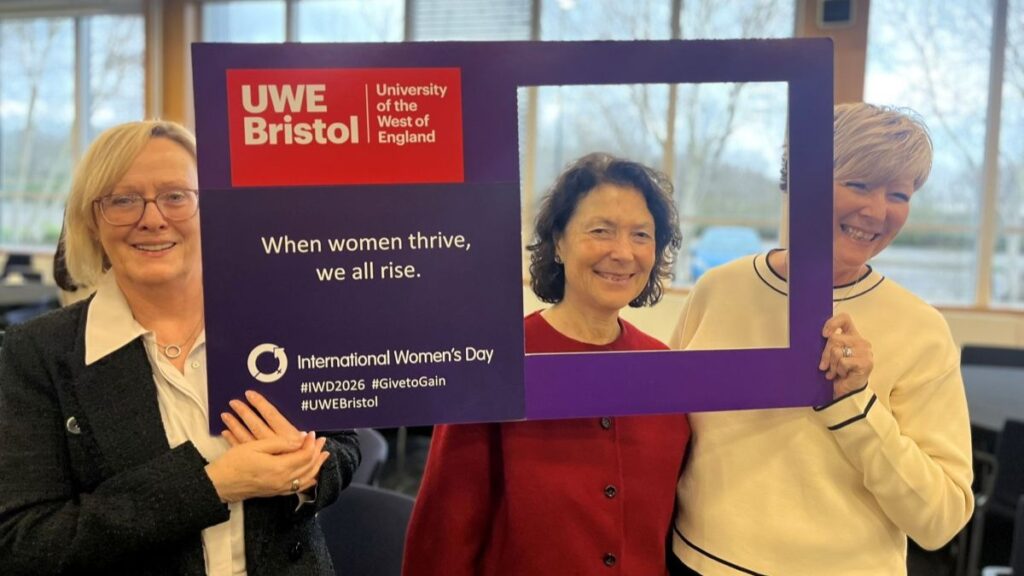
A stand organised by Vanda Papafilippou and Chathushka Kiriella invited participants to take part in a “Give to Gain” pledge aligned with the International Women’s Day 2026 theme. Attendees wrote personal commitments to advancing gender equality, contributing to a shared sense of responsibility and action.
These pledges ranged from professional commitments, such as “giving time to mentor others through every step of their journey” and “putting more effort into supporting women through flexible working practices”, to wider reflections on community and culture, including “passing empathy on to future generations” and simply encouraging women to “be kind to each other.”
Final reflections
The event made clear that gender-based violence is not an individual issue; rather, it is systemic, structural, and deeply embedded in society. From gaps in funding and policy to stigma and institutional barriers, the challenges are complex. But the research and discussions at this event also pointed toward solutions: better support services, stronger community engagement, more inclusive policies, better data, more research and a willingness to confront uncomfortable truths.
Most importantly, the event reinforced that meaningful change requires collective effort across researchers, institutions, communities and individuals.